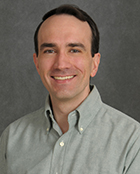
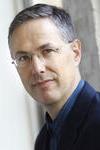
Kevin McDonnell is the CS Undergraduate Program Director and a Teaching Professor in the Department of Computer Science at Stony Brook University. He is affiliated with the College of Engineering and Applied Sciences and focuses on Computer Science Education, Visualization, Visual Analytics, Geometric Modeling, and Computer Graphics. He has received numerous awards, including the 2024 Provost's Outstanding Lecturer Award and multiple Excellence in Teaching Awards. His teaching portfolio includes courses such as CSE 101, CSE 114, CSE 215, CSE 220, CSE 564, and ISE 218. His research emphasizes data visualization, visual analytics frameworks, and computational methods in environmental and biomedical contexts. Recent work includes studies on peptide identification algorithms, microbial community dynamics, and geo-spatial data exploration. Awards: SUNY Chancellor's Award (2021), NSF GAANN Fellowship (1998), and honor society memberships (Phi Beta Kappa, Golden Key). Advising & Grants: No formal student advisees listed, but contributes extensively to curriculum development and accessibility initiatives. Labs/Teams: Engaged with interdisciplinary projects in visualization and computer graphics, though specific lab affiliations are not detailed.
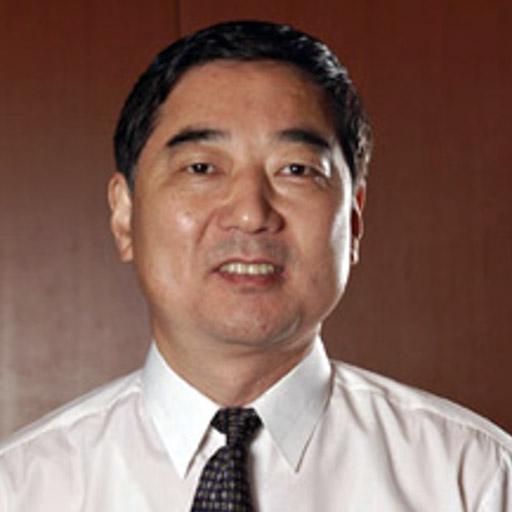
Youmin Zhang is a Professor in the Department of Mechanical, Industrial and Aerospace Engineering at Concordia University, affiliated with the Concordia Institute of Aerospace Design & Innovation. His research focuses on advanced control strategies for safety-critical systems, including fault diagnosis, fault-tolerant control, and autonomous vehicle systems. His work spans aerospace, industrial, and mechatronic domains, with applications in UAV navigation, spacecraft formation flying, and real-time environmental monitoring. Research interests include: Fault-tolerant control for safety-critical systems Avionics and flight control systems UAV trajectory planning and swarm coordination Modeling and simulation of physical systems Signal processing for diagnostics Recent publications emphasize resilient control architectures, cybersecurity in autonomous systems, and AI-driven solutions for fault detection in industrial processes. His work bridges theoretical control frameworks with practical applications in aerospace, energy, and environmental systems. He holds an academic position at Concordia’s Sir George Williams and Loyola campuses, and his research contributes to advancing autonomous systems and smart manufacturing technologies.
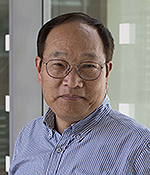
Nicholas Kalouptsidis is a Professor in the Department of Communications and Signal Processing. His research focuses on interdisciplinary areas including nonlinear communications, cryptography, adaptive filtering, and neural networks. He is affiliated with the DSP Lab, contributing to advancements in signal processing methodologies. His teaching portfolio includes undergraduate courses in Image Processing and Signals & Systems, as well as postgraduate modules on Error Control Coding & Information Theory, Introduction to Telecommunications, and System's Security. Dr. Kalouptsidis has expertise in discrete choice models, nonlinear systems control, and communication policies. While specific publications are not detailed here, his work spans coding theory, nonlinear identification, and pattern recognition applications. His collaborations (Co-Workers) and research outputs are available via the provided Download section.
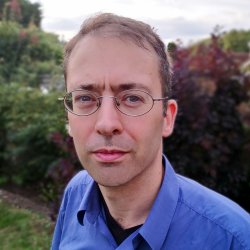
Conjoint Associate Professor Roslyn Hickson serves as Science Leader for Emerging Infectious Diseases through a joint appointment between James Cook University and CSIRO. She holds affiliations with the Australian Institute of Tropical Health and Medicine (AITHM), Centre for Tropical Biosecurity (CTB), Centre for Tropical Environmental and Sustainability Science (TESS), WHO Collaborating Centre for Vector Borne Diseases, and previously with the University of Melbourne's School of Mathematics and Statistics. PhD in Engineering (Heat/Mass Transfer), UNSW Canberra 2010 Research Fellow, National Centre for Epidemiology and Population Health (ANU) Postdoctoral Research Fellow, University of Newcastle (2011-2014) Research Scientist, IBM Research Australia (2014-2018) Research Fellow, Australian Centre of Research Excellence in Malaria Elimination (University of Melbourne, 2018) Her research program focuses on mathematical modeling of infectious disease transmission with emphasis on emerging pathogens, zoonotic spillover events, and vector-borne diseases through One Health and biosecurity frameworks. She develops quantitative tools for risk assessment, surveillance optimization, and policy evaluation across Australian, Southeast Asian, and Pacific Island contexts. Current projects integrate ecological niche modeling, behavioral epidemiology, and multi-scale transmission dynamics to address challenges in pandemic preparedness and tropical disease control. Analysis of her 28 publications reveals consistent focus on mathematical frameworks applicable to real-world health security challenges. Her work spans influenza, dengue, malaria (particularly Plasmodium vivax), Japanese encephalitis, and bat-borne pathogens, with increasing emphasis on model reproducibility and policy translation since the COVID-19 pandemic. Key methodological contributions include multiscale modeling approaches, behavior-disease interaction frameworks, and spillover risk prediction systems. Victorian Young Tall Poppy Science Award (2018) ITS Award for Excellence in Research and Development (2020) Ria de Groot Prize for best female postgraduate student (2010) Two-time EmTech Asia Innovators Under 35 Finalist (2016, 2017) Corporate Social Responsibility Award (2017) As primary advisor for five doctoral candidates and multiple honours students, she supervises research on bat-pathogen ecology, feral pig zoonoses, and wildlife disease dynamics. Her committee service includes PREZODE international working group, Biosecurity Commons Advisory Panel, and editorial roles for BMC Infectious Diseases. Current research integrates ecological modeling with public health decision support systems through partnerships with WHO, CSIRO, and regional health authorities across the Indo-Pacific.
Jian-Qiao Sun is a Professor in the Department of Mechanical Engineering at the University of California, Merced. His research focuses on vibrations, controls, and mechanical systems, with a strong emphasis on nonlinear stochastic systems and neural network applications. He has contributed extensively to the development of neural network-based methods for analyzing complex dynamical systems, including stochastic responses and control strategies. His work spans areas such as energy harvesting, robotics, and structural dynamics. Dr. Sun's research interests include the analysis of systems under random excitation, such as Poisson and Gaussian noise, and the application of radial basis function neural networks (RBFNN) to solve problems in stochastic dynamics and control. He has also explored the use of machine learning techniques for predictive modeling in agricultural engineering, such as dust control during almond harvesting. His publications highlight advancements in optimal control, model reduction, and global analysis methods like the generalized cell mapping approach. He has developed innovative solutions for mechanical systems, including underactuated robots, vibro-impact systems, and high-speed train bogie stability. His lab's work integrates theoretical, computational, and experimental approaches to address challenges in mechanical and control engineering. Dr. Sun has led research on multi-objective optimization, flutter control of airfoils, and energy harvesting systems. His contributions emphasize practical applications, such as improving the efficiency of piezoelectric devices and enhancing robotics control through neural networks.
Fawad Rauf is an Associate Professor of Electrical Engineering with expertise in nonlinear adaptive filters, signal processing, and chaos theory. His research spans adaptive filtering algorithms, neural network architectures, and sustainable energy solutions for developing regions, alongside contributions to engineering curriculum development. Rauf's technical publications focus on nonlinear adaptive filters, chaotic systems modeling, and parallel implementation of adaptive algorithms. Recent work explores sustainable building technologies and energy solutions for mountain communities. His educational research addresses ABET accreditation standards and curriculum improvement methodologies.
Prof. Zhengtao Ding is a Chair of Control Systems and Head of the Control, Robotics and Communication Division at the University of Manchester. He holds a BEng from Tsinghua University and MSc/PhD from the University of Manchester. His research focuses on nonlinear and adaptive control, distributed optimization, machine learning applications in robotics and power systems, and disturbance rejection in dynamic systems. He has authored/co-authored three books and over 300 papers, and serves as Editor-in-Chief for Drones and Autonomous Vehicles and Specialty Chief Editor for Frontiers in Control Engineering . Education : BEng, Tsinghua University (China) MSc in Systems and Control, University of Manchester PhD in Control Systems, University of Manchester His research interests span networked control systems, distributed optimization, and AI-driven robotics. Recent work emphasizes multi-agent systems, consensus algorithms, and fault-tolerant control. Key contributions include fixed-time control strategies and Nash equilibrium-seeking mechanisms for heterogeneous systems. Scientific awards include Fellowship at the Alan Turing Institute. He has supervised 32 students and led projects funded by EPSRC and industry collaborations. Active in editorial roles for journals like IEEE Transactions on Automatic Control and Neurocomputing . Labs/Teams: Control Systems Centre, University of Manchester.
William Lionheart is a Professor of Applied Mathematics at the University of Manchester, specializing in inverse problems with applications in imaging across industry, security, medicine, and non-destructive testing. He leads research collaborations including the Henry Mosley Centre for X-ray Imaging and the Land Mine Research Centre. His work integrates theoretical, numerical, and practical methods to advance imaging technologies. Education: BSc, PhD in Applied Mathematics. Key research areas include electrical impedance tomography, X-ray imaging, and polarizability tensor-based object characterization. He has pioneered techniques for metallic object detection and medical imaging applications. Research highlights include developing algorithms for synthetic aperture radar, elastic strain reconstruction, and proton therapy verification systems. Awards include the Wolfson Research Merit Award (2015) and a 2013 recognition. He has contributed to 193+ research outputs, led 11 projects (e.g., RASTER, SEMIS Phase III), and organized conferences like the 2023 'Rich and Nonlinear Tomography' event. His work impacts airport security, land mine detection, and medical diagnostics, generating over USD215M in industrial applications.
Eyal Neuman is an Associate Professor in the Department of Mathematics at Imperial College London, where he also serves as co-director of the MSc in Mathematics and Finance program. His research focuses on probability theory, stochastic processes, and their applications in mathematical finance and interacting particle systems. He has held prior research positions at the University of Rochester and Hong Kong University of Science and Technology. His academic service includes editorial roles for Mathematical Finance journal and organizing numerous conferences, including the 12th Bachelier World Congress minisymposium on Market Microstructure and the ETH-Hong Kong-Imperial Mathematical Finance Workshop. He has supervised multiple PhD students and mentored postdoctoral researchers such as Wolfgang Stockinger and Yonatan Shadmi. Neuman's work spans theoretical advancements in stochastic analysis and practical applications in quantitative finance, including optimal trading strategies, market microstructure analysis, and systemic risk modeling. His research often bridges abstract mathematical frameworks with real-world financial systems.
Alessio Moreschini is a Research Associate at the Department of Electrical and Electronic Engineering, Imperial College London, within the Faculty of Engineering. He holds a dual Ph.D. in Automatica (University of Rome "La Sapienza") and Systems and Control (Université Paris-Saclay), both awarded in 2021. His research focuses on nonlinear systems and control theory, with expertise in passivity-based control, sampled-data systems, and model order reduction. Moreschini is affiliated with the Control and Power Research Group at Imperial College. He previously served as a Postdoctoral Fellow at the University of Rome from 2021–2022. His academic roles include Associate Editorships for Automatica and the EUCA Conference Editorial Board, as well as membership in the IEEE CSS Technical Committee on Nonlinear Systems and Control, and the IFAC Technical Committee on Nonlinear Control Systems. Research interests span advanced control methodologies, including passivity theory, model reduction techniques, and their applications to electrical networks and robotics. His recent work emphasizes data-driven approaches, nonlinear system interpolation, and stabilization strategies for sampled-data systems.
Giordano Scarciotti is a Senior Lecturer in the Department of Electrical and Electronic Engineering at Imperial College London, within the Faculty of Engineering. His research focuses on control systems, model reduction, and nonlinear dynamics, with applications in energy systems such as wave energy converters. He leads the Control and Power Research Group and has affiliations with organizations like EPSRC and MINES ParisTech. Scarciotti has received notable awards, including the IEEE Transactions on Control Systems Technology Outstanding Paper Award and the President's Award for Excellence in Teaching Innovation. His work emphasizes data-driven methods and stochastic control, addressing challenges in large-scale systems like wind farms and differential-algebraic systems. Research Interests: Nonlinear and stochastic control theory Model reduction techniques (moment matching, data-driven approaches) Energy systems optimization (wave energy, wind farms) Control of complex systems with constraints Awards: IEEE Transactions on Control Systems Technology Outstanding Paper Award IET Control & Automation PhD Award President's Award for Excellence in Teaching Innovation Grants & Collaborations: EPSRC-funded research on model reduction Affiliations with MINES ParisTech and the Italian Embassy in London Scarciotti's recent publications emphasize innovative methods for system modeling and control, including energy-maximizing strategies for wave energy systems and hybrid observer-based approaches for output regulation.
Yunus Emre Harmanci is a Scientist at the Swiss Federal Laboratories for Materials Science and Technology (Empa) within the Department of Structural Engineering. He holds a B.Sc. from Middle East Technical University (METU) in Ankara, Turkey (2010) and an M.Sc. from ETH Zurich (2013). His research focuses on structural strengthening of reinforced concrete (RC) using carbon fiber-reinforced polymers (CFRP), structural health monitoring (SHM), and advanced sensor technologies like Digital Image Correlation (DIC) and fiber-optic sensors. He has conducted experimental and theoretical studies on the long-term performance of gradient anchorages for prestressed CFRP strips, freeze-thaw effects on anchorage systems, and the use of iron-based shape memory alloys (Fe-SMA) for structural retrofitting. His work includes collaborative projects with ETH Zurich and Empa, such as the SNSF-funded study on gradient anchorages and environmental exposure testing of Fe-SMA-reinforced beams. He has also contributed to structural monitoring of complex structures like the Zurich Zoo’s Elephant Park and the Gotthard Street Tunnel. His research emphasizes data-driven approaches for infrastructure lifecycle analysis and non-invasive diagnostic techniques. Harmanci’s publications span topics from finite element modeling of bond behavior to autonomous strain-based monitoring frameworks. His expertise includes structural dynamics, nonlinear analysis, and computational mechanics, with applications in both academic and industrial settings.
Cecilia Surace is an Associate Professor in the Department of Structural, Building and Geotechnical Engineering (DISEG) at the Polytechnic University of Turin. She is a member of the Interdepartmental Centre R3C (Responsible Risk Resilience Centre), the Polito Spin Off Evaluation Commission, and the Patent Commission. Her research focuses on structural dynamics, medical devices, and structural health monitoring, with expertise in biomechanics, nonlinear dynamics, and biomimetic materials. She has been recognized with the Elsevier Journal Exemplary Reviewer award (2013). She teaches courses in structural mechanics, dynamics of structures, and bio/nano construction science at both undergraduate and graduate levels. Her research involves projects like DIMOSS (displacement monitoring using strain sensors) and T-SURE (tissue surgical repair), and she leads teams in developing innovative repair technologies for biological tissues and aerospace structures. She advises three PhD students and holds patents for medical devices such as SurgiFET for tendon repair. Her work spans interdisciplinary applications, including bridge health monitoring, soft tissue repair, and bio-inspired nanomechanics. She contributes to editorial boards and international conferences, demonstrating leadership in her field.
Koen Buisman is an Associate Professor in microwave and millimeter-wave electronics at the University of Surrey's Advanced Technology Institute (ATI), part of the School of Computer Science and Electronic Engineering. He leads the Nonlinear Microwave Measurement and Modeling Laboratories (n3m labs). Previously, he held roles at Delft University of Technology (2004–2014) and Chalmers University of Technology (2014–2020), where he worked as an Assistant Professor in the Microwave Electronics Laboratory. His research focuses on nonlinear device characterization, multi-physics measurements, and technology optimization for high-frequency electronics. Dr. Buisman earned his PhD from Delft University of Technology in 2011. His work emphasizes practical applications of advanced measurement techniques, including load-pull emulation, thermal analysis, and millimeter-wave system design. He has contributed to advancements in power amplifier efficiency, MIMO testbed calibration, and adaptive antenna systems. His recent publications explore topics such as W-band receiver design, temperature-dependent amplifier characterization, and nonlinear distortion mitigation in millimeter-wave communications. His research bridges theoretical models with experimental validation, leveraging cutting-edge tools like the Chalmers mm-wave MIMO testbed (MATE) and electrothermal simulation frameworks. Dr. Buisman’s n3m labs specialize in developing measurement methodologies for nonlinear devices and multi-physical phenomena, supporting innovations in 5G and beyond-5G technologies. His work is published in top-tier journals like IEEE Transactions on Microwave Theory and Techniques and IEEE Transactions on Antennas and Propagation.
Yuval Kluger is a Professor of Pathology at the Yale School of Medicine, Yale University. His research focuses on integrating computational methods with biomedical data to address challenges in immunology, cancer biology, and virology. He specializes in single-cell omics analysis, machine learning applications in healthcare, and the development of bioinformatics tools for genomic and proteomic data interpretation. Key research interests include HIV pathogenesis mechanisms in the central nervous system, tumor immune microenvironment dynamics, and the development of algorithms for analyzing spatial transcriptomics and proteomics. He leads collaborative efforts such as the SCORCH consortium to study opioid responses in HIV contexts. His work spans methodological advancements in optimal transport for single-cell trajectory inference and noise reduction techniques in omics datasets. Publications emphasize cutting-edge tools like AMULETY for adaptive immune receptor analysis and SIMVI for spatial omics disentanglement. Kluger’s team also explores therapeutic implications of tumor-reactive T-cell suppression in melanoma and cytokine signaling pathways in inflammation regulation. No scientific awards are explicitly listed in the provided texts. His work is supported by grants enabling humanized mouse models for studying immune-oncology and viral persistence. Collaborations include multi-institutional projects on HIV reservoirs and cancer immunotherapy mechanisms.