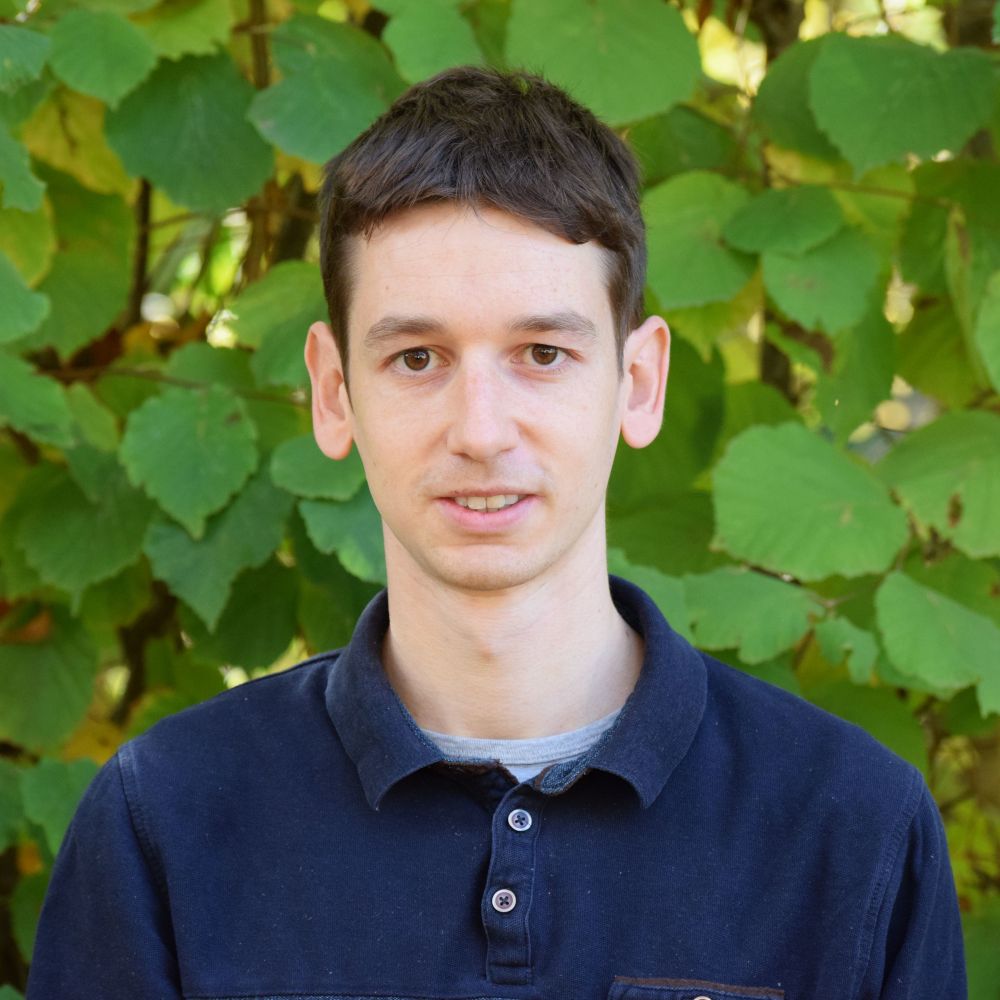
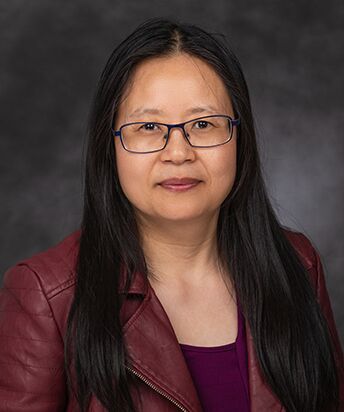
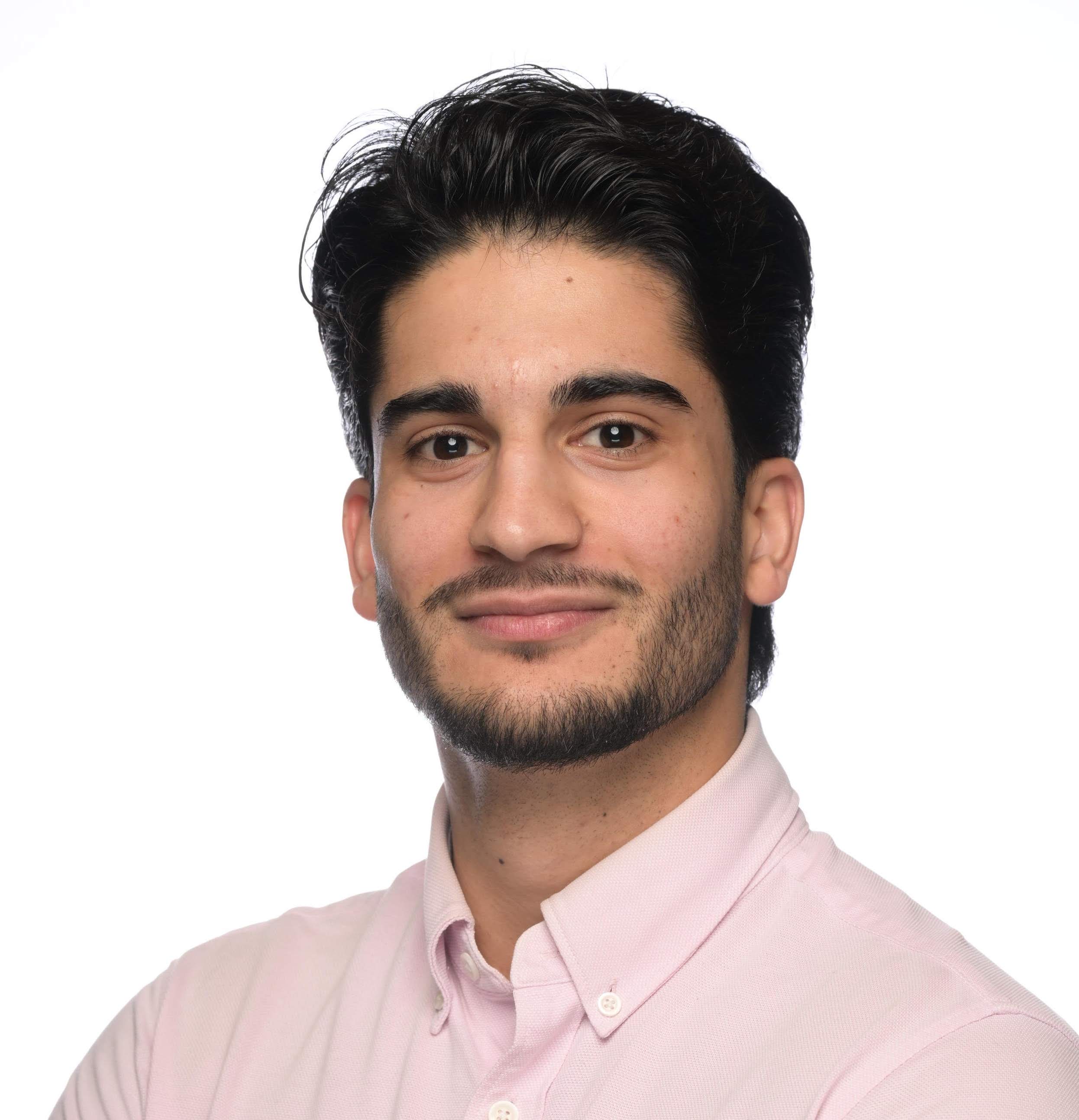
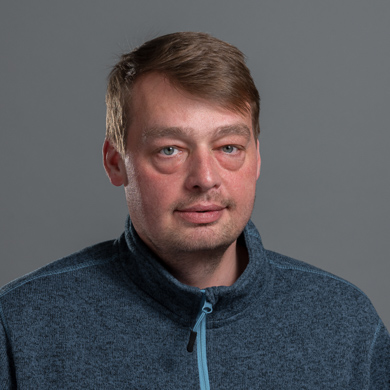
Nicolas Boulle is an Assistant Professor in Applied Mathematics at Imperial College London's Department of Mathematics within the Faculty of Natural Sciences. His research focuses on the intersection of numerical analysis and deep learning, particularly in discovering mathematical models (e.g., partial differential equations) from data and developing theoretically grounded numerical techniques. Education: DPhil (PhD) in Numerical Analysis from the University of Oxford (2018–2022) Research interests include numerical analysis, operator learning, machine learning, and their applications in solving complex mathematical problems. His work emphasizes data-driven methods for Green’s functions and the development of rational neural networks for enhanced accuracy in deep learning. Recent publications explore topics like dynamic mode decomposition, Koopman operators, and large language models' behavior. He advises PhD students and visiting researchers on projects involving operator learning and neural networks. Boulle contributes to open-source projects such as GreenLearning (for PDE Green’s functions) and RationalNets (rational activation functions in neural networks), hosted on GitHub.
Cai Xia Yang is an Associate Professor in the Department of Mechanical Engineering at the University of North Dakota since August 2020, previously holding the same title there since 2014 and an Assistant Professor role from 2013-2020. Her research focuses on Nonlinear Dynamics , Data Analysis , Stability Analysis , and Fault Detection using vibration signals, with applications in rotating machinery, bipedal robotics, and posture stability. She has developed low-cost diagnostic systems for vibration detection and balance measurement. Ph.D. , Mechanical Engineering, University of Manitoba M.S. , Mechanical Engineering, Tianjin Institute of Textile Science and Technology B.S. , Mechanical Engineering, Tianjin Institute of Textile Science and Technology Her work integrates nonlinear Lyapunov exponent analysis with KNN classification for fault detection in mechanical systems, nonlocal elasticity theory for microsystem vibrations, and computer vision for rotating machine balancing. Publications span journals like Actuators , Nonlinear Dynamics , and conferences including ASME IMECE and IEEE EIT. She has advised numerous graduate and undergraduate students on projects related to machinery fault classification, wind turbine design, and biomedical signal processing. Recent collaborations include low-cost vital signs monitors via computer vision and vibration analysis.
Bengt Eliasson is a Professor in the Department of Physics at the University of Strathclyde, Faculty of Science, United Kingdom. He is an active researcher in theoretical and computational plasma physics, with strong affiliations to space and ionospheric research. His work spans relativistic laser-plasma interactions, quantum plasmas, and wave propagation in complex plasma environments. His research interests focus on the theory and simulations of waves and nonlinear structures in plasmas , including relativistic laser-plasma interactions , ionospheric physics and radio wave propagation , and quantum phenomena in plasmas . He also develops advanced Vlasov-Maxwell simulation codes , numerical models for wave propagation in the ionosphere and laboratory plasmas, and kinetic models of nonlinear water waves. His work has broad implications for space weather, satellite communications, and high-energy density physics. The recent publications highlight a consistent focus on wave generation, instabilities, and nonlinear dynamics across diverse plasma systems—from laser-driven electron-hole plasmas to ionospheric satellite interactions and quantum electrostatic shocks. His research combines high-performance computing with theoretical modeling to address fundamental and applied challenges in plasma science. Scientific Awards: Fellow of American Physical Society (2012) Prof. Eliasson leads significant research grants and projects, including the Space Object Identification with Measurements of Orbit Driven Waves (SOIMOW) funded by the Office of the Director of National Intelligence, and multiple EPSRC-funded Doctoral Training Partnerships. He actively supervises PhD students and collaborates internationally with institutions in the US and Russia. He serves on the editorial board of the journal Physics and regularly presents at major conferences as an invited speaker. He is involved in experimental collaborations such as those using EISCAT and mirror-confined plasma setups, and leads teams developing simulation tools for satellite-plasma interactions and artificial ionospheric layer formation.
Abdullah Tokmak is a Doctoral Researcher at the Department of Electrical Engineering and Automation, Aalto University (Finland). His research focuses on cyber-physical systems and safety-critical control algorithms. Current affiliation: Aalto University Department: Electrical Engineering and Automation Email: abdullah.tokmak@aalto.fi Research Interests: Safe exploration in reproducing kernel Hilbert spaces Parameter tuning for multi-agent systems Bayesian optimization with safety guarantees Kernel-based control approximation techniques His publications demonstrate expertise in integrating machine learning with control systems through methods like: Nonlinear MPC approximation Safe Bayesian optimization Distributed multi-agent control Kernel-based modeling
Luis F. Ayala serves as Department Head and Professor of Petroleum and Natural Gas Engineering at Pennsylvania State University's College of Earth and Mineral Sciences, holding the William A. Fustos Family Professorship and Energi Simulation Chair in Fluid Behavior and Rock Interactions. His leadership spans academic administration and cutting-edge research in natural gas systems. His educational background includes dual summa cum laude engineering degrees from Universidad de Oriente (Venezuela) in Chemical and Petroleum Engineering, followed by M.S. and Ph.D. degrees in Petroleum and Natural Gas Engineering from Penn State. This foundation supports his expertise in advanced computational modeling of hydrocarbon systems. Ayala's research focuses on multiphase flow dynamics in unconventional reservoirs, with emphasis on numerical modeling of shale gas systems, retrograde gas condensates, and thermodynamic interactions in ultra-tight formations. His work bridges nanoscale fluid behavior with field-scale production forecasting through innovative computational approaches including lattice Boltzmann methods and boundary element solutions. His recent publications reveal strong trends in developing physics-based models for complex reservoir phenomena, particularly in nanopore transport mechanisms, multiphase adsorption dynamics, and anomalous diffusion in heterogeneous systems. These studies consistently integrate thermodynamic rigor with practical reservoir engineering applications. E. Williard & Ruby S. Miller Faculty Fellowship (2023) SPE Distinguished Member Award (2022) Howard B. Palmer Faculty Mentor Award (2022) Charles Hosler DEI Faculty Award (2021) Fulbright Scholar (2016-2017) Multiple SPE Outstanding Technical Editor Awards Ayala actively mentors students through research collaborations and has received multiple advising/mentoring awards. His administrative roles include SPE editorial positions (Executive Editor for SPE Journal) and leadership in Penn State's Office of the Senior Vice President for Research. Current research is supported by industry partnerships through the EMS Energy Institute and Earth and Environmental Systems Institute. He leads the Natural Gas Engineering research group within the John and Willie Leone Department, focusing on experimental validation and computational modeling of multiphase transport in unconventional reservoirs. The team collaborates with national laboratories and industry partners on projects addressing fundamental flow mechanisms in nano-porous media.
Professor Ralf Brüggemann is a full-time faculty member at the University of Konstanz , holding the Chair of Statistics and Econometrics since October 2007. He completed his Habilitation in Time Series Econometrics at Humboldt-Universität zu Berlin in 2007 and received his Ph.D. in Economics in 2003 for work on VAR model reduction techniques. Education : Habilitation: "Topics in Time Series Econometrics", Humboldt University Berlin (2007) Ph.D.: Economics, Humboldt University Berlin (2003) Diplom: Economics, Humboldt University Berlin (1999) His research spans Time Series Econometrics with focus on Cointegrated VAR Models , Structural VAR/VECM , Forecasting Methods , and Empirical Macroeconomics . Key contributions include methodological work on structural identification, variable selection in high-dimensional VAR, and monetary policy analysis using microeconomic data. Recent publications address External instruments in SVAR identification (2022) Directed graphs for VAR variable selection (2022) Stochastic aggregation weights in forecasting (2023) Asymmetric impulse responses in European financial markets (2014) with methodological innovations in heteroskedasticity-robust inference and stochastic aggregation weights. Scientific Awards : Jean Monnet Fellow, European University Institute (2003-2004) He leads research on monetary policy transmission mechanisms and macroeconomic risk through collaborative projects with institutions like the German Research Foundation Collaborative Research Center 649 (2005-present) and serves as editor for the Journal of Economics and Statistics special issue on Economic Forecasts (2011).
Hong Kun Zhang is a Full Professor in the Department of Mathematics & Statistics at the University of Massachusetts Amherst. His research focuses on dynamical systems, ergodic theory, chaotic billiards, and financial mathematics. He holds a PhD from the University of Alabama at Birmingham (2005) under Nikolai Chernov's supervision. His work includes studies on statistical properties of hyperbolic systems, random billiards, and quantum billiards. Education: PhD in Mathematics (2005), University of Alabama at Birmingham M.S. in Mathematics (2001), University of Alabama at Birmingham M.S. in Mathematics (1998), University of Inner Mongolia, China B.S. in Mathematics (1993), University of Inner Mongolia, China Research Interests: His primary interests span billiard dynamics, statistical properties of chaotic systems, financial time series analysis, and applications of deep learning to dynamical systems. He has contributed to understanding mixing rates, entropy production, and spectral gaps in billiard systems. Awards and Grants: NSF CAREER Award (DMS-1151762) Simons Fellowship (2015–2016) NSF Grant (DMS-0901448) Dean’s Award (UAB, 2005) Key Contributions: Zhang has organized international conferences on statistical properties of dynamical systems and co-authored influential papers on Lorentz gases, spectral analysis of billiards, and applications of GARCH models in financial markets. His work bridges pure mathematics with applied fields like financial engineering and data science.
Vahid Vaziri is a Senior Lecturer (Associate Professor) in the School of Engineering at the University of Aberdeen, where he has been serving since February 2020, initially as a Lecturer and promoted to Senior Lecturer in December 2021. He is actively involved in teaching, research, and PhD supervision, and holds leadership roles as Programme Co-ordinator for several MSc programmes in Advanced Mechanical and Structural Engineering. PhD in Engineering – Dynamics and Control of Nonlinear Engineering Systems MSc in Complex Systems Engineering – Control of Rotational Motion in Parametric Pendulum System BSc in Control & Instrument Engineering – Using fuzzy logic to find the best controller for multi-model systems His research focuses on nonlinear dynamics and control , with applications in vibration suppression, wave energy harvesting, drill-string dynamics, rotor dynamics, and AI/ML integration in engineering systems. He investigates coexisting attractors, passive and active vibration control, and fracture mechanics in tubular components. His work bridges theoretical modeling with experimental validation. The recent publications highlight a strong trend in nonlinear control systems , smart materials (e.g., dielectric elastomers, piezoelectrics), and energy systems (e.g., wind turbines, geothermal). The research spans modeling, simulation, and experimental validation, with increasing integration of AI techniques for system identification and control. Keywords such as fractional-order modeling, sliding mode control, and thermo-electro-mechanical coupling reflect technical depth and interdisciplinary reach. Scientific service and recognition: Board member and Subject Editor, Nonlinear Dynamics journal External Examiner, Robert Gordon University (2023–2027) Reviewer for top journals including Journal of Sound and Vibration , Mechanical Systems and Signal Processing , and Physica D Co-organizer of major conferences: ENOC 2027 (Aberdeen), ICOVP&WMVC 2025 (Lisbon), and multiple mini-symposia on nonlinear dynamics and drilling control Vahid Vaziri supervises multiple PhD and MSc students and leads or co-leads several externally funded research projects. He has served as Principal Investigator on industry-funded projects with ANSA, iVDynamics, and Baker Hughes, and as Co-Investigator on grants from the Royal Society of Edinburgh, Petroleum Technology Development Fund, and SPARK. His work involves collaboration with energy and technology firms, focusing on real-world engineering challenges in oil and gas, renewables, and smart systems. He is a founding member of the Geothermal Energy Advancement Association (GEAA), demonstrating commitment to sustainable energy innovation. He is affiliated with key research groups including the Centre for Applied Dynamics Research and the Artificial Intelligence, Robotics and Mechatronic Systems Group at the University of Aberdeen.
Shaunak Bopardikar is an Associate Professor in the Department of Electrical and Computer Engineering at Michigan State University (MSU), affiliated with the Center for Connected Autonomous Networked Vehicles for Active Safety (CANVAS). He holds a B.Tech. and M.Tech. from IIT Bombay and a Ph.D. from UC Santa Barbara. His research focuses on scalable computation, cyber-physical systems security, and autonomous motion planning. Previously, he worked as a Staff Research Scientist at United Technologies Research Center and a postdoctoral researcher at UC Santa Barbara. Education: B.Tech. and M.Tech. in Mechanical Engineering (CADA), Indian Institute of Technology Bombay (2004) Ph.D. in Mechanical Engineering (Dynamics and Control), University of California, Santa Barbara (2010) Research Interests: Dr. Bopardikar explores advanced methods for autonomous systems, including randomized algorithms for large-scale optimization, adversarial motion planning, and resilient cyber-physical systems. His work integrates game theory, control systems, and sensor networks to address challenges in autonomous vehicle safety, perimeter defense, and multi-agent collaboration. Key Research Trends: His recent publications emphasize game-theoretic approaches to security, optimal motion planning under uncertainty, and multi-fidelity modeling for sensor systems. He has contributed to frameworks for secure route planning, dynamic sensor selection, and adversarial emulation in cyber-physical systems. Teaching and Advising: He teaches courses in control systems and has an open Ph.D. position for students interested in his research areas. His group focuses on collaborative projects with industrial and academic partners. Labs and Affiliations: His work leverages the CANVAS center to advance connected autonomous vehicle technologies, emphasizing real-world applications of theoretical advancements.
Ana Barjau Condomines is a faculty member in the Department of Mechanical Engineering at the Escola Tècnica Superior d'Enginyeria Industrial de Barcelona (ETSEIB), Universitat Politècnica de Catalunya (UPC). She is affiliated with the BIOMEC - Biomechanical Engineering Lab and the TecSalut - Research Group in Health Technologies. Her academic work spans mechanical system dynamics, acoustics, and biomedical applications. Her research interests include acoustics of musical instruments, rigid body and multibody dynamics, biomechanical modeling, vibration analysis, and wave energy conversion systems. She has developed computational models for wind instrument acoustics, impact dynamics in mechanical systems, and muscle force prediction in gait analysis, contributing to both fundamental mechanics and applied biomedical engineering. The recent publications highlight her work in nonlinear dynamics of mechanical systems, educational tools for engineering mechanics, and energy harvesting from ocean waves. Her research combines theoretical modeling, numerical simulation, and experimental validation, often in interdisciplinary teams. Scientific Awards: 3r Premi UPC al Compromís Social She has participated in multiple competitive R&D+i projects, including those focused on biomechanical engineering, assistive robotics, and health technologies. Her collaborations include researchers from UPC, CERN, and various biomedical and engineering groups. She has also contributed to teaching innovation, particularly in classical mechanics education. Laboratories and Research Groups: BIOMEC - Biomechanical Engineering Lab TecSalut - Research Group in Health Technologies Xarxa R+D+I en Tecnologies de la Salut (Xartec Salut)
Igor Aizenberg is a Professor and Chair of the Department of Computer Science at Manhattan College (Riverdale, NY) since 2016. He holds a Ph.D. in Computer Science (1986) and M.S. in Mathematics (1982) from Dorodnicyn Computing Center (Moscow) and Uzhhorod National University (Ukraine), respectively. Ph.D. in Computer Science, Dorodnicyn Computing Center, USSR (1986) M.S. in Mathematics, Uzhhorod National University (1982) His research focuses on complex-valued neural networks (CVNNs) with multi-valued neurons (MVN), emphasizing classification , pattern recognition , intelligent image processing , and spectral techniques . He pioneered the MLMVN (Multilayer Neural Network with Multi-Valued Neurons), which excels in learning speed and generalization for nonlinear separability problems like XOR. His recent publications (2025-2016) highlight advancements in CVNNs for frequency domain image filtering , power system fault diagnosis , DC-DC converter monitoring , and CNNMVN (Convolutional Neural Networks with Multi-Valued Neurons). Key trends include edge detection , impulse noise filtering , and financial time series prediction . $300,000 NSF grant (2009-2012) Fulbright Specialist Awards (2014, 2015) Senior Member, IEEE Aizenberg has developed MATLAB simulators and executable tools for MLMVN and CNNMVN, freely available for non-commercial research. These tools address classification , regression , and multi-class problems . He has also contributed to books and tutorials on CVNNs, including the 2011 Springer monograph Complex-Valued Neural Networks with Multi-Valued Neurons .
Dr. Chao Zhang is a Professor at the Department of Mechanical & Materials Engineering, Western University, Canada. He holds a Ph.D. in Mechanical Engineering from the University of New Brunswick (Canada) and M.Sc.Eng. & B.Sc.Eng. in Power Machinery Engineering from Xi'an Jiaotong University (China). Ph.D. Mechanical Engineering, University of New Brunswick, Canada M.Sc.Eng. Power Machinery Engineering, Xi'an Jiaotong University, China B.Sc.Eng. Power Machinery Engineering, Xi'an Jiaotong University, China His research focuses on Computational Fluid Dynamics (CFD) , Thermofluids , and Heat Transfer Modeling . He develops numerical models for thermal performance of heat exchangers, combustion processes in regenerative furnaces, NOx formation analysis, and CFD applications in fluidized beds, diesel engines, and supercritical water reactors. His work spans Multiphase Flow Dynamics , Turbulence Modeling , and Emission Control . Recent publications highlight his expertise in CFD-assisted control systems , supercritical fluid heat transfer , and gas-solid flow modeling . He collaborates with industry partners like Pratt & Whitney Canada and BIOREM Technologies Inc., focusing on compact compressor flows and biofiltration efficiency . Scientific Awards: Best paper award, CSME Transactions (2005) Windsor Engineering Golden Apple Award (1993/94) He supervises a dynamic research group, including Ph.D. candidates R. Maitri, P. Mirzabeygi, S. Ali, M. El-Halwagy, R. Saha, and A. Dadashi. His professional roles include organizing ASME conferences, serving on the ASME K-11 Committee, and examining thermodynamics for Ontario engineers.
Xiaojun Xu is a Professor at the School of Computer Science, Beijing Institute of Technology, with a prolific research career spanning machine learning security, medical AI, and robotics. Their work demonstrates strong interdisciplinary collaboration across computer science, healthcare, and engineering domains. Institution: Beijing Institute of Technology, School of Computer Science Research Focus: AI security, medical imaging, robotics, and remote sensing applications Collaborations: Extensive work with Bo Li (29 papers), Dawn Song (11 papers), and medical researchers Xu's research interests center on adversarial machine learning, with significant contributions to model security, backdoor detection, and LLM unlearning. They've pioneered techniques like Meta Neural Analysis for Trojan detection and developed frameworks for certified robustness. Their medical imaging work focuses on quantitative susceptibility mapping for neurodegenerative diseases, particularly Parkinson's and Alzheimer's. In robotics, they've advanced control systems for quadruped and amphibious vehicles. Recent publications reveal a strong trend toward large language model security, with multiple 2024-2025 papers on machine unlearning and watermarking techniques. Their work bridges theoretical security with practical healthcare applications, particularly in medical image analysis where they've developed tools for subcortical nucleus segmentation and brain age prediction. Key venues: NeurIPS, CCS, IEEE S&P, NeuroImage, IEEE Transactions Research impact: High citation count with consistent top-tier publication record Xu has secured significant research funding, evidenced by the volume and diversity of publications across multiple domains. Their work on blockchain-enabled IoT systems and RAFT-based private blockchain demonstrates expertise in distributed systems. The medical imaging research shows strong hospital collaborations, particularly in developing tools for Parkinson's diagnosis. Current projects appear focused on LLM security challenges and multimodal medical AI systems with potential clinical applications.
Sébastien Besset is a researcher at Centrale Lyon's Solid Mechanics department, specializing in friction-induced vibrations , nonlinear dynamics , and vibroacoustic optimization of mechanical systems. His work bridges aerospace engineering and computational mechanics, with a focus on aircraft braking systems and automotive disc-brake squeal noise reduction. Roles: Head of Master's in Mechanics, Head of Transport and Traffic option Key collaborations: LTDS; MSGMGC Research interests include: Friction-induced dynamic instabilities Robust shape optimization under uncertainties Isogeometric analysis for mechanical systems Multimodal energy flow and modal synthesis methods Recent publications (2025–2023) emphasize brake squeal noise modeling, nonlinear tire vibrations, and hybrid optimization techniques for complex mechanical systems. His work integrates experimental validation with computational modeling, particularly using the FIVE@ ECL test bench. Additional teaching roles include contributions to Aeronautics and Space programs at Centrale Lyon's Lyon-Ecully Campus.
Institute of Process Management, Faculty of Applied Informatics at Tomas Bata University in Zlín. Petr Navrátil, Ph.D., is an Assistant Professor whose work bridges theoretical and applied control systems research. He holds a Ph.D. from Tomas Bata University in Zlín (2007) and an M.Sc. from Brno University of Technology (2001). A three-month internship at the University of Applied Science Cologne (2003) enriched his expertise in process engineering and control systems. Petr's research spans adaptive control , recursive identification , Delta model , and MIMO systems . His publications (2003-2016) focus on real-time control of laboratory models, optosensor applications, and environmental factors in measurement accuracy. Collaborations with colleagues like Vladimir Bobál and Ján Ivanka highlight his team-based approach to solving complex control problems, including TITO and three-tank systems. His work with MATLAB/Simulink libraries for recursive algorithms and applications in commercial security (light/laser protection systems) underscores his commitment to practical, industry-relevant solutions. The Institute of Process Control at Tomas Bata University serves as his primary research environment, where he develops tools and frameworks for both educational and industrial applications.