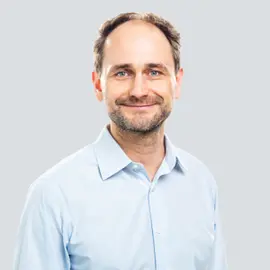
Peter Bühlmann is a Professor at ETH Zürich within the Seminar für Statistik , focusing on high-dimensional statistics, causal inference, and machine learning. His work bridges theoretical advancements with practical software implementations in R packages like pcalg , mboost , and glmmlasso , impacting fields such as genomics, proteomics, and intensive care analytics. Key Contributions : Causal structure learning, stability selection, anchor regression, and deconfounding. Software : Developed widely used R packages for statistical modeling and causal inference. Teaching : Courses on high-dimensional statistics at ETH Zürich and international institutions. Research Trends : Recent articles emphasize causal robustness, domain adaptation, and applications in medicine. His work addresses challenges in heterogeneous data, missing values, and covariate shifts using methods like spectral deconfounding and residual prediction tests. Scientific Recognition : Co-author of a paper designated as a New Hot Paper (Meinshausen and Bühlmann, 2006) by Essential Science Indicators, indicating significant impact in high-dimensional multiple testing.
Prof. Gabriela Hug is a Full Professor at ETH Zurich's Department of Information Technology and Electrical Engineering, serving as Deputy Head of the Department and Deputy Head of the Power Systems and High Voltage Lab. She leads the Energy Science Center (ESC) and holds adjunct roles at Carnegie Mellon University. Her research focuses on modeling, control, and optimization of electric power systems for sustainable energy transitions. Education: PhD in Information Technology and Electrical Engineering, ETH Zurich (2004–2008) MSc in Information Technology and Electrical Engineering, ETH Zurich (1999–2004) Research Interests: Her work addresses challenges in smart grid integration, renewable energy systems, and advanced control strategies. Key areas include vehicle-to-grid technologies, distribution network optimization, and energy storage system planning. She emphasizes data-driven approaches and collaborative frameworks for grid resilience and flexibility. Key Achievements: Recipient of the 2019 ALEA Award (ETH Zurich) NSF Career Award (2013) IEEE Outstanding Young Engineer Award (2013) Leadership & Roles: Co-Director, NCCR Automation (Swiss National Centre of Competence in Research) Board Chair, Energy Science Center (ESC) Adjunct Faculty, Carnegie Mellon University Labs & Teams: Power Systems Laboratory (ETH Zurich) Energy Science Center (multi-disciplinary research hub)
Colin Jones is an Associate Professor at the École Polytechnique Fédérale de Lausanne (EPFL) in the Automatic Control Laboratory, School of Engineering. He earned his BASc and MASc in Electrical Engineering and Mathematics from the University of British Columbia (1994-2002) and a PhD in Control Theory from the University of Cambridge (2002-2005). Prior to EPFL, he was an assistant professor there and a senior researcher at ETH Zürich. Current role: Director of the Robotics, Control, and Intelligent Systems Doctoral Program at EPFL Research focus: Optimization-based and model predictive control (MPC) for renewable energy systems, green energy management, and data-driven control methods His recent work (2023-2025) spans high-speed predictive control , smart grid optimization , and physically consistent neural networks , with applications to buildings, hovercrafts, and power systems. He has secured an ERC Starting Grant for his research on optimal control of building networks. Publications include over 200 papers in journals like Automatica , IEEE Transactions , and Energy and Buildings . Notable article trends include distributed optimization , data privacy in energy systems , and nonlinear MPC for autonomous vehicles . Scientific Awards : ERC Starting Grant for optimal control of building networks Advising : Supervises 10 current PhD students and has advised 19 past PhD students, including Alessandretti Andrea and Diwale Sanket Sanjay. Grants and projects emphasize smart energy systems , predictive demand response , and nonlinear control .
Prof. Eleni Chatzi is a Full Professor and Chair of Structural Mechanics at ETH Zurich's Department of Civil, Environmental and Geomatic Engineering. She holds a PhD from Columbia University (2010) and has held roles from Assistant to Full Professor at ETH since 2010. Her research focuses on intelligent structural monitoring and data-driven asset management, emphasizing nonlinear dynamics and sensor integration. Affiliations : Institute of Structural Engineering, European Academy of Wind Energy (EAWE President), Swiss Community for Computational Methods (SWICCOMAS Chair) Research interests include Structural Health Monitoring (SHM), system identification, and advanced simulation tools. She pioneered work on data-driven diagnostics and self-aware infrastructure, supported by grants like the ERC Starting Grant (2015). Awards include the 2020 Walter L. Huber Prize and 2024 SHM Person of the Year Award. Her work spans wind energy infrastructure, metamaterials for vibration control, and AI-driven structural analytics. Over 600 publications and 200k+ citations highlight her impact. She teaches computational science and structural dynamics in ETH's programs and collaborates globally on sustainable infrastructure projects.
Dr. Andrea Martinelli is a Lecturer and Postdoctoral Researcher at the Automatic Control Laboratory (IfA), ETH Zurich. He holds a PhD in Automatic Control from ETH Zurich (2024) under Prof. John Lygeros, an MSc in Control Engineering (2017) from Politecnico di Milano, and a BSc in Management Engineering (2015). His research focuses on optimal control, reinforcement learning, and decentralized control strategies for large-scale systems, emphasizing scalability and applicability to renewable energy systems. He received the ETH Medal for his doctoral thesis on data-driven control methods. Education: BSc in Management Engineering, Politecnico di Milano (2015) MSc in Control Engineering with Honours, Politechnico di Milano (2017) PhD in Automatic Control, ETH Zurich (2024) Research Interests: Optimal control and reinforcement learning Data-driven methods for control systems Decentralized control of interconnected systems Dissipativity theory and passivity-based approaches Applications in renewable energy systems (DC microgrids) Teaching & Outreach: Program Manager for the CAS ETH in Automation Teaching a post-graduate course on automation in 2025 Professional Activities: Worked at Laboratoire d'Automatique (EPFL) during MSc thesis (2017) Research Assistant with Prof. R. Scattolini, Politecnico di Milano (2018)
Giancarlo Ferrari Trecate is an Adjunct Professor at the Swiss Federal Institute of Technology Lausanne (EPFL) , affiliated with the School of Engineering and the SCI-STI-GFT department. He is also involved in teaching and research through the STI-SGM and EDRS-ENS programs. Research Interests : Automatic control, state estimation, system identification, machine learning, distributed control, hybrid systems, microgrids, biochemical networks, voltage and frequency stabilization in AC/DC microgrids. Publications Trends : His recent work focuses on integrating Neural ODEs and Hamiltonian structures for stable control systems, regret minimization in distributed control, and robust state estimation under uncertainty. Applications include autonomous mobility-on-demand , power grid optimization , and secure microgrid control against cyber-attacks. Scientific Awards : No specific awards mentioned in the provided data. Teaching & Advising : He supervises PhD students in mechanical engineering and teaches courses on Multivariable control and Networked control systems . His lab, DECODE , specializes in Dependable Control and Decision systems.
George Haller is a Professor at the Department of Mechanical and Process Engineering at ETH Zurich . He leads the Institute of Mechanical Systems and holds the Chair in Nonlinear Dynamics . His research focuses on: Nonlinear dynamical systems theory Data-driven model reduction Spectral submanifolds (SSMs) Coherent structure identification in fluids and solids Control of complex nonlinear systems His recent work emphasizes equation- and data-driven modeling across solids, fluids, and control systems . Key contributions include: SSMTool - a MATLAB package for nonlinear model reduction SSMLearn - open-source software for data-driven modeling Transport barrier detection algorithms with oceanographic applications Scientific accolades include: 2025 Lyapunov Award (ASME) 2023 Stanley Corrsin Award (APS) Fellowships: ASME, APS, SIAM External Member, Hungarian Academy of Sciences His group has trained notable alumni: Thomas Breunung (Assistant Professor, University of Wisconsin-Madison) Shobhit Jain (Assistant Professor, Delft University of Technology) Mattia Serra (Assistant Professor, UCSD) Publications span Nonlinear Dynamics, Nature Communications , and Physical Review Fluids , with a 2025 book Modeling Nonlinear Dynamics for Equations and Data (SIAM Press). Current projects include: Reduced-order modeling of fluid-structure interactions Control of soft robots via nonlinear dynamics Identifying material barriers in turbulence
Bernhard Thomaszewski is a Lecturer at the Department of Computer Science at ETH Zürich. His research focuses on computational mechanics, robotics, and computer graphics, with an emphasis on simulation-based design and material modeling. He explores topics such as deformable contact, flexible materials, and robotic mechanisms. His work bridges theoretical foundations and practical applications, including medical imaging, garment simulation, and biomechanical systems. Notable research interests include the development of novel algorithms for real-time simulation, optimization-driven design of mechanical systems, and integration of machine learning with physical models. He has contributed to advancements in finite element modeling, differentiable simulation, and topology optimization for robotic and biomedical applications. His recent projects highlight interdisciplinary collaboration, addressing challenges in areas like orthodontic treatment prediction, automated pipeline design, and neural network-driven material characterization. While no specific grants or awards are explicitly listed, his prolific publication record underscores his impactful contributions to computational engineering and computer science.
Prof. Dr. Robert Eberlein is a Senior Lecturer in Mechanics at the ZHAW School of Engineering , specifically working at the Institute of Mechanical Systems (IMES) . He has served as Director of IMES since 08/2017, following previous roles as Senior Lecturer at IMES (11/2013-07/2017) and industry leadership positions including CTO of Angst+Pfister Group (06/2006-10/2013). Dr. Eberlein holds a Dr.-Ing. (PhD) in Numerical Mechanics from Darmstadt University of Technology (1992-1997) and completed an exchange program at UC Berkeley (1991-1992). Education: Dr.-Ing. (PhD) in Numerical Mechanics, Darmstadt University of Technology (07/1992-07/1997); Exchange Student at University of California, Berkeley (07/1991-06/1992) Professional: Director of Institute IMES (08/2017-today); Senior Lecturer at IMES (11/2013-07/2017); CTO & Group Executive Committee, Angst+Pfister Group (06/2006-10/2013); Group Leader in Biomechanics, Sulzer Innotec (07/1998-04/2006) Dr. Eberlein focuses on experimental and numerical modeling of solid polymers and lightweight structures. His research spans material modeling, finite element analysis, and fatigue life prediction for materials like POM gears, TPU and vulcanizates. Recent work explores digital twin development for rubber spring elements and machine learning enhanced process simulation in additive manufacturing. His projects include Lifetime prediction of POM gears , Measurement of human soft tissue properties , and Optimization of plastic gear geometry . Scientific achievements include: Professor ZFH (Fachhochschulrat) - 12/2019 Dr.-Ing. (PhD) summa cum laude - Darmstadt University of Technology - 07/1997 Graduate Assistantship - Darmstadt University of Technology - 01/1993 His work appears in journals like International Journal of Non-Linear Mechanics , Rubber Chemistry and Technology , and Journal of Loss Prevention in the Process Industries . Publications since 2015 show a consistent focus on material characterization , finite element modeling , and fatigue analysis with applications in industrial components and biomedical systems.
Romuald Houdré is a Full Professor at the École Polytechnique Fédérale de Lausanne (EPFL), affiliated with the School of Basic Sciences (SB) and the Department of Physics (IPHYS). He holds dual roles in teaching and research within the School of Physics (SB-SPH). His research focuses on photonic crystals, optical microcavities, and their applications in biophotonics, semiconductor physics, and quantum optoelectronics. Education and Career: PhD in Condensed Matter Physics from École Polytechnique (France), 1985 Habilitation, Pierre and Marie Curie University, Paris 6, 1998 Joined EPFL in 1988, leading molecular beam epitaxy and microcavity activities Appointed Full Professor at EPFL in 2011 Research Interests: Photonic crystal cavities and optical trapping for biomedical sensing Nanophotonics and semiconductor materials (GaN-based systems) Nonlinear optics and quantum phenomena in polaritonic systems Development of lab-on-chip technologies for single-cell analysis Achievements: Over 220 publications, including 89 invited talks 5 patents and 4 book chapters High h-index (H=56 in WOS, H=68 in Google Scholar) Teaching: Optics II (Bachelor in Physics) Photonics for the Doctoral School in Photonics (EDPO) Supervised over 20 doctoral students Labs/Groups: Research conducted in the Quantum Optoelectronics Laboratory (LOEQ) and the SCI-SB-RH group, focusing on integrated photonics and biophotonics applications.
Feiran Zhao is a Researcher at the Institute of Automatic Control, part of the Department of Mechanical and Process Engineering at ETH Zürich. He holds a B.S. in Control Science and Engineering from Harbin Institute of Technology (2018) and a Ph.D. from Tsinghua University (2024). His research focuses on data-driven control, adaptive control, reinforcement learning, and their applications in engineering systems. Zhao is currently a postdoc under Prof. Florian Dorfler at ETH's Automatic Control Lab. Research interests span topics like policy optimization for LQR systems, quantized feedback control, and model predictive control acceleration. His work bridges machine learning and classical control theory, with applications in robotics, power systems, and aerospace engineering. His publications (2019–2025) explore theoretical foundations of policy gradient methods, convergence analysis, and practical implementations in autonomous systems. Though no awards are explicitly listed, his active research in high-impact areas suggests potential recognition. As part of the Automatic Control Lab, Zhao collaborates on projects involving data-enabled control strategies and real-world system applications. No student advisees are currently listed.
Mirko Bothien is a Senior Lecturer and Head of Research/Focus Area Renewable Energy at the Institute of Energy Systems and Fluid Engineering (IEFE) within the Zurich University of Applied Sciences (ZHAW) School of Engineering. He also holds an Associate Professor position at the Department of Energy and Process Engineering at the Norwegian University of Science and Technology (NTNU) in Trondheim. Previously, he was a Rudolf Diesel Industry Fellow at the Institute for Advanced Study at TU München from 2018 to 2022. His work focuses on renewable energy systems with particular emphasis on hydrogen technologies and gas turbine applications. Dr. Bothien earned his Dr.-Ing. in Thermoacoustics and Combustion from the Institute of Fluid Mechanics and Acoustics at TU Berlin (2005-2008) and his Dipl.-Ing. in Turbo-machinery and Jet Propulsion from RWTH Aachen (2001-2005). In 2023, he completed a Certificate of Advanced Studies in Teaching and Learning in Higher Education from PH Zürich, enhancing his pedagogical expertise. Dr. Bothien's research spans thermoacoustics, combustion dynamics, gas turbine technology, hydrogen energy systems, and alternative fuels. He leads numerous projects investigating hydrogen combustion in gas turbines, ammonia-hydrogen co-firing, and advanced combustion systems for carbon-free power generation. His work addresses critical challenges in decarbonizing power systems through innovative combustion technologies that maintain high efficiency while reducing emissions. His research integrates experimental, numerical, and theoretical approaches to understand complex combustion phenomena, particularly focusing on thermoacoustic instabilities in reheat combustors and novel flame stabilization mechanisms. He teaches Thermodynamics, Heat Transfer, and Wind Power and Hydropower courses. Analysis of Dr. Bothien's recent publications reveals a strong focus on hydrogen and ammonia combustion technologies for gas turbines, with particular attention to thermoacoustic stability, flame dynamics, and emissions characteristics. His work demonstrates increasing emphasis on carbon-free energy carriers and their integration into existing power generation infrastructure. The research spans fundamental combustion science to applied engineering solutions, with a clear trajectory toward enabling hydrogen-based power systems. Dr. Bothien actively leads multiple research projects including HyPowerGT (demonstrating hydrogen-powered gas turbines), FLEX4H2 (hydrogen flexibility), AETHER (hydrogen burner development), and ADONIS (ammonia-hydrogen combustion in micro gas turbines). These projects involve collaboration with industry partners and research institutions across Europe, securing significant research funding for advancing renewable energy technologies. As Head of Research at IEFE, Dr. Bothien oversees a research team focused on renewable energy systems, with particular expertise in thermoacoustic analysis, combustion dynamics, and hydrogen technologies. The team operates advanced experimental facilities for combustion research and maintains strong industry partnerships to translate research findings into practical applications for the energy sector.
Dr. Clotaire Michel serves as a Lecturer in Risk Assessment and Risk Management at ZHAW School of Engineering, where he also holds roles as Deputy Programme Director for MAS/DAS/CAS Integrated Risk Management (IRM), Module Manager for Risk Management (Bachelor), and Coordinator for the CAS Risk Assessment program. His academic work spans Technology Assessment in the Master Circular Economy Management program and MSE module coordination. His educational background includes a PhD in Earth Sciences from Université Grenoble Alpes (2004-2007), an Ingénieur Civil des Mines (Engineering Geology) from Ecole Nationale Supérieure des Mines de Nancy (2001-2004), and a Master in Earth Sciences from Université Grenoble Alpes (2003-2004). Continuing education includes CAS Earthquake Engineering (HSLU, 2023) and Habilitation à diriger les recherches (Université Grenoble Alpes, 2017). Michel's research focuses on interdisciplinary risk management, integrating seismic risk assessment, technology evaluation, and climate resilience. His work bridges engineering geology with practical safety applications, particularly in structural safety, fire protection systems, and earthquake engineering. Current projects address circular economy risk frameworks and regulatory compliance in European safety standards. His 15 most recent publications (2020-2025) reveal evolving expertise from traditional seismic site characterization toward broader risk domains including climate adaptation and fire safety. Key trends include methodological advances in ambient vibration analysis for structural monitoring and practical applications of risk assessment frameworks in European regulatory contexts. Professional networks include Verein Risiko und Sicherheit, Netzwerk Risikomanagement, Institut pour la maîtrise des risques (ImdR), Association Française du génie ParaSismique (AFPS), and Schweizer Gesellschaft für Erdbebeningenieurwesen und Baudynamik (SGEB). His industry role as Project Manager/Section Leader at Risk&Safety AG complements his academic work in hazard and risk analysis. As Deputy Programme Director for IRM, Michel oversees curriculum development and program coordination for professional risk management education. His research group within ZHAW's Technology Assessment focus conducts field studies on structural safety systems and develops risk assessment protocols adopted by Swiss safety agencies.
Prof. Dr. Helmut Bölcskei is a Full Professor of Mathematical Information Science at ETH Zurich's Department of Information Technology and Electrical Engineering. He holds a joint affiliation with the Department of Mathematics. His academic journey includes a Dipl.-Ing. and Dr. techn. from Vienna University of Technology, followed by postdoctoral research at Stanford University and industry roles at Iospan Wireless and Celestrius AG. He has been at ETH Zurich since 2002, contributing to applied mathematics, machine learning theory, signal processing, and statistics. Education : 1994: Dipl.-Ing., Vienna University of Technology 1997: Dr. techn., Vienna University of Technology Industry Experience : Co-founder of Iospan Wireless (acquired by Intel) and Celestrius AG His research focuses on applied mathematics , machine learning theory , and data science , with emphasis on neural network approximation, metric entropy, and signal processing. Recent work explores theoretical limits of deep learning and nonlinear system identification. His publications highlight advancements in quantization, compression, and system complexity analysis. Prof. Bölcskei has received numerous accolades, including IEEE Fellow status, the 2010 Vodafone Innovations Award, and the ETH 'Golden Owl' Teaching Award. He served as Editor-in-Chief of the IEEE Transactions on Information Theory (2010–2013) and has held editorial roles in multiple journals. His leadership includes roles on the Board of Governors of the IEEE Information Theory Society and as a delegate for faculty appointments at ETH Zurich. Labs/Teams : Mathematical Information Science Group at ETH Zurich's Department of Information Technology and Electrical Engineering
Xudong Jian is a Postdoctoral Researcher at the Singapore-ETH Centre (SEC) and the Chair of Structural Mechanics and Monitoring at ETH Zurich, advised by Prof. Eleni Chatzi. His research focuses on enhancing the resilience of civil infrastructure through mobile sensing and data-driven approaches, particularly for bridges and roads. He holds degrees in civil engineering from Tongji University, China, where his work emphasized structural health monitoring (SHM), bridge weigh-in-motion (BWIM), and AI applications. Education: Bachelor’s, Master’s, and Doctoral degrees in Civil Engineering from Tongji University, Shanghai, China. Research Interests: Xudong’s work integrates structural health monitoring with advanced AI techniques such as physics-informed deep learning, graph neural networks, and computer vision. He develops mobile sensing solutions for bridge assessment and has pioneered robotic systems for high-resolution modal analysis. His research also addresses BWIM problems using regularization algorithms and sparse sensor data. Awards & Honors: China National Scholarship Shanghai Municipal Scholarship The Distinguished Graduate of Shanghai Municipality Outstanding Master's Thesis Award, Tongji University Advising & Grants: Xudong collaborates on projects funded by Singapore’s Future Resilient Systems (FRS) initiative and ETH Zurich’s Structural Mechanics group. While no formal advisees are noted, his work involves interdisciplinary teams advancing SHM and AI applications. Labs & Teams: Key affiliations include the Future Resilient Systems (FRS) programme at SEC and the Chair of Structural Mechanics and Monitoring, working on cyber-physical systems resilience and automated structural diagnostics.