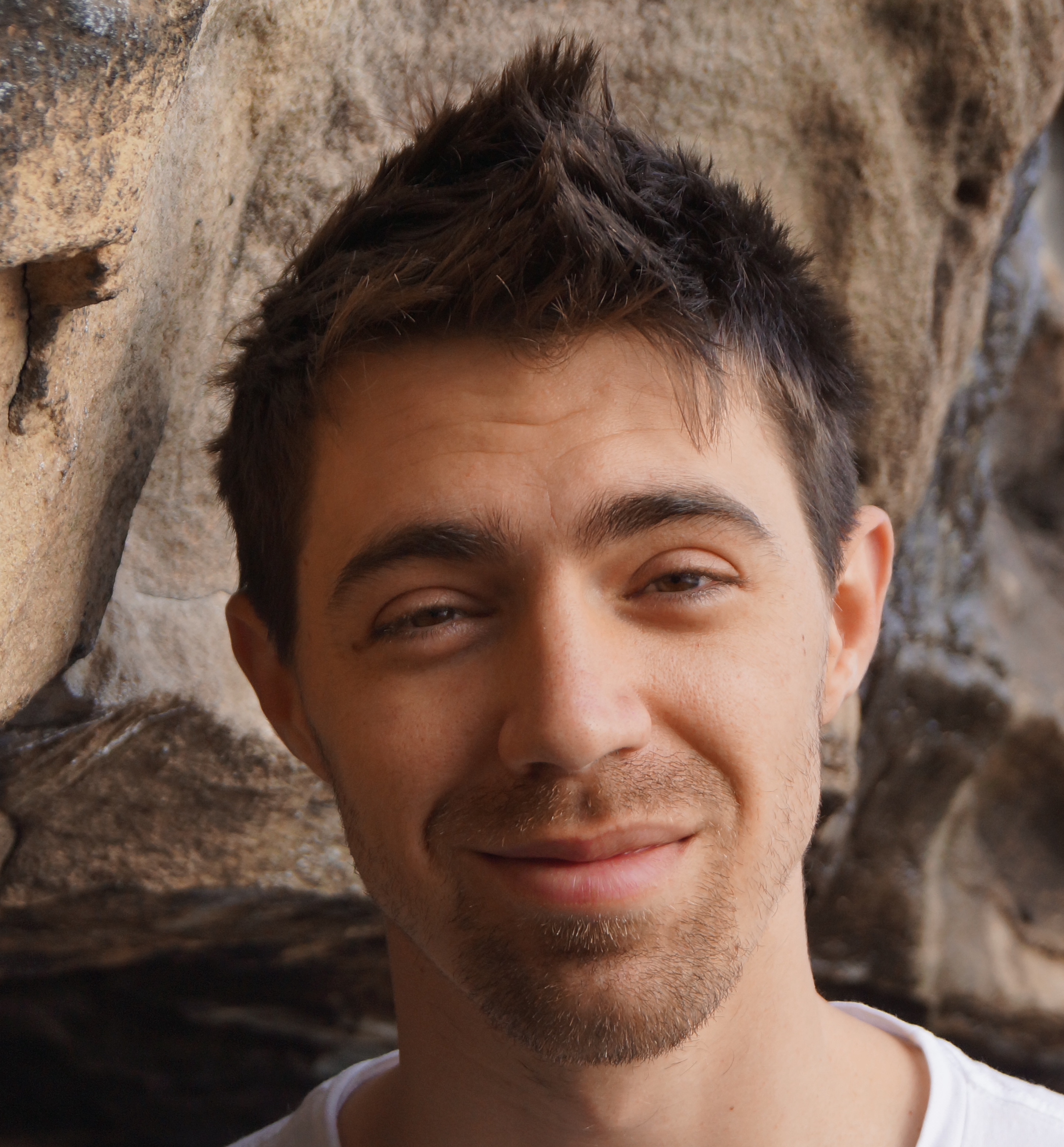
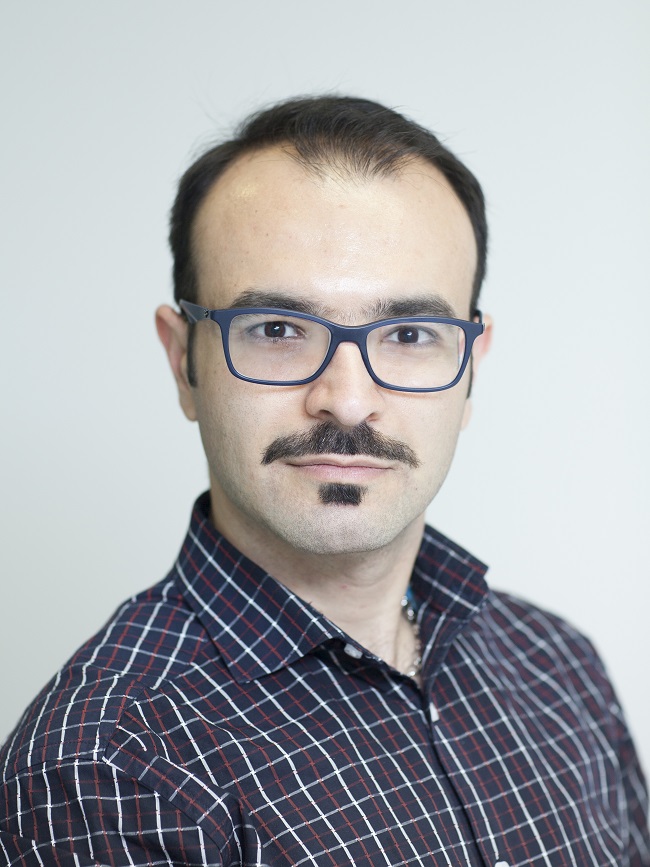
Pieter van Goor is a Research Fellow at the Australian National University (ANU), affiliated with the School of Engineering and the Systems Theory and Robotics (STR) group. He holds a PhD in Control Theory (completed 2022) and dual bachelor's degrees (BEng/BSc, 2018). His research focuses on equivariant systems theory, state estimation, and robotics applications. Key contributions include equivariant observer design, Lie group-based control, and geometric data fusion. Education: Bachelor of Engineering (Research & Development) (Honours) in Mechatronics (ANU, 2018) Bachelor of Science in Mathematics (ANU, 2018) PhD in Control Theory (ANU, 2022) Research Interests: Equivariant systems theory, nonlinear control, robotics applications, state estimation on Lie groups, sensor fusion, and geometric control methods. His work emphasizes symmetry exploitation in filter design and observer construction for systems with inherent geometric structures. Grants & Collaborations: Active collaborations include work with Robert Mahony and institutions like the IEEE. Research spans theoretical frameworks (e.g., equivariant filters) and applied systems (e.g., ArduPilot autopilot, event cameras). Labs/Teams: Member of the Systems Theory and Robotics (STR) group at ANU, focusing on advanced control theory and robotics.
Professor Hong Hao is a John Curtin Distinguished Professor at Curtin University, affiliated with the School of Civil and Mechanical Engineering and the Curtin Research Centre for Infrastructural Monitoring & Protection. His expertise spans Structural Dynamics, Earthquake Engineering, Blast and Impact Engineering, and Structural Health Monitoring. He holds prestigious roles like Fellow of ATSE, ISEAM, and ASCE, and has led organizations such as the International Association of Protective Structures and the Australian Earthquake Engineering Society. Education: BE (Tianjin University, 1982), MSc (UC Berkeley, 1985), PhD (UC Berkeley, 1989). Awards include the Tan Chin Tuan Fellowship and multiple Ko Medals. He has authored over 200 journal articles, with recent work focusing on blast-resistant materials, seismic fragility, and AI-driven structural health monitoring. His research emphasizes resilient infrastructure, including metaconcrete structures, corrosion-resistant materials, and sensor-based damage detection. Ongoing projects involve smart tunnel safety under BLEVE explosions and modular building systems.
Professor Chunsheng Lu is a faculty member at Curtin University's School of Civil and Mechanical Engineering within the Faculty of Science and Engineering. He currently holds the position of Professor and serves as Editor-in-Chief of Mechanical Engineering Advances . His research focuses on fracture mechanics, multi-scale modeling, energy materials, nonlinear dynamics, and natural disaster risk analysis. Lu is actively involved in HDR (Masters/PhD) supervision, offering projects on advanced materials modeling and simulations. His research interests include mechanics of energy materials, multi-scale modeling, and fracture statistics. He has contributed to over 200 publications, with recent work emphasizing piezoelectric semiconductors, nanomaterials, and energy storage systems. Lu's teaching spans materials engineering, solid mechanics, and numerical methods.
Dr Bastien Lechat is a Research Fellow at Flinders Health and Medical Research Institute (FHMRI): Sleep Health, within the College of Medicine and Public Health at Flinders University. He is also a Full Member of the College of Science and Engineering and the Medical Device Research Institute. As an NHMRC Emerging Leadership Fellow, he leads innovative research at the intersection of sleep medicine, artificial intelligence, and wearable technology. Education: PhD in Sleep Health, Adelaide Institute for Sleep Health, Flinders University (2018–2021) Bachelor of Engineering in Engineering Science/Acoustics, Université du Maine, France (2014–2017) Dr Lechat’s research focuses on understanding the physiological mechanisms and consequences of obstructive sleep apnea (OSA), particularly night-to-night variability and patient subtypes. He develops AI-driven tools for efficient and accurate diagnosis using wearables and signal processing. His work aims to create a scalable, low-cost model of care for sleep-disordered breathing, addressing global diagnostic gaps. His recent publications reveal a strong trend in digital health innovation, with a focus on machine learning for OSA detection, circadian rhythm modeling, cardiovascular risk prediction, and climate impacts on sleep. His research has been published in top journals including Nature Communications , Journal of Sleep Research , and Sleep Medicine , demonstrating interdisciplinary reach. Scientific Awards and Recognition: NHMRC Emerging Leadership Fellow (2023) Helen Bearpark Memorial Scholarship (2022) Emerging Research Leader Award, Flinders University (2021) Multiple early-career awards from Sleep Down Under, Australasian Sleep Association, and Adelaide Sleep Retreat Ranked in the top 5% of international authors in sleep apnea by Expertscape Dr Lechat has secured over $2.5 million in competitive research funding and actively supervises and mentors junior researchers. He serves on the program committee of the American Thoracic Society meetings and contributes to clinical guidelines. He collaborates globally with industry and academic partners to translate research into clinical practice. Laboratories and Research Teams: He co-leads the 'Novel use of digital innovations & technology development' theme at FHMRI: Sleep Health, working closely with Professor Danny Eckert. His team integrates expertise in biomedical engineering, data science, and clinical sleep physiology to advance digital sleep medicine.
Dr. Zhen Peng is a Research Fellow at Curtin University's School of Civil and Mechanical Engineering, part of the Faculty of Science and Engineering. He holds an ARC Early Career Industry Fellowship (2025–2028), focusing on developing cost-effective bridge monitoring systems using computer vision and edge computing in collaboration with Main Roads WA. His work bridges structural engineering, IoT/edge computing, and machine learning to enhance infrastructure safety. Dr. Peng earned his PhD from Curtin University (Chancellor's Commendation, 2022). His research emphasizes structural dynamics, nonlinear damage detection, and mobile crowdsensing frameworks for infrastructure monitoring. He has published extensively in top journals like Engineering Structures and Structural Control and Health Monitoring , receiving notable awards such as the 2023 Best Paper Award and a Gold Medal in the China Postdoctoral Innovation Competition. His current projects include deploying IoT-driven systems for real-time bridge condition assessment and training students via available 2025 PhD scholarships. Dr. Peng teaches courses in civil engineering and structural analysis, contributing to both academia and industry through innovation in smart infrastructure technologies.
Dr. Xinqun Zhu is an Associate Professor at the University of Technology Sydney (UTS) in the School of Civil and Environmental Engineering . He has held academic positions at Western Sydney University (2016-2017), University of Western Australia (2005-2009), and University of Manchester (2001-2005). His research spans structural health monitoring, steel-concrete composite structures, physics-informed machine learning, and advanced sensor systems.
Dr. Thomas Chaffey is a Lecturer in the School of Electrical and Computer Engineering at The University of Sydney. His research focuses on nonlinear control theory, convex optimization, and neuromorphic systems. He obtained his PhD from the University of Cambridge (2022) and held the Maudslay-Butler Fellowship at Pembroke College, Cambridge (2022–2025). Education: PhD in Control Theory, University of Cambridge (2022) Maudslay-Butler Fellowship in Engineering, Pembroke College, Cambridge (2022–2025) Master's in Mechanical Engineering, University of Sydney (Australia) Bachelor's in Mathematics and Computer Science, University of Sydney (Australia) Research Interests: Nonlinear control theory and its intersections with optimization and circuit theory Development of neuromorphic systems and analog hardware simulation Monotone operator methods and large-scale optimization algorithms Key Research Trends in Articles: Advances in graphical methods for nonlinear system analysis (e.g., scaled relative graphs) Analysis of neuromorphic circuits using convex optimization frameworks Exploration of symmetry properties in physical systems Awards: Best Student Paper Award, 2021 European Control Conference Outstanding Student Paper Award, 2021 IEEE Conference on Decision and Control Labs/Teams: Leading projects on learning in physical systems and monotone circuits Collaborations with institutions like Lund University and University of British Columbia
Professor Georg Gottwald is a distinguished academic in the School of Mathematics and Statistics at the University of Sydney, where he has been a faculty member since 2002, progressing from Lecturer to his current position as Professor since 2013. He also holds a Visiting Professor position at the University of Surrey in the UK since 2013. His extensive research career spans dynamical systems theory, geophysical fluid dynamics, and the intersection of machine learning with complex systems. Professor Gottwald's research focuses on dynamical systems theory as an abstract formalism for studying systems evolving in time and space. His work has significant applications across diverse fields including climate modeling, biological systems, and complex networks. He is particularly known for developing methods for model reduction of complex dynamical systems, stochastic modeling approaches, and the application of machine learning techniques to dynamical systems. His research aligns with the Faculty of Science Research Strengths in Understanding the Universe, Fundamental Laws of Nature, Complex Systems, Climate and Environmental Change, Data and Decisions, and National Security. His most recent publications demonstrate a strong trajectory toward integrating machine learning with dynamical systems theory, particularly in developing stable generative models, learning dynamical systems with random feature maps, and combining data assimilation with machine learning for forecasting. His work spans pure mathematical theory to practical applications in climate science, finance, and biological systems, showing remarkable breadth while maintaining deep mathematical rigor. Future Fellowship, 'Stochastic methods in mathematical geophysical fluid dynamics', Australian Research Council, 2010-2014 Australian Research Fellowship, 'Stochastic methods in mathematical geophysical fluid dynamics', Australian Research Council, 2010-2015 (declined) Australian Research Fellowship, 'Geometric methods in geophysical fluid dynamics', Australian Research Council, 2004-2009 Professor Gottwald has successfully supervised numerous PhD and Master's students who have gone on to academic and industry positions worldwide. His current research group includes postdocs and PhD students working on machine learning for dynamical systems, stochastic model reduction, physics-informed machine intelligence, and tensor methods for scientific machine learning. He has secured multiple ARC Discovery Project grants and has been involved in significant international collaborative research projects. He is actively involved with the Sydney Dynamics Group, which he co-founded in 2007, fostering collaboration between the University of Sydney and UNSW. Professor Gottwald maintains strong editorial commitments as Associate Editor for Geophysical and Astrophysical Fluid Dynamics, SIAM Journal of Applied Dynamical Systems, and Journal of Computational Dynamics, and serves on the Editorial Advisory Board for Chaos and the Editorial Board for Physical Review E. His professional activities demonstrate leadership in the dynamical systems community through organizing workshops, seminars, and special journal issues.
Dhammika Jayalath is an Associate Professor at Queensland University of Technology (QUT) in the School of Electrical Engineering & Robotics within the Faculty of Engineering. He has been with QUT since 2007, initially as a Senior Lecturer and later promoted to Associate Professor. Prior to joining QUT, he worked as a Senior Researcher at National ICT Australia Ltd and held a Fellowship at the Australian National University. His educational background includes a PhD in Wireless Communications from Monash University and a Graduate Certificate in Higher Education from QUT. He is a Senior Member of IEEE and active in multiple IEEE societies including Communications, Signal Processing, and Vehicular Technology. Research Interests: Dhammika's research focuses on Smart Systems with particular expertise in wireless communications and networking. His work spans Physical Layer Security, Massive MIMO Systems, Internet of Things, Optimum Resource Allocation, Cooperative communications, Cognitive radio, and Vehicular communications. He has made significant contributions to 5G New Radio, Chaotic Communications, Orthogonal Frequency Division Multiplexing (OFDM), and Space-Time Signal Processing. Publication Trends: His recent publications demonstrate a strong focus on 5G/6G networking technologies, physical layer security for IoT devices, and optimization of wireless communication systems. His work bridges theoretical communications theory with practical implementation challenges, particularly in vehicular networks, secure communications, and resource allocation for heterogeneous networks. The articles show increasing interdisciplinary work, combining machine learning techniques with traditional communications engineering approaches. Scientific Awards: 2007: Early Career Academic Recruitment and Development (ECARD) award from QUT 2009: Elevated to Senior Member Grade of IEEE 2000: IEEE travel grant Multiple scholarships during graduate studies at Monash University Supervision and Grants: Professor Jayalath has supervised numerous PhD students to completion with research topics including chaotic communication systems, resource allocation in heterogeneous networks, and vehicular communication systems. He has secured multiple research grants totaling over AU $300,000, including projects from ARC, QUT internal grants, and industry partnerships with Queensland Fire and Emergency Services. His current research includes physical layer security frameworks for IoT devices and optimization of massive MIMO systems for dense mobile networks. Laboratory and Team Work: He has been instrumental in establishing wireless communications research capabilities at QUT, including securing equipment grants for Software Defined Radio platforms. His work often involves interdisciplinary collaboration with researchers in signal processing, cybersecurity, and transportation systems.
Dr. Arash Khatamianfar is a Lecturer in the School of Electrical Engineering and Telecommunications at the University of New South Wales (UNSW), specializing in Control Engineering and Robotics. With a strong background in both academia and industry, he has made significant contributions to engineering education and control systems research. His educational background includes a B.Sc. in Electrical Engineering (Electronics major) from Iran (2005), an M.Sc. in Electrical Engineering (Control Engineering and Robotics major) from Iran (2008), and a Ph.D. in Electrical Engineering with focus on Control Systems and Robotics from UNSW (2015). Dr. Khatamianfar's research spans two primary domains: educational technologies in engineering education and advanced control systems. In engineering education, he has focused on developing effective online laboratory practices, managing hands-on labs during the pandemic, and comparing online versus in-person teamwork. In control engineering, his work centers on overhead crane systems, model predictive control, and applications in renewable energy systems. His publications reveal a clear trajectory from theoretical control methods to practical industrial applications, with recent work emphasizing educational technologies alongside continued contributions to control theory. Best Lab Demonstrator Award in the School of Electrical Engineering and Telecommunications at UNSW (2014) Nominated for Best Lab Demonstrator Award at UNSW (2015) Nominated for Best Lecturer Award in the Faculty of Engineering at UNSW (2018) Dr. Khatamianfar has demonstrated significant commitment to teaching excellence, earning the first-ever Best Lab Demonstrator Award in his school based on student satisfaction. His industry experience includes work at Buildings Alive Pty. Ltd. as a Systems and R&D Engineer, where he developed methods for improving energy consumption in commercial buildings, and professional training in SIEMENS PLC systems. He has been active in the Systems and Control group at UNSW, particularly in running teaching laboratories and collaborating in research laboratories. His work environment includes the Systems and Control Research laboratories at UNSW, where he has supervised undergraduate thesis students and contributed to developing advanced control methodologies with practical industrial applications.
Professor Gianluca Ranzi is a Professor in the School of Civil Engineering at the University of Sydney, serving as Chairman of the Centre for Advanced Structural Engineering. His expertise spans structural engineering, architectural science, and heritage conservation, with a focus on sustainable building technologies. He leads research on composite materials, energy-efficient structures, and the mitigation of urban heat islands. Research Interests: His work addresses the behavior of concrete and composite steel-concrete structures, building energy management systems, and heritage conservation strategies for twentieth-century concrete structures. He develops adaptive systems to enhance indoor comfort and building functionality while reducing energy consumption. Publications: Ranzi has authored/edited key texts including Design of Prestressed Concrete to Eurocode 2 (2017) and Structural Analysis: Principles, Methods and Modelling (2015). His recent articles explore topics like lithium slag composites, P2P energy trading, and dynamic characterization of historic structures. Teaching: He teaches courses such as CIVL3511/CIVL9511 (Basics of Integrated Building Engineering) and CIVL5531 (Advanced Integrated Building Engineering). Supervises PhD/Master's students on projects like composite brick-concrete construction and crack control in shotcrete linings. Affiliations: Member of Standards Australia committees (BD-002, BD-032), American Concrete Institute (ACI), and the International Association for Bridge and Structural Engineering (IABSE).
Professor Adrian Pagan holds the position of Professor of Economics at the University of Sydney's School of Economics. His research focuses on macro-econometric modeling, policy analysis, and business cycle theories. He has held visiting appointments at prestigious institutions including Oxford University and Princeton University. Key achievements include: Fellowships with the Academy of Social Sciences, Econometric Society, and Journal of Econometrics Medallist Fellow of the Modelling and Simulation Society of Australia and New Zealand Distinguished Fellow of the Economic Society of Australia Centenary Medal recipient (2001) His work emphasizes structural macroeconomic modeling, particularly in analyzing recurrent economic events and policy impacts. Recent research explores business cycle synchronization, financial frictions, and shock decomposition in macroeconomic systems. Publications span over four decades, with notable contributions to journals like Journal of Econometrics , Macroeconomic Dynamics , and European Economic Review . He has authored the influential 2016 book The Econometric Analysis of Recurrent Events in Macroeconomics and Finance .
Dr. Hendra Nurdin is a Senior Lecturer in the School of Electrical Engineering and Telecommunications at the University of New South Wales (UNSW), where he has been employed since 2012. His academic journey began with a Sarjana Teknik (equivalent to a Bachelor of Engineering) in Electrical Engineering from Institut Teknologi Bandung, Indonesia, followed by an MSc in Engineering Mathematics from the University of Twente in the Netherlands, and culminated with a PhD in Engineering and Information Science from the Australian National University in 2007. His educational background includes: PhD in Engineering and Information Science, Australian National University, 2007 MSc in Engineering Mathematics, University of Twente, The Netherlands Sarjana Teknik (ST, equivalent to Bachelor of Engineering) in Electrical Engineering, Institut Teknologi Bandung, Indonesia Dr. Nurdin's research lies at the intersection of control engineering and systems theory with quantum physics and energy systems. He has made significant contributions to quantum control systems, quantum information processing, and microgrid control. His work combines theoretical advances in quantum stochastic processes with practical applications in quantum computing and renewable energy systems. He has developed novel approaches to quantum reservoir computing, quantum parameter estimation, and control of distributed energy resources. His recent publications reveal a strong focus on quantum reservoir computing, non-Markovian quantum systems, and the intersection of quantum information with machine learning. There's a clear trend toward practical implementations of quantum information processing systems, particularly exploring how quantum systems can enhance computational capabilities. His work bridges fundamental quantum theory with engineering applications, demonstrating how quantum phenomena can be harnessed for practical computing and sensing tasks. Dr. Nurdin has received recognition including an ARC APD Fellowship (2009-2011). His research has resulted in numerous publications in top-tier journals including Nature Communications, Physical Review series, and IEEE Transactions. He has successfully supervised multiple PhD students to completion, including Dr. Jiayin Chen (2022), Dr. Jiacheng Li (2021), Dr. Muhammad Ali (2021), and Dr. Zhan Shi (2016). Currently, he is supervising Mr. Wen Liu as a PhD candidate. His research is supported by various funding mechanisms including Sydney Quantum Academy scholarships and UNSW research grants, enabling him to pursue cutting-edge research in quantum systems and control. Dr. Nurdin is actively involved with the Sydney Quantum Academy, supervising research in quantum systems and control. His work contributes to Australia's growing quantum technology ecosystem, collaborating with researchers across multiple institutions to advance quantum information processing and quantum engineering applications.
Professor Qing Li is a faculty member at the School of Aerospace, Mechanical and Mechatronic Engineering, The University of Sydney. He obtained his PhD from Sydney in 2000, underwent postdoc training at Cornell University (2000-2001), and held academic roles at James Cook University (2004-2006). He joined Sydney in 2006 via a Sesqui senior lectureship, becoming Associate Professor in 2010 and Professor in 2014. He served as Director of Postgraduate Studies (2007-2012) and Director of Biomedical Engineering (2017-2019). Education: PhD (University of Sydney, 2000), ME (UTS), ME (Hunan) His research focuses on computational design, multidisciplinary optimization of nonlinear and time-dependent multifunctional materials, and biomedical applications. Key areas include additive manufacturing , biomechanics , and machine learning in structural reliability. Recent publications emphasize fracture modeling in biomaterials, reliability analysis, and tissue scaffold design. Recent publications highlight Bayesian learning for robotic systems, probabilistic transformation in reliability analysis, and phase field fracture models for additively manufactured composites. Collaborations with industry partners like Cochlear and Stryker span ARC , NHMRC , and MRFF projects. Awards: Clarivate Highly Cited Researcher (2020), Top 50 Australia Research Leader (2020), APACM Computational Mechanics Award (2016) Fellowships: ARC Future Fellow (2013-2017), ARC Australian Postdoctoral Fellow (2001) He supervises PhD students in projects like epidermal electrodes , Silver Diamine Fluoride remineralization , and virtual surgical planning . His leadership extends to the Centre for Advanced Materials Technology and editorial roles in computational methods journals.
Surya Nurzaman is a Senior Lecturer at Monash University Malaysia, specializing in soft robotics, embodied intelligence, and bio-inspired systems. He holds a PhD from Osaka University (2011) and has held research fellowships at ETH Zürich and the University of Cambridge. His work bridges robotics engineering with biomedical applications, emphasizing interdisciplinary collaboration. He teaches courses such as Dynamics II, Electromechanics, and Engineering Design. Research focuses on soft robotics for industrial and biomedical applications, including soft grippers, exoskeletons, and adaptive control systems. Projects include aerial robotics for oilfield inspection and AI-driven sensor frameworks. Nurzaman has received awards like the ITEX 2021 Gold Medal and the 2024 School of Engineering Excellence Award. He is actively involved in editorial roles for journals like IEEE Robotics & Automation Magazine and Frontiers in Robotics and AI. His contributions span over 50 publications, with recent work addressing tremor prediction, soft sensor modeling, and cross-domain learning. Collaborations include international partners in Japan, Switzerland, and the UK. Nurzaman’s research aligns with UN SDGs, particularly in advancing sustainable industry solutions and health innovations.