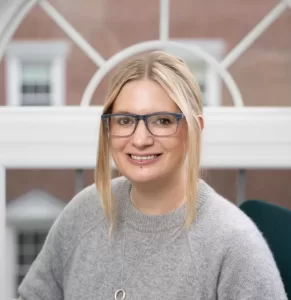
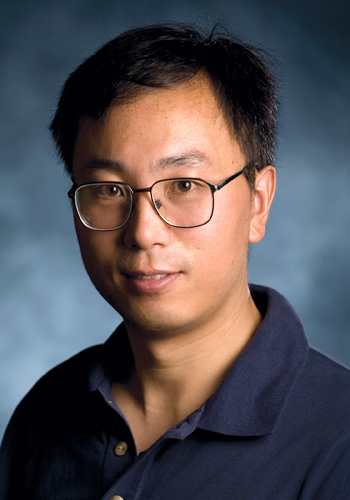
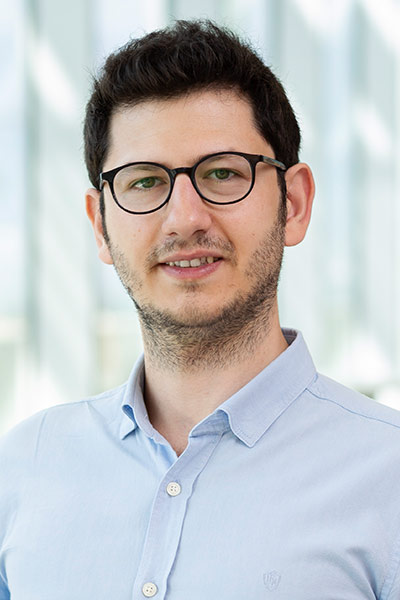
Marion K. Matters-Kammerer is a Full Professor of Electrical Engineering at Eindhoven University of Technology, leading research in terahertz (THz) and millimeter-wave systems. She holds positions in the Center for Wireless Technology, THz Electronics and Integration Lab, and RF Sensing & Communication Lab. Her expertise includes integrated circuits, antenna design, and power amplifier systems. She has led EU projects like 3DmicroTune and ULTRA, and co-authored over 70 journal/conference papers with 13 US patents. Education: MSc in Physics from École Normale Supérieure (Paris) and TU Berlin (1999), PhD in Physics from RWTH Aachen (2007). Past roles include Senior Scientist at Philips Research (1999–2011) and Guest Professor at RWTH Aachen (2009–2010). Research focuses on THz spectroscopy, mm-wave integrated circuits, and energy-efficient wireless systems. Key projects involve THz biosensing, 60 GHz sensor networks, and co-integration of photonics and electronics. Her work addresses UN SDGs like affordable and clean energy, and industry-academia collaboration via NXP Smart Mobility projects. Recent articles highlight advancements in mm-wave power amplifiers, waveguide integration, and radar signal processing. Grants include €2.5M for TeraIBs (2025–2028) and €1.8M for Future Wireless Interfaces (2024–2029). Labs include THz Electronics Lab and RF Sensing Team, advancing sensor and communication technologies.
Maxim Raginsky is a Professor at the University of Illinois at Urbana-Champaign, holding appointments in the Department of Electrical and Computer Engineering, Coordinated Science Laboratory, and a courtesy appointment in Computer Science. His work bridges probability, stochastic processes, control theory, machine learning, optimization, and information theory , focusing on modeling, learning, and simulation of nonlinear dynamical systems with applications to advanced electronics, autonomy, and artificial intelligence. Research Interests Nonlinear dynamical systems in machine learning and control Statistical machine learning theory Information-theoretic methods in learning Stochastic control and filtering Scientific Contributions Co-author of foundational monographs on concentration inequalities and generalization bounds Recipient of the NSF CAREER Award (2013) , IEEE Fellow (2025) , and Roberto Tempo Best CDC Paper Award (2024) Editorial roles in Foundations and Trends in Machine Learning , Journal of Machine Learning Research , and SIAM Journal on Mathematics of Data Science Academic Leadership Advising 15+ graduate students and postdocs including Joshua Hanson, Belinda Tzen, and Tanya Veeravalli Teaching core graduate courses: Control of Stochastic Systems , Statistical Learning Theory , Optimization by Vector Space Methods
Valentina Breschi is an Assistant Professor in the Control Systems Group at the Department of Electrical Engineering, Eindhoven University of Technology (TU/e). She holds a Ph.D. from IMT School for Advanced Studies Lucca, with postdoctoral and junior faculty experience at Politecnico di Milano. Her research focuses on data-driven control, jump model learning, meta-learning for system identification, and human-centered policy design for mobility systems. She contributes to UN Sustainable Development Goals related to sustainable infrastructure and innovation. Education: B.Sc. in Electronic and Telecommunication Engineering (University of Florence, 2011) M.Sc. in Electrical and Automation Engineering (University of Florence, 2014) Ph.D. in Control Systems (IMT School for Advanced Studies Lucca, 2018) Research Interests: Her work spans data-driven control methodologies, including LPV control, predictive control, and ethical frameworks for policy design. She explores applications in sustainable mobility, energy systems, and healthcare, emphasizing fairness and social impact. Labs/Teams: She is part of the Control Systems Group, collaborating on projects like the CONSIDER study and the design of fair-MPC frameworks. Her work integrates theoretical control principles with real-world applications in smart systems and social networks.
Professor Herbert Ho Ching Iu is a distinguished academic at The University of Western Australia, serving in the School of Engineering within the Department of Electrical, Electronic and Computer Engineering. With an impressive research portfolio of over 500 publications and an h-index of 61, Prof. Iu has established himself as a leading authority in power electronics and nonlinear systems research. Prof. Iu received his BEng(Hons) in Electrical and Electronic Engineering from The University of Hong Kong in 1997, followed by a PhD in Electronic and Information Engineering from The Hong Kong Polytechnic University in 2000. After a brief research fellowship at HKPU, he joined The University of Western Australia in 2002 as a Lecturer and has since risen to the rank of full Professor. His primary research focuses on power electronics , renewable energy systems , nonlinear dynamics and chaos , current sensing techniques , and memristive systems . Prof. Iu's work uniquely bridges theoretical exploration with practical implementations, particularly in energy conversion, secure communications, and neuromorphic computing. His research has significant implications for DC microgrids, advanced encryption techniques, and next-generation computing paradigms. Analysis of Prof. Iu's recent publications reveals a strong interdisciplinary trajectory combining memristive systems with chaotic dynamics for applications in image encryption and secure communications . There's a notable emphasis on machine learning techniques applied to power electronics and energy systems , particularly for DC microgrids and battery management. His work demonstrates consistent progression from fundamental research in nonlinear systems to practical engineering solutions with real-world impact. Prof. Iu's significant contributions have been recognized with several prestigious awards: Vice-Chancellor's Award for HDR Supervision (2024) School of Engineering Award for Research Mentorship (2023) Vice Chancellor's Award in Research Mentorship (2023) With 18 supervised research students and leadership on 16 research grants, Prof. Iu has built a robust research program at the forefront of power systems innovation. His grant portfolio includes major projects like 'Mine Electrification' and 'Microgrid Battery Deployment' through the CRC for Future Battery Industry, as well as collaborations with Western Power on 'Project Symphony.' These initiatives demonstrate his ability to secure substantial funding and translate theoretical concepts into practical engineering solutions for industry. Prof. Iu leads a dynamic research team that specializes in hardware implementation of advanced theoretical concepts, particularly in memristive systems and chaotic circuits. The laboratory maintains strong industry connections, especially with energy and mining sectors, ensuring research has tangible real-world applications. Current work emphasizes DC microgrid technologies, advanced battery systems for electrified transportation, and novel applications of chaotic systems in security contexts, positioning the team at the cutting edge of power electronics research.
Sjoerd van der Heide is a University Researcher at Eindhoven University of Technology, affiliated with the Electrical Engineering department and the Electro-Optical Communication group. His work focuses on advanced optical communication systems, with expertise in quantum key distribution, digital signal processing, and space-division multiplexing. Education: MSc in Optical Communication Systems (2017), thesis titled Low-complexity pre-compensation and advanced modulation techniques for high capacity intensity-modulated direct detection systems , supervised by Prof. C.M. Okonkwo. Research interests include: Quantum cryptography over free-space and fiber links GPU-accelerated real-time optical receivers Mode-division multiplexing techniques Holography-based fiber device characterization Atmospheric turbulence compensation Statistical modeling of mode-dependent loss Recent publications demonstrate trends in Continuous-variable QKD integration Co-propagation of classical and quantum signals Neural network applications for transmission High-capacity SDM systems Real-time GPU-based signal processing Off-axis digital holography techniques Scientific awards include: ECOC 2018 Student Paper Award Optica Student Paper Award (2022) OECC 2019 Best Paper Award Active in experimental validation of transmission systems, with collaborations on multi-core fiber implementations, turbulence generators, and software-defined optical receivers. Currently involved in the Zwaartekracht ECO project for integrated nanophotonics research.
Suchuan Dong is a Professor in the Department of Mathematics at Purdue University , affiliated with the Center for Computational and Applied Mathematics . His work bridges Computational Mathematics and Machine Learning , focusing on High-Order Numerical Methods and Multiphase Flows . Academic Background Post-Doc in Applied Mathematics, Brown University (2004) Ph.D. in Mechanical Engineering, SUNY Buffalo (2001) M.S. in Physics, Zhejiang University (1995) B.S. in Aerospace Engineering, National University of Defense Technology (1992) His research centers on Neural Network-Based Numerical Methods and Data-Driven Scientific Computing , with applications to Computational Fluid Dynamics , Contact Line Dynamics , and High-Performance Computing . Publications highlight Physics-Informed Neural Networks , Energy-Stable Schemes , and Extreme Learning Machines for PDEs. The articles reflect trends in Neural Network Applications to Dynamic PDEs , Phase Field Modeling , and High-Dimensional Computing , often combining High-Order Numerical Methods with Interfacial Phenomena . His recent work focuses on Exact Time Integration Algorithms and Hidden-Layer Concatenation for stability and efficiency. He leads research in the Center for Computational and Applied Mathematics , emphasizing Thermodynamically Consistent Modeling and Flow-Structure Interactions . His teaching includes MA-36600: Ordinary Differential Equations (Spring 2025).
Navid Constantinou is a Senior Lecturer at The University of Melbourne, specializing in Climate & Ocean Geoscience. His research focuses on physical oceanography, geophysical fluid dynamics, and climate modeling, with a particular emphasis on machine learning applications in these fields. He is affiliated with the University of Melbourne and contributes to collaborative projects like Oceananigans.jl and regional-mom6. Research Interests: His work explores ocean circulation dynamics, fluid mechanics, and the interplay between atmospheric and oceanic systems. Key areas include surface wave effects, turbulence decay, and parameterization of ocean mixing processes. He actively develops computational tools to enhance climate modeling accuracy and resolution. Publications: His recent work addresses topics like meridional heat transport in the Atlantic, GPU-based ocean modeling, and the impact of climate change on Antarctic currents. These studies often involve interdisciplinary collaborations with institutions like MIT and the Scripps Institution of Oceanography. Awards: While no explicit awards are listed, his research has been highlighted in prominent journals and media outlets like The Conversation and Nature Climate Change . Advising & Grants: He supervises students such as Dhruv Bhagtani and collaborates on projects funded by initiatives like the Australian Research Council. His software contributions, including OceanBioME.jl and SpeedyWeather.jl, underscore his commitment to advancing computational methods in geosciences. Labs/Teams: Involved in global climate modeling teams and open-source software development communities focused on ocean and atmospheric dynamics.
Alex Townsend is an Associate Professor of Mathematics at Cornell University, affiliated with the College of Arts and Sciences. He holds the Stephen H. Weiss Junior Fellowship and has been recognized for both research and teaching excellence. His research focuses on numerical analysis, scientific computing, and theoretical aspects of deep learning, with contributions to spectral methods, low-rank techniques, and computational algebraic geometry. Education: Townsend earned a DPhil (PhD) in Mathematics from the University of Oxford in 2014. Research Interests: Townsend's work spans several areas: novel spectral methods for differential equations, low-rank matrix and tensor techniques, theoretical foundations of deep learning, and computational algebraic geometry. His research emphasizes developing fast, accurate, and robust numerical algorithms with applications in science and engineering. Teaching & Mentoring: Townsend is a dedicated educator, having taught courses at MIT and Cornell on topics ranging from linear algebra and numerical analysis to advanced graduate-level subjects like kernel-based learning and top-ten algorithms of the 20th century. He has mentored numerous PhD students and postdocs, many of whom now hold academic and industry positions. Awards & Honors: 2022 Stephen H. Weiss Teaching Award 2022 Simons Fellowship in Mathematics 2018 SIAG/LA Early Career Prize 2015 Leslie Fox Prize in Numerical Analysis Grants & Funding: Townsend has secured significant funding, including an NSF CAREER grant (2021), to support his work on operator learning and spectral methods. Labs & Collaborations: While not tied to a specific lab, his research frequently intersects with computational mathematics and machine learning communities. He collaborates widely, contributing to open-source tools like Chebfun and Diskfun.
Dr. Adel Abdelnaby is an Associate Professor in the Department of Civil, Construction, and Environmental Engineering at The University of Memphis College of Engineering. He holds a Ph.D. from the University of Illinois at Urbana-Champaign (2012) and has been on the faculty since fall 2012. Dr. Abdelnaby is a licensed Professional Engineer (P.E.) in multiple states and a licensed Structural Engineer (S.E.) in Illinois. His research interests span structural dynamics, earthquake engineering, structural health monitoring, life-cycle analysis of structures, application of innovative materials, and nonlinear finite element methods. He specializes in analyzing structures subjected to multiple hazards and developing methods for structural assessment and improvement. Dr. Abdelnaby's publications reveal a strong focus on earthquake engineering, particularly the effects of multiple earthquakes on reinforced concrete structures. His work includes fragility analysis, hybrid simulation techniques, and vulnerability assessment of bridges and buildings. He has established the Multi-Axial Testing and Simulation (MAT-SIM) Facility at the University of Memphis for advanced structural testing. Engaged Learning Fellowship for redesigning undergraduate steel design courses American Institute of Steel Construction Educator Workshop participant Dr. Abdelnaby has advised numerous graduate students on topics including semi-rigid steel connections, multiple earthquake effects, fragility analysis, and structural health monitoring. He directs the MAT-SIM facility, which includes sophisticated equipment for structural testing under complex loading conditions. His professional affiliations include ASCE, AISC, ACI, EERI, and ASEE, and he serves as a reviewer for several structural engineering journals.
Alan Edelman is a Professor at the Massachusetts Institute of Technology (MIT), renowned for his work in high-performance computing, linear algebra, and random matrix theory. He is a co-creator of the Julia programming language, which emphasizes efficiency and versatility for scientific computing. His research integrates mathematics and computer science, focusing on numerical methods, parallel computing, and applications in fields like quantum control and climate modeling. Edelman leads projects such as Oceananigans.jl for geophysical fluid dynamics and Circuitscape for connectivity analysis in conservation biology. His academic contributions span theoretical advancements in matrix theory and practical implementations of computational tools. Edelman collaborates across disciplines, bridging scientific computing with machine learning and quantum physics. His work on differentiable programming frameworks and GPU acceleration has impacted both academic research and industry applications. Key Projects: Julia programming language, Oceananigans.jl, Circuitscape Research Themes: High-performance computing, numerical linear algebra, random matrices, scientific machine learning Affiliations: MIT’s Theory of Computation Community of Research, PI of multiple NSF-funded projects Edelman’s recent work emphasizes interdisciplinary applications, including climate policy modeling and automated materials discovery. His publications reflect a blend of foundational mathematics and cutting-edge computational techniques.
Dr. Ronald Stauber is an Associate Professor in the Research School of Economics at The Australian National University. His research focuses on game theory, economic theory, and decision-making under ambiguity. He has contributed to understanding Nash equilibria, Bayesian analysis in strategic settings, and correlated equilibrium dynamics. His work frequently explores how ambiguity and irrationality influence strategic interactions in extensive and normal-form games. Key research areas include ambiguity-averse player behavior, robustness of equilibria to higher-order beliefs, and applications of game theory to public insurance systems and dynamic agent models. Stauber's publications span journals like Games and Economic Behavior and Journal of Mathematical Economics , with notable contributions on strategic delegation, belief function products, and computational methods for solving dynamic public insurance games. His research has addressed topics such as Kuhn’s theorem extensions for ambiguity-averse players, trembles in extensive form games, and worker heterogeneity in limited-commitment frameworks. Stauber’s work often combines theoretical rigor with practical insights into economic policy and institutional design.
Laura S. Storch is an Assistant Professor of Mathematics at Bates College, specializing in theoretical ecology and applied mathematics. Her research focuses on spatial pattern change, ecological transitions, and population dynamics using topological data analysis. She holds a PhD in Applied Mathematics from the University of New Hampshire and has conducted postdoctoral research at William & Mary and Oregon State University. Laura collaborates with faculty at William & Mary to co-advise undergraduate summer research projects in mathematical ecology. Her work bridges mathematics and ecology, addressing critical transitions, pattern formation, and population sustainability in complex systems. Her research interests include chaotic dynamical systems, mathematical ecology, and topological methods for analyzing ecological systems. Laura emphasizes applied mathematics in understanding ecological phenomena such as oyster population dynamics in Florida estuaries and spatial gradients affecting species productivity. She is currently on leave for the fall 2025 semester. Though no scientific awards are explicitly mentioned, her contributions to theoretical ecology and interdisciplinary collaboration highlight her scholarly impact. Laura’s advising efforts reflect her commitment to mentoring students in mathematical research, particularly in ecology-related projects.
Michael W. Trosset is a Professor of Statistics at Indiana University in Bloomington, IN. He holds a Ph.D. in Statistics from the University of California at Berkeley and has previously worked at the Arizona Media Arts Center and the College of William & Mary. Educational background includes Princeton High School, Rice University (B.A. in Mathematics), and UC Berkeley (Ph.D. in Statistics). Research Interests: Statistical inference, numerical optimization, manifold learning, high-dimensional data analysis, and stochastic simulation. His work bridges classical statistical theory with modern computational methods, focusing on dimensionality reduction, network analysis, and algorithmic validation. Publication Trends: Recent articles emphasize geometric approaches to statistical computing, including continuous multidimensional scaling, latent structure inference in random graphs, and rehabilitating manifold learning techniques like Isomap. His work often integrates theoretical rigor with practical implementation. Academic Contributions: He has developed courses in statistical computing, multivariate analysis, and statistical learning, emphasizing both theoretical foundations and real-world applications in text mining, microarray analysis, and network inference.
Jiming Bao is a Professor in the Department of Electrical & Computer Engineering at the University of Houston. He holds prestigious fellowships from the Optical Society of America (2018) and the American Physical Society (2019), and received the NSF CAREER Award (2012). His research focuses on nanomaterials, plasmonics, optoelectronics, and energy materials, with notable expertise in photoacoustic laser streaming, 2D materials like graphene, and solar energy conversion technologies. Education: BS and MS in Physics from Zhejiang University (China), PhD in Applied Physics from the University of Michigan (Ann Arbor). Research interests include semiconductor nanowires, plasmonic biosensors, and novel materials for CO₂ reduction and solar water splitting. His work has produced over 150 peer-reviewed publications, including seminal studies in Nano Letters , Nature Materials , and Advanced Materials . Bao collaborates with industry through patented innovations in microfluidic systems and medical sensor technologies. He leads the Nano-Electronics and Photonics Laboratory at UH, advancing cutting-edge research in optoelectronic materials and energy harvesting. Key contributions include groundbreaking studies on boron arsenide's exceptional thermal conductivity, laser-driven microfluidic systems, and defect-engineered light-emitting diodes. His awards reflect sustained excellence in both fundamental science and translational research.
Dr. Burak Sarsilmaz is an Assistant Professor in the College of Engineering at Utah State University, specializing in Electrical and Computer Engineering. His research focuses on distributed control of multi-agent systems, adaptive control, and trajectory optimization for aerospace applications. Education: PhD in Mechanical Engineering, University of South Florida (2020) MA in Mathematics, University of South Florida (2020) MS in Aerospace Engineering, Middle East Technical University (2016) BS in Aerospace Engineering, Middle East Technical University (2013) Research: His work bridges control theory and practical applications in autonomous systems, with emphasis on robustness under uncertainty. Recent publications explore novel approaches to cooperative control and optimization in constrained environments. Students: Actively mentors graduate students including Akalu Desta Teklu and Kursad Metehan Gul. Leads the Autonomy, Robotics, Control, and Optimization (ARCO) research group. Awards: Holds a Canada Research Chair in Translational Cancer Research.