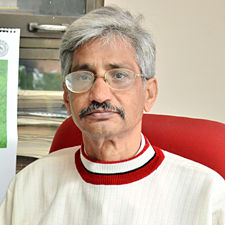
Professor Ali Yapar is a faculty member at Istanbul Technical University in the Electronics and Communication Engineering department. His research focuses on Electromagnetics , Microwave Engineering , and Antenna Technologies , with a particular emphasis on inverse scattering problems and microwave imaging for biomedical applications. He has supervised numerous graduate students and led projects related to breast cancer treatment and rough surface imaging. PhD in Electronics and Communication Engineering from Istanbul Technical University (1997) MSc in Electronics and Communication Engineering (1995) His recent publications analyze advanced techniques for microwave hyperthermia systems, reverse time migration methods, and Newton-based solutions for electromagnetic inverse scattering. Key projects include TUBITAK-funded initiatives on microwave tomography and brain stroke imaging. He serves as a project investigator and executive for electromagnetic research programs. Research areas span Electromagnetic Wave Propagation , Green's Function Applications , and Dielectric Material Analysis . Collaborations include IEEE members and international researchers in computational electromagnetics.
Professor Liu Xiaogang is a Distinguished Professor in the Department of Chemistry at the National University of Singapore (NUS). He holds a B. Eng from Beijing Technology and Business University, M.Sc. and Ph.D. degrees in Chemistry from East Carolina University and Northwestern University (USA), respectively, and completed postdoctoral research at MIT. His research focuses on supramolecular coordination chemistry, catalysis, chemical sensors, optogenetics, photon upconversion, and X-ray photonics. Key achievements include pioneering work on metal-organic complexes for optoelectronics and developing advanced X-ray scintillators for medical imaging. Education: B. Eng, Beijing Technology and Business University, China M.Sc. Chemistry, East Carolina University, USA Ph.D. Chemistry, Northwestern University, USA Postdoctoral Associate, Massachusetts Institute of Technology, USA Research Highlights: Professor Liu’s lab has produced groundbreaking advancements in luminescent materials, including directive giant upconversion via supercritical bound states and real-time single-proton counting scintillators. His work bridges chemistry, materials science, and biomedical applications, with notable contributions to photon upconversion, X-ray imaging technologies, and nanotheranostics. Awards: RSC Centenary Prize (2024) President’s Science Award (2016) Advising & Grants: As Principal Investigator of the Liu Lab at NUS, he oversees a dynamic research group focused on cutting-edge nanomaterials and their applications in healthcare and photonics. His grants include support for projects on X-ray luminescence imaging and optogenetic tools. Labs & Teams: The Liu Lab operates within NUS’s Department of Chemistry, collaborating with interdisciplinary teams to advance materials innovation for biomedical and environmental challenges.
Axel Schülzgen is a Professor of Optics at CREOL, The College of Optics and Photonics, University of Central Florida. He also holds an Adjunct Research Professor position at the University of Arizona's College of Optical Sciences. His research focuses on fiber fabrication, nano-structured fibers, nonlinear materials, and applications in fiber lasers, sensing, and communications. He earned a PhD in Physics from Humboldt-University of Berlin, Germany. His expertise spans optical fiber devices, components, and structures, with a strong emphasis on advancing high-power laser delivery and sensing technologies. Research Interests: - Development of hollow-core fibers for low-loss light transmission - Anti-resonant fiber designs for multi-mode guidance - Nonlinear optical materials for fiber lasers - Applications in fiber optic sensing and medical imaging - Disordered media imaging using optical fibers Awards & Honors: OSA Fellow (Optical Society of America) SPIE Fellow (International Society for Optics and Photonics) 2021 Excellence in Graduate Teaching Award 2015 CREOL Excellence in Research Award Advising & Labs: - Current advisees: Ameen Alhalemi, Caleb Dobias, Md Abu Sufian - Notable alumni: Xiaowen Hu (2022), Stefan Gausmann (2021), and Jian Zhao (2019) - Research Group: Focuses on fiber fabrication technology, nanotechnology in fibers, and photonics applications
David Hong is an Assistant Professor in the Department of Electrical and Computer Engineering at the University of Delaware. He holds a PhD from the University of Michigan, where he was an NSF Graduate Research Fellow, and previously served as an NSF Postdoctoral Research Fellow at the University of Pennsylvania. His research focuses on developing robust methods for analyzing heterogeneous and high-dimensional data, particularly through low-rank matrix and tensor techniques. Applications span medical imaging, radar systems, genomics, and astronomy. He emphasizes theoretical guarantees and practical algorithms for signal extraction and inverse problems. Education: PhD in Electrical Engineering and Computer Science (University of Michigan), NSF Postdoctoral Research Fellowship (University of Pennsylvania). Research Interests: Low-rank matrix/tensor methods, heterogeneous data analysis, unsupervised learning, and applications in healthcare, imaging, and sensor systems. His work addresses noise robustness, scalable algorithms, and real-world deployment challenges. Scientific Awards: Recipient of the NSF Postdoctoral Research Fellowship (2020) and NSF Graduate Research Fellowship (2015). Advising & Grants: Advisor to graduate students in machine learning and signal processing (no named advisees listed). Active NSF grant recipient for foundational and applied research in data science. Labs/Teams: Engaged in interdisciplinary collaborations through the University of Delaware's Center for Computational Research and Data Science initiatives.
Yunan Yang is the Goenka Family Assistant Professor in Mathematics at Cornell University, within the Department of Mathematics, College of Arts and Sciences. He holds a Ph.D. from the University of Texas at Austin (2018), supervised by Prof. Björn Engquist. Previously, he was a Courant Instructor at NYU (2018–2021), Simons-Berkeley Research Fellow (2021), and Advanced Fellow at ETH Zürich (2022–2023). His research focuses on computational mathematics, including inverse problems, optimal transport, machine learning, and nonconvex optimization. Notable contributions include applications of optimal transport to seismic inversion and PDE-constrained optimization. He has advised numerous students, including undergraduates and Ph.D. candidates at Cornell and other institutions. Yang teaches courses such as MATH 6220 (Applied Functional Analysis) and has published extensively in journals like SIAM Journal on Scientific Computing and Communications on Pure and Applied Mathematics. His work bridges theoretical foundations with practical applications in geophysics and computational science.
Hao Liu is a researcher affiliated with institutions like Chinese Academy of Sciences , Beihang University , and Stanford University . His work spans Computer Science , Artificial Intelligence , and Robotics . Key affiliations: National Space Science Center (Beijing), School of Astronautics (Beihang), Key Laboratory of Pervasive Computing (Tsinghua) Research interests include Machine Learning , Image Processing , Graph Neural Networks , and Wireless Communication Optimization His recent publications focus on: Advanced control systems for fuzzy models Medical imaging via hyperspectral analysis Transformer-based approaches in NLP and vision Quantum-safe and edge computing protocols
Aurélie Labbe is a Full Professor in the Department of Decision Sciences at HEC Montréal, holding the prestigious FRQ-IVADO Chair in Data Science. Appointed as Co-Scientific Director – Academic Partnerships at IVADO in October 2023, she plays a key leadership role in establishing connections between IVADO and partner universities. Her academic journey includes a PhD in Statistics from the University of Waterloo, a Master's degree in Statistics from the University of Montreal, and dual Bachelor's degrees in Applied Mathematics and Social Sciences from Paris-Dauphine University and Pure Mathematics from Versailles-St Quentin University. Her research spans multiple interdisciplinary domains with a focus on developing advanced statistical and machine learning methodologies for big data analysis. Labbe's work bridges theoretical statistics with practical applications across diverse fields including genomics, neuroscience, transportation systems, and health informatics. She has made significant contributions to kernel methods, matrix factorization techniques, random forest applications, and spatiotemporal data analysis, with publications appearing in top journals across multiple disciplines. Analyzing her recent publications reveals a clear trend toward methodological innovation applied to complex real-world problems. Her work demonstrates expertise in handling high-dimensional data from diverse sources including neuroimaging, transportation networks, and genomic studies. The interdisciplinary nature of her research connects statistical theory with applications in healthcare, transportation safety, and biological sciences, reflecting her ability to develop methods that address domain-specific challenges while advancing statistical methodology. Holder of the FRQ-IVADO Chair in Data Science Member of the Center for Mathematical Research Training Professor Labbe actively mentors the next generation of data scientists, supervising numerous doctoral and master's students. Her supervision portfolio includes 1 doctoral thesis (2023), 4 master's theses (2022-2024), and 32 supervised projects spanning 2019-2025. Her students' work covers diverse applications including transportation safety, healthcare analytics, financial modeling, and environmental analysis. Through her leadership of the FRQ-IVADO Chair in Data Science, she coordinates research activities that integrate mathematical, statistical, and computer science expertise with domain knowledge from various data-generating fields. As Co-Scientific Director at IVADO, Professor Labbe leads efforts to establish connections with faculties and departments across five partner universities, integrating them into IVADO's research and knowledge transfer activities. Her leadership role positions her at the forefront of advancing data science research and applications in Quebec's academic ecosystem.
Ying Wu is a Professor of Physics at Duke University within the Trinity College of Arts & Sciences . His research focuses on the nonlinear dynamics of charged particle beams , coherent radiation sources , and the development of novel accelerators and light sources using advanced mathematical frameworks like Lie Algebra, Differential Algebra, and Frequency Analysis. His work has significantly enhanced understanding of nonlinear phenomena in light source storage rings and collider rings, with applications in Gamma-ray source development Free-electron laser (FEL) technology Beam stability and diagnostics VUV mirror protection systems Polarization-controlled radiation sources High-reflectivity cavity design Recent publications highlight experimental and theoretical advances in Orbital angular momentum beam generation Photonuclear cross-section measurements Storage ring lattice optimization Multi-color FEL operation Longitudinal beam instability control Differential algebra for particle dynamics Current research programs include collaborations with the High Intensity Gamma-ray Source (HIγS) facility and the Triangle Universities Nuclear Laboratory , with active grants from the Department of Energy (1997–2027), National Institutes of Health (2024–2026), and Ian's Friends Foundation (2024–2025). Ying Wu's laboratory specializes in Free-electron laser cavity design Gamma-ray beam characterization Storage ring diagnostics systems High-current electron beam control Polarization-sensitive detection Next-generation light source development
Sandra Keiper is a Lecturer at the Institute of Mathematics within Faculty II - Mathematics and Natural Sciences at Technical University of Berlin. She has held academic positions since at least 2011, including roles as Tutor, Assistant, and Lecturer, with teaching responsibilities in Analysis, Linear Algebra, and Partial Differential Equations for both mathematicians and engineers. Research interests include: Compressed Sensing and Sparse Signal Recovery Numerical Linear Algebra with applications to high-dimensional data Wavelet and curvelet transforms for geometric multiscale analysis Approximation theory for finite-valued and cartoon-like functions Deep learning and graph approximation techniques Professional activities : Active in teaching since 2011 (Analysis I-III, Functional Analysis, Integral Transforms) Supervising theses since 2015 on topics like Compressed Sensing and Deep Learning Invited lectures at Caltech, ETH Zurich, and Alan Turing Institute Research stays at Hausdorff Institute, ETH Zurich, and Duke University
Alain Durmus is a Professor at École Polytechnique, affiliated with the applied mathematics department (CMAP). His research focuses on computational statistics, machine learning, and stochastic methods, including Monte Carlo algorithms, Bayesian inference, and optimization. He explores topics such as Markov chain Monte Carlo (MCMC), stochastic approximation, and generative models. His work emphasizes theoretical guarantees for algorithms like Langevin Monte Carlo and Hamiltonian Monte Carlo, with applications to high-dimensional Bayesian inference and inverse problems. Key contributions include hypocoercivity analysis of piecewise deterministic MCMC processes, convergence guarantees for stochastic gradient methods, and the development of efficient sampling techniques. He has also contributed to Bayesian imaging and federated learning through works like the QLSD algorithm. Awarded the Best Student Paper Award at ICASSP 2020 for his work on the Sliced-Wasserstein distance. His teaching spans mathematical statistics, stochastic methods, and probability at École Polytechnique and ENS Paris-Saclay. He has also contributed to conferences and workshops on topics ranging from MCMC convergence to optimization in machine learning.
Albert H. Titus is a Professor in the Department of Biomedical Engineering and an Adjunct Professor in the Department of Electrical Engineering at the University at Buffalo, State University of New York. He serves as Associate Vice President for Regulatory Support in the Office of the Vice President for Research and Economic Development. His research focuses on analog VLSI design for neuromorphic visual processing, biosensors, wearable devices, optoelectronic systems, and neural networks. Education: PhD in Electrical and Computer Engineering, Georgia Institute of Technology (1997) MS in Electrical Engineering, University at Buffalo (1991) BS in Electrical Engineering, University at Buffalo (1989) Research Interests: His work spans wearable and implantable sensors, bioinstrumentation, neural network-based visual processing, analog VLSI implementations, optoelectronics, and electronic packaging. He pioneered CMOS-based neuromorphic systems and developed patented technologies for glare sensing and RF power calorimetry. Publication Trends: His recent articles emphasize CMOS-integrated sensors, machine learning for bioimpedance analysis, implantable medical devices, and xerogel-based optical biosensors. These works bridge biomedical engineering and microelectronics. Scientific Recognition: He is a Fellow of the National Academy of Inventors and has received the SUNY Chancellor’s Award for Excellence in Service (2017), NSF CAREER award, and Western New York Inventor of the Year (2010). His inventions include a patented low-power glare sensor (U.S. Patent 7,586,079) featured in Popular Science’s 2011 Top Ten Inventions. Academic Leadership: As a faculty member, he has supervised nearly 20 PhD and over 40 MS students, while teaching courses in circuits, IC design, sensors, and signal processing across electrical and biomedical engineering disciplines.
Pouya Bashivan is an Assistant Professor in the Department of Physiology at McGill University's Faculty of Medicine. His research focuses on developing computational models to explain and regulate neural responses during visual tasks requiring memory, combining machine learning, neuroscience, and cognitive science. Education : Ph.D. in Computer Engineering (2016), Postdocs in Machine Learning (2020) and Computational Neuroscience (2016-2020) His lab investigates: Topographical neural networks for visual cortex simulation Massively-multitask models for prefrontal cortex Saccade-driven visual exploration models Predictive hippocampus models for episodic memory Recent publications explore adversarial robustness, memory-augmented networks, and brain-state decoding. Current projects emphasize causal models, brain-AI alignment, and translating computational neuroscience into therapeutic applications. The lab is located in the McIntyre Medical Sciences Building, Room 1117, Montreal, Quebec.
Naren Naik is a Professor in the Department of Electrical Engineering at the Indian Institute of Technology (IIT) Kanpur, specializing in computational tomographic reconstructions and analysis for subsurface imaging and shape/target tracking. His educational background includes: PhD from the Indian Institute of Science (IISc) Bangalore in 2000 M.E. in Electronics and Communication Engineering from IISc Bangalore in 1992 B.Sc. from Bangalore in 1988 Professor Naik's research focuses on development and analysis of reconstruction algorithms for nonlinear tomography , with particular emphasis on shape-based and dynamic tomography, tracking and battlefield surveillance, and numerical solutions to partial differential equations in electromagnetics. His work spans multiple imaging modalities including subsurface imaging with Ground Penetrating Radar (GPR), fluorescence optics, electrical impedance tomography, and photoacoustic tomography. His research bridges theoretical mathematics with practical applications in electromagnetic imaging and target tracking systems, addressing complex inverse problems in computational imaging. His publication record shows a clear progression from electromagnetic tomography to advanced Kalman filtering techniques for target tracking applications. The most recent works focus on wireless sensor networks and maneuvering target tracking, demonstrating his ability to adapt theoretical frameworks to evolving technological contexts while maintaining mathematical rigor in solving inverse problems. His professional recognition includes: Invited presentation at the special session on advances in model based inversion at the 2011 IEEE AP-S International Symposium on Antennas and Propagation Professor Naik maintains an active research program with consistent publication output in high-impact journals and conferences. His work demonstrates strong interdisciplinary collaboration, particularly with researchers in electromagnetics, signal processing, and imaging sciences. His research has significant applications in defense technology (battlefield surveillance), medical imaging, and subsurface exploration systems, contributing to both theoretical advances and practical implementations in these fields. He is based in Office 303A ACES (Advanced Centre for Electronic Systems) at the Department of Electrical Engineering, IIT Kanpur, where he leads research activities in computational imaging and tomographic reconstruction.
Govind Sharma is a Professor in the Department of Electrical Engineering at the Indian Institute of Technology Kanpur. He holds a PhD from the University of Southern California, Los Angeles, and completed both his M.Tech. (1984) and B.Tech. (1979) in Electrical Engineering from IIT Kanpur. His research interests span multiple areas of signal processing and communications, with a focus on: Signal Processing Communication Systems Video signal processing Medical image processing Professor Sharma has published numerous research papers in prestigious journals and conferences. His work primarily focuses on signal processing techniques, including time delay estimation in acoustic channels, direction of arrival estimation, adaptive filtering algorithms, wavelet transforms, and spectrum estimation. His research has contributed significantly to both theoretical foundations and practical applications in these fields, with publications spanning from 1986 to 2011. He can be reached at his office in ACES-205A, Department of Electrical Engineering, Indian Institute of Technology, Kanpur, UP, India-208016, or by phone at 0512-259-7922.
Sapun Parekh is an Associate Professor in the Department of Biomedical Engineering at the University of Texas at Austin, supported by the Cockrell Family Fellowship. His research focuses on developing label-free imaging and analytical tools using nonlinear chemical microscopy to diagnose pathologies such as type 2 diabetes. The Parekh Lab, operating at UT Austin and the Max Planck Institute, investigates molecular basis of pathology, microscopy instrumentation, and mechano-chemical coupling in cancer. Key research areas include chemical and nonlinear microscopy, molecular physics of biomaterials, and imaging molecular structure under mechanical deformation. Recent work emphasizes biomolecular condensates, blood clot mechanics, and metabolic defense mechanisms in cancer cells. The lab actively recruits graduate students and postdoctoral researchers in topics like nonlinear microscopy and neurodegeneration imaging. Notable students include Jacob, Sam, Nick, and Advika, who have passed exams or defended theses. Collaborations with institutions like Brown University and EMBL advance interdisciplinary projects. The lab’s innovations bridge fundamental biophysics with clinical applications, emphasizing inclusion and innovation. Education Background: Not explicitly stated in provided texts. Affiliations: UT Austin Biomedical Engineering, Max Planck Institute. Research interests span imaging technologies, biomaterials, and disease mechanisms, with recent articles addressing biomolecular condensates, clot mechanics, and nanotechnology. The lab’s work is published in high-impact journals, reflecting its commitment to advancing biomedical diagnostics and therapies.