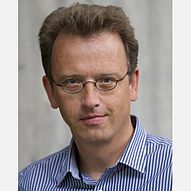
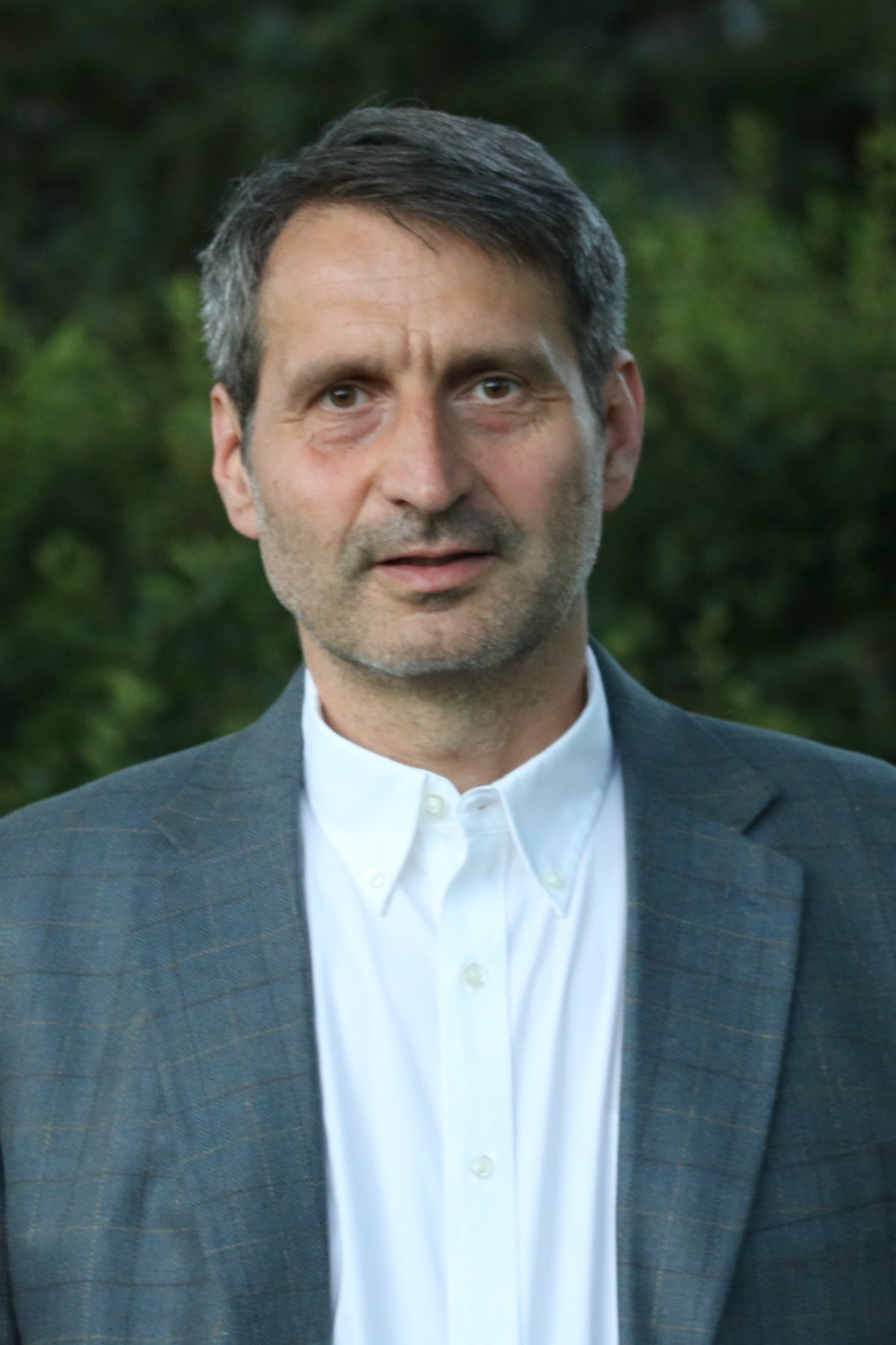
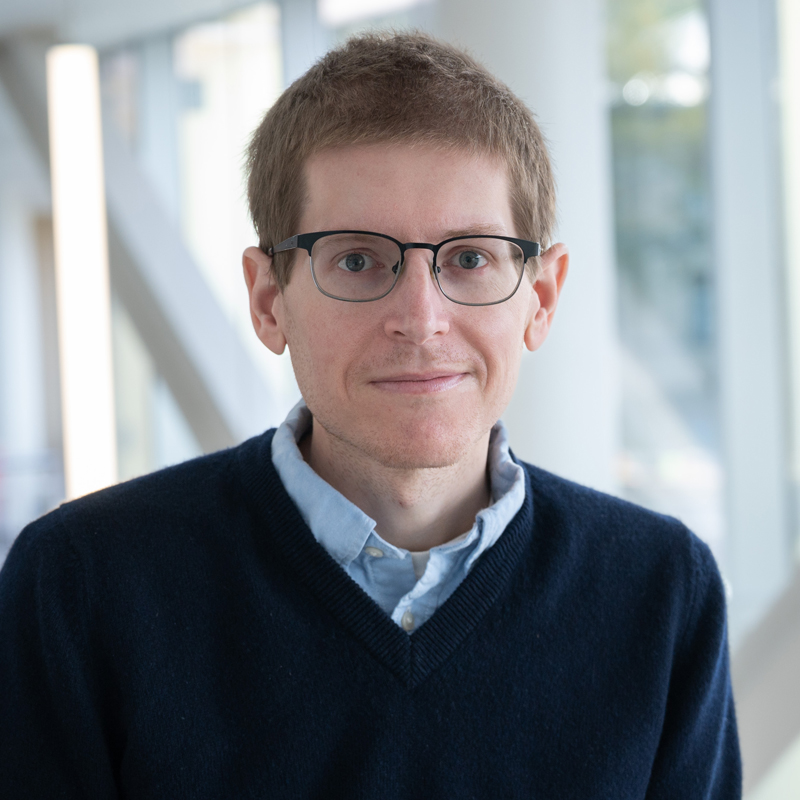
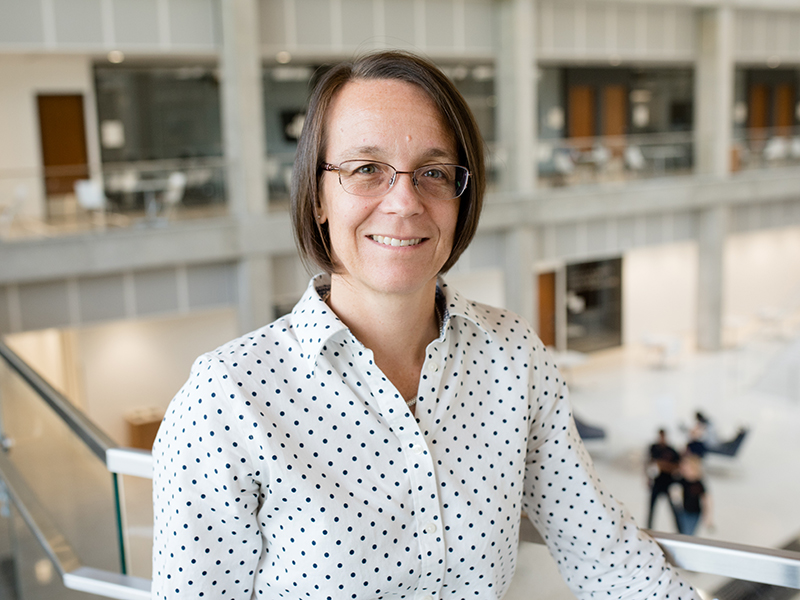
Prof. Dr. Ferdinand Evers is a Chair of Computational Condensed Matter Theory at the Institute of Theoretical Physics , University of Regensburg. His research spans quantum transport , spintronics , molecular electronics , and many-body localization , with a focus on ab initio and DFT-based modeling of nanostructures and low-dimensional systems . Key Research Areas: Quantum transport in molecular junctions Spin-orbit coupling and chiral effects Multifractality at quantum phase transitions Electronic structure of topological materials Ultrafast laser-driven electron dynamics Anderson localization and disorder Recent Article Trends (2021–2024): High-harmonic generation in topological insulators Spin-selective transport in chiral systems Mechanical torque in molecular rotors Self-consistent GW methods for molecular electronics Quantum interference in graphene nanoribbons Teaching: Lecturer for Theoretical Physics I-IV , Advanced Quantum Mechanics , and Scientific Perspectives courses at the University of Regensburg Focus on statistical mechanics , quantum transport , and computational nanoscience
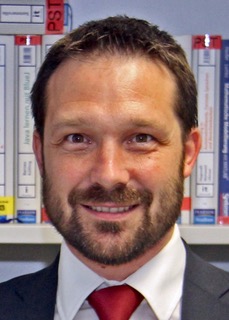
Rupert Frank is a Professor of Mathematics at the University of Munich (LMU Munich) . He has held academic positions at Caltech (2013–2021) and Princeton University (2009–2013). His research spans Mathematical Physics , Spectral Theory , and Functional Inequalities , with a focus on quantum many-body systems, stability of matter, and nonlocal operators. Research Themes : Analysis of eigenvalues for Schrödinger and Pauli operators with complex potentials Semi-classical spectral asymptotics and effective theories for quantum systems Matrix inequalities and quantum information theory Calculus of variations in models like the liquid drop problem Geometric inequalities and their applications to quantum mechanics Magnetic field effects on spectral properties Recent Publications : 2025: Sharp stability for Sobolev/log-Sobolev inequalities with dimensional dependence 2025: Endpoint Schatten class properties of commutators 2024: Degenerate stability of Caffarelli-Kohn-Nirenberg inequality 2024: Hardy inequalities for large fermionic systems 2023: Review on Scott conjecture for Coulomb systems Scientific Awards : Young Scientist Prize in Mathematical Physics (2009) Grants and Collaborations : Principal Investigator in CRC TRR 352 (2023–) PI in Munich Center for Quantum Science and Technology (2019–) Multiple NSF grants (2009–2020) DFG and DAAD grants Editorial and Conference Leadership : Editorial boards: Communications in Mathematical Physics , Journal in Mathematical Physics , Journal of Spectral Theory , SIAM Journal on Mathematical Analysis , Springer Lecture Notes Organized conferences/workshops on quantum many-body systems, spectral methods, and functional inequalities (2018–2025)
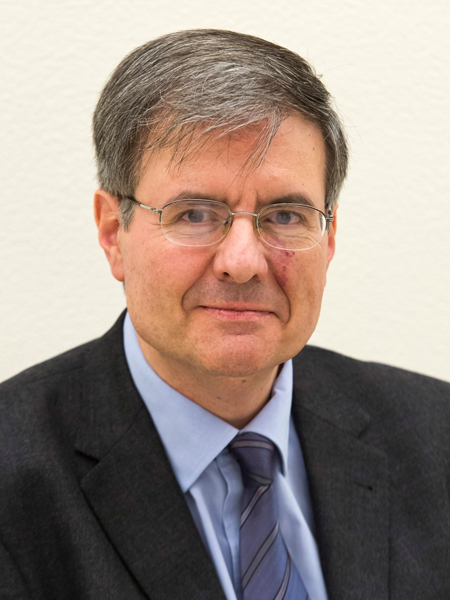
Lionel Truquet is a Lecturer-Researcher in Statistics and Director of Research at ENSAI (École Nationale de la Statistique et de l'Analyse de l'Information). His research focuses on advanced statistical methodologies, including time series analysis, Markov chains, and ecological data modeling. He has contributed to multivariate autoregressive binary models, compact space time series models, and nonstationary count processes. Research Interests: His work emphasizes statistical theory applied to dependent data, with a strong focus on ecological applications. Key areas include ergodic properties of Markov chains, mixing properties of time series, and modeling presence-absence data. His methods address challenges in high-dimensional and nonstationary environments. Publications: Recent work includes influential contributions such as the TJALLING C. KOOPMANS ECONOMETRIC THEORY PRIZE-winning paper on iterations of dependent random maps. His publications span top journals like Bernoulli, the Annals of Applied Probability, and the Journal of Time Series Analysis, reflecting his expertise in both theoretical and applied statistics. Teaching: He teaches advanced courses such as Asymptotic Statistics and Dependence at the M2 level, reflecting his commitment to training future statisticians in cutting-edge methodologies.
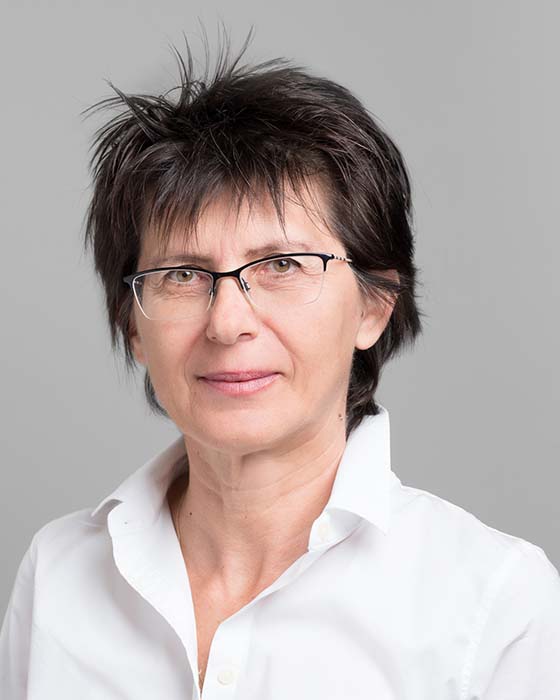
Manuel Arellano is Professor of Economics at the Center for Monetary and Financial Studies (CEMFI) in Madrid since 1991, with prior appointments at the University of Oxford (1985-89) and London School of Economics (1989-91). A leading econometrician specializing in panel data analysis, his work bridges theoretical econometrics and labor economics applications. He earned his undergraduate degree from the University of Barcelona and Ph.D. from the London School of Economics. Arellano's research focuses on econometric methodology for panel data, particularly dynamic models with heterogeneity. His seminal book Panel Data Econometrics (2003) established foundational frameworks for nonlinear and dynamic panel estimation. Current work extends to distributional analysis of random coefficients and robust inference under uncertainty, maintaining consistent emphasis on labor market applications like unemployment duration and policy evaluation. His publication history reveals a 30-year trajectory advancing panel data econometrics, evolving from specification testing (1987-1995) to sophisticated dynamic and nonlinear models (2003-2014), with persistent focus on practical implementation and labor economics applications. Major honors include: President of the Econometric Society (2014) Foreign Honorary Member of the American Academy of Arts and Sciences (2014) Rey Jaime I Prize in Economics (2012) ISI Highly Cited Researcher status (2010) Fellow of the Econometric Society (2002) No information on student advising or research grants appears in the source materials. Similarly, details about research laboratories or collaborative teams are not documented in the provided texts.
Jesús Carro is an Associate Professor at Universidad Carlos III de Madrid in the Department of Economics . He specializes in micro-econometrics and labor economics, focusing on dynamic discrete choice models and unobserved heterogeneity analysis. Doctorate from CEMFI Active research since 2004 Key methodological contributions in econometric modeling His research spans: Labor supply dynamics Education policy evaluation Health economics Intergenerational preference transmission Recent publications highlight: Dynamic binary choice modeling with maximal heterogeneity (2014) State dependence in health outcomes (2014) Bilingual education program impacts (2016) Preference transmission mechanisms (2017) He teaches courses in: Micro-econometrics Economics of Education Policy Evaluation
T V Raziman is a Researcher in the Department of Mathematics at Imperial College London within the Faculty of Natural Sciences. He specializes in nanophotonics, focusing on light-matter interactions through theoretical models and simulations. His academic journey includes postdoctoral roles at Eindhoven University of Technology (2017–2021) and École Polytechnique Fédérale de Lausanne (2016–2017), and holds a PhD from EPFL and an Integrated MSc in Physics from IIT Kanpur. Raziman's research spans Optical Physics , Applied Mathematics , and Artificial Intelligence , with a strong emphasis on Nanophotonics . He explores cutting-edge topics like synthetic optical motion, retinomorphic machine vision, and topological optimization of nanostructures. His work bridges theoretical frameworks with practical applications in photonics and materials science. Key contributions include studies on semiconductor network lasers, surface lattice resonance lasers, and neural network-driven laser mode control. He collaborates within the Complex Nanophotonics Group , advancing interdisciplinary projects at the intersection of photonics and machine learning. No scientific awards are explicitly mentioned, but his prolific publication record highlights sustained innovation in photonics research. He has advised no recorded students, focusing primarily on independent and collaborative research efforts.
Lacra Pavel is a Professor in the Edward S. Rogers Sr. Department of Electrical and Computer Engineering at the University of Toronto, Faculty of Applied Science and Engineering. She joined the department in August 2002 after industry experience at Nortel Networks and Solinet Systems, and remains active in the System Control Group and Photonics Group. Her educational background includes: Diploma of Engineering (with distinction) in Automatic Control, Technical University Gh. Asachi of Iasi, Romania (1989) PhD in Electrical and Computer Engineering, Queen's University at Kingston (1996) Research focuses on integrating game theory, control theory, and optimization within networked systems. She pioneered applications in noncooperative/evolutionary game theory for network control, nonlinear/robust control frameworks, and energy-efficient optical/transportation networks. Current work develops mathematical foundations for learning in games via control-theoretic approaches to enable autonomous multi-agent network optimization. Recent publications (2019-2013) reveal dominant trends: distributed Nash equilibrium seeking using passivity-based and operator-splitting methods, stability analysis for optical network power control with time-delays, and extensions to transportation systems like railway timetabling. Key subfields include graphical games, ADMM algorithms, and Lyapunov-based boundary control for distributed parameter systems. Scientific recognition includes: Fellow of the IEEE (2025) for contributions to game theory, control, and optimization for network systems Connaught New Staff Award, University of Toronto (2003) New Opportunities Infrastructure Award, CFI/OIT (2003) Award for Innovation, Solinet Systems (2001, 2002) Inventor Recognition Award, Nortel Networks (2000) She has advised over 20 graduate students including current PhD candidates and former students now at MIT, Princeton, Amazon, and Ciena. Major grants include the CFI/OIT New Opportunities Infrastructure Award (2003). Her research bridges theoretical game control with practical implementations in optical and transportation networks. As co-director of the System Control Group and member of the Photonics Group, she leads teams developing algorithms for autonomous network optimization. Current projects focus on stochastic approximation methods for multi-agent learning and energy-efficient network design.
Vladimir Sverak serves as a Distinguished McKnight University Professor in the School of Mathematics at the University of Minnesota, where he maintains an active research program and teaches graduate courses in partial differential equations. His office is located in Vincent Hall 236 (206 Church Street SE, Minneapolis, MN 55455) with contact details including email sverak@umn.edu and phone (612) 625-1899. As of 2020, he continues to instruct courses such as Complex Analysis (Math 5583) and Topics in PDE (Math 8590), demonstrating ongoing academic engagement. Professor Sverak's research centers on fundamental questions in partial differential equations, particularly concerning existence, uniqueness, and singularity formation in fluid dynamics systems. His work focuses extensively on Navier-Stokes and Euler equations, examining behavior in critical function spaces where standard analytical methods often fail. He employs both rigorous mathematical techniques and numerical investigations to explore phenomena like non-uniqueness, blowup scenarios, and scale-invariant solutions, contributing significantly to the theoretical understanding of fluid mechanics. Analysis of his 15 most recent publications (2012-2017) reveals consistent thematic focus on Navier-Stokes equations, with particular attention to borderline spaces, axisymmetric flows, and singularity analysis. His collaborative approach is evident through frequent co-authorships with leading researchers including G. Seregin, H. Jia, and T. Gallay, reflecting the interdisciplinary nature of modern mathematical fluid dynamics research. His scientific recognition includes: Distinguished McKnight University Professor Research support comes from the National Science Foundation (grant DMS 1956092), while his teaching contributions span both foundational and advanced topics. Course materials for offerings like Elementary Partial Differential Equations (Math 5587/5588) and Introduction to Ordinary Differential Equations (Math 5525) remain accessible through university platforms, demonstrating commitment to pedagogical resources. Though student advising details aren't specified, his graduate-level course instruction indicates active mentorship within the mathematics community. Professor Sverak's work continues to advance mathematical fluid dynamics through rigorous analysis of nonlinear PDEs, maintaining strong connections between theoretical developments and physical fluid behavior while contributing to both research and education in mathematical sciences.
Xiaoming Zhai is an Associate Professor in Ocean Modelling at the University of East Anglia's School of Environmental Sciences, and a member of the Centre for Ocean and Atmospheric Sciences. His career includes roles from Lecturer (2012) to Senior Lecturer (2017) before his current position (2019). He holds a PhD from Dalhousie University's Oceanography Department and has conducted postdoctoral work at the University of Oxford and IFM-GEOMAR in Germany. His research focuses on ocean physical processes, particularly the dynamics of ocean circulation, eddy interactions, near-inertial waves, and air-sea interactions. Key projects include investigating eddy energy dissipation timescales, Southern Ocean circulation impacts, and the annual cycle of eddy energy. He has secured funding from the Royal Society and Natural Environment Research Council for initiatives like the GEOMETRIC project on ocean eddy representation in climate models. Zhai has received prestigious awards including the Challenger Fellowship (2018) and Kan Tong Po Fellowship (2023). His recent publications explore topics like South China Sea eddies, internal tide generation under global warming, and zonal jet dynamics in geostrophic turbulence. He actively supervises PhD students and contributes to academic activities such as external doctoral examinations and peer review panels.
Martin Ostoja-Starzewski , Ph.D. (McGill), is a Professor of Mechanical Science & Engineering at the University of Illinois at Urbana-Champaign , with affiliate appointments at the Beckman Institute and National Center for Supercomputing Applications . His research spans continuum mechanics , stochastic wave propagation , and fractal media , focusing on scaling laws and the statistical-to-representative volume element transition. 2006–Present: Professor, UIUC 2001–2005: Canada Research Chair, McGill University 2023: Rothschild Distinguished Visiting Fellow, University of Cambridge 2022: Member, European Academy of Sciences and Arts 2024: Academia Europaea Foreign Member His work pioneered continuum mechanics with spontaneous second law violations and tensor random fields for stochastic PDEs. He authored four foundational books, including Tensor-Valued Random Fields for Continuum Physics (2019), and edited 16 special issues. Recent 2025–2023 articles explore odd elasticity , fractal thermodynamics , and stochastic wavefronts , bridging non-equilibrium thermodynamics to granular Couette systems . Scientific accolades include the Worcester Reed Warner Medal (2018) and ASME , AAM , SES fellowships. As part-time faculty at Beckman Institute (2008–Present), he integrates bioimaging with mechanics across electrosurgery and traumatic brain injury modeling.
Yuan Huang is an Assistant Professor in the Department of Biostatistics at the Yale School of Public Health . Her research focuses on statistical methods for high-dimensional data, motivated by challenges in cancer genomics and neurodegenerative diseases. She develops approaches for biomarker identification, network structure estimation, and gene-environment interaction analysis, with applications in Alzheimer’s, Huntington’s, and Parkinson’s diseases. Key Affiliations: Yale Cancer Center, Center for Brain & Mind Health, Yale Center for Analytical Sciences (YCAS) Her methodological work emphasizes integrative analysis across multiple datasets to improve reproducibility and discovery. Recent collaborations span clinical trials, genetics, and epidemiology, with a focus on addressing heterogeneity and nonlinearity in complex biomedical data. Her publications include Bayesian finite mixture models, precision matrix estimation, and advanced techniques for high-dimensional causal mediation analysis. She actively engages in translational research, linking statistical innovation to clinical and public health challenges.
Matthew Rosenzweig is an Assistant Professor in the Department of Mathematical Sciences at Carnegie Mellon University's Mellon College of Science, specializing in mathematical physics, nonlinear partial differential equations, and probability with applications to many-body systems and wave turbulence. His educational background includes: Ph.D. in Mathematics, University of Texas at Austin Postdoctoral Appointment, Massachusetts Institute of Technology Undergraduate Degree, Harvard University Rosenzweig's research focuses on effective dynamics of large-scale systems such as Coulomb/Riesz gases, where he derives nonlinear dispersive, fluid, and kinetic equations from microscopic particle interactions. His work bridges physics and mathematics, increasingly incorporating statistical and machine learning perspectives. Key contributions address mean-field convergence , propagation of chaos , and scaling limits for singular interactions. Analysis of his 15 most recent publications (2022-2024) reveals a dominant trend in uniform-in-time mean-field theory for singular potentials, with strong emphasis on logarithmic Sobolev inequalities, wave turbulence connections (e.g., stochastic KdV equations), and fluid dynamics applications like the Lake equation. The research spans mathematical physics, probability theory, and nonlinear PDE analysis, often featuring collaborations with Sylvia Serfaty and Gigliola Staffilani. Rosenzweig's research is funded by National Science Foundation grants DMS-2441170 and DMS-2345533. As a former CLE Moore Instructor at MIT and Simons Collaboration postdoc, he maintains active involvement in the Center for Nonlinear Analysis at CMU, though no formal lab structure is specified in available materials.
Professor Georg Gottwald is a distinguished academic in the School of Mathematics and Statistics at the University of Sydney, where he has been a faculty member since 2002, progressing from Lecturer to his current position as Professor since 2013. He also holds a Visiting Professor position at the University of Surrey in the UK since 2013. His extensive research career spans dynamical systems theory, geophysical fluid dynamics, and the intersection of machine learning with complex systems. Professor Gottwald's research focuses on dynamical systems theory as an abstract formalism for studying systems evolving in time and space. His work has significant applications across diverse fields including climate modeling, biological systems, and complex networks. He is particularly known for developing methods for model reduction of complex dynamical systems, stochastic modeling approaches, and the application of machine learning techniques to dynamical systems. His research aligns with the Faculty of Science Research Strengths in Understanding the Universe, Fundamental Laws of Nature, Complex Systems, Climate and Environmental Change, Data and Decisions, and National Security. His most recent publications demonstrate a strong trajectory toward integrating machine learning with dynamical systems theory, particularly in developing stable generative models, learning dynamical systems with random feature maps, and combining data assimilation with machine learning for forecasting. His work spans pure mathematical theory to practical applications in climate science, finance, and biological systems, showing remarkable breadth while maintaining deep mathematical rigor. Future Fellowship, 'Stochastic methods in mathematical geophysical fluid dynamics', Australian Research Council, 2010-2014 Australian Research Fellowship, 'Stochastic methods in mathematical geophysical fluid dynamics', Australian Research Council, 2010-2015 (declined) Australian Research Fellowship, 'Geometric methods in geophysical fluid dynamics', Australian Research Council, 2004-2009 Professor Gottwald has successfully supervised numerous PhD and Master's students who have gone on to academic and industry positions worldwide. His current research group includes postdocs and PhD students working on machine learning for dynamical systems, stochastic model reduction, physics-informed machine intelligence, and tensor methods for scientific machine learning. He has secured multiple ARC Discovery Project grants and has been involved in significant international collaborative research projects. He is actively involved with the Sydney Dynamics Group, which he co-founded in 2007, fostering collaboration between the University of Sydney and UNSW. Professor Gottwald maintains strong editorial commitments as Associate Editor for Geophysical and Astrophysical Fluid Dynamics, SIAM Journal of Applied Dynamical Systems, and Journal of Computational Dynamics, and serves on the Editorial Advisory Board for Chaos and the Editorial Board for Physical Review E. His professional activities demonstrate leadership in the dynamical systems community through organizing workshops, seminars, and special journal issues.
Ellen Rathje is a Professor and Janet S. Cockrell Centennial Chair in Engineering at the University of Texas at Austin's Department of Civil, Architectural, and Environmental Engineering within the Cockrell School of Engineering. Her expertise spans geotechnical engineering with a focus on earthquake engineering, seismic response of earth structures, and liquefaction evaluation. She leads research initiatives such as DesignSafe cyberinfrastructure and TexNet Seismological Network, advancing geohazard risk assessment and computational modeling. Education: Ph.D. (1997), M.S. (1994), and B.S. (1993) in Civil Engineering from University of California, Berkeley and Cornell University. Research Interests: Dr. Rathje investigates earthquake-induced ground failures, including lateral spreading, liquefaction, and slope instabilities. Her work integrates machine learning, finite element analysis, and geospatial data to enhance predictive models for infrastructure resilience. Recent projects address induced seismicity in energy-producing regions, site amplification in Central and Eastern North America, and tailings dam failure mechanisms. Awards: Recipient of the 2022 Ralph B. Peck Award, 2018 William B. Joyner Lecture Award, and 2016 ASCE Fellow distinction. Her work has advanced open science through DesignSafe's cyberinfrastructure, supporting natural hazards research collaboration. Technical Contributions: Developed hybrid finite-element/material point methods for granular collapse modeling, probabilistic frameworks for regional landslide assessments, and neural network-based site amplification models. Active in post-earthquake reconnaissance through GEER (Geotechnical Extreme Events Reconnaissance) and TexNet operations.
Professor Sergei Fedotov is a Professor of Applied Mathematics in the Department of Mathematics at the University of Manchester. He holds a PhD from Ural Federal University (1986) and has held academic positions in London, Aachen, Wuppertal, and Berlin before joining Manchester in 1998. His research focuses on random walk theory, reaction-transport systems, and anomalous transport phenomena with applications to biophysics, nanotechnology, and cancer biology. His expertise includes non-Markovian models, fractional calculus, and interdisciplinary collaborations in areas such as intracellular transport, nanoparticle dynamics, and DNA repair. Fedotov has led major grants, including EPSRC-funded projects on nanoparticle transport in radiotherapy and FAPESP-UoM collaborations on correlated memory in biological systems. He has supervised PhD students including Anna Gavrilova, Daniel Han, and Helena Stage, and collaborates with institutions globally, such as Universitat Autònoma de Barcelona and The Christie Hospital. Key research themes include stochastic models of subdiffusion/superdiffusion, fractional partial differential equations, and the application of statistical mechanics to biological systems. His work contributes to sustainable development goals through advancements in medical physics and environmental modeling. Recent publications explore heterogeneous transport in C. elegans, stochastic water flow dynamics, and the modeling of radiation-induced DNA damage. Fedotov’s team develops novel frameworks to bridge theoretical mathematics with experimental biology, emphasizing the role of memory effects and non-equilibrium processes. Grants managed include the EPSRC £702k project on improving radiotherapy via nanoparticle transport modeling (2021–2025) and the FAPESP-UoM study on correlated memory in biological systems (2018–2022). His work integrates mathematical rigor with experimental validation, addressing challenges in cellular logistics and disease mechanisms.