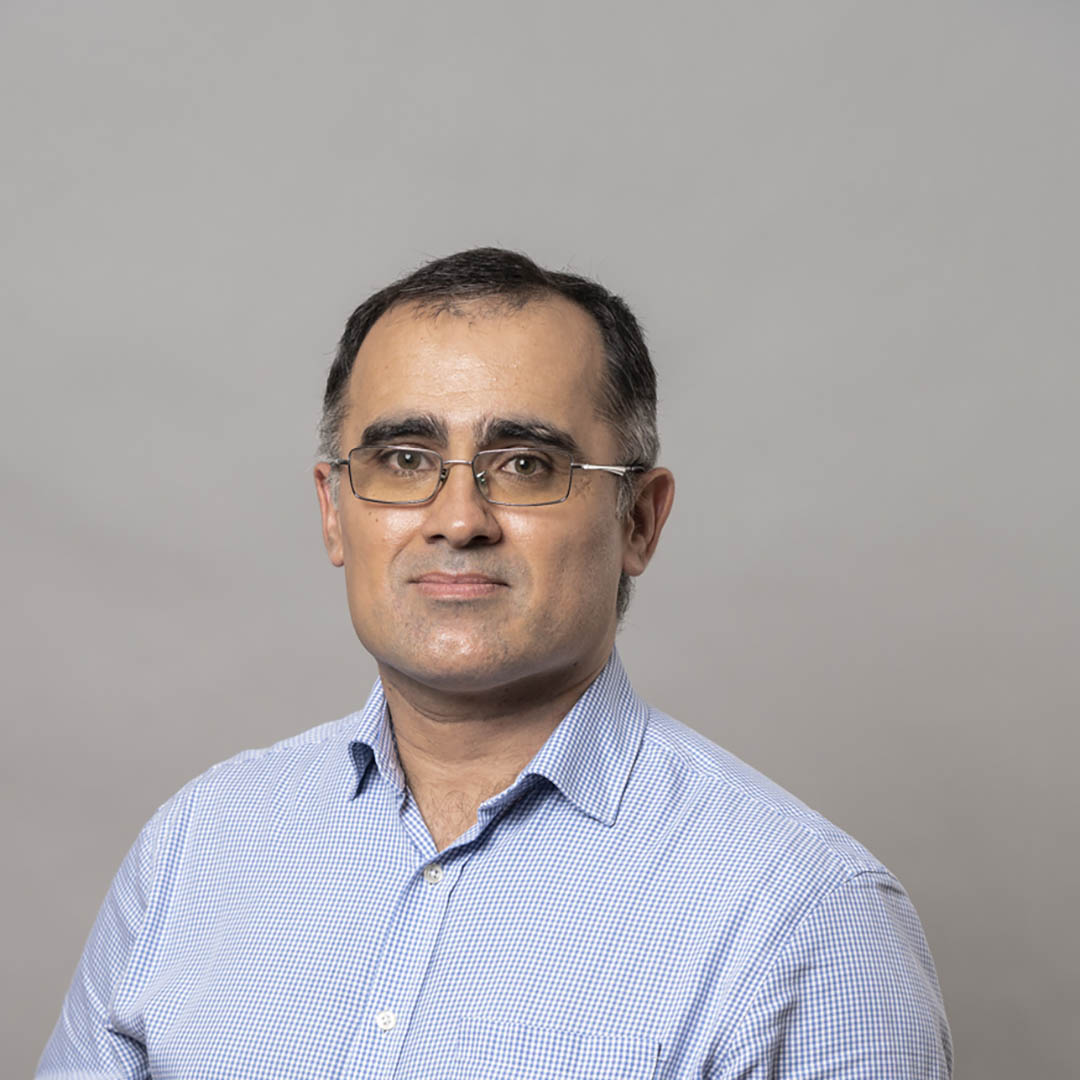
Paulo Parente is a Professor at the Instituto Superior de Economia e Gestão (ISEG), part of the Universidade de Lisboa. He holds a PhD in Economics from the University of Warwick (2007), a Master's in Economics from Nova School of Business and Economics (2002), and a Bachelor's in Mathematics Applied to Economics from the Higher Institute of Economics in Lisbon (1998). He currently serves as President of ISEG, overseeing its academic and administrative leadership. His research focuses on advanced econometric methodologies, including time series analysis, quantile regression, bootstrap techniques, and empirical likelihood methods. His work has been published in top journals such as Journal of Econometrics , Econometric Theory , and Journal of Time Series Analysis . Parente teaches courses such as Econometrics, Quantitative Methods, and Advanced Econometric Topics at both undergraduate and graduate levels. He has supervised numerous Master’s theses, advising students on topics ranging from labor market dynamics to energy market forecasting and insurance industry analysis. He is actively involved in ISEG's research initiatives, contributing to labs like the Data Lab, Futures Lab, and Policy Lab, which address contemporary economic challenges through interdisciplinary approaches.
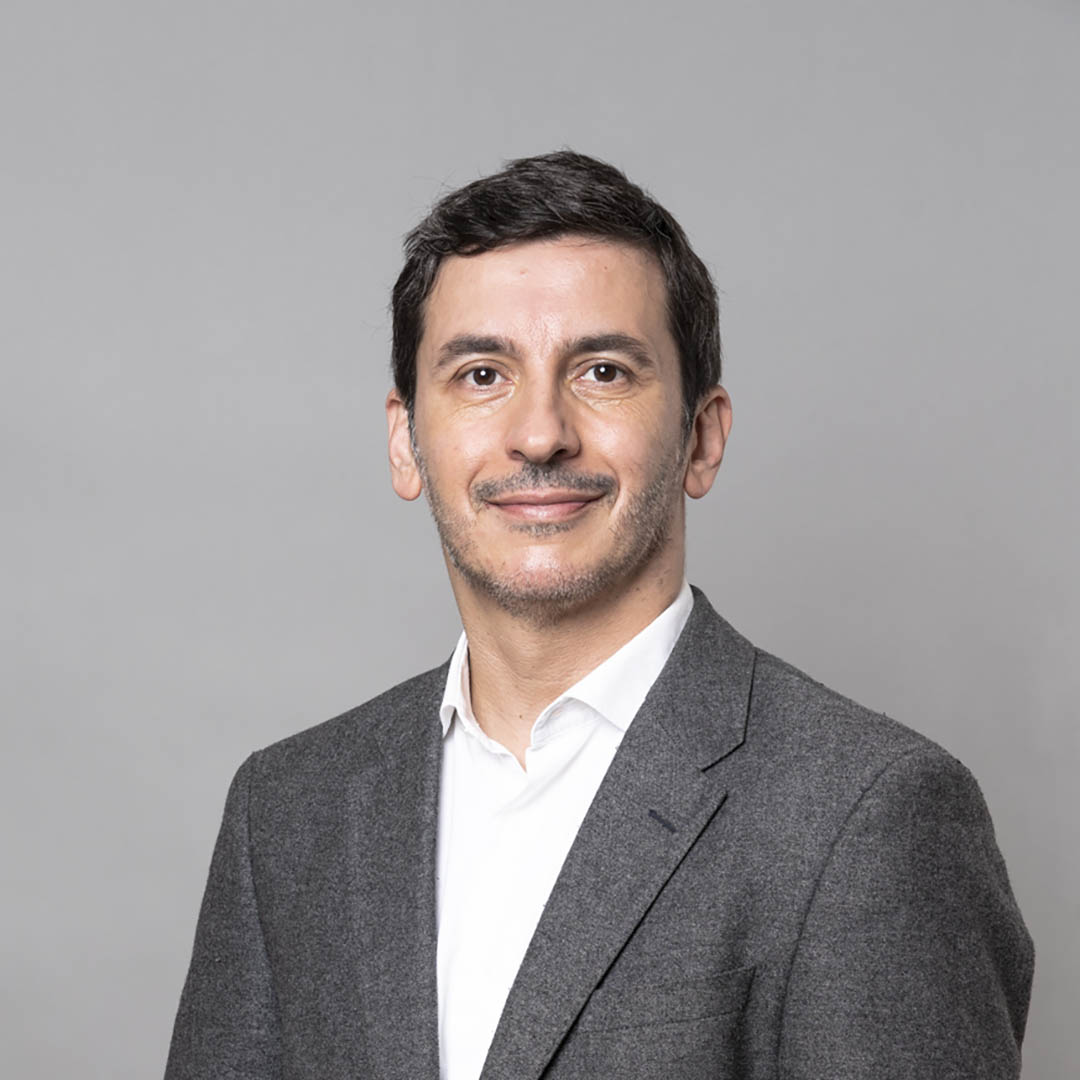
Dr. Jorge Caiado is an Associate Professor with Aggregation at ISEG Lisbon School of Economics and Management (University of Lisbon). He specializes in Applied Mathematics, Data Science, and Financial Econometrics. He coordinates the Applied Artificial Intelligence and Machine Learning postgraduate program at ISEG Executive Education and is an integrated researcher at CEMAPRE (Center for Applied Mathematics in Economics and Finance). Education: PhD in Applied Mathematics to Economics and Management (ISEG, 2006) Aggregation in Mathematics (Econometrics focus, 2021) Bachelor of Business Administration (Universidade Internacional, 1994) Research Interests: Focus on machine learning, time series analysis, financial markets volatility modeling, and clustering techniques. Applies methods like GARCH models, VAR analysis, and spectral metrics to problems in economics, finance, and environmental policy. Recent work explores financial inclusion in Mozambique, global stock market dynamics, and demographic impacts on inflation. Awards & Patents: 1st Prize SICO2007 (IEEE Computational Intelligence Society) US Patent for B2B Procurement Optimization Professional Roles: Co-founder of tech startup GlobalSolver; visiting researcher at Universidad Carlos III de Madrid; consultant for central banks, financial institutions, and logistics companies. Served on ISEG’s research unit leadership. Teaching: Teaches data science, econometrics, and quantitative methods at undergraduate and graduate levels. Courses include 'Data Science for Sustainability' and 'Machine Learning in Finance.'
Bruno Filipe Rama Travassos is an Associate Professor with Tenure at the University of Beira Interior (UBI) , affiliated with the Department of Sports Sciences and the CIDESD - Research Center in Sports Sciences, Health Sciences and Human Development . He directs courses in Data Analysis and Research in Football and Futsal , Entrepreneurship and Career Management in Sports , and Futsal Training . His roles include teaching units such as Seminars in Sports Science and Strategic Planning in Futsal . Research Focus: Decision-making in sports, tactical behavior in soccer/futsal, ecological dynamics, spatiotemporal analysis, athlete-environment interaction, and training task manipulation. Publications Trends: Recent work explores weekly training load impacts on futsal performance (2023), age/numerical relation dynamics in youth football (2022), team composition effects on tactical behaviors (2021), and network metrics for training adaptation (2020). Earlier studies address perceptual constraints, volleyball decision-making, and rink-hockey physiology (2016–2017). Labs & Teams: Active in CIDESD research center, focusing on sports sciences and human development.
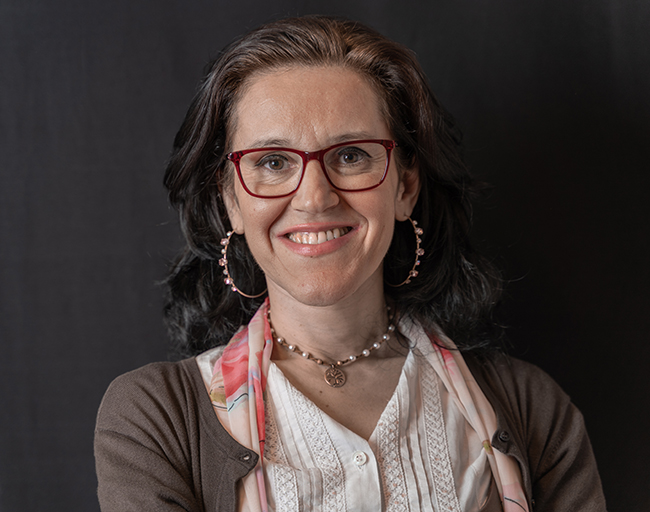
Andreia Teixeira Marques Dionisio serves as an Associate Professor with Tenure at the University of Évora, Portugal, where she has established herself as a prominent researcher in financial markets, econophysics, and econometrics. Her academic journey includes a PhD in Management from ISCTE (2006), a Master's in Organization and Information Systems from the University of Évora (2001), and a Degree in Business Management from the same institution (1997). She maintains active research collaborations through CEFAGE (Centro de Estudos e Formação Avançada em Gestão e Economia), contributing significantly to the university's research profile in quantitative economic analysis. Dr. Dionisio's research interests span financial markets analysis, econophysics applications in finance, and advanced econometric methodologies. Her work demonstrates particular expertise in cryptocurrency market dynamics, energy economics, financial integration across global markets, and the application of physics-inspired approaches to economic phenomena. She has developed sophisticated analytical frameworks using mutual information, detrended fluctuation analysis, and transfer entropy to examine market behaviors and dependencies that traditional econometric methods might overlook. Analysis of her recent publications reveals a strong focus on cryptocurrency markets (particularly Bitcoin and Ethereum), geopolitical risk impacts on energy markets, and cross-border financial integration patterns. Her research increasingly incorporates interdisciplinary approaches from physics and complexity science, reflecting the growing importance of econophysics in understanding modern financial systems. The publications span top-tier journals in finance, energy economics, and interdisciplinary physics, demonstrating both methodological rigor and practical relevance to contemporary financial challenges. Dr. Dionisio has successfully supervised numerous graduate students through both master's and doctoral programs at the University of Évora, with thesis topics reflecting her research expertise in financial markets, cryptocurrency, and quantitative economic analysis. Her supervisory record includes students examining topics such as cryptocurrency market efficiency, financial contagion, and the impact of geopolitical risks on investment behavior. She has also contributed to significant research projects including Grampcity: Inovstone 4.0, Exploration of Entropy on Decision Models, and CONECTA PYME 4.0, demonstrating her ability to secure competitive research funding. Her research team collaborates extensively with international scholars, particularly with Paulo Ferreira, Dora Almeida, and other researchers across Europe and beyond. This collaborative approach has enabled her to tackle complex research questions requiring diverse expertise and access to multiple data sources. The team frequently employs advanced quantitative methods including entropy-based approaches, nonlinear dependence analysis, and fuzzy-set qualitative comparative analysis to address research questions in finance and economics.
Pedro Marques Quinteiro Fernandes da Silva is an Associate Professor at the School of Economic Sciences and Organizations (Universidade Lusófona), Lisbon, Portugal, and a Guest Professor at ISCTE Executive Education. He holds a PhD in Human Resources Management and Development from ISCTE- Instituto Universitário de Lisboa (2015). His research focuses on leadership and teamwork in extreme environments (e.g., healthcare, firefighting, Antarctic missions) and small groups as complex adaptive systems. He has published over 20 peer-reviewed articles in Q1/Q2 journals and led multiple competitive research projects, including grants from the Portuguese Polar Program (€4,000), European Space Agency (€41,700), and Interdisciplinary Network for Group Research ($10,000). Notable projects include a 3-year ESA-funded study on sociometric badges for Antarctic teams and leadership training for astronauts. He led scientific expeditions to King George Island, Antarctica, and his work has been featured in the Wall Street Journal and Diário de Notícias. As an Associate Editor for the Spanish Journal of Psychology and Team Performance Management , he contributes to advancing understanding of team resilience and adaptability. His 2024 book chapter on improvisation integrates nonlinear dynamics theory with organizational studies, proposing methodologies like cusp catastrophe modeling for analyzing complex processes. Grants & Awards: Two postdoctoral fellowships (FCT, Portugal), ESA grants, Antarctic logistics support, and international collaborations. Research Teams: Collaborates with global experts (e.g., University of Zurich, University of Torino) on projects blending human dynamics with space exploration. Media Attention: Coverage of Antarctic expeditions and pandemic impacts on polar researchers. His work bridges extreme environment studies, leadership, and complex systems theory, with direct applications to healthcare, emergency services, and space missions.
Cristiana J. Silva is an Assistant Professor (with Habilitation) in the Department of Mathematics at Iscte – Instituto Universitário de Lisboa (ISTA), Portugal. She holds a PhD in Mathematics from the University of Aveiro and Université d'Orléans, and a Bachelor's in Mathematics from the University of Coimbra. Her research focuses on mathematical epidemiology, optimal control theory, and biomathematical modeling with applications to public health and disease dynamics. She teaches courses such as Computational Optimization (Master in Artificial Intelligence), Differential Calculus, and Mathematics for Management programs. Silva has supervised multiple doctoral and master's students, including Ana Pedro Lemos-Paiao (2019), Zaitri Mohamed Abdelaziz (2020), and Sergio Punishment (ongoing). Her postdoctoral supervision includes Asmae Tajani (2023–2025). Her work emphasizes HIV/AIDS, cholera, and Zika virus modeling, with notable contributions to fractional calculus applications in epidemiology. She has developed compartmental models for infectious diseases like the SIQRB delayed cholera model and a hybrid model analyzing human behavior impacts on epidemics. Recent research includes optimizing control strategies for pandemics such as Portugal's sanitary deconfinement during the COVID-19 pandemic. Her publications span journals like Mathematical Biosciences and Engineering , AIMS Mathematics , and Scientific Reports , with over 2,100 Google Scholar citations. Silva collaborates internationally, contributing to interdisciplinary projects involving complex networks and optimal intervention strategies for public health crises.
Prof. Filipe Serra de Oliveira is a Mathematics Professor at ISEG (Lisbon School of Economics and Management) within the University of Lisbon. He holds an Aggregation in Mathematics from the University of Lisbon and a Doctorat in Mathematics from Université Paris Sud. His research focuses on nonlinear partial differential equations, mathematical physics, and dispersive systems. He has served as course coordinator, research group member (REM/CEMAPRE), and master's program coordinator. His work includes studies on Schrödinger systems, kinetic models, and fluid dynamics, with over 40 publications in top journals like SIAM and Nonlinearity. He actively participates in academic governance roles and has supervised at least one master’s thesis in optimal control theory. Research interests: His work spans dispersive equations (e.g., Schrödinger, Boussinesq systems), soliton dynamics, and nonlinear optics. He explores theoretical aspects like well-posedness, stability, and scattering behavior while addressing applied problems in fluid dynamics and chemical reaction modeling. Recent trends include analyzing critical cases and coupled systems. Teaching contributions include leading courses like Mathematical Analysis I and Calculus for economics and management programs. His pedagogical materials emphasize practical problem-solving in calculus and differential equations.
Maria do Rosário Domingos Laureano is an Assistant Professor at ISCTE - University Institute of Lisbon, affiliated with the Department of Social and Business Sciences. She serves as an Integrated Researcher at ISTAR-Iscte (Research Center in Information Sciences, Technologies and Architecture), leading the Computational Modeling of Systems group. Her academic qualifications include a PhD in Quantitative Methods (ISCTE-IUL, 2009), a Master's in Applied Mathematics (Higher Technical Institute-UTL, 2002), and a Bachelor's in Mathematics (Faculty of Sciences-UL, 1990). Her research explores dynamical systems , mathematical optimization , and complex networks , with applications ranging from chaos synchronization in physics to biomathematical modeling of physiological processes. She employs cohomological methods, nonlinear differential equations, and multicriteria decision analysis across interdisciplinary domains including neuroscience, cybersecurity, and architectural sustainability. Laureano's publications emphasize chaos theory, cohomology in dynamical systems, and real-world complexity. Recent works investigate Lie group cocycles, Anosov systems, and biological signal dynamics, reflecting a consistent focus on theoretical rigor coupled with applied interdisciplinary modeling. Her 2025 research advances synchronization frameworks for chaotic systems and re-examines foundational celestial mechanics problems. She actively mentors graduate students, including doctoral research on molecular dynamics and water coherence phenomena. Her teaching portfolio includes core courses such as Mathematical Optimization , Computational Intelligence , and Multivariable Calculus across engineering and applied mathematics programs.
Francisco Alexandre Lopes Figueiredo Merino is an Assistant Professor in the Department of Arts at the Faculty of the Department of Arts, University of Beira Interior. He serves as Director of the Interactive Cinema course and is an active researcher at LabCom - Communication and Arts. His academic responsibilities include teaching courses in New Cinemas, Digital Narratives, Television Production, and Cinema Laboratory. Merino's research explores the intersection of traditional media and emerging technologies, with a focus on: Cinematic virtual reality and immersive storytelling Evolution of interactive narratives in television and digital platforms Media convergence and transmedia strategies Narrative theory in film and digital contexts His publications demonstrate consistent engagement with media transformation, particularly analyzing how digital technologies reshape storytelling conventions across cinema, television, and interactive platforms. Recent work emphasizes participatory narratives and VR environments. Merino currently leads the research project 'Interactive Narratives Propose Pluralist Discourse' (2022.04406.PTDC), examining how interactive formats foster diverse perspectives in media. As LabCom researcher, he collaborates on interdisciplinary studies of communication and arts innovation.
Dr. Ana Maria Fité Alves Diniz serves as Assistant Professor in the Mathematical Methods Section at the Faculty of Human Kinetics, University of Lisbon, where she integrates advanced mathematical frameworks with human movement science to investigate complex motor behaviors in competitive sports environments. Her research program centers on: Multiscale analysis of motor control dynamics Mathematical modeling of team interactions in rugby, basketball, and badminton Interpersonal synergy formation in expert athletic performance 1/f noise phenomena in movement variability Procrustes-based quantification of movement dissimilarity Analysis of her 2011-2022 publications reveals a consistent methodological trajectory applying nonlinear dynamics and statistical physics to sports biomechanics, with particular emphasis on perceptual-motor coupling during competitive scenarios. Her work demonstrates increasing sophistication in capturing interpersonal coordination patterns through ecological psychology lenses while maintaining strong mathematical rigor. Dr. Diniz maintains active research collaborations across European institutions as evidenced by multi-author publications, though specific grant details remain undisclosed in available materials. Her position as Assistant Professor implies ongoing mentorship responsibilities despite no explicit student listings in current documentation.
Pedro Afonso Fernandes is a Research Fellow at the CUBE – Católica Lisbon Research Unit in Business & Economics and a Senior Economist at the NECEP – Católica Lisbon Forecasting Lab since 2013. His interdisciplinary work bridges Economics , Data Analysis , and Urban Planning , with expertise in computational methods, econometrics, and forecasting. PhD in Urban Planning (Lusófona University) MSc in Economics (NOVA School of Business and Economics) MSc in Urban and Regional Planning (Technical University of Lisbon) BSc in Economics (NOVA University Lisbon) His research focuses on Business Cycles , Forecasting (including GDP nowcasting), Logic Programming (Prolog), and Computable General Equilibrium (CGE) Models , with applications to Water Sustainability , Regional Development , and Urban Economics . Recent work integrates Space Syntax with Machine Learning for predictive urban analysis. Key trends in his publications include water resource management (e.g., São Francisco River Basin), economic forecasting (GDP, business cycles), and computational urbanism (Space Syntax + Prolog/ML). He also explores lifelong skill certification and its labor market impacts. Best GDP Forecaster - Portugal (2018, 2020) At NECEP, he develops R-based forecasting models for Portugal’s economy and contributes to quarterly newsletters. He has designed tools for traffic forecasting (BRISA), financial plan modeling (tourist resorts), and socioeconomic assessments (e.g., EuroPACE project). His work aligns with UN Sustainable Development Goals , particularly in Education and Water Sustainability .
Alessandro Rudi is a Professor at Bocconi University's Department of Economics, Politics and Decision Sciences, specializing in Digital Transformation. His research bridges mathematical optimization and machine learning through kernel methods and polynomial decomposition techniques. Recent publications reveal focus areas in mathematical programming, including global optimization via kernel approximations, smooth transport map estimation, and sum-of-squares hierarchies for trigonometric polynomials. His work demonstrates exponential convergence properties and functional decomposition approaches. Key subfields include non-convex optimization, optimal transport theory, constrained mathematical modeling, and vector-valued regression frameworks. These studies connect broader disciplines of machine learning, computational mathematics, and statistical data science.
Robertt Ângelo Fontes Valente is an Associate Professor in the Department of Mechanical Engineering at the University of Aveiro. He specializes in computational mechanics, material forming processes, and engineering education. His research focuses on numerical simulation techniques like the Finite Element Method (FEM), Isogeometric Analysis (IgA), and Finite Cell Method (FCM), with applications in automotive and aerospace industries. He also investigates engineering education innovation, including curriculum design and entrepreneurial mindset development in engineering curricula. Valente holds a PhD in Mechanical Engineering from the University of Porto (2004) and has held academic positions at the University of Aveiro since 2005. He has led multiple research projects funded by entities like the Portuguese Foundation for Science and Technology (FCT), European Commission, and EIT Urban Mobility, focusing on topics such as advanced material modeling, virtual forming processes, and university-business collaboration. His work includes over 50 peer-reviewed publications and active roles in academic administration, including directing the Department of Mechanical Engineering at the University of Aveiro. Key research areas include computational plasticity, material forming simulations, and integrating engineering education with industry needs. Valente collaborates internationally, with sabbatical research at RWTH Aachen University and the University of Pavia. Advising and grants: He has coordinated 20+ research projects and contributed to initiatives like the HEInnovate 2.0 program. His labs and teams are part of the TEMA Research Center and the Laboratório Associado de Sistemas Inteligentes (LASI), focusing on smart systems and advanced manufacturing.
Henrique Pedro Currais Monteiro is an Assistant Professor in the Department of Economics at ISCTE - University Institute of Lisbon, where he also serves as an Affiliate Member of the BRU-Iscte - Business Research Unit. His academic career spans over two decades, with significant administrative responsibilities including serving as Director of the Master's Degree in Economics program from 2017-2026 and previously as Deputy Director of the School of Management (2019-2021) and Department of Economics (2010-2013). Monteiro earned his Bachelor's degree in Economics from ISCTE-IUL in 2000 and completed his PhD in Economy from the Higher Institute of Economics and Management - UTL in 2009. His academic journey reflects a strong foundation in economic theory with increasing specialization in environmental and water resource economics. His research focuses primarily on environmental and natural resource economics with particular emphasis on water economics and applied microeconometrics. Monteiro has developed expertise in analyzing water pricing mechanisms, particularly increasing block tariffs, and their relationship to water scarcity, consumer behavior, and cost recovery. His work consistently examines how pricing structures influence residential water demand, with special attention to consumer awareness of water bills and the impact of information on consumption patterns. He has also contributed to understanding the water-energy-food nexus and its implications for economic growth in the Mediterranean region. Analysis of Monteiro's publication record reveals a consistent focus on water economics spanning over 15 years, with publications appearing in high-impact journals like Water Resources Research (Q1) and Frontiers in Environmental Science (Q1). His work demonstrates methodological sophistication through the application of advanced econometric techniques including quantile regression to model heterogeneous consumer responses. While water pricing remains his central theme, his research has expanded to examine broader resource management issues including the water-energy-food nexus and regional economic development. APRH Award (2009) Monteiro has successfully advised two doctoral students to completion and supervised nine master's dissertations and one master's final project, demonstrating his commitment to academic mentorship. His research has been supported by multiple projects including the PTDC/EGE-ECO/114477/2009 project on water pricing and behavioral responses (2011-2013), and he has participated in four research projects between 2000-2008 with current involvement in one active project. His professional engagement extends to multiple associations including the European Association of Environmental and Resource Economists (2009-2016) and the Portuguese Association of Water Resources (2006-2013). Monteiro's work connects academic research with practical policy applications through collaborations with entities like NEMUS on river basin management plans for multiple Portuguese hydrographic regions and the Turin School of Local Regulation where he taught on water regulation in Portugal. His research bridges theoretical economic models with real-world water management challenges, particularly in the Portuguese context.
Fernando Lezama Cruzvillasante is an Integrated Researcher at GECAD (Research Group on Intelligent Engineering and Computing for Advanced Innovation and Development) at the Polytechnic Institute of Porto (IPP). He earned his PhD in Information and Communication Technologies (ICTs) from Tecnológico de Monterrey (ITESM) in 2014 and holds a master's degree in Electronic Engineering from the same institution. PhD in ICTs (2014) - Tecnológico de Monterrey MSc in Electronic Engineering (2011) - Tecnológico de Monterrey BSc in Electronic Engineering (2008) - Tecnológico Nacional de México His research focuses on computational intelligence applications for energy systems optimization, particularly in evolutionary algorithms, demand response, transactive energy systems, and local electricity markets. He coordinates GECAD's interdisciplinary energy systems optimization team, which includes 1 senior researcher, 2 PhD students, and 1 MSc student. Dr. Lezama has coordinated multiple international projects including Honda Research Institute Europe GmbH consultancy, European F4iTECH (CELTIC-NEXT), and Portuguese NGS-BP12 . His work has resulted in over 100 publications including 44 journal articles and 15 book chapters, with 2160+ Google Scholar citations and h-index 24. IEEE Senior Member Co-chair, IEEE ISATC Task Force on CI for Energy Domain SNI-1 award from Mexico’s National Research System He supervises/co-supervises 15+ MSc/BSc projects and served as Auxiliary Professor at ISEP (2021-2023) and Visiting Professor at UNESP Brazil (2023).