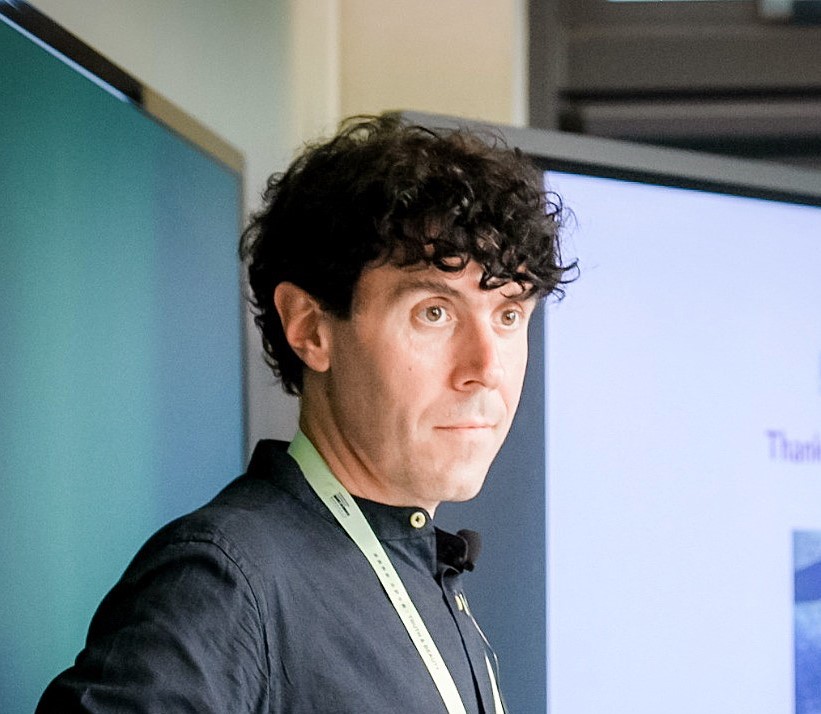
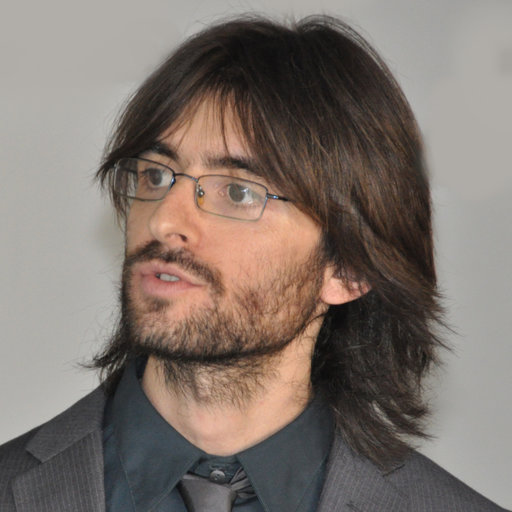
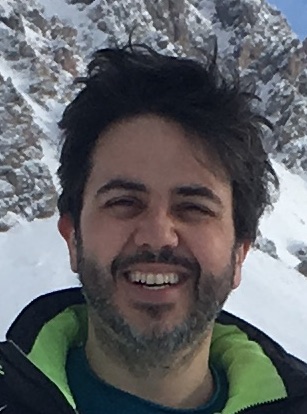
Alfonso Sorrentino is a full professor of mathematical analysis at the Department of Mathematics, University of Rome Tor Vergata. He specializes in Hamiltonian dynamical systems, with expertise in nonlinear analysis, differential geometry, and mathematical physics. He earned his Ph.D. in mathematics from Princeton University (2008) and held academic positions at the Fondation des Sciences Mathématiques de Paris (2008–2009) and the University of Cambridge (2009–2012). His research focuses on invariant structures in Hamiltonian systems, billiard dynamics, and spectral rigidity. Key recognitions include the Fubini Prize (2018), Barcelona Dynamical Systems Prize (2019), Best Paper Award (Gold medal, 2020), and Frontiers of Science Award (2023). His work bridges pure mathematics and applications, emphasizing geometric and analytic approaches to dynamical systems. Recent studies explore topics like invariant Lagrangian graphs, spectral properties of billiards, and homogenization of Hamilton-Jacobi equations on networks. His contributions reflect a commitment to advancing theoretical frameworks in dynamical systems and their interdisciplinary implications.
Bernardo Tellini is a Full Professor of Electrical and Electronic Measurements at the Department of Energy, Systems, Land, and Construction Engineering (DESTEC) at the University of Pisa, where he also serves as Vice-Rector for Doctoral Research. He has held this institutional role since 2020, overseeing doctoral program planning, accreditation, and admission procedures. Previously, he chaired the doctoral program in Energy, Electrical, and Thermal Engineering from 2012 to 2016 and served on the Leonardo da Vinci Doctoral School in Engineering from 2008 to 2016. Education: PhD in Electrical Engineering, University of Pisa (1999) Degree in Electrical Engineering, University of Pisa (1993) Postdoctoral research at Karlsruhe Research Center for Technology and Environment Industry experience at ABB Tellini's research focuses on electrical and magnetic measurement methodologies for high-power pulsed applications, characterization of electrical and magnetic properties of materials, aging processes in battery cells, and electromagnetic emissions from power circuits. His work spans from fundamental measurement theory to practical industrial applications, particularly in railway technologies where he represents the University on the Steering Committee of the District for Railway Technologies, High-Speed, and Network Safety in Tuscany. He has served as president of the European Pulsed Power Laboratories agreement and chaired major IEEE conferences including I2MTC 2015 and MELECON 2020. His recent publications reveal a strong emphasis on RFID-based localization systems , nanoparticle-enhanced optical sensors , and advanced battery characterization techniques . The research trajectory shows increasing integration of measurement science with emerging technologies like plasmonic sensing, microwire-based transducers, and smart systems for industrial monitoring. His team has developed innovative approaches for battery health monitoring under vibration stress, temperature sensing using magnetic materials, and precise localization methods using phase-based RFID systems. Professional Service: President of Italian Section of IEEE (2019-2021) Scientific director of Pisa research unit in Association of Electrical and Electronic Measurements (GMEE) Member of Certification Committee of Italcertifer SpA (since 2019) Representative on District for Railway Technologies Steering Committee (since 2013) Tellini has authored approximately 200 publications in international journals and conference proceedings. His leadership extends to academic governance through roles on the DESTEC Department Human Resources Committee and various university committees overseeing scientific qualifications and doctoral programs. His research bridges theoretical measurement principles with practical engineering solutions for energy systems, transportation infrastructure, and industrial monitoring applications.
Cosimo Lacava is an Assistant Professor at the University of Pavia, Department of Industrial and Information Engineering. He works in the Integrated Photonics Laboratory (Floor F) and specializes in silicon photonics, integrated optics, and nonlinear optics for optical communications applications. His research focuses on developing advanced photonic integrated circuits for next-generation optical networks and signal processing systems. Dr. Lacava's primary research interests include: Silicon and silicon nitride photonic devices (design, fabrication and testing) Integrated electro-optic devices for telecommunications applications Design of highly spectral-efficient optical networks enabled by advanced modulation formats Digital signal processing (DSP) for telecommunication and data communication applications Nonlinear optics for all optical signal processing His recent publication record demonstrates significant contributions to integrated photonics, particularly in wavelength conversion technologies, nonlinear signal processing, and silicon nitride platforms. The research shows a clear progression from fundamental studies of nonlinear optical properties to practical implementations of photonic integrated circuits for optical communications systems. His work bridges theoretical understanding with practical device development for real-world applications. Dr. Lacava received his education at the University of Pavia, graduating with honors in Electronic Engineering in 2011 and completing his PhD in Optoelectronics and Electronic Engineering in 2014. Prior to his current position, he worked as a Senior Research Fellow at the Optoelectronics Research Centre, University of Southampton, and as a Postdoctoral researcher at the Quantum Electronics Laboratory at the University of Pavia working on the 'Fabulous' European Project. As an educator, he teaches Physics 1 for civil and environmental engineering students. His laboratory work in the Integrated Photonics Laboratory focuses on developing and testing photonic integrated circuits with applications spanning optical communications, signal processing, and emerging quantum information systems.
Lorenzo Pavesi is a Full Professor of Experimental Physics at the Department of Physics, University of Trento (Italy), where he leads the Nanoscience Laboratory with 25 members. His academic career spans over 30 years, including roles as Assistant Professor (1990), Associate Professor (1999), and Full Professor (2002). He founded semiconductor optoelectronics research at the university and established photonics laboratories focused on growth and advanced treatment of materials. Research Focus: Silicon photonics, quantum optics, nonlinear optics, optical sensors, and neuromorphic computing. Leadership: IEEE Italian Chapter on Nanotechnology founder, editorial board member for Frontiers in Physics , ETRI Journal , and Sensors . His work bridges photonics and electronics, with recent advancements in integrated quantum photonics and neuromorphic systems. He has managed numerous national and international projects, holds 9 patents, authored over 500 papers, and edited 15+ books. Awards include the Cavaliere title (2001), IEEE Distinguished Speaker (2010-2011), and fellowships from IEEE, SPIE, and SIF.
Matteo Strozzi is an Associate Professor at the Department of Engineering Sciences and Methods, University of Modena and Reggio Emilia. His research focuses on mechanical vibrations, carbon nanotube dynamics, and nonlinear structural mechanics. He specializes in shell theories, nonlocal elasticity models, and advanced diagnostics for mechanical systems such as bearings and gears. Key research areas include vibration analysis of nanostructures, experimental validation of models, and the application of signal processing techniques (e.g., Hjorth parameters) for condition monitoring. His work addresses challenges in both theoretical and applied mechanics, with contributions to renewable energy systems (wind turbines) and additive manufacturing (3D-printed materials). Publications highlight advancements in understanding energy localization in carbon nanotubes, nonlinear resonance interactions, and the development of shell models for nanoscale structures. His research bridges continuum mechanics with modern engineering applications, emphasizing both fundamental science and industrial relevance.
Luca Schenato is a Full Professor in the Department of Information Engineering at the University of Padova. His research focuses on distributed control systems, federated learning, multi-agent optimization, and wireless communication protocols. He has extensive experience in developing algorithms for cyber-physical systems, with applications in robotics, smart grids, and sensor networks. Education and Appointments section lists his academic journey but lacks explicit details. He has held positions related to control systems and information engineering throughout his career. Research interests include: Design of resilient wireless control systems Federated learning architectures for edge computing Distributed optimization under communication constraints Robotics and multi-agent coordination Smart energy management systems His recent publications (2021–2025) demonstrate a strong focus on: Over-the-air federated learning innovations High-speed wireless control systems (e.g., 1 kHz Wi-Fi control) Resilient distributed optimization algorithms Human-centric building automation He has contributed to numerous projects related to networked control systems and has organized conferences like ECC13. His work emphasizes bridging theoretical control principles with practical industrial applications.
Alessio Lugnan is an Assistant Professor at the Department of Physics, University of Trento, specializing in photonic neural networks and neuromorphic computing. His research bridges nonlinear dynamics, silicon photonics, and machine learning. Research Focus: Photonic neural networks, reservoir computing, and biologically plausible learning models. Technologies: Silicon microring resonators, integrated photonics, and all-optical memory systems. Recent publications highlight his work on leveraging nonlinear dynamics in photonic systems for advanced signal processing, image classification, and memory retention. He explores the intersection of optical computing and machine learning to enhance computational efficiency. Collaborations include Lorenzo Pavesi, Stefano Biasi, and Alessandro Foradori, focusing on scalable photonic architectures. No explicit awards, grants, or student advisement details are available in the provided text.
Leonardo Ricci is an Associate Professor at the Department of Physics, University of Trento , with a 28-year teaching career spanning 56 courses (31 in English) and extensive roles in the Interdepartmental Center for Mind/Brain Sciences - CIMEC (30% affiliation). His research bridges nonlinear dynamics , information theory , and neuroscience , focusing on chaos detection in time series and entropy analysis. Academic Career : From 1994 post-doc at Max-Planck-Institut to 2022 promotion to Associate Professor Teaching : Courses in Experimental Physics, Advanced Electronics, and Statistical Methods across Physics and Computer Science programs Ricci leads the NSE Lab (Nonlinear Systems and Electronics) , developing hardware/software systems for experimental research. His 2022 Entropy cover story on permutation entropy highlights his impact in information theory. Scientific Contributions : 20 patents (visibility measurement devices), collaborations with international researchers on complex systems Editorial Roles : Associate Editor for Chaos, Solitons & Fractals and Frontiers in Network Physiology
Riccardo Piccoli is a Researcher at the Department of Molecular Sciences and Nanosystems, Ca' Foscari University of Venice. He serves as a Laboratory Supervisor at the Research Institute for Complexity Safety and teaches courses such as Fundamentals of Electronics in the Physical Engineering degree program. PhD in Electronic, Computer, and Electrical Engineering (University of Pavia, 2014) Master's in Electronic Engineering (University of Pavia, 2011) Bachelor's in Electronic and Telecommunications Engineering (University of Pavia, 2009) His research focuses on ultrafast lasers and terahertz technology, particularly in quantum matter-light interactions and hollow-core fiber applications . Recent work includes terahertz imaging techniques and high-power laser pulse compression. He collaborates with institutions across Europe, North America, and the Middle East. Dr. Piccoli's publications highlight advancements in terahertz coherent detection , nonlinear photonics , and microfluidic waveguides . He leads research projects involving quantum optics, nanocavity interactions, and biomedical imaging applications. He is affiliated with the Research Institute for Complexity Safety and has held research roles at Polytechnic University of Milan, Weizmann Institute of Science, Max-Planck-Institut für Kernphysik, and INRS-EMT. His expertise spans terahertz spectroscopy, ultrafast phenomena, and photonic material design.
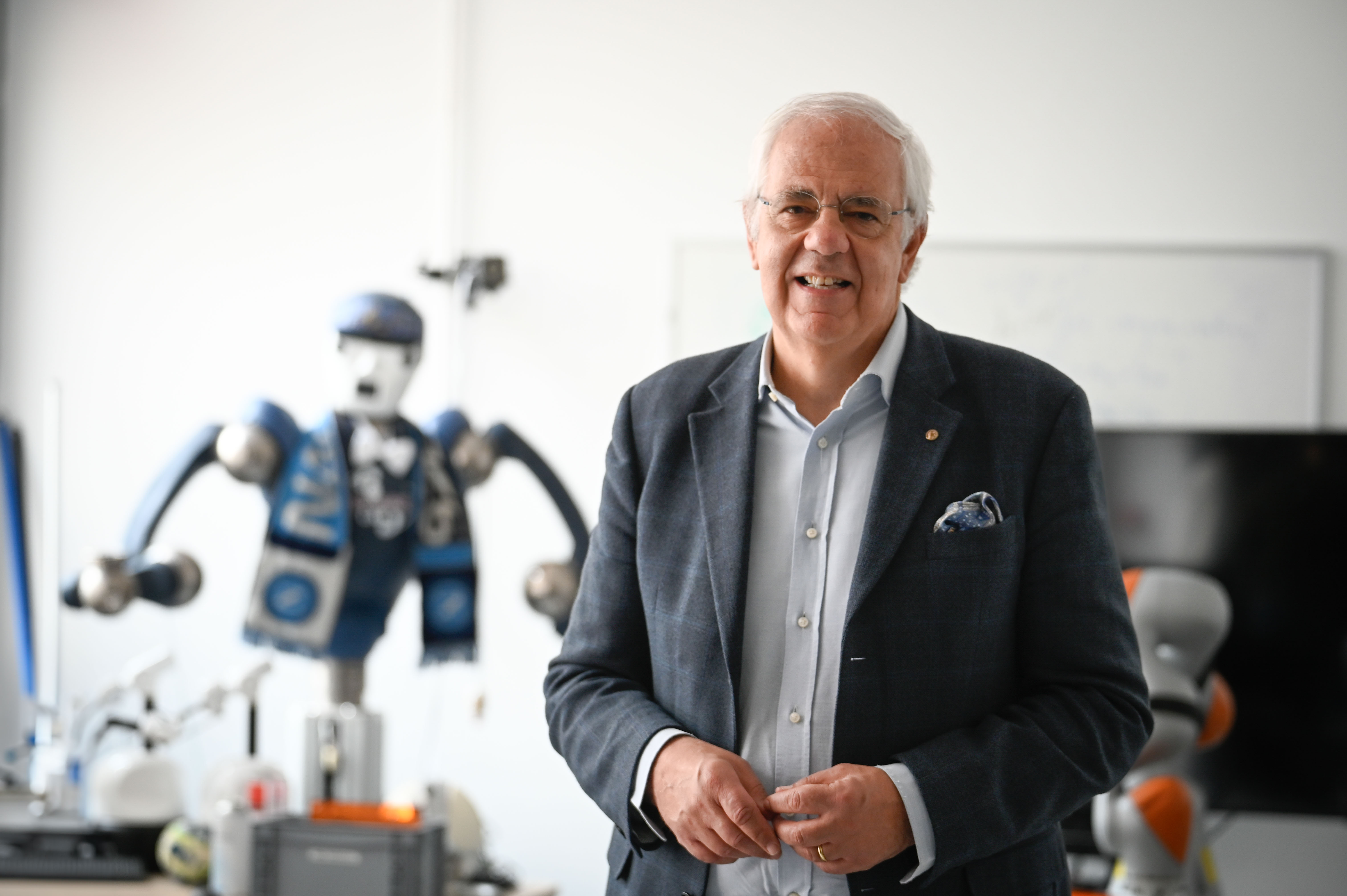
Prof. Bruno Siciliano is a full Professor of Automatics and Robotics at the University of Naples Federico II's Department of Electrical Engineering and Information Technology (DIETI). He directs the PRISMA Lab and chairs the Scientific Council of the ICAROS Center. His research focuses on robotics, automation, and human-robot interaction, with notable contributions to medical robotics, deformable object manipulation, and AI integration. He has received prestigious awards such as the 2024 IEEE RAS Pioneer Award and is a Fellow of multiple international organizations. Affiliations: Director, PRISMA Lab Chair, ICAROS Center Scientific Council Member, ACN Technical-Scientific Committee Research Interests: His work spans robotics education, surgical robotics, non-prehensile manipulation, and AI-driven robotic systems. Notably, his projects include the ERC-funded EndoTheranostics initiative for robotic colonoscopy and RoDyMan for dynamic manipulation. His contributions bridge robotics with healthcare, automation, and cognitive systems. Awards & Honors: 2024 IEEE RAS Pioneer in Robotics and Automation Award Genio Award (2024) for pioneering Italian robotics Fellowships: IFAC, IEEE RAS, and international AI associations Grants & Leadership: ERC Synergy Grant (2023, 10M€) and Advanced Grant (2013) Leadership roles in IEEE RAS and international robotics initiatives Labs & Teams: PRISMA Lab focuses on robotics paradigms like design, knowledge, and human-robot interaction, with projects in medical robotics and autonomous systems.
Gabriella Bosco is a Full Professor at Politecnico di Torino in the Department of Electronics and Telecommunications. She specializes in optical communication systems, focusing on fiber optics transmission, digital signal processing (DSP), and nonlinear effects mitigation. Her roles include Editor-in-Chief of the IEEE/OSA Journal of Lightwave Technology and Board member of the IEEE Photonics Society. She earned her Telecommunication Engineering degree (1998) and PhD (2002) from Politecnico di Torino. Research Interests: Performance analysis and design of optical transmission systems Application of DSP in optical links Fiber-optic sensor networks and anomaly detection Nonlinear interference mitigation techniques Awards: OSA Fellow (2017) IEEE Fellow (2019) 2014 & 2015 Best Paper Award in Journal of Lightwave Technology Professional Service: Program Chair/General Chair of OFC 2017-2019 Editorial roles in major photonics journals EU-funded projects: E-Photon/One, Nobel, BONE Labs & Groups: Leading the OptCom Group, a pioneer in optical communications research since 2000. Collaborates with industry leaders including Huawei and Cisco.
Vittorio Curri is a Full Professor in Optical Communications and Networking at the Department of Electronics and Telecommunications (DET) of Politecnico di Torino , Italy. He is a founding member of the OptCom Group and PhotonLab and leads the PLANET research team. His work spans optical network modeling, AI-assisted control, open-source software (GNPy), and environmental sensing via optical fiber. He has led numerous EU and industry-funded projects and is a key figure in open optical networking. Research Interests: Multi-band optical transmission in single-mode fibers Physical layer aware networking Machine learning and AI for optical network optimization Environmental sensing using optical network telemetry Open and disaggregated optical networks Digital twin development (GNPy project) WDM and coherent transmission modeling The recent publications reflect a strong trend toward integrating AI and machine learning with digital twin technologies for real-time network control, anomaly detection, and performance optimization. There is a clear focus on wideband, multi-band, and converged metro-access networks , with modeling efforts extending to filtering effects, polarization, and nonlinear impairments. The research is highly applied, with strong industry collaboration and open-source contributions. Scientific Awards: Concorso "Galileo Feraris" (2002) JLT Best Paper Award (2014, 2015) FFABR 2017 Research Grant Advising and Grants: Prof. Curri has supervised 25 PhD students and numerous postdocs. He has served as Principal Investigator on major projects including WON (EU H2020) , ALLEGRO , NESTOR , RESTART , SENSEI , and SCIPIO . He leads the GNPy open-source project under TIP and has extensive collaborations with Synopsys, Open Fiber, INFINERA, and CESNET. His research is funded by EU programs (Horizon Europe, H2020), PNRR, and multiple industrial contracts. Labs and Teams: He leads the PLANET (Physical Layer Aware NETworking) team, a subgroup of the OptCom Group at PoliTo. The team focuses on simulation, modeling, and AI-driven control of next-generation optical networks. They collaborate closely with the LINKS Foundation and international partners including Soochow University and CESNET .
Antonio Papangelo is an Associate Professor at the Department of Mechanics, Mathematics & Management of the Politecnico di Bari , Italy. His research focuses on mechanical design and machine construction, particularly in contact mechanics, adhesion phenomena, and viscoelastic material behavior. Email: antonio.papangelo@poliba.it Research Areas: Tribology, Adhesion Mechanics, Viscoelasticity, Fracture Mechanics, Nonlinear Dynamics Current research explores adhesion enhancement through microvibrations, viscoelastic friction in sliding/rolling contacts, and dynamic JKR adhesion problems. Studies often combine multi-scale modeling and experimental validation to address challenges in soft robotics and automotive engineering (e.g., porpoising suppression in race cars). Scientific contributions span tribology , contact mechanics , and nonlinear vibration analysis , with publications covering topics like surface topography characterization, mechanochromic suction cups, and fatigue crack propagation laws. His work bridges theoretical modeling and practical applications in mechanical systems.
Marco Cannas is a Full Professor at the Department of Physics and Chemistry of the University of Palermo. His research focuses on advanced materials science, including 2D materials (MoS₂), metal-organic frameworks (MOFs), optical fibers, and nanocomposites. He investigates optoelectronic properties, defect engineering, and applications in photonics, environmental sensing, and energy materials. His work spans synthesis techniques like sulfurization, thermal treatments, and colloidal approaches. Cannas' studies often employ advanced characterization methods such as Raman spectroscopy, transient absorption, and atomic resolution microscopy. Education & Affiliations: University of Palermo - Department of Physics and Chemistry Active roles in materials physics research groups Research Interests: Nanomaterials synthesis and characterization (e.g., carbon dots, quantum dots) Radiation effects on semiconductor materials (SiC, optical fibers) MOF-based sensors and photocatalytic systems 2D material heterojunctions for optoelectronics Key Contributions: Developed tunable luminescent materials for sensing and optoelectronics Advanced understanding of MoS₂ doping and strain effects Studied radiation-induced defects in optical fibers for aerospace applications Labs/Teams: Active in the University's Materials Physics and Photonics laboratories, collaborating on EU-funded projects.
Giorgio Zavarise is a Full Professor in the Department of Structural, Building and Geotechnical Engineering (DISEG) at the Politecnico di Torino, where he also contributes to the SISCON Interdepartmental Center for Safety of Infrastructures and Constructions. His academic work spans computational and structural mechanics, with a focus on contact mechanics, finite element methods, and thermomechanical modeling. He has held leadership roles in numerous international conferences and serves on the editorial board of Computational Mechanics . His research interests include contact mechanics, isogeometric analysis, cohesive zone modeling, beam-to-beam contact, and the mechanics of masonry and massive concrete structures. He has extended his work into advanced technological applications such as subatomic particle detectors (e.g., Mu2e, SuperB, MEG), thermonuclear fusion (RFX, ITER), large optical telescopes (LBT), and structural fire analysis. His methodologies integrate physical modeling with computational efficiency, often involving multi-scale and coupled problems. The recent publications reflect a strong trend in computational contact mechanics, particularly using NURBS and T-splines for isogeometric analysis, as well as cohesive zone models for fracture and delamination. His work consistently emphasizes algorithmic robustness, geometric accuracy, and real-world engineering applications across civil, aerospace, and energy sectors. Scientific Awards and Recognitions: Fellow of the International Association for Computational Mechanics (IACM), 2013–2022 Professional Memberships: Full Member, IACM Full Member, Italian Group of Computational Mechanics Full Member, AIMETA (Italian Association of Theoretical and Applied Mechanics) Full Member, EUROMECH (European Mechanics Society) Advising and Grants: He has supervised PhD students in Civil, Mechanical, and Complex Systems Engineering at Politecnico di Torino and Università del Salento. He has led multiple PRIN-funded national research projects on contact and fracture mechanics and is currently managing a commercial consulting project on reconstructed stone materials. His editorial role in Computational Mechanics and chairmanship of the ICCCM series highlight his leadership in the computational mechanics community. He has also contributed to the Encyclopedia of Computational Mechanics . Laboratories and Teams: He is affiliated with the SISCON Interdepartmental Center, focusing on infrastructure safety, and collaborates internationally with institutions such as INFN (Lecce), Fermilab, CNR, and the University of Arizona’s Steward Observatory.