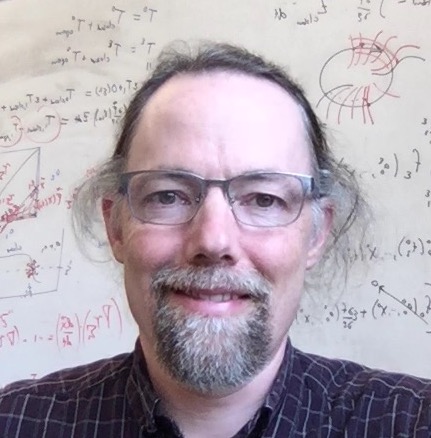
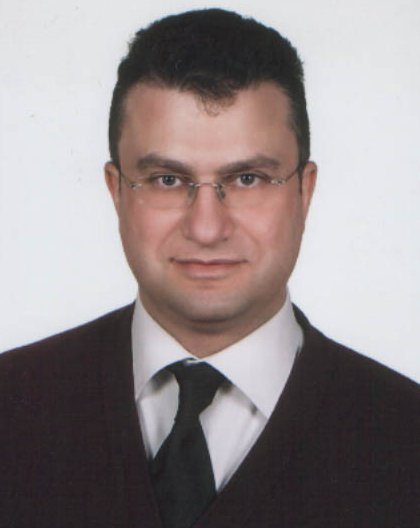
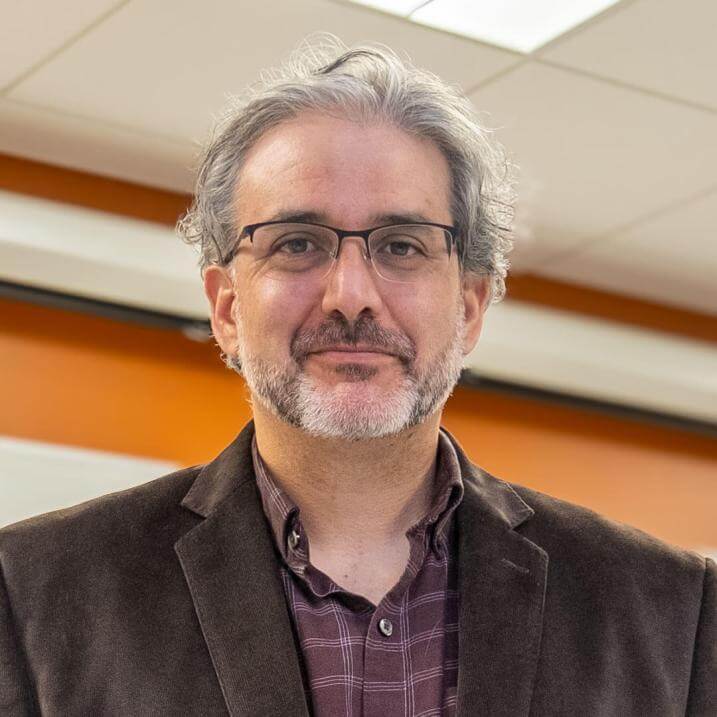
Mikael Johansson is a Professor at Kungliga Tekniska Högskolan (KTH), specializing in Control Technology . He teaches and coordinates courses such as Distributed Optimization (FEL3311) and various advanced-level degree projects in computer science, electrical engineering, and systems engineering. His research spans Control Systems , Machine Learning , and Optimization , with a focus on asynchronous algorithms, federated learning, and applications in energy systems and construction. His work includes 15 recent publications on topics like neural networks, distributed optimization, and battery technology. Notable areas of contribution are in asynchronous learning, federated learning with privacy constraints, and quasi-Newton methods for optimization. His research bridges theoretical advancements with practical applications in urban design, healthcare, and autonomous systems.
Mikael Gidlund is a Full Professor of Computer Engineering at Mid Sweden University in Sundsvall and holds an adjunct professorship at Beijing Jiaotong University, China. He serves as head of the Computer Engineering subject and program manager for the international MSc program in Computer Engineering. His academic journey includes a Ph.D. in Electrical Engineering from Mid Sweden University (2005), followed by roles at ABB Corporate Research (2008-2014) where he led wireless technologies research. Dr. Gidlund's research spans Wireless Communication, Industrial IoT, 5G/6G Networks, and Network Security . His group focuses on AI/ML for beyond-5G wireless communication, time-critical industrial applications, and IoT security. Current research themes include Future Wireless Networks (5G/6G) using AI/ML, Time-and mission-critical wireless communication, Industrial IoT, and IoT Security. His work demonstrates strong interdisciplinary connections between wireless systems, industrial automation, and security. His publication portfolio includes over 200 scientific articles and 20+ patents. Recent publications show a clear trend toward AI/ML integration in wireless systems, NOMA techniques, RIS technologies, and security solutions for industrial applications. The research output demonstrates strong international collaboration across six continents. Best Paper Award at IEEE International Conference on Industrial IT (2014) Co-author of IEEE Sweden VT-COM-IT Joint Chapter Best Student Journal Paper Award (2022) Dr. Gidlund actively mentors 6 current PhD students and has supervised 16 former PhD students who now hold positions at institutions including Ericsson, Lund University, Aalborg University, and Mid Sweden University. His research is supported by multiple active projects including IRS TransTech, NIIT, ENSURE 6G, and TRUST. He collaborates with institutions worldwide including City University of Hong Kong, Iowa State University, Kyung Hee University, and KTH Royal Institute of Technology. His research group maintains strong industry connections through projects with ABB, Ericsson, and other industrial partners, focusing on practical implementations of wireless technologies for industrial automation and critical infrastructure.
Christopher Rycroft is a Professor and Associate Chair in the Department of Mathematics at the University of Wisconsin–Madison. He leads the Rycroft Group, which focuses on mathematical modeling and scientific computation for interdisciplinary applications in science and engineering. Prior to joining UW-Madison in summer 2022, he was a professor at Harvard University's School of Engineering and Applied Sciences from 2014-2022, and before that a Morrey Assistant Professor at UC Berkeley from 2010-2013. Professor Rycroft's research spans three main areas: numerical methods for material mechanics, data-driven discovery, and computational geometry. His group develops new computational methods while working directly with domain scientists. Key achievements include the development of the reference map technique for fluid-structure interaction, Voro++ software library for Voronoi tessellation, and novel approaches to understanding crumpling physics. His work combines traditional analysis and modeling with machine learning methods to extract scientific insights from complex data. The Rycroft Group's publication record demonstrates a strong trajectory of interdisciplinary research bridging mathematics, physics, materials science, and biology. Recent work has focused on fluid-structure interaction, computational geometry applications, mechanical metamaterials, and biological fluid dynamics. The group develops both theoretical frameworks and practical software tools that have found applications across diverse scientific domains from materials science to virology. Everett Mendelsohn Award for Excellence in Mentorship (2021) Professor Rycroft has advised numerous PhD and master's students who have gone on to postdoctoral positions at institutions including MIT, EPFL, and Cornell. His teaching includes advanced scientific computing courses that have quadrupled in enrollment during his tenure. He has secured research funding supporting his group's work on computational methods and interdisciplinary applications. The Rycroft Group consists of graduate students, postdocs, and collaborators with diverse backgrounds in applied mathematics, physics, engineering, and computer science. The group maintains active collaborations with researchers across multiple institutions and participates in centers such as the Harvard Quantitative Biology Initiative.
Boris Buffoni is a Senior Lecturer at École Polytechnique Fédérale de Lausanne (EPFL) in the School of Basic Sciences, Institute of Mathematics, specifically within the Chair of Partial Differential Equations. He maintains his office at MA C2 605 (MA Building), Station 8, 1015 Lausanne, Switzerland, and can be contacted at boris.buffoni@epfl.ch or +41 21 693 49 87. His academic role spans both teaching responsibilities across multiple mathematics programs and active research in theoretical and applied mathematics. Dr. Buffoni's research program centers on the calculus of variations applied to Lagrangian and Hamiltonian systems, with significant contributions to optimal transportation in Lagrangian dynamics and hydrodynamics. His work explores semi-global minimization methods for quasi-linear elliptic variational problems and the variational approach to capillary-gravity water waves and their energetic stability. Additional research foci include local bifurcation and center-manifold theory for elliptic PDEs, the configurations of infinite elastic cylinders under compression or traction, and the analytic theory of global bifurcation with applications to gravity waves and their secondary bifurcations. The trajectory of his recent publications reveals a deepening focus on three-dimensional water wave phenomena, particularly steady rotational flows, gravity-capillary solitary waves, and advanced mathematical techniques for analyzing these complex systems. His 2025 publications demonstrate continued innovation in applying Kato's approach to locally coercive problems and developing the theoretical foundations of global bifurcation. The consistent application of variational methods and bifurcation theory across his work represents a unifying theme in addressing challenging problems in fluid dynamics and nonlinear partial differential equations. Dr. Buffoni has received research support including an EPSRC grant (GR/L41059) for work on 'Multibump localised solutions for spatially homogeneous partial differential equations,' reflecting the significance of his contributions to the field. His teaching portfolio at EPFL includes foundational courses such as Analysis II, Functional Analysis I, and Partial Differential Equations of Evolution, where he imparts knowledge of differential and integral calculus of real functions of several variables, linear functional analysis, and fundamental techniques for solving evolution equations.
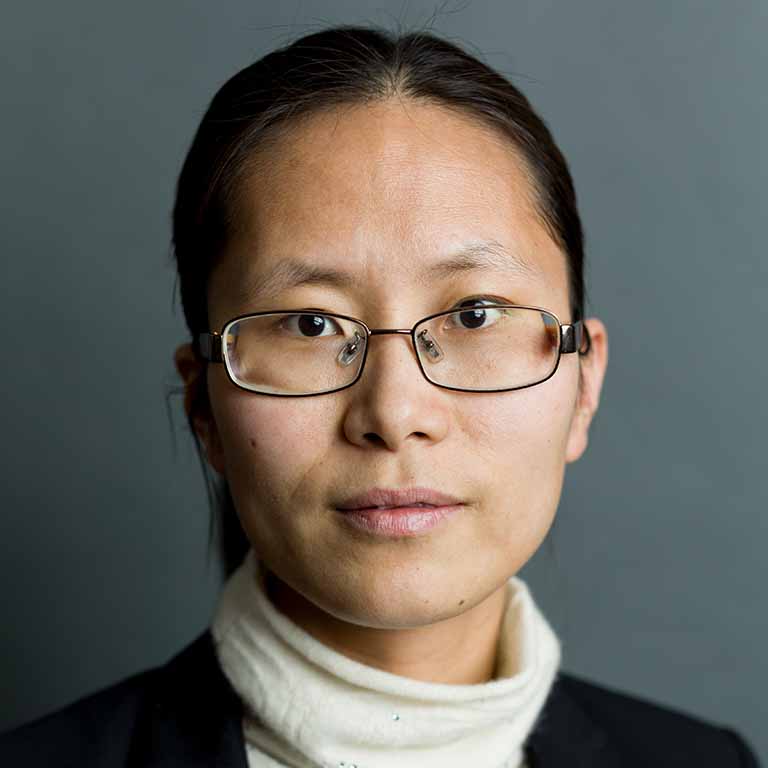
Ruli Xiao serves as Associate Professor and Director of Graduate Studies in the Department of Economics at Indiana University Bloomington's College of Arts and Sciences. Her academic office is located in Wylie Hall (Room 349), with contact details including email rulixiao@iu.edu and phone (812) 855-3213. Her academic credentials include: B.S. in Statistics from Tongji University M.A. in Economics from Shanghai University of Finance and Economics Ph.D. in Economics from Johns Hopkins University (2014) Dr. Xiao's research program emphasizes Empirical Industrial Organization and Micro-econometrics , specializing in methodological solutions for complex economic modeling scenarios. Her work develops identification frameworks for finite action games where multiple equilibria coexist with unobserved market heterogeneity, advancing estimation techniques for real-world industrial applications. Her publication profile demonstrates consistent focus on econometric theory development, particularly in dynamic modeling with unobservables as evidenced by her 2017 Journal of Econometric Methods paper. Current research trajectories indicate continued innovation in nonparametric methods for structural industrial organization models. As Director of Graduate Studies, Dr. Xiao oversees all graduate programs including M.A., M.S., and Ph.D. tracks, guiding curriculum development and student progression through rigorous economics training.
Heikki Remes serves as Associate Professor in the Department of Energy and Mechanical Engineering at Aalto University's School of Engineering, where he investigates high-performance steel structures for marine environments with emphasis on lightweight ship designs using advanced materials and manufacturing techniques. His research integrates fundamental fatigue and fracture mechanics with practical structural challenges, spanning from crystal-level material behavior to continuum-scale modeling. Key focus areas include welded joint integrity, additive manufacturing defects, and computational analysis of marine structures under extreme conditions. Recent publications reveal strong trends in fatigue assessment methodologies for complex welded geometries, experimental validation of distortion effects, and AI-enhanced damage prediction systems, reflecting his commitment to bridging theoretical mechanics with shipbuilding applications. Scientific Awards: Aalto Education Impact Award (2018) for establishing Marine Technology study programs SNAME Honorable Mention for 2018 Vice Admiral E. L. Cochrane Award Teaching Award of Aalto School of Engineering (2012) for educational tools No specific student advising or grant information appears in available sources, though his active publication record indicates ongoing research leadership. He contributes significantly to the Marine and Arctic Technology research group, driving projects on structural integrity assessment and advanced manufacturing solutions for next-generation marine vessels.
Professor Lyudmila Mihaylova is a distinguished academic at the University of Sheffield's School of Electrical and Electronic Engineering, where she holds the position of Professor of Signal Processing and Control. She has established herself as a leading researcher in the fields of signal processing, Bayesian methods, and autonomous systems, with significant contributions to particle filtering techniques for intelligent transportation systems. Her work bridges theoretical developments with practical applications across multiple domains including transportation, healthcare, and industrial automation. Prof. Mihaylova's research interests center on nonlinear filtering, sequential Monte Carlo methods, statistical signal processing, and sensor data fusion. Her work spans both theoretical advancements and practical implementations, with particular focus on high-dimensional problems including vehicular traffic flow estimation, image processing, and localization in sensor networks. She has extensive experience with various image modalities such as optical, thermal, LIDAR, SAR, and hyperspectral imaging. Her group actively develops novel methods for autonomous intelligent systems focusing on sensing, tracking, decision making, and machine learning applications. Analysis of Prof. Mihaylova's recent publications reveals a strong trend toward uncertainty quantification in machine learning models, particularly for safety-critical applications. Her work increasingly integrates traditional signal processing techniques with modern deep learning approaches, with applications spanning sewer inspection robotics, medical diagnostics (particularly sleep apnea detection), UAV swarm tracking, industrial manufacturing, and autonomous vehicle systems. A significant portion of her recent research focuses on developing robust methods that can handle incomplete or outlier-corrupted data while providing reliable uncertainty estimates. Among her notable professional achievements: President of the International Society of Information Fusion (ISIF) Senior member of the IEEE Signal Processing Society Associate Editor for IEEE Transactions on Aerospace and Electronic Systems Associate Editor for Elsevier Signal Processing Journal Prof. Mihaylova has successfully mentored numerous PhD students and postdoctoral researchers, many of whom have gone on to prominent academic and industry positions. Her research has been supported by major funding bodies including EPSRC, EU, MOD/DSTL, and industry partners, with recent projects including 'Protecting Environments with UAV Swarms' (InnovateUK, 2022-2024), 'ShiRAS: Towards Safe and Reliable Autonomy in Sensor Driven Systems' (NSF-EPSRC, 2019-2023), and 'Confident safety integration for Cobots' (Lloyd's Register Foundation, 2019-2020). Her research group follows a collaborative approach with the philosophy 'We share knowledge, we grow.' Prof. Mihaylova maintains active research collaborations with institutions worldwide and has held previous academic positions at Lancaster University (2006-2013) and University of Bristol (2004-2006), along with research visiting positions at the University of Ghent, Katholic University of Leuven, and the Bulgarian Academy of Sciences.
Peter J. Thomas is a Professor in the Department of Mathematics, Applied Mathematics, and Statistics at Case Western Reserve University's College of Arts and Sciences, with secondary appointments in Electrical Engineering and Computer Science, Cognitive Science, and Biology. He serves as Co-Editor-in-Chief of Biological Cybernetics and leads the Computational Biomathematics Laboratory. Primary Affiliation: Department of Mathematics, Applied Mathematics, and Statistics Secondary Affiliations: Department of Electrical Engineering and Computer Science, Department of Cognitive Science, Department of Biology Leadership: Co-Editor-in-Chief of Biological Cybernetics Thomas earned his B.A. in Physics and Philosophy from Yale University (1990), M.S. in Mathematics from the University of Chicago (1994), and both M.A. in Conceptual Foundations of Science and Ph.D. in Mathematics from the University of Chicago (2000). His research spans mathematical neuroscience, theoretical biophysics, and information theory applications to biological systems. Thomas specializes in understanding how noise and stochasticity affect neural coding, developing mathematical frameworks for gradient sensing in cells, and applying graph theory to biological networks. His work on stochastic shielding has provided novel approaches to simplifying complex stochastic models while preserving essential dynamics. His research bridges theoretical mathematics with experimental neuroscience through collaborations with the Chiel laboratory and others. Thomas's recent publications demonstrate a strong focus on stochastic oscillators, sensory feedback mechanisms, and information theory applications to biological systems. His work consistently develops novel mathematical frameworks to address specific biological questions, with significant contributions to understanding phase dynamics in neural oscillators and information processing in biochemical signaling. Core Fulbright Scholar Program (2013) Simons Fellow in Mathematics Program (2014) Multiple NSF grants as Principal Investigator Co-Editor-in-Chief of Biological Cybernetics Thomas has mentored numerous students at all levels, from undergraduates to postdoctoral researchers. His laboratory has produced successful scholars who have gone on to faculty positions at institutions like New Jersey Institute of Technology and the University of Nevada, Reno. He has actively organized workshops at the Banff International Research Station and served on editorial boards for leading journals in computational neuroscience. The Computational Biomathematics Laboratory focuses on developing mathematical frameworks to understand neural dynamics, cellular signaling, and pattern formation. The lab maintains strong collaborations with experimental neuroscience groups and has made significant contributions to understanding rhythmic neural systems, respiratory control mechanisms, and information processing in biological systems.
Professor Serdar Özoğuz is a full faculty member at the Department of Electronics and Communication Engineering , Istanbul Technical University . Holding a Ph.D. from ITU (2000) and a M.Sc. from ITU (1993) , he has taught courses like Active Network Synthesis , Basics of Electrical Circuits , and Scientific Research Ethics since 2014. His research focuses on Active RC filters Nonlinear electronic circuits Analog integrated circuit design Network synthesis . His recent publications emphasize machine learning applications in RF/microwave design , quantum computing for CAD tools , and emerging memory devices . The department's Devreler ve Sistemler Laboratuvarı Çok Geniş Ölçekli Tümdevre (VLSI) Tasarımı Laboratuvarı likely support his work. Despite no explicit awards listed, his 15+ recent articles in high-impact journals underscore his technical contributions.
Sanjeev Kulkarni is the William R. Kenan, Jr. Professor of Electrical and Computer Engineering and Operations Research & Financial Engineering at Princeton University. He is associated with the Department of Philosophy and has held significant administrative roles including Dean of the Graduate School (2014-2017), Director of the Keller Center (2011-2014), and Master of Butler College (2004-2012). His research spans Statistics , Machine Learning , Applied Probability , Information Theory , and Signal Processing , with applications to Wireless Networks , Econometrics , and Control Systems . He has co-authored over 100 publications and supervised numerous PhD and Master’s students.
Marco Pirola is a Full Professor at the Department of Electronics and Telecommunications (DET) of the Polytechnic University of Turin, Italy. He is a member of the Interdepartmental Center 'CleanWaterCenter@PoliTo' and actively contributes to research in high-frequency electronics and microwave engineering. His work focuses on power amplifiers, device characterization, and advanced microwave circuit design. Research Interests: Microwave power devices, GaN technology, 5G/mm-Wave applications, space communications, and smart pipeline monitoring systems. Awards: IEEE Fellow (since 2019), IEEE Senior Member. Recent Publications address topics like Ka-band MMIC amplifiers for SAR systems, broadband Doherty amplifiers using GaN, and harmonic analysis of current-mode power stages. His projects include STARGATE (European GaAs power architectures) and Millimetre-Wave GaN Radar for UAV detection. Teaching: He leads courses on 'Radio Frequency Integrated Circuits' and 'Advanced Devices for High Frequency Applications' at the Polytechnic University of Turin. Supervised PhD students include Wenjun Zhang and Abbas Nasri, who worked on III-V HEMT circuits and GaN power amplifiers.
Summary Luis A. Duffaut Espinosa is an Assistant Professor in the Department of Electrical and Biomedical Engineering at the University of Vermont (UVM), affiliated with the College of Engineering and Mathematical Sciences. His research focuses on control theory, estimation, robotics, and nonlinear systems with applications in autonomy, quantum control, and environmental monitoring. He holds a Ph.D. in Electrical and Computer Engineering from Old Dominion University (2009) and has held academic positions at George Mason University and postdoctoral roles at Johns Hopkins University and the University of New South Wales. Education: Ph.D. in Electrical and Computer Engineering (2009), Old Dominion University M.S. in Mathematics (2005), Pontificia Universidad Católica del Perú B.S. in Physics (2003), Universidad Nacional de Ingeniería, Peru Research Interests: His work emphasizes data-driven control and estimation methodologies, including model-free approaches for power systems, environmental monitoring, and quantum control. Current projects include real-time data assimilation in harsh environments, resilient robotics in GPS-denied conditions, and SAR with small satellites. He co-directs the Autonomous and Intelligent Systems Research Laboratory (AIRLab) and is part of the CREATE center. Recognition: 2024 NSF CAREER Award for work on safety-aware data-driven control frameworks Teaching & Advising: He teaches courses in estimation theory, control systems, and signal processing. Advises a team of graduate and undergraduate students focusing on autonomy, robotics, and control systems. Notable students include Danial Waleed (Ph.D. 2024), Jacob Friz-Trillo (M.S. 2025), and Farnaz Boudaghi (Ph.D. candidate). Labs & Collaborations: AIRLab: Focuses on data-driven control for autonomy in robotics and engineered systems CREATE: Research on resilient energy and autonomous technologies
Dr. David Ayuso is a researcher at the Max Born Institute for Nonlinear Optics and Short Pulse Spectroscopy in Berlin, Germany, associated with the Strongfield Theory Group. His work focuses on ultrafast phenomena in chiral molecules, attosecond physics, and nonlinear optics. He contributes to understanding electronic and nuclear dynamics under extreme light-matter interactions. Research interests include photoionization dynamics, chiral sensitivity detection, and the development of synthetic chiral light techniques for molecular imaging. His recent studies explore geometric magnetism effects, polarization control, and enantio-selective observables in ultrafast spectroscopy. Key collaborations involve international teams working on high harmonic generation, X-ray scattering in liquids, and theoretical modeling of chiral systems. His publications frequently appear in Science Advances , Nature Photonics , and Optics Express .
Monica Olvera de la Cruz is the Lawyer Taylor Professor of Materials Science and Engineering, Chemistry, and Chemical & Biological Engineering at Northwestern University, with a courtesy appointment in Physics and Astronomy. She directs the Center for Computation & Theory of Soft Materials and serves as Deputy Director of the Center for Bio-Inspired Energy Science. Her research focuses on designing responsive materials, including polymers, electrolytes, and complex fluids, with applications in biotechnology and energy. She holds a Ph.D. from Cambridge University (1985) and a B.A. from UNAM (Mexico). Her research interests include self-assembly of heterogeneous molecules, ionic-driven assembly mechanisms, and functional materials design. Recent work highlights include modeling electrostatic effects in biomimetic systems and exploring superionic conductors. Awards include National Academy of Sciences membership (2012), APS Polymer Prize (2017), and American Philosophical Society membership (2020). Professional service roles: Gordon Research Conferences Board, DOE Basic Energy Sciences, Max Planck Institute advisory board Led over 150 publications since 2020, emphasizing soft matter physics and materials innovation Her group's innovations bridge theoretical physics and applied materials science, with notable achievements in bio-inspired materials and electrochemical systems.
Professor Efthymios Pavlidis is a faculty member in the Department of Economics at Lancaster University Management School (LUMS). He holds the rank of Professor and specializes in macroeconomics, international finance, and time series econometrics. His research focuses on housing market dynamics through collaborations like the International Housing Observatory (with the Federal Reserve Bank of Dallas) and the UK Housing Observatory. He is a Fellow of the Higher Education Academy, reflecting his commitment to academic excellence in teaching and research. His research interests include speculative bubble detection, real estate price forecasting, and testing parity conditions in financial markets. Pavlidis actively supervises PhD students in applied time series econometrics, emphasizing practical applications in financial markets and housing economics. He is involved in numerous academic activities, including organizing conferences and workshops such as the Dynare Conference and the Lancaster Economics Seminar. Key contributions include developing econometric methods for detecting market exuberance and analyzing real exchange rates. His work bridges theoretical econometrics with practical policy implications, particularly in housing and energy markets. Pavlidis collaborates internationally, evidenced by his participation in global academic networks and institutions like the European Economic Association and the Royal Economic Society. His teaching includes the course ECON222 Intermediate Macroeconomics I, and he maintains an office in the Management School (B015), with weekly office hours on Tuesdays. A comprehensive overview of his research and projects is available at his personal webpage: https://sites.google.com/view/etpavlidis/ .