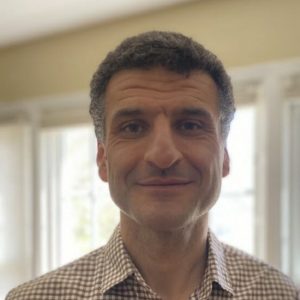
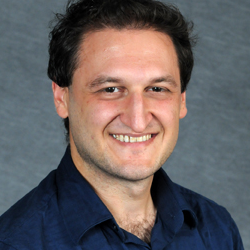
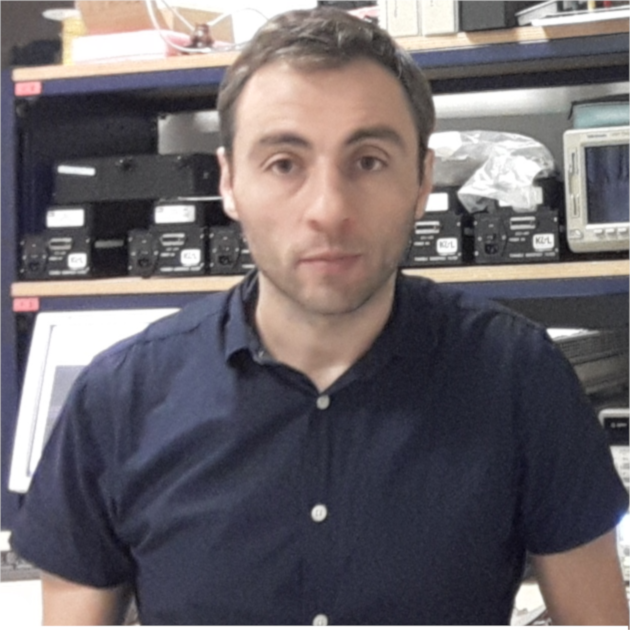
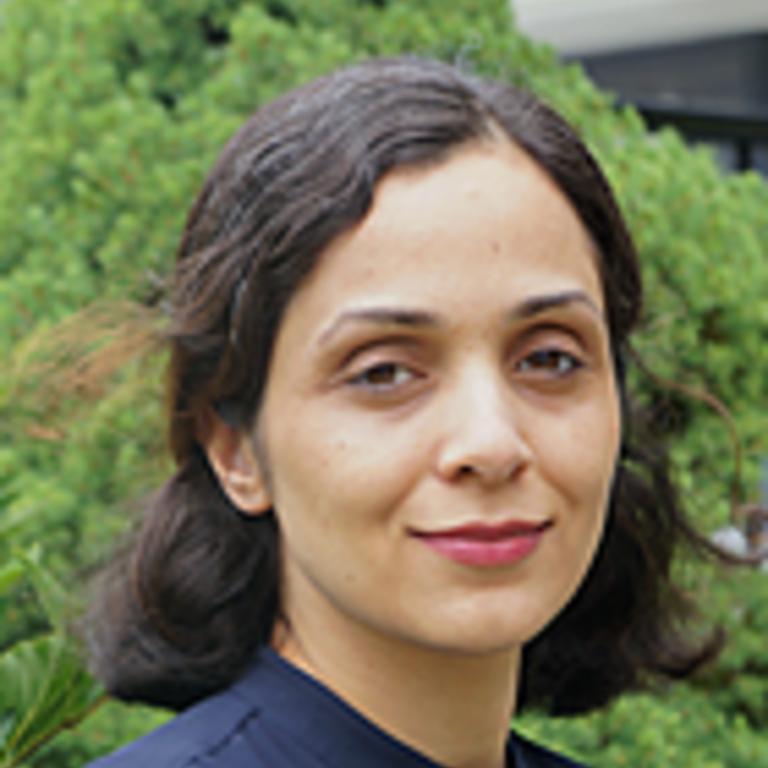
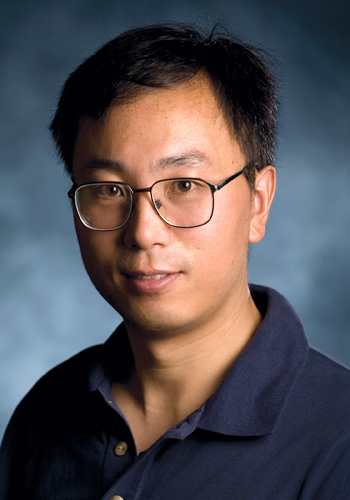
Alex Kiselev is the William T. Laprade Professor of Mathematics at Duke University, part of the Trinity College of Arts & Sciences. He holds a B.S. in Physics from St. Petersburg State University (1992) and a Ph.D. in Mathematics from Caltech (1996). His research focuses on partial differential equations, fluid mechanics, mathematical biology, combustion, and Schrödinger operators. He has held positions at the University of Chicago, University of Wisconsin-Madison, Rice University, and Duke University since 2018. Kiselev's work explores fluid dynamics, singularity formation in PDEs, and mathematical biology, with notable contributions to chemotaxis and turbulence. He has been honored with the Alfred P. Sloan Research Fellowship and the Guggenheim Fellowship. Education: B.S., Physics, St. Petersburg State University, 1992 Ph.D., Mathematics, California Institute of Technology, 1996 Awards: Alfred P. Sloan Research Fellowship Guggenheim Fellowship Editorial Roles: Managing Editor, Duke Mathematical Journal Associate Editor, Communications in Mathematical Sciences
Dr. Mirzet Šeho is a Senior Lecturer at the School of Business, Monash University Malaysia, where he contributes significantly to teaching, research, and academic leadership. With nearly fifteen years of combined industry and academic experience, he has established himself as a leading voice in Islamic finance, fintech, and financial economics. He plays a pivotal role in developing innovative fintech curricula that blend academic rigor with real-world industry insights. PhD in Islamic Finance, International Centre for Education in Islamic Finance (2018) Dr. Šeho's research centers on Islamic finance and banking, corporate finance, financial economics, and fintech. His work explores critical issues such as the stability of dual-banking systems, the impact of interest rates on Islamic financial instruments, and the role of finance in energy justice and sustainable development. He actively investigates how diversification strategies influence bank risk and returns, particularly in mixed financial environments. His recent publications, primarily from 2020 to 2024, reflect a strong trend toward empirical and policy-relevant research in Islamic and conventional banking systems. These works frequently appear in high-impact journals such as the Pacific Basin Finance Journal and International Review of Finance , with a methodological emphasis on econometric modeling, including GMM techniques. The interdisciplinary nature of his research is evident in contributions linking finance with energy justice and sustainable development goals. Dr. Šeho has been honored with three major scientific awards: Best Paper Award by the Journal of Muamalat and Islamic Finance Research (2016) Pacific-Basin Finance Journal Best Paper Award (2018) Pacific-Basin Finance Journal Best Paper Award (2019) He is actively involved in academic advising, currently accepting PhD students, and has contributed to research grants and projects through collaborative international research. His academic service includes peer review for journals like Applied Finance Letters and Journal of International Financial Markets, Institutions and Money , editorial responsibilities, and participation in major conferences such as the 14th Financial Markets and Corporate Governance Conference 2024, where he served as both speaker and session chair. Dr. Šeho is affiliated with research networks focusing on Islamic finance and fintech, collaborating with scholars from Malaysia, Bosnia and Herzegovina, and beyond. His work is disseminated not only in scholarly outlets but also through press and media features, demonstrating his commitment to public engagement and policy impact.
Christophe Bailly is the Director of the Laboratory of Fluid Mechanics and Acoustics (LMFA UMR5509) and a Professor at École Centrale de Lyon, France. His career spans academic roles at École Centrale Paris (1995-2006) and École Nationale Supérieure des Techniques Avancées (2001-2020), alongside membership in the Institut Universitaire de France since 2007. He specializes in turbulence, aeroacoustics, sound propagation, and high-resolution numerical methods. His research focuses on jet noise , ducted flow acoustics , and advanced diagnostic techniques like Interferometric Rayleigh Scattering. He has co-authored over 120 peer-reviewed articles and a textbook on turbulence with Geneviève Comte-Bellot. Notable scientific awards include the Yves Rocard Prize (1996), Alexandre Joannidès Prize (2001), Air & Space Academy Medal (2016), CEAS Aeroacoustics Award (2020), and the French Medal (2023). He serves as Associate Editor for the AIAA Journal and Advisory Editor for Flow, Turbulence and Combustion .
Prof. Dr.-Ing. Katharina Schmitz serves as Institute Director and Vice Dean at the Institute for Fluid Power Drives and Systems, RWTH Aachen University. Her leadership within the Production Technology Cluster and extensive contributions to fluid power engineering establish her as a leading authority in mechanical engineering research and education. Her research spans fluid power systems, hydraulic component design, tribology, and physics-informed machine learning applications. She pioneers sustainable propulsion solutions through bio-hybrid fuels research while addressing fundamental challenges in polymer material behavior under hydraulic stresses. Current work focuses on carbon-neutral heavy-duty transportation, physics-based neural networks for lubrication modeling, and advanced control systems for electro-hydraulic actuators. Analysis of her 15 most recent publications reveals a dominant trend toward integrating physics-based modeling with deep learning to solve complex engineering problems. Her team consistently develops novel frameworks for cavitation prediction, flow rate determination, and material compatibility assessment - significantly advancing fluid power system reliability, efficiency, and digitalization. Scientific recognition includes: GfT Förderpreis 2023 for experimental and simulative investigation of partially hydrostatic relieved contacts in variable speed axial piston machines As head of the Institute for Fluid Power Drives and Systems, she leads cutting-edge research in sustainable fluid power technologies. The institute maintains strong industry partnerships while driving innovation in hydraulic component design, digital twins for condition monitoring, and next-generation propulsion systems through its position within RWTH Aachen's Production Technology Cluster.
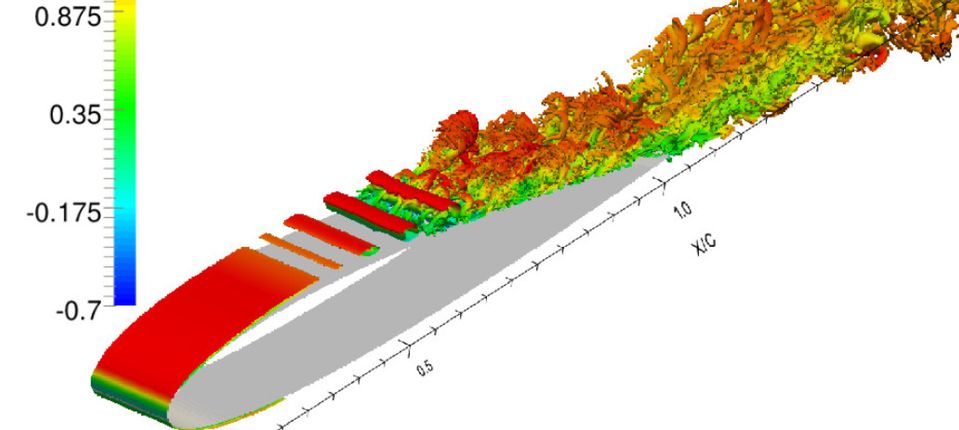
Professor George Papadakis is a Professor of Aerodynamics at the Department of Aeronautics, Faculty of Engineering at Imperial College London. His research focuses on fundamental analysis and manipulation of transitional or turbulent flows, with applications in aerodynamics, flow control, and mixing enhancement. He leads the Papadakis Lab, which develops computational methods and optimization algorithms for fluid dynamics problems. Education: PhD in Mechanical Engineering (National Technical University of Athens, 1996), BEng in Mechanical Engineering (National Technical University of Athens, 1990). Professional history includes roles as Lecturer at King's College London (1999–2011) and Reader at Imperial College (2011–present). Research interests include turbulence enhancement/suppression, sensitivity analysis of chaotic systems, and DNS/LES simulations. His group is funded by EPSRC, European Union, Leverhulme Trust, and the President's Scholarship Fund. Key affiliations include the Energy Futures Lab and Flow Control networks. Advising and grants: Supervised numerous PhD students (e.g., Dandan Xiao, Felipe Alves Portela) and secured funding from multiple agencies. Current students include Hanxun Yao, Karim Shawki, and others. Research outputs span flow control, vortex dynamics, and industrial mixing applications. Labs/teams: Papadakis Lab focuses on aerodynamics, turbulence, and computational methods. Collaborations include Temasek Labs (Singapore) and Prof. J.C. Vassilicos (Imperial College).
Cen Wu serves as Associate Professor in the Department of Statistics at Kansas State University and Faculty Scientist at the Johnson Cancer Research Center. His methodological research focuses on developing robust statistical machine learning approaches for high-dimensional cancer genomic data integration, addressing challenges where measurement dimensions far exceed sample sizes. Dr. Wu earned his Ph.D. in Statistics from Michigan State University in 2013, followed by a postdoctoral fellowship in Biostatistics at Yale School of Public Health (2013-2015). He joined Kansas State University as Assistant Professor in 2015, was promoted to Associate Professor in 2021, and has maintained dual appointments in Statistics and Cancer Research since 2016. His research program centers on Bayesian sparse learning methods for cancer genomics, with particular emphasis on robust variable selection techniques that accommodate outliers and heavy-tailed distributions common in genomic studies. He develops integrative approaches for multi-platform genomic data (mRNA expression, copy number variations, DNA methylation) to elucidate cancer etiology and identify prognostic markers. His work bridges theoretical statistics with practical clinical applications, including adaptive prediction of patient recruitment in clinical trials. Analysis of his recent publications reveals consistent focus on gene-environment interaction modeling through advanced Bayesian frameworks, with increasing emphasis on longitudinal data structures and robust inference procedures. His methodological innovations frequently translate into practical R packages that implement these complex statistical techniques for broader research communities. Dr. Wu actively contributes to the academic community as Associate Editor for TEST and BMC Genomics, and previously served as Guest Editor for a special issue on Bayesian Learning in Entropy. He maintains active collaborations with cancer researchers at the Johnson Cancer Research Center, applying his statistical expertise to real-world cancer genomics problems. His laboratory develops and implements cutting-edge statistical methods through R packages including 'mixedBayes', 'pqrBayes', 'roben', and 'interep', which address specific challenges in high-dimensional data analysis for cancer research. Current projects focus on extending robust Bayesian frameworks to handle increasingly complex genomic data structures while maintaining computational efficiency.
Ji Hyung Lee is a Professor of Economics at the University of Illinois Urbana Champaign, with a courtesy appointment in the Department of Finance at Gies College of Business. His research focuses on econometric theory, time series analysis, financial econometrics, and machine learning applications in economics. He holds a Ph.D. in Economics from Yale University (2013) and a B.A. in Economics from Seoul National University (2005). His research interests include developing robust econometric methods for high-dimensional data, quantile regression techniques, and applications to macroeconomic policy and financial risk analysis. Notable contributions include work on predictive quantile regression, nonparametric density estimation, and modeling household inflation expectations. His recent articles explore topics such as machine-learning approaches to growth risk, quantile impulse responses for value-at-risk dynamics, and parameter-free methods for density estimation. Lee’s work emphasizes methodological innovation and practical relevance in policy contexts. He has held positions at multiple institutions and maintains affiliations with the Midwest Econometrics Group. His research has been published in top journals like Journal of Econometrics and Econometric Theory .
Y. Samuel Wang is an Assistant Professor in the Department of Statistics and Data Science at Cornell University. He holds a PhD in Statistics from the University of Washington and a BS in Applied Mathematics and Economics from Rice University. Prior to academia, he worked as a management consultant and served as a postdoctoral researcher at the University of Chicago’s Booth School of Business. His research focuses on causal discovery, graphical models, mixed membership models, and high-dimensional data analysis, with applications in network science, environmental studies, and healthcare. Education: PhD in Statistics, University of Washington BS in Applied Mathematics & Economics, Rice University Research Interests: Development of interpretable statistical methods for causal inference and graphical model structures High-dimensional data analysis, particularly in non-Gaussian settings Applications in collaborative networks, environmental microbiology, and healthcare outcomes Recent Research Trends: Recent publications emphasize causal discovery under latent confounding, functional graphical models, and gender dynamics in scholarly collaborations. Methodological contributions include robust high-dimensional inference techniques and computational tools for cyclic structural equation models. Professional Activity: Licensed on GitHub, Google Scholar, and ORCID GitHub repositories include projects on causal discovery (highDNG), gender homophily analysis (genderHomophily), and mixed membership models (mixedMem)
Deniz Yavuz is a Professor and Director of the Molecular and Quantum Photonics Cluster (MSPQC) at the Department of Physics, University of Wisconsin–Madison, where he leads the Yavuz Lab. His research group conducts experimental, computational, and theoretical studies in quantum optics and ultrafast physics, with a focus on quantum interference effects such as slow and stopped light. His research interests span a wide range of topics in atomic, molecular, and optical (AMO) physics. Key areas include nanoscale atomic localization using electromagnetically induced transparency (EIT), molecular modulation for generating broadband coherent light sources (including the concept of a 'white laser'), superradiance as a source of decoherence in quantum computing, and axion detection through laser-based four-wave mixing in waveguides. He also investigates negative refraction and refractive index engineering in atomic and solid-state systems. The recent publications of Deniz Yavuz reflect a consistent focus on quantum optical phenomena, nonlinear interactions, and ultrafast processes. His articles explore topics such as nanoscale manipulation of atoms, axion generation, Raman lasing in microresonators, and superradiance. The keywords and sub-fields reveal a strong emphasis on quantum interference, coherence, and the engineering of light-matter interactions at fundamental limits. Among his notable scientific contributions are pioneering work on EIT-based sub-diffraction localization, high-power Raman lasing in solid-state resonators, and theoretical frameworks for axion detection and negative refraction. Though no specific awards are listed in the provided text, his sustained publication record in high-impact journals and leadership of a major research lab indicate significant recognition in the field. Deniz Yavuz has mentored numerous graduate students and postdoctoral researchers, many of whom have pursued successful careers in academia and industry. His advising spans projects in atomic localization, molecular modulation, quantum computing, and axion physics. He has also received research funding enabling long-term investigations into quantum optics and ultrafast phenomena, though specific grants are not detailed in the text. The Yavuz Lab operates two optics laboratories in Chamberlain Hall and conducts research through experimental setups, computational modeling, and theoretical analysis. The lab is actively working on projects codenamed 'E.I.T.', 'Project Rainbow', 'Shepherd', and previously 'Project Green Lantern', reflecting a structured and innovative research environment focused on pushing the boundaries of quantum and optical science.
Vahé Nerguizian is a full Professor in the Department of Electrical Engineering at École de technologie supérieure (ÉTS) in Montreal, Canada, where he has established himself as a leading researcher in microelectronics, MEMS, and biomedical applications. Affiliated with the LACIME (Communications and Microelectronic Integration Laboratory), his work bridges engineering disciplines with healthcare innovations, particularly in cancer research and point-of-care diagnostics. His educational background includes a B.Ing. from Polytechnique Montréal, an M.Eng. from McGill University, and a Ph.D. from Concordia University. This strong foundation in electrical engineering has enabled his interdisciplinary research across multiple domains. Nerguizian's research focuses on the intersection of microfluidics, MEMS, and biomedical applications, with particular emphasis on cancer cell detection, liposome production for drug delivery, and microelectronic integration for healthcare solutions. His laboratory develops microfluidic devices for synthesizing nanoparticles and liposomes, with applications in cancer therapeutics and diagnostics. The work combines microwave engineering, bio-MEMS, and microelectronics to create innovative diagnostic tools and therapeutic delivery systems. His recent publications (2021-2025) demonstrate a clear trajectory toward increasingly sophisticated biomedical applications of microfluidic and MEMS technologies, with growing emphasis on cancer research, extracellular vesicle analysis, and therapeutic delivery systems. The research has evolved from fundamental MEMS and microwave engineering toward highly translational biomedical applications. 2015: Excellence in Teaching Award from the Board of Directors Nerguizian has supervised over 25 graduate students across doctoral and master's programs, with current projects focusing on microfluidic systems for nanoparticle synthesis and sensor systems for biomolecule detection. His research has received significant funding through collaborations with medical researchers, particularly with Julia Burnier's team at McGill University. The LACIME laboratory, where he conducts his research, provides state-of-the-art facilities for micro- and nanofabrication, integrated circuit design, and photonic microsystems. As part of the LACIME research group, Nerguizian contributes to a dynamic environment focused on both fundamental and applied research with strong industry connections. The laboratory's work spans from materials science to communication protocols, with particular strength in developing innovative solutions for healthcare applications.
Angelo Elmi is an Associate Professor at the Milken Institute School of Public Health , The George Washington University , affiliated with the Department of Biostatistics and Bioinformatics . His work bridges biostatistical methodology with applications in women's and child health sciences. Education: Ph.D. in Biostatistics, University of Pennsylvania (2009) Research Focus: Dr. Elmi specializes in Mixed Effects Models , Joint Modeling , and Longitudinal Data analysis, with emphasis on addressing complex statistical challenges in biomedical research. Publication Trends: His recent work explores advanced statistical frameworks for analyzing longitudinal and event-time data, applying nonlinear mixed-effects models and spline-based techniques. Notably, he has contributed to joint modeling methodologies for paired outcomes in public health contexts. Contact: Email: Angelo.Elmi@gwu.edu | Office Phone: 202-994-8416 | Location: Science & Engineering Hall, 800 22nd Street NW, Washington DC 20052.
Chadi Jabbour is a Professor at Institut Polytechnique de Paris , specializing in analog/digital converter design, communication system linearization, and flexible receiver architectures. He leads the Communication Circuits and Systems (C2S) team at the Information Processing and Communication Laboratory (LTCI) in the Communications and Electronics (Comelec) department.
Zahra Aminzare is an Associate Professor of Mathematics at the University of Iowa. She is affiliated with the Department of Mathematics within the College of Liberal Arts and Sciences. Her research focuses on Mathematical Biology and Dynamical Systems, with emphasis on modeling biological systems such as cellular homeostasis, insect locomotion, and neural oscillators. She holds a PhD from Rutgers University. Her work explores topics including synchronization in nonlinear networks, stochastic processes in biological systems, and the application of contraction theory to stability analysis. Notable contributions include studies on ion transport dynamics, bacterial chemotaxis, and phase reduction in noisy oscillators. Her research bridges mathematical methodologies with biological phenomena, addressing questions related to system robustness and emergent behaviors. Aminzare’s publications span across journals and conferences, with recent work addressing rhythmicity in insect locomotion, spike-generation mechanisms in multi-timescale systems, and stochastic synchronization in networked systems. She maintains an active research lab focused on interdisciplinary applications of dynamical systems theory.
Navid Constantinou is a Senior Lecturer at The University of Melbourne, specializing in Climate & Ocean Geoscience. His research focuses on physical oceanography, geophysical fluid dynamics, and climate modeling, with a particular emphasis on machine learning applications in these fields. He is affiliated with the University of Melbourne and contributes to collaborative projects like Oceananigans.jl and regional-mom6. Research Interests: His work explores ocean circulation dynamics, fluid mechanics, and the interplay between atmospheric and oceanic systems. Key areas include surface wave effects, turbulence decay, and parameterization of ocean mixing processes. He actively develops computational tools to enhance climate modeling accuracy and resolution. Publications: His recent work addresses topics like meridional heat transport in the Atlantic, GPU-based ocean modeling, and the impact of climate change on Antarctic currents. These studies often involve interdisciplinary collaborations with institutions like MIT and the Scripps Institution of Oceanography. Awards: While no explicit awards are listed, his research has been highlighted in prominent journals and media outlets like The Conversation and Nature Climate Change . Advising & Grants: He supervises students such as Dhruv Bhagtani and collaborates on projects funded by initiatives like the Australian Research Council. His software contributions, including OceanBioME.jl and SpeedyWeather.jl, underscore his commitment to advancing computational methods in geosciences. Labs/Teams: Involved in global climate modeling teams and open-source software development communities focused on ocean and atmospheric dynamics.
Jiming Bao is a Professor in the Department of Electrical & Computer Engineering at the University of Houston. He holds prestigious fellowships from the Optical Society of America (2018) and the American Physical Society (2019), and received the NSF CAREER Award (2012). His research focuses on nanomaterials, plasmonics, optoelectronics, and energy materials, with notable expertise in photoacoustic laser streaming, 2D materials like graphene, and solar energy conversion technologies. Education: BS and MS in Physics from Zhejiang University (China), PhD in Applied Physics from the University of Michigan (Ann Arbor). Research interests include semiconductor nanowires, plasmonic biosensors, and novel materials for CO₂ reduction and solar water splitting. His work has produced over 150 peer-reviewed publications, including seminal studies in Nano Letters , Nature Materials , and Advanced Materials . Bao collaborates with industry through patented innovations in microfluidic systems and medical sensor technologies. He leads the Nano-Electronics and Photonics Laboratory at UH, advancing cutting-edge research in optoelectronic materials and energy harvesting. Key contributions include groundbreaking studies on boron arsenide's exceptional thermal conductivity, laser-driven microfluidic systems, and defect-engineered light-emitting diodes. His awards reflect sustained excellence in both fundamental science and translational research.