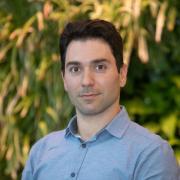
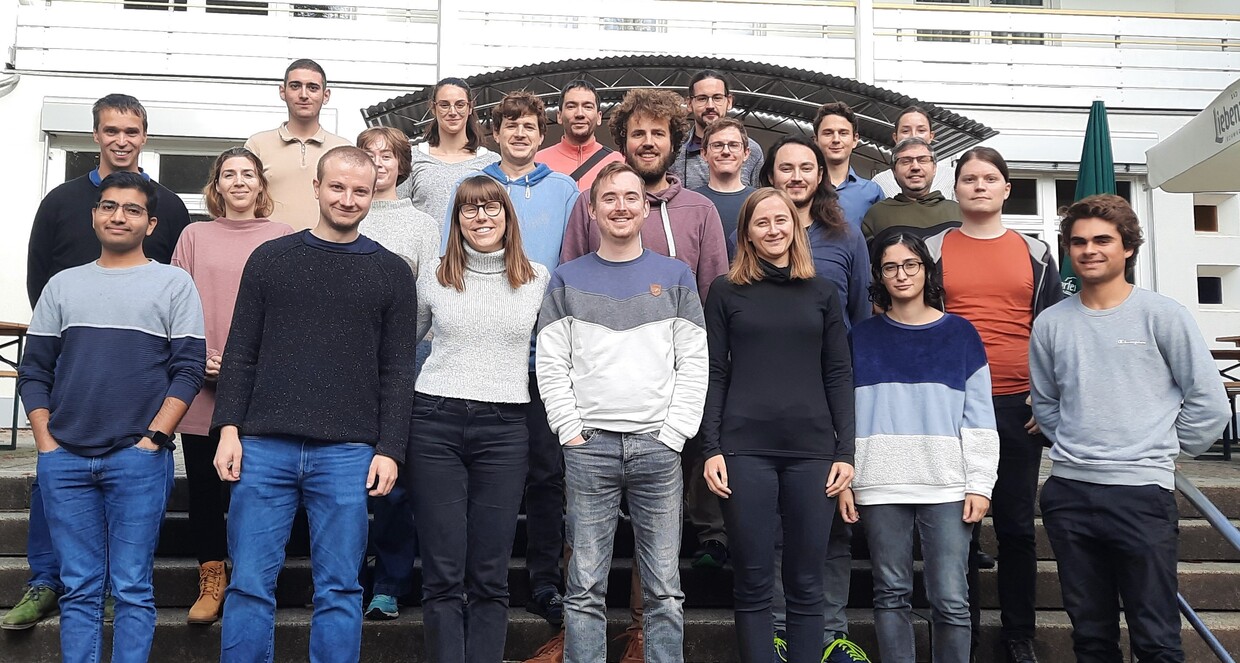
Ayhan Demircan is an Adjunct Professor at the Leibniz School of Optics and Photonics in Leibniz University Hannover. He leads the Micro and Nano Photonics task group and contributes to institutions including the Institute of Quantum Optics , Ultrafast Laser Laboratory , and Hannover Centre for Optical Technologies (HOT) . His work spans photonics, quantum optics, and nonlinear dynamics, with applications in terahertz technology, soliton physics, and optical modeling. Research Interests: Photonics, quantum optics, terahertz radiation, soliton dynamics, nanophotonics, and computational modeling of optical systems. Key Institutions: Leibniz School of Optics and Photonics, Institute of Quantum Optics, HOT, and PhoenixD Cluster of Excellence. Technical Expertise: Develops Python-based tools for nonlinear Schrödinger equations, optical parametric oscillators, and ultrafast laser systems. Contact: demircan@iqo.uni-hannover.de
Dr. Lior Medina is a Senior Lecturer at the School of Mechanical Engineering, Tel Aviv University, specializing in nonlinear meta-micro-structures (MMS) and their applications in micro-electro-mechanical systems (MEMS), multistable structures, and energy harvesting. Education: B.Sc. and M.Sc. Magna Cum Laude in Mechanical Engineering from Tel Aviv University (2010, 2012). Postdoctoral Fellowships: Israel Ministry of Science, Broadcom, Israel Science Foundation, Tel-Aviv–Northwestern joint fellowship, Blavatnik fellowship. His research combines theoretical and experimental approaches to study coupled microstructures under electrostatic actuation, with a focus on stability properties and characterization methods. Recent work includes investigations into Kirigami-based nanoscale 3D configurations and bistable/tristable microbeams. Scientific Awards: Israel Ministry of Science Fellowship Broadcom Grant Israel Science Foundation Grant Tel-Aviv–Northwestern Postdoctoral Fellowship Blavatnik Postdoctoral Fellowship
Dr. Itay Griniasty is a Senior Lecturer at the School of Mechanical Engineering, Tel Aviv University. He holds a PhD in Physics from the Weizmann Institute, supervised by Ulf Leonhardt, and completed postdoctoral research at Cornell University with Itai Cohen and Jim Sethna. Research Focus : Emergent functionality in materials, geometrical mechanics, and information geometry of computational systems. Interdisciplinary Work : Bridges meta-material machines (e.g., kirigami robots) with computational models like deep neural networks. Methodology : Combines analytic theory, experiments, and numerical simulations to study design frameworks for material-machine integration. Key Article Trends : Explores sloppiness in neural networks , shear thickening suspensions , geometric inverse design , and Casimir stress in quantum vacuum . Contact : griniasty@tauex.tau.ac.il
Carsten Rockstuhl is a Professor of Theoretical Solid State Physics at the Karlsruhe Institute of Technology (KIT), affiliated with the Department of Physics and leading the Theoretical Photonics group at the Institute for Theoretical Solid State Physics (TFP). His research is centered on controlling light using micro- and nanostructured materials, with applications in renewable energy, quantum technologies, and advanced optical devices. His primary research interests include Plasmonics , Optical Nanoantennas , Metamaterials , Photon Management in Solar Cells , Nonlinear Optics , and Quantum Optics . His group explores how the interaction between light and nanostructures can be tailored to enhance solar cell efficiency, enable novel sensing platforms, and manipulate quantum optical phenomena. A key focus is on the interaction of atomic systems with optical nanostructures to modify emission rates and optical properties. The 15 most recent publications highlight a strong trend in theoretical and computational nanophotonics , with a significant emphasis on inverse design of nanophotonic devices, metasurfaces (including disordered and time-varying ones), and advanced multipole and scattering theories . There is a clear interdisciplinary approach, bridging physics, materials science, and engineering, with applications ranging from solar energy to quantum information. No scientific awards were explicitly mentioned in the provided text. Carsten Rockstuhl leads a research group that fosters close collaboration with both theoretical and experimental groups. While specific grant details are not listed, the volume and quality of publications suggest active funding. The group is involved in developing fundamental theories and computational tools, such as the T-matrix method and frameworks for homogenization, which are crucial for the design and analysis of complex photonic systems. The research group is actively engaged in the theoretical exploration of cutting-edge topics in nanophotonics. Key areas include the development of analytical models for optical nanoantennas, the study of photonic time crystals, and the investigation of quantum optical effects in nanostructured environments. The group's work on photon management in solar cells focuses on using nanostructures like photonic crystals and metallic nanoparticles to enhance light absorption in thin-film and organic solar cells.