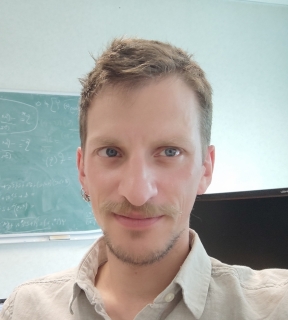
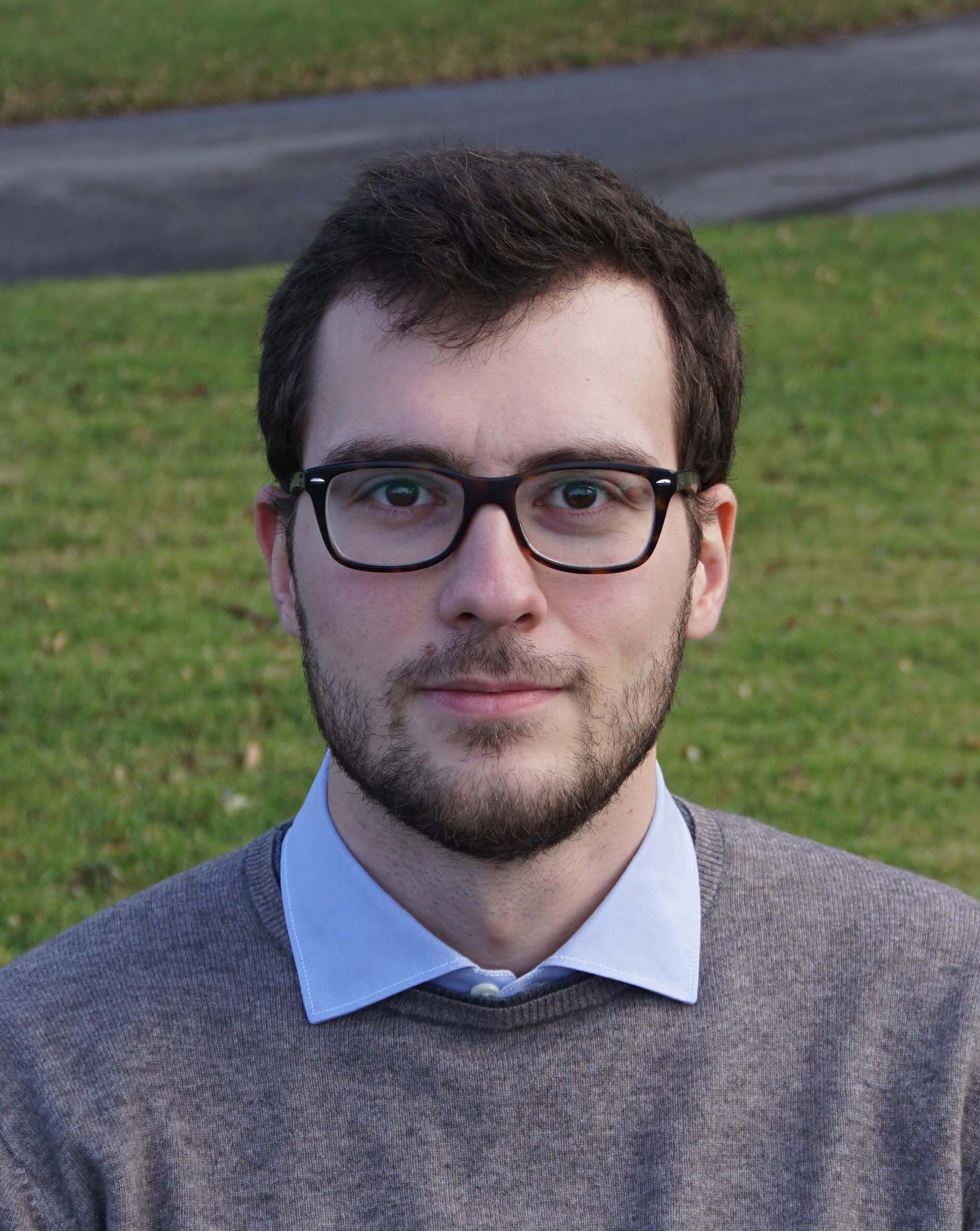
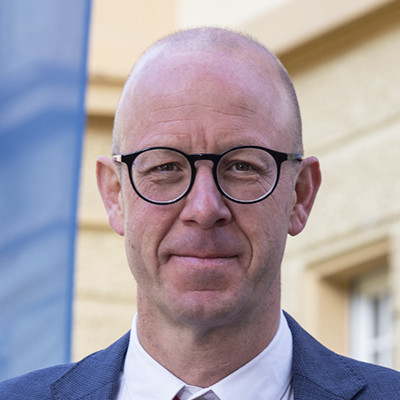
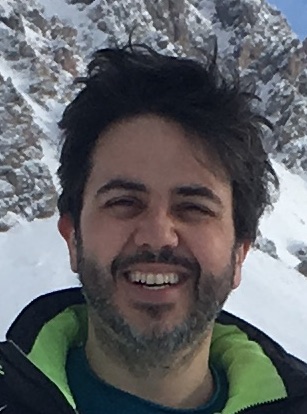
Carlo Fezzi is an Associate Professor at the Department of Economics and Management, University of Trento. His research focuses on econometrics, environmental economics, and climate change impacts, particularly in policy design and integrated modeling. Teaches Applied Econometrics and Econometrics for Behavioral and Applied Economics and Mathematics programs. Leads workshops in the Market Analysis Laboratory (G3-2), emphasizing data-driven market understanding. Fezzi’s research integrates econometric methods with environmental policy, addressing biodiversity, climate adaptation, and energy economics. Recent work explores land use optimization under climate change, electricity demand forecasting, and coral reef valuation. His publications span topics like carbon trading, agro-environmental modeling, and non-market valuation techniques. Fezzi’s 15 most recent articles highlight trends in econometric applications to environmental challenges, including climate policy, energy demand modeling, and biodiversity conservation. His methodologies combine linear/nonlinear models, neural networks, and spatial analysis to address global issues like food security, carbon emissions, and ecosystem resilience.
Luca Pavarino is a Professor at the Department of Mathematics, University of Pavia. His research focuses on scientific computing and numerical methods, particularly in the context of cardiac electrophysiology and multiphysics systems. He leads the Scientific Computing group, specializing in domain decomposition methods (BDDC/FETI-DP), isogeometric analysis, and parallel algorithms. His work integrates advanced numerical techniques with biomedical applications, including cardiac electromechanical coupling, drug testing on cardiac tissues, and modeling genetic cardiac disorders like LQT8 syndrome. Key contributions include scalable solvers for nonlinear systems, preconditioners for heterogeneous media, and operator learning for ionic dynamics. Research interests span computational cardiology, numerical analysis, and parallel computing, with applications to biophysics and drug discovery. His projects often involve interdisciplinary collaborations between mathematics, engineering, and medicine. Notable contributions include: Development of BDDC/FETI-DP preconditioners for cardiac models Integration of machine learning with cardiac electrophysiology High-performance computing for multiphysics systems (Biot’s consolidation, protein stability) Labs/Teams: Scientific Computing Group at the University of Pavia’s Department of Mathematics.
Davide Previtali is an Assistant Professor at the University of Bergamo's Department of Engineering. His research focuses on control systems, black-box and preference-based optimization, and lithium-ion battery technologies. He teaches the 'Data science and automation' course (6 CFU). Education: Master’s in Computer Science Engineering (2019), PhD in Engineering and Applied Sciences (2022), both from University of Bergamo Research interests include model predictive control, thermal systems optimization, regenerative braking systems, and integration of biological models with neural networks. Recent work emphasizes energy-efficient industrial processes and algorithms for preference-based optimization with convergence guarantees. Publications span industrial oven modeling, shrink tunnel control systems, and advanced optimization algorithms. He leads the Control systems and Automation Laboratory, focusing on practical applications of control theory in manufacturing and energy systems. Labs/Teams: Control systems and Automation Laboratory
Leonardo Ricci is an Associate Professor at the Department of Physics, University of Trento , with a 28-year teaching career spanning 56 courses (31 in English) and extensive roles in the Interdepartmental Center for Mind/Brain Sciences - CIMEC (30% affiliation). His research bridges nonlinear dynamics , information theory , and neuroscience , focusing on chaos detection in time series and entropy analysis. Academic Career : From 1994 post-doc at Max-Planck-Institut to 2022 promotion to Associate Professor Teaching : Courses in Experimental Physics, Advanced Electronics, and Statistical Methods across Physics and Computer Science programs Ricci leads the NSE Lab (Nonlinear Systems and Electronics) , developing hardware/software systems for experimental research. His 2022 Entropy cover story on permutation entropy highlights his impact in information theory. Scientific Contributions : 20 patents (visibility measurement devices), collaborations with international researchers on complex systems Editorial Roles : Associate Editor for Chaos, Solitons & Fractals and Frontiers in Network Physiology
Matteo Strozzi is an Associate Professor at the Department of Engineering Sciences and Methods, University of Modena and Reggio Emilia. His research focuses on mechanical vibrations, carbon nanotube dynamics, and nonlinear structural mechanics. He specializes in shell theories, nonlocal elasticity models, and advanced diagnostics for mechanical systems such as bearings and gears. Key research areas include vibration analysis of nanostructures, experimental validation of models, and the application of signal processing techniques (e.g., Hjorth parameters) for condition monitoring. His work addresses challenges in both theoretical and applied mechanics, with contributions to renewable energy systems (wind turbines) and additive manufacturing (3D-printed materials). Publications highlight advancements in understanding energy localization in carbon nanotubes, nonlinear resonance interactions, and the development of shell models for nanoscale structures. His research bridges continuum mechanics with modern engineering applications, emphasizing both fundamental science and industrial relevance.
Andrea Cristofaro is an Associate Professor at the Department of Computer, Control and Management Engineering, Sapienza University of Rome. He holds an M.Sc. in Mathematics (2005) from Sapienza University of Rome and a Ph.D. in Information Science and Complex Systems (2010) from the University of Camerino. His academic trajectory includes postdoctoral positions at INRIA Rhône-Alpes (France) and the Norwegian University of Science and Technology, followed by faculty appointments at the University of Camerino and University of Oslo before joining Sapienza in 2019. His research spans: Robotic systems : Fault-tolerant control, multi-agent coordination, and hybrid dynamics Distributed parameter systems : Stability analysis, observer design, and optimal control of PDEs Hybrid systems : Control synthesis for systems with state-driven jumps and switching logic Recent publications (2024-2025) predominantly explore fault-tolerant control architectures for multi-robot systems, decentralized task allocation, adaptive observer designs for biological and thermal systems, and optimal control of reaction-diffusion equations. This reflects a consistent focus on robustness in complex dynamical systems with applications ranging from industrial robotics to biomedical engineering. He serves as Associate Editor for Automatica and IEEE Transactions on Control Systems Technology , and is a member of the IEEE CSS Conference Editorial Board.
Mario Annunziato is a Researcher in Mathematics at the Department of Physics, University of Salerno, since 2004. His work focuses on numerical methods for stochastic processes and optimal control. Institution: University of Salerno Department: Department of Physics Academic Rank: Researcher Research Interests include numerical solutions of PDEs and integral equations for stochastic processes, probability density function optimization, and modeling random phenomena. His work addresses positivity, monotonicity, and conservation in discrete PDFs. Article Trends span stochastic control frameworks, computational finance, biophysics applications, and numerical methods for jump-diffusion processes. Key topics involve Fokker-Planck equations, Hamilton-Jacobi-Bellman formulations, and splitting methods. Advising and Grants include teaching Numerical Analysis until 2013 and securing funding from the University of Salerno's FARB program, INdAM-GNCS, and the European Science Foundation's OPTPDE grants. He participated in the STRIKE Marie Curie ITN network. Labs & Teams : Collaborated with Prof. Alfio Borzì at Würzburg University and contributed to open-source tools like MATLAB Central File Exchange for PDP solvers.
Michele Ruggeri is an Assistant Professor of Numerical Analysis (RTD-B) at the Department of Mathematics, University of Bologna, and an Honorary Lecturer at the University of Strathclyde, UK. His research focuses on numerical analysis of partial differential equations in materials science and engineering, including liquid crystal theory, micromagnetism, nonlinear elasticity, and spintronics. He is also active in developing numerical methods for uncertainty quantification and model order reduction. Education: PhD in Technical Mathematics (TU Wien, Austria), Laurea Magistrale in Mathematics (University of Pavia, Italy), and a Diploma in Science and Technology from Scuola Universitaria Superiore IUSS, Italy. He holds a Fellowship (FHEA) from Advance HE and a PGCert in Learning & Teaching in Higher Education from the University of Strathclyde. His work emphasizes finite element methods and their applications, with contributions to computational micromagnetics and software development (e.g., Commics). He is affiliated with the (AM)² Research Center on Applied Mathematics and ARCES at the University of Bologna. Awards: Fellowship (FHEA), Advance HE, UK. Key Projects: Development of numerical methods for micromagnetic simulations, uncertainty quantification in stochastic models. Contact: m.ruggeri@unibo.it
Roberto Ghiselli Ricci is a Full Professor at Ca' Foscari University of Venice, affiliated with the Department of Environmental Sciences, Informatics and Statistics. His academic career includes extensive teaching and research in mathematical statistics and probability, with a focus on copula theory, aggregation functions, and econometric applications. He currently teaches courses such as Calculus, Linear Algebra, and Mathematics for Environmental Sciences. His research explores advanced topics in probability theory, including copula properties, fixed-point theorems, and axiomatic characterizations of mobility measures. Recent publications highlight contributions to fuzzy set theory, optimization penalties, and financial securities modeling. His work bridges mathematical rigor with practical applications in economics and environmental policy analysis. Publications trends emphasize interdisciplinary approaches, with notable contributions to Fuzzy Sets and Systems , International Journal of Game Theory , and Social Choice and Welfare . He actively participates in academic activities through courses, research collaborations, and advisory roles within his department.
Alex Weissensteiner is a Full Professor of Quantitative Finance and Rector at the Free University of Bozen-Bolzano (unibz). He previously held academic positions at Leopold Franzens University in Innsbruck, the University of Liechtenstein, and served as Professor of Financial Engineering at the Technical University of Denmark from 2013–2015. At unibz, he held leadership roles including Director of the Bachelor's Degree in Economics and Management (2015–2020) and Pro-Rector for Studies (2020–2024) before becoming Rector in 2024. His research focuses on Life-cycle asset allocation Parameter uncertainty in financial models Scenario generation for investment decisions Asset-liability management Market microstructure dynamics Information economics in financial markets Recent publications emphasize portfolio optimization under uncertainty, option-implied risk analysis, and agricultural risk management. His work combines theoretical finance with empirical validation, often applying quantitative methods to banking, insurance, and pension systems. Scientific recognition includes EU grants for "Understanding Pensions in Europe" (2016) and "Understanding Saving in Europe" (2019) Regular contributions to leading journals like Journal of Banking & Finance and Quantitative Finance Invited presentations at major finance conferences (Jackson Hole, AFA, DGF) As Rector, he maintains active research collaborations with scholars including Mogens Steffensen (University of Copenhagen), N. Branger, T. Dangl, and L. Garlappi. He serves on the editorial board of Risks journal and has consulted for provincial education policy bodies.
Luca Schenato is a Full Professor in the Department of Information Engineering at the University of Padova. His research focuses on distributed control systems, federated learning, multi-agent optimization, and wireless communication protocols. He has extensive experience in developing algorithms for cyber-physical systems, with applications in robotics, smart grids, and sensor networks. Education and Appointments section lists his academic journey but lacks explicit details. He has held positions related to control systems and information engineering throughout his career. Research interests include: Design of resilient wireless control systems Federated learning architectures for edge computing Distributed optimization under communication constraints Robotics and multi-agent coordination Smart energy management systems His recent publications (2021–2025) demonstrate a strong focus on: Over-the-air federated learning innovations High-speed wireless control systems (e.g., 1 kHz Wi-Fi control) Resilient distributed optimization algorithms Human-centric building automation He has contributed to numerous projects related to networked control systems and has organized conferences like ECC13. His work emphasizes bridging theoretical control principles with practical industrial applications.
Mauro Bonfanti is a Fixed-term Assistant Professor at the Department of Mechanical and Aerospace Engineering (DIMEAS) at Politecnico di Torino, Italy. His academic work focuses on wave energy conversion systems, mechatronics, and applied mechanics within the field of industrial and information engineering. Dr. Bonfanti's primary research interests include wave energy conversion systems, system identification, optimal control, mechatronics, and renewable energy systems. His work centers on developing advanced control strategies for wave energy converters, with particular emphasis on improving energy extraction efficiency through innovative mechanical designs and control algorithms. He has made significant contributions to the understanding of wave-structure interactions, hydrodynamic modeling of floating bodies, and optimization of wave energy converter systems under various sea conditions. His research bridges theoretical modeling with practical implementation, often involving high-fidelity numerical simulations validated through experimental testing. His publication record demonstrates a strong focus on advancing wave energy conversion technology, with particular emphasis on control systems, hydrodynamic modeling, and optimization techniques. The research shows progression from fundamental modeling approaches to increasingly sophisticated control strategies and system integration. Recent work has expanded to include hybrid renewable energy systems that combine wave and wind energy technologies. Dr. Bonfanti serves as a Scientific Responsible for several research projects including OCEANGLIDE, AQUALEV, and WISE, which focus on innovative wave energy conversion technologies. He holds multiple patents related to wave energy conversion systems, including the WISE (Water-air Injectable Swath Elevator) and AQUALEV magnetic support systems. He actively supervises PhD students including Alessandro Brusasco, Matteo Mastorakis, Francesco Balestrieri, and Domenico Edoardo Sfasciamuro, guiding research in sustainable materials, mechanical engineering, and wave energy conversion systems. His teaching responsibilities include courses on System Identification and Optimal Control of Wave Energy Conversion Systems, as well as Mechatronics across multiple academic years. Dr. Bonfanti is a member of the Mechatronics and Servosystems research group at DIMEAS, where he collaborates on projects related to marine renewable energy systems and advanced control technologies.
Sebastiano Boscarino is an Associate Professor of Numerical Analysis (MAT/08) at the Department of Mathematics and Computer Science, University of Catania, Italy. His research focuses on numerical methods for conservation laws , stiff problems , hyperbolic systems with relaxation terms , and kinetic problems , with a special emphasis on semi-Lagrangian methods. Education: Ph.D. in Applied Mathematics (2006, University of Catania), Laurea in Mathematics (2001, University of Catania) Research Projects: Coordinated national and international projects including PRIN 2017/2022 and European MODCLIM/MODCOMPSHOK. From 2016 to 2023, his publications highlight high-order semi-implicit and IMEX schemes for evolutionary PDEs , particularly in gas dynamics , Boltzmann equations , and shallow water models . Collaborations include institutions in the USA, South Korea, and Germany. He has organized international workshops and minisymposia at conferences like ICIAM, SCICADE, and ODS2018, and serves as a referee for journals such as SIAM Journal on Scientific Computing and Journal of Computational Physics. His teaching includes courses in Numerical Analysis and participation in PhD programs since 2017.
Annamaria Montanari is a Full Professor at the Department of Mathematics, University of Bologna, where she has worked since 2016. Her research focuses on Mathematical Analysis, particularly degenerate elliptic partial differential equations and Sub-Riemannian geometric structures. University of Bologna (1998-present) Ph.D. in Mathematics (University of Bologna, 1998) Visiting positions at Temple University, MSRI Berkeley, Pittsburgh University, ETH Zurich Her research explores: Regularity theory for Levi curvature equations Viscosity solutions in complex geometry Sub-Riemannian metrics and cut loci Optimal transport with non-quadratic costs Recent publications demonstrate expertise in: Geometric PDEs Convexity on Carnot groups Harnack inequalities in quasi-metric spaces Transport equations and conservation laws She supervises doctoral students and collaborates on international projects, serving as Editor-in-Chief of the Bruno Pini Mathematical Analysis Seminar journal.
Giuseppe Toscani is a Full Professor at the Department of Mathematics of the University of Pavia. His research focuses on mathematical modeling of socio-economic systems, epidemiological dynamics, and kinetic theory. He explores topics such as wealth distribution, opinion formation, and epidemic spread using advanced methods in partial differential equations and statistical mechanics. Key research areas include analysis of inequality indices (Gini Index extensions), multi-agent systems, and nonlinear diffusion processes. His work intersects with applications in public health, economic policy, and social behavior modeling, emphasizing the interplay between theoretical frameworks and real-world phenomena. Education: Not explicitly detailed in provided texts, but his academic role implies a doctoral degree in Mathematics or related field. Labs/Teams: Affiliated with the Methods and Models for Applied Sciences research group. Grants/Awards: No specific grants or awards listed in the text. Recent publications address condensation patterns in opinion dynamics, multidimensional inequality metrics, and pandemic modeling through compartmental systems. His kinetic models provide foundational tools for understanding complex social and biological systems.