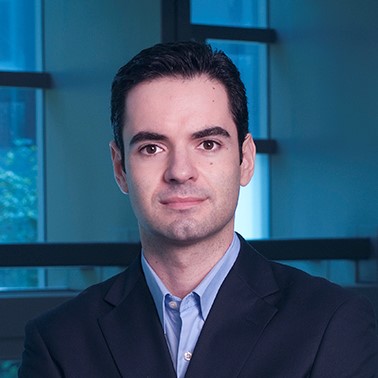
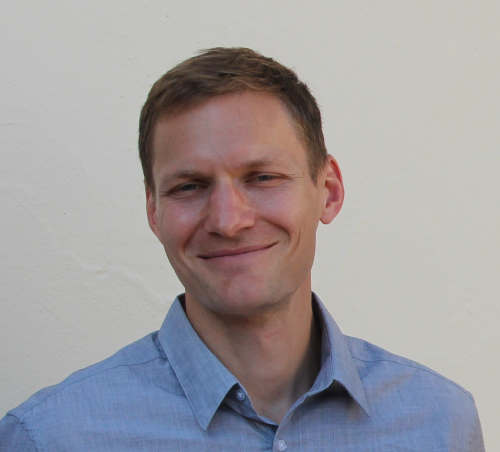
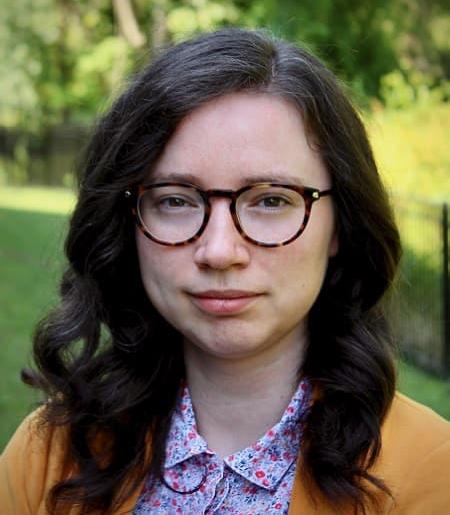
Qian Wang is Professor of Mathematics at the Mathematical Institute, University of Oxford, affiliated with the Oxford Centre for Nonlinear PDE. His research focuses on nonlinear partial differential equations, particularly in contexts of general relativity and fluid dynamics. He investigates global solutions to complex physical models including Einstein's field equations, wave propagation phenomena, and compressible fluid systems. Research Focus: Professor Wang specializes in: Mathematical relativity (e.g., Einstein vacuum equations, spacetime geometry) Nonlinear wave equations and hyperbolic systems Fluid dynamics (Euler equations, compressible flows) Global existence and stability problems His work combines geometric analysis with PDE theory to address fundamental questions in mathematical physics. Publication Trends: Recent works (2014-2024) demonstrate progression from foundational relativity studies toward complex fluid dynamics and nonlinear field equations. Key themes include: Well-posedness for rough initial data Global solution behavior in relativistic and fluid systems Innovative geometric approaches to PDE analysis
Victor Preciado is an Associate Professor at the University of Pennsylvania, holding appointments in the Departments of Electrical & Systems Engineering and Computer & Information Science . He is affiliated with the Warren Center for Network & Data Sciences , the PRECISE Center , and the Applied Math and Computational Science graduate group . His research bridges Network Science , Dynamical Systems , and Data Science , focusing on modeling, analysis, and control of complex networked systems. Ph.D. in Electrical Engineering and Computer Science from MIT (supervised by Prof. George Verghese) Visiting scholar at UC Berkeley, Santa Fe Institute, and Courant Institute (NYU) Postdoctoral researcher at GRASP Lab (working with Prof. Ali Jadbabaie) His research interests include epidemic modeling and control , socio-technical networks , network controllability , and data-driven optimization . Recent work explores contact-aware robotics and operator learning using attention mechanisms. His publications from 2022–2024 highlight advancements in robust control , epidemic tracking , and hypergraph neural networks , with applications in pandemic management , robotics , and temporal network analysis . Scientific awards include: 2024: IEEE Robotics and Automation Society Best Paper Award finalist (for Stabilization of Complementarity Systems ) 2022: IEEE Control Systems Magazine Best Paper Award (retrospectively for Analysis and Control of Epidemics ) 2017: National Science Foundation CAREER Award 2019: IEEE Transactions on Network Science and Engineering Best Paper Award runner-up He has served as Associate Editor for IEEE Transactions on Network Science and Engineering and IEEE Transactions on Control of Networked Systems , and as Guest Editor for special issues on pandemics and control of epidemics in journals like Annual Reviews in Control and SIAM Journal on Control and Optimization .
Martin Siebenborn is a Junior Professor (W1) for Optimization and Approximation at the Department of Mathematics, University of Hamburg. His research focuses on shape optimization with applications in fluid dynamics, structural mechanics, and partial differential equations (PDEs), emphasizing scalable high-performance algorithms and multigrid methods. Education: PhD in Mathematics (2014, Universität Trier), Diploma in Mathematics (2010, Universität Trier). His research integrates algorithmic scalability for PDE-constrained optimization, leveraging multigrid preconditioners and nonlinear extension operators. Recent projects include simulation-based design optimization under uncertainties and scalable shape optimization for fluid dynamics. Onyshkevych, Pinzon Escobar, and Wyschka are part of his research team. He has developed open-source software tools like MinFEM, MGSS, and MultigridShapeOpt for teaching and high-dimensional data analysis.
Rostyslav Hryniv serves as Professor of Applied Mathematics and Statistics at Ukrainian Catholic University (UCU), holding dual leadership roles as Deputy Dean for Research and Head of the Machine Learning Laboratory. His academic profile uniquely bridges rigorous mathematical physics with cutting-edge artificial intelligence applications, reflecting UCU's interdisciplinary research vision. Hryniv's educational foundation includes dual PhDs in Mathematics (1996, 2007) and a higher doctorate (dr hab.) from the Institute of Mathematics of the Polish Academy of Sciences (2009). His postdoctoral trajectory features prestigious appointments as a Humboldt Research Fellow at the University of Bonn (2003-2005) and PIMS Postdoctoral Fellow at the University of Calgary (1998-1999), complemented by teaching roles across institutions in Ukraine, Canada, Poland, and the United States. His research demonstrates a strategic evolution from foundational work in spectral theory and inverse problems to contemporary machine learning. Early career contributions focused on Schrödinger operators with singular potentials, trace formulas, and quantum scattering phenomena. Recent publications (2021-2025) reveal a decisive pivot toward applied AI, including Ukrainian NLP benchmarks, symmetry-based 3D reconstruction, and minimal solvers for computer vision. This transition exemplifies his commitment to leveraging deep mathematical insights for real-world technological challenges. Analysis of his publication trends indicates a clear interdisciplinary trajectory: while maintaining mathematical rigor, his work increasingly addresses Ukrainian language technology and geometric deep learning. The Machine Learning Laboratory under his direction has become a regional hub for AI innovation, particularly in developing resources for low-resource languages and symmetry-aware computer vision systems. Hryniv's scholarly recognition includes: Humboldt Research Fellowship (University of Bonn, 2003-2005) PIMS Postdoctoral Fellowship (University of Calgary, 1998-1999) As Head of UCU's Machine Learning Laboratory, Hryniv leads research initiatives spanning Ukrainian NLP, 3D vision, and quantum machine learning. The lab's recent focus on symmetry-based algorithms and Ukrainian language resources positions it at the forefront of culturally contextual AI development in Eastern Europe, while maintaining connections to his foundational work in mathematical physics through quantum-inspired computing approaches.
Tobias Lehrer is a Doctoral Candidate at the Chair of Computational Solid Mechanics at the Technical University of Munich since 2023. His research focuses on integrating machine learning with computational mechanics for manufacturing optimization. 2023 - Present: Doctoral Candidate, Chair of Computational Solid Mechanics, TU Munich 2020 - 2023: Doctoral Candidate, Laboratory of Finite-Element-Method, OTH Regensburg 2018 - 2020: M.Sc. in Mechanical Engineering, OTH Regensburg His research interests span machine learning, surrogate modeling, data augmentation, synthetic data, generative AI, sheet metal forming, and sensitivity analysis. His publications emphasize deep drawing processes , parametric CAD modeling , and surrogate-based optimization for manufacturability assessment. Key projects include AMEDEO and eEgO, aiming to enhance early-stage prediction of sheet metal part feasibility through simulation-driven machine learning frameworks. In teaching, Tobias has led courses on structural optimization , computational mechanics for car body design , and structural mechanics modeling . His work bridges computational methods with industrial applications, particularly in automotive manufacturing.
Heinz Bauschke is a Professor of Mathematics at the Irving K. Barber Faculty of Science, University of British Columbia Okanagan. His office is located in ASC 352, and he serves as a graduate student supervisor in the Department of Mathematics. Dr. Bauschke earned his PhD from Simon Fraser University. His academic career has focused on mathematical optimization and analysis, establishing him as a prominent researcher in these fields. Professor Bauschke's research centers on convex analysis and optimization, monotone operator theory, and projection methods . His work explores the theoretical foundations and practical applications of these mathematical concepts, particularly in developing algorithms for solving complex optimization problems. He has made significant contributions to the understanding of fixed-point iterations, resolvent operators, and splitting methods. His research has important applications in various scientific and engineering domains where optimization problems arise. Analysis of Professor Bauschke's recent publications reveals a consistent focus on optimization theory, particularly in convergence properties of algorithms, projection methods, and applications to nonconvex problems. His work bridges theoretical mathematics with practical computational methods, with increasing attention to applications in machine learning and data science in recent years. Professor Bauschke has received notable recognition for his research contributions: Research of the Year (2009), UBC Okanagan As a graduate student supervisor, Professor Bauschke mentors students in mathematical optimization and analysis. His research is supported by various grants that enable him to maintain an active research program and collaborate with mathematicians worldwide. His professional service includes involvement with the Centre for Optimization, Convex Analysis and Nonsmooth Analysis. Professor Bauschke is an active member of the mathematical research community, regularly publishing in top optimization journals and contributing to the advancement of mathematical optimization theory and its applications.
Alice Nadeau is an NSF Postdoctoral Fellow in Mathematics at Cornell University, serving as a Visiting Assistant Professor. Her research is conducted through the Department of Mathematics within the College of Arts and Sciences. She holds a Ph.D. from the University of Minnesota (2019), where she was affiliated with both the Mathematics Department and the Carl Sagan Institute. Ph.D. (2019) - University of Minnesota, Mathematics Department and Carl Sagan Institute Nadeau's research focuses on applied dynamical systems with applications in climate science, particularly in modeling Earth's and other planets' climates using conceptual climate models. She investigates rate-dependent critical transitions in nonautonomous dynamical systems and the propagation of asymmetries in low-dimensional climate models. Her work bridges smooth and nonsmooth dynamical systems, celestial mechanics, harmonic analysis, and data analysis. She has applied these mathematical techniques to understand climate phenomena on Earth (such as greenhouse gas effects on global temperature) and other planets (including Pluto's nitrogen glaciers). Nadeau's publications reveal a research trajectory focused on planetary climate modeling, with particular attention to energy balance models across different celestial bodies. Her work spans mathematical theory, computational implementation, and practical applications to real-world climate phenomena. She has demonstrated expertise in adapting Earth-based climate models to other planetary contexts, requiring novel mathematical approaches. Nadeau is actively engaged in mentoring undergraduate students, having directed four research projects at the University of Minnesota. She has also co-founded the Mathematics Project at Minnesota to increase participation of undergraduate women and people of color in mathematics. She has served in leadership roles for the SIAM Student Chapter and participated in numerous outreach activities including math camps for girls and community science events. She is an organizer of the MRC Micro-conference on differential equations, probability, and sea ice, demonstrating her commitment to interdisciplinary collaboration in climate science. Her research connects mathematics with broader scientific questions about planetary climate systems, making significant contributions to both theoretical mathematics and applied climate science.
Luiz Chamon is an Assistant Professor (tenure-track) and Hi!PARIS Chair holder at the Center for Applied Mathematics (CMAP) , École polytechnique, Paris, France. His research bridges machine learning with control theory and signal processing, focusing on intelligent systems that extract, process, and act on information under constraints. Research Interests: He specializes in constrained learning frameworks for machine learning, with applications to reinforcement learning, statistical signal processing, and optimization. His work includes adversarial robustness, safe policy design, and duality analysis in constrained settings. Article Trends: Recent publications span differential equation solving (ICLR 2025), primal-dual sampling (NeurIPS 2024), and resilient reinforcement learning (IEEE Trans. Autom. Control 2024). Common themes include constrained optimization, robustness, and bridging theory with practical applications in wireless systems and graph signal processing. Scientific Awards: Hi!PARIS Chair (2025) ELLIS Scholar (2025) Best Student Paper Award (ICASSP 2020) Best Paper Award (ICASSP 2020) Top 50 Most Accessed Articles in IEEE TSP (2019) Grants & Projects: Currently leads a 4-year ANR JCJC project on "Beyond (Robust) Learning: Striking Compromises in Machine Learning" (2024). Previously involved in technical reports on aircraft vibroacoustics and wireless power systems. Labs & Teams: Heads a research group at École polytechnique developing tools for constrained learning, collaborating with institutions like University of Pennsylvania and IMPRS-IS. Organizes tutorials and panels on constrained learning and career development.
Monica Ana Paraschiva Purcaru is an Associate Professor at the Department of Mathematics and Computer Science , Faculty of Mathematics and Computer Science , Transilvania University of Brașov, Romania. Her work bridges pure mathematics and interdisciplinary applications. Research Interests Geometry of Finsler, Lagrange, and Hamilton spaces Higher-order Lagrange geometry Complex Finsler geometry DNA dynamics and biophysics Mathematics education in medical contexts Recent Publications Her research spans geometric transformations, mathematical modeling in medicine, and biophysical studies of DNA. Notable works include surface-enhanced Raman spectroscopy of plant DNA (2022), biomedical imaging with Bezier curves (2019), and structural analysis of R-complex geometries. Contributions Purcaru has authored a practical guide on mathematics education ( Ghid de bună practică. Didactica matematicii , 2013) and collaborated on actuarial models with Michel Denuit (2006). Her zbMATH entries (48+ publications) reflect a focus on N-linear connections and geometric invariance.
Tomislav Marošević serves as an Associate Professor at the School of Applied Mathematics and Informatics, Josip Juraj Strossmayer University of Osijek, Croatia. His academic career spans over three decades with significant contributions to numerical mathematics and applied mathematical research. His educational background includes a BSc in Mathematics and Physics from University of Osijek (1987), MSc in Mathematics from University of Zagreb (1994), and PhD in Mathematics from University of Zagreb (1998). Marošević's research focuses on numerical and applied mathematics with particular expertise in electoral systems analysis, mathematical modeling of political power, geometric algorithms for shape detection, and optimization techniques. His work bridges theoretical mathematics with practical applications in political science and computer science, demonstrating how mathematical frameworks can solve real-world problems in voting systems and data analysis. His recent publications reveal a strong thematic focus on electoral systems analysis, particularly examining quantitative indicators of electoral features, modified political power indices, and the mathematical properties of divisor methods. He has also made significant contributions to computational geometry through his work on Hausdorff distance applications, circle detection algorithms, and ellipse fitting techniques using clustering methods. As an active researcher, Marošević has participated in multiple projects funded by the Ministry of Science, Education and Sport of Croatia, including 'Nonlinear parameter estimation problems in mathematical models' (2007-2013), 'Parameter estimation in mathematical models' (2002-2006), and 'Application of numerical and finite mathematics.' He serves on editorial boards for Osječki matematički list and reviews for Mathematical Reviews. His teaching responsibilities for the 2023/2024 academic year include History of Mathematics, Applications of Differential and Integral Calculus II, Mathematical Aspects of Electoral Systems, Differential Calculus (for Physics Department), Mathematics III (for Electrical Engineering), and Mathematics II (for Food Technology). His office hours are held on Mondays from 10:45-11:30, with additional appointments available by request.
Domagoj Matijević is an Associate Professor at the School of Applied Mathematics and Informatics within Josip Juraj Strossmayer University of Osijek . His academic career spans computational geometry, optimization algorithms, and bioinformatics applications. PhD in Computer Science (Algorithms and Complexity), Max-Planck-Institute for Computer Science, Saarbrücken (2007) MS in Computer Science, Saarland University (2002) BS in Mathematics and Computer Science, University of Osijek (2001) Research interests focus on Machine Learning , Computational Geometry , and Bioinformatics , particularly through software tools like Fortuna for RNA splicing analysis and Trajan for comparing single-cell trajectories. His work bridges theoretical computer science with practical implementations in C++ , Python , and CUDA for high-dimensional data processing. 2023 Best Paper Award at MIPRO's Artificial Intelligence Systems track Key contributor to Neural Network-Based Pollen Prediction and Well-Separated Pair Decomposition implementations Developed Trajan for dynamic pseudotime warping and Fortuna for novel splicing event detection Currently teaches Algorithm Complexity , Computational Geometry , and Embedded Systems . Past projects include NVIDIA-funded GPU implementations and German-Croatian collaborations on kinetic spanners.
Dr. Kristian Sabo is a Full Professor at the School of Applied Mathematics and Informatics , Josip Juraj Strossmayer University of Osijek, Croatia. His research focuses on Applied and Numerical Mathematics with applications in Agriculture , Medicine , and Seismology . He has developed innovative clustering algorithms like adaptive Mahalanobis fuzzy clustering and hybrid RANSAC-DBSCAN methods. PhD (2007) and MSc (2003) in Mathematics, University of Zagreb BSc (1999) in Mathematics and Computer Science, University of Osijek Research Highlights : Created Minimal Distance Index for optimal cluster validation in complex datasets Developed DIRECT algorithm adaptations for global optimization in multi-dimensional partitions Applied clustering methods to earthquake analysis and medical imaging Software Development : Co-developed LeArEst R package for noisy image analysis Created Mathematica modules for pandemic forecasting models
Laurent Thomann is a Full Professor at Université de Lorraine , affiliated with the Institut Élie Cartan de Lorraine (IECL) and the Institut des Sciences du Digital, Management et Cognition (IDMC) . He serves as director of the MIAGE master's program and has held administrative roles in university councils since 2015. Education: HDR in "Hamiltonian Dynamics and Randomness" (2013, University of Nantes), PhD in Mathematics (2007, Paris-Sud University) under Nicolas Burq. Research Focus: Hamiltonian dynamics, nonlinear dispersive PDEs, Gibbs measures, stochastic analysis, and control theory with applications to quantum systems. His recent work investigates probabilistic well-posedness, scattering behavior in NLS equations, and controllability obstructions in Gross-Pitaevskii and wave equations. Key keywords include partial differential equations , mathematical physics , stochastic methods , and Hamiltonian systems . Thomann contributes to ANR projects ISDEEC, BEKAM, and ANAÉ, focusing on dynamical systems and asymptotic analysis.
Vladimir Filipović is a Full Professor at the Department for Computer Science, Faculty of Mathematics, University of Belgrade. He is also a member of the Modelling and optimization group within the Department for Computer Science. His academic career spans over 30 years at the University of Belgrade, where he has held various positions including teaching assistant, assistant professor, associate professor, and since December 2019, Full Professor. He has also served in administrative roles such as Head of the Software Examination and Certification Laboratory (2007-2016), Vice Dean for Academic Affairs (2008-2011), and Head of the Department for Computer Science (2017). Additionally, he was a Visiting Fellow at University Milano-Bicocca (2017-2018) and a visiting professor at University of Banja Luka (2007-2020). Dr. Filipović earned his BSc in Computer Science (1993), MSc degree (1998), and PhD in Computer Science (2006), all from the Faculty of Mathematics, University of Belgrade. His doctoral thesis was titled 'Selection and Migration Operators and Web Services in Evolutionary Applications'. His research interests span across Operational research, Computational intelligence, Big data, Soft-computing, Metaheuristics, Evolutionary algorithms, Bioinformatics, and Graph theory. His work demonstrates a strong interdisciplinary approach, bridging theoretical computer science with practical applications in bioinformatics, network optimization, and biomedical data analysis. His research has resulted in numerous publications in high-impact journals and conferences, with a recent focus on topological variable neighborhood search methods and cancer evolution inference. Analysis of his recent publications (2020-2024) reveals a strong trend toward applying advanced metaheuristics to complex problems in bioinformatics and graph theory. His work increasingly focuses on topological approaches to variable neighborhood search, cancer phylogeny inference, and complex network analysis in biological systems. This represents a maturation of his research from foundational work in evolutionary algorithms to sophisticated applications in computational biology and network science. Best Practice in the area of the 'Introduction of the IT in Service Provision Process' awarded by Union of Municipalities of Montenegro (December 2010) Best Paper Prize award for 'Two Hybrid Genetic Algorithms for Solving the Super-Peer Selection Problem' presented at Online World Conference on Soft Computing in Industrial Applications, WSC 2008 Dr. Filipović has supervised numerous Master's students at both University of Belgrade and University of Banja Luka, with over 25 successful thesis completions. His professional activities extend beyond academia to include leadership in significant IT projects such as the 'eMunicipality' system for city administration, the 'Polyclinic' information system, and digitalization projects for cultural heritage institutions like the Bar County Museum. He has also been involved in educational initiatives including developing new study programs and translating computer science textbooks. He is actively involved with several professional organizations including IEEE Systems, Men and Cybernetics Society - Technical Committee for Soft Computing, IEEE Computational Intelligence Society, IEEE Big Data Community, Mathematical Society of Serbia, and The Heritage Forum of Serbia. His work with the Modelling and optimization group at University of Belgrade represents a significant research hub for computational optimization methods.
Dr Georg Maierhofer is a Henslow Research Fellow at Clare Hall, University of Cambridge, affiliated with the Department of Applied Mathematics and Theoretical Physics (DAMTP) in the Applied and Computational Mathematics research group. His work focuses on numerical analysis for partial differential equations and scientific computing. Education: BA & MMath, Trinity College, University of Cambridge (2013-2017) PhD, Cambridge Centre for Analysis, University of Cambridge (2017-2021) Georg's research centers on structure-preserving numerical methods , particularly for nonlinear dispersive PDEs and high-frequency wave scattering . He integrates machine learning into classical numerical algorithms for mesh optimization and solver acceleration. Key applications include simulating extreme ocean waves and noise processes in turbomachinery . His work bridges geometric numerical integration with low-regularity data in infinite-dimensional settings. Recent publications highlight low-regularity integrators , symplectic algorithms , and graph-based machine learning for mesh refinement. He also explores resonance-based schemes and high-frequency wave scattering in computational physics. Scientific Awards: Marie Skłodowska-Curie Fellow (2021-2023) Henslow Research Fellow, Clare Hall (2023-present) Dr Maierhofer's affiliations include DAMTP and the Mathematics of Information research group. He collaborates with experts like Professor William Lionheart and Professor Athanassios Fokas.