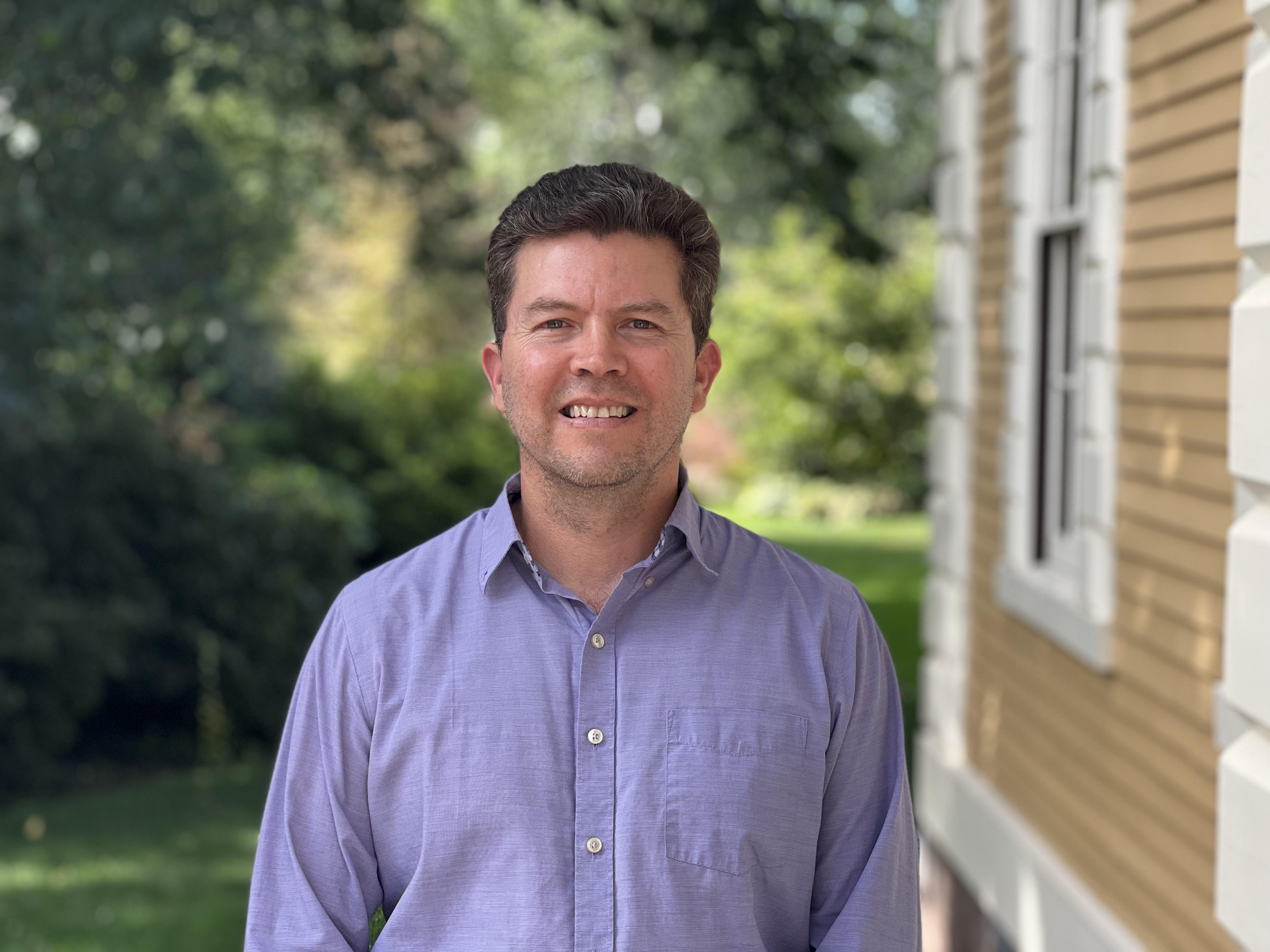
Johnny Guzmán is a Professor of Applied Mathematics at Brown University, specializing in numerical analysis of partial differential equations and scientific computing. He holds a Ph.D. in Applied Mathematics from Cornell University (2005) and a B.S. in Mathematics from California State University, Long Beach (1999). His research focuses on numerical methods for PDEs, including discontinuous Galerkin methods, mixed finite element methods, and fluid-structure interaction problems. Key contributions include work on hybridizable and mixed finite element methods, discontinuous Galerkin discretizations, and stability analysis of numerical schemes. He has been funded by multiple NSF grants, including a Postdoctoral Fellowship (2005–2008) and awards totaling over $1M in research support. Notable recognitions include the Comfort and Urry Family Fund Prize (2013). Guzmán collaborates with institutions globally and serves on editorial boards for journals like Journal of Numerical Mathematics and Calcolo . His teaching spans computational linear algebra, numerical methods for differential equations, and finite element analysis.
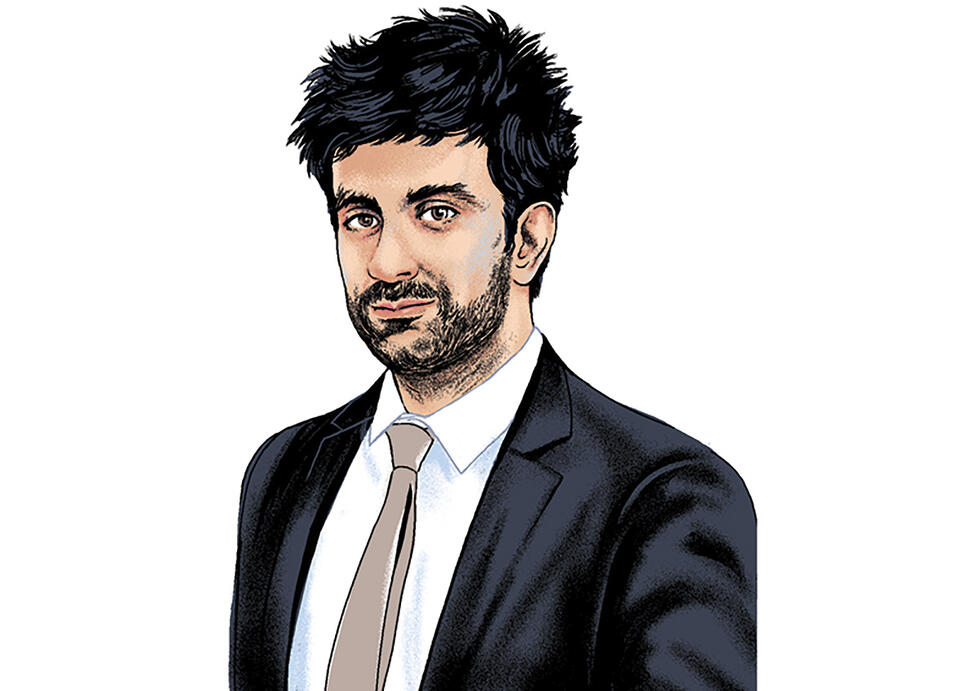
Kai Xu is a Morrey Visiting Assistant Professor in the Mathematics department at the University of California, Berkeley, mentored by Richard Bamler. Appointed in 2025, he holds a PhD from Duke University supervised by Hubert Bray. His research addresses foundational problems at the intersection of differential geometry and analysis. His educational background includes: PhD in Mathematics, Duke University (2025), supervised by Hubert Bray Xu's research spans geometric analysis, calculus of variations, and metric geometry with concentrated focus on 3D scalar curvature geometry, weak inverse mean curvature flow, nonlinear potential theory (p-harmonic functions for $1 \leq p \leq \infty$), and spectral Ricci curvature bounds. His work systematically explores connections between curvature constraints, topological properties, and geometric flows through rigorous analytical methods. His publication record (2022-2025) reveals consistent advancement in scalar curvature theory, inverse mean curvature flow, and spectral Ricci geometry. Key contributions include spectral splitting theorems, drawstring constructions for scalar curvature constraints, and topological gap theorems for positive scalar curvature 3-manifolds. His collaborative work with leading mathematicians appears in journals including Duke Mathematical Journal and Calculus of Variations and Partial Differential Equations. No scientific awards are mentioned in the provided text. Teaching responsibilities include Math 104 in Fall 2025. Information regarding student advising and grant funding is not specified in available materials. No dedicated laboratory or research team structure is described in the source text.
Amir Ali Ahmadi is a Professor at Princeton University's Department of Operations Research and Financial Engineering (ORFE), with affiliations across multiple disciplines including PACM, Computer Science, Mechanical & Aerospace Engineering, Electrical Engineering, and the Center for Statistics and Machine Learning. He serves as Director of Princeton's Optimization and Quantitative Decision Science Certificate Program and has taken temporary roles at Citadel GQS (2021-2022) and Google Brain (2020-2021). His research bridges optimization theory , dynamical systems , and control theory , focusing on scalable algorithms for complex problems in robotics, autonomous systems, and machine learning. He has pioneered DSOS/SDSOS relaxations as alternatives to traditional sum-of-squares methods, enabling faster solutions through linear/second-order cone programming. Recent publications explore: Higher-order Newton methods for socially responsible investment Data-efficient learning of dynamical systems Computational complexity of local minima Robust-to-dynamics optimization frameworks Award highlights include: 2024 Egon Balas Prize in Optimization 2024 Princeton Engineering Council Teaching Award 2023 Distinguished Teaching Award (Princeton SEAS) 2019 NSF CAREER Award 2017 DARPA Young Faculty Award 2017 Sloan Fellowship in Computer Science He advises prominent researchers like Georgina Hall (Tucker Prize finalist) and Bachir El Khadir (Goldstine Fellow), and leads the Princeton Optimization Seminar and MURI project on Control-Oriented Learning on the Fly.
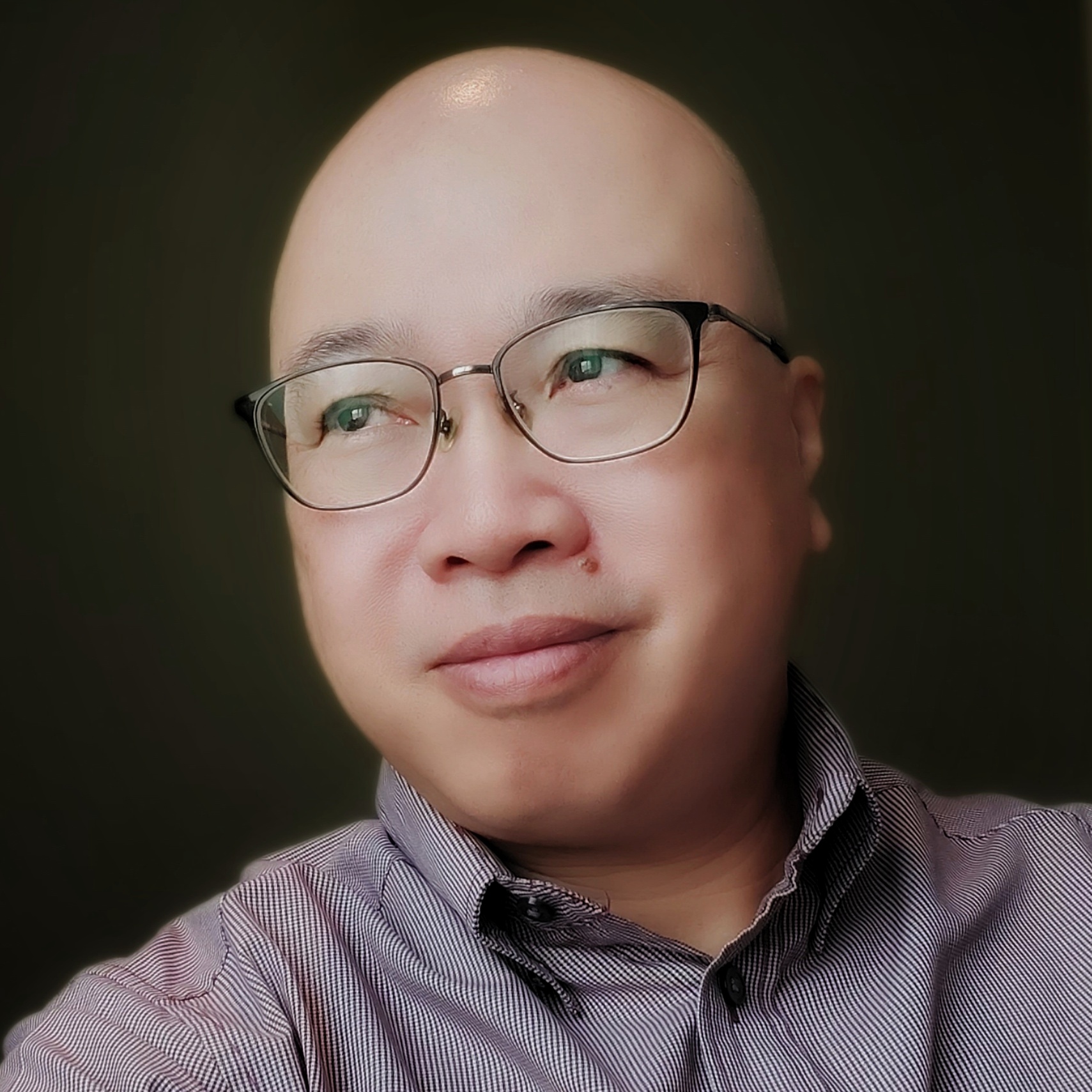
Lam James is a Chair Professor of Control Engineering at the University of Hong Kong (HKU), affiliated with the Faculty of Engineering. He holds a BSc (1st Hons.) in Mechanical Engineering from the University of Manchester, and MPhil/PhD degrees from the University of Cambridge. His academic journey includes roles as a Croucher Fellow, Lecturer at the University of Melbourne, and faculty member at City University of Hong Kong before joining HKU in 1993. Professor Lam serves as Editor-in-Chief for four international journals including IET Control Theory and Applications and Journal of The Franklin Institute . His research focuses on networked control systems, vibration control, control theory, and multi-agent systems. With 600+ peer-reviewed publications, he maintains an H-index of 102 (Web of Science) and 108 (Scopus), recognized as a Highly Cited Researcher in multiple fields. Education: BSc Manchester (Mechanical Engineering), MPhil/PhD Cambridge Editorial Roles: 20+ journals, including leadership roles since 2012 His awards include Foreign Membership of Academia Europaea (2024), National Academy of Artificial Intelligence membership (2025), and two State Natural Science Awards (2015, 2019). He is a Fellow of multiple institutions including IEEE, IMechE, and HKIE.
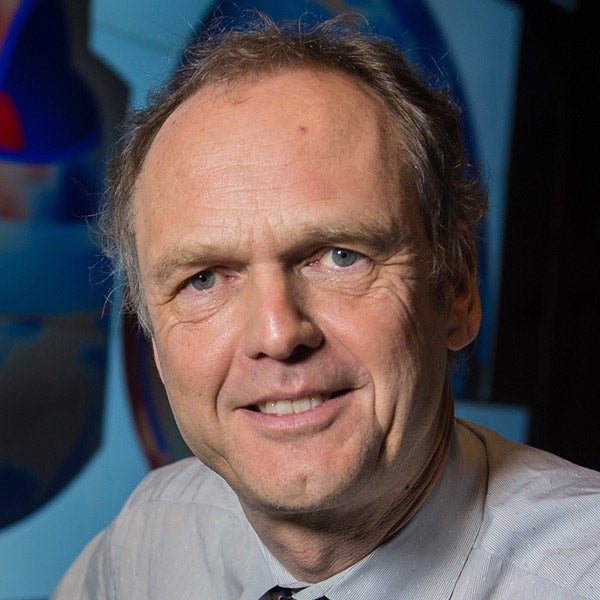
Maarten de Hoop is the Simons Chair and Professor of Computational and Applied Mathematics at Rice University, part of the George R. Brown School of Engineering. He holds visiting roles at MIT and the Chinese Academy of Sciences. His research spans seismic wave analysis, inverse problems, deep learning, and planetary seismology. He earned his Ph.D. in Technical Sciences from Delft University of Technology (1992), and earlier degrees from Utrecht University. Notable awards include the 1996 J. Clarence Karcher Award and 2001 Fellowship from the Institute of Physics. His work integrates computational mathematics with geophysics, focusing on extracting signal information from large datasets, developing novel inverse scattering methods, and applying deep learning to geoscience challenges. Recent studies include transformer models for in-context learning, semialgebraic neural networks, and seismic waveform foundation models like SeisLM. He leads the Geo-Mathematical Imaging Group, fostering interdisciplinary projects in planetary missions and data-driven discovery.
Prof. Igors Gorbovickis is an Associate Professor of Mathematics at the Department of Mathematics, School of Computer Science and Engineering, Constructor University (formerly Jacobs University Bremen). His research focuses on complex dynamical systems, including topics such as renormalization theory, bifurcation analysis, Julia sets, and applications to mathematical physics. He also contributes to discrete geometry, particularly exploring conjectures like the Kneser-Poulsen problem. His work bridges pure mathematics with interdisciplinary applications, emphasizing rigorous analysis of nonlinear systems and geometric configurations. Key areas of investigation include critical point accumulations, Hausdorff dimension estimates, and equidistribution phenomena in parameter spaces. Recent publications highlight advancements in understanding chaotic systems, circle maps, and the interplay between algebraic structures and dynamical behavior. Prof. Gorbovickis collaborates internationally, with co-authored papers appearing in journals like Advances in Mathematics , Ergodic Theory and Dynamical Systems , and Nonlinearity . His office is located at Research I, Room 128 on the Constructor University campus in Bremen, Germany.
Prof. Dr. Michael Ulbrich is a full professor and Chair of Mathematical Optimization at the Technical University of Munich (TUM), within the School of Computation, Information and Technology. He has held this position since 2006 and previously served as Dean of Studies (2007–2010) and Vice Dean of the Faculty of Mathematics (2012–2015). His research focuses on nonlinear optimization, optimal control, and numerical analysis, with applications in fluid dynamics, shape optimization, and PDE-constrained systems. He leads projects in the DFG SPP 1962 and IGDK 1754, and has received prestigious awards including the Howard Rosenbrock Prize (2015) and the Doctoral Award from the TUM Association of Friends (1996). Ulbrich is Editor-in-Chief of Optimization and Engineering and contributes to multiple journals. His work bridges theoretical foundations and practical applications, including CO2 sequestration, fluid-structure interaction, and distributed optimization algorithms. Education: PhD (1996), Habilitation (2002) in Mathematics at TUM. Research stays at Rice University (USA) under DFG funding. Research Areas: Semismooth Newton methods, PDE-constrained optimization, optimal control of Navier-Stokes equations, and distributed parameter systems. Awards: Rosenbrock Prize, Teaching Excellence Awards, and recognition for doctoral work. Leadership Roles: Department Head of Mathematics (2022–), Member of TUM Senate (2019–2022), and Co-Chair of GAMM 2018. Ulbrich has authored influential textbooks like Semismooth Newton Methods for Variational Inequalities and Nichtlineare Optimierung . His recent projects include OptiGeoS (2024–2026) and collaborations on nonsmooth optimization and stochastic algorithms. His academic contributions span over 100 publications, emphasizing both algorithmic innovation and rigorous mathematical analysis.
Anders Rantzer is a Professor of Automatic Control at the Department of Control Engineering, Faculty of Engineering, Lund University, Sweden. He has held visiting positions at Caltech (2004–2005) and the University of Minnesota (2015–2016) as the Taylor Family Distinguished Visiting Professor. His academic journey began with a PhD from KTH Stockholm in 1991, followed by a postdoc at the Institute for Mathematics and its Applications (IMA), University of Minnesota. His research interests center on modeling, analysis, and synthesis of control systems , with a strong focus on scalability, adaptation, and applications in energy networks . He is particularly known for foundational work in positive systems and integral quadratic constraints (IQCs) . These theoretical frameworks are critical in analyzing stability and robustness of large-scale interconnected systems. His work bridges mathematical rigor with practical engineering applications, especially in sustainable energy and networked systems. The recent publications and lecture materials reflect a consistent trajectory in scalable and robust control, optimization, and distributed systems. Themes such as large-scale convex optimization , nonlinear and stochastic control , and network dynamics dominate his scholarly output, indicating a sustained commitment to advancing control theory for complex, real-world systems. Scientific honors include: Fellow of IEEE Member of the Royal Swedish Academy of Engineering Sciences (IVA) Chairman of the Swedish Scientific Council for Natural and Engineering Sciences Chairman of the Royal Physiographic Society of Lund Rantzer has supervised numerous students and contributed extensively to academic leadership and education. He has been involved in major national and international research initiatives such as WASP (Wallenberg AI, Autonomous Systems and Software Program) and ELLIIT. His work includes developing educational tools and courses in control, optimization, and machine learning. He leads and contributes to research projects on autonomous systems, cloud control, and smart energy networks. He is affiliated with the Control Lab at LTH and participates in collaborative efforts such as the Nordic University Hub on Industrial Internet of Things (HI2OT). His work integrates theoretical advances with practical implementations in robotics, biomedical systems, and industrial automation.
David Jerison is a Professor of Mathematics at the Massachusetts Institute of Technology (MIT), where he conducts research in Fourier analysis and partial differential equations. His work focuses primarily on free boundary problems and, more recently, on internal Diffusion Limited Aggregation (internal DLA), a stochastic growth model. He maintains an active research program with numerous publications in leading mathematical journals. Professor Jerison's research spans several interconnected areas of mathematical analysis. His primary interests include Fourier analysis and partial differential equations, with particular emphasis on free boundary problems. In recent years, he has expanded his research to include internal Diffusion Limited Aggregation, a stochastic growth model that has connections to probability theory and mathematical physics. His work often bridges geometric analysis, spectral theory, and probabilistic methods, demonstrating the deep connections between different branches of mathematics. Analysis of Professor Jerison's recent publications reveals a consistent focus on geometric aspects of partial differential equations, particularly free boundary problems. His research shows progression from classical PDE theory toward more stochastic and probabilistic approaches, as evidenced by his work on internal DLA. The publications demonstrate interdisciplinary connections between mathematical analysis, probability theory, and mathematical physics, with applications ranging from geometric measure theory to quantum mechanics. Professor Jerison is actively involved in teaching and mentoring at MIT. He has taught courses including Differential Equations (18.03), Fourier Analysis and Applications (18.103), and Differential Analysis (18.155). He also directs the Summer Program for Undergraduate Research (SPUR), which is exclusively for MIT undergraduates, and organizes the mathematics section of the Research Science Institute (RSI) for high school students. His teaching materials are available through MIT's Open Courseware platform, indicating his commitment to educational outreach and accessibility.
Scientia Professor Gary Froyland is a Professor at the University of New South Wales (UNSW), affiliated with the School of Mathematics & Statistics. He leads the ARC Laureate Centre for Dynamical Systems and Data and holds an Einstein Visiting Fellowship from the Einstein Foundation Berlin. His academic credentials include a BSc (Hons 1, Medal) in Pure and Applied Mathematics from the University of Queensland and a PhD in Mathematics from the University of Western Australia. Professor Froyland's research spans two primary domains: dynamical systems and optimization. In dynamical systems, he investigates the interplay of probability and geometry in nonlinear and chaotic systems, employing tools from ergodic theory, functional analysis, and differential geometry. His work extends to applications in oceanography, atmospheric science, and granular flows. In optimization, he focuses on decision-making in complex systems with uncertain information, developing novel approaches in mathematical programming that have been applied to mining, logistics, and medical treatment planning. His recent publications demonstrate a strong focus on coherent structures in dynamical systems, linear response theory, and applications to geophysical phenomena. The research shows increasing interdisciplinary collaboration, particularly with climate scientists and data analysts, reflecting a trend toward applying advanced mathematical techniques to real-world problems in environmental science and engineering. J.D. Crawford Prize (2025) Elected Member of the Academy of Europe / Academia Europaea (2024) ARC Laureate Fellow (2024-2029) Fellow of the Society for Industrial and Applied Mathematics (SIAM) (2021) Fellow of the Australian Academy of Science (2020) Vice-Chancellor's Award for Teaching Excellence - Postgraduate Research Supervision (2015) Professor Froyland actively supervises PhD and honors students, with current advisees including Kevin Felipe Kühl Oliveira, Nicholas Peters, and Kathrin Völkner. His research is supported by multiple grants, including an ARC Laureate Fellowship (2024-2029) for "Breakthrough mathematics for dynamical systems and data," an Einstein Visiting Fellowship (2022-2026), and several ARC Discovery Projects. His work has practical applications in climate science, mining optimization, and medical treatment planning, particularly in radiotherapy. He leads the ARC Laureate Centre for Dynamical Systems and Data, which brings together researchers to develop new mathematical approaches for analyzing complex dynamical systems. The center focuses on creating methods to identify coherent structures in spatiotemporal data, with applications spanning environmental science, social science, health science, and engineering.
Michael Muehlebach leads the independent Learning and Dynamical Systems research group at the Max Planck Institute for Intelligent Systems in Tuebingen, Germany. His interdisciplinary work bridges machine learning, dynamical systems theory, and control engineering to develop algorithms for cyber-physical systems with theoretical guarantees and practical implementations. Dr. Muehlebach received his B.Sc. and M.Sc. in Mechanical Engineering from ETH Zurich in 2010 and 2013, specializing in robotics and control systems. He completed his Ph.D. at ETH's Institute for Dynamic Systems and Control under Prof. R. D'Andrea in 2018, followed by postdoctoral research with Prof. Michael I. Jordan at UC Berkeley. His research focuses on constrained optimization, reinforcement learning, and control theory with applications in robotics. He pioneered approaches that express constraints in terms of velocities rather than positions, enabling more efficient optimization algorithms. His work spans theoretical foundations to physical implementations, including the One-Wheel Cubli balancing robot and electromagnetic navigation systems. Recent publications reveal a strong trend toward physics-informed machine learning, particularly for robotics applications requiring real-time performance and safety guarantees. Dr. Muehlebach has received numerous prestigious awards: Outstanding D-MAVT Bachelor Award Willi-Studer prize for best Master's degree ETH Medal and HILTI prize for doctoral thesis Branco Weiss Fellowship (2018) Emmy Noether Fellowship (2020) Amazon Fellowship (2024) He actively mentors doctoral researchers including Hao Ma, Melis Ilayda Bal, and Onno Eberhard, with research supported by multiple grants. His group maintains strong collaborations with Bernhard Schölkopf's Empirical Inference group at the Max Planck Institute. The Learning and Dynamical Systems group develops innovative hardware and software platforms, including Floaty (a wind-harnessing flying robot), advanced electromagnetic navigation systems, and data-efficient learning methods for robotic table tennis. Their approach combines rigorous theoretical analysis with practical validation on physical systems, emphasizing the integration of known physical structure into machine learning algorithms to improve sample efficiency and ensure generalization.
Martin Larsson is a Professor in the Department of Mathematical Sciences at Carnegie Mellon University (CMU), affiliated with the Mellon College of Science. He holds a Ph.D. from Cornell University and completed a postdoctoral appointment at the Swiss Finance Institute at EPFL, Lausanne, Switzerland. His research focuses on Mathematical Finance, stochastic analysis, probability, and statistics, with emphasis on affine and polynomial processes, stochastic portfolio theory, and sequential statistics. Key research domains include modeling interest rate term structures, large-scale equity market dynamics, and statistical testing in online settings. He serves as the Departmental representative for the Master of Science in Computational Finance (MSCF) program at CMU. Larsson has received the Bruti-Liberati Visiting Fellowship from the University of Technology Sydney. His work bridges theoretical probability with applications in finance, including contributions to stochastic volatility modeling, optimal contracts in trading, and robust portfolio optimization under uncertainty. Publications span topics such as martingale exit times, Wasserstein distance convergence, and ergodic control in stochastic systems, reflecting his interdisciplinary approach to mathematical finance and probability theory. His research often combines analytical techniques with stochastic control and geometric flows.
Juha Kinnunen is a Professor of Mathematics at Aalto University, affiliated with the Department of Mathematics and Systems Analysis within the School of Science. His primary research focuses on mathematical analysis, particularly nonlinear partial differential equations, harmonic analysis, and regularity theory in metric measure spaces. He holds a Ph.D. and has been an active researcher in areas such as degenerate and singular PDEs, parabolic equations, and functional inequalities. Affiliations: Aalto University, Department of Mathematics and Systems Analysis, School of Science Roles: Professor, Researcher in Analysis and Nonlinear PDEs His research emphasizes theoretical aspects of nonlinear PDEs, including regularity theory for singular/degenerate elliptic and parabolic equations, and applications in multiphase fluid dynamics and nonhomogeneous media. He has extensively studied methods involving harmonic analysis and has contributed to the understanding of reverse Hölder classes, Muckenhoupt weights, and maximal function approaches in metric measure spaces. Recent work includes studies on doubly nonlinear equations, mixed local/nonlocal operators, and the development of self-improving properties of weighted inequalities. Over 100 publications since 1994 highlight his contributions to fields like parabolic systems, quasiminimizers, and supercaloric functions.
Urs Lang is a Full Professor at the Department of Mathematics, ETH Zurich, where he has held a professorship since 2001. His academic journey began with mathematics studies at the University of Berne and the University of Freiburg i.Br., culminating in a doctoral degree focused on hyperbolic geometry and minimal surfaces. Education: University of Berne (undergraduate) University of Freiburg i.Br. (doctoral degree) Lang's research lies at the intersection of differential geometry , metric geometry , and geometric group theory . His work explores non-positive curvature spaces, geometric measure theory, and large-scale Lipschitz analysis. Recent publications examine combinatorial hyperbolicity, isoperimetric inequalities, and rank-rigidity phenomena. The publications overview reveals a consistent focus on geometric structures, including: Higher-rank hyperbolicity in singular spaces Convex geodesic bicombings Injective hulls in geometric group theory Nonlinear potential theory on hyperbolic metric spaces Lipschitz extension problems Curvature comparison theorems Lang actively contributes to academic discourse through editorial roles at journals like Geometry and Topology and Analysis and Geometry in Metric Spaces , as well as organizing major conferences including the 2025 Metric Analysis Trimester Program at Bonn's Hausdorff Institute.
Betsy Stovall is a Professor of Mathematics at the University of Wisconsin–Madison and holds the Letters and Science Mary Herman Rubenstein Professor chair. She serves as the AMS Associate Secretary for the Central Section . Education : Not explicitly stated in provided text. Appointments : Regular faculty at UW–Madison since at least 2012 Organizer of graduate analysis seminars Research Interests : Stovall specializes in harmonic analysis , focusing on operators involving curvature, oscillatory integrals, and Fourier restriction phenomena. Her work intersects with partial differential equations (PDEs) through the study of dispersive equations and geometric analysis problems. Teaching : Complex Analysis (Math 623) - Fall 2021 Calculus III (Math 234) - Fall 2020 Graduate Analysis Seminar - Spring 2022 Organized UW Madison undergraduate summer school in Analysis (2018) Scientific Contributions : Sole or joint author of 15+ publications NSF RTG grant in Analysis and PDE Active in harmonic analysis seminars and educational initiatives Administrative Roles : AMS Associate Secretary Co-organizer of RTG/Student seminars Summer school director