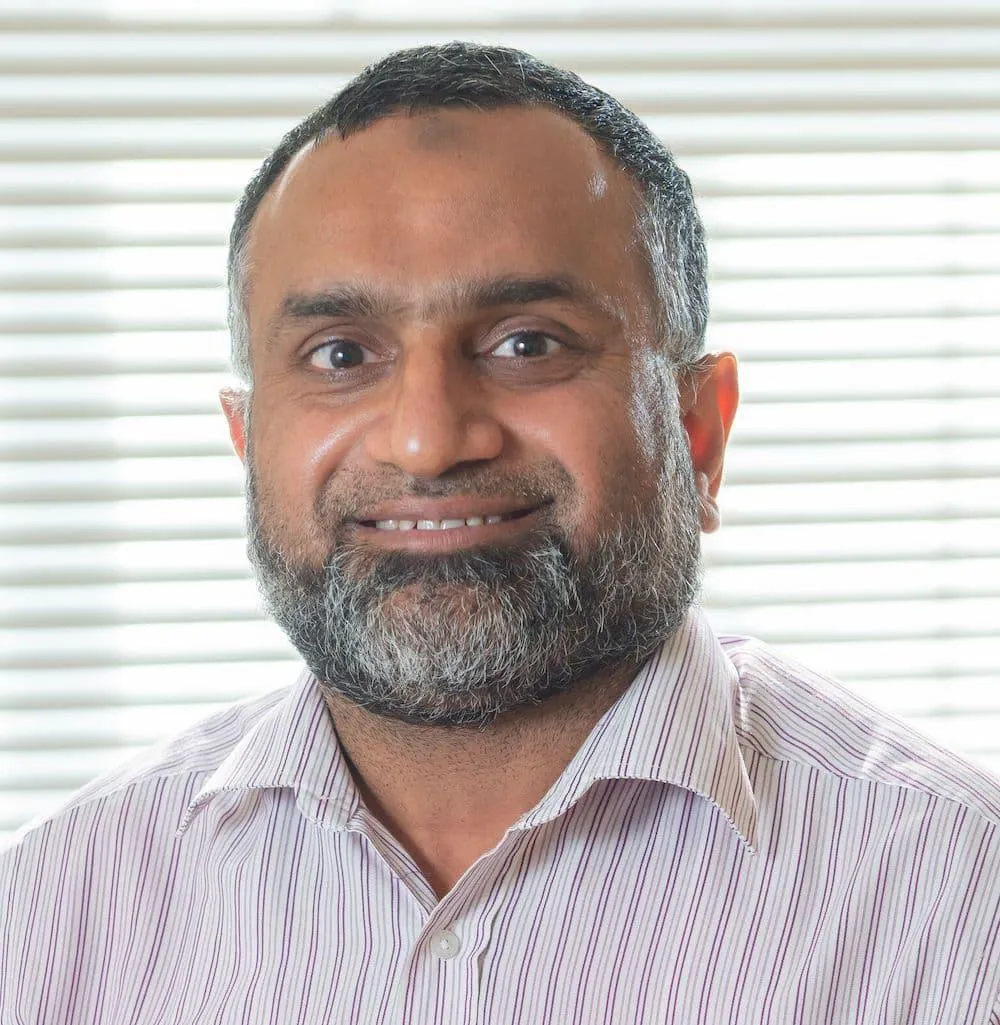
Dr. Jamshed Iqbal is a Senior Lecturer at the University of Hull , affiliated with the School of Digital and Physical Sciences and the Computer Science department . With over two decades of experience in academia and industry, he leads the BEng/MEng Robotics and AI program and contributes to pedagogical innovation via the CDIO framework.
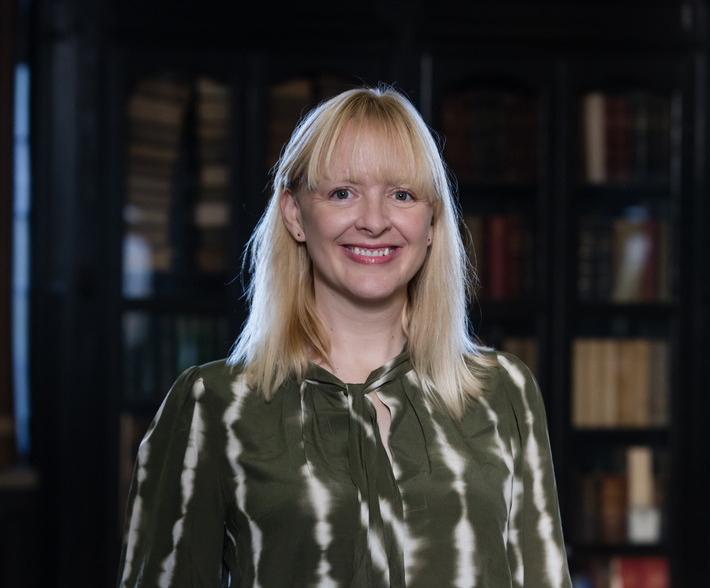
Dr. Aarti Panday serves as a Lecturer at the University of the Witwatersrand's School of Mechanical, Industrial & Aeronautical Engineering, where she teaches Mechatronics and Postgraduate Flight Dynamics and Control. With over 18 years of integrated academic and industry experience since 2004, she bridges theoretical research with practical aerospace applications. Her academic credentials include: BSc (Aerospace Engineering) MSc (Engineering) PhD (University of the Witwatersrand) Graduate Diploma in Education (GDE) Dr. Panday's research spans multiple critical domains: Mechatronics, Robotics, and Advanced Control Systems Flight Dynamics and Aerial Refuelling for manned/unmanned aircraft Technology Management, Commercialisation, and Intellectual Property Aircraft Certification and Regulatory Compliance Analysis of her recent publications reveals consistent application of evolutionary algorithms and neural networks to solve control challenges in aerospace and building systems, particularly in aerial refuelling maneuvers and elevator dynamics for supertall structures. Her industry background—including work on the Rooivalk helicopter, A-Darter missile, and regulatory approvals for aircraft like the Airbus A320—provides exceptional context for students. Since 2013, she has expanded her impact through technology management, supporting innovators via due diligence, investment scoping, and strategic partnership development with government and industry entities.
Jennifer Croft is an Associate Professor and Presidential Professor of English & Creative Writing in the Kendall College of Arts & Sciences at The University of Tulsa. An acclaimed author, critic, and translator of Polish, Ukrainian, and Argentine Spanish literature, she has established herself as a significant voice in contemporary literary translation and creative writing. Her research spans multiple interconnected areas including literary translation theory and practice, experimental fiction, hybrid genres, prose poetry, and the cultural connections between Poland/Central Europe and Argentina/Latin America. Croft's work consistently explores the boundaries between translation and creation, examining how translation functions as both a regenerative cultural force and a process that inevitably involves elements of erasure. Her fascination with postcards as a medium for communication across distances reflects her broader interest in how meaning travels between languages and cultures. Croft's publication record shows a consistent output of both creative and translated works spanning over a decade. Her most recent novel, The Extinction of Irena Rey (2024), has been recognized as one of The Wall Street Journal 's 10 Best Books of 2024 and has already been translated into nine languages. This work continues her exploration of translation as a creative act, using the framework of eight translators searching for a missing author in Poland's Białowieża Forest. Notable awards include: International Man Booker Prize (2018) for translating Olga Tokarczuk's Flights William Saroyan International Prize for Writing (2020) for her memoir Homesick Guggenheim Fellowship (2022) for The Extinction of Irena Rey American Academy of Arts and Letters Award in Literature (2023) As a mentor and educator, Croft brings her extensive professional experience to the classroom, having navigated both the academic world and the competitive landscape of literary translation and publication. Her advocacy for translator visibility has influenced publishing practices industry-wide, and she continues to champion greater integration of international literature into mainstream American reading culture. While she doesn't lead a formal research lab, her creative practice and translation work function as a collaborative enterprise with authors, publishers, and fellow translators across multiple countries.
Piotr Jan Garbaczewski is a Professor of Physics at the University of Opole, Poland, where he serves as the Head of the Institute of Physics. Previously, he held professorial positions at the University of Zielona Góra (1998-2006) and the University of Wrocław (1971-1998). His research spans multiple areas of theoretical and mathematical physics, with particular focus on: Stochastic processes and random dynamics Quantum mechanics and fractional quantum mechanics Non-equilibrium statistical mechanics Lévy flights and stable processes in bounded domains Diffusion processes with non-conservative drifts Mathematical aspects of quantum potentials Garbaczewski's recent publication record shows consistent output in prestigious journals, with notable work on killing versus branching processes, non-conservative diffusion, and Lévy processes in bounded domains. His research demonstrates a strong connection between stochastic processes and quantum mechanical systems, particularly through the lens of non-Hermitian quantum mechanics and fractional calculus. His scientific achievements include: h-index (WoS Citations): 7 Total Impact Factor: 31.499 Total SNIP: 15.42 Total CiteScore: 28.41 Total ministerial score: 1,210 Throughout his career, Garbaczewski has maintained active collaborations with researchers across Poland and internationally, contributing significantly to the field of mathematical physics through both theoretical developments and practical applications of stochastic processes in physical systems.
Dr Thomas Woolley is a Reader in Applied Mathematics at Cardiff University's School of Mathematics, where he leads research in mathematical biology with a focus on pattern formation and cellular dynamics. His academic journey began at the University of Oxford (2004-2017), where he specialized in mathematical biology, completing doctoral research on the pattern formation behind fish spots and zebra stripes. At Cardiff, he maintains an active research program while supervising PhD students and engaging in significant mathematical outreach. Dr Woolley's research interests center on mathematical biology, particularly morphogenesis, reaction-diffusion theory, cellular motion, stochastic dynamics, and neurobiology. His current work investigates muscle stem cell protrusions known as blebs that enable cells to navigate toward damaged muscle tissue for healing and regeneration. He develops analytical links between discrete cellular protrusions and continuous population distributions, with the goal of algebraically coupling observable cellular motion to unobservable structural features of the cell membrane. His research also explores Turing-type pattern formation across biological systems, from feather development to fingerprint variation. His recent publications demonstrate consistent output across high-impact journals, with work spanning theoretical mathematical biology, medical applications, and public health modeling. Notable recent projects include modeling indoor airborne transmission during the pandemic, analyzing bat movement patterns, and investigating pattern formation in biological systems. His research shows strong interdisciplinary connections between mathematics, biology, and medicine. Poster prize at international biology conference Dr Woolley actively supervises doctoral students and research assistants, with a track record of successful PhD completions. His supervision approach emphasizes connecting mathematical theory with biological applications, often through collaborations with experimentalists. He has developed several interactive web applications to implement research findings, including tools for predicting Covid-19 transmission and optimizing public transport seating during the pandemic. His work on stem cell motion and pattern formation continues to advance our understanding of fundamental biological processes with potential therapeutic applications.
Jean-François Boland is a Professor in the Department of Electrical Engineering at École de technologie supérieure (ÉTS), where he leads research in aerospace systems and embedded technologies through the LASSENA Laboratory. His expertise spans avionics, autonomous systems, digital design methodologies, and functional verification. Research Interests: Aeronautics & Aerospace : Flight control systems, radiation-hardened avionics, integrated modular architectures Intelligent Systems : Bipedal robot control, adaptive algorithms, autonomous navigation Digital Design : RTL verification, fault modeling, high-level synthesis His recent publications emphasize fault-tolerant aerospace systems , with 60% focused on radiation effects mitigation, 25% on autonomous robotics, and 15% on design methodologies. Key trends include AI-enhanced verification (2019), SEU-resistant flight controls (2013–2016), and bipedal locomotion control (2021–2022). Awards and Honors: Ambassadeur Honoraire (ÉTS, 2020) CNESST Safety Award & GREPCI Finalist (2017) CRIAQ Project Excellence Award (2012) Two ÉTS Teaching Excellence Awards (2011, 2013) He actively advises graduate students, with 16+ supervisees working on projects like fault-tolerant avionics and quadcopter control systems. Laboratory work at LASSENA emphasizes resilient embedded systems and aerospace-grade validation platforms.
Weigang Yao serves as an Associate Professor in the School of Engineering and Sustainable Development at De Montfort University, Leicester, specializing in aerospace engineering research and education within the Nonlinear Flight Dynamics Research Group under the Institute for Sustainable Futures / Digital Futures Institute. His academic credentials include a PhD in Aircraft Design and an MA in Education with distinction, demonstrating dual expertise in engineering and pedagogy. Dr. Yao's research concentrates on computational fluid dynamics (CFD) for simulating complex aerodynamic phenomena, structural aeroelasticity analysis for aircraft stability, model order reduction techniques to optimize computational efficiency, and multidisciplinary design optimization (MDO) frameworks for integrated aerospace systems development. His work bridges theoretical fluid-structure interaction challenges with practical sustainable aviation applications. Key professional recognitions include: DMU Education Academy Fellow Senior Fellow of Higher Education Academy He maintains active professional engagement as a Senior Member of the American Institute of Aeronautics and Astronautics (AIAA) and Member of the Royal Aeronautical Society, contributing to aerospace knowledge dissemination. Dr. Yao teaches core aerospace courses including Fundamentals of Aerodynamics, Mechanics of Flight, Structural Dynamics and Aeroelasticity, and UAV Design, while leading research initiatives through the Nonlinear Flight Dynamics Research Group.
Christian Circi is an Associate Professor of Flight Mechanics at the Department of Astronautical, Electrical, and Energy Engineering, Sapienza University of Rome. He has held this position while actively contributing to space research and education in Italy's premier academic institution. Dr. Circi earned his Bachelor of Science and Master of Science in Aeronautical Engineering, followed by a Master of Science in Aerospace Engineering, and ultimately his PhD in Aerospace Engineering, all from Sapienza University of Rome. His educational background provided the foundation for his specialization in space mission design and orbital mechanics. His primary research focuses on orbital mechanics , with particular expertise in third-body perturbations , interplanetary and lunar trajectories , solar sails , orbits for planetary observation , and launch vehicle ascent trajectories . Dr. Circi's work bridges theoretical celestial mechanics with practical space mission applications, making significant contributions to the understanding of complex orbital dynamics in multi-body systems. Analysis of Dr. Circi's recent publications reveals a strong emphasis on solar sail technology, particularly the Helianthus mission, as well as innovative approaches to orbit design for lunar and planetary exploration. His work increasingly incorporates quantum-inspired optimization techniques and machine learning applications to traditional astrodynamics problems, demonstrating adaptability to emerging computational methodologies. Dr. Circi serves as the scientific director of the Italian Space Agency's "Research and Development on Photonic Solar Propulsion" project, demonstrating leadership in cutting-edge propulsion research. He has also been actively involved in consulting for both public and private space sector organizations. At Sapienza University of Rome, Dr. Circi teaches "Interplanetary Trajectories" and "Launcher Flight Mechanics" in the Master's Degree program in Space and Astronautical Engineering, as well as the second-level Master's program in "Space Transportation Systems." His teaching directly reflects his research expertise, providing students with practical knowledge of space mission design. Dr. Circi has authored 153 scientific articles throughout his career and serves as Associate Editor for several prestigious journals including "Aerospace Science and Technology," "International Journal of Aerospace Engineering," "Astrodynamics," and "Space: Science & Technology," indicating his standing within the international space research community.