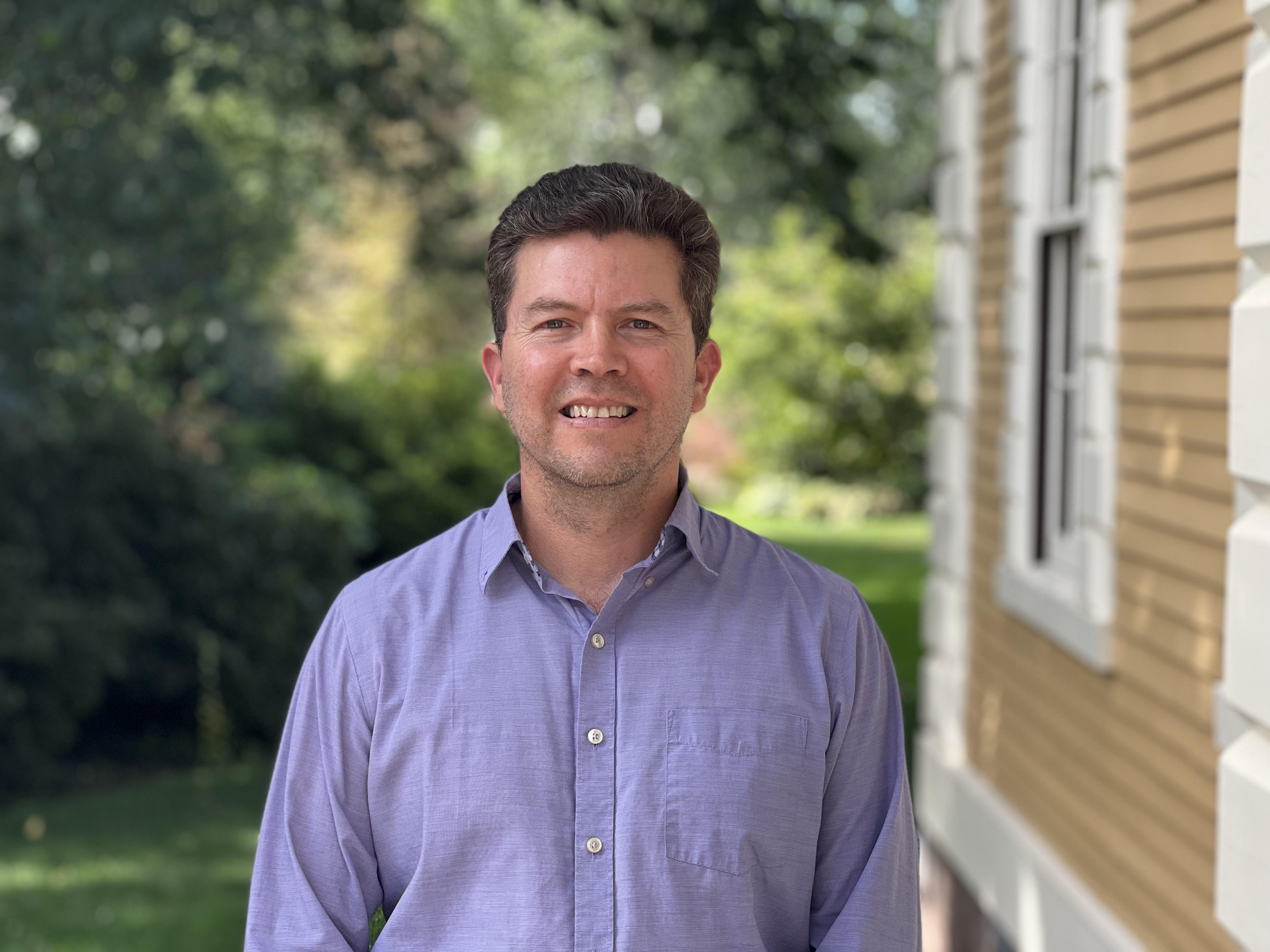
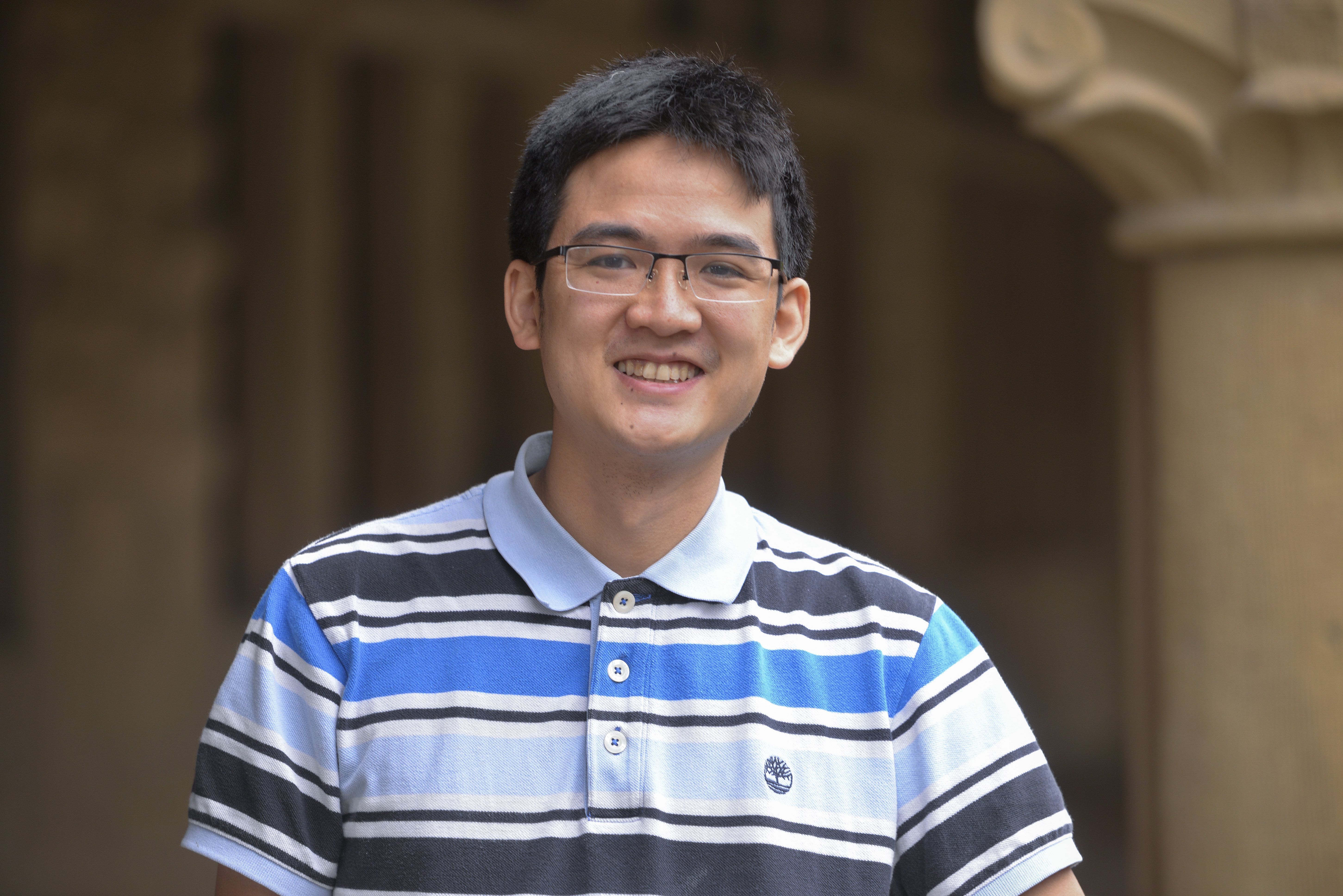
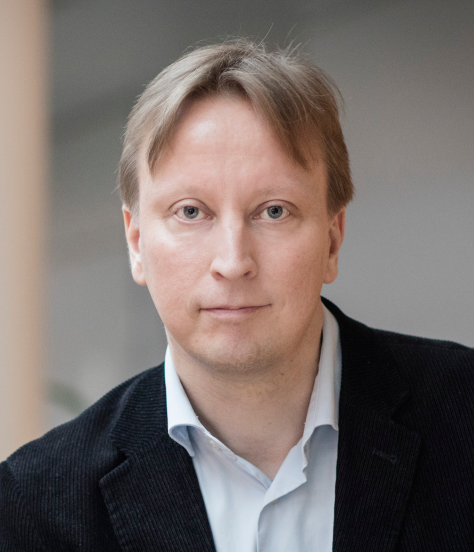
Andrew Stuart is the Bren Professor of Computing and Mathematical Sciences at the California Institute of Technology (Caltech), joining in 2016. He previously held faculty positions at the University of Warwick (1999–2016), Stanford University (1992–1999), and Bath University (1989–1992). He earned his PhD from the University of Oxford's Computing Laboratory in 1986. Professor Stuart's research focuses on applied and computational mathematics , particularly Bayesian inverse problems , data assimilation for dynamical systems , and stochastic modeling . His work bridges mathematical theory, algorithm development, and applications in geophysics, materials science, and biological systems. His recent publications emphasize operator learning , machine learning for PDEs , and uncertainty quantification . Key areas include ensemble Kalman methods , Gaussian processes , and neural operators for solving and learning from complex systems. Scientific awards include the Vannevar Bush Faculty Fellowship and election to the Royal Society of Great Britain . He advises graduate students in applied mathematics, computational science, and geophysics, including Edoardo Calvello , Hojjat Kaveh , and Florian Wolf .
Prof. Niki Kilbertus is an Assistant Professor at the Technical University of Munich (TUM) in the Department of Informatics, and Group Leader at Helmholtz AI. His research focuses on causal machine learning, ethical AI systems, and applications in healthcare, climate science, and dynamical systems. He earned his PhD from the University of Cambridge (2020) and has held positions at DeepMind, Google, and Amazon during his studies. His research interests include causal discovery, fairness in AI, counterfactual reasoning, and integrating physics-based constraints into neural networks. Key contributions include foundational work on fair machine learning (e.g., avoiding discrimination through causal models) and developing methods for causal inference in complex systems like healthcare and climate modeling. Recent work emphasizes generative models for causal interventions, robust treatment effect estimation, and physically consistent neural differential equations. He leads a large interdisciplinary group with over 20 students and postdocs working on projects funded by Helmholtz Association, ERC, and industry collaborations. Notable awards include the Leopoldina Prize for Young Scientists (2024) and membership in the Junge Akademie. His lab maintains active partnerships with ELLIS, MCML, and the Zuse Institute Berlin.
Johnny Guzmán is a Professor of Applied Mathematics at Brown University, specializing in numerical analysis of partial differential equations and scientific computing. He holds a Ph.D. in Applied Mathematics from Cornell University (2005) and a B.S. in Mathematics from California State University, Long Beach (1999). His research focuses on numerical methods for PDEs, including discontinuous Galerkin methods, mixed finite element methods, and fluid-structure interaction problems. Key contributions include work on hybridizable and mixed finite element methods, discontinuous Galerkin discretizations, and stability analysis of numerical schemes. He has been funded by multiple NSF grants, including a Postdoctoral Fellowship (2005–2008) and awards totaling over $1M in research support. Notable recognitions include the Comfort and Urry Family Fund Prize (2013). Guzmán collaborates with institutions globally and serves on editorial boards for journals like Journal of Numerical Mathematics and Calcolo . His teaching spans computational linear algebra, numerical methods for differential equations, and finite element analysis.
Jonathan Winghong Luk is a Professor in the Department of Mathematics at Stanford University. His research focuses on nonlinear partial differential equations, general relativity, and mathematical physics, with a particular emphasis on gravitational wave dynamics, shock formation, and high-frequency spacetime solutions. Contact: Email: jluk@stanford.edu Office: 382-Z, Building 380, Stanford, CA 94305 Research Trends: His recent publications examine nonlinear wave equations on dynamic spacetimes, gravitational phase mixing, impulsive gravitational wave interactions, and stability of black hole interiors. He frequently collaborates with experts like C. Huneau, S.-J. Oh, and J. Speck. Academic Activities: Luk organizes the Analysis and PDE seminar at Stanford with Eugenia Malinnikova and Ryan Unger. He has developed lecture notes on nonlinear wave equations and Fourier analysis, complemented by example sheets.
Ram Vasudevan is an Associate Professor and Associate Chair of Graduate Studies in the Department of Robotics at the University of Michigan. His research focuses on developing tools for safe and robust deployment of robotic systems, emphasizing optimization, nonlinear control, and real-world applications. Key areas include legged robot locomotion, shared control systems, and safety-critical autonomous systems. Research Interests: Optimization and control of nonlinear systems, locomotion of legged robots, shared control active safety systems, and automation of diagnostic/rehabilitative tasks. His ROAHM Lab prioritizes mathematical guarantees for robotic performance, with applications in medical robotics, autonomous vehicles, and soft robotics. Recent work emphasizes trajectory optimization, sensor fusion, and safety-aware control strategies. He has contributed to benchmarks for autonomous vehicle perception and novel methods in thermal image restoration using neural radiance fields. Awards: None explicitly listed in provided text. Labs/Teams: Directs the ROAHM Lab, collaborating on projects like robotic tail mechanics, real-time motion planning, and sensor data analysis. Active in academic conferences including RSS and ICRA.
Paul Goldberg is a Professor of Computer Science and Director of the MSc in Mathematics and Foundations of Computer Science (MFoCS) at the University of Oxford. He holds a BA in Mathematics from Oxford University and a PhD in Computer Science from the University of Edinburgh. His research focuses on algorithmic game theory, computational complexity, and machine learning, with notable contributions to equilibrium computation, complexity classes of total search problems, and decentralized systems. Affiliations: Department of Computer Science, Oxford; Editorial Board of ACM Transactions on Economics and Computation. Education: PhD in Computer Science (1993), University of Edinburgh MSc in Computer Systems Engineering (1989), University of Edinburgh and Université Paris-Sud BA in Mathematics (1988), Oxford University Research Interests: Algorithmic game theory, computational complexity (especially total search problems like CLS and PPAD), decentralized computation of equilibria, and applications in machine learning and AI. His work bridges theoretical computer science and economics, with a focus on algorithm design and complexity analysis. Publications and Awards: Over 120 papers, including influential work on Nash equilibrium complexity (2009), gradient descent (2023), and fair division algorithms. Notable awards include the ACM SIGecom Test of Time Award (2022) and a SIAM Outstanding Paper Prize (2011). Grants and Students: Leads EPSRC-funded projects on game theory and machine learning. Supervised 11 PhD graduates and currently advises Giannis Tyrovolas and others. Active in mentoring MSc and undergraduate projects. Labs/Teams: Part of the Algorithms and Complexity Theory group at Oxford, contributing to research on optimization, equilibrium dynamics, and fair division.
PD Dr. Christian Zillinger is a researcher at the Karlsruhe Institute of Technology (KIT), specifically within the Department of Mathematics. He leads the Junior Research Group "Stability and Instability in Fluids and Materials" (AP6) as part of the CRC 1173. His office is located at Kollegiengebäude Mathematik (20.30), room 2.024 in Karlsruhe, Germany. Dr. Zillinger obtained his PhD under the supervision of Herbert Koch at the University of Bonn. Following his doctorate, he served as an assistant professor (NTT) at the University of Southern California and was a postdoctoral fellow at BCAM (Basque Center for Applied Mathematics). He recently completed his habilitation thesis titled "On Mixing and Resonances in Fluid Systems" at KIT in 2023. Dr. Zillinger's research focuses on partial differential equations motivated by physical problems, particularly in fluid dynamics and material sciences. His work encompasses several key areas: Mixing as a (de)stabilizing mechanism in fluids and inviscid damping Cascades of resonances and instabilities in fluids and plasmas Convex integration and microstructures in materials, including rigidity and flexibility phenomena Magnetic fluids and magnetohydrodynamics Partial dissipation in the Boussinesq equations His recent publications demonstrate a strong focus on stability and instability phenomena in fluid systems, with particular attention to mathematical analysis of PDEs governing fluid behavior. He has made significant contributions to understanding echo chains, resonance phenomena, and damping mechanisms in various fluid models. His work bridges theoretical mathematics with applications in physics and materials science, often employing advanced analytical techniques to address challenging problems in nonlinear PDEs. Dr. Zillinger actively teaches courses at KIT, including "Klassische Methoden für partielle Differentialgleichungen" (Classical Methods for Partial Differential Equations), "Introduction to convex integration," "Introduction to Kinetic Equations," and seminars on microstructure in materials and fluid dynamics. He leads the Junior Research Group "Stability and Instability in Fluids and Materials" which is part of the Collaborative Research Centre (CRC) 1173 at KIT, focusing on wave phenomena. This research group investigates mathematical aspects of stability and instability in physical systems, with applications to fluid dynamics and material science.
Zaid Harchaoui is an Adjunct Professor in the Department of Statistics at the University of Washington. His research focuses on machine learning, generative AI, and algorithmic optimization, with applications spanning ecology, neuroscience, and artificial intelligence. He explores learning under distributional shifts and develops tools for scalable generative models in language and vision domains. University: University of Washington Department: Statistics Research Focus: Learning from data with computational, inferential, and mathematical rigor; distributional shift adaptation; generative model scaling Email: zaid@uw.edu His recent work emphasizes generative AI applications in ecology and neuroscience, stochastic optimization for robustness, and algorithmic efficiency in large-scale learning. Key contributions include techniques for distributionally robust optimization, interpretable authorship obfuscation, and uncertainty quantification in behavior classification. Scientific awards and honors are not explicitly mentioned in the provided text. Collaborative efforts often intersect with nonlinear control algorithms, spectral analysis, and privacy-preserving machine learning frameworks.
Renate Sachse is a Researcher at the Chair of Structural Analysis, Technical University of Munich (TUM), where she has worked since May 2024. Previously, she held postdoctoral positions at Harvard University's Bertoldi Lab (2024) and TUM's Chair of Computational Mechanics (2021-2024), following academic staff roles at the University of Stuttgart (2015-2020). Her interdisciplinary work bridges civil engineering, biomechanics, and computational modeling. Her educational foundation includes a Master's in Civil Engineering from the University of Stuttgart (2014; thesis: 'Isogeometric contact analysis of thin-walled structures') and a Bachelor's from the same institution (2011; thesis: 'A Primary School Pavilion for Magagula in South Africa - Structural Analysis'). She also completed ERASMUS studies at ESTP Paris and internships at Foster + Partners and Werner Sobek AG. Dr. Sachse's research centers on biomechanics and biomimetics, with pioneering work on plant-inspired structures. She investigates snapping mechanisms in carnivorous plants (Venus flytrap, waterwheel plant) to develop bio-inspired adaptive systems, soft robotics, and metamaterials. Her expertise spans motion design for large-deformation structures, isogeometric analysis, and hygroscopic actuation in 4D-printed materials, emphasizing computational modeling of contact mechanics and structural stability. Analysis of her 15 most recent publications reveals a dominant focus on biomechanics (60% of articles), particularly plant movement mechanics translated into engineering solutions. Her work consistently integrates computational structural analysis with biological principles, showing increasing emphasis on motion design (25% of recent output) and additive manufacturing applications (15%). Key trends include translating snap-buckling phenomena into robotics and developing material design spaces for responsive structures. Her distinguished awards include the Bertha Benz Prize (2022), Klaus Tschira Boost Fund Fellowship (2022-2024), and University of Stuttgart Publication Award (2022). Additional recognition comprises GAMM Juniors Fellowship (2020-2022), AVK Innovation Award (2017), and Emil Mörsch Study Prize (2014). She has secured independent funding through the Klaus Tschira Boost Fund for high-risk interdisciplinary projects and participates in collaborative initiatives including CoDA, MistralWind, WINSENT, and FlexWing. While teaching advanced courses at TUM (Advanced Finite Element Methods, Theory of Plates), her mentorship focuses on computational mechanics and biomimetic design principles. Currently based at TUM's Chair of Structural Analysis under Prof. Bletzinger, she maintains active collaboration with Harvard University's Bertoldi Lab in developing next-generation adaptive structures.
Kai Xu is a Morrey Visiting Assistant Professor in the Mathematics department at the University of California, Berkeley, mentored by Richard Bamler. Appointed in 2025, he holds a PhD from Duke University supervised by Hubert Bray. His research addresses foundational problems at the intersection of differential geometry and analysis. His educational background includes: PhD in Mathematics, Duke University (2025), supervised by Hubert Bray Xu's research spans geometric analysis, calculus of variations, and metric geometry with concentrated focus on 3D scalar curvature geometry, weak inverse mean curvature flow, nonlinear potential theory (p-harmonic functions for $1 \leq p \leq \infty$), and spectral Ricci curvature bounds. His work systematically explores connections between curvature constraints, topological properties, and geometric flows through rigorous analytical methods. His publication record (2022-2025) reveals consistent advancement in scalar curvature theory, inverse mean curvature flow, and spectral Ricci geometry. Key contributions include spectral splitting theorems, drawstring constructions for scalar curvature constraints, and topological gap theorems for positive scalar curvature 3-manifolds. His collaborative work with leading mathematicians appears in journals including Duke Mathematical Journal and Calculus of Variations and Partial Differential Equations. No scientific awards are mentioned in the provided text. Teaching responsibilities include Math 104 in Fall 2025. Information regarding student advising and grant funding is not specified in available materials. No dedicated laboratory or research team structure is described in the source text.
Pieter van Goor is a Research Fellow at the Australian National University (ANU), affiliated with the School of Engineering and the Systems Theory and Robotics (STR) group. He holds a PhD in Control Theory (completed 2022) and dual bachelor's degrees (BEng/BSc, 2018). His research focuses on equivariant systems theory, state estimation, and robotics applications. Key contributions include equivariant observer design, Lie group-based control, and geometric data fusion. Education: Bachelor of Engineering (Research & Development) (Honours) in Mechatronics (ANU, 2018) Bachelor of Science in Mathematics (ANU, 2018) PhD in Control Theory (ANU, 2022) Research Interests: Equivariant systems theory, nonlinear control, robotics applications, state estimation on Lie groups, sensor fusion, and geometric control methods. His work emphasizes symmetry exploitation in filter design and observer construction for systems with inherent geometric structures. Grants & Collaborations: Active collaborations include work with Robert Mahony and institutions like the IEEE. Research spans theoretical frameworks (e.g., equivariant filters) and applied systems (e.g., ArduPilot autopilot, event cameras). Labs/Teams: Member of the Systems Theory and Robotics (STR) group at ANU, focusing on advanced control theory and robotics.
Professor Simo Särkkä holds a position in Sensor Informatics and Medical Technology at the Department of Electrical Engineering and Automation (EEA), Aalto University. His research focuses on multi-sensor data processing, Bayesian filtering, machine learning, and their applications in medical technology, brain imaging, and inverse problems. He leads research groups including the Helsinki Institute for Information Technology (HIIT) and Sensor Informatics and Medical Technology. His work bridges theoretical advancements in probabilistic methods with practical implementations in healthcare and engineering. Key research interests include Gaussian processes, stochastic differential equations, quantum machine learning, and signal processing. He has contributed to advancements in algorithms for nonlinear state-space models, parallel computing techniques, and medical imaging technologies such as scatter correction in CT scans. His methodologies are applied across domains like autonomous systems, robotics, and bioengineering. Notable publications span topics like quantum-assisted Gaussian regression, physics-informed machine learning for industrial processes, and parallel-in-time numerical methods. His work emphasizes computational efficiency and robustness in high-dimensional and real-time systems.
Kenneth McLaughlin is the Evelyn and John G. Phillips Distinguished Chair in Mathematics at Tulane University's School of Science & Engineering. He holds a Ph.D. and B.A. in Mathematics from New York University (1994 and 1989). Prior to Tulane, he served as faculty at the University of North Carolina, Chapel Hill, the University of Arizona, Universidade Federal de Brasília, and Colorado State University, where he also held leadership roles as Department Head and Chair. His research focuses on integrability, applying techniques across mathematics to study complex systems and phenomena. He has held visiting positions at institutions worldwide, including France, Italy, Brazil, Belgium, and the UK. McLaughlin’s research spans integrable systems, nonlinear dynamics, and asymptotic analysis. His work often involves the Riemann-Hilbert problem approach, orthogonal polynomials, and random matrix theory. Notable contributions include studies on soliton gases, the KdV equation, and universality in quantum operator dynamics. His recent articles explore topics such as asymptotic behavior of polynomials, soliton gas condensation, and hydrodynamic limits in integrable systems. McLaughlin’s academic career is marked by interdisciplinary collaboration and international research engagement.
Andrew Childs is a Professor at the University of Maryland, affiliated with the Department of Computer Science and the Institute for Advanced Computer Studies (UMIACS). He serves as Director of the NSF Quantum Leap Challenge Institute for Robust Quantum Simulation (RQS) and is a Fellow at the Joint Center for Quantum Information and Computer Science (QuICS). His research focuses on quantum algorithms for simulating physical systems, algebraic problems, and quantum walk protocols, with applications in quantum computing and computational complexity. University of Maryland Institute for Advanced Computer Studies (UMIACS) Joint Center for Quantum Information and Computer Science (QuICS) NSF Quantum Leap Challenge Institute for Robust Quantum Simulation Childs' research spans quantum simulation, quantum Fourier transform, phase estimation, and Hamiltonian dynamics. He has developed techniques to reduce quantum computational resources for simulating quantum systems and explored limitations of quantum computers through hidden subgroup problems and non-unitary dynamics. His publications cover diverse areas including quantum walk optimization, Hamiltonian simulation methods, and applications to cryptography and condensed matter physics. Recent works address spatial search algorithms, product formulas for commutators, and quantum routing protocols. As an educator, Childs has taught courses on quantum algorithms and information processing at both the University of Maryland and University of Waterloo, with lecture notes and materials spanning multiple years. Contact: amchilds@umd.edu | Office: ATL 3359 | Affiliated with University of Maryland's quantum research institutes.
Bradley D. Olsen is a full professor in the Department of Chemical Engineering at the Massachusetts Institute of Technology (MIT), where he leads research at the intersection of polymer science, soft matter physics, and bioengineering. His work focuses on designing materials for critical applications in biotechnology, hemostasis, and sustainable polymer development while advancing fundamental understanding of polymer network mechanics and self-assembly. Education: Ph.D. in Chemical Engineering, University of California Berkeley (2007) S.B. in Chemical Engineering, Massachusetts Institute of Technology (2003) Olsen's research spans protein-based materials, block copolymer phase behavior, and mechanochemical hydrogels. He has pioneered methods for quantifying polymer network topology, developing hemostatic nanoparticles, and creating bio-inspired materials for selective biomolecular transport and medical applications. His recent publications emphasize data-driven approaches to polymer characterization and educational outreach in materials science. Scientific Awards: American Physical Society (APS) Fellow (2023) Fulbright Amazonia Scholar (2023) Alexander and I. Michael Kasser Chair in Chemical Engineering (2021) ACS Macro Letters Young Investigator Award (2021) MIT Committed to Caring Honor (2019) AIChE Owens Corning Early Career Award (2019) APS Dillon Medal (2018) Kavli Emerging Leader in Chemistry (2017) ACS Polymer Division Fellow (2016) Camille Dreyfus-Teacher Scholar (2015) Alfred P. Sloan Research Fellow (2014) NSF Career Grant (2013) NIH Postdoctoral Fellowship (2008-2009) Hertz Fellow (2003-2007) Barry M. Goldwater Scholarship (2002) Olsen has received significant grant support including NSF Career (2013) and AFOSR (2012) awards. His teaching activities include innovative international outreach like the 2025 soccer-themed science camp in Brazil. The Olsen Group at MIT explores advanced materials with applications ranging from trauma care to sustainable polymers.