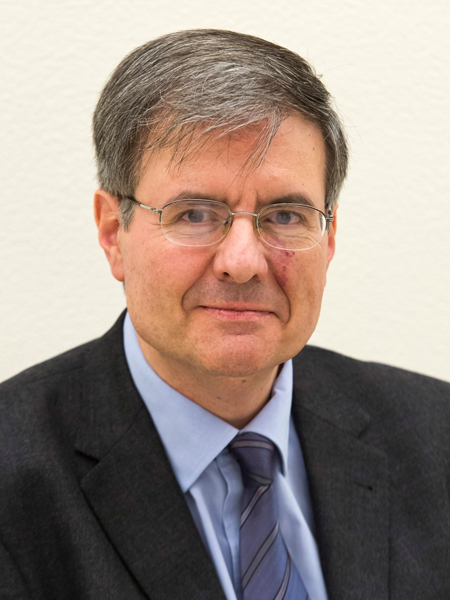
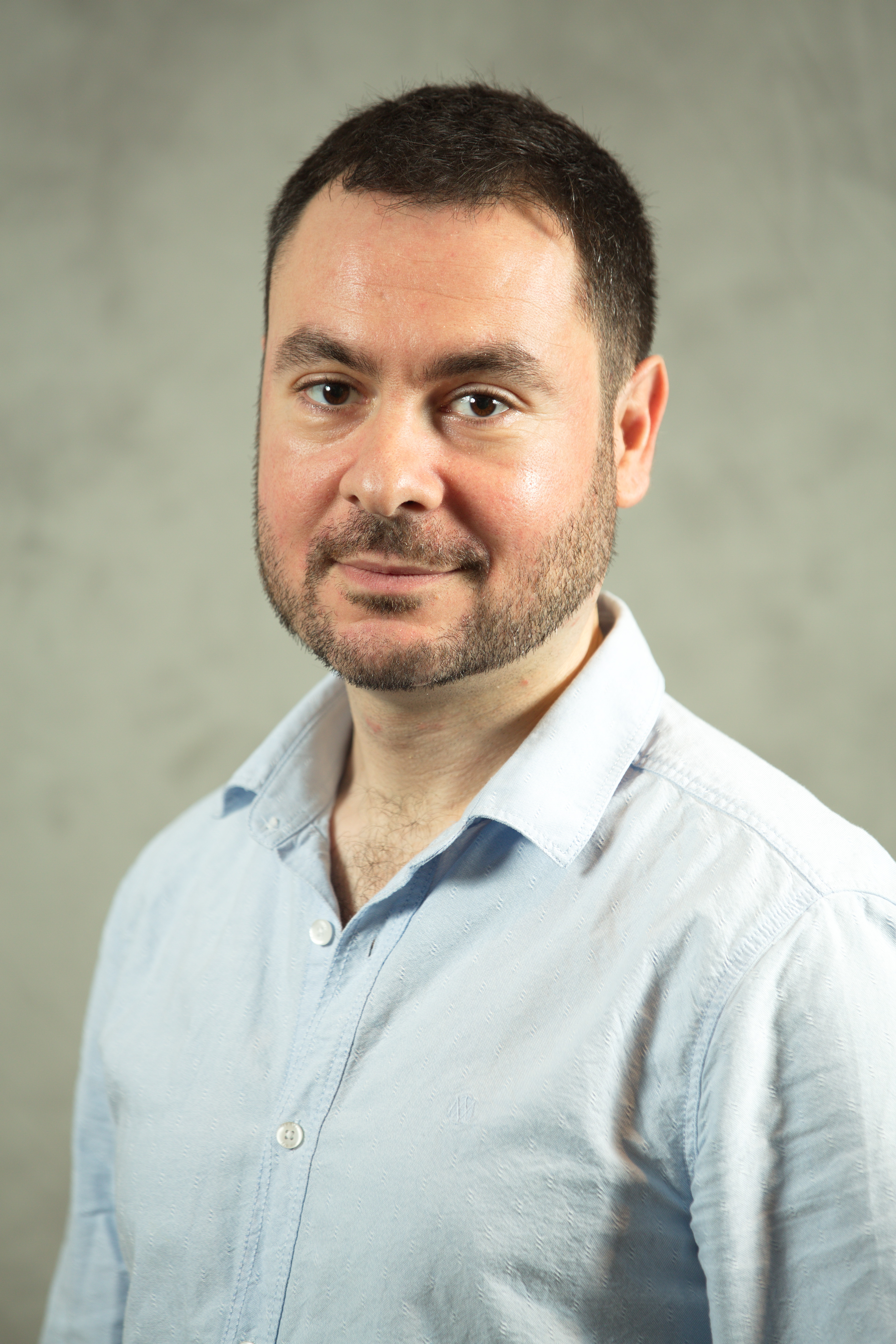
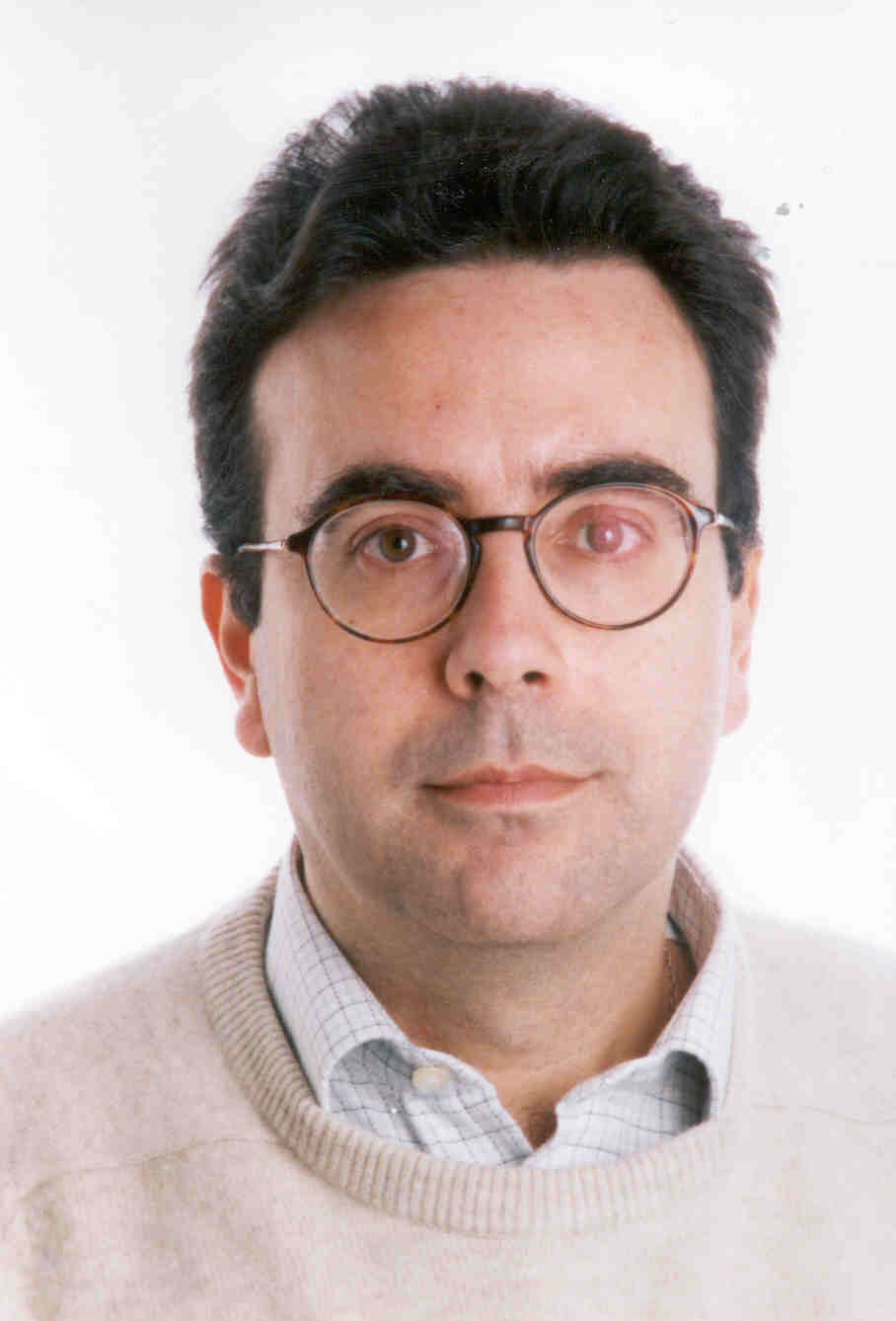
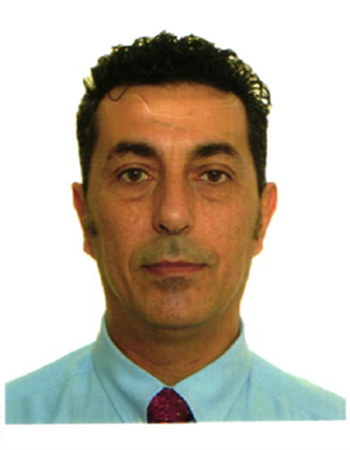
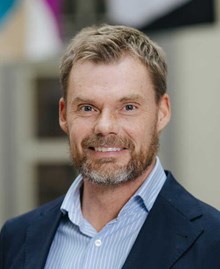
Lionel Truquet is a Lecturer-Researcher in Statistics and Director of Research at ENSAI (École Nationale de la Statistique et de l'Analyse de l'Information). His research focuses on advanced statistical methodologies, including time series analysis, Markov chains, and ecological data modeling. He has contributed to multivariate autoregressive binary models, compact space time series models, and nonstationary count processes. Research Interests: His work emphasizes statistical theory applied to dependent data, with a strong focus on ecological applications. Key areas include ergodic properties of Markov chains, mixing properties of time series, and modeling presence-absence data. His methods address challenges in high-dimensional and nonstationary environments. Publications: Recent work includes influential contributions such as the TJALLING C. KOOPMANS ECONOMETRIC THEORY PRIZE-winning paper on iterations of dependent random maps. His publications span top journals like Bernoulli, the Annals of Applied Probability, and the Journal of Time Series Analysis, reflecting his expertise in both theoretical and applied statistics. Teaching: He teaches advanced courses such as Asymptotic Statistics and Dependence at the M2 level, reflecting his commitment to training future statisticians in cutting-edge methodologies.
Òscar Jordà serves as Professor of Economics at the University of California, Davis and Senior Policy Advisor at the Federal Reserve Bank of San Francisco. His academic career bridges rigorous econometric methodology with practical monetary policy applications, maintaining active roles in both academic and central banking institutions. Dr. Jordà's research spans five major areas: econometric methodology (particularly local projections), macroeconomics, monetary economics, economic history, and international economics. His methodological innovations in local projections have transformed how economists estimate dynamic causal effects, providing alternatives to traditional VAR approaches with greater robustness to model misspecification. His historical work with Moritz Schularick and Alan Taylor on centuries of financial data has revealed critical patterns in credit cycles, financial crises, and their macroeconomic consequences. His recent publications demonstrate significant evolution in research focus from traditional monetary policy analysis toward contemporary challenges including pandemic economic impacts, climate economics, and labor market stress measurement. The methodological thread connecting these diverse topics remains his expertise in dynamic causal inference and time series analysis. Dr. Jordà maintains extensive editorial responsibilities across leading economics journals including as Co-editor of the International Journal of Central Banking, Guest Editor for the European Economic Review, and Associate Editor for both the Journal of Applied Econometrics and the Journal of International Economics. He previously served on editorial boards for the Journal of Business and Economic Statistics and the Journal of the Spanish Economic Association. As Founding Chair of the Spanish Business Cycle Dating Committee, he has contributed to establishing systematic historical chronologies of economic activity. His work with Schularick and Taylor has produced influential datasets covering bank credit, financial crises, and asset returns across 17 advanced economies since 1870, enabling unprecedented historical analysis of financial stability.
Manuel Arellano is Professor of Economics at the Center for Monetary and Financial Studies (CEMFI) in Madrid since 1991, with prior appointments at the University of Oxford (1985-89) and London School of Economics (1989-91). A leading econometrician specializing in panel data analysis, his work bridges theoretical econometrics and labor economics applications. He earned his undergraduate degree from the University of Barcelona and Ph.D. from the London School of Economics. Arellano's research focuses on econometric methodology for panel data, particularly dynamic models with heterogeneity. His seminal book Panel Data Econometrics (2003) established foundational frameworks for nonlinear and dynamic panel estimation. Current work extends to distributional analysis of random coefficients and robust inference under uncertainty, maintaining consistent emphasis on labor market applications like unemployment duration and policy evaluation. His publication history reveals a 30-year trajectory advancing panel data econometrics, evolving from specification testing (1987-1995) to sophisticated dynamic and nonlinear models (2003-2014), with persistent focus on practical implementation and labor economics applications. Major honors include: President of the Econometric Society (2014) Foreign Honorary Member of the American Academy of Arts and Sciences (2014) Rey Jaime I Prize in Economics (2012) ISI Highly Cited Researcher status (2010) Fellow of the Econometric Society (2002) No information on student advising or research grants appears in the source materials. Similarly, details about research laboratories or collaborative teams are not documented in the provided texts.
Jesús Carro is an Associate Professor at Universidad Carlos III de Madrid in the Department of Economics . He specializes in micro-econometrics and labor economics, focusing on dynamic discrete choice models and unobserved heterogeneity analysis. Doctorate from CEMFI Active research since 2004 Key methodological contributions in econometric modeling His research spans: Labor supply dynamics Education policy evaluation Health economics Intergenerational preference transmission Recent publications highlight: Dynamic binary choice modeling with maximal heterogeneity (2014) State dependence in health outcomes (2014) Bilingual education program impacts (2016) Preference transmission mechanisms (2017) He teaches courses in: Micro-econometrics Economics of Education Policy Evaluation
Anandamayee Majumdar is an Assistant Professor in the Department of Mathematics at San Francisco State University (SFSU), part of the College of Science & Engineering. She holds a Ph.D. and M.S. in Statistics from the University of Connecticut and Michigan State University, respectively, and earlier degrees from the Indian Statistical Institute (I.S.I.). Her research focuses on spatial and spatio-temporal processes, Bayesian computation, and their applications in biology, health, environmental sustainability, ecology, economics, finance, and industry. She has developed robust statistical models for handling missing data, multivariate processes, and expert-informed modeling, particularly in contexts like tuna catch estimation during the pandemic and financial risk analysis. She is currently exploring expert-integrated spatio-temporal models and public health trends. Professional experience includes roles as Senior Statistician at the Inter-American Tropical Tuna Commission (2021–2023), Professorial positions at universities in Bangladesh and China, and visiting research at UC Davis. She serves as Associate Editor for Applied Stochastic Modeling in Business and Industry and reviews for journals like Computational Statistics and Data Analysis and Biostatistics . Majumdar has contributed to interdisciplinary collaborations, including soil property modeling in urban ecosystems, and has held leadership roles in academic committees, such as the Interdisciplinary M.S./Ph.D. programs at Arizona State University. She actively mentors students and seeks to involve undergraduates and graduates in research projects.
Associate Professor Feng Chen is a faculty member at the School of Mathematics & Statistics, University of New South Wales, specializing in statistical methodology development and applications. His research bridges theoretical statistics and practical implementations across financial modeling, spatiotemporal processes, and public health analysis. PhD in Statistics from University of Hong Kong (2008) MSc in Applied Probability & Statistics from Lanzhou University (2004) BSc in Mathematics from Lanzhou University (2001) Research focuses include: Nonparametric and semiparametric statistical methods Point process modeling with emphasis on Hawkes processes Statistical computing and algorithm development Applications to financial data, earthquake analysis, and public health Recent publications demonstrate methodological advances in: Hawkes process estimation with complex data structures Renewal process applications in seismology GARCH modeling with missing data Spatiotemporal clustering analysis Scientific recognition includes: UNSW Science Staff Impact Award (2023) Professional roles: Director of Research Postgraduate Studies (2023--) Associate Editor for multiple journals Statistics Honours Coordinator (2013-2018) Active participant in statistical societies
Dr. David Ubilava is an Associate Professor in the School of Economics at the University of Sydney, affiliated with the Faculty of Arts and Social Sciences. He holds a PhD in Agricultural Economics from Purdue University (2010) with research focusing on agricultural markets, commodity prices, and the socioeconomic impacts of climate variability and political conflict. His work examines how environmental factors and market dynamics influence food security and social stability in developing regions. Research interests center on: Price analysis and forecasting in commodity markets Climate shocks and agricultural adaptation strategies Political violence and conflict economics Economic development in vulnerable regions Publications demonstrate consistent focus on climate-economy interactions, with recent work examining El Niño impacts on global commodity markets and post-harvest conflict dynamics. Research consistently integrates econometric modeling with development policy applications. Awards & Honors: Quality of Research Discovery Award (2025) Research Collaboration Award, Faculty of Arts and Social Sciences (2024) Teaching Excellence Award, Faculty of Arts and Social Sciences (2017) Currently advises doctoral candidate Gilliane Angela on emerging Asian economies and serves as associate editor for the American Journal of Agricultural Economics (since 2022) and co-editor of Food Policy (since 2018). Research funding includes ARC Discovery Projects on political conflict and food security.
Enrique Sentana is a Professor of Economics at CEMFI (Centro de Estudios Monetarios y Financieros) in Madrid, Spain. He is also a Research Fellow at the CEPR Financial Economics Programme and a Senior Research Associate at the LSE Financial Markets Group. His academic career spans prestigious institutions including the London School of Economics and the University of Alicante. Degrees: PhD in Economics (LSE, 1991), MSc in Econometrics and Mathematical Economics (LSE, 1987), Licenciado en Ciencias Económicas y Empresariales (University of Alicante, 1985) Dr. Sentana specializes in Econometrics , with a focus on Asset Pricing , Financial Economics , and VIX Derivatives . His methodological contributions include work on ARCH models, indirect estimation, and identification issues in econometrics, advancing volatility modeling and financial risk assessment. His research trends highlight innovations in empirical asset pricing , nonlinear time series , and financial market linkages . Notable achievements include the Rey Jaime I Prize in Economics (2014) , Fellowships at the Econometric Society and Journal of Econometrics , and prestigious prizes from the University of London and LSE. Scientific Awards: Rey Jaime I Prize in Economics (2014) Fellow of the Econometric Society (2012) Fellow of the Journal of Econometrics (2010) Sayers Prize, University of London (1992) Ely Devons Prize, London School of Economics (1987) Dr. Sentana has advised 10 PhD students at CEMFI and held editorial roles including Managing Editor of the Review of Economic Studies and Co-Editor of the Journal of Financial Econometrics . He has also served as Executive Vice-President of the Econometric Society and Treasurer of its European Standing Committee.
Liqun Wang is a Professor of Statistics at the University of Manitoba, within the Faculty of Science. His research focuses on statistical inference in complex models, measurement error correction, boundary crossing problems in stochastic processes, and Monte Carlo simulation methods. He holds a prominent role in advancing methodologies for nonlinear time series analysis and Bayesian inference. His work integrates theoretical rigor with practical applications, addressing challenges in econometrics, environmental science, and public health. Notable contributions include advancements in instrumental variable estimation, second-order least squares methods, and high-dimensional covariance estimation. He actively mentors graduate students in these areas and has published extensively in top-tier statistical journals. Recent research highlights include Bayesian bias correction techniques, sparse covariance matrix estimation, and modeling SARS-CoV-2 dynamics via wastewater data. His methodologies often bridge computational efficiency with statistical accuracy, making them applicable to diverse fields such as finance, biostatistics, and environmental monitoring. Despite prolific output (over 70 publications since 1990), Dr. Wang has yet to be explicitly noted for formal scientific awards. His academic profile emphasizes methodological innovation, with a strong focus on real-world data challenges and interdisciplinary collaboration.
Prof. Dr. Hasan Gungor is a Professor of Economics at the Faculty of Business & Economics, Eastern Mediterranean University. He holds a PhD in Banking from Marmara University, an MBA in Business Administration from Eastern Mediterranean University, and a BA in Business Administration from the same institution. His research focuses on environmental economics, financial development, energy policy, and macroeconomic dynamics with a particular emphasis on emerging markets and policy uncertainty effects. His academic contributions include over 30 supervised theses, advising PhD and Master's students on topics such as renewable energy impacts, economic policy uncertainty, and sustainable development. He has published extensively in peer-reviewed journals, addressing global challenges like carbon neutrality, cryptocurrency volatility, and climate policy efficacy. His work often integrates advanced econometric techniques such as nonlinear ARDL models and wavelet coherence analysis. Education: 1994–1999: PhD in Banking, Marmara University 1992–1994: MBA in Business Administration, Eastern Mediterranean University 1986–1992: BA in Business Administration, Eastern Mediterranean University Research interests span environmental sustainability, financial market dynamics, and the interplay between globalization and economic growth. His recent articles highlight the role of policy uncertainty in shaping energy markets, cryptocurrency returns, and carbon emissions in G7 and BRICS economies. He actively contributes to policy discussions on sustainable development and financial stability in emerging markets.
Rickard Sandberg is an **Associate Professor** and **Center Director** at the **Department of Entrepreneurship, Innovation and Technology** at the **Stockholm School of Economics (SSE)**. His work bridges econometrics, statistics, and business analytics with a focus on time series analysis, machine learning applications, and sustainability measurement. **Research Interests**: Machine Learning, Deep Learning, Data Analytics, Predictive Analytics, Forecasting, Nonlinear Time Series Modelling, Structural Economic Modelling, Econometrics, and Measuring Sustainability. His research emphasizes theoretical advancements in statistical methods and their practical application in economic and business contexts. **Key Contributions**: His publications explore unit root testing in nonlinear models, ESG rating challenges, and the impact of energy policies. Notable works include analyzing Scandinavian unemployment trends, cartel damage calculations, and Nordic companies' data-driven transformations. His 2023 paper on ESG ratings proposes solutions for consistency in ambiguous evaluation systems. **Teaching & Outreach**: Teaches advanced econometric time series courses (e.g., MSc 5314) and actively engages in international academic collaborations through presentations in Japan and Brazil. His work on AI for sustainability highlights interdisciplinary outreach efforts. **Labs/Teams**: Leads research initiatives within SSE’s Department, focusing on entrepreneurship and innovation through data and economic modeling frameworks.
Andrei Zeleneev is a Lecturer in Economics at University College London (UCL), Department of Economics, where he joined in 2020. He holds a PhD from Princeton University and is affiliated with CeMMAP (Centre for Microdata Methods and Practice). His research focuses on econometric methodologies, particularly addressing challenges in panel models, network models, and errors-in-variables. His work emphasizes nonparametric identification, robust estimation, and applied econometric techniques to handle unobserved heterogeneity and measurement errors. Dr. Zeleneev’s academic background includes advanced training in econometrics, and his research spans both theoretical and applied domains. He has published extensively on topics such as treatment effects in large panels, latent variable modeling, and structural econometric approaches to network analysis. His articles highlight innovations in handling complex data structures and improving the reliability of econometric inferences in settings with non-classical errors or latent factors. He maintains an active research agenda, with recent work addressing methodological advancements in semiparametric models and interactive fixed effects. Dr. Zeleneev’s professional activities include teaching at UCL and contributing to the econometrics community through publications and affiliations with leading institutions.
Irina Panovska is an Associate Professor of Economics at the University of Texas at Dallas (UT Dallas), affiliated with the School of Economic, Political, and Policy Sciences. Her research focuses on macroeconomic policy responses, business cycle dynamics, and economic recoveries. She teaches macroeconomics, forecasting, and business cycles at both undergraduate and graduate levels. Education includes a PhD (2013) and MA (2009) in Economics from Washington University in St. Louis, and a BS in Economics and Mathematics from Ohio University (2007). She holds visiting scholar positions at the University of Zagreb (2023–2026) and has collaborated with institutions in Australia and Croatia. Research interests emphasize modeling policy impacts on economies, labor market dynamics, and time series analysis. Recent work addresses business cycle synchronization in the EU, jobless recoveries, and the effects of the pandemic on financial markets. She has presented at conferences including the Society for Economic Measurement and the Southern Economic Association. Professional activities include serving as Treasurer of the Society for Nonlinear Dynamics and Econometrics (2019–2024) and organizing academic sessions. In 2023, she received the School’s Teaching Comet Award for excellence in instruction. Her work bridges theoretical frameworks with policy relevance, addressing issues like fiscal policy effectiveness, inflation dynamics, and maternal labor force participation. Current projects include keynote talks on commercial real estate and mentoring initiatives for junior economists.
Dr. Mirzet Šeho is a Senior Lecturer at the School of Business, Monash University Malaysia, where he contributes significantly to teaching, research, and academic leadership. With nearly fifteen years of combined industry and academic experience, he has established himself as a leading voice in Islamic finance, fintech, and financial economics. He plays a pivotal role in developing innovative fintech curricula that blend academic rigor with real-world industry insights. PhD in Islamic Finance, International Centre for Education in Islamic Finance (2018) Dr. Šeho's research centers on Islamic finance and banking, corporate finance, financial economics, and fintech. His work explores critical issues such as the stability of dual-banking systems, the impact of interest rates on Islamic financial instruments, and the role of finance in energy justice and sustainable development. He actively investigates how diversification strategies influence bank risk and returns, particularly in mixed financial environments. His recent publications, primarily from 2020 to 2024, reflect a strong trend toward empirical and policy-relevant research in Islamic and conventional banking systems. These works frequently appear in high-impact journals such as the Pacific Basin Finance Journal and International Review of Finance , with a methodological emphasis on econometric modeling, including GMM techniques. The interdisciplinary nature of his research is evident in contributions linking finance with energy justice and sustainable development goals. Dr. Šeho has been honored with three major scientific awards: Best Paper Award by the Journal of Muamalat and Islamic Finance Research (2016) Pacific-Basin Finance Journal Best Paper Award (2018) Pacific-Basin Finance Journal Best Paper Award (2019) He is actively involved in academic advising, currently accepting PhD students, and has contributed to research grants and projects through collaborative international research. His academic service includes peer review for journals like Applied Finance Letters and Journal of International Financial Markets, Institutions and Money , editorial responsibilities, and participation in major conferences such as the 14th Financial Markets and Corporate Governance Conference 2024, where he served as both speaker and session chair. Dr. Šeho is affiliated with research networks focusing on Islamic finance and fintech, collaborating with scholars from Malaysia, Bosnia and Herzegovina, and beyond. His work is disseminated not only in scholarly outlets but also through press and media features, demonstrating his commitment to public engagement and policy impact.
Pierre Duchesne is a Full Professor in the Department of Mathematics and Statistics at the University of Montreal . He serves as Professor-responsibility for the M.Sc. and Ph.D. in Statistics programs (2000-2004). His research focuses on applied statistics with emphasis on: Time Series Analysis (univariate and multivariate models, serial correlation testing, portmanteau statistics) Sampling Theory (robust estimation methods, calibration estimators) Multivariate Analysis (ARCH effects, vector autoregressive models, causality testing) Applications in Econometrics and Financial Econometrics His work combines theoretical development with practical implementation through: Wavelet-based diagnostic methods Simulation studies for model validation Software development (S-PLUS/SAS) for statistical analysis Collaboration with organizations like Statistics Canada and Canadian Journal of Statistics He has served as Associate Editor for journals including Computational Statistics & Data Analysis (CSDA) and Canadian Journal of Statistics (CJS/RCS) .