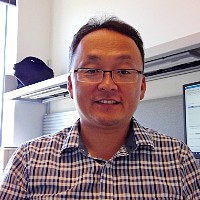
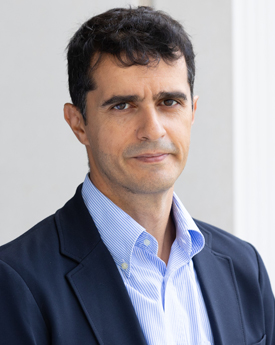
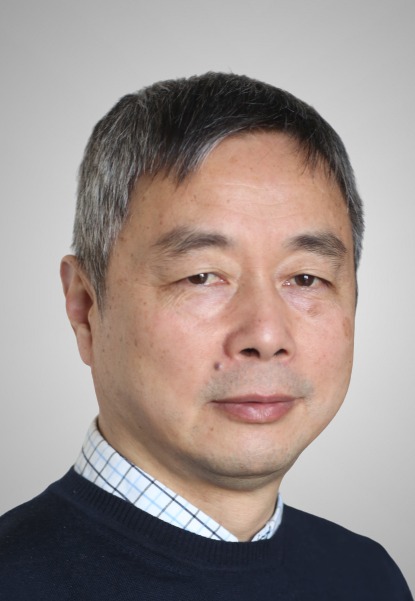
Min Seong Kim is an Associate Professor in the Department of Economics at the University of Connecticut, affiliated with the College of Liberal Arts and Sciences. His research focuses on econometrics, particularly panel data analysis, bootstrap methods, and cross-sectional dependence. He earned his Ph.D. in Economics from UC San Diego in 2011. His contact information includes email: min_seong.kim@uconn.edu , and office location Oak Hall 330. Education: Ph.D., Economics, UC San Diego, 2011 Research Interests: Econometric theory and applications Bootstrap methods and robust inference Panel data models with cross-sectional dependence Time series analysis and spatial econometrics Publications highlight his contributions to econometric methodology, including robust inference techniques for panel data models, bootstrap methods, and policy analysis. Recent work addresses cross-sectional dependence in large panel models and diffusion index forecasts. No scientific awards are explicitly listed. Advising and grant details are not provided in the text. His research is supported through standard academic channels, and he maintains a professional website at http://minseongkim.weebly.com .
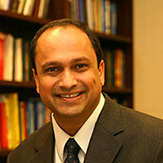
Oliver Linton is the Chair of the Faculty and Professor of Political Economy at the University of Cambridge's Faculty of Economics. He coordinates the Empirical Analysis of Financial Markets theme at the Janeway Institute and holds a position at Trinity College. His research primarily focuses on econometric theory and empirical finance , with applications in market microstructure, asset pricing, and volatility modeling. His research interests span: Development of novel econometric methods for high-dimensional and dynamic data Analysis of financial market behavior, including liquidity and trading patterns Applications in policy-relevant contexts such as quantitative easing and pandemic forecasting Linton's recent publications demonstrate a strong focus on: Advanced time-series methodologies (e.g., GARCH, nonparametric regression) Financial market microstructure and high-frequency trading Economic impact analysis of major events (e.g., Brexit, COVID-19) He has received prestigious awards including: Humboldt Research Award (2015) Thousand Talents Plan recognition from Renmin University of China (2016) Linton actively advises doctoral students, with current supervisees including Xinyi Su, Zhaocheng Zhang, and Kilian Bachmair. He secured significant funding such as the European Commission FP7 grant for Nonparametric and Semiparametric Methods in Economics and Finance (2011–2014).
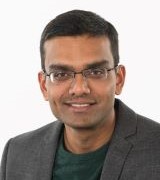
Ankush Agarwal is an Associate Professor in the Department of Statistical and Actuarial Sciences at the University of Western Ontario. His research focuses on mathematical finance, financial statistics, and Monte Carlo methods, with applications to risk management and derivatives pricing. He supervises PhD students in quantitative finance and has taught courses on Monte Carlo methods and advanced financial modeling at Western University. Education: PhD in Mathematics from Tata Institute of Fundamental Research (2015) Research interests span regime-switching models, longevity risk hedging, stochastic differential equations, and rare event simulation. His work combines theoretical probability with computational techniques for financial applications. Recent publications include studies on McKean-Vlasov SDEs, implied Sharpe ratio estimation, and optimal portfolio strategies under stochastic volatility. These works demonstrate his expertise in stochastic processes and financial engineering. Supervision: Current PhD advisees include Ying Liao, Buchun Wang, and Shuya Zhang at the University of Glasgow. Former advisees include Yongjie Wang and Yihan Zou.
Nicholas Polson is the Robert Law, Jr. Professor of Econometrics and Statistics at the University of Chicago Booth School of Business. His academic career centers on Bayesian statistics with applications in financial econometrics and machine learning. Polson's research interests span Bayesian statistics, financial econometrics, Markov chain Monte Carlo methods, particle learning, and deep learning applications in finance. His work has significantly contributed to understanding stochastic volatility models and developing new algorithms for Bayesian inference. He has pioneered applications of deep learning in asset pricing, portfolio management, and financial prediction, demonstrating how neural networks can detect complex patterns invisible to traditional financial models. His recent publication trends reveal a strong focus on integrating deep learning with financial econometrics, particularly in developing characteristics-sorted factor models, portfolio optimization techniques, and explaining the performance differences between active and passive investment strategies. His work consistently bridges theoretical statistical methods with practical financial applications, with a particular emphasis on nonlinear modeling and high-dimensional data analysis. His article 'Bayesian Analysis of Stochastic Volatility Models' was named one of the most influential articles in the 20th anniversary issue of the Journal of Business and Economic Statistics Polson teaches courses including 'Bayes, AI and Deep Learning' and 'Business Statistics' at Chicago Booth, with scheduled offerings for both 2024-2025 and 2025-2026 academic years. His work has been featured in Chicago Booth Review, where he has contributed insights on statistical analysis in chess, machine learning applications in money management, and the odds of cheating in competitive settings. His research demonstrates the powerful intersection of Bayesian statistics, financial modeling, and modern machine learning techniques.
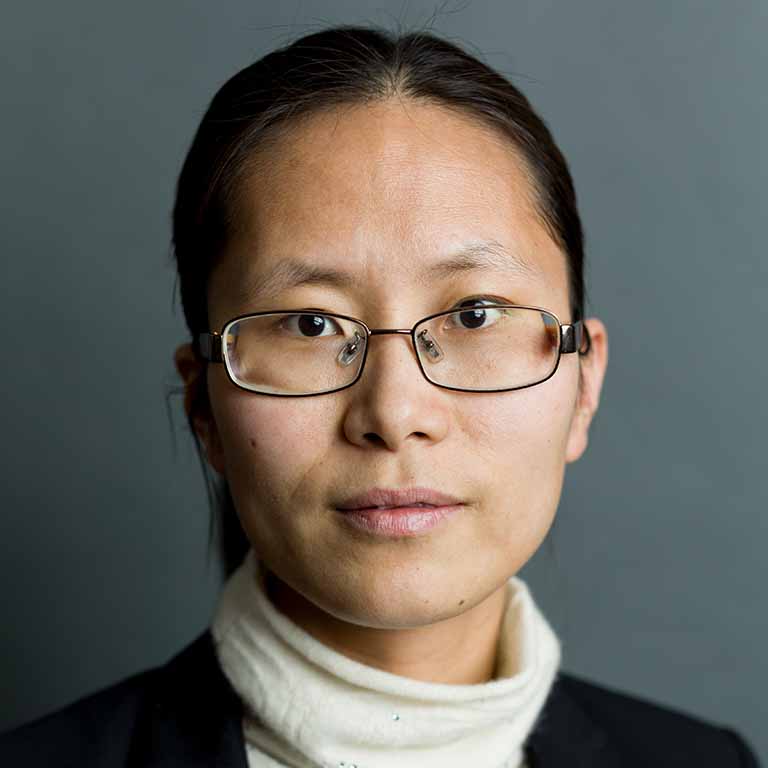
Ruli Xiao serves as Associate Professor and Director of Graduate Studies in the Department of Economics at Indiana University Bloomington's College of Arts and Sciences. Her academic office is located in Wylie Hall (Room 349), with contact details including email rulixiao@iu.edu and phone (812) 855-3213. Her academic credentials include: B.S. in Statistics from Tongji University M.A. in Economics from Shanghai University of Finance and Economics Ph.D. in Economics from Johns Hopkins University (2014) Dr. Xiao's research program emphasizes Empirical Industrial Organization and Micro-econometrics , specializing in methodological solutions for complex economic modeling scenarios. Her work develops identification frameworks for finite action games where multiple equilibria coexist with unobserved market heterogeneity, advancing estimation techniques for real-world industrial applications. Her publication profile demonstrates consistent focus on econometric theory development, particularly in dynamic modeling with unobservables as evidenced by her 2017 Journal of Econometric Methods paper. Current research trajectories indicate continued innovation in nonparametric methods for structural industrial organization models. As Director of Graduate Studies, Dr. Xiao oversees all graduate programs including M.A., M.S., and Ph.D. tracks, guiding curriculum development and student progression through rigorous economics training.
Sanjeev Kulkarni is the William R. Kenan, Jr. Professor of Electrical and Computer Engineering and Operations Research & Financial Engineering at Princeton University. He is associated with the Department of Philosophy and has held significant administrative roles including Dean of the Graduate School (2014-2017), Director of the Keller Center (2011-2014), and Master of Butler College (2004-2012). His research spans Statistics , Machine Learning , Applied Probability , Information Theory , and Signal Processing , with applications to Wireless Networks , Econometrics , and Control Systems . He has co-authored over 100 publications and supervised numerous PhD and Master’s students.
Professor Efthymios Pavlidis is a faculty member in the Department of Economics at Lancaster University Management School (LUMS). He holds the rank of Professor and specializes in macroeconomics, international finance, and time series econometrics. His research focuses on housing market dynamics through collaborations like the International Housing Observatory (with the Federal Reserve Bank of Dallas) and the UK Housing Observatory. He is a Fellow of the Higher Education Academy, reflecting his commitment to academic excellence in teaching and research. His research interests include speculative bubble detection, real estate price forecasting, and testing parity conditions in financial markets. Pavlidis actively supervises PhD students in applied time series econometrics, emphasizing practical applications in financial markets and housing economics. He is involved in numerous academic activities, including organizing conferences and workshops such as the Dynare Conference and the Lancaster Economics Seminar. Key contributions include developing econometric methods for detecting market exuberance and analyzing real exchange rates. His work bridges theoretical econometrics with practical policy implications, particularly in housing and energy markets. Pavlidis collaborates internationally, evidenced by his participation in global academic networks and institutions like the European Economic Association and the Royal Economic Society. His teaching includes the course ECON222 Intermediate Macroeconomics I, and he maintains an office in the Management School (B015), with weekly office hours on Tuesdays. A comprehensive overview of his research and projects is available at his personal webpage: https://sites.google.com/view/etpavlidis/ .
C. Lanier Benkard is the Gregor G Peterson Professor of Economics at the Graduate School of Business, Stanford University. He is a prominent researcher in industrial organization, game theory, and econometrics, focusing on dynamic models of market competition and structural estimation. Research Interests: His work spans Dynamic games and equilibrium modeling Hedonic pricing and demand estimation Econometric tools for imperfect competition Computational methods for large-scale industries Publication Trends: His research emphasizes oblivious equilibrium approximations, strategic interactions in concentrated industries, and empirical analysis of markets with heterogeneous consumers. He frequently collaborates with scholars like Gabriel Weintraub and Patrick Bajari. Tools & Extensions: He has developed computational resources, including C++ and Matlab code, to analyze oblivious equilibrium. Current work includes extensions to Markov Perfect Industry Dynamics and aggregate shock modeling.
George Evans is the John B. Hamacher Professor of Economics at the University of Oregon, affiliated with the Department of Economics in the College of Arts and Sciences. He holds a Ph.D. from the University of California, Berkeley (1980), with expertise in macroeconomics and econometrics. His research centers on adaptive learning in macroeconomic models, exploring how expectations influence monetary and fiscal policy, economic stability, and sunspot equilibria. His work integrates theoretical modeling with experimental and behavioral insights, contributing significantly to the understanding of bounded rationality and learning dynamics in economic systems. The recent articles highlight a consistent focus on expectations, learning, and macroeconomic policy . Themes include the stability of economic equilibria under learning, the role of bounded rationality in unemployment and market dynamics, and the nonlinear effects of fiscal policy. His research often employs advanced dynamic modeling and has been published in leading journals such as the American Economic Journal: Macroeconomics and Journal of Economic Theory . Evans has received research funding, including from the NSF (Grant No. SES-1559209), and is a co-author of the influential book Learning and Expectations in Macroeconomics . He has delivered numerous invited lectures at international conferences and institutions, solidifying his role as a leading scholar in behavioral and learning-based macroeconomics. He advises and collaborates extensively, particularly with Seppo Honkapohja, Bruce McGough, and William Branch. His work continues to shape the discourse on how agents form expectations and how such behavior affects macroeconomic outcomes.
Holger Dette is a Professor and Chair Holder of Stochastics (specializing in Statistics) at the Faculty of Mathematics, Ruhr University Bochum. He leads the prominent Group Dette within the Institute of Statistics, overseeing a team of researchers, doctoral students, and administrative staff including Birgit Tormöhlen as team assistant. His research group is deeply integrated within the university's mathematical ecosystem, collaborating with other research groups across algebra, analysis, numerics, and topology. Dette's research spans mathematical statistics with strong applications in real-world problems. His primary interests include optimal experimental design, time series analysis, functional data, change point problems, nonparametric regression, biostatistics, special functions, goodness-of-fit tests, and random matrices . His work bridges theoretical statistics with practical applications, particularly evident in his collaborations with pharmaceutical giants Novartis and Bayer AG in biostatistics, as well as Quasol, a spin-off company from his statistics institute. His recent publications (2024-2025) reveal a research program increasingly focused on high-dimensional and functional data analysis, privacy-preserving statistics, and novel methodological approaches to longstanding statistical problems. Dette's work shows strong interdisciplinary connections, particularly with biomechanics (analyzing joint angles during fatigue phases) and data science (addressing challenges in the era of big data). His research group is actively involved in multiple DFG-funded projects including the newly established 'Small Data' collaborative research center (Sonderforschungsbereich 1597) and the Spatio-temporal Statistics for the Transition of Energy and Transport (Transregio 391). Dette has received significant recognition including the prestigious Humboldt Research Award . His paper 'With Great Power Come Great Side Channels: Statistical Timing Side-Channel Analyses with Bounded Type-1 Errors' achieved second place at the CSAW'24 Applied Research Competition MENA. His research group has also secured multiple significant funding awards from the German Research Foundation (DFG). As an advisor, Dette supervises numerous doctoral and master's students including Pascal Quanz, Marius Kroll, and Carina Graw. His group offers statistical consulting services for scientists and students across bachelor's, master's, and doctoral phases. The group maintains strong industrial partnerships, particularly in biostatistics applications, demonstrating Dette's commitment to translating theoretical statistics into practical solutions for real-world challenges.
Dr. Mawuli Kouami Segnon is a researcher at the Chair of Empirical Economics, School of Business and Economics, University of Münster. His work focuses on econometric modeling, financial time series analysis, and volatility forecasting across various domains including cryptocurrencies, energy markets, and macroeconomic indicators. Research interests include: Development of advanced volatility models (GARCH, multifractal, regime-switching) Applications to financial markets, energy economics, and macroeconomic policy High-frequency data analysis and mixed-frequency forecasting Count data modeling with conditional heteroscedasticity Portfolio risk management using copula and multifractal approaches Recent publications demonstrate expertise in: Geopolitical risk impacts on stock volatility Comparative analysis of realized variance measures Inflation uncertainty modeling in G7 countries Electricity price volatility in Australian markets Bitcoin market forecasting Historical economic data analysis Current projects (since 2020) involve: Innovative economic/financial time series forecasting Financial market volatility modeling Applications of multifractal structures in econometrics
Prof. Jalal Etesami is an Assistant Professor in the Department of Computer Science at Technical University of Munich (TUM), leading the Decision Sciences & Systems group. He holds a Ph.D. in Industrial and Systems Engineering from the University of Illinois at Urbana-Champaign and was a Postdoctoral Fellow at EPFL in Switzerland. His research focuses on machine learning, causal inference, multi-agent systems, and game theory, with applications to systemic risk modeling and market design. He teaches advanced courses such as Causal Inference in Time Series , Algorithmic Game Theory , and Optimization, Learning, and Market Design . Notable contributions include work on causal structure learning, stochastic optimization, and non-Gaussian causal models. Recent research explores causal effect identification under confounding, neural networks for market analysis, and optimal experiment design. Prof. Etesami’s work appears in top venues like NeurIPS, AAAI, and IEEE journals. He actively contributes to the academic community, organizing seminars and workshops on topics ranging from causal reasoning to computational social choice.
Qiwei Yao is a Professor of Statistics at the Department of Statistics, London School of Economics (LSE), where he maintains an active research program in statistical methodology and applications. His office is located in Columbia House, Room 7.16 at LSE's Houghton Street campus in London. Professor Yao's research focuses on statistical inference for complex time series, with particular expertise in high-dimensional time series, dynamic networks, spatio-temporal processes, functional time series, nonlinear time series, and high-frequency data. His work bridges theoretical statistics with practical applications, especially in financial econometrics. He has developed innovative methodologies for dimension reduction, factor modeling, and network analysis that have become influential in the field. His recent publications reveal a strong trend toward developing statistical methods for increasingly complex data structures, particularly focusing on high-dimensional and network-based time series. His work integrates machine learning techniques with traditional statistical approaches, as evidenced by papers on deep learning for Markov property testing and tensor decompositions for matrix time series. There's also a clear emphasis on privacy-preserving methods and differential privacy in network analysis. Professor Yao has secured substantial research funding through multiple EPSRC Programme Grants and Research Projects, including the EPSRC Programme Grant for 'Statistical Foundations for Detecting Anomalous Structure in Stream Settings (DASS)' and 'Network Stochastic Processes and Time Series (NeST)'. He also leads the EPSRC Research Project on 'Statistical Network Analysis: Model Selection, Differential Privacy, and Dynamic Structures' and has collaborated with industry partners like Andurand Capital Management on projects such as 'Forecasting Oil Prices Based on Quantitative Methods'. His research has significant applications across various domains, particularly in energy forecasting (electricity load prediction), financial modeling (volatility modeling, oil price forecasting), and ecological modeling (spatio-temporal population dynamics). Professor Yao maintains strong collaborative relationships with researchers across multiple institutions and disciplines.
Stavros Stavroglou is an Assistant Professor in Credit Risk and Fin Tech at the University of Edinburgh Business School, specializing in Management Science and Business Economics. He leads research in complex systems, causality networks, and AI-driven financial modeling with significant industry applications. His educational background includes a PhD and MRes in Applied Mathematics and Decision Making from the University of Liverpool (funded by EPSRC-ESRC scholarships), and MSc and BSc in Mathematics from Aristotle University of Thessaloniki (under full IKY Scholarships). He was a visiting scholar at California Institute of Technology and won the Best PhD Thesis award in 2020 from the University of Liverpool. Stavros specializes in designing and developing applications with AI Foundation models, quantitative and qualitative modeling, and real-time forecasting. His research focuses on uncovering hidden causal relationships in complex systems, particularly in financial markets. He has developed innovative methodologies including Pattern Causality for time series analysis, PillarScape Assembler for deep-future forecasting, and P-mo for LLM enhancement in financial contexts. His work bridges academic innovation with practical market applications, consistently delivering profitable insights through data-driven approaches. His four major publications in PNAS and Risk Analysis demonstrate his expertise in causal analysis of complex financial systems. These works have established him as a leading researcher in pattern causality and financial network analysis, with his methods being implemented in Python and R packages used by researchers worldwide. Best PhD Thesis 2020, University of Liverpool Trading Competition Winner 2018 As Research Director, Stavros supervises PhD students in AI, East Asian Economies, Statistics, and Econometrics, as well as MSc students in Quantitative Finance, Risk Management, and Credit Scoring. He has raised £600,000 for R&D in data-driven technologies for portfolio management. He is the Co-Organizer of the annual Quantitative Finance and Risk Analysis (QFRA) international symposium, which has been held in various Greek islands since 2018. Stavros maintains an extensive professional network with academics at Stanford, Oxford, Peking, Fudan, Boston, Monash, Caltech, and UCI Irvine, as well as senior professionals at firms like ETPA and JPMorgan Chase & Co. His research fingerprint spans Engineering (Policy Maker, Embedded Information, Decision Maker), Economics (Financial Market, Credit Derivative), and Computer Science domains.
Dr Gonzalo Castex Hernandez is a Senior Lecturer in the Department of Economics at the University of New South Wales (UNSW). He holds a Ph.D. in Economics from the University of Rochester. His research focuses on Macroeconomics, Labour Economics, and the Economics of Education, with particular emphasis on topics such as pension systems, juvenile crime determinants, and the impact of policy measures like minimum wage laws and non-pharmaceutical interventions during pandemics. He has contributed to edited volumes, including Changing Inflation Dynamics, Evolving Monetary Policy , and authored numerous peer-reviewed articles in journals such as Journal of Economic Dynamics and Control and Economic Modelling . His recent work explores nonlinear means-tested pension systems, the evolving relationship between capital and skill complementarity, and cross-country analyses of policy responses to crises like the 2020 pandemic. He maintains an active research agenda bridging theoretical models with empirical evidence, particularly in areas affecting public policy design and labor market dynamics. Dr Castex Hernandez’s academic contributions span multiple subfields, including public finance, development economics, and quantitative social science. He collaborates internationally with institutions such as the Central Bank of Chile and the ANU Crawford School of Public Policy. His ORCID profile ( 0000-0001-7943-8627 ) and personal website ( https://sites.google.com/site/gonzalocastex/ ) provide access to his full body of research.