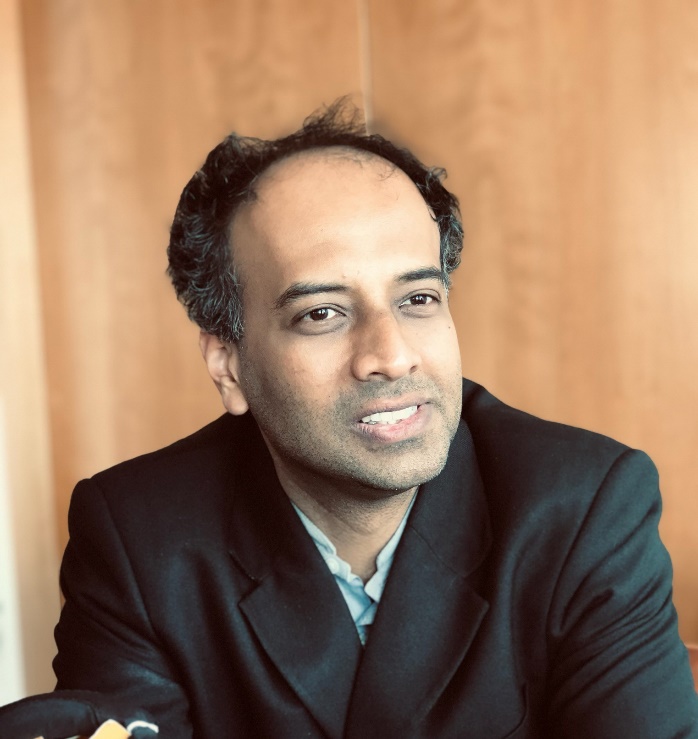
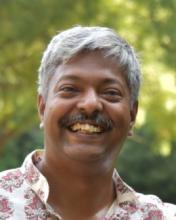
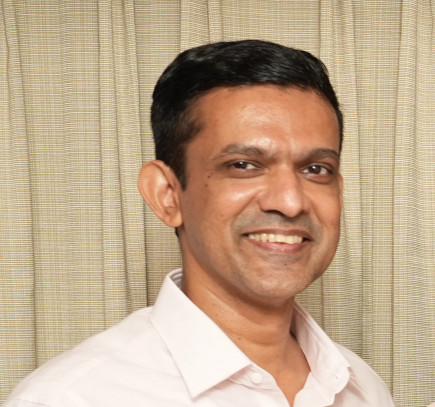
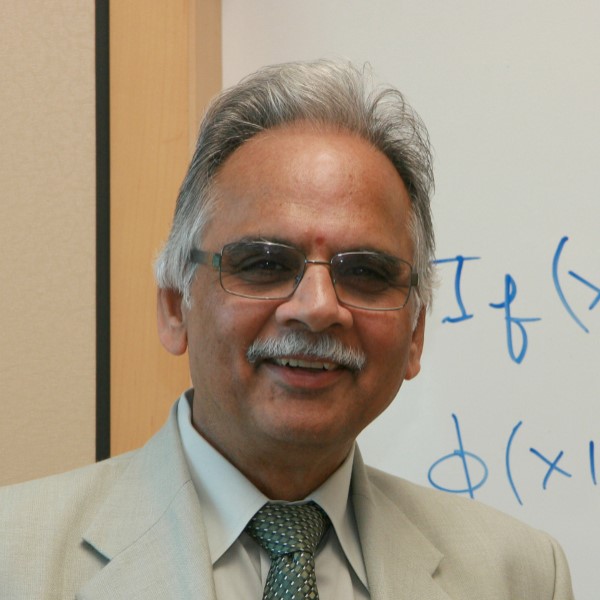
Malay Banerjee is a Professor in the Department of Mathematics and Statistics at the Indian Institute of Technology Kanpur (IIT Kanpur) . His academic career is anchored in mathematical ecology and nonlinear dynamics, with a focus on modeling ecological and epidemiological systems. Education: Ph.D. (2005), University of Calcutta, India M.Sc. (1998), University of Calcutta, India Research Interests: His research spans Mathematical Ecology , Eco-epidemiology , and Nonlinear Dynamics . He applies differential equations and stochastic modeling to understand predator-prey dynamics, phytoplankton competition, and the impact of allelopathy and Allee effects on ecosystem stability. Publications Overview: His recent publications (2011–2014) focus on advanced modeling of ecological systems, including stochastic phytoplankton dynamics, bifurcation in predator-prey systems, and spatial self-organization. These works are published in leading journals like Mathematical Biosciences , Ecological Complexity , and Theoretical Ecology . Awards and Honors: Junior Research Fellowship (JRF), CSIR India Contact & Office: Office: FB-526, Department of Mathematics and Statistics, IIT Kanpur, Kanpur 208016 Phone: 0512-259-6157 (O) Email: malayb@iitk.ac.in
Y. N. Singh is a Professor in the Department of Electrical Engineering at Indian Institute of Technology Kanpur . He holds a PhD and M.Tech from IIT Delhi and a B.Tech from REC Hamirpur . Education PhD, IIT Delhi (1997) M.Tech, IIT Delhi (1992) B.Tech, REC Hamirpur (1991) His research focuses on telecom networks , optical networks , complex networks , and wireless sensor networks , with significant contributions to network protection protocols, rumor propagation modeling, and optical memory design. His work on p-cycles has advanced telecom network survivability techniques. Selected publications include key papers in IEEE/OSA Journal of Lightwave Technology and Acta Physica Polonica B . He has received the AICTE Young Teacher Award (2002) and the Dr. M.N. Saha Memorial Award (2006). Contact details Office: EE/ACES, IIT Kanpur, UP, India-208016 Phone: 0512-[679/392/259]-7944 (O) Lab: 0512-[679/392/259]-7841, 7070 Fax: 0512-259-0063
Manjesh Kumar Singh is an Associate Professor in the Department of Mechanical Engineering at Indian Institute of Technology Kanpur. He holds a PhD in Polymer Science from ETH Zurich and has postdoctoral experience at the Max Planck Institute for Polymer Research and ETH Zurich. Education: PhD (2016) - ETH Zurich, Switzerland ME (2011) - Indian Institute of Science, Bangalore BE (2009) - IIEST Shibpur His research focuses on Tribology, Soft Matter, and Rheology , with expertise in molecular dynamics simulations, AFM techniques, and polymer brush systems. Key projects include studying cross-linked polymer brushes under shear, solvation behaviors of elastin-like polypeptides, and tribological responses of disentangled polymer melts. Recent publications highlight his work in polymer tribology, solvation mechanisms, and shear dynamics. He has received multiple scholarships for international conferences and a Best Oral Presentation award at IndiaTrib-2019. Awards & Fellowships: Thailand 2020 International Nanotribology Forum Scholarship IndiaTrib-2019 Best Oral Presentation Kerala 2014 International Nanotribology Forum Scholarship 2012 Gordon Research Conference Travel Grant 2011 Vietnam International Nanotribology Forum Scholarship He works in the Himanshu Hatwal Nonlinear Mechanics Lab at IIT Kanpur.
Krishna Jagannathan is a full-time Professor in the Department of Electrical Engineering at the Indian Institute of Technology Madras (IIT Madras), India. He specializes in stochastic modeling, communication networks, information theory, and queuing theory. He obtained his B.Tech from IIT Madras in 2004, followed by S.M. and Ph.D. degrees from MIT in 2006 and 2010, respectively. After post-doctoral positions at Caltech and MIT, he joined IIT Madras in 2011. Education: B.Tech in Electrical Engineering, IIT Madras (2004) S.M. in Electrical Engineering and Computer Science, MIT (2006) Ph.D. in Electrical Engineering and Computer Science, MIT (2010) Research Interests: His research focuses on stochastic modeling and analysis of communication networks , information theory , and queuing theory . He has made significant contributions to understanding network performance, resource allocation, and risk-aware decision-making in complex systems. He leads the Networks and Stochastic Systems lab at IIT Madras, mentoring a large cohort of Ph.D. and M.S. students working on cutting-edge problems in networking, optimization, and stochastic systems. Scientific Awards: Best Paper Award at WiOpt 2013, Tsukuba, Japan Young Faculty Recognition Award for Excellence in Teaching and Research, IIT Madras (2014) Teaching & Mentorship: He has taught a wide range of courses including Probability Foundations , Stochastic Modeling and Queuing Theory , Convex Optimization , and Signals & Systems , consistently receiving high teaching evaluations. He has supervised over 15 Ph.D. and M.S. students to completion and continues to guide several active researchers.
Naveen Tiwari is a Professor in the Department of Chemical Engineering at the Indian Institute of Technology Kanpur. His research focuses on transport phenomena, instabilities in micro-scale free surface flows, flow through porous media, and numerical modeling and simulation. He maintains active research collaborations and has published extensively in leading fluid dynamics journals. His research interests encompass Transport Phenomena , Instabilities in micro-scale free surface flows , Flow through porous media , and Numerical modeling and simulation . His work primarily investigates thin liquid film dynamics, interfacial phenomena, and stability analysis of coating flows over heterogeneous surfaces. His research has significant applications in coating technologies, microfluidics, and thermal management systems. His recent publications demonstrate a strong focus on Thin film stability analysis over heated surfaces Effects of substrate topography on liquid film behavior Nonlinear dynamics of volatile liquid films Dip-coating processes on patterned surfaces His work bridges fundamental fluid dynamics with practical engineering applications. His notable scientific achievements include: Young Scientist Research Award from the Department of Atomic Energy (2014) Membership in the Honor Society of Phi Kappa Phi (2007-2008) Invitation to present at the International Union of Theoretical and Applied Mechanics symposium in Bangalore (2014) Prof. Tiwari received his PhD from the University of Massachusetts Amherst (2003-2008) with a thesis on 'Dynamics and Stability of Non-Inertial Coating Flows over Heterogeneous Surfaces' under Prof. Jeffrey M. Davis. Prior to his current position, he worked as a Senior Research Engineer at Saint-Gobain, MA (USA) from 2008-2012, where he worked on Diesel Particulate Filter regeneration modeling, methane ignition modeling, sapphire crystal growth, and solid-oxide fuel cells.
Indranil Chowdhury is an Assistant Professor in the Department of Mathematics and Statistics at the Indian Institute of Technology Kanpur. He holds a Ph.D. from Tata Institute of Fundamental Research, Centre for Applicable Mathematics in Bengaluru (2017) and has previously served as a Postdoctoral Researcher at University of Zagreb, Croatia (2020-2022) and Norwegian University of Science and Technology, Trondheim, Norway (2018-2020). Ph.D: Tata Institute of Fundamental Research, Centre for Applicable Mathematics, Bengaluru, India (2017) PG: Tata Institute of Fundamental Research, Centre for Applicable Mathematics, Bengaluru, India (2012) UG: St. Xavier's College, Kolkata, India (2010) Dr. Chowdhury's research focuses on the theory and numerical analysis of partial differential equations, with particular expertise in nonlocal and fractional order problems and fully nonlinear equations. His work bridges theoretical mathematics with practical applications in areas such as mean field games, optimal control, and mathematical modeling. His research program demonstrates a consistent trajectory of advancing the mathematical understanding of complex nonlocal phenomena through rigorous analytical techniques and innovative numerical methods. His publication record reveals a strong focus on fractional calculus, nonlocal diffusion processes, and mean field games. The research shows progression from foundational work on fractional Poincaré inequalities to increasingly sophisticated studies of fully nonlinear mean field games with both local and nonlocal diffusions. His recent work (2023-2025) demonstrates continued innovation in the field, particularly in addressing strongly degenerate cases and establishing precise error bounds for numerical approximations. Dr. Chowdhury maintains an active research program with consistent publication output in high-impact journals such as Foundations of Computational Mathematics, SIAM Journal on Numerical Analysis, and Discrete and Continuous Dynamical Systems. His collaborative work with researchers across international institutions reflects the global significance of his contributions to the field of nonlocal partial differential equations.
Naren Naik is a Professor in the Department of Electrical Engineering at the Indian Institute of Technology (IIT) Kanpur, specializing in computational tomographic reconstructions and analysis for subsurface imaging and shape/target tracking. His educational background includes: PhD from the Indian Institute of Science (IISc) Bangalore in 2000 M.E. in Electronics and Communication Engineering from IISc Bangalore in 1992 B.Sc. from Bangalore in 1988 Professor Naik's research focuses on development and analysis of reconstruction algorithms for nonlinear tomography , with particular emphasis on shape-based and dynamic tomography, tracking and battlefield surveillance, and numerical solutions to partial differential equations in electromagnetics. His work spans multiple imaging modalities including subsurface imaging with Ground Penetrating Radar (GPR), fluorescence optics, electrical impedance tomography, and photoacoustic tomography. His research bridges theoretical mathematics with practical applications in electromagnetic imaging and target tracking systems, addressing complex inverse problems in computational imaging. His publication record shows a clear progression from electromagnetic tomography to advanced Kalman filtering techniques for target tracking applications. The most recent works focus on wireless sensor networks and maneuvering target tracking, demonstrating his ability to adapt theoretical frameworks to evolving technological contexts while maintaining mathematical rigor in solving inverse problems. His professional recognition includes: Invited presentation at the special session on advances in model based inversion at the 2011 IEEE AP-S International Symposium on Antennas and Propagation Professor Naik maintains an active research program with consistent publication output in high-impact journals and conferences. His work demonstrates strong interdisciplinary collaboration, particularly with researchers in electromagnetics, signal processing, and imaging sciences. His research has significant applications in defense technology (battlefield surveillance), medical imaging, and subsurface exploration systems, contributing to both theoretical advances and practical implementations in these fields. He is based in Office 303A ACES (Advanced Centre for Electronic Systems) at the Department of Electrical Engineering, IIT Kanpur, where he leads research activities in computational imaging and tomographic reconstruction.
Aditya Saurabh is an Assistant Professor in the Department of Mechanical Engineering at the Indian Institute of Technology Kanpur. His research focuses on thermoacoustic instability, combustion dynamics, and diagnostics of reacting flows. Dr. Saurabh completed his PhD in 2017 from the Chair of Fluid Dynamics at Technical University Berlin, following a dual degree (BTech + MTech) in Aerospace Engineering from IIT Madras in 2010. He also conducted postdoctoral research at TU Berlin from 2017-2018. His research interests include dynamics of gas turbine combustors, flame dynamics, atomization of liquid fuels, alternative and biofuels in gas turbine engines, and suppression of noise and instabilities in combustors. His work employs advanced diagnostic techniques such as LDA, Hotwire anemometry, PIV, OH PLIF, Chemiluminescence, and microphones for unsteady pressure measurement. Dr. Saurabh's publications demonstrate a strong focus on understanding and controlling combustion instabilities through both experimental and numerical approaches, with applications to gas turbine technology. His work spans fundamental combustion science, nonlinear dynamics, and practical engineering solutions for cleaner and more stable combustion systems. DST-INSPIRE faculty (2018) Best Poster, Dynamic Days XXXVI (2016) TU Anschubfinanzierung (TU Berlin seed funding for research projects) (2015) IGTI Student Scholar (2012) Boeing Student Travel Grant (2010) Dr. Saurabh is actively involved in mentoring students and currently accepts Masters and PhD students for research on liquid fuel atomization, thermoacoustic instability, and combustion. He has established research collaborations with institutions including TU Berlin, IIT Ropar, IIT Madras, IIT Kanpur, University of Cincinnati, and Tokyo University of Science. He teaches courses including ME 341 (Heat transfer lab) and ME 401 (Energy Systems II).
Anirban Chakraborti is a Professor at the School of Computational and Integrative Sciences, Jawaharlal Nehru University (JNU), New Delhi, India, where he has been a faculty member since 2014. He previously held academic positions at École Centrale Paris (France) as Chercheur Senior (Associate Professor) and Chargé de Recherche (Assistant Professor), and earlier roles at Banaras Hindu University, Brookhaven National Laboratory (USA), and Helsinki University of Technology (Finland). He is a leading figure in the interdisciplinary field of econophysics and complex systems. Education: Diplôme d’Habilitation à Diriger des Recherches (2013), Université Pierre et Marie Curie – Paris VI, France (Physics) Ph.D. in Physics (2003), Saha Institute of Nuclear Physics, Jadavpur University, India Post-M.Sc. in Physics (1999), Saha Institute of Nuclear Physics, Jadavpur University, India (Ranked First) M.Sc. in Physics (1998), University of Calcutta, India (Ranked First) B.Sc. in Physics (1996), Scottish Church College, University of Calcutta, India His research interests lie at the intersection of physics, economics, and data science. He is particularly known for pioneering work in econophysics , including the statistical mechanics of money, wealth distribution, agent-based market models, and network-based analysis of financial and social systems. He also works on complex systems , computational finance , statistical physics , and nanosciences , with applications in sensing and imaging. His work often involves modeling socio-economic phenomena using tools from statistical physics. His recent publications span topics such as financial fluctuations, wealth inequality, network analysis of conflicts, order book dynamics, and nanomaterial characterization. These works reflect a strong trend toward interdisciplinary research combining physics, economics, and data analytics, with a focus on real-world applications in finance, inequality, and social systems. Scientific Awards: Indian National Science Academy Young Scientist Medal (2009) He has advised Ph.D. students such as Kiran Sharma and leads the ETC (Experimental-Theoretical-Computational) Lab at JNU, which brings together physicists, computer scientists, and mathematicians. The lab has been involved in international collaborations, including projects funded by the Estonian Ministry of Education and Research and consultancies with TCS Innovation Labs and DONO Consulting. His research has been supported through grants and collaborative projects, reflecting strong industry and global academic engagement.
Joel George is an Associate Professor in the Department of Aerospace Engineering at the Indian Institute of Technology Madras (IIT Madras), where he conducts advanced research in aerospace vehicle dynamics, navigation, and control systems. His work spans theoretical studies, experimental validation, and practical applications in both atmospheric flight and space exploration domains. Dr. George's research focuses on several critical areas of aerospace engineering: Hybrid rocket propulsion systems and thrust control mechanisms Spacecraft landing technologies, including soft landing applications Orbital mechanics, particularly periodic orbits around asteroids Unmanned aerial vehicle (UAV) applications for microgravity experiments Propeller modeling for small UAV systems Geophysical flows research as part of IIT Madras's Centre of Excellence His recent publications demonstrate a strong trend toward innovative propulsion systems with practical space applications. Dr. George's work on hybrid rocket motors shows particular promise for safer vertical takeoff and landing systems both in space exploration and terrestrial aviation. His research on UAV-based microgravity platforms offers cost-effective alternatives to traditional space-based microgravity research methods. As a dedicated mentor, Dr. George supervises several PhD students including Anandu Bhadran (hybrid rocket motors), Rishi (asteroid orbital dynamics), and Siddhardha (UAV microgravity platforms). His collaborative work extends to partnerships with Prof. Ramakrishna and other researchers at IIT Madras. Within the Geophysical Flows Lab, a Centre of Excellence at IIT Madras, Dr. George contributes his expertise in UAV design, automation, and environmental monitoring. The lab employs a unified approach combining field measurements, climate modeling, and laboratory studies to advance understanding of air-sea interactions in the northern Indian Ocean, with applications to weather prediction and climate science.
Dipak Kumar Giri is an Assistant Professor in the Department of Aerospace Engineering at the Indian Institute of Technology Kanpur (IIT Kanpur). He received his PhD from IIT Kharagpur and has established himself as a specialist in aerospace control systems with a focus on satellite attitude dynamics and control. Dr. Giri's educational background includes a doctoral degree from IIT Kharagpur, one of India's premier technical institutions. His academic journey reflects a strong foundation in aerospace engineering principles and control theory, which has enabled his transition from research engineer to faculty position at IIT Kanpur. His research program centers on linear and nonlinear control systems for aerospace applications, with particular expertise in satellite attitude control using innovative actuation methods. Dr. Giri has pioneered work in magneto-Coulombic satellite attitude control systems, developing fault-tolerant control strategies and advanced sliding mode techniques. His research bridges theoretical control methodologies with practical aerospace applications, addressing critical challenges in spacecraft orientation and stabilization. The consistent publication of his work in top-tier journals demonstrates his scholarly contributions to the field of aerospace control systems. Analysis of Dr. Giri's publications reveals a sustained research focus on satellite attitude control through magneto-Coulombic systems, Lorentz forces, and magnetic actuation. His work spans theoretical developments in control theory to practical implementations for Earth-pointing satellites. The progression of his research from basic magneto-Coulombic control (2014) to fault-tolerant systems (2015-2019) and applications to aircraft control (2020) shows an expanding research scope while maintaining core expertise in control systems. Dr. Giri has held prestigious positions including DST INSPIRE Faculty at IIT Kanpur (2018-2020), Postdoctoral Research Associate at Singapore-MIT Alliance for Research and Technology (2017-2018), and Postdoctoral Fellow at Ulsan National Institute of Science and Technology in South Korea (2016-2017). These international research experiences have enriched his academic perspective and contributed to collaborative research efforts across borders. His laboratory work focuses on spacecraft dynamics and control systems, with particular attention to innovative actuation methods for satellite orientation. The research environment likely supports both theoretical modeling and simulation studies of spacecraft control systems, with potential applications to real-world satellite missions and aerospace technology development.
Laxmidhar Behera is a Professor in the Department of Electrical Engineering at the Indian Institute of Technology Kanpur, specializing in Intelligent Systems and Control. With over two decades of academic experience at IIT Kanpur and international research experience at institutions including Fraunhofer Institute of Autonomous Intelligent Systems in Germany, ETH Zurich, and University of Ulster, he has established himself as a leading researcher in cognitive robotics and intelligent control systems. Dr. Behera's research spans multiple cutting-edge domains including Cognitive Robotics, Nano-robotics, Vision based Control, Soft Computing, Information Retrieval in music and language, Semantic Information Processing, Physics of Complex Systems, Cyber Physical Systems, Formation Control of UAVs, Brain-Computer Interface (BCI), and Sanskrit Computational Linguistics. His interdisciplinary approach bridges traditional control theory with modern computational intelligence techniques, creating innovative solutions for complex real-world problems. His extensive publication record in top-tier journals like IEEE Transactions demonstrates his leadership in areas such as brain-computer interfaces, visual servoing, multi-robot systems, and music information retrieval. Notably, his work on quantum neural networks for EEG filtering and multisatellite formation control has received significant attention in the research community. UKIERI Standard Research Award 2008 Best Paper at International Conf. on Intelligent Sensors and Information Processing (ICISIP-2004) Best Paper at WoSco,02, Int. Conf. High-Performance Computing (HiPC, 2002) AICTE career award for young teacher (1997) Senior Member IEEE Multiple IEEE top accessed articles (2009-2010) As an Associate Editor for Autosoft Journal and Technical Committee Member for Intelligent Control at IEEE Control System Society, Dr. Behera actively contributes to the academic community. His laboratory in the Western Lab - 212A of the Department of Electrical Engineering serves as a hub for research in intelligent systems, where he mentors students and collaborates with researchers worldwide on cutting-edge projects in robotics, control systems, and computational intelligence.
Indian Institute of Technology Hyderabad (IITH)India
Mathukumalli Vidyasagar is a Distinguished Professor at the Indian Institute of Technology Hyderabad and previously held the SERB National Science Chair and Cecil & Ida Green Chair in Systems Biology Science at the University of Texas at Dallas. He earned his Ph.D. from the University of Wisconsin, Madison, and has authored 13 books and over 160 peer-reviewed papers.
Sagar Chakraborty is a Professor in the Department of Physics at the Indian Institute of Technology Kanpur. His research primarily focuses on nonlinear dynamics and evolutionary game theory, with significant contributions to understanding complex physical systems. Education: PhD (2005-2008) from S. N. Bose National Center for Basic Sciences, Kolkata M.Sc. in Physics (2005) from S. N. Bose National Center for Basic Sciences, Kolkata B.Sc. with Physics Honors (2003) from A. B. N. Seal College, North Bengal University Professor Chakraborty's research interests span the fascinating intersection of nonlinear dynamics and evolutionary game theory. His work explores how complex systems behave under various conditions, with applications ranging from fluid dynamics to astrophysical phenomena. He has made significant contributions to understanding synchronization in complex networks, stability of plasma systems, and scaling properties in turbulent flows. His research often bridges theoretical frameworks with practical applications, demonstrating the power of mathematical physics to explain natural phenomena. Analysis of his publications reveals a strong focus on mathematical physics and nonlinear systems. His work frequently appears in high-impact journals such as Physical Review Letters, Physical Review E, and Journal of Fluid Mechanics. The research demonstrates expertise in both theoretical analysis and computational approaches to complex physical systems, with particular emphasis on scaling laws, synchronization phenomena, and stability analysis. Scientific Awards and Fellowships: Excellence in Teaching Award (2019) by Indian Institute of Technology Kanpur Gopal Das Bhandari Memorial Distinguished Teacher Award (2018) by Indian Institute of Technology Kanpur NASI-Young Scientist Platinum Jubliee Award in Physics by the National Academy of Sciences (Allahabad) for year 2016 Associateship of the Indian Academy of Sciences (Bangalore) for 3 years (2016-2019) INSPIRE faculty fellowship for the period of 2014-2019 by the Indian National Science Academy (INSA) and the Department of Science and Technology (DST), India Danish Council of Independent Research postdoctoral fellowship (Natural Sciences), Copenhagen, Denmark (1 Jan, 2010 - 31 Dec, 2011) Professor Chakraborty has demonstrated excellence in both research and teaching. His INSPIRE faculty fellowship and Danish Council postdoctoral fellowship reflect the international recognition of his research capabilities. His recent awards for teaching excellence at IIT Kanpur demonstrate his commitment to academic instruction alongside his research endeavors. His work bridges theoretical physics with practical applications across multiple domains.
Ramprasad Potluri is an Associate Professor in the Department of Electrical Engineering at the Indian Institute of Technology Kanpur (IIT Kanpur), where he has been contributing to control systems research and education. His academic journey includes a PhD from the University of Kentucky, USA (2003) and a Master of Science in Electrical Engineering from Saint Petersburg State Technical University, Russia (1996). Dr. Potluri's research focuses on the practical applications of Control Systems theory, with particular emphasis on motor control, autonomous vehicle navigation, and fault-tolerant systems. His work bridges theoretical control concepts with real-world engineering applications, making significant contributions to both academic research and educational practices in the field. His publication record from 2011-2015 demonstrates a strong focus on applying control theory to practical engineering challenges, particularly in the domains of electric vehicles, robotic systems, and educational laboratory development. His research shows consistent progression from theoretical foundations toward increasingly complex real-world applications, with a notable emphasis on making advanced control systems accessible through low-cost educational platforms. Best Teaching Assistant award recipient Manavaalan Gunasekaran developed the new Control Systems Laboratory under his guidance Jitendra Bharadwaj, working with Dr. Potluri and Dr. KS Venkatesh, received a first prize at Techkriti (IIT Kanpur technology festival) His laboratory work in Western Labs 217A focuses on developing practical control systems experiments that make advanced control concepts accessible to undergraduate students, complementing his research on advanced control applications in autonomous vehicles and robotics.