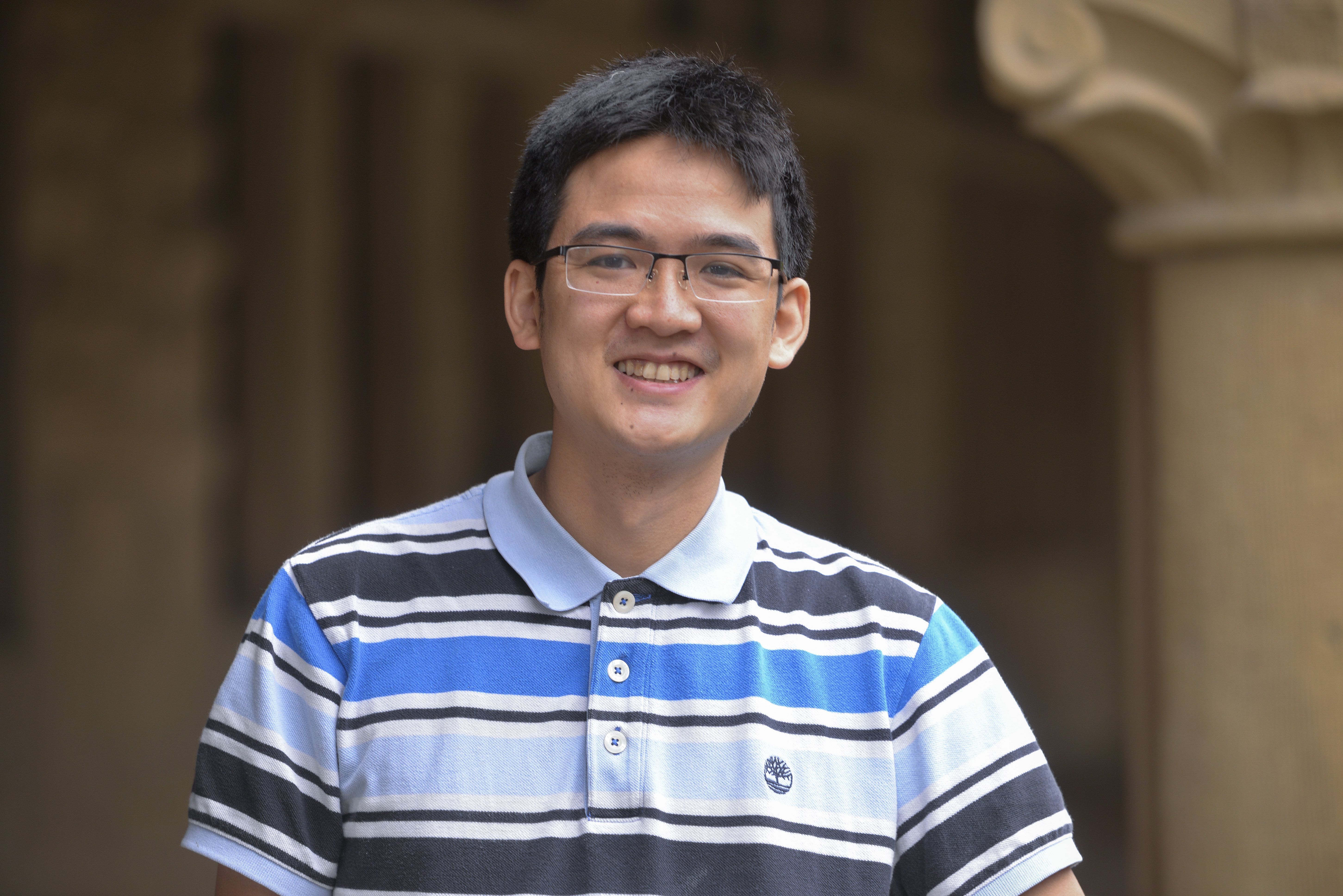
Jonathan Winghong Luk is a Professor in the Department of Mathematics at Stanford University. His research focuses on nonlinear partial differential equations, general relativity, and mathematical physics, with a particular emphasis on gravitational wave dynamics, shock formation, and high-frequency spacetime solutions. Contact: Email: jluk@stanford.edu Office: 382-Z, Building 380, Stanford, CA 94305 Research Trends: His recent publications examine nonlinear wave equations on dynamic spacetimes, gravitational phase mixing, impulsive gravitational wave interactions, and stability of black hole interiors. He frequently collaborates with experts like C. Huneau, S.-J. Oh, and J. Speck. Academic Activities: Luk organizes the Analysis and PDE seminar at Stanford with Eugenia Malinnikova and Ryan Unger. He has developed lecture notes on nonlinear wave equations and Fourier analysis, complemented by example sheets.
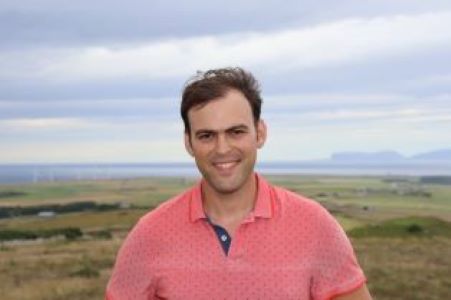
Peter K. Kitanidis is a Professor in the Department of Civil and Environmental Engineering and the Institute for Computational and Mathematical Engineering at Stanford University . His research focuses on groundwater flow , hydrologic forecasting , and stochastic inverse modeling , with applications to pollutant remediation and CO₂ storage monitoring . Education : Diploma, National Technical University of Athens (1974) M.S., MIT (1976) Ph.D., MIT (1978) Research Interests : Groundwater modeling and contaminant transport Hydraulic tomography and aquifer characterization Stochastic methods for uncertainty quantification Bioremediation and enhanced in-situ pollutant decay Dilution and mixing processes in heterogeneous media Real-time river flow forecasting Scientific Awards : L.G. Straub Award (1979) W.L. Huber Research Prize (1994) ISI Highly Cited Researcher (2001) AGU Hydrologic Sciences Award (2011) ASCE Pioneers in Groundwater Lecturer (2011) Advising and Grants : Advised 20+ PhD and MS students (1978–2018) Principal investigator on NSF, EPA, and DOE-funded projects Developed software for groundwater data analysis and CO₂ monitoring Contributed to bioremediation protocols and hydraulic tomography algorithms Labs and Teams : Kitanidis Laboratory for groundwater crisis solutions Collaborated with Oak Ridge National Laboratory and Stanford Hydrogeology Group Mentored postdocs (2000–2017) in reactive transport and inverse modeling
Betsy Stovall is a Professor of Mathematics at the University of Wisconsin–Madison and holds the Letters and Science Mary Herman Rubenstein Professor chair. She serves as the AMS Associate Secretary for the Central Section . Education : Not explicitly stated in provided text. Appointments : Regular faculty at UW–Madison since at least 2012 Organizer of graduate analysis seminars Research Interests : Stovall specializes in harmonic analysis , focusing on operators involving curvature, oscillatory integrals, and Fourier restriction phenomena. Her work intersects with partial differential equations (PDEs) through the study of dispersive equations and geometric analysis problems. Teaching : Complex Analysis (Math 623) - Fall 2021 Calculus III (Math 234) - Fall 2020 Graduate Analysis Seminar - Spring 2022 Organized UW Madison undergraduate summer school in Analysis (2018) Scientific Contributions : Sole or joint author of 15+ publications NSF RTG grant in Analysis and PDE Active in harmonic analysis seminars and educational initiatives Administrative Roles : AMS Associate Secretary Co-organizer of RTG/Student seminars Summer school director
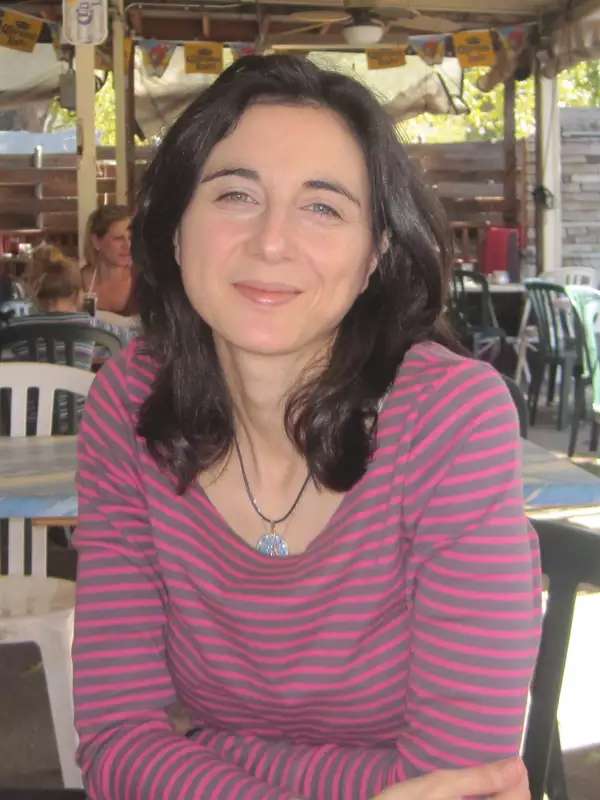
Yvain Bruned is a Professor of Mathematics at Université de Lorraine, Nancy, France, where he leads research in singular stochastic partial differential equations and related fields. He serves as Principal Investigator for the ERC Starting Grant LoRDeT (2023-2028), which focuses on advancing the theory of decorated trees and Hopf algebraic structures for solving singular SPDEs and dispersive PDEs at low regularity. Previously, he was a Lecturer at the University of Edinburgh (2019-2022) and completed postdoctoral work at Imperial College London and University of Warwick under Martin Hairer. His educational background includes: PhD in Mathematics (2012-2015), UPMC (Paris 6), on "Singular KPZ type equations" under Lorenzo Zambotti Master 2 in Probability and Statistics, ENS Cachan / Rennes 1, with honors Master 1 in Mathematics, ENS Cachan, with honors Bachelor in Mathematics and Computer Science, University of Rennes 1, with honors Student at ENS Cachan Brittany extension (2009-2013) Classes Préparatoires in Mathematics and Physics (2007-2009) Bruned's research centers on singular stochastic partial differential equations, with particular focus on Regularity Structures, renormalization theory, and their connections to Hopf algebras. His work bridges theoretical mathematics with applications in quantum field theory, wave turbulence, and numerical analysis. He has developed novel approaches using decorated trees to handle renormalization procedures for singular SPDEs and has extended these methods to dispersive PDEs with random initial data. His research program aims to establish existence and uniqueness results for quasilinear and dispersive SPDEs while developing algebraic tools through deformations of Hopf algebras. His extensive publication record demonstrates consistent contributions to the field of singular SPDEs, with a clear trajectory from foundational work on Regularity Structures to more recent applications in dispersive PDEs and numerical methods. The publications reveal a strong collaborative network with leading researchers in stochastic analysis, mathematical physics, and algebra. His work shows increasing sophistication in handling renormalization procedures through algebraic structures, with recent papers exploring connections between different mathematical frameworks. His major scientific recognition includes: ERC Starting Grant LoRDeT (2023-2028) Bruned actively supervises a large group of researchers, currently advising 4 PhD students and 2 postdoctoral researchers at Université de Lorraine, with several former PhD students having completed their degrees at the University of Edinburgh. His ERC grant has enabled him to organize multiple international workshops in Nancy, fostering collaboration between researchers in singular SPDEs, algebraic structures, and numerical analysis. The grant also supports the development of software platforms for decorated trees and their Hopf algebraic structures. As Principal Investigator of the ERC LoRDeT project, Bruned leads a vibrant research team based at the Elie Cartan Institute of Lorraine, which includes postdocs, PhD students, and visiting researchers. The team regularly organizes specialized workshops on topics including operads, symmetries for quantum field theory, and normal forms for singular dynamics, creating a dynamic research environment that bridges multiple mathematical disciplines.
Michele Dolce is a Lecturer and Scientist at the École Polytechnique Fédérale de Lausanne (EPFL), affiliated with the School of Basic Sciences (SB) and the Chair of Mathematical Analysis, Calculus of Variations and PDEs (AMCV). He previously held positions as a Postdoc at EPFL and a Research Associate at Imperial College London, where he worked under Prof. Michele Coti Zelati. His academic journey includes a PhD from the Gran Sasso Science Institute. Current affiliation: EPFL, School of Basic Sciences (SB), Department of Mathematics (MATH), AMCV Past affiliation: Imperial College London His research focuses on the mathematical analysis of Partial Differential Equations (PDEs) in fluid dynamics and kinetic theory. Key areas include hydrodynamic stability, long-time behavior of viscous vortex systems, and time-decay properties of kinetic models like the Boltzmann and Wave Kinetic Equations. Recent work explores vortex merging phenomena and Taylor dispersion in rotationally symmetric flows. Scientific activities include organizing workshops such as "Long time dynamics in random and deterministic systems" (2025) and co-organizing events like the "Deterministic and random features of fluids" summer school (2023) and the "Enjoying Probability and Fluids in Lausanne" workshop (2023). His publications span journals including Communications in Mathematical Physics, Archive for Rational Mechanics and Analysis, and Journal of Mathematical Fluid Mechanics. Supported by Swiss National Science Foundation (SNF Ambizione grant PZ00P2_223294) Partially funded by GNAMPA (INdAM group)
Daniela De Silva is the Olin Professor of Mathematics and Chair of the Department of Mathematics at Barnard College, Columbia University. She holds a B.A. from the University of Naples Federico II and a Ph.D. from the Massachusetts Institute of Technology (MIT). Her research focuses on partial differential equations (PDEs), particularly free boundary problems and geometric analysis. She teaches advanced courses such as Calculus and Analysis at Barnard and organizes the Geometry and Analysis seminar at Columbia University. Her work explores regularity theory for free boundaries, phase transitions, and harmonic analysis. Notably, her contributions include studies on energy-minimizing free boundaries and monotonicity formulas. De Silva has also contributed to nonlinear Schrödinger equations and has held academic positions at institutions like Johns Hopkins University and MIT before joining Barnard in 2007. Her research interests span theoretical and applied aspects of PDEs, with a focus on geometric implications and singularities. While her work has been featured in prestigious journals like Comm. on Pure and Applied Math , Duke Math. J. , and Indiana Univ. Math. J. , she remains active in academic outreach, including discussions on topics like the mathematics of melting ice and the significance of π in popular media.
Richard Pawlowicz is a Professor in the Department of Earth, Ocean & Atmospheric Sciences at the University of British Columbia (UBC), within the Faculty of Science. His research focuses on ocean physics, seawater properties, geophysical fluid dynamics, and coastal processes. He holds a PhD from the MIT/WHOI Joint Program and has been a faculty member at UBC since 1996. His work integrates field observations, numerical modeling, and novel instrumentation, such as neutrally buoyant floats (Swish floats) and satellite-tracked drifters, to study coastal circulation, estuarine dynamics, and double diffusion processes. He leads research in the Salish Sea, Strait of Georgia, and Gulf of St. Lawrence, emphasizing subsurface mixing, dispersion, and the impacts of climate change on marine ecosystems. Education & Background: B.Sc. (Hons) from Queen's University (1987), PhD from MIT/WHOI (1994), Postdoctoral research at Institute of Ocean Sciences (1994–1996). Research Interests: Ocean circulation, nonlinear waves, estuarine mixing, double diffusion in stratified basins, and the application of TEOS-10 seawater standards. He collaborates on projects like the MEOPAR Observation Core and has developed influential software tools for oceanographic analysis. Students & Supervision: Active supervisor of graduate students and postdocs in physical oceanography. Notable supervisees include Mark Halverson, Caixia Wang, Sam Stevens, and Grace Watts. He emphasizes mathematical rigor and writing skills, requiring strong backgrounds in PDEs and fluid dynamics. Labs & Teams: Member of the MEOPAR Research Management Committee, co-chair of SCOR/IAPWS/IAPSO seawater committees, and collaborator with the Pacific Salmon Foundation's citizen science programs. His work contributes to coastal resource management and climate resilience initiatives.
Dr. Fengyan Li is a Professor in the Department of Mathematical Sciences at Rensselaer Polytechnic Institute (RPI). She holds a PhD in Applied Mathematics from Brown University (2004) and previously held a postdoc at the University of South Carolina. Her research focuses on numerical analysis and scientific computing, particularly discontinuous Galerkin methods for applications in wave propagation, fluid dynamics, plasma physics, and nonlinear optics. She has received prestigious awards including the NSF-CAREER Award (2009) and Alfred P. Sloan Fellowship (2008). Dr. Li serves on editorial boards of journals like SIAM Journal of Numerical Analysis and IMA Journal of Numerical Analysis. Education: PhD in Applied Mathematics (Brown University, 2004); MS & BS in Computational Mathematics (Peking University, 2000 & 1997). Research interests emphasize multi-scale simulations, reduced-order modeling, and high-order methods. Her work addresses challenges in kinetic transport, nonlinear optics, and plasma dynamics. She has delivered plenary talks at major conferences, including ICOSAHOM (2018) and NAHOMCon (2022). Professional service includes leadership roles in the Association for Women in Mathematics (AWM), co-organizing symposiums, and mentoring. She is a 2025 AWM Fellow and advises RPI's AWM Student Chapter.
Herbert Koch is Professor of Mathematics at the University of Bonn, leading the Research Group for Analysis and Partial Differential Equations. His work addresses fundamental problems in nonlinear PDEs and mathematical physics. Research focuses on dispersive equations, fluid dynamics, and harmonic analysis, with recent investigations into soliton stability and blow-up phenomena in wave maps. Publications demonstrate consistent mathematical rigor in analyzing complex nonlinear systems.
Dr. Anjan Biswas is a Professor in the Department of Math & Physics at the College of Arts & Sciences. His research focuses on analytical and computational approaches to quantum optics and nonlinear wave propagation. Education: Ph.D. in Mathematics from the University of New Mexico. Metrics: Erdos Number 4, Hirsch Index 111. Research interests center on optical solitons in fibers with linear and nonlinear chromatic dispersion, Lie symmetry analysis for quiescent solitons, and stochastic modeling in photonic systems. His work explores fractional temporal evolution, polarization-mode dispersion, and Kudryashov’s power-law structures. Recent publications highlight advancements in cubic-quartic soliton modeling, dispersion triplet systems, and noise-resilient optical communication frameworks. Studies span Boussinesq-type models, magneto-optic waveguides, and metamaterial applications. Key methodologies include Adomian decomposition, Sardar sub-equation techniques, and Lie symmetry analysis. Applications range from quantum fluid dynamics to internet bottleneck suppression via exotic self-phase modulation structures.
Samuel Walsh is an Associate Professor in the Mathematics Department at the University of Missouri, within the College of Arts and Science. His research focuses on nonlinear partial differential equations, particularly those arising in fluid dynamics and water wave theory. He is actively involved in the academic community, organizing the Differential Equations Seminar and advising both graduate and undergraduate students. PhD in Applied Mathematics, Brown University, 2010 BS in Mathematical Sciences, Carnegie Mellon University Former Courant Instructor, New York University His primary research interests lie in nonlinear PDEs , especially water waves , steady waves , and dispersive systems . He investigates existence, stability, and qualitative properties of solutions in fluid mechanics, including solitary waves, internal waves, and vorticity-driven flows. His work often involves rigorous analysis of free boundary problems and global bifurcation theory. Analysis of his recent publications reveals a strong focus on solitary and traveling water waves , particularly with vorticity, stratification, and interfacial effects. His work bridges rigorous mathematical analysis with physical fluid dynamics, emphasizing existence, stability, and asymptotic behavior. A recurring theme is the use of bifurcation theory and nonlinear functional analysis to construct and classify solutions to hydrodynamic PDEs. Walsh has received research support from the National Science Foundation (grants DMS-1514950, DMS-1812436, DMS-2306243) and the Simons Foundation (Award 960210). These grants support his ongoing work in nonlinear wave phenomena and fluid dynamics. National Science Foundation: DMS-1514950, DMS-1812436, DMS-2306243 Simons Foundation: Award 960210 He has advised numerous graduate students, including PhD candidates and MS students, many of whom have completed their degrees on topics related to water waves and PDE analysis. He also serves as the Math Competition Advisor at MU, mentoring undergraduates for the Putnam exam. Additionally, he mentored students in the 2012 Summer Undergraduate Research Experience (S.U.R.E.) at Courant. Samuel Walsh organizes the Differential Equations Seminar at the University of Missouri, fostering academic exchange and collaboration in the field of PDEs and applied analysis.
Jeremy Quastel is a University Professor in the Department of Mathematics at the University of Toronto, within the Faculty of Arts and Science. He has been a prominent figure in the department since returning to Canada in 1998, serving as Chair of the Department of Mathematics from 2017 to 2021. Under his leadership, the mathematics department has become a world center for research in random interface growth and the KPZ universality class. His educational background includes: Undergraduate studies at McGill University PhD from the Courant Institute (NYU) in 1990 under S.R.S. Varadhan Professor Quastel is a specialist in probability theory, stochastic processes, and partial differential equations . His research focuses on the large scale behavior of interacting particle systems and stochastic partial differential equations, with particular emphasis on the Kardar-Parisi-Zhang (KPZ) universality class. He made groundbreaking contributions by discovering the first exact distributional solutions of the KPZ equation in 2010 and the KPZ fixed point in 2017 - the scaling invariant, integrable Markov process at the center of the KPZ universality class. His work bridges probability theory, mathematical physics, and statistical mechanics, with applications to interface growth models and directed polymers. Analysis of his recent publications reveals a consistent focus on KPZ-related phenomena, with increasing sophistication in understanding the KPZ fixed point and its properties. His work has evolved from discovering exact solutions to establishing convergence results and exploring connections to other integrable systems like the Toda lattice. The research spans theoretical developments in stochastic PDEs, connections to random matrix theory, and applications to physical growth models. His scientific achievements have been recognized with numerous prestigious awards: Sloan Fellow (1996-98) Invited session speaker at the International Congress of Mathematicians (2010) Current Developments in Mathematics lectures (2011) St. Flour lectures (2012) Plenary speaker at the International Congress of Mathematical Physics (2012) Fellow of the Royal Society of Canada (2016) Fellow of the Royal Society (2021) CRM-Fields-PIMS prize (2018) Jeffery-Williams Prize of the Canadian Mathematical Society (2019) Professor Quastel has supervised numerous PhD students who have gone on to successful careers in academia and industry, including Xuicai Ding at UC Davis, Hanna Jankowski at York University, and Konstantin Matetski at Columbia University. His research group has attracted many postdoctoral fellows who have become leading researchers in probability theory. While specific grant information isn't detailed in the provided text, his sustained research output and leadership position suggest significant grant funding supporting his work in probability theory and stochastic processes. Though not explicitly mentioned in the provided text, Professor Quastel's work has established the University of Toronto as a global hub for research on the KPZ universality class. His collaborations span institutions worldwide, and his research group likely includes graduate students, postdocs, and visiting scholars working on various aspects of stochastic processes, interface growth models, and integrable probability. His recent work on the KPZ fixed point represents the culmination of decades of research in this field.
Professor Martijn de Sterke is a Professor in the Department of Physics at the University of Sydney and a member of the Sydney Nano Institute. He holds a MEng in Applied Physics from Delft University of Technology (1982) and a PhD in Optics from the University of Rochester (1987). His postdoctoral work at the University of Toronto (1988–1990) preceded his faculty appointment at the University of Sydney, where he has contributed significantly to the field of nonlinear optics. His research focuses on nonlinear optics, photonic crystals, soliton dynamics, and plasmonic systems. Notable contributions include studies on soliton microcombs, metamaterial-enhanced optical effects, and relativistic lightsail propulsion concepts. He has pioneered work on pure-quartic solitons and their applications in fiber lasers, as well as investigations into Förster resonance energy transfer in engineered metamaterials. Educations: MEng in Applied Physics, Delft University of Technology (1982) PhD in Optics, University of Rochester (1987) His publications span over 300 works, including key contributions to Optics Express as Editor-in-Chief from 2007–2012. He has received prestigious awards such as the Pawsey Medal (1999), Esther Hoffman Beller Medal (2017), and Beatty Steel Medal (2024). Current research activities include ARC-funded projects on optical microcombs and dispersion-engineered solitons. His work bridges theoretical models and experimental implementations, with applications in ultrafast optics, nanophotonics, and space propulsion systems leveraging optical forces.
Dr. Niharika Singh is a Lecturer in the UniSQ College (Pathways) at the University of Southern Queensland. She holds a BEd from the South Pacific, an MSc from the South Pacific, and a PhD from USQ. Her research spans two primary areas: educational technology and fluid dynamics. In education, she focuses on student engagement in online learning environments, interactive technologies, and widening participation programs. In fluid dynamics, her work examines solitary waves, nonlinear wave behavior, and oceanographic models. She received Seed Funding Early Research Career grant in 2023 and serves as an Associate Supervisor for doctoral research exploring effective teaching practices for remote students. Her educational research includes studies on Panopto video analytics, embedded quizzes in lecture videos, and the impact of filmic 'dark academia' on academic identity. Her fluid dynamics work analyzes modulational instability in rotating oceans and soliton dynamics in two-layer systems. Dr. Singh contributes to the academic community through affiliations with UniSQ College and collaborations on projects like Third Space Theory applications in pathways education. She has published extensively across these fields, with recent work appearing in journals like Technology, Pedagogy and Education and Wave Motion .
Margaret Beck is a Professor and former Director of Undergraduate Studies in the Department of Mathematics and Statistics at Boston University. She holds a PhD from Boston University and has held postdoctoral positions at the University of Surrey, MSRI, and Brown University. Her research focuses on partial differential equations and dynamical systems, particularly analyzing the long-time behavior of solutions and stability of nonlinear waves. She has received prestigious awards including the 2019 SIAM J.D. Crawford Prize and the 2018 AMS Birman Fellowship. Education: Bachelor's degree from Colorado College PhD in Mathematics from Boston University Research Interests: Nonlinear waves and coherent structures Spectral and nonlinear stability analysis Pattern formation in dissipative systems Applications to fluid dynamics and mathematical physics Awards: 2019 SIAM J.D. Crawford Prize 2018 AMS Birman Fellowship 2012 Sloan Research Fellowship Advising: Supervised 11 graduate students and postdocs, including Montie Avery and Jonathan Jaquette. Actively mentors through the AWM Mentor Network. Current advising handled by Prof. Matt Szczesny during her 2025 sabbatical. Labs/Community: Co-organizes the GeMs group supporting gender minorities in mathematics at BU and co-founded the GeMsGetMath@BU summer math camp for high school students. Engages in initiatives promoting diversity in STEM, including presentations at EDGE and WISE@Warren programs.