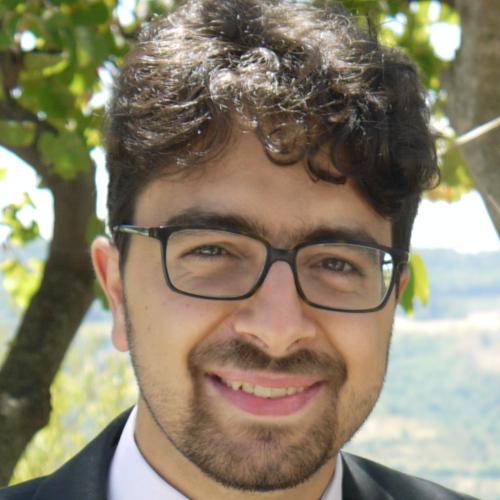
Simona Fornaro is an Associate Professor of Mathematical Analysis at the University of Pavia , affiliated with the Department of Mathematics under the College of Engineering . Her research focuses on Partial Differential Equations and Applied Mathematics , particularly in elliptic and parabolic problems with unbounded coefficients . Educational Roles Teaching Mathematical Analysis 1 for Electronic and Computer Engineering (2019/2020) Instructing Complementi di Analisi Matematica for Civil Engineering (2017/2018) Research Interests Specializes in gradient estimates , degenerate operators , and singular parabolic equations . Key areas: Partial Differential Equations , Functional Analysis , and Nonlinear Analysis . Publications Contributed to 15+ peer-reviewed journals , including Journal of Differential Equations , Studia Mathematica , and Discrete and Continuous Dynamical Systems . Recent work includes Lp-theory for degenerate operators , Harnack inequalities , and measure-valued solutions . Contact & Office Office: Room C23, Department of Mathematics, University of Pavia Email: simona.fornaro@unipv.it Phone: +39 0382 98.5691 Fax: +39 0382 98.5602
Gregory P. Waite is a Professor in the Department of Geological and Mining Engineering and Sciences at Michigan Technological University's College of Engineering. His research focuses on applying seismology to study Earth processes from the crust to the upper mantle, with particular emphasis on volcanic and tectonic systems across diverse locations including Yellowstone, Mount St. Helens, and Central American volcanoes. Dr. Waite earned his PhD and MS in Geophysics from the University of Utah and his BS in Mathematics from St. Norbert College. His educational background provides a strong foundation for his quantitative research in seismic analysis and modeling of geological processes. Dr. Waite's research spans multiple areas of geophysics and volcanology. He specializes in seismic source mechanisms of tectonic and volcanic earthquakes, mantle and crustal-scale seismic tomography, and the relationship between seismic anisotropy and fluid dynamics. His work integrates seismology with other geophysical techniques to develop comprehensive models of active processes in the Earth's crust and upper mantle. A significant portion of his research focuses on active-source investigations of magmatic systems and understanding how earthquakes can be triggered by magmatic and hydrous fluid migration. His research often involves field deployments at active volcanoes for seismic monitoring and data collection. Analysis of Dr. Waite's recent publications reveals a consistent focus on volcanic seismicity, particularly at Central American volcanoes like Fuego and Pacaya in Guatemala. His work frequently combines seismic data with geodetic measurements (GPS, InSAR) to understand magma movement, volcanic deformation, and eruption dynamics. There's a clear progression toward more sophisticated analysis techniques, including nonlinear inversion methods for studying volcanic seismic signals and developing improved approaches for volcanic hazard assessment and eruption forecasting. Dr. Waite teaches several advanced courses at Michigan Tech including Earthquake Seismology (GE4560/5560), Natural Hazards (GE4150/5150), Intercultural Communication of Natural Hazards (GE5001), Geophysical Inverse Theory (GE5950), Open-Vent Volcanoes Seminar (GE5185), and Volcano Seismology (GE5195). His teaching reflects his research expertise and commitment to training the next generation of geoscientists in both theoretical and practical aspects of earth sciences. Dr. Waite directs the Shock Tube Facility at Michigan Tech, which supports experimental research related to volcanic processes. His research often involves collaboration with scientists from other institutions, as evidenced by his numerous co-authored publications. While specific grant information isn't detailed in the available text, his research activities suggest involvement in externally funded projects focused on volcanic monitoring and hazard assessment.
Wesley Burghardt serves as Associate Dean of Undergraduate Engineering and Professor of Chemical and Biological Engineering at Northwestern University's McCormick School of Engineering. Appointed in 1990, he previously chaired the Department of Chemical and Biological Engineering and oversees curriculum development, professional growth, and personal development initiatives for engineering undergraduates. His academic credentials include: Ph.D. in Chemical Engineering from Stanford University M.S. in Chemical Engineering from the University of Illinois B.S. in Chemical Engineering from the University of Illinois Burghardt's research pioneers optical and X-ray scattering methodologies to investigate complex fluid dynamics during polymer flow. Key focus areas encompass: Microstructure evolution in block copolymer gels under deformation Flow-induced crystallization mechanisms in polymers Rheological behavior of physically associating networks Nanocomposite orientation dynamics under shear In-situ structural characterization using synchrotron techniques Analysis of his 2018-2023 publications reveals dominant emphasis on Rheo-SAXS for capturing transient microstructure in deforming soft materials. His work systematically explores strain-temperature interdependencies in triblock gels, sphere-forming copolymer alignment mechanisms, and molecular origins of extensional strain hardening. Recent studies increasingly bridge polymer physics with biomedical applications through hydrogel research for 3D bioprinting and tissue engineering. No scientific awards were documented in the source materials. No student advising records or grant funding details were provided in the available content. His experimental program operates through a specialized laboratory focused on polymer rheology and advanced scattering techniques, supporting investigations into structure-property relationships in soft matter systems.
Augustin Constantinescu is a Lecturer at Transilvania University of Brașov, Romania, affiliated with the Faculty of Mechanics and the Department of Automotive, Transportation and Industrial Engineering. Holding a Doctor of Engineering in Technical Sciences (2010) from Transilvania University, his academic foundation combines mechanical engineering with advanced mathematical modeling capabilities. His educational background includes a PhD in Mechanical Engineering with specialization in Automotive Engineering, Road Transport Systems, Management and Legislation in Transport, and Tractors and Trailers. His areas of competence encompass road vehicles, tractors and agricultural machinery, finite element analysis, and agricultural machinery expertise. Constantinescu's research spans multiple disciplines with particular emphasis on dynamical systems theory, nonlinear dynamics, and mathematical physics. His work demonstrates remarkable interdisciplinary breadth, connecting plasma physics with epidemiological modeling and transportation engineering. Recent publications reveal significant contributions to epidemic modeling, including applications to the COVID-19 pandemic in Romania, alongside his longstanding research in plasma physics and nonlinear dynamical systems. His publication record shows consistent output since the 1990s, with recent work focusing on bifurcation theory, stability analysis, and multistability phenomena in 3D dynamical systems. The research demonstrates strong mathematical rigor with practical applications across epidemiology, plasma physics, and engineering systems. Constantinescu maintains active scholarly communication through two professional email addresses: gusti_constantinescu@yahoo.com and augustin.constantinescu@edu.ucv.ro. His academic profile reflects a dedicated researcher who bridges theoretical mathematics with practical engineering applications, particularly in transportation systems and plasma physics.
Heikki Haario is a Professor in Computational Engineering at the LUT School of Engineering Sciences, LUT University, Lappeenranta. His research focuses on robust Bayesian inference, parameter estimation, and uncertainty quantification in chaotic and stochastic systems. Broad research areas: Bayesian Statistics, Chaotic Dynamical Systems, Gaussian Processes, Machine Learning The 15 most recent publications (2025-2023) demonstrate expertise in computational modeling, data-driven methods, and interdisciplinary applications spanning finance, biology, and engineering. Articles emphasize Bayesian techniques, kernel flows, and neural network integration for solving inverse problems and optimizing predictions in uncertain environments.
Prof. Vittorio Romano (b. 1966) is a Full Professor of Mathematical Physics at the Department of Mathematics and Computer Science, University of Catania, Italy. He obtained his Laurea Magna cum Laude (1989) and PhD in Mathematics (1994) from Catania. His research focuses on charge/phonon transport modeling in semiconductors and graphene , non-equilibrium thermodynamics , and numerical methods for hyperbolic systems . Research areas include relativistic fluid dynamics, nonlinear wave propagation, stability of shock waves, and applications in cosmology. He has led major EU projects like COMSON (FP6) and AMBEATION (MSCA-RISE), and developed MEP-based hydrodynamic models for nanoscale devices. Scientific leadership : Director of A.M. Anile Interdepartmental Center, ECMI Council member, GNFM Co-Chair Key publications : 24 (Scopus) and 35 (Google Scholar) H-index with over 3900 citations International collaborations : Autonomous University of Barcelona, Kaiserslautern University, ST-Microelectronics, Synopsys He has supervised 9 PhD students in topics ranging from quantum transport to Monte Carlo simulations, and organized conferences like SCEE 2018 and ICTT 2015. His editorial roles include associate editor for Frontiers in Applied Mathematics and Statistics and guest editor for Entropy.
Antonio Miguel Márquez Durán is an Associate Professor in the Department of Economics, Quantitative Methods and Economic History at Universidad Pablo de Olavide in Seville, Spain. His academic career spans over three decades with significant contributions to numerical analysis and partial differential equations. His research focuses on developing and analyzing finite element methods for fluid mechanics, solid mechanics, and fluid-structure interaction problems. PhD from University of Seville (2005) Thesis: Contribution to the study of some models governed by non-autonomous and/or stochastic evolution equations Supervised by Dr. Tomás Caraballo Garrido and Dr. José Real Anguas Professor Márquez Durán's research interests center on numerical methods for partial differential equations , particularly finite element methods for fluid mechanics, solid mechanics, and fluid-structure interaction problems. His work often involves developing mixed formulations, analyzing error estimates, and studying the coupling of different physical models. He has made significant contributions to pseudostress-based formulations, Brinkman models, and non-autonomous/stochastic evolution equations. His research bridges theoretical mathematical analysis with practical computational applications in engineering and physics. His publication record shows a consistent focus on developing robust numerical methods for complex physical systems. Recent work emphasizes mixed-hybrid and discontinuous Galerkin methods for dynamical systems, coupling techniques between different numerical methods (VEM and BEM), and analysis of fluid-solid interaction problems. The research trajectory demonstrates increasing sophistication in handling time-dependent problems, nonlinearity, and multi-physics coupling. Professor Márquez Durán has established productive collaborations with leading researchers in computational mathematics, most notably Gabriel N. Gatica (24 joint publications) and Salim Meddahi (22 joint publications). His work has been cited 815 times across 465 documents, indicating significant impact in his field. He has published in top journals including Computer Methods in Applied Mechanics and Engineering, SIAM Journal on Numerical Analysis, and IMA Journal of Numerical Analysis. His academic activities include extensive research collaboration, with 25 co-authors and 521 co-co-authors. While specific grant information isn't detailed in the provided materials, his sustained publication record suggests successful funding acquisition. Professor Márquez Durán appears to be an active member of the computational mathematics research community, contributing to both theoretical developments and practical applications of numerical methods.
Quentin Mérigot is a Professor in Applied Mathematics at the University of Paris-Saclay, affiliated with the Faculty of Science at Orsay and the Institut de Mathématique d'Orsay. He serves as the Director of the Master in Optimization program, a joint initiative between University of Paris-Saclay and Institut Polytechnique de Paris. Dr. Mérigot completed his Doctoral Thesis at the University of Nice Sophia-Antipolis in 2009, followed by a Habilitation à diriger les recherches at the University of Grenoble in 2014. His research focuses on the intersection of optimal transport theory, numerical analysis, and geometric methods for data analysis. Mérigot has made significant contributions to the development of numerical methods that leverage optimization and computational geometry techniques. His work spans theoretical foundations and practical applications, including seismic tomography, reflector design, and crowd motion modeling. He is particularly known for his work on stability properties of optimal transport maps and the development of efficient algorithms for solving optimal transport problems. Analysis of Mérigot's recent publications reveals a strong focus on quantitative stability properties of optimal transport maps, with applications spanning from machine learning to optics and fluid dynamics. His work demonstrates a consistent theme of bridging theoretical mathematical analysis with computational methods, particularly through the development of Lagrangian discretization techniques and Newton-type algorithms for solving complex geometric problems. Junior member of the Institut universitaire de France (IUF) Professor Mérigot has supervised numerous PhD students including Alex Delalande, Anatole Gallouët, Clément Sarrazin, Jocelyn Meyron, and Julien André. He has also hosted several postdoctoral researchers such as Jean-Baptiste Keck, Andrea Natale, Federico Stra, Thomas Gallouët, and Hiba Abdallah. His current research projects include PEPR PDE-AI and OT @ Lagrange, which likely represent significant collaborative efforts with funding support. Mérigot is an active member of the mathematical community, with his research bridging pure mathematical analysis, computational methods, and practical applications across various scientific domains. His work demonstrates the power of optimal transport theory as a unifying framework for diverse problems in mathematics and its applications.
Gerlind Plonka is a Professor of Applied Mathematics at the University of Göttingen, specifically within the Institute for Numerical and Applied Mathematics (NAM). Her research focuses on Numerical Fourier Analysis Wavelet Theory Regularization and Nonlinear Diffusion Methods Fast Algorithms and Numerical Stability Signal and Image Processing Applications Her recent publications emphasize structured subsampling in Fourier domains, Prony-type methods for exponential sum recovery, and deep learning integration in medical imaging. She supervises active PhD candidates including Benjamin Kocurov, Anahita Riahi, Yannick Nicola Riebe, and Janina Schmidt, with a legacy of advising over 50 graduates across diverse topics like Sparse FFT Algorithms Phase Retrieval Constraints Wavelet-Based Image Compression Nonlinear Diffusion Filters High-Dimensional Data Approximation
Ioana Ciotir is an Associate Professor (Maître de Conférence) in the Department of Mathematical Engineering at INSA Rouen, France, where she has been employed since 2014. She previously served as an Assistant Professor at the Institute of Mathematics at the University of Neuchâtel, Switzerland (2012-2014) and as an Assistant at the Department of Mathematics at "Alexandru Ioan Cuza" University of Iasi, Romania (2008-2012). Her research focuses on stochastic partial differential equations, homogenization theory, and optimal control problems, with applications to porous media flow, traffic modeling, and financial mathematics. Dr. Ciotir earned her Ph.D. in Mathematics from "Alexandru Ioan Cuza" University of Iasi, Romania in 2010, with a thesis titled "Stochastic Porous Media Equations." She later obtained her Habilitation à Diriger des Recherches (HDR) from the University of Rouen, France in 2022. Her academic journey includes additional training in educational methodologies and summer schools in mathematical finance. Her primary research interests span stochastic analysis and partial differential equations, with a focus on stochastic porous media equations, homogenization of stochastic processes, optimal control theory, and probabilistic representations. She investigates the behavior of stochastic processes with singular diffusivity, including fast and super-fast diffusion equations with various types of noise (Stratonovich, Itô, gradient-type). Her work extends to applications in physics (plasma diffusion), engineering (porous media flow), and social sciences (traffic flow modeling, pandemic economic impacts). Dr. Ciotir's publication record demonstrates consistent contributions to high-impact mathematical journals, with recent work focusing on regularity theory for stochastic diffusion equations, state-constrained control systems for porous media, and non-local models for traffic flow. Her research often involves international collaborations with institutions in Switzerland, Germany, Japan, and China, reflecting the interdisciplinary nature of her work. Among her scientific recognitions are the Thesis Prize for Applied Mathematics from ROMAI (2011) and the Doctoral and Research Supervision Bonus (PEDR) for the periods 2018-2021 and 2022-2025. She has successfully supervised multiple doctoral students through completion of their theses and currently mentors several Ph.D. candidates working on topics related to stochastic PDEs and control theory. Dr. Ciotir has secured significant research funding through projects such as Scale Op (2024-2028, with Siemens Gamesa Renewable Energy), DEFHY3GEO (2022-2025), M2SiNum (2018-2021), M2Num (2015-2019), and the ANR Project QUantum Turbulence Exploration by High-Performance Computing (ANR-18-CE46-0013). She serves as the Sustainable Development Representative for the LMI laboratory and the GM Department since May 2020, and has been elected to the LMI laboratory council (2017-2021 and 2021-2025). She is actively involved in the Mathematics Laboratory (LMI) at INSA Rouen, where she serves as the SMAI correspondent and Mathrice correspondent via FR CNRS 3335. Her international collaborations include partnerships with Siemens-Gamesa, ENSTA Paris, universities in Romania, Switzerland, Germany, and Japan, demonstrating her position within a broad academic network focused on applied mathematics and stochastic analysis.
Peter Polacik is a Professor at the School of Mathematics, University of Minnesota, specializing in partial differential equations and dynamical systems. His research focuses on the asymptotic behavior of solutions, symmetry properties, and global dynamics of reaction-diffusion and semilinear heat equations. Key areas: PDEs, nonlinear dynamics, asymptotic symmetry Contact: polacik@umn.edu His recent work examines radial and quasiperiodic solutions, stability of subharmonic structures, and Liouville-type theorems. Publications span rigorous analyses of convergence, blow-up phenomena, and spectral properties.
Dr. Martin Lenz is a researcher at the Institut für Numerische Simulation at the University of Bonn , specializing in numerical methods for materials science and mechanics. His work bridges computational mathematics with applications in magnetic-shape-memory materials, microstructure optimization, and multiscale modeling. Teaching: Lecturer for Ingenieurmathematik III (module M43), Ingenieurmathematik II (module B42), and Ingenieurmathematik (Master module M22). Current Research: Leads Numerical optimization of shape microstructures (Project C06, DFG SFB 1060) focusing on two-scale optimization of elastic materials. Past Research: Developed continuum models for magnetic-shape-memory materials (Project A6, DFG priority program 1239) and studied multiscale phase separation with elastic misfit. His recent publications (2023-2012) emphasize shape-memory alloys , microstructure dynamics , and adaptive numerical schemes . Key methodologies include finite volume methods, homogenization, and phase field modeling. Education: PhD (2007) and Diploma in Mathematics (2002) from the University of Bonn.
Niklas Kolbe is an interim professor at the Department of Mathematics, RWTH Aachen University . His research focuses on numerical analysis, modeling of partial differential equations, and applications in cancer biology and traffic flow systems. Current affiliation: Department of Mathematics, RWTH Aachen University Academic rank: Interim Professor Research Interests Dr. Kolbe specializes in: Numerical methods for hyperbolic/parabolic PDEs Adaptive mesh refinement Lagrange-Galerkin techniques Cancer invasion modeling (stem cells, extracellular matrix) Network models for blood vessels/road systems Notable Contributions Recent publications address: Lax-Friedrichs methods in hemodynamics Relaxation approaches for fluid-solid coupling Flux-limited PDEs for glioma invasion Stochastic TGF-β signaling models
Simone Di Marino is an Associate Professor in the Department of Mathematics at the University of Genoa. His research focuses on Optimal Transport, Mathematical Analysis, and their applications to Partial Differential Equations and Functional Analysis. He is a member of the research commission and teaches courses such as Mathematical Analysis, Calculus, and specialized topics in Mathematics and Engineering programs. His research interests include Optimal Transport Theory, Nonlinear Analysis, and the development of variational methods for problems in mathematical physics and differential geometry. He explores topics such as gradient flows, entropy regularization, and geometric inequalities on manifolds. Recent work highlights contributions to the theory of Grand-Canonical Optimal Transport, nonlinear mobilities in transport models, and the convexity properties of ground state energies in quantum systems. His articles often bridge pure analysis with applications in physics and numerical methods. Di Marino is available for student consultations on Wednesdays from 2pm to 4pm. Though no specific grants or awards are listed, his extensive publication record reflects active engagement in collaborative research.
Xiangjin Xu is an Associate Professor in the Department of Mathematical Sciences at Binghamton University (SUNY), part of Harpur College. He has been affiliated with Binghamton since 2007. His research focuses on Harmonic Analysis on Manifolds and Nonlinear Partial Differential Equations (PDEs), with a particular emphasis on eigenfunction estimates, geometric PDEs, and control theory. He holds a Ph.D. in Mathematics from Johns Hopkins University (2004) and a Master’s degree from Nankai Institute of Mathematics (1999). Education: Ph.D., Mathematics, Johns Hopkins University, 2004 Master’s Thesis: Periodic solutions of Hamiltonian systems, Nankai Institute of Mathematics, 1999 Research Interests: Xiangjin’s work spans two primary areas: Harmonic Analysis on Manifolds: Studies eigenfunction growth estimates, nodal sets, and applications to PDE well-posedness on compact manifolds. This includes work on Hörmander multiplier theorems, Bochner-Riesz means, and spectral projectors. Nonlinear Differential Equations: Focuses on Harnack inequalities, Liouville-type theorems, and gradient estimates for equations on manifolds with Ricci curvature conditions. Explores stabilization/observability of PDEs via Carleman estimates and periodic solutions in Hamiltonian systems. Grants & Funding: NSF-DMS 0602151 (2006–2008), NSF-DMS-0852507 (2008–2010) Harpur College Research Grants (2010–2011, 2012–2013, 2019–2020) NYS/UUP Individual Development Award (2013–2014) AMS-NSF Travel Grants for international conferences (2010–2025) Labs/Teams: Collaborates on projects involving geometric analysis, spectral theory, and PDE control. Active in seminars like the Analysis Seminar (Math 564).