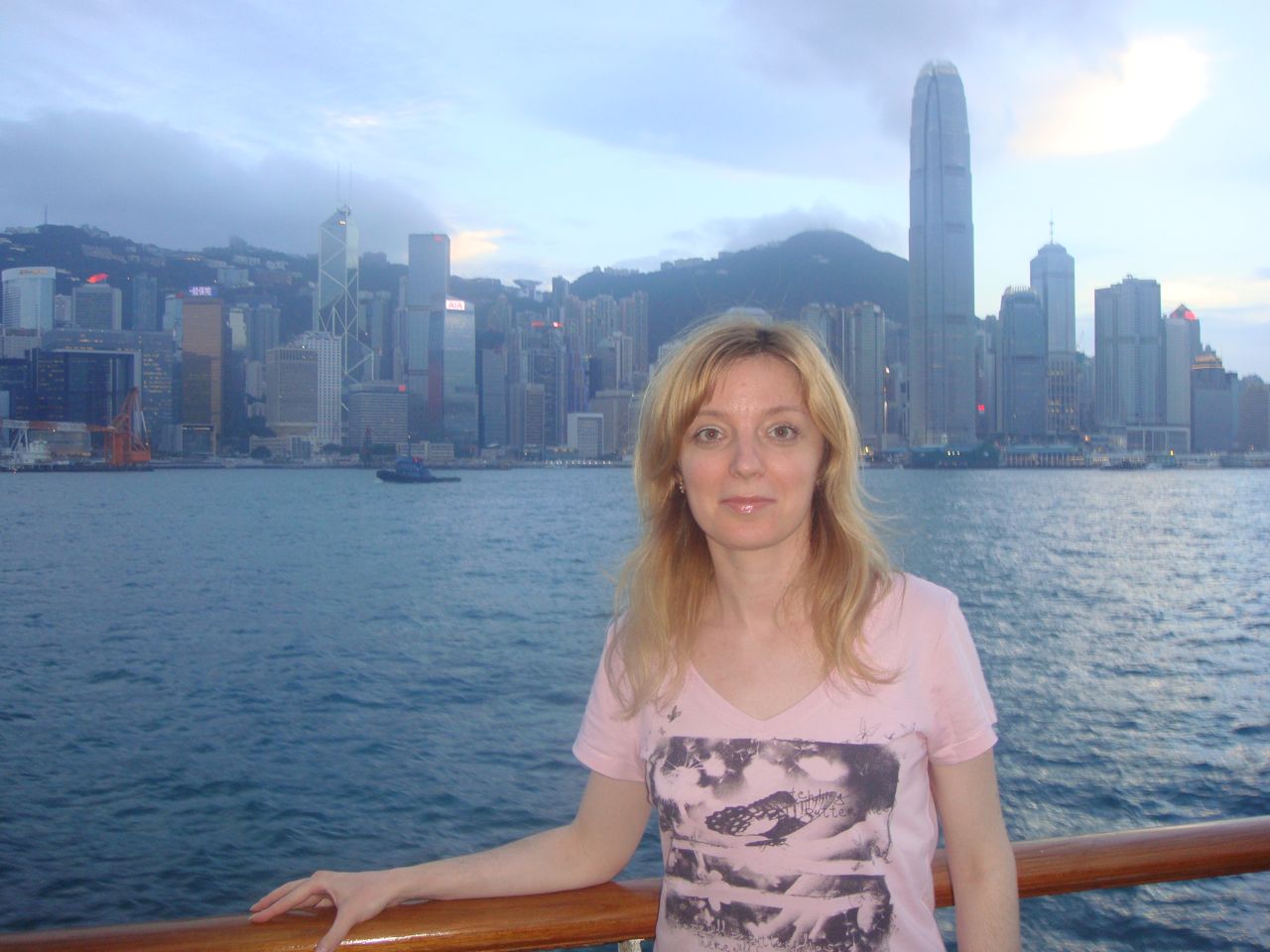
Francesca Da Lio is a Professor at the Department of Mathematics, ETH Zurich, where she has held a titular professorship since 2014. Her research focuses on nonlinear elliptic and parabolic partial differential equations (PDEs), with applications in stochastic and deterministic optimal control, homogenization, front propagation, and geometric analysis. She has pioneered work on conformally invariant variational problems and nonlocal PDEs, including fractional harmonic maps and stability analysis for critical points. PhD in Mathematics (1998) and Summa Cum Laude Degree in Mathematics (1994) from University of Padova. Her research explores the interplay between nonlinearity and non-locality, particularly in problems arising from geometry, mathematical finance, and physics. She has led major Swiss National Fund (SNF) projects, including grants for geometric analysis and conformally invariant variational theory. Her work on 3-commutators, integrability by compensation, and Morse index stability has advanced the understanding of harmonic maps and elliptic systems. Francesca Da Lio has mentored numerous PhD, postdoctoral, and Master/Bachelor students, including Dominik Schlagenhauf, Jerome Wettstein, and Ali Hyder. She has served on hiring committees for full professorships at ETH Zurich and co-organized international conferences such as 'Recent Advances in Nonlocal and Nonlinear Analysis' and 'Topics in Sub-Elliptic PDEs.' Scientific Awards: Italian Scientific Qualification as Full Professor in Mathematical Analysis (2013). She contributes to editorial boards, including Advances in Calculus of Variations , and participates in academic services like refereeing for SNF projects and international journals.
Dr. Jean-Christophe Nave is an Associate Professor in the Department of Mathematics and Statistics at McGill University. He holds a PhD from the University of California, Santa Barbara (2004), under advisors Xu-Dong Liu and Sanjoy Banerjee. Prior to McGill, he served as a Lecturer and Instructor at MIT's Mathematics Department (2005-2010). His research focuses on numerical analysis, partial differential equations, fluid mechanics, and computational methods for interface problems. He has led research groups involving postdocs, PhD, and undergraduate students, collaborating on projects like the Correction Function Method for PDEs and the Characteristic Mapping Method for advection problems. Education: Ph.D. in Applied Mathematics from UCSB (2004). Affiliations include the Institut des Sciences Mathematiques Steering Committee, Centre de Recherches Mathematiques Applied Math Lab, and CNRS-UMI. Active in teaching courses like Numerical Analysis I/II and Non-Linear Dynamics at McGill, with sabbatical periods noted in recent years. Research interests span numerical methods for PDEs, fluid-structure interaction, and multi-phase flows. His work integrates computational geometry and invariant numerical techniques, addressing challenges in complex fluid dynamics and interface-driven phenomena. Over 40 peer-reviewed publications and continuous contributions to the field of computational applied mathematics. Scientific advising includes over 20 graduate and undergraduate students, with notable alumni now in academia and industry. Collaborations include projects on volcano dynamics, fiber drawing instabilities, and concentrated solar power systems. His methods have advanced numerical simulations for engineering and physical systems involving discontinuous coefficients and sharp interfaces.
Bernardo Cockburn is a Distinguished McKnight University Professor in the School of Mathematics at the University of Minnesota. He has been a faculty member since 1987, progressing from Assistant Professor to Associate Professor in 1992, and achieving full Professor status in 1997. He also held positions as an Affiliate Professor at the University of Delaware (2019-2020) and Chair Professor of Mathematics at King Fahd University of Petroleum and Minerals in Saudi Arabia (2012-2014). Education: Ph.D. from University of Chicago (1986), Doctorat de 3eme Cycle from University of Paris VI/INRIA (1983), Masters and Licenciatura from Universidad Nacional de Ingenieria in Lima, Peru Research Focus: Numerical methods for partial differential equations, particularly discontinuous Galerkin methods Cockburn's research primarily centers on the devising and analysis of efficient methods for numerically solving linear and nonlinear partial differential equations . His most significant contribution has been in the development and analysis of discontinuous Galerkin methods , particularly the hybridizable discontinuous Galerkin (HDG) methods which he pioneered. His work spans error estimation for hyperbolic problems, continuous dependence for Hamilton-Jacobi equations, and numerous applications across fluid dynamics, structural mechanics, and electromagnetics. He has developed theoretical frameworks for superconvergence properties and created practical algorithms for a wide range of engineering applications. Analysis of his recent publications reveals a strong focus on hybridizable discontinuous Galerkin methods , with significant contributions to superconvergence theory, error estimation, and applications to diverse physical problems including Stokes flow, linear elasticity, Timoshenko beams, and convection-diffusion problems. His work demonstrates a clear trajectory from theoretical foundations to practical implementation, with increasing emphasis on curved domains, adaptive methods, and coupling techniques between different numerical approaches. Doctor Honoris Causa from Universidad Nacional de Ingenieria, Lima, Peru (2013) Invited Speaker at the International Congress of Mathematicians, Numerical Analysis Section (2010) Distinguished McKnight University Professor, University of Minnesota (2007) Cockburn has supervised an impressive 23 PhD students throughout his career, many of whom have gone on to become professors at major universities worldwide including the University of Puerto Rico, Purdue University, and University of Concepcion in Chile. His advisees have produced significant research in discontinuous Galerkin methods, particularly in applications to structural mechanics, fluid dynamics, and Hamilton-Jacobi equations. His research has been supported by numerous grants from the National Science Foundation and other funding agencies, enabling extensive collaboration with researchers across the United States and internationally. Cockburn leads a vibrant research group focused on computational mathematics, with particular emphasis on developing and analyzing discontinuous Galerkin methods. His work has fostered significant collaboration between mathematicians and engineers, with applications spanning aerospace, civil engineering, and materials science. The research group maintains strong connections with institutions worldwide, including regular collaborations with researchers in Peru, Chile, and Europe, reflecting Cockburn's international background and influence.
Ilaria Perugia is a University Professor (Univ.-Prof.) and Chair of Numerics of PDEs at the Department of Mathematics, Faculty of Mathematics, University of Vienna. She also serves as Deputy Head of the Research Platform Erwin Schrödinger International Institute for Mathematics and Physics. Her research focuses on numerical methods for partial differential equations with applications in computational physics and engineering. Professor Perugia's primary research interests include: Numerical methods for PDEs Finite element methods Discontinuous Galerkin methods Trefftz methods Virtual element methods Space-time methods Computational electromagnetics Wave propagation problems Nonlinear reaction-diffusion problems Her work spans theoretical analysis, algorithm development, and practical implementation of numerical methods for solving complex physical phenomena. Her recent publications demonstrate a strong focus on space-time methods, virtual element methods, and structure-preserving discretizations for wave equations, heat equations, and other PDEs. She has made significant contributions to the development of stable and efficient numerical schemes that preserve important physical properties of the underlying continuous problems, particularly in the context of wave propagation and computational electromagnetics. Professor Perugia leads a research group comprising several researchers and students including Mattia Corti, Matteo Ferrari, Monica Nonino, Andrea Scaglioni, Paul Stocker, Enrico Zampa, and Marco Zank. Her group actively collaborates on projects related to numerical analysis and scientific computing, with particular emphasis on developing novel discretization techniques for challenging PDE problems.
Guillermo Ferreyra is a Professor in the Department of Mathematics at Louisiana State University (LSU), where he has served since 1996. He holds a Ph.D. from Rutgers University (1983) and a Licenciado from the Universidad de Córdoba, Argentina (1977). His research focuses on Deterministic and Stochastic Control Theory, Partial Differential Equations, Probability Theory, and Financial Mathematics. Ferreyra has held significant administrative roles, including Associate Dean for Science Education (2012–present), Deputy Superintendent of the Office of STEM at the Louisiana Department of Education (2010–2012), and Dean of the College of Arts and Sciences at LSU (2004–2009). He has led initiatives to enhance STEM education, including professional development programs for K-12 teachers and strategies to improve 8th-grade math achievement. Ferreyra’s academic contributions include over 30 journal articles and co-edited volumes on evolution equations and control theory. He has advised five Ph.D. students and secured millions in grants for interdisciplinary research and educational initiatives. His administrative achievements at LSU include expanding faculty diversity, improving student advising, and fostering interdisciplinary programs such as the China Initiative. He has also contributed to statewide education reforms, including planning for the Common Core State Standards. Ferreyra is a member of the American Mathematical Society and has served on national evaluation committees and grant review panels. Publications highlight his work in stochastic control, free boundary problems, and applications to finance and advertising models. His research bridges theoretical mathematics with practical applications, such as the mathematical underpinnings of the 1997 Nobel Prize in Economics for the Black-Scholes formula.
Professor Ali Yapar is a faculty member at Istanbul Technical University in the Electronics and Communication Engineering department. His research focuses on Electromagnetics , Microwave Engineering , and Antenna Technologies , with a particular emphasis on inverse scattering problems and microwave imaging for biomedical applications. He has supervised numerous graduate students and led projects related to breast cancer treatment and rough surface imaging. PhD in Electronics and Communication Engineering from Istanbul Technical University (1997) MSc in Electronics and Communication Engineering (1995) His recent publications analyze advanced techniques for microwave hyperthermia systems, reverse time migration methods, and Newton-based solutions for electromagnetic inverse scattering. Key projects include TUBITAK-funded initiatives on microwave tomography and brain stroke imaging. He serves as a project investigator and executive for electromagnetic research programs. Research areas span Electromagnetic Wave Propagation , Green's Function Applications , and Dielectric Material Analysis . Collaborations include IEEE members and international researchers in computational electromagnetics.
Naren Naik is a Professor in the Department of Electrical Engineering at the Indian Institute of Technology (IIT) Kanpur, specializing in computational tomographic reconstructions and analysis for subsurface imaging and shape/target tracking. His educational background includes: PhD from the Indian Institute of Science (IISc) Bangalore in 2000 M.E. in Electronics and Communication Engineering from IISc Bangalore in 1992 B.Sc. from Bangalore in 1988 Professor Naik's research focuses on development and analysis of reconstruction algorithms for nonlinear tomography , with particular emphasis on shape-based and dynamic tomography, tracking and battlefield surveillance, and numerical solutions to partial differential equations in electromagnetics. His work spans multiple imaging modalities including subsurface imaging with Ground Penetrating Radar (GPR), fluorescence optics, electrical impedance tomography, and photoacoustic tomography. His research bridges theoretical mathematics with practical applications in electromagnetic imaging and target tracking systems, addressing complex inverse problems in computational imaging. His publication record shows a clear progression from electromagnetic tomography to advanced Kalman filtering techniques for target tracking applications. The most recent works focus on wireless sensor networks and maneuvering target tracking, demonstrating his ability to adapt theoretical frameworks to evolving technological contexts while maintaining mathematical rigor in solving inverse problems. His professional recognition includes: Invited presentation at the special session on advances in model based inversion at the 2011 IEEE AP-S International Symposium on Antennas and Propagation Professor Naik maintains an active research program with consistent publication output in high-impact journals and conferences. His work demonstrates strong interdisciplinary collaboration, particularly with researchers in electromagnetics, signal processing, and imaging sciences. His research has significant applications in defense technology (battlefield surveillance), medical imaging, and subsurface exploration systems, contributing to both theoretical advances and practical implementations in these fields. He is based in Office 303A ACES (Advanced Centre for Electronic Systems) at the Department of Electrical Engineering, IIT Kanpur, where he leads research activities in computational imaging and tomographic reconstruction.
Robin Neumayer is an Assistant Professor in the Department of Mathematical Sciences at Carnegie Mellon University. Her research focuses on the intersection of calculus of variations, partial differential equations (PDE), and geometric analysis, with a particular emphasis on stability and regularity in geometric inequalities. Education: Ph.D. in Mathematics, University of Texas at Austin, supervised by Alessio Figalli and Francesco Maggi. Her work explores problems related to Sobolev inequalities, isoperimetric problems, scalar curvature, and free boundary phenomena. Recent publications highlight collaborations with leading researchers and address topics such as quantitative stability, anisotropic geometries, and nonlinear PDE. Scientific Awards and Fellowships: NSF Grant DMS-2155054 (2022-2025) RTG Postdoctoral Fellow at Northwestern University (2017-18, 2019-21) Institute for Advanced Study member (2018-19) She teaches courses such as Introduction to Differential Equations and maintains active research collaborations with institutions like the Center for Nonlinear Analysis.
Samuel Walsh is an Associate Professor in the Mathematics Department at the University of Missouri, within the College of Arts and Science. His research focuses on nonlinear partial differential equations, particularly those arising in fluid dynamics and water wave theory. He is actively involved in the academic community, organizing the Differential Equations Seminar and advising both graduate and undergraduate students. PhD in Applied Mathematics, Brown University, 2010 BS in Mathematical Sciences, Carnegie Mellon University Former Courant Instructor, New York University His primary research interests lie in nonlinear PDEs , especially water waves , steady waves , and dispersive systems . He investigates existence, stability, and qualitative properties of solutions in fluid mechanics, including solitary waves, internal waves, and vorticity-driven flows. His work often involves rigorous analysis of free boundary problems and global bifurcation theory. Analysis of his recent publications reveals a strong focus on solitary and traveling water waves , particularly with vorticity, stratification, and interfacial effects. His work bridges rigorous mathematical analysis with physical fluid dynamics, emphasizing existence, stability, and asymptotic behavior. A recurring theme is the use of bifurcation theory and nonlinear functional analysis to construct and classify solutions to hydrodynamic PDEs. Walsh has received research support from the National Science Foundation (grants DMS-1514950, DMS-1812436, DMS-2306243) and the Simons Foundation (Award 960210). These grants support his ongoing work in nonlinear wave phenomena and fluid dynamics. National Science Foundation: DMS-1514950, DMS-1812436, DMS-2306243 Simons Foundation: Award 960210 He has advised numerous graduate students, including PhD candidates and MS students, many of whom have completed their degrees on topics related to water waves and PDE analysis. He also serves as the Math Competition Advisor at MU, mentoring undergraduates for the Putnam exam. Additionally, he mentored students in the 2012 Summer Undergraduate Research Experience (S.U.R.E.) at Courant. Samuel Walsh organizes the Differential Equations Seminar at the University of Missouri, fostering academic exchange and collaboration in the field of PDEs and applied analysis.
Indranil Chowdhury is an Assistant Professor in the Department of Mathematics and Statistics at the Indian Institute of Technology Kanpur. He holds a Ph.D. from Tata Institute of Fundamental Research, Centre for Applicable Mathematics in Bengaluru (2017) and has previously served as a Postdoctoral Researcher at University of Zagreb, Croatia (2020-2022) and Norwegian University of Science and Technology, Trondheim, Norway (2018-2020). Ph.D: Tata Institute of Fundamental Research, Centre for Applicable Mathematics, Bengaluru, India (2017) PG: Tata Institute of Fundamental Research, Centre for Applicable Mathematics, Bengaluru, India (2012) UG: St. Xavier's College, Kolkata, India (2010) Dr. Chowdhury's research focuses on the theory and numerical analysis of partial differential equations, with particular expertise in nonlocal and fractional order problems and fully nonlinear equations. His work bridges theoretical mathematics with practical applications in areas such as mean field games, optimal control, and mathematical modeling. His research program demonstrates a consistent trajectory of advancing the mathematical understanding of complex nonlocal phenomena through rigorous analytical techniques and innovative numerical methods. His publication record reveals a strong focus on fractional calculus, nonlocal diffusion processes, and mean field games. The research shows progression from foundational work on fractional Poincaré inequalities to increasingly sophisticated studies of fully nonlinear mean field games with both local and nonlocal diffusions. His recent work (2023-2025) demonstrates continued innovation in the field, particularly in addressing strongly degenerate cases and establishing precise error bounds for numerical approximations. Dr. Chowdhury maintains an active research program with consistent publication output in high-impact journals such as Foundations of Computational Mathematics, SIAM Journal on Numerical Analysis, and Discrete and Continuous Dynamical Systems. His collaborative work with researchers across international institutions reflects the global significance of his contributions to the field of nonlocal partial differential equations.
Katya Krupchyk is a Professor in the Department of Mathematics at the University of California, Irvine (UCI). Her research focuses on inverse problems, partial differential equations (PDEs), microlocal analysis, and spectral theory. She holds a position in the Analysis and Partial Differential Equations group at UCI. Her work often involves collaborations with leading institutions and researchers globally, addressing challenges in mathematical physics, geometric inverse problems, and nonlinear analysis. Dr. Krupchyk teaches advanced courses in real analysis, functional analysis, and partial differential equations. She has contributed to editorial boards for journals such as Journal of Spectral Theory , SIAM Journal on Mathematical Analysis , and Inverse Problems and Imaging . Her research spans theoretical and applied aspects of inverse problems, including studies on fractional operators, magnetic Schrödinger equations, and anisotropic media. Recent work emphasizes high-frequency analysis, nonlinear perturbations, and reconstruction algorithms for geometric inverse problems.
Professor Alexander Tumanov is a faculty member in the Department of Mathematics at the University of Illinois at Urbana-Champaign, affiliated with the College of Liberal Arts & Sciences. He holds the rank of Professor and has been active in research and teaching since at least 2000. His current teaching includes Math 220 Calculus in Fall 2025. Education & Affiliations: His academic career is deeply rooted at the University of Illinois, with no indications of former roles or retirement status. Research Interests: Tumanov specializes in Several Complex Variables, Differential Geometry, and Partial Differential Equations. His work explores topics such as CR mappings, stationary discs, pseudoholomorphic curves, symplectic geometry, and nonlinear PDEs. Notable contributions include studies on automorphism groups of bounded domains, boundary value problems, and applications of Gromov's methods in symplectic topology. Publications: His recent work (2025–2013) focuses on advanced topics like non-linear Lie groups, q-convex manifolds analysis, outer billiards dynamics, and symplectic non-squeezing in infinite dimensions. Earlier contributions include boundary regularity for elliptic equations and minimal energy configurations on spheres. Awards & Grants: No specific awards are listed in the provided materials, though his extensive publication record reflects sustained scholarly impact. No grants or advising data are explicitly mentioned. Labs & Teams: Tumanov collaborates extensively with researchers like A. Sukhov, L. Baracco, and B. Coupet, as evidenced by co-authored papers. His work intersects pure mathematics with geometric analysis and mathematical physics.
Rafe Mazzeo is a Professor of Mathematics and the Cassius Lamb Professor in Natural Sciences at Stanford University. He is affiliated with the Department of Mathematics, specializing in geometric analysis, partial differential equations, and differential geometry. His research focuses on areas such as Hitchin moduli spaces, Ricci flow, minimal surfaces, and geometric inverse problems. His expertise includes microlocal analysis, geometric PDE, and the analysis of singularities in geometric structures. Notable contributions involve the study of conical metrics on Riemann surfaces, the compactification of Hitchin moduli spaces, and the analysis of Ricci flow on manifolds with bounded geometry. His work often bridges geometric analysis with applications in physics, such as geometric inverse problems related to astrophysical systems. Publications highlight advancements in nonlinear flows, scattering theory on wave-guides, and the topological properties of moduli spaces. His research spans theoretical developments in spectral geometry, operator theory, and the geometric analysis of singular spaces. Mazzeo's work has implications for understanding geometric structures in both pure and applied contexts, including contributions to mathematical physics and geometric topology.
Yves Bourgault is a Full Professor in the Department of Mathematics and Statistics at the University of Ottawa. He holds a MSc and PhD from Laval University. His research focuses on computational fluid dynamics, numerical methods, finite element techniques, and continuum mechanics modeling, with applications in cardiac electrophysiology and ecological systems. Dr. Bourgault has supervised several graduate students, including Edward Boey (co-supervised), Sana Keita, Saint-Cyr Koyagurebo-Ime, and Kak Choon Loy. His work integrates advanced numerical techniques to address complex problems in biomedical engineering, environmental science, and mathematical physics. Key methodologies include finite element methods, deferred correction schemes, and anisotropic mesh adaptation. His research group is part of the Applied Mathematics division at the University of Ottawa, emphasizing interdisciplinary applications. Recent work explores climate change impacts on ecological systems, cardiac tissue modeling using high-resolution MRI data, and robust numerical methods for reaction-diffusion equations. Publications span topics such as bidomain models for cardiac electrophysiology, fluid-structure interaction in heart mechanics, and mathematical modeling of fuel cells. His contributions bridge theoretical numerical analysis with real-world biomedical and environmental challenges.
Ali Maalaoui is a Professor of Mathematics at Clark University, specializing in geometric analysis and calculus of variations, with a focus on conformal and CR geometries. He holds a Ph.D. from Rutgers University (2013) and a prior Ph.D. from the University of Tunis (2010). Before Clark, he was an Associate Professor at the American University of Ras Al Khaimah in the UAE and a postdoctoral fellow at the University of Basel, Switzerland. His research explores critical geometric partial differential equations (PDEs) involving energy concentration and bubbling phenomena, particularly in contexts like Dirac-Einstein equations, fractional Yamabe problems, and CR manifolds. Key contributions include studies on Q’-curvature flows, singular solutions in geometric PDEs, and functional inequalities in non-Euclidean settings. Maalaoui’s work combines analytical techniques from functional analysis, geometric measure theory, and Morse-Floer homology. Recent trends in his publications focus on fractional operators, spin geometry, and applications of conformal invariance principles. His articles span high-impact journals such as Mathematische Nachrichten , Journal of Differential Equations , and Calculus of Variations and Partial Differential Equations . No scientific awards or grants are explicitly listed in the provided information. He has advised no listed students but has contributed to collaborative projects with institutions worldwide. His research often involves international co-authors, reflecting a global network in geometric analysis.