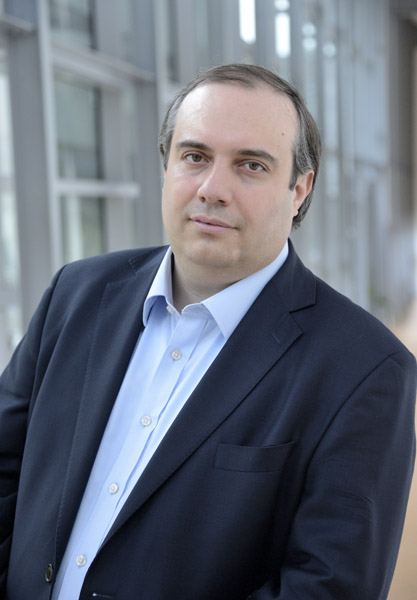
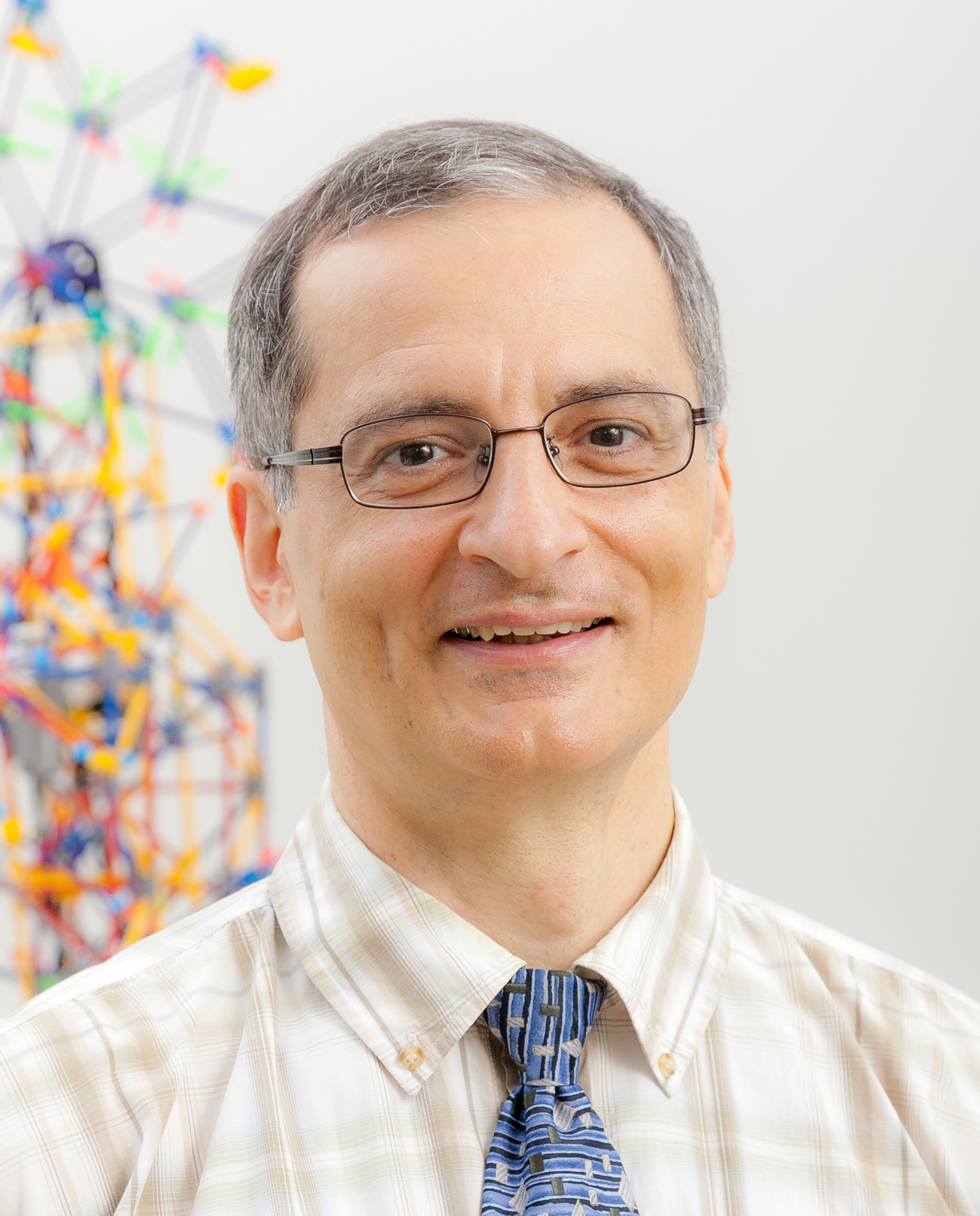
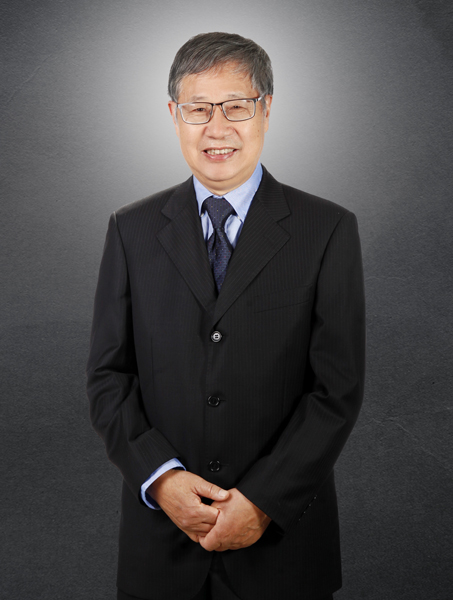
Lam James is a Chair Professor of Control Engineering at the University of Hong Kong (HKU), affiliated with the Faculty of Engineering. He holds a BSc (1st Hons.) in Mechanical Engineering from the University of Manchester, and MPhil/PhD degrees from the University of Cambridge. His academic journey includes roles as a Croucher Fellow, Lecturer at the University of Melbourne, and faculty member at City University of Hong Kong before joining HKU in 1993. Professor Lam serves as Editor-in-Chief for four international journals including IET Control Theory and Applications and Journal of The Franklin Institute . His research focuses on networked control systems, vibration control, control theory, and multi-agent systems. With 600+ peer-reviewed publications, he maintains an H-index of 102 (Web of Science) and 108 (Scopus), recognized as a Highly Cited Researcher in multiple fields. Education: BSc Manchester (Mechanical Engineering), MPhil/PhD Cambridge Editorial Roles: 20+ journals, including leadership roles since 2012 His awards include Foreign Membership of Academia Europaea (2024), National Academy of Artificial Intelligence membership (2025), and two State Natural Science Awards (2015, 2019). He is a Fellow of multiple institutions including IEEE, IMechE, and HKIE.
Andrea C. Ferrari is a Professor of Nanotechnology at the Department of Engineering, University of Cambridge, UK. He holds multiple leadership roles, including Director of the Cambridge Graphene Centre and EPSRC Centre for Doctoral Training in Graphene Technology, and serves as Science and Technology Officer for the EU Graphene Flagship. Education: PhD, University of Cambridge (2001) Laurea in Nuclear Engineering, Politecnico di Milano (1997) Ferrari’s research focuses on graphene, 2D materials, and their applications in nanotechnology, photonics, optoelectronics, and Raman spectroscopy. His work bridges fundamental studies and industrial translation, emphasizing scalable synthesis and characterization techniques. His publications span over 390 peer-reviewed articles, including groundbreaking studies on graphene photonics, quantum emitters, and advanced optoelectronic devices. These works are highly cited, with an H-index of 115 and over 116,000 total citations. Scientific Awards: IMR-Lee Hsun Lecture Award (2018) Nanosmat Award (2017) Knight Officer of the Order of the Star of Italy (2017) ERC Synergy Grant (2013) EU-40 Materials Prize (2011) Royal Society Wolfson Research Merit Award (2010) ERC Starting Grant (2008) Philip Leverhulme Prize (2005) Ferrari has secured over £60M in research funding, including leadership roles in the EU Graphene Flagship and the EU Quantum Technology Flagship. He is a Fellow of the Optical Society, Materials Research Society, Institute of Physics, and American Physical Society.
Nori Franco serves as Professor in the Department of Physics at the University of Michigan and Chief Scientist at RIKEN's Theoretical Quantum Physics Laboratory in Japan. His dual appointments reflect his significant contributions to both American and Japanese academic communities, with continuous service at Michigan since 1990 and at RIKEN since 2002. His research spans quantum information, condensed matter physics, and quantum optics, with particular focus on light-matter interactions, superconducting qubits, optomechanics, and quantum open systems. Franco's work bridges theoretical foundations with experimental implementations, especially in circuit quantum electrodynamics and quantum computing applications. Analysis of his recent publications reveals a strong emphasis on non-Hermitian quantum systems, quantum control techniques, and applications of quantum information science to fundamental physics problems. His research group consistently produces highly cited work, with publications appearing in top journals across quantum physics and condensed matter disciplines. Scientific Awards: Charles Hard Townes Medal (2024) - sole recipient for fundamental contributions to quantum optics and quantum information processing Research Doctorate Honoris Causa from University of Messina (2024) Highly Cited Researcher for eight consecutive years (2017-2024) Member of Academia Europaea (2023) Willis E. Lamb Medal (2023) for quantum electronics research Throughout his career, Franco has secured significant research funding and mentored numerous students and postdoctoral researchers. His work has received international recognition through invitations to deliver prestigious lectures including the Stanislav Ulam Lecture and Sir Nevill Mott Lecture in 2024. His research group maintains strong collaborations across multiple continents, reflecting his global impact on quantum physics. At RIKEN, Franco leads the Quantum Information Physics Theory Research Team within the Quantum Computing Center, directing cutting-edge theoretical work that complements experimental efforts in quantum computing hardware development.
Institute of Science and Technology AustriaAustria
Francesco Locatello is a tenure-track Assistant Professor at the Institute of Science and Technology Austria (ISTA), leading the Causal Learning and Artificial Intelligence lab. He is also an AI Resident at the Chan Zuckerberg Initiative. He holds a PhD from ETH Zürich, co-advised by Gunnar Rätsch and Bernhard Schölkopf. His research focuses on causal representation learning, score matching, and object-centric learning, with applications in machine learning and AI. His work has been recognized with prestigious awards, including the ICML 2019 Best Paper Award and the Hector Foundation Award (2023). Education: PhD in Machine Learning, ETH Zürich (advisors: Gunnar Rätsch, Bernhard Schölkopf) Research Interests: Causal Learning, Causal Representation Discovery, Score Matching Algorithms, Object-Centric Learning, Robust Generalization in AI, and Applications in Vision and Reinforcement Learning. Recent Work Trends: His publications emphasize causal mechanisms in neural representations, scalable causal discovery methods, and improving model generalization through latent space analysis. Recent studies explore geometric representations, mechanistic neural networks, and OOD detection using relative angles. Awards: ICML 2019 Best Paper Award Hector Foundation Award for Outstanding Achievements in Machine Learning (2023) Google Research Scholar Award (2024) Advising & Teams: Supervises a dynamic lab with students and postdocs across ISTA, ELLIS, and partner institutions. Notable advisees include Dingling Yao (ISTA), Riccardo Cadei (co-advised with Cordelia Schmid), and Marco Fumero (now a postdoc at ISTA). Collaborates with leading researchers like Arthur Gretton, Max Welling, and Volkan Cevher. Labs & Initiatives: Leads the Causal Learning and AI lab at ISTA, contributing to ELLIS programs and fostering interdisciplinary collaborations in causal AI.
Professor Marta Zofia Kwiatkowska is Professor of Computing Systems and Fellow of Trinity College at the University of Oxford, where she has held a faculty position since 2007. She previously served as Professor of Computer Science at the University of Birmingham (2001–2007), Reader and Lecturer at the University of Birmingham (1994–2001), and Lecturer at the University of Leicester (1986–1994). Her academic career began as Assistant Professor at the Jagiellonian University in Kraków, Poland (1980–1988). Education: BSc/MSc in Computer Science, Jagiellonian University, Kraków MA, University of Oxford PhD, University of Leicester Research Interests: Professor Kwiatkowska spearheaded the development of probabilistic and quantitative verification methods on the international stage. Her work bridges theory and practice through the PRISM model checker—the leading software tool in probabilistic model checking—used worldwide for research and teaching. Application domains include communication and security protocols , nanotechnology designs , power management , ubiquitous computing and systems biology . She investigates automated verification , temporal logics , semantic models for concurrency , real-time systems , and biological process modelling . Current grant funding exceeds £3.7 million from EPSRC, EU and ERC, including the prestigious ERC Advanced Grant VERIWARE. Scientific Awards & Honours: Fellow of the Royal Society Fellow of the ACM Fellow of the European Association for Theoretical Computer Science (EATCS) Fellow of the British Computer Society (BCS) Fellow of the Polish Society of Arts & Sciences Abroad ERC Advanced Grant VERIWARE (€2.046 M, 2010–2015) Top Cited Article Award, Theoretical Computer Science (2005–2010) Best Paper Award, QEST 2006 Doctoral Supervision & Grants: Professor Kwiatkowska actively supervises doctoral students (D.Phil. at Oxford) and post-doctoral researchers. She welcomes applications in areas aligned with her research interests, detailed here . Current students include Charlie Griffin, Daqian Shao, Matthew Yuan and Minghao Liu; past students and researchers number over twenty, many now in faculty or industry leadership roles. Laboratory & Teams: She leads the Oxford Quantitative Verification group within the Department of Computer Science. Ongoing projects include FUN2MODEL, ELSA, FAIR and the flagship PRISM probabilistic model checker. The group maintains strong collaborations with biological, robotics and engineering teams worldwide.
Peng Shige is a Professor of 1st class at the School of Mathematics, Shandong University, China. He has held the Distinguished Professor title under the Ministry of Education (Cheung Kong Scholarship) since 1999. His academic journey includes degrees from Shandong University (Physics diploma, 1971-1974), Paris-IX (1985), and Aix-Marseille University (PhD 1986, Habilitation 1992). Research focuses on nonlinear expectations, stochastic calculus, partial differential equations, and financial mathematics. Key contributions include foundational work on backward stochastic differential equations (BSDEs), the g-expectation framework, and the G-expectation theory extending probability axioms to nonlinear settings. These innovations have advanced stochastic control, financial risk modeling, and differential games. Honors include the 2020 Future Science Award, 2011 Princeton Global Scholar, and 2005 Chinese Academy of Sciences Academician status. He delivered a plenary lecture at the 2010 International Congress of Mathematicians. Peng's work integrates theoretical breakthroughs with applied domains like financial engineering. His research has been widely cited (~8k citations) and shaped modern stochastic analysis methodologies.
Christian Bargetz is a Professor of Functional Analysis at the University of Innsbruck, Austria, affiliated with the Faculty of Mathematics, Computer Science, and Physics (MIP). His primary research focuses on nonlinear functional analysis, Banach space theory, and distribution theory. He teaches advanced courses such as Optimization, Distribution Theory, and Functional Analysis, demonstrating his expertise in both theoretical and applied aspects of his field. Education: Completed his PhD in 2012 at the University of Innsbruck under the supervision of Norbert Ortner. His diploma thesis (2008) explored differential behaviors with Ulrich Oberst. Bargetz has held continuous academic positions since 2008, including roles as a lecturer and researcher. Research Interests: Specializes in iterative projection methods, generic properties of nonexpansive mappings, Fréchet spaces, and vector-valued distributions. His work bridges functional analysis with geometric measure theory and optimization, with applications in metric geometry and topological tensor products. Publications: Over 30 peer-reviewed articles in prestigious journals such as Canadian Journal of Mathematics , Journal of Mathematical Analysis and Applications , and Proceedings of the American Mathematical Society . Recent work includes studies on extremal nonexpansive mappings and Lipschitz function spaces. Grants & Projects: Principal investigator in FWF-funded projects on nonexpansive mappings and Banach spaces. Collaborates internationally, including with institutions in Israel, Poland, and Serbia. Teaching: Leads advanced courses in functional analysis, optimization, and distribution theory. Supervises bachelor's theses and master's projects on topics like extension operators for Lipschitz functions. Affiliations: Active member of the Functional Analysis working group and regularly participates in international conferences such as the Banach Afternoon, Winter School in Abstract Analysis, and DMV-ÖMG Annual Conferences.
Vladimir Kazeev is an Assistant Professor at the Faculty of Mathematics, University of Vienna , where he has held a faculty position since 2019. He also held previous academic appointments as a Szegő Assistant Professor at Stanford University (2017–2019), a postdoctoral researcher at the University of Geneva (2015–2017), and research positions at ETH Zurich (2011–2015), Russian Academy of Sciences (2008–2011), and Moscow Institute of Physics and Technology (2009). His research focuses on adaptive, data-driven numerical methods for differential equations, nonlinear low-parametric approximation, and numerical linear algebra. His work intersects computational mathematics, tensor methods, and high-dimensional problem-solving, particularly in the context of partial differential equations (PDEs) and stochastic modeling. The 15 most recent publications reveal a strong emphasis on quantized tensor-structured methods for PDEs, low-rank approximations, and high-dimensional numerical analysis. His research spans theoretical advancements in tensor decomposition, practical applications in chemical reaction networks, and novel discretization techniques for multiscale and degenerate diffusion problems. Scientific awards include the prestigious ETH Medal for outstanding doctoral theses (2016) Russian Academy of Sciences Medal for outstanding student works in mathematics (2011) Advising and teaching activities include supervising Jason Zhu (Stanford, 2019) and Simon Etter (ETH Zurich, 2014), as well as teaching advanced courses in tensor methods, numerical analysis, and PDEs at the University of Vienna, Stanford University, and the University of Geneva. His service to the community includes peer review for 15+ journals and co-organizing minisymposia at SIAM meetings.
Xu Jinchao is a Professor of Applied Mathematics and Computational Sciences at King Abdullah University of Science and Technology (KAUST) and the Verne M. Willaman Professor of Mathematics at Penn State University. He has held distinguished roles, including Director of the Center for Computational Mathematics and Applications at Penn State since 1997 and is an Affiliated Faculty member of the College of Information Sciences and Technology at Penn State. His research focuses on numerical partial differential equations (PDEs), multigrid methods, machine learning, finite element methods, and domain decomposition methods. He is renowned for pioneering contributions such as the Bramble-Pasciak-Xu (BPX) preconditioner, Hiptmair-Xu (HX) preconditioner, Xu-Zikatanov (XZ) identity, and Morley-Wang-Xu (MWX) element. His work bridges computational mathematics and machine learning, including the development of MgNet, which unifies multigrid methods with convolutional neural networks. Xu has been recognized with numerous awards, including Fellowships from SIAM, AMS, AAAS, and the European Academy of Sciences. Notable accolades include the 2008 DOE Top 10 Breakthroughs for his HX preconditioner and the 1995 Feng Kang Prize for Scientific Computing. He has organized over 100 conferences and serves on editorial boards of top journals such as Mathematics of Computations and Numerische Mathematik . His leadership includes directing research centers and advancing computational science through collaborative efforts.
Olivia Constantin is an Associate Professor in the Department of Mathematics at the Faculty of Mathematics. She has been actively publishing since 2008, with research contributions in functional analysis, complex analysis, and mathematical fluid dynamics. PhD in Mathematics (implied by academic position and research output) Her research primarily focuses on operator theory on function spaces, especially Fock and Bergman spaces, and the application of complex analysis to fluid flows. Key areas include Hankel operators, integral operators, embedding theorems, and the analysis of water waves and oceanic gyres. Her work combines deep analytical techniques with applications in fluid mechanics. Recent publications show a strong trend toward using complex-analytic methods to study irrotational flows, traveling water waves, and gyre dynamics, indicating an interdisciplinary approach bridging pure and applied mathematics. Her 2025 paper on velocity extrema in ocean gyre flows highlights ongoing contributions to geophysical fluid dynamics. She has led two research projects: Operatorenklassen (2012–2016) and Analysis of Operators on Spaces of Holomorphic Functions (2017–2019), demonstrating sustained research leadership. Active speaker at academic conferences, with 18 recorded scientific activities including talks from 2008 to 2023 Olivia Constantin collaborates with prominent mathematicians such as A. Aleman, J. A. Peláez, A.-M. Persson, and D. Kalaj. She has not received any explicitly mentioned scientific awards. There is no information about her advising students or managing labs or research teams.
Dr. Borivoje Dakic is an Associate Professor at the University of Vienna , affiliated with the Faculty of Physics and the Quantum Optics, Quantum Nanophysics and Quantum Information department. His research spans foundational and applied aspects of quantum theory. Operational reconstruction of quantum formalism Quantum interference as a resource for communication Tomography of large-scale quantum systems Macroscopic quantum phenomena His work includes scalable verification techniques for quantum devices and collaborations with experimental teams like Philip Walther’s and Markus Aspelmeyer’s groups. He received the Marko Jarić Prize (2025) for his contributions. Recent projects focus on diagnostics of quantum devices (FWF BeyondC SFB), information-theoretic foundations of quantum interference (FWF P36994), and local operations in quantum field theory (Cluster of Excellence QuantA). His research on quantum coherence in networks and macroscopic entanglement challenges traditional assumptions about quantum-classical boundaries. Publications emphasize resource-efficient tomography, device-independent verification, and foundational frameworks for quantum statistics and field theory. Teaching: Quantum Information (2025W), Theory in Quantum Optics (2025S), VCQ Summerschool Labs: Dakić Group at University of Vienna
Claudia Plant is a Professor in the Faculty of Computer Science , leading the Research Group Data Mining and Machine Learning . Her research focuses on clustering algorithms, data mining, and machine learning applications in areas like biomedical data, wind energy, and causality inference. She has contributed to projects such as Knowledge-infused Deep Learning for Natural Language Processing (2020–2028) and Hybrid Computational Sciences (2021–2021). Plant has authored over 160 publications, with recent work emphasizing deep learning, anomaly detection, and GPU-optimized algorithms. She actively engages in academic activities, including talks on clustering methods and interdisciplinary projects like Governing Algorithms: The Politics of Data and Decision-Making . Her research interests span clustering algorithms , graph neural networks , causality discovery , and ethical digital transformation . Notable projects include causal analysis of wind farm dynamics and AI-enhanced education tools. Plant’s work bridges computational methods with societal challenges, such as empowering marginalized communities through ethical technology adoption.
University of Applied Sciences Upper AustriaAustria
Philipp Eichmeir is a Researcher at the Research Center Wels within the Upper Austria University of Applied Sciences . His work focuses on optimal control , multibody dynamics , and adjoint methods applied to robotics and automotive systems. Expertise in adjoint gradient computation for extremal value optimization Active in automotive/mobility and smart production domains Philipp's research spans computational mathematics , robotics , and mechanical engineering , utilizing advanced numerical methods and simulation modeling for complex dynamic systems. His recent publications focus on multibody dynamics , adjoint optimization , and inequality constraint handling in control systems. Collaborative projects include IOMMS (Innovative Optimization Methods for Multibody Systems) and JR-Centre for Thermal NDE of Composites . Scientific Awards Best Paper Award (2020) Automatisierte Körperschallauswertung (2015)
Dirk Praetorius is a Professor of Numerics of Partial Differential Equations (PDEs) at the Technische Universität Wien (TU Wien) , affiliated with the Institute for Analysis and Scientific Computing (ASC) within the Faculty of Mathematics and Geoinformation . He leads the research group on Numerics of PDEs and has held various leadership roles, including Institute Director (since 2020) and head of the Numerics research area. His work focuses on numerical methods for PDEs, including Finite Element Methods (FEM), Boundary Element Methods (BEM), adaptive algorithms, and computational micromagnetics. Education and Career: Praetorius earned his Diplom in Mathematics (2000) and PhD in Applied Mathematics (2003) from TU Wien, followed by a Habilitation in Numerical Analysis (2005). He has been a faculty member at TU Wien since 2005, progressing from Assistant Professor to full Professor in 2017. He has also held visiting positions at institutions such as the University of Jyväskylä and RICAM (Linz). Research Interests: His research spans numerical analysis, adaptive FEM/BEM, a-posteriori error estimation, matrix compression, and computational micromagnetics. He has contributed to modeling spin dynamics, magnetic skyrmions, and multiscale systems. His work emphasizes efficient algorithms for large-scale problems and optimal computational complexity. Awards and Editorial Roles: Praetorius received the TU Best Teacher Award (2021) and TU Best Lecture Award (2019). He serves as Senior Editor for Computational Methods in Applied Mathematics (CMAM) and on the editorial board of Applied Numerical Mathematics (APNUM) . He co-founded the outreach initiative TUForMath to promote mathematics education. Grants and Projects: He leads or co-leads several research projects funded by the Austrian Science Fund (FWF), including the collaborative SFB "Taming Complexity in Partial Differential Systems" (2017–2025) and international collaborations with Germany. His work addresses topics like functional error estimates, nonlinear PDEs, and computational design of magnetic devices. Labs and Teams: He contributes to the ASC Institute and coordinates interdisciplinary projects involving computational physics and engineering. His team develops software tools like MooAFEM and Commics for micromagnetic simulations.
Professor Moncef Gabbouj is a distinguished academic and researcher currently serving as Professor of Signal Processing at the Department of Computing Sciences, Faculty of Information Technology and Communication Sciences, Tampere University, Finland. Previously, he held the same position at Tampere University of Technology before the merger in 2019. He has also held visiting professorships at prestigious institutions including Hong Kong University of Technology and Science, University of Southern California, and Purdue University. Ph.D. and MSc. in Electrical Engineering from Purdue University, USA (1989 and 1986) B.Sc. in Electrical Engineering from Oklahoma State University, USA (1985) Prof. Gabbouj's research spans multiple domains within signal and image processing, with a strong focus on machine learning applications. His primary research interests include artificial intelligence, machine learning, Big Data analytics, multimedia content-based analysis, indexing and retrieval, nonlinear signal and image processing, voice conversion, and video processing and coding. His work bridges theoretical advancements with practical applications across various industries, particularly in multimedia communications and biomedical applications. His extensive publication record demonstrates a clear evolution from traditional signal processing techniques toward more sophisticated machine learning and deep learning approaches. Recent work shows increasing focus on convolutional neural networks for various applications including ECG classification, video processing, financial time-series analysis, and image recognition tasks, reflecting the broader trend in the field toward deep learning methodologies while maintaining strong foundations in signal processing theory. IEEE Fellow (2011) Member, Finnish Academy of Science and Letters (2014) Knight, First Class, of the Order of the White Rose of Finland (2006) Nokia Foundation Recognition Award (2005) Nokia Foundation Visiting Professor Award (2012) Finnish Cultural Foundation for Art and Science Award (2017) TUT Foundation Grand Award (2015) Prof. Gabbouj has supervised 64 doctoral and 72 Master's theses, demonstrating his significant contribution to academic mentoring. His research has been supported by substantial funding, including research grants totaling 8.5 million Euro (2001-2015). He has served as Academy of Finland Professor during 2011-2015 and has been involved in numerous EU research projects including Horizon, ESPRIT, HCM, IST, COST, Tempus and Erasmus programs. As Editor, Guest Editor or member of the Editorial Board of 6 international scientific journals, he has significantly influenced the academic discourse in his field. He leads the Signal Analysis and Machine Intelligence (SAMI) research group at Tampere University and serves as the Finland Site Director of the NSF IUCRC funded Center for Visual and Decision Informatics. His research unit focuses on applying advanced machine learning techniques to solve complex problems in signal processing, computer vision, and multimedia analytics, with applications ranging from healthcare to multimedia communications and financial analysis.