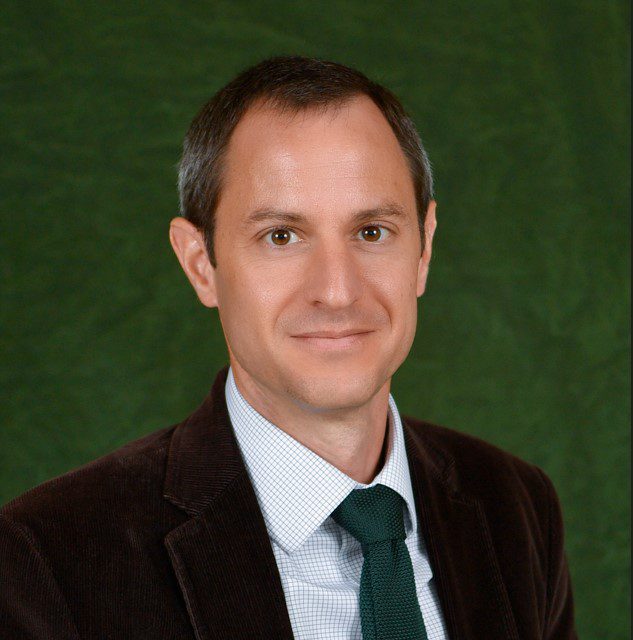
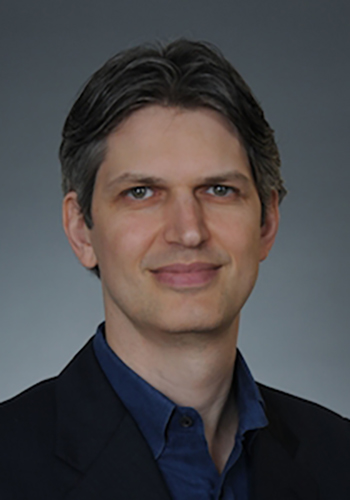
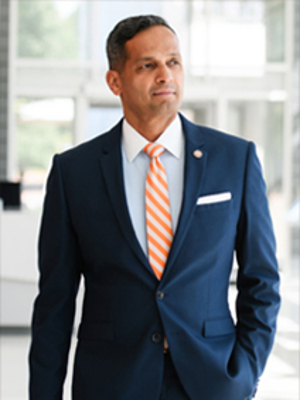
Dr. Matthew Whelan is an Associate Professor and EPIC Assistant Director of Research for Energy Infrastructure at the University of North Carolina at Charlotte. He is affiliated with the Department of Civil and Environmental Engineering and specializes in structural health monitoring, sensing technologies, and infrastructure resilience under dynamic loads. Current roles: Associate Professor, EPIC Assistant Director of Research for Energy Infrastructure Department: Civil and Environmental Engineering Research Interests: Dr. Whelan focuses on full-scale structural testing, ambient vibration monitoring, and the application of wireless sensor networks for bridge and building diagnostics. His work addresses deterioration modeling, blast and impact load responses, and digital twin integration for infrastructure management. Key Trends: Recent publications highlight advancements in concrete constitutive modeling, blast testing of cold-formed steel systems, and digital twins for construction quality monitoring. His work bridges computational simulations (e.g., LS-DYNA) with experimental validation using high-rate wireless sensors. Professional Background: He obtained all his degrees (B.S., M.S., Ph.D.) in Civil and Environmental Engineering from Clarkson University and has been a faculty member at UNC Charlotte since 2010. Dr. Whelan is a licensed Professional Engineer.
Professor Nikolaos Dervilis is a faculty member in the Department of Mechanical Engineering at the University of Sheffield, serving as Director of Research and Innovation for the School of Mechanical, Aerospace and Civil Engineering. He holds a BSc from the National and Kapodistrian University of Athens, an MSc in Sustainable and Renewable Energy Systems from the University of Edinburgh, and a PhD from the University of Sheffield in Mechanical Engineering with a focus on machine learning for Structural Health Monitoring (SHM). His research emphasizes SHM, renewable energy systems (particularly wind turbines), data analysis, nonlinear dynamics, and advanced signal processing. His work spans population-based SHM (PBSHM), machine learning applications in structural dynamics, and probabilistic modeling. Recent publications focus on active learning frameworks, Bayesian methods, and generative models for damage prognosis. He collaborates with industry on wind energy and has contributed to datasets for experimental bridges and aerospace components. Notably, he leads efforts in transfer learning and domain adaptation for heterogeneous structural populations. Research highlights include developing frameworks for risk-informed decision support, model selection via approximate Bayesian computation, and digital twin tools for engineering systems. His lab, part of the Dynamics Research Group, addresses challenges in energy systems, composite materials, and condition monitoring of critical infrastructure.
Imad Al-Qadi is the Grainger Distinguished Chair in Engineering and Director of the Illinois Center for Transportation (ICT) at the University of Illinois at Urbana-Champaign. He holds a Ph.D. in Civil Engineering from Penn State University and has held academic positions at Virginia Tech and Penn State. His research focuses on sustainable transportation infrastructure, pavement mechanics, and autonomous vehicles. Al-Qadi is a Fellow of the American Society of Civil Engineers (ASCE) and has served as Editor-in-Chief of the International Journal of Pavement Engineering . Education: B.S. (1984) Yarmouk University, M.Eng. (1986) and Ph.D. (1990) Penn State University. Affiliations: Past president of ASCE's Transportation and Development Institute, founder of the Academy of Pavement Science and Engineering. Key Projects: Illinois Autonomous and Connected Track (I-ACT), Illinois Center for Transportation, Smart Road research. His research emphasizes pavement sustainability, recycling optimization, and tire-pavement interaction. He has authored over 1,000 publications and led 180+ research projects funded by federal agencies and industry partners. Recent work includes energy harvesting from pavements and assessing impacts of electric vehicles on infrastructure. Al-Qadi has received prestigious awards including the NSF Young Investigator Award (1994) and TRB Roy W. Crum Distinguished Service Award (2023). He chairs international conferences and serves on technical committees, driving advancements in pavement science and transportation innovation.
Prof. Robert Meißner is a Professor at the Department of Surface Physics and Technology at TUHH. His research focuses on molecular simulation techniques applied to corrosion processes, energy storage systems, and nanomaterials. He develops computational tools like ELECTRODE and i-PI for electrochemical and advanced molecular dynamics simulations. His work addresses challenges in magnesium battery performance, structural health monitoring of composite materials, and interfacial phenomena in nanoscale systems. Education details are not explicitly provided in the text, but his professional trajectory reflects extensive academic and industrial experience in materials science. Research interests span from fundamental studies (e.g., water imbibition in nanopores, magnetite oxidation dynamics) to applied innovations (e.g., corrosion protection via layered double hydroxides, data-driven electrolyte design). His recent publications highlight trends in data-driven materials discovery, structural health monitoring via vibro-acoustic methods, and computational prediction of corrosion inhibitors. He collaborates on projects involving graphene-based supercapacitors, epoxy resin curing dynamics, and peptide-surface interactions. Advising and grants: While student names are not listed, his research group actively explores corrosion engineering, battery technology, and nanomaterials. Projects include EU-funded initiatives and industry partnerships. Technical expertise includes ATR-FTIR spectroscopy, molecular dynamics, and machine learning for sparse data scenarios. He leads teams focused on surface science and energy storage, maintaining lab facilities for in situ electrochemical analysis and advanced computational modeling. His work bridges theoretical insights with practical applications in materials durability and energy systems.
Daniel Rönnow is a Professor of Electronics at the University of Gävle since 2011. Previously, he held roles such as lecturer at the University of Gävle (2004–2006), researcher at Acreo (1998–2000), and postdoc at the Max Planck Institute (1996–1998). He earned his MSc and PhD in Engineering Physics from Uppsala University (1991–1996). His research focuses on RF/microwave components, including phase noise characterization, nonlinear system linearization, metamaterials, and measurement technology. Key areas include MIMO systems, thin-film optics, and seismic sensors. Recent work emphasizes ultrawideband radar for nondestructive testing and antenna design for industrial applications. Rönnow has authored/co-authored over 50 publications, with notable contributions in IEEE Transactions and other journals. His work bridges theoretical models (e.g., behavioral amplifiers) with practical applications like sensor development and radar systems.
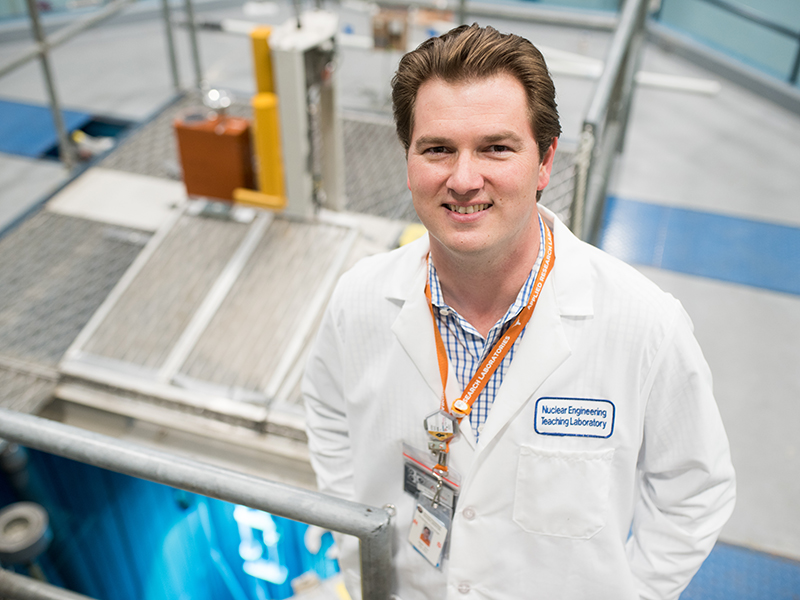
Derek A. Haas is an Associate Professor in the Walker Department of Mechanical Engineering at The University of Texas at Austin, holding the Chevron Centennial Fellowship No. 2. He serves as the Area Coordinator for Nuclear and Radiation Engineering and leads research in radiation detection for nuclear arms control, non-proliferation, and advanced reactor design. His work utilizes the university’s TRIGA Mark II reactor and involves collaborations on molten salt reactor projects. Dr. Haas is also a consultant to nuclear energy firms and co-founder of NuWells Energy. His research spans experimental physics, including fission yields, environmental radionuclide transport, and radiation detection techniques. He contributes to nuclear policy through roles in the Texas Advanced Nuclear Reactor Working Group and the Texas Nuclear Alliance. Previously, he served as a surrogate inspector for the Comprehensive Nuclear-Test-Ban Treaty and worked at Pacific Northwest National Laboratory as a Senior Research Engineer. Dr. Haas holds BS, MS, and PhD degrees from UT Austin. His awards include the Chevron Centennial Fellowship. His publications focus on reactor instrumentation, radiation detection systems, and nuclear policy analysis. He advises on nuclear energy workforce development and collaborates on international nuclear safety initiatives.
Genda Chen is a Professor and the Robert W. Abbett Distinguished Chair in Civil Engineering at Missouri University of Science and Technology. He serves as Director of the System and Process Assessment Research Laboratory, Director of the INSPIRE University Transportation Center, and Associate Director of the Mid-America Transportation Center. Dr. Chen's research spans multiple domains in civil and structural engineering with a strong emphasis on integrating advanced technologies for infrastructure assessment and resilience. His work prominently features structural health monitoring, smart infrastructure systems, bridge engineering, and the application of machine learning and computer vision techniques to civil infrastructure problems. Specific research interests include ultra-high performance concrete applications, structural connections, resilient infrastructure design for extreme events, unmanned vehicle systems for infrastructure inspection, and digital twinning of civil infrastructure. Analysis of Dr. Chen's recent publications reveals a strong trend toward integrating artificial intelligence and machine learning with traditional civil engineering practices. His work increasingly focuses on computer vision applications for infrastructure inspection, including crack detection, bridge element segmentation, and delamination detection using thermal imaging. There's also a significant emphasis on developing resilient infrastructure systems, particularly for bridges, with research on SMART shear keys for recovery after extreme events. His publications demonstrate a multidisciplinary approach that bridges civil engineering, materials science, robotics, and data science. Robert W. Abbett Distinguished Chair in Civil Engineering As Director of the System and Process Assessment Research Laboratory and the INSPIRE University Transportation Center, Dr. Chen leads research initiatives focused on transportation infrastructure assessment and innovation. His work with the Mid-America Transportation Center involves regional transportation research and technology transfer, with numerous projects addressing bridge inspection, structural monitoring, and resilient infrastructure design. Dr. Chen's laboratory work centers on structural assessment technologies, with particular emphasis on sensor development, unmanned systems for infrastructure inspection, and digital twin applications for civil infrastructure. His research team appears to be actively engaged in developing next-generation tools for bridge inspection, structural health monitoring, and resilient infrastructure design, with strong connections to transportation agencies and industry partners.
Dr. John Moore is an Assistant Professor in the Department of Mechanical Engineering at Marquette University . He leads the Computational Mechanics of Materials Laboratory, focusing on computational mechanics, materials science, and high-performance computing. His research spans alloys, polymers, and biomedical devices. Education Ph.D., Mechanical Engineering, Northwestern University (2015) M.S.E., Civil Engineering, University of Washington (2007) B.S., Aeronautical and Astronautical Engineering, University of Washington (2005) Research Focus Dr. Moore's work combines computational modeling with experimental validation to understand material behavior under extreme conditions. Key areas include: Crystal plasticity modeling of metallic alloys Nonlocal damage mechanics for fatigue prediction Dynamic spallation and porosity evolution High-throughput X-ray imaging of additively manufactured materials UV-sensitive resin material modeling Recent Publications His recent work focuses on advanced computational techniques for material failure analysis, including: Nonlocal approaches for statistical fatigue prediction Microinertia effects in spall modeling Betatron X-ray tomography applications UV resin optimization studies Phase transformation fatigue mechanisms Contact Email: john.a.moore@marquette.edu | Phone: (414) 288-6641 Location: Haggerty Hall, 225, Marquette University, Milwaukee, WI 53201
Farhad Ansari is a UIC Distinguished Professor and Christopher B. and Susan S. Burke Professor of Civil Engineering at the University of Illinois at Chicago. He is a leading specialist in monitoring the structural status of bridges, dams, buildings and tunnels, with expertise in fiber optic sensor technology for structural health monitoring systems. His work spans infrastructure monitoring projects worldwide, including assessments of the Brooklyn Bridge and monitoring systems for bridges in China. Professor Ansari received his Ph.D. in Civil Engineering from the University of Illinois at Chicago (1983), M.S. in Civil Engineering from the University of Colorado (1979), and B.S. in Civil Engineering from the University of Illinois at Urbana-Champaign (1976). Professor Ansari's research focuses on the application of optical fiber sensors for structural health monitoring of civil infrastructure. His expertise includes forensic investigations of bridges, development of monitoring systems using both discrete (FBG) and distributed sensors (BOTDA, Rayleigh, MZ), and nondestructive testing methodologies. He has consulted on structural monitoring systems for bridges worldwide, including New York's Brooklyn Bridge, Lingotto Bridge in Turin, Italy, Manhattan Bridge, and numerous bridges across the United States and China. His recent publications demonstrate a strong focus on distributed fiber optic sensing technologies for bridge monitoring, with particular emphasis on crack detection, deflection monitoring, and vehicle weight detection without traditional influence lines. His work bridges civil engineering, materials science, and optical technology to create innovative solutions for infrastructure monitoring that are fast, accurate, and affordable. Professor Ansari has received numerous honors including the Aftab Mufti Medal for achievements in civil structural health monitoring (2018), Presidential Fellow of the University of Illinois System (2019-2020), and UIC Distinguished Professor designation (2015). He also received the Nova Award from the Construction Innovation Forum in 1997. As Editor-in-Chief of the Journal of Civil Structural Health Monitoring published by Springer, Professor Ansari has shaped the discourse in his field. He has served on numerous panels including as a Panel member for the Research Assessment Exercise (RAE) in Hong Kong and as Oversight Panel member for the IDEA Program of the National Cooperative Highway Research Program. His laboratory at UIC develops strategies for forensic analysis of bridges and other infrastructure, producing graduates with unique expertise in sensors, NDT, and structural health monitoring. Professor Ansari's Structural Health Monitoring Laboratory specializes in developing monitoring systems for civil infrastructure. The lab's capabilities are unique due to their combination of structural engineering expertise with specialized knowledge in fiber optic sensors. They work on the complete lifecycle of monitoring systems from design and installation to real-time data acquisition and analysis.
Romuald Houdré is a Full Professor at the École Polytechnique Fédérale de Lausanne (EPFL), affiliated with the School of Basic Sciences (SB) and the Department of Physics (IPHYS). He holds dual roles in teaching and research within the School of Physics (SB-SPH). His research focuses on photonic crystals, optical microcavities, and their applications in biophotonics, semiconductor physics, and quantum optoelectronics. Education and Career: PhD in Condensed Matter Physics from École Polytechnique (France), 1985 Habilitation, Pierre and Marie Curie University, Paris 6, 1998 Joined EPFL in 1988, leading molecular beam epitaxy and microcavity activities Appointed Full Professor at EPFL in 2011 Research Interests: Photonic crystal cavities and optical trapping for biomedical sensing Nanophotonics and semiconductor materials (GaN-based systems) Nonlinear optics and quantum phenomena in polaritonic systems Development of lab-on-chip technologies for single-cell analysis Achievements: Over 220 publications, including 89 invited talks 5 patents and 4 book chapters High h-index (H=56 in WOS, H=68 in Google Scholar) Teaching: Optics II (Bachelor in Physics) Photonics for the Doctoral School in Photonics (EDPO) Supervised over 20 doctoral students Labs/Groups: Research conducted in the Quantum Optoelectronics Laboratory (LOEQ) and the SCI-SB-RH group, focusing on integrated photonics and biophotonics applications.
Valerio Vignoli is an Associate Professor of Electronics at the University of Siena's Department of Information Engineering and Mathematics since 2005. He holds a Laurea in Electronic Engineering (1989) and a Ph.D. in Nondestructive Testing (1994) from the University of Florence. His research focuses on chemical sensors, measurement systems, and circuits for ICT applications. He has pioneered low-cost IoT sensor solutions for environmental monitoring, healthcare, and industrial safety. Notable projects include magnetic contaminant detection systems, wearable health monitors for hazardous environments, and QCM-based biosensors for on-site diagnostics. His work integrates interdisciplinary approaches, such as applying machine learning to sensor signal processing and developing energy-efficient self-powered sensor nodes. He has contributed to advancing photoacoustic gas sensing, entropy estimation for secure random number generation, and wearables for occupational safety. His research emphasizes practical applications, including smart agriculture CO₂ monitoring and real-time worker health tracking. Dr. Vignoli has designed innovative systems like the remotely controlled test bench for ultrasonic anemometers and self-tunable chaotic TRNGs. His publications span sensor design, environmental technology, and hardware security, reflecting a commitment to bridging theoretical advancements with real-world implementation challenges.
Ada Fort is an Associate Professor in the Department of Information Engineering and Mathematics at the University of Siena, Italy. Her research focuses on advanced sensor systems, including environmental monitoring, biomedical instrumentation, and IoT applications. She holds a Laurea in Electronic Engineering (1989) and a Ph.D. in Nondestructive Testing (1992) from the University of Florence. Key research areas include wearable sensors for air quality monitoring, magnetic detection of contaminants, and QCM-based biosensors. Her work integrates machine learning for signal processing and fault detection in industrial and environmental systems. Notable projects involve self-sufficient IoT nodes powered by solar energy and low-cost sensor networks for agriculture and healthcare. Publications highlight innovations in sensor design, data imputation for environmental monitoring, and entropy-based security systems. Her contributions span interdisciplinary fields, linking engineering principles with applications in healthcare, agriculture, and climate science.
Dr. Song Yu is an Associate Professor at the Department of Engineering Mechanics , School of Civil Engineering , Shandong University , with expertise in rock mechanics, fracture mechanics, and numerical simulation techniques. Education: B.E. (1989), M.E. (1992) in Machine Building, Ph.D. (2004) in Mould & Die Engineering, Post-doctoral research (2005-07) in Die & Mold CAD at Shanghai Jiao Tong University, Visiting Scholar at UC San Diego (2008) Research focuses on rock and soil mechanics , fracture mechanics , nondestructive AE detection , and numerical simulation for rock-metal interaction. Pioneered 3D DDA method applications in rock mechanics and fluid-solid coupling models. Recent publications emphasize geotechnical stability analysis under seismic loads, coupled hydro-mechanical modeling , and hexahedral mesh algorithms in metal forming. His work bridges computational methods with practical geotechnical challenges. Notable grants: National Natural Science Foundation of China (51579140), State Key Laboratory of Geotechnical Mechanics projects Teaches advanced topics in Finite Element Method (FEM) , structural optimization, and ANSYS simulation techniques. Collaborated with institutions including Shanghai Jiao Tong University and UC San Diego.
Luca Pollonini, Ph.D. , is an Associate Professor at the University of Houston within the Cullen College of Engineering , Department of Engineering Technology. He leads the Optical Bioimaging Lab , focusing on biomedical optics, cortical hemodynamics, and tissue oxygenation monitoring. His research spans wearable sensors, traumatic brain injury (TBI) studies, and early detection of pressure ulcers via diffuse optical imaging. Education: Ph.D. in Information Engineering, University of Brescia, Italy (2004) M.S. in Electrical Engineering, University of Brescia, Italy (2000) Dr. Pollonini's research integrates near-infrared spectroscopy (fNIRS) for real-time brain imaging and biomedical signal processing to detect physiological changes. His work on portable optical sensors includes applications for heart failure monitoring, astronaut fingertip injuries, and pressure ulcer prevention. Recent publications highlight his contributions to biomedical device design , TBI cortical connectivity , and cardiac rehabilitation technologies . Awards include the 2001 Best Science Thesis (Lombardy Institute), 2004 ARVO Best Poster , and 2014 Wolff Center Innovation Patent for skin-flap blood-flow monitoring. He serves as an Assistant Affiliate Member at the Houston Methodist Research Institute (since 2014) and mentors postdoctoral and graduate fellows in NSF-funded projects involving diffuse optical imaging and wearable sensor development.
Dr. Anand K. Gramopadhye is a Professor and Dean of the College of Engineering, Computing and Applied Sciences at Clemson University. He holds dual fellowships from HFES and IISC. His research focuses on human factors in manufacturing and aviation systems, with emphasis on hybrid systems and human-machine interaction. Education: BE (Production Engineering, 1987) from Victoria Jubilee Technical Institute, MS/PhD (Industrial Engineering) from SUNY Buffalo (1989-1992) Research explores modeling humans in complex systems, trust in automated systems, and aviation maintenance training. His publications span human factors journals and aviation ergonomics conferences. He serves as Editor-In-Chief of the International Journal of Industrial Ergonomics and holds editorial roles in multiple journals. Professional affiliations include the Human Factors and Ergonomics Society, American Society for Quality Control, and Institute of Industrial Engineers.