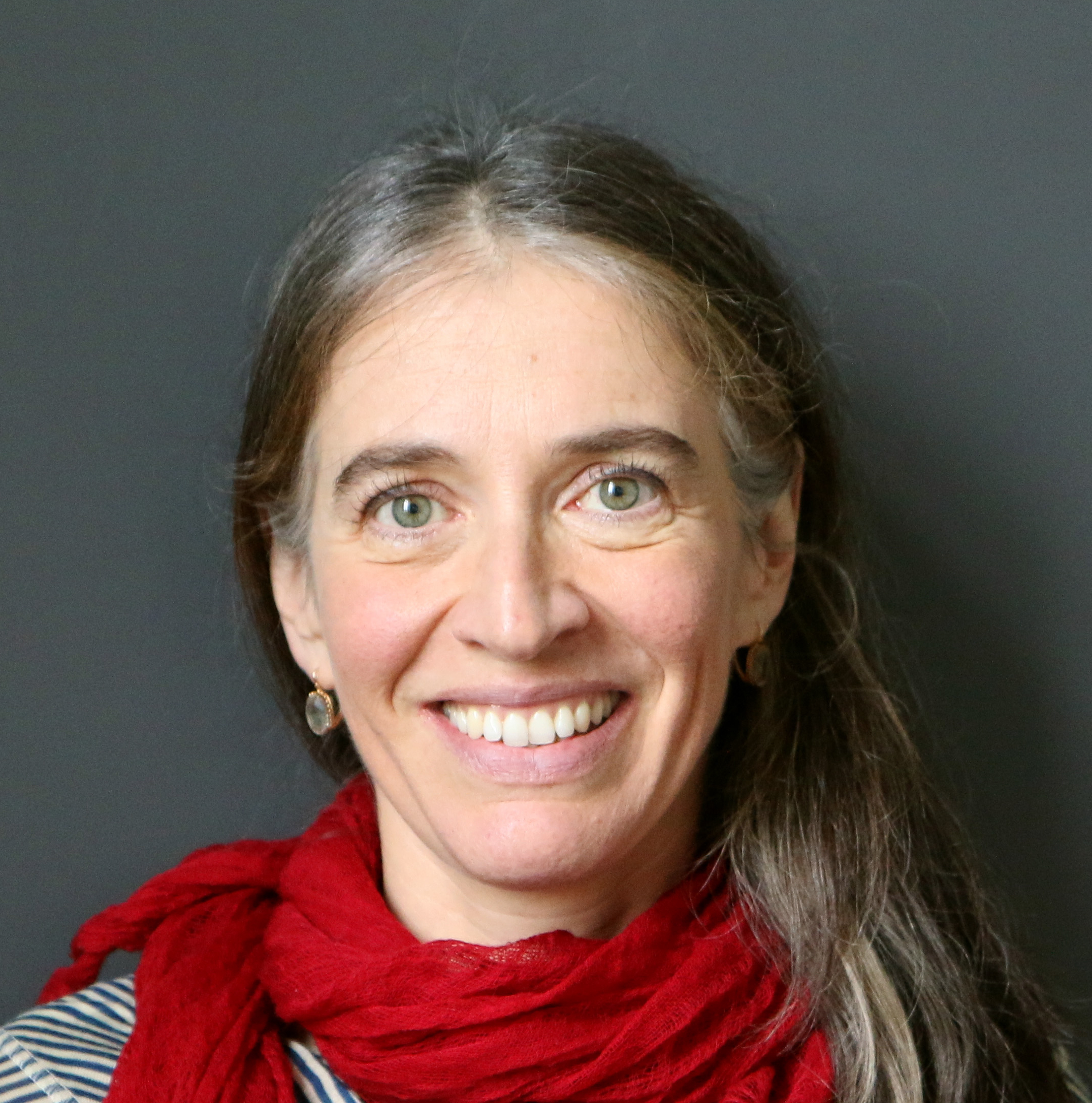
Eva Bayer Fluckiger is an Honorary Professor at the School of Basic Sciences (SB) at EPFL, Lausanne. She holds a position in the Mathematics Section (SB-DEC) and is affiliated with the Department of Mathematics. Her academic career includes a Doctorate from the University of Geneva (1978) under Michel Kervaire, postdoctoral work in Germany, France, and the U.S., and a CNRS position (1987–2001). She became a full professor at EPFL in 2001. Her research focuses on algebraic number theory, Galois cohomology, quadratic and Hermitian forms, knot theory, and applications to algebraic codes. She has held visiting positions at prestigious institutions like IAS Princeton and has been actively involved in editorial roles and international committees. Her awards include the Vacheron Constantin Prize (1983) and the Maria Sybilla Merian Prize (2001). She has advised numerous PhD students and contributed over 150 publications, with recent work emphasizing K3 surfaces, lattice theory, and algebraic geometry. She is an editor of five international journals and has held leadership roles in mathematical societies, including the European Mathematical Society.
Professor Robert G. Leigh holds a position in the Department of Physics at the University of Illinois at Urbana-Champaign, where he has been a faculty member since 1996. His research spans theoretical high energy physics, quantum gravity, and quantum information science, with significant contributions to string theory and its applications. Leigh received his bachelor's degree in theoretical physics from the University of Guelph in 1986 and completed his Ph.D. in theoretical particle physics at the University of Texas at Austin in 1991. Following postdoctoral appointments at the Institute for Particle Physics at the University of California, Santa Cruz and at Rutgers University, he joined the University of Illinois faculty. Professor Leigh's work lies at the heart of current efforts to build a fundamental theory of matter, including quantum gravity effects. His research primarily focuses on using gauge/gravity dualities (or holography) to study the physics of strongly coupled gauge theories and the strong coupling dynamics in condensed matter systems. His most notable contributions include the discovery of D-branes and orientifolds in string theory, the first example of superstring duality, and the derivation of the Dirac-Born-Infeld action describing the dynamics of D-branes. D-branes correspond to non-perturbative states unique to string theory and are analogous to magnetic monopoles in field theory. The study of D-branes is fundamental to modern string theory and its applications to particle physics, mathematics and condensed matter physics. His most recent publications demonstrate a continued focus on quantum entanglement, Chern-Simons theory, and the intersection of quantum information with gravitational physics. His work shows an evolution from fundamental string theory discoveries toward applications in condensed matter physics and quantum information through holographic methods. Fellow, American Physical Society (2007) Arnold O. Beckman Award, UIUC (December 2004) Outstanding Junior Investigator, DOE (1997-2000) Professor Leigh has taught advanced courses including Quantum Mechanics I & II, General Field Theory, Advanced Field Theory, and specialized topics in AdS/QFT Correspondence. His research program has been supported by various grants from the Department of Energy and other funding agencies. He has mentored numerous graduate students and postdoctoral researchers, contributing significantly to the next generation of theoretical physicists. His work continues to bridge multiple areas of theoretical physics, connecting string theory with quantum information science, condensed matter physics, and gravitational physics through the powerful framework of holography and gauge/gravity dualities.
Eyal Z. Goren is a Professor in the Department of Mathematics and Statistics at McGill University. His research focuses on arithmetic geometry, including studies of Shimura varieties, modular forms, complex multiplication, expander graphs, arithmetic dynamics, and mathematical cryptography. He is affiliated with the Centre Interuniversitaire en Calcul Mathématique Algébrique (CICMA), a Montreal-based group in number theory. Goren’s work bridges pure mathematics and applications in cryptography, with notable contributions to the theory of supersingular elliptic curves and cryptographic hash functions derived from expander graphs. Education : PhD in Mathematics from the Hebrew University of Jerusalem (1996), advised by Ehud De Shalit. Teaching : Teaches advanced courses such as Higher Algebra I/II, Algebra 1/2/3/4, Number Theory, and specialized topics like Unlikely Intersections. Affiliations : Active member of CICMA and the CRM (Centre de Recherches Mathématiques), collaborating on seminars and research initiatives. Research Interests : Goren’s work emphasizes the interplay between number theory and geometry, with recent focus on p-adic dynamics, canonical subgroups, and Faltings heights. His studies on Picard modular forms and Shimura varieties explore geometric structures in positive characteristic and their arithmetic implications. Publications : Over 40 articles in leading journals, including Inventiones Mathematicae , Compositio Mathematica , and Journal für die reine und angewandte Mathematik . His book Lectures on Hilbert Modular Varieties and Modular Forms is a key resource in the field. Grants and Collaboration : Engaged in collaborative projects on expander graphs, post-quantum cryptography, and the geometry of abelian varieties with complex multiplication. His research is supported by grants from the NSERC and other agencies.
Luca Vitagliano is a Full Professor of Geometry at the Department of Mathematics, University of Salerno. His research focuses on Differential Geometry and Mathematical Physics, with specializations in Poisson Geometry, Lie Algebroids/Groupoids, Differentiable Stacks, and Geometric Methods for PDEs. He has advised four PhD students, including Antonio Maglio (2025) and Pier Paolo La Pastina (2020). He teaches courses such as Geometry II, Homology and Cohomology, and Higher Geometry. His recent articles explore shifted contact structures, Nijenhuis integrations, and deformation cohomology. Education: Not explicitly stated in text Research Groups: Geometry Group at University of Salerno Affiliations: INdAM Intensive Period on Poisson Geometry, Poisson 2024 Conference His work bridges pure mathematics (homological methods, stack theory) with applications in mathematical physics, emphasizing geometric structures like Jacobi manifolds and coisotropic submanifolds. He actively participates in international conferences and publishes with collaborators globally.
Tomer Moshe Schlank is a Professor of Mathematics at the University of Chicago, conducting cutting-edge research at the intersection of Algebraic Topology and Arithmetic Geometry with significant contributions to Chromatic Homotopy Theory and Algebraic K-Theory. His research program centers on deep structural connections between homotopy theory and number theory, particularly exploring redshift phenomena, ambidexterity in K(n)-local homotopy theory, and ∞-categorical frameworks. Schlank's work bridges abstract homotopy-theoretic constructions with concrete arithmetic applications, advancing our understanding of stable homotopy categories and their algebraic representations. Analysis of his recent publications reveals a dominant trend toward chromatic redshift phenomena in algebraic K-theory, cyclotomic extensions, and ambidextrous structures in homotopy theory. His work consistently demonstrates how higher categorical methods solve foundational problems in stable homotopy theory while generating new insights for arithmetic geometry. Tomer Schlank mentors numerous graduate students including PhD candidates Arye Deutsch, Shai Keidar, Jonatan Kogan, Asaf Yekutieli, Shauly Ragimov, Jacob Lerma, and Yuqin Kew ang, along with MSc student Iyar Mazor. His extensive network of former students and collaborators encompasses Edo Arad, Netanel Stein, Yizhak Zanghi, Asaf Horev, Lior Yanovski, Shachar Carmeli, Shay Ben-Moshe, Segev Cohen, Noam Zimhoni, Ariel Davis, and Shaul Barkan. Scientific Awards: None listed in the provided information.
Konstantin Ardakov is a Tutorial Fellow in Mathematics at Brasenose College and University Lecturer in Pure Mathematics at the University of Oxford. He holds an MMath from the University of Oxford and a PhD from the University of Cambridge. His academic background includes positions at the Universities of Sheffield, Nottingham, Queen Mary University of London before returning to Oxford in 2013. Dr. Ardakov's research focuses on applying techniques from algebraic geometry and noncommutative algebra to study problems in representation theory arising from areas of algebraic number theory such as non-commutative Iwasawa theory and the Langlands programme. His work explores the geometric representation theory of p-adic groups and the development of p-adic analogues of Beilinson-Bernstein localization.
Anton Mellit is an Associate Professor in the Faculty of Mathematics at the University of Vienna. He holds a Doctor of Natural Sciences from the University of Bonn (2008) and completed postdoctoral positions at institutions including the Hausdorff Center for Mathematics (Bonn), Scuola Internazionale Superiore di Studi Avanzati (Trieste), and the Institute of Science and Technology Austria (Klosterneuburg). His research focuses on algebraic geometry, enumerative geometry, and their connections to representation theory, combinatorics, and number theory, with particular emphasis on moduli spaces, categorification, and character varieties. Education: Doctor of Natural Sciences (2008), University of Bonn Master in Applied Mathematics (2004), National Technical University of Ukraine Bachelor in Applied Mathematics (2002), National Technical University of Ukraine Research Interests: Investigates Poincaré polynomials of moduli spaces, Higgs bundles, and character varieties Studies Khovanov-Rozansky homology and torus knots Explores connections between Macdonald polynomials and affine Springer fibers Develops combinatorial approaches to algebraic geometry via Hilbert schemes and categorification Grants & Projects: ERC Consolidator Grant: Macdonald polynomials and related structures in geometry FWF Standalone Project: Refined invariants in combinatorics, low-dimensional topology, and geometry of moduli spaces Labs/Teams: Collaborates with researchers in geometric representation theory, quantum cohomology, and algebraic combinatorics, including notable co-authors like Erik Carlsson, Eugene Gorsky, and Maxim Smirnov.
Andrew Neitzke is a Professor of Mathematics at Yale University, where he holds the Kline Tower office (KT 913). His research focuses on the intersection of string theory, supersymmetric field theory, and geometry, with notable contributions to spectral networks, Hitchin systems, and quantum field theory applications. He has taught advanced mathematics courses at both Yale and the University of Texas at Austin, including Vector Analysis, Differential Geometry, and Quantum Field Theory-related topics. His work bridges theoretical physics and pure mathematics, particularly in understanding geometric structures through quantum field theory frameworks. Key contributions include studies on WKB asymptotics, Stokes phenomena, and the interplay between spectral curves and topological strings. He maintains an active role in both research and education, with a prolific publication record in high-impact journals.
Alexander Müller-Hermes is an Associate Professor at the Department of Mathematics, University of Oslo. His research focuses on quantum information theory with emphasis on mathematical questions in quantum Shannon theory and entanglement. He also explores functional analysis and convex geometry inspired by quantum phenomena. Before joining UiO, he held a Marie Skłodowska-Curie fellowship at University Claude Bernard Lyon 1 and was a postdoc at the Centre for Mathematics in Quantum Theory (QMATH), University of Copenhagen. He earned his PhD in Mathematics from Technical University Munich in 2015. Teaching includes advanced courses like Quantum Information Theory (MAT4430) and Linear Algebra (MAT1120). His research interests span quantum communication, entanglement theory, operator algebras, and functional analysis, with over 20 peer-reviewed publications since 2014. His work on fault-tolerant quantum coding and entanglement monotones has advanced theoretical foundations in quantum information. He collaborates with the Operator Algebras research group at UiO and is part of the QOMBINE project on quantum computation and many-body theory.
Lars Hesselholt is a Professor at the Department of Mathematical Sciences, University of Copenhagen, and a key member of the Copenhagen Centre for Geometry and Topology (GeoTop). His research focuses on the intersection of algebraic topology, K-theory, and arithmetic geometry, with significant contributions to topological Hochschild homology and its applications to number theory and algebraic geometry. His recent work includes advancements in Dirac geometry, connections between topological cyclic homology and the Fargues–Fontaine curve, and studies on the K-theory of division algebras over local fields. These publications highlight his role in bridging homotopy theory with arithmetic structures. Hesselholt maintains an active research profile, with 36 research outputs documented, including collaborations with mathematicians like Thomas Nikolaus, Morten Larsen, and Ayelet Lindenstrauss. His work spans topological methods in algebraic geometry, cyclic homology, and noncommutative geometry. For correspondence, he can be reached at larsh@math.nagoya-u.ac.jp or via phone at +4551319971. His office is located at Universitetsparken 5, 2100 København Ø, Denmark.
James Pascaleff is an Associate Professor in the Department of Mathematics at the University of Illinois at Urbana-Champaign (UIUC), where he has held tenured faculty positions since 2014. He specializes in symplectic geometry, Floer theory, and homological mirror symmetry. His work bridges geometric and algebraic approaches, with notable contributions to Fukaya categories and their applications in mirror symmetry. Education: Ph.D. in Mathematics, MIT (2011), advised by Denis Auroux A.B. in Mathematics, University of Chicago (2006, honors) Research Interests: Focus on symplectic topology, including Fukaya categories, Lagrangian submanifolds, wall-crossing phenomena, and their connections to algebraic geometry and mirror symmetry. Recent work explores higher categorical structures and applications of monoidal Fukaya categories. Awards & Grants: Simons Foundation Collaboration Grant (2019–2024) NSF Award (2014–2017) on symplectic cohomology and equivariant Lagrangians Paul R. Cohen Memorial Prize (2006), MIT Presidential Fellowship Teaching & Mentorship: Teaches undergraduate and graduate courses in algebraic topology, abstract algebra, and differential geometry. Advises Ph.D. students in symplectic geometry and related fields. Serves as Chair of the Undergraduate Affairs Committee and faculty liaison for student success initiatives.
Florian Naef is an Assistant Professor in the School of Mathematics at Trinity College Dublin. His research spans topological and algebraic structures with applications to mathematical physics, including string topology, Poisson geometry, and homotopy theory. Publications emphasize formality theorems, torsion invariants, and quantization methods. Recurring themes include loop spaces, deformation quantization, and connections between differential geometry and algebraic topology.
Ana Cannas da Silva is a Lecturer in the Department of Mathematics at ETH Zurich (Switzerland). She specializes in Symplectic Geometry , Geometric Topology , and Geometric Analysis . Her academic work includes research on symplectic toric manifolds, folded symplectic structures, and geometric quantization, with notable publications in journals like Pure and Applied Mathematics Quarterly and Mathematical Research Letters . Research Interests Symplectic Geometry Geometric Topology Geometric Analysis Hamiltonian Group Actions Toric Manifolds Recent Academic Activities Co-organized Symplectic Geometry Seminar (2021-2023) Supervised student theses on topics like contact toric manifolds, Hamiltonian actions, and symplectic linear algebra Authored research on Dedekind sums via Atiyah-Bott-Lefschetz theory (2023) and symplectic origami (2011) Teaching Lecturer for Mathematics I (2024), covering differential calculus and linear algebra Lecturer for Mathematics II (2024), focusing on multivariable calculus and partial differential equations Co-taught seminars on symplectic/contact geometry with Bahar Acu Academic Contributions Advised 20+ MSc/BSc theses at ETH Zurich since 2012 Co-organized conferences like D-Days (2013) and LP-60 (2023) Authored outreach book: Step by Step Symmetry (2016)
Jonathan M. Rosenberg is a Professor of Mathematics at the University of Maryland, where he holds the Ruth M. Davis Professorship. His career spans several decades with significant contributions across multiple mathematical disciplines. He maintains active involvement in departmental activities including the Geometry/Topology Seminar, Algebra/Number Theory Seminars, Departmental Colloquium, and Geometry and Physics RIT. Rosenberg's research focuses on the deep connections between topology, geometry, and mathematical physics. His primary interests include K-theory, noncommutative geometry, C*-algebras, index theory of elliptic operators, and positive scalar curvature problems. His work bridges pure mathematics with theoretical physics, particularly in string theory applications. His research has evolved to address increasingly sophisticated questions in manifold theory, pseudomanifolds, and their connections to physical theories. His recent publications show a continued focus on positive scalar curvature problems across various geometric settings including spin c manifolds, pseudomanifolds, and manifolds with boundary. Rosenberg also maintains active collaborations with leading mathematicians like Boris Botvinnik, Varghese Mathai, and others, producing work that connects topology with mathematical physics through T-duality and related concepts. His publications span prestigious journals including Journal of Geometry and Physics, Communications in Mathematical Physics, and Advances in Theoretical and Mathematical Physics. Fellow of the American Mathematical Society Ruth M. Davis Professorship at University of Maryland Co-editor of influential volumes including "Novikov Conjectures, Index Theorems and Rigidity" Author of the graduate textbook "Algebraic K-Theory and its Applications" Principal speaker at multiple NSF/CBMS Regional Conferences Rosenberg serves on editorial boards of several prominent journals including Annals of K-Theory (as Managing Editor Emeritus), Journal of Topology and Analysis (as Managing Editor), Homology Homotopy and Applications, SIGMA, and The New York Journal of Mathematics. He previously served as Secretary of the K-Theory Foundation from 2010 to 2021. His teaching responsibilities span undergraduate courses including Calculus and Differential Equations to advanced graduate courses in K-theory, Homotopy Theory, and Noncommutative Geometry. He has maintained the Novikov Conjecture home page and the UMCP Math Department electronic journals web page as significant service contributions to the mathematical community.
Dr. Koen van den Dungen is a researcher at the Mathematical Institute of the University of Bonn , specializing in noncommutative geometry and unbounded KK-theory with applications to Fredholm operators , spectral flow , index theory , and gauge theories in both classical and quantum contexts. He has organized the NSeaG2023 meeting at the Hausdorff Center for Mathematics (HCM) , which included a school on noncommutative geometry and a workshop for researchers in the field. His research spans various subfields, including operator algebras , mathematical physics , and Lorentzian geometry , with a focus on the interplay between geometry and operator theory. He has contributed to the study of Kasparov product , Dirac operators , and Callias-type theorems , particularly in relation to noncommutative spaces and quantum field theories . Dr. van den Dungen's recent publications emphasize unbounded KK-theory , index theory , and noncommutative geometry , with keywords such as K-Theory , Operator Algebras , and Mathematical Physics . He has collaborated extensively with researchers like Bram Mesland, Adam Rennie, and Walter D. van Suijlekom, and his work has been published in journals including Forum of Mathematics, Sigma , Annales Henri Poincaré , and Journal of Noncommutative Geometry . At the University of Bonn, he has taught advanced courses such as Graduate Seminar on Global Analysis and Lecture course V5B8 'Selected Topics in Analysis' , focusing on noncommutative spaces and K-theory of C*-algebras . His teaching roles include assisting in Einführung in die Komplexe Analysis and Global Analysis courses. Dr. van den Dungen has not been explicitly mentioned as receiving scientific awards, but his leadership in organizing the NSeaG2023 workshop underscores his academic influence. His email contact is kdungen@uni-bonn.de or kdungen@math.uni-bonn.de , and his office is located in Room 1.032 at the Mathematical Institute (Endenicher Allee 60) .