Tim Audas is an Associate Professor at the Department of Molecular Biology and Biochemistry, Simon Fraser University, Canada. He holds the Canada Research Chair in Cellular Stress and focuses on the role of noncoding RNAs (ncRNAs) in regulating cellular pathways, particularly through stress-induced amyloid-like protein aggregation. University: Simon Fraser University Department: Molecular Biology and Biochemistry Rank: Associate Professor Research Interests: ncRNAs act as transcription/translation factors, epigenetic regulators, and architectural molecules. They enable cells to enter a reversible proliferative arrest under stressors (heat shock, DNA damage), redirecting resources to survival pathways. His group investigates a novel extracellular stress-response pathway where ncRNAs mediate amyloid aggregation, linking it to Alzheimer’s, Parkinson’s, and prion diseases. The lab explores environmental factors driving aggregate formation/disassembly and translational applications for neurological disease treatment. Scientific Awards: Canada Research Chair in Cellular Stress Publications: Recent works highlight ncRNA-stress interplay in amyloidogenesis, evolutionary conservation of protein aggregation, and implications for neurodegenerative diseases. Articles span journals like Nature Communications , Scientific Reports , and Developmental Cell .
Sam Griffiths-Jones is a Professor of Computational Biology at the University of Manchester, affiliated with the Division of Evolution, Infection and Genomics within the Faculty of Life Sciences and Faculty of Biology, Medicine and Health. His research focuses on non-coding RNA (ncRNA) structure, function, and evolution, leveraging computational methods and databases such as Rfam and miRBase. He holds a PhD in Chemistry from the University of Nottingham (2000) and has held academic positions since 2007, including roles at the Wellcome Trust Sanger Institute. Research interests include ncRNA gene identification, microRNA regulation, and comparative genomics. Key contributions include curating miRBase and expanding Rfam to include viral and metagenomic families. His work bridges computational tools and biological insights, addressing questions about RNA diversity and evolutionary mechanisms. Education: BSc (Biochemistry) and PhD (Chemistry) from the University of Nottingham Labs/Teams: Leads a group focused on RNA computational biology and collaborates with global teams on Rfam/miRBase development Grants/Impacts: Impacts include tool development for microRNA research and pharmaceutical applications Teaching roles include Academic Admissions Officer for biosciences programs and courses in bioinformatics and genomics. Recent publications (2020-2025) highlight advancements in RNA sequencing, database resources, and functional studies in diverse organisms.
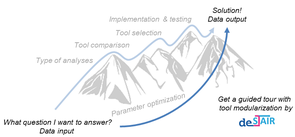
Steve Hoffmann is a Group Leader at the Leibniz Institute on Aging – Fritz Lipmann Institute (FLI) , specializing in bioinformatics and genomics. His research focuses on RNA-Seq analysis workflows, p53 gene regulatory networks, and epigenetic aging mechanisms through projects like de.STAIR (BMBF 031L016A) and DFG FI 1993/2-1 . Hoffmann collaborates with the RNA Bioinformatics Center (RBC) and integrates multiomics approaches for cancer and aging studies. Education: Not explicitly detailed but inferred from research leadership and publications. Projects: de.STAIR for RNA-Seq workflows; DFG FI 1993/2-1 dissecting p53 networks; contributions to DNA methylation, circRNA detection, and aging genomics His research interests span bioinformatics tool development, gene regulation, epigenetics, and aging. Hoffmann’s recent articles emphasize nonlinear aging patterns, chromatin remodeling, and tumor suppression mechanisms. He leads a team of doctoral candidates and postdocs, including Maja Kinga Olecka and Omid Omrani, and contributes to open-source platforms like Galaxy. Hoffmann’s work addresses gaps in p53 target gene regulation and aging-related epigenomic changes, supported by grants from the DFG and BMBF. Hoffmann’s scientific contributions include tools like metilene and DARIO for DNA methylation and ncRNA analysis. His advising involves mentoring students in computational biology and aging research. Collaborations with the Leibniz Research Alliance Resilient Ageing and Balance of the Microverse DFG Cluster of Excellence highlight his institutional affiliations. Hoffmann’s labs integrate next-generation sequencing, proteomics, and life science computing facilities at FLI, focusing on data-driven workflows for aging and cancer studies.
Jennifer Chen, MD is an Associate Professor in the Department of Medicine at the University of California, San Francisco (UCSF) School of Medicine. As a physician-scientist trained in hepatology, she leads a research program focused on developing precision approaches for diagnosing and treating hepatic fibrogenesis to improve care for patients with chronic liver disease. Her laboratory investigates molecular mechanisms of liver fibrosis with a particular emphasis on identifying novel antifibrotic targets. Dr. Chen's educational background includes: AB in Government from Harvard College (2003) MD from Harvard Medical School (2009) Residency in Internal Medicine at Brigham and Women's Hospital (2012) Fellowship in Gastroenterology and Hepatology at Massachusetts General Hospital (2016) Dr. Chen's research focuses on hepatic fibrogenesis, the molecular process leading to end-stage liver disease. Her laboratory discovered that acid ceramidase (aCDase) is a key regulator of hepatic stellate cell activation through the YAP/TAZ signaling pathway. She has validated aCDase as an antifibrotic target using genetic and pharmacological approaches across multiple mouse models of fibrosis, including those that reproduce nonalcoholic steatohepatitis (NASH). Her team has also developed gene signature scores, such as the ceramide responsiveness score, to identify patients with advanced fibrosis. Current projects include identifying upstream and downstream targets of the aCDase-YAP/TAZ pathway, developing novel aCDase inhibitors for treating hepatic fibrosis and hepatocellular carcinoma, and refining gene signature scores as biomarkers. Analysis of Dr. Chen's publication record reveals a strong focus on liver fibrosis mechanisms, particularly the role of hepatic stellate cells and ceramide signaling. Her work bridges basic science and clinical applications, with significant contributions to understanding fibrosis pathways and developing potential therapeutic interventions. She has also conducted important research on HIV/hepatitis co-infections and maternal-child health in global settings, particularly in Botswana. Dr. Chen is deeply committed to mentoring and has trained numerous postdoctoral fellows and post-baccalaureate trainees, with a focus on supporting individuals from groups historically underrepresented in science. She serves as Principal Investigator on multiple NIH-funded research projects, including two recent R01 awards in 2023 focused on ceramide signaling in fibrosis regression and developing novel acid ceramidase inhibitors. Her laboratory, the Chen Lab, is part of UCSF's Institute for Global Health Sciences and works at the highly cross-disciplinary intersection of hepatology, molecular biology, and translational medicine to address the critical unmet need for FDA-approved therapies targeting liver fibrosis.
Dr. Sandro Fernandes Ataide is a Professor at the School of Life and Environmental Sciences, University of Sydney, and leads the Ataide Lab. His research focuses on structural biology, RNA interactions, and seekRNA gene editing technology. He holds postdoctoral fellowships from ETH Zurich and UC Berkeley, and has pioneered tools like seekRNA for precise genome manipulation. Dr. Ataide teaches courses such as Proteins in Cells (BCMB2002/2902) and supervises PhD students including Jameel ABDULJALIL and Rezwan SIDDIQUEE. Education: PhD in Biochemistry from The Ohio State University (USA), under Prof. Michael Ibba. Postdoctoral work with Prof. Jennifer Doudna (UC Berkeley) and Prof. Nenad Ban (ETH Zurich). Research interests include structural and biochemical characterization of ncRNAs/RNPs, drug design targeting RNA-protein interactions, and development of seekRNA for gene editing. His lab collaborates with industry and receives grants from NHMRC, ARC, and strategic partnerships. Awards: American Heart Association Predoctoral Fellowship, Phi Kappa Phi Honors, ETH Postdoctoral Fellowship. Grants include funding for seekRNA plant genome applications (2024), SRP structural studies (2013), and equipment grants for biophysical instruments (2014-2012). Labs/Teams: Ataide Lab focuses on structural biology, RNA interactions, and seekRNA technology. Collaborates with Sydney Drug Discovery Initiative and USyd RNA Network.
Hélène Touzet is a Researcher at the University of Lille, affiliated with the CRIStAL - ESPRIT team and the BONSAI team in the field of Algorithmic Bioinformatics . Her work focuses on developing state-of-the-art algorithms in Computational Biology to analyze DNA, RNA, and protein molecules for applications in Biology and Medicine . Research Interests High-throughput sequencing Metagenomics Noncoding RNA Proteomics Algorithmic Solutions Scientific Contributions PAMPA software suite for ZooMS analysis in Archaeology SortMeRNA tool for filtering ribosomal RNA miRkwood for microRNA detection in plant genomes Porechop_ABI for adapter trimming in Nanopore reads Collaborations & Leadership Member of the scientific board of GDR Bioinformatique Moleculaire Gender equality representative for CRIStAL Active in the Institut Pasteur COMESP committee
Joseph A. Piccirilli is a Professor of Biochemistry and Molecular Biology at the University of Chicago, where he leads the Piccirilli Lab within the Biological Sciences Division. His research focuses on developing and applying chemical and biochemical tools to investigate the structure and function of noncoding RNAs (ncRNAs) and their complexes with proteins (RNPs) and small molecules. Dr. Piccirilli's research spans multiple areas of RNA biology, with particular emphasis on: Engineering fragment antigen binding (Fabs) as chaperones for RNA crystallography and cryo-electron microscopy Elucidating mechanisms of RNA function, especially catalytic RNAs (ribozymes) Structural characterization of RNA-antibody complexes Understanding RNA catalytic mechanisms through kinetic isotope effect analysis Developing nucleotide analogs from artificially expanded genetic systems His recent work has made significant contributions to understanding SARS-CoV-2 RNA structures, RNA aptamers like Pepper RNA, and various ribozymes. The Piccirilli Lab employs a diverse array of approaches including structural biology, biophysics, biochemistry, computational modeling, and chemical synthesis to address fundamental questions in RNA biology. Dr. Piccirilli has been consistently funded by the National Institutes of Health, serving as Principal Investigator on multiple major grants including the prestigious R35 "Outstanding Investigator Award" for his work on non-coding RNA structure and function. He has mentored numerous graduate students and postdoctoral researchers, including recent PhD graduates Huw Rees (Pepper RNA aptamer structure) and Christina Roman (SARS-CoV-2 Programmed -1 Ribosomal Frameshifting Element). The Piccirilli Lab maintains active collaborations with researchers across disciplines and institutions, contributing to major scientific initiatives such as the RNA-Puzzles project for RNA structure prediction.