Ali Feizmohammadi is an Assistant Professor, Teaching Stream (LTA) in the Department of Mathematics at the University of Toronto Mississauga, affiliated with the Mathematical and Computational Sciences division. His research focuses on inverse problems, partial differential equations, and geometric analysis. He holds a position emphasizing teaching excellence within the university's framework. His work addresses advanced mathematical challenges such as coefficient identification in subdiffusion equations, fractional Laplacian problems on Riemannian manifolds, and nonlinear elliptic equations on manifolds. Recent articles highlight contributions to the Calderón problem in various contexts, wave equation control, and spacetime finite element methods. No scientific awards or grants are explicitly listed in the provided information. He has not yet listed advisees in the available data. His research trends emphasize rigorous mathematical analysis of inverse problems in both classical and fractional PDE frameworks, with applications to geometric and control-theoretic questions. Dr. Feizmohammadi's work spans theoretical advancements in inverse problems, numerical methods for control systems, and the interplay between differential geometry and PDEs. His contributions address both fundamental theory and applied methodologies in mathematical physics and engineering.
Scientia Professor Gary Froyland is a Professor at the University of New South Wales (UNSW), affiliated with the School of Mathematics & Statistics. He leads the ARC Laureate Centre for Dynamical Systems and Data and holds an Einstein Visiting Fellowship from the Einstein Foundation Berlin. His academic credentials include a BSc (Hons 1, Medal) in Pure and Applied Mathematics from the University of Queensland and a PhD in Mathematics from the University of Western Australia. Professor Froyland's research spans two primary domains: dynamical systems and optimization. In dynamical systems, he investigates the interplay of probability and geometry in nonlinear and chaotic systems, employing tools from ergodic theory, functional analysis, and differential geometry. His work extends to applications in oceanography, atmospheric science, and granular flows. In optimization, he focuses on decision-making in complex systems with uncertain information, developing novel approaches in mathematical programming that have been applied to mining, logistics, and medical treatment planning. His recent publications demonstrate a strong focus on coherent structures in dynamical systems, linear response theory, and applications to geophysical phenomena. The research shows increasing interdisciplinary collaboration, particularly with climate scientists and data analysts, reflecting a trend toward applying advanced mathematical techniques to real-world problems in environmental science and engineering. J.D. Crawford Prize (2025) Elected Member of the Academy of Europe / Academia Europaea (2024) ARC Laureate Fellow (2024-2029) Fellow of the Society for Industrial and Applied Mathematics (SIAM) (2021) Fellow of the Australian Academy of Science (2020) Vice-Chancellor's Award for Teaching Excellence - Postgraduate Research Supervision (2015) Professor Froyland actively supervises PhD and honors students, with current advisees including Kevin Felipe Kühl Oliveira, Nicholas Peters, and Kathrin Völkner. His research is supported by multiple grants, including an ARC Laureate Fellowship (2024-2029) for "Breakthrough mathematics for dynamical systems and data," an Einstein Visiting Fellowship (2022-2026), and several ARC Discovery Projects. His work has practical applications in climate science, mining optimization, and medical treatment planning, particularly in radiotherapy. He leads the ARC Laureate Centre for Dynamical Systems and Data, which brings together researchers to develop new mathematical approaches for analyzing complex dynamical systems. The center focuses on creating methods to identify coherent structures in spatiotemporal data, with applications spanning environmental science, social science, health science, and engineering.
Juha Kinnunen is a Professor of Mathematics at Aalto University, affiliated with the Department of Mathematics and Systems Analysis within the School of Science. His primary research focuses on mathematical analysis, particularly nonlinear partial differential equations, harmonic analysis, and regularity theory in metric measure spaces. He holds a Ph.D. and has been an active researcher in areas such as degenerate and singular PDEs, parabolic equations, and functional inequalities. Affiliations: Aalto University, Department of Mathematics and Systems Analysis, School of Science Roles: Professor, Researcher in Analysis and Nonlinear PDEs His research emphasizes theoretical aspects of nonlinear PDEs, including regularity theory for singular/degenerate elliptic and parabolic equations, and applications in multiphase fluid dynamics and nonhomogeneous media. He has extensively studied methods involving harmonic analysis and has contributed to the understanding of reverse Hölder classes, Muckenhoupt weights, and maximal function approaches in metric measure spaces. Recent work includes studies on doubly nonlinear equations, mixed local/nonlocal operators, and the development of self-improving properties of weighted inequalities. Over 100 publications since 1994 highlight his contributions to fields like parabolic systems, quasiminimizers, and supercaloric functions.
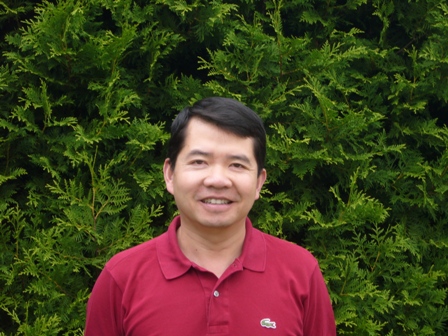
Xiaoming Hu is a Professor at the Division of Numerical Analysis, Optimization and Systems Theory within the Department of Mathematics at KTH Royal Institute of Technology (Kungliga Tekniska Högskolan) in Stockholm, Sweden. Born in Chengdu, China, he received his B.S. degree from University of Science and Technology of China in 1983, followed by M.S. and Ph.D. degrees from Arizona State University in 1986 and 1989 respectively. After serving as a research assistant at the Institute of Automation, Chinese Academy of Sciences (1983-1984), he was a Gustafsson Postdoctoral Fellow at KTH (1989-1990) before becoming a faculty member. His educational background includes: B.S. in Engineering, University of Science and Technology of China, 1983 M.S. in Engineering, Arizona State University, 1986 Ph.D. in Engineering, Arizona State University, 1989 Xiaoming Hu's research primarily focuses on multi-agent systems, nonlinear feedback stabilization, nonlinear observer design, and sensing and active perception. His work bridges theoretical control theory with practical applications in robotics and autonomous systems. He has made significant contributions to geometric control theory, mathematical systems theory, and nonlinear systems analysis and control. His research often involves developing theoretical frameworks for distributed control, formation control, and cooperative behavior in multi-robot systems. Professor Hu's publication record shows a consistent research trajectory with numerous high-impact publications in top-tier journals like Automatica, IEEE Transactions on Automatic Control, and Systems & Control Letters. His research has evolved from fundamental control theory to more applied problems in robotics and multi-agent systems, while maintaining strong mathematical foundations. Recent work shows increasing focus on safety-critical control, inverse problems in estimation, and networked systems. His scientific contributions include: Development of theoretical frameworks for multi-agent coordination and formation control Advances in nonlinear observer design for robotic systems Contributions to geometric control theory and systems theory Research on distributed estimation and control algorithms Applications of control theory to robotics and autonomous systems Professor Hu teaches several advanced courses including Mathematical Systems Theory, Geometric Control Theory, and Nonlinear Systems: Analysis and Control. He has supervised numerous degree projects at both undergraduate and graduate levels in mathematics, optimization, systems theory, and scientific computing. His teaching reflects his research expertise, providing students with both theoretical foundations and practical applications of control theory.
Prof. Dr. Rainer Nagel is affiliated with the University of Tübingen as a faculty member in the Faculty of Mathematics and Natural Sciences , specifically within the Department of Mathematics . He leads the Tübingen Functional Analysis Group (AGFA) and the AGFA-TRI-TEAM, focusing on functional analysis and its applications. Editorial roles: Journal of Evolution Equations , Semigroup Forum , Positivity , and others. Research interests: Functional analysis, operator theory, evolution equations, ergodic theory, and mathematical physics. Publications span topics like semigroups, nonautonomous Cauchy problems, and boundary feedback systems.
Dr. Arno Berger is a Professor in the Department of Mathematical and Statistical Sciences at the University of Alberta. He holds a Dipl.Ing. (ME) and Dipl.Ing. (MSc) in Mechanical Engineering and Applied Mathematics from TU Wien (Vienna University of Technology), followed by a Dr. techn (PhD) and Habilitation in Applied Mathematics from the same institution. His research focuses on dynamical systems, ergodic theory, Benford's Law, nonautonomous dynamics, bifurcation theory, applied probability, and dimensional analysis. He has held visiting positions at prestigious institutions including Georgia Tech, University of Warwick, Goethe University Frankfurt, and University of Canterbury. His recent work includes studies on Saint-Venant-Polya inequalities, planar curves with position-dependent curvature, and distributions of logarithmic functions. He co-authored the seminal book An Introduction to Benford's Law (2015), and maintains the Benford Online Bibliography. His teaching spans courses like Differential Equations and Real Variables. Dr. Berger’s research has explored Benford’s Law in diverse contexts, from stochastic processes to finite-time dynamics. His articles often bridge theoretical insights with practical applications, emphasizing the ubiquity of Benford’s Law in mathematical systems.
Yakov B. Pesin is a Distinguished Professor in the Department of Mathematics at the Pennsylvania State University, within the Eberly College of Science. He is also the Director of the Anatole Katok Center for Dynamical Systems and Geometry, a leading research hub in dynamical systems. He holds a tenured, full-time faculty position and is actively engaged in research and academic leadership. B.S./M.S. in Mathematics, Moscow State University (1970) Ph.D. in Mathematics, Gorky State University (1979) Pesin's research is centered on dynamical systems , with profound contributions to nonuniform hyperbolicity theory (known as Pesin Theory), partial hyperbolicity , ergodic theory , dimension theory , and mathematical physics . His work underpins the mathematical understanding of deterministic chaos, particularly through the Pesin entropy formula , which links entropy to Lyapunov exponents. He has also made seminal advances in the study of SRB measures, geodesic flows, and coupled map lattices. The trends in his recent publications (2016–2023) reveal a sustained focus on extending thermodynamic formalism to non-uniformly hyperbolic and partially hyperbolic systems, constructing SRB measures via geometric methods, analyzing equilibrium states , and exploring multifractal and dimensional properties of invariant measures. His collaborations span leading figures in the field, and his work appears in top-tier journals such as Annals of Mathematics , Communications in Mathematical Physics , and Ergodic Theory and Dynamical Systems . Pesin has received numerous honors, including: Fellow of the American Mathematical Society (Inaugural Class, 2012) Member of Academia Europaea (2019) Member of the American Academy of Arts and Sciences (2023) Michael Brin Prize in Dynamical Systems He has advised many PhD students and contributed significantly to mathematical education through the MASS program at Penn State. While specific student names are not listed in the provided texts, his role as a thesis advisor is explicitly mentioned. Pesin has also been invited to deliver distinguished lectures worldwide, including at SIAM and AMS meetings and the Bernoulli Lecture series. His research is supported by long-standing academic and collaborative networks rather than specific grant details mentioned here. He leads the Anatole Katok Center, which fosters interdisciplinary research in dynamics and geometry.
Lai-Sang Young is the Henry & Lucy Moses Professor of Science at the Courant Institute of Mathematical Sciences, New York University. She has held previous positions at Northwestern University, Michigan State University (1980–1986), the University of Arizona (1987–1990), and UCLA (1991–1999). She has also held visiting positions at MSRI, Universitat Bielefeld, the University of Warwick, and the Institute for Advanced Study at Princeton. Her primary research interests lie in dynamical systems and ergodic theory , particularly focusing on strange attractors , non-uniform hyperbolicity , SRB measures , entropy , and statistical properties of chaotic systems . Her work bridges pure mathematics with applications in mathematical physics , probability , and neuroscience . She has made groundbreaking contributions to the understanding of chaotic behavior in deterministic and stochastic systems. The 15 most recent publications highlight her sustained focus on non-uniformly hyperbolic systems , random perturbations , Lyapunov exponents , SRB measures , and nonequilibrium statistical mechanics . Her research spans abstract mathematical theory and its applications to physical and biological models, including neuronal networks and heat conduction. Her scientific awards include: Ruth Lyttle Satter Prize (1993) Guggenheim Fellowship (1997) Election to the American Academy of Arts and Sciences (2004) Noether Lecturer, AWM (2005) Sonia Kovalevsky Lecture, AWM-SIAM (2007) Rolf Schock Prize in Mathematics (2024) She has advised several students and collaborated with prominent mathematicians such as Qiudong Wang, François Ledrappier, and Mark Demers. Her work has been supported by prestigious fellowships and grants, though specific funding sources are not detailed in the provided text. She has not held administrative or part-time roles, and there is no indication of retirement. She leads a research group focused on chaotic and stochastic dynamical systems, contributing to both theoretical advances and interdisciplinary applications.
Prof. Karl Kunisch is the Scientific Director at RICAM (Johann Radon Institute for Computational and Applied Mathematics) and a Full Professor of Mathematics at the University of Graz, Austria. He has held academic positions worldwide, including visiting roles at Brown University, INRIA, and Technical University Berlin. His research focuses on Optimization and Optimal Control, Partial Differential Equations (PDEs), Inverse Problems, and their applications in mathematical imaging, medicine, and computational science. Education: 1975: Diploma Degree, Technical University of Graz, Austria 1975: Master Degree, Northwestern University, Evanston, Illinois, USA 1978: Ph.D. Degree, Technical University of Graz 1980: Habilitation, Technical University of Graz Research Interests: Prof. Kunisch’s work spans theoretical and applied aspects of optimal control, including stabilization of PDEs, infinite horizon control problems, and feedback design. He explores numerical methods for PDE-constrained optimization and their applications in medical imaging, cardiac electrophysiology, and machine learning. His projects also address shape optimization and mathematical models for fluid dynamics and quantum systems. Publications Trends: His recent articles emphasize feedback stabilization for nonlinear systems, sparse control approaches, and the intersection of optimal control with machine learning. Key themes include robust algorithms for uncertainty handling, efficient numerical methods for high-dimensional problems, and applications in biomedical engineering. Awards: Pro Scientia-Scholarship (1974–1977) Research Award of Theodor-Körner-Fonds (1979) Fulbright Travel Scholarship (1979/80, 1985) Max Kade Scholarship (1982–83) Japanese Society for the Promotion of Science Fellowship (1990) Christian Doppler Laboratory Fellowship (1992) Advising & Grants: Prof. Kunisch leads the Optimization and Optimal Control research group at RICAM and has directed projects on mathematical data science and inverse problems. His work involves collaborations with institutions globally and has been supported by grants from NASA, the European Union, and national funding bodies. He has advised numerous researchers, though specific student names are not listed here. Labs/Teams: Group Leader of the Group "Optimization and Optimal Control" at RICAM since 2004, contributing to interdisciplinary research in computational mathematics and its applications.
Frédéric JEAN is a Professor and Director of the Unité de Mathématiques Appliquées (UMA) at ENSTA Paris. His expertise lies in nonlinear control theory and geometric control, with applications in neurophysiology modeling. He holds an HDR (Habilitation à Diriger des Recherches) and advises doctoral students across multiple domains. Research Interests: Frédéric’s research focuses on geometric control theory, sub-Riemannian geometry, optimal control, and nonholonomic systems. His work bridges theoretical advancements with practical applications in neurophysiology and aerospace engineering. Recent studies include trajectory planning for planetary landings and robust control strategies under uncertainty. Teaching: He teaches courses on applied differential geometry, dynamical systems analysis, and control systems at ENSTA Paris. Publications: His recent work emphasizes sub-Riemannian geometry, stochastic control, and aerospace applications. Key trends include optimal control in constrained systems and geometric approaches to robotic and biological movement. Students: Co-supervised over 10 doctoral theses, including those by Clara Leparoux (2023), Meryem Kafnemer (2022), and Sofya Maslovskaya (2018). Labs/Teams: Active within the Optimization and Commande team at UMA, contributing to interdisciplinary research in control systems and applied mathematics.
Dr. Yevhen Suprunenko is a Visiting Researcher in the Department of Plant Sciences at the University of Cambridge, actively contributing to the Epidemiology and Modelling research group. His work bridges theoretical physics and plant pathology to address critical challenges in agricultural sustainability and global food security through advanced spatial modeling of disease dynamics. He holds a PhD in Theoretical Physics (Condensed Matter) from Lancaster University, UK, which provides the mathematical foundation for his interdisciplinary research in plant disease epidemiology. This unique background enables innovative approaches to complex biological systems. Suprunenko's research centers on mathematical modeling of spatial epidemic spread in agricultural systems, focusing on intrinsic scales of epidemics, cropping patterns, and host landscape structure. He investigates how spatially explicit dynamics, stochasticity, and time-variability influence pest/pathogen distribution, epidemic severity, and optimal control strategies for threats like oak processionary moth and cassava brown streak disease. His work integrates computational methods with field data to develop practical solutions for crop protection. Analysis of his publication trajectory reveals a distinct evolution from chronotaxic systems in physics (2012-2017) to advanced spatial epidemiology in plant sciences (2019-2025). Recent work demonstrates increasing sophistication in modeling landscape-pathogen interactions, with strong emphasis on analytical approximations for invasion thresholds, individual-based model frameworks, and real-world applications in crop disease management. Key thematic areas include spatial scaling effects, infection rate optimization, and data refinement techniques for improved predictive accuracy. No scientific awards were explicitly documented in the provided materials. While specific student supervision details are absent from available records, Suprunenko's collaborative publications indicate active mentorship within the Epidemiology and Modelling group. Grant funding specifics are not disclosed, though his research aligns with major initiatives in agricultural security and environmental sustainability at Cambridge. As a core member of the Epidemiology and Modelling research group, Suprunenko collaborates on projects addressing plant-pathogen interactions within the Department of Plant Sciences. His work interfaces with Cambridge's broader environmental research ecosystem including the Centre for Global Wood Security and Global Food Security IRC, contributing to interdisciplinary efforts in ecosystem conservation and agricultural resilience.
Takafumi Mase is an Assistant Professor at the Graduate School of Mathematical Sciences, University of Tokyo . His research focuses on integrable systems and discrete dynamical systems , with an emphasis on algebraic approaches to integrability criteria.
Qiudong Wang is a Professor in the Department of Mathematics at the University of Arizona, where he conducts research and teaches in the field of dynamical systems and differential equations. His work spans theoretical and applied aspects of nonlinear dynamics, celestial mechanics, and chaotic systems. Education: Ph.D., University of Cincinnati, 1994 B.S., Nanjing University, China, 1982 His research focuses on homoclinic tangles, Melnikov methods, rank one attractors, twist maps, and the N-body problem . He has made significant contributions to the understanding of chaotic behavior in both deterministic and stochastically perturbed systems. His work often involves deep analytical techniques and has been published in premier journals such as Annals of Mathematics , CPAM , and JDE . He has also contributed expository works on rank one chaos and homoclinic tangles, including a Scholarpedia article. The trends in his recent publications emphasize nonautonomous and stochastic perturbations, geometric methods in dynamical systems, and the statistical properties of chaotic attractors . His research bridges pure mathematics with applications in physics and engineering, particularly in celestial mechanics and circuit systems. Scientific Contributions: Development of high-order Melnikov methods Theory of rank one attractors with Lai-Sang Young Analysis of homoclinic tangles and their chaotic dynamics Study of the N-body problem and integral manifolds Investigations into twist maps and variational methods Wang advises students in mathematics and has mentored work in dynamical systems, though specific names are not listed. He has received recognition through publications in top journals, though formal awards are not mentioned. He teaches undergraduate courses such as Math 254 and maintains comprehensive lecture notes on dynamical systems, homoclinic tangles, and rank one chaos. He is actively involved in research and continues to publish preprints and expository works, indicating ongoing scholarly activity. He leads a research group focused on nonlinear dynamics and chaos theory, with a strong emphasis on rigorous mathematical analysis. His team explores theoretical frameworks for understanding complex dynamical behavior in both finite and infinite-dimensional systems.
Lassi Paunonen is an Associate Professor in Mathematics at the Faculty of Information Technology and Communication Sciences (ITC), Tampere University. He leads the Systems Theory Research Group, focusing on functional analysis, operator theory, and robust control of infinite-dimensional systems. His work addresses challenges in stability analysis of semigroups, output regulation, and control design for distributed parameter systems. Research Interests: Functional analysis, operator theory, infinite-dimensional linear systems, robust control, stability of strongly continuous semigroups, and mathematical systems theory. Key Contributions: Recent publications explore admissibility in infinite-dimensional systems, boundary control of heat equations, and model reduction techniques for neural ODEs. His research emphasizes theoretical foundations with applications in engineering and physics. Lassi Paunonen collaborates actively through his research group, maintaining professional presence on Systems Theory Research Group and personal website .
Aïssa Guesmia is a Maître de conférence (Associate Professor) at Université de Lorraine in Metz, France, where he has been working since 2001. He is affiliated with the Faculty of Mathematics, Computer Science and Mechanics (UFR MIM) and is a member of the Partial Differential Equations research team at IECL (Institut Élie Cartan de Lorraine). He also holds an Adjunct Professor position at King Fahd University of Petroleum and Minerals (KFUPM) in Saudi Arabia since 2019, following a two-year detachment as Associate Professor there from 2012-2014. Dr. Guesmia received his Baccalauréat in Mathematics from Technicome de M'sila, Algeria in 1991. He earned his Maitrise (equivalent to Master's) in Functional Analysis from Ferhat Abbas University in Sétif, Algeria in 1995. He then pursued his DEA (Diplôme d'Études Approfondies) and PhD in Mathematics at Louis Pasteur University in Strasbourg, France, completing his PhD titled "Contributions to exact controllability and stabilization of evolution systems" in 2000 under the supervision of Professor Vilmos Komornik. He obtained his HDR (Habilitation à Diriger des Recherches) in 2006 with the thesis "Integral inequalities and applications to the stabilization of non-dissipative distributed systems." Dr. Guesmia's research focuses on partial differential equations and control theory, particularly in the areas of existence, uniqueness and regularity of PDE solutions, observability and exact controllability, asymptotic behavior, integral inequalities, and numerical analysis. His work has significant applications in structural mechanics, including Timoshenko systems, wave equations, plate theory, and elasticity. He has developed innovative approaches for stabilizing non-dissipative distributed systems through the introduction of new integral inequalities and has made substantial contributions to understanding the stability of systems with memory effects and delays. His research bridges theoretical mathematics with practical engineering applications. Analysis of Dr. Guesmia's recent publications (2017-2020) reveals a continued focus on stability analysis of various structural systems, particularly Timoshenko beams, Bresse systems, and plate equations. His work frequently examines the effects of viscoelasticity, thermal conduction, and memory effects on system stability. A notable trend is his investigation of logarithmic nonlinearities in viscoelastic systems and the comparison of different types of heat conduction (types I and III) in thermoelastic structures. His research demonstrates both theoretical depth and practical relevance to engineering applications, with over 63 publications and extensive international collaborations. Dr. Guesmia has served as an Associate Editor for the journals Nonautonomous Dynamical Systems (since 2013) and International Journal of Mathematical Physics (since 2018). He has been a regular reviewer for Mathematical Reviews, American Mathematical Society since 2001. His professional qualifications include three successful qualifications for Professor positions (2007, 2012, and 2017) in section CNU 26. Dr. Guesmia has supervised six doctoral theses, two magister theses, and several Master's theses across multiple countries including France, Algeria, and Lebanon. He has secured eleven research projects primarily funded by institutions in Saudi Arabia and Oman. His international collaborations are extensive, with regular teaching activities in Algeria through the Algerian-French doctoral school established in 2005, where he has conducted eight intensive M2 courses. Dr. Guesmia is an active member of the Partial Differential Equations, Analysis and Applications research group at IECL. His international network includes ongoing work with King Fahd University of Petroleum and Minerals in Saudi Arabia, University of Maringà in Brazil, Lebanese University in Beirut, and multiple Algerian universities. He has participated in over 50 conferences worldwide and maintains a robust research program with continuous publications since 1997.