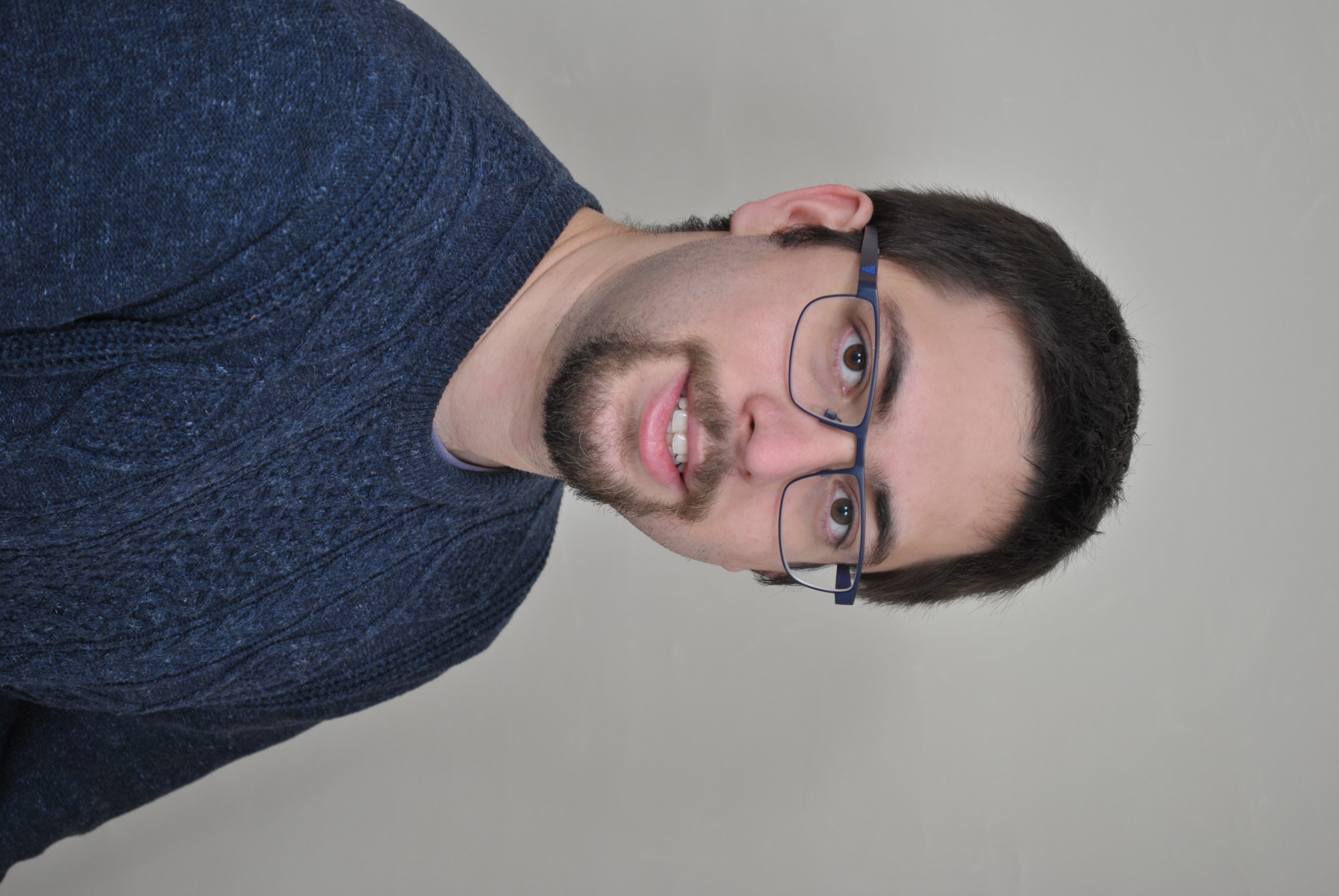
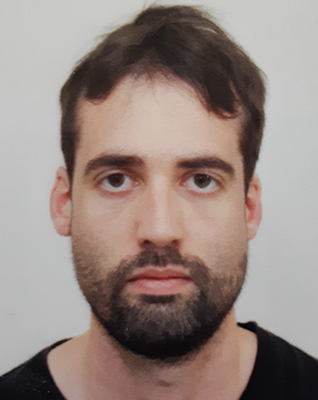
Dr. Robert Smyk is an Assistant Professor in the Department of Automation at Gdańsk University of Technology's Faculty of Electrical and Automation Engineering. His office is located on floor 112 of the faculty building, and he can be contacted via email at robert.smyk@pg.edu.pl or by phone at +48 58 347 1332. Dr. Smyk's research spans several interconnected domains: Hardware-focused computing : FPGA implementations, residue arithmetic systems, and high-speed digital converters Algorithm development : Novel approaches to residue number system operations and signal processing optimizations Engineering applications : Computer vision for infrastructure inspection, cryptographic systems, and sensor data processing His publications demonstrate consistent focus on improving computational efficiency through mathematical optimizations and hardware-aware designs. With 67 publications documented in institutional repositories, his recent works explore: algorithmic improvements for residue arithmetic (2023-2025), thresholding/edge detection for industrial vision systems (2018-2022), and hardware architectures for specialized converters. Teaching activities include extensive involvement with 163 documented educational engagements.
Constantinos Chamzas is an Assistant Professor in Robotics Engineering at Worcester Polytechnic Institute (WPI), with an affiliated appointment in the Computer Science Department. He leads the Efficient Learning for Planning and Intelligent Systems (ELPIS) Lab, which focuses on developing autonomous robotic systems capable of reasoning about and interacting with the physical world. His research interests span robotics, artificial intelligence, motion planning, machine learning, and autonomous systems, with specific focus on planning efficiency, planning under uncertainty, and planning from visual inputs. The ELPIS Lab integrates classical planning algorithms with state-of-the-art machine learning techniques to develop efficient and robust robotic agents. Prof. Chamzas has received notable recognition including an NSF-GRFP fellowship during his doctoral studies and a recent NSF-CRII grant for $175k. His publication record includes papers at top robotics conferences such as RSS, IROS, and HSCC, with research focusing on motion planning algorithms, robot learning, and efficient computational methods for robotics. His lab actively advises both Master's and Ph.D. students, with recent graduates and new students joining regularly. The ELPIS Lab maintains strong connections with the robotics research community and participates in major conferences and workshops. NSF-GRFP fellowship recipient NSF-CRII grant awardee ($175k) Multiple publications at top robotics conferences (RSS, IROS, HSCC) Prof. Chamzas received his Diploma in Electrical and Computer Engineering from Aristotle University of Thessaloniki in 2017 and completed his Ph.D. in Computer Science at Rice University in 2023 under the supervision of Dr. Lydia Kavraki and Dr. Anshumali Shrivastava.
Michał Baranowski serves as an Assistant lecturer at the Department of Microwave and Antenna Engineering within the Faculty of Electronics Telecommunications and Informatics at Gdańsk University of Technology since 2021. He is simultaneously pursuing his PhD at the same institution, demonstrating a strong commitment to both teaching and research in microwave engineering. His research interests focus on advanced microwave component design, particularly in the areas of microwave filters, design optimization techniques, electronic design automation, finite element method applications, computational electromagnetics, and specialized microwave design methodologies. His work bridges theoretical concepts with practical manufacturing approaches, especially regarding additive manufacturing techniques for microwave components. Baranowski's publication record (13 papers from 2020-2025) reveals a clear research trajectory centered on innovative approaches to microwave filter design and waveguide component manufacturing. His most recent work (2024-2025) emphasizes 3D-printed microwave components, shape deformation techniques for resonator design, and methods to improve surface quality of additively manufactured waveguides. This research has direct applications in satellite communications, Earth observation systems, and 5G technology infrastructure. His technical expertise spans computational electromagnetics, optimization algorithms, and advanced manufacturing techniques for high-frequency components, with a particular emphasis on making these technologies more accessible through open platform tools and cost-effective manufacturing approaches. As an active researcher and educator, Baranowski contributes to both the theoretical advancement and practical implementation of microwave engineering solutions, with his work appearing in prestigious journals including IEEE Microwave and Wireless Technology Letters, IEEE Transactions on Microwave Theory and Techniques, and IEEE Access.
Pierre-Antoine Thouvenin is an Assistant Professor at Centrale Lille, a prestigious engineering school within the University of Lille community in France. He is a member of the SigMA team from the CRIStAL laboratory (Centre de Recherche en Informatique, Signal et Automatique de Lille), where he conducts research on inverse problems with applications to remote sensing and astronomy. His academic journey began with an Engineering degree in Electronics and Signal Processing from INP - ENSEEIHT Toulouse in 2014, followed by a Master of Science in "Signal, Image, Acoustics" from the same institution. He completed his Ph.D. in "Signal, Image, Acoustics" from Institut National Polytechnique de Toulouse between 2014 and 2017, with research focused on modeling spatial and temporal variabilities in hyperspectral image unmixing. Thouvenin's research interests span several interconnected areas in signal processing and computational imaging. His primary focus is on solving inverse problems, particularly in the context of radio-interferometric imaging for astronomy and hyperspectral image unmixing for remote sensing applications. He has made significant contributions to developing advanced algorithms for handling spectral variability in hyperspectral data and for image reconstruction in radio astronomy. His work often combines Bayesian statistical methods with optimization techniques to address challenging high-dimensional problems. A distinctive aspect of his research is the development of distributed and parallel computational methods that enable processing of extremely large datasets that would be intractable with conventional approaches. An analysis of his recent publications reveals a strong trend toward developing distributed and parallel computational methods for large-scale inverse problems. His work increasingly integrates machine learning approaches, particularly neural networks, with traditional signal processing techniques. There's a clear progression from theoretical developments in hyperspectral unmixing to practical applications in astronomy, particularly through his involvement in the ORION-B project where he applies statistical methods to infer physical conditions in star-forming regions. His most recent work demonstrates sophisticated integration of spatial regularization techniques with Bayesian inference for astrophysical parameter estimation. Prix Léopold Escande from Institut National Polytechnique de Toulouse (2017) - awarded to the best PhD theses defended at INPT Prix de l'Institut National Polytechnique de Toulouse (2014) - awarded for outstanding academic achievement during engineering studies Thouvenin is actively involved in mentoring the next generation of researchers. He currently co-supervises the PhD thesis of Pierre Palud on "Statistical methods for model inversion and spatial distribution of physico-chemical properties of the molecular cloud Orion B" as part of the CNRS 80|Prime project OrionStat. His research is supported through various academic collaborations and projects, including the ORION-B project led by Jérôme Pety, which involves molecular line observations from the IRAM-30m Large Program. He has established productive international collaborations, particularly with researchers at Heriot-Watt University in Edinburgh where he worked as a Research Associate from 2017-2019. Thouvenin is a key member of the SigMA team within the CRIStAL laboratory, a joint research unit between Centrale Lille, INRIA, and University of Lille. His work often intersects with the ORION-B project, where he collaborates with astrophysicists to develop statistical methods for inferring properties of Galactic and extra-galactic star forming regions. This interdisciplinary environment fosters innovation at the intersection of signal processing, statistics, and astronomy. He has developed expertise in translating complex statistical methodologies into practical computational tools that address real-world challenges in both remote sensing and astronomical imaging.
Prof. Jonathan J. Wylie serves as a Professor at City University of Hong Kong, holding a PhD from King's College, University of Cambridge, UK. His academic trajectory includes a Junior Research Fellowship at King's College, followed by research appointments at Cornell University, Woods Hole Oceanographic Institution, and the University of Toronto prior to his current position. His research expertise spans fluid mechanics , granular materials , suspension mechanics , and mathematical modeling of geophysical systems , with seminal contributions to viscous thread dynamics and coupled partial differential equations. His interdisciplinary work bridges industrial applications with fundamental physics. Analysis of his recent publications reveals dominant research threads in granular flow intermittency , thermal effects in viscous filaments , and mathematical neuroscience . His methodology consistently combines asymptotic analysis with computational modeling to address complex multiphysics problems, demonstrating strong cross-disciplinary collaboration between physics, engineering, and life sciences. His distinguished scientific recognition includes: Junior Research Fellowship from King's College, Cambridge Wylie has secured major research funding from the National Science Foundation (USA), Australian Research Council, and Hong Kong's Research Grant Council. As associate editor of the IMA Journal of Applied Mathematics , he actively shapes scholarly discourse. His extensive publication record in high-impact journals like Journal of Fluid Mechanics and Physical Review E demonstrates sustained research productivity without explicit mention of advisees in available materials. While specific laboratory facilities aren't documented, his international collaborations with institutions across North America, Europe, and Asia indicate participation in global research networks addressing industrially relevant fluid dynamics challenges.
Edmund Chadwick is a Reader in Applied Mathematics at the University of Salford, serving as Line Manager for Mathematics since 2025 and previously as Head of Mathematics since 2010. He is affiliated with the School of Science, Engineering & Environment and contributes to the Centre for Future Engineering. His academic career spans over three decades with significant contributions to fluid dynamics and mathematical physics. Dr Chadwick earned his B.Sc. Hons. in Maths and Physics from the University of Manchester in 1988, followed by a Ph.D. in Applied Mathematics from the same institution in 1992. He holds the prestigious designation of Fellow of the Institute of Mathematics and its Applications (FIMA). His research focuses on fundamental fluid dynamics problems, particularly the Navier-Stokes equations, boundary integral methods, and mathematical modeling of fluid flow. His most significant contribution is an Existence and Smoothness proof of the Navier-Stokes problem, one of the Clay Mathematics Institute's Millennium Prize Problems, published in 2023. He has also developed novel approaches including the NSlet representation for Navier-Stokes equations and has made contributions to slender body theory and boundary layer flow. His recent publications demonstrate a strong focus on boundary integral methods for fluid dynamics problems, with particular emphasis on the Navier-Stokes equations. His work spans theoretical developments, numerical implementations, and experimental validations, showing a comprehensive approach to fluid dynamics research with applications in aerospace engineering, robotics, and climate modeling. Catherine Richards best paper Prize in IMA journal Mathematics Today Bill Morton young researcher prize for novel Global Climate Model Fellow of the Institute of Mathematics and its Applications (FIMA) Dr Chadwick has supervised 12 postgraduate students (11 PhD and 1 MPhil) and currently mentors an MRes student working on General Relativity. He has secured significant research funding as Principal Investigator on 14 separate projects with grants from EPSRC, STFC, TSB, HESTEM, IMA, and NCTL, and is named in 19 separate grant awards, including an ongoing EPSRC grant verifying his Navier-Stokes formulation for industry applications. Dr Chadwick leads the fluid dynamics research group within the Centre for Future Engineering, focusing on developing novel mathematical approaches to fluid flow problems with applications in aerospace, robotics, and environmental modeling. He has organized the United Kingdom Boundary Integral Methods Conference and serves as University of Salford representative for the Head Of Department Of Mathematics Sciences (HODOMS) and Isaac Newton Institute (INI).