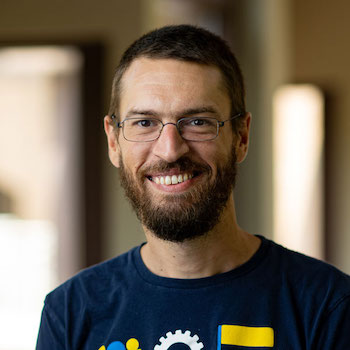
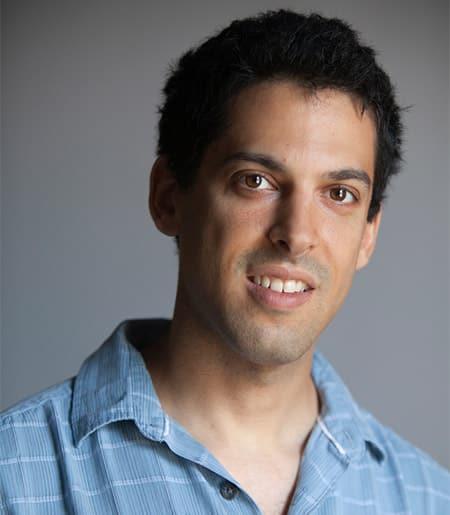
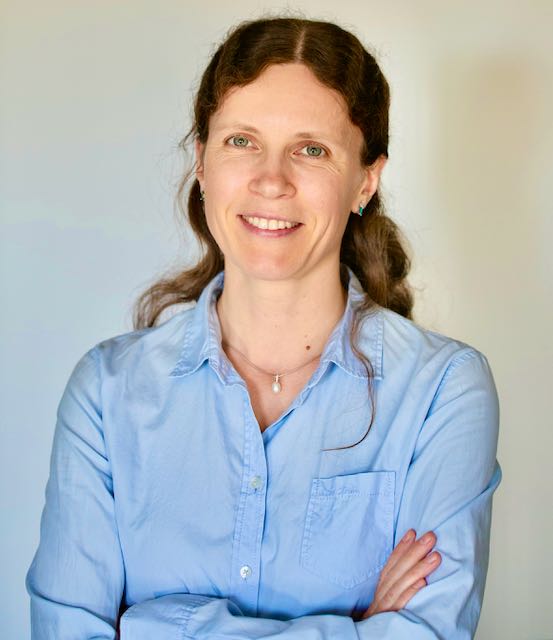
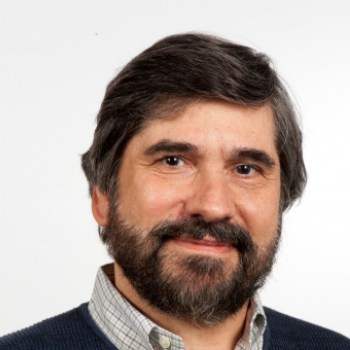
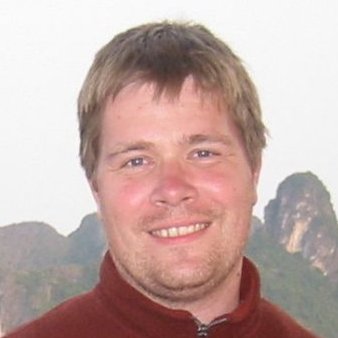
Sean O'Rourke is an Associate Professor in the Department of Mathematics at the University of Colorado Boulder. His research focuses on probability, random matrix theory, and random polynomials. He has organized multiple workshops and minisymposia, including events at the Canadian Discrete and Algorithmic Mathematics Conference (CanaDAM) and ICERM, demonstrating his active role in academic community engagement. His research spans spectral properties of random matrices (e.g., singular values, elliptic matrices, Laplacian matrices), probabilistic behavior of polynomial roots under operations like differentiation and summation, and applications of free probability theory. Recent work includes universal behavior in eigenvalue gaps, non-Hermitian matrix controllability, and asymptotic refinements of classical theorems for random polynomials. Publications highlight collaborations with researchers such as Andrew Campbell, Kyle Luh, David Renfrew, and Van Vu. His work appears in leading journals like Annals of Probability , Electronic Journal of Probability , and Transactions of the American Mathematical Society , covering topics from Gaussian fluctuations to low-rank perturbations and noncommutative harmonic analysis.
Albert S. Berahas is an Assistant Professor in the Department of Industrial and Operations Engineering at the University of Michigan's College of Engineering. He joined the university in 2020 after completing postdoctoral positions at Lehigh University (2018-2020) and Northwestern University (2018). He holds a PhD in Engineering Sciences and Applied Mathematics from Northwestern University (2018), an MS in Applied Mathematics from Northwestern (2012), and a BSE in Operations Research and Industrial Engineering from Cornell University (2009). His research focuses on designing, developing, analyzing, and implementing algorithms for solving large-scale nonlinear optimization problems. His work spans multiple sub-fields including constrained optimization, optimization for machine learning, stochastic optimization, derivative-free optimization, and decentralized optimization. He is affiliated with the Michigan Institute for Data Science (MIDAS), the Michigan Institute for Computational Discovery and Engineering (MICDE), and the Michigan Center for Applied and Interdisciplinary Mathematics (MCAIM). Berahas has received numerous honors including the Charles Broyden Prize (2025), the Air Force Office of Scientific Research Young Investigator Program award (2025), the IISE Operations Research Division Teaching Award (2024), and the North Campus Dean's MLK Spirit Award for Community Building & Impact (2024). His recent publications demonstrate strong activity in developing novel optimization frameworks with theoretical guarantees for challenging problem settings. His research has been supported by significant grants including from the Office of Naval Research (ONR) and the Air Force Office of Scientific Research. He actively mentors PhD students and has successfully advised Jiahao Shi, who defended his dissertation in March 2025 and joined Amazon. Berahas is also engaged in community outreach, particularly through initiatives like Engage Detroit that aim to empower Detroit's next generation of engineers.
Lionel Levine is a Professor in the Department of Mathematics at Cornell University, affiliated with the College of Arts and Sciences. His academic research focuses on abelian networks, interacting particle systems, and the emergence of complex patterns from simple rules. He has held prestigious fellowships, including the Simons Fellowship and Sloan Research Fellowship, and has been honored with an endowed professorship. Levine's work bridges probability theory, combinatorics, and statistical physics, with notable contributions to the study of sandpile models and internal diffusion-limited aggregation (IDLA). Education: Ph.D. in Mathematics (2007), University of California, Berkeley. Research Interests: Applied Mathematics, Combinatorics, Probability, Abelian Networks, Sandpile Models, and their intersections with computer science and statistical physics. His research explores how local rules generate large-scale structures, such as in abelian networks and sandpile models. Awards and Honors: Simons Fellowship, Sloan Research Fellowship, Endowed Professorship in the College of Arts and Sciences. Teaching: Courses include Probability Theory (MATH 6710/6720), Topics in Probability: Math for AI Safety (MATH 7710), and undergraduate mathematics courses like Strategy, Cooperation, and Conflict (MATH 1340). Grants and Funding: Supported by the National Science Foundation (NSF), Simons Foundation, Sloan Foundation, and Institute for Advanced Study. Collaborations: Collaborates with prominent researchers such as Yuval Peres, Cris Moore, and Jim Propp. His work has been published in leading journals like the Annals of Probability and Duke Mathematical Journal. Future Work: Continues investigating AI safety, causal models, and multi-agent learning, including research on mathematical frameworks for transformer circuits and hidden incentives in AI systems.
Professor Gareth Roberts is a Professor in the Department of Statistics at the University of Warwick. His research focuses on Computational Statistics, particularly MCMC methods, stochastic processes, Bayesian inference, statistical privacy, and applications in infectious disease modeling and sports analytics. He leads the OCEAN project with Eric Moulines, Michael Jordan, and Christian Robert, and teaches the ST923 lecture course on advanced statistical methods. His research interests include developing efficient sampling algorithms (e.g., MCMC, PDMP), statistical methodology for missing data, and privacy-preserving statistical techniques. Recent work emphasizes high-dimensional Bayesian models, quasi-stationary Monte Carlo, and scalability of computational methods. Publications span innovations in MCMC theory, applications to epidemiology, and sports probability modeling. His work on the Zig-Zag process and stereographic MCMC demonstrates contributions to PDMP-based sampling. Collaborations include interdisciplinary projects on bacterial transmission dynamics and statistical methods for big data. He actively participates in academic leadership, including organizing courses and contributing to the statistical community through projects like OCEAN. Contact: Gareth.O.Roberts@warwick.ac.uk .
Prof. Vladimir Spokoiny is a leading figure in stochastic algorithms and nonparametric statistics at the Weierstrass Institute for Applied Analysis and Stochastics (WIAS) and Humboldt University of Berlin . His work bridges mathematical statistics with practical applications in finance, medicine, and machine learning. Born in 1959 in Moscow, USSR PhD from Lomonosov Moscow State University (1988) Habilitation from Humboldt University (1996) Head of WIAS research group since 2000 Professor at Humboldt University since 2002 Spokoiny's research focuses on adaptive nonparametric methods, high-dimensional data analysis, and statistical finance. His innovations in local homogeneity testing and propagation-separation methods have advanced volatility modeling, image analysis, and manifold learning. He employs Bayesian optimization frameworks and stochastic control techniques for financial instrument pricing. Recent scientific contributions include generalized bootstrap procedures for Bures-Wasserstein barycenters (2024), dimension-free Laplace approximation bounds (2023), and structure-adaptive manifold estimation (2022). His 19+ PhD students and editorial roles in top journals like The Annals of Statistics demonstrate sustained academic impact. International Statistical Institute member American Statistical Association fellow Institute of Mathematical Statistics member Bernoulli Society member
Qin Li is an Associate Professor in the Mathematics Department at the University of Wisconsin-Madison. She holds affiliations with the Wisconsin Institutes for Discovery and serves as a senior PI at the Institute for Foundations of Data Science. Her research focuses on numerical analysis, scientific computing, and inverse problems, with a strong emphasis on kinetic theory and multiscale PDEs. Her work spans computational methods for inverse transport and radiative transfer equations, Bayesian approaches in optical tomography, and optimization techniques for solving stochastic and deterministic PDEs. Recent publications highlight applications of diffusion models, Wasserstein gradient flow, and random sampling in inverse problems, as well as control theory for Vlasov-Poisson systems and reconstruction of chemotaxis kernels. She leads a research group within the Mathematics Department and has received funding from the National Science Foundation (NSF), the Office of Naval Research (ONR), and the Wisconsin Alumni Research Foundation (WARF). Her lab, Kinetic At Madison, explores nonlinear hyperbolic PDEs and their applications. She also contributes to teaching as a TA Supervisor.
Natalia Nolde is a Professor in the Department of Statistics at the University of British Columbia, Faculty of Science. Her research focuses on multivariate extreme value theory , probabilistic modeling , and applications in quantitative risk management across finance, insurance, hydrology, and geosciences. Her work explores non-classical approaches to multivariate extremes, particularly through limit set geometry and asymptotic dependence structures , offering novel insights into tail dependence and risk assessment. Recent publications highlight her expertise in copula-based risk modeling , financial stress testing , and geohazard prediction . Current students include: Daniel Hadley Jonathan O.K. Agyeman
Jaouad Mourtada is an Assistant Professor in the Department of Statistics at ENSAE/CREST, École Nationale de la Statistique et de l'Administration Économique since September 2020. Previously, he was a postdoctoral researcher at the Laboratory for Computational and Statistical Learning at the University of Genoa (2019-2020). He completed his PhD in Statistics at École Polytechnique under the supervision of Stéphane Gaïffas and Erwan Scornet. His educational background includes a Master's degree in Mathematics with specialization in Probability and Random Models (2016), a Master's degree in Fundamental Mathematics (2015), and a Bachelor's degree in Mathematics from Pierre and Marie Curie University and École Normale Supérieure (2013). Dr. Mourtada's research focuses on the intersection of statistics and learning theory, with particular interest in high-dimensional statistics, online learning, and density estimation. His work explores the complexity of prediction and estimation problems through rigorous theoretical analysis. His research spans statistical learning theory, robust statistics, and the theoretical foundations of machine learning algorithms. His publication record since 2017 demonstrates consistent contributions to top-tier venues in statistics and machine learning, with recent work focusing on universal coding, aggregation methods, robust regression, and the theoretical analysis of kernel methods and random forests. His research shows a progression from online learning and expert aggregation to more complex statistical learning problems involving high-dimensional data and model misspecification. He teaches courses including Statistical Learning Theory for Master 2 Data Science students and Probability Theory at ENSAE. His teaching spans theoretical foundations of machine learning and core probability concepts for advanced statistics students.
Christos G. Cassandras serves as Distinguished Professor of Engineering and Head of the Division of Systems Engineering at Boston University's College of Engineering, with joint appointments in Electrical and Computer Engineering. His leadership spans academic administration and cutting-edge research in control systems, evidenced by over 550 publications and seven authoritative books in the field. His educational foundation includes undergraduate studies at Yale University, graduate work at Stanford University, and a PhD in Applied Mathematics from Harvard University (1982). This multidisciplinary background underpins his research approach. Dr. Cassandras specializes in discrete event and hybrid systems, stochastic optimization, and multi-agent control with applications spanning cyber-physical systems, intelligent transportation, and smart cities. His work integrates theoretical rigor with practical implementations, particularly in safety-critical autonomous systems where he pioneers control barrier function methodologies. Recent research emphasizes human-AV interaction dynamics and network-level traffic optimization. Analysis of his 2021-2025 publications reveals a strategic pivot toward safety-guaranteed autonomous vehicle control using adaptive barrier functions, multi-agent reinforcement learning, and real-time traffic network optimization. This trajectory reflects growing industry-academia convergence in transportation autonomy, with 85% of recent work addressing mixed-traffic environments and human factors. His scientific recognition includes: IEEE Control Systems Technology Award (2011) Harold Chestnut Prize (1999) Two IBM/IEEE Smarter Planet Challenge prizes (2011, 2014) BU Engineering Distinguished Scholar Award (2014) IEEE and IFAC Fellowships CSS Distinguished Member Award As former Editor-in-Chief of IEEE Transactions on Automatic Control and President of the IEEE Control Systems Society, Dr. Cassandras has shaped global research directions. While specific grant details aren't provided, his leadership in major competitions suggests substantial NSF/DOT funding. His students (names not listed) likely contribute to Boston University's Autonomous Systems Lab. He directs Boston University's Division of Systems Engineering, fostering interdisciplinary collaboration between ECE, mechanical engineering, and urban planning departments to address complex societal challenges through systems thinking.
Cynthia Vinzant is an Associate Professor in the Department of Mathematics at the University of Washington. Her research focuses on real algebraic geometry, combinatorics, and convex optimization, with applications to hyperbolic polynomials, determinantal representations, and convex algebraic geometry. She collaborates extensively on projects involving numerical ranges, quasicrystals, and geometric optimization problems. Research Interests: Real algebraic geometry and its connections to combinatorics and optimization Hyperbolic and log-concave polynomials Convex geometry and spectrahedra Applications in matrix analysis and statistical mechanics Her work spans theoretical advances in algebraic geometry and computational methods, including contributions to the study of principal minors, tropical geometry, and phase retrieval problems. Recent publications highlight her focus on Fourier quasicrystals, higher-rank numerical ranges, and combinatorial structures in matroids. Publications: Over 30 peer-reviewed articles, including influential works on quartic curves, determinantal representations, and log-concave polynomials. Grants & Collaborations: Active in interdisciplinary research, with projects supported by NSF and collaborations in algebraic combinatorics and geometric optimization.
Arya Mazumdar is a tenured Professor of Data Science and Computer Science at the Halıcıoğlu Data Science Institute (HDSI) , part of the School of Computing, Information and Data Sciences at the University of California San Diego (UCSD). He also holds affiliations with the Computer Science and Engineering and Electrical and Computer Engineering departments at UCSD. Previously, he was an Assistant and Associate Professor at the University of Massachusetts Amherst (2015–2021), and held a postdoctoral position at MIT (2011–2012). He is an IEEE Distinguished Lecturer (2023–2024) and recipient of the NSF CAREER Award (2015–2020). Education : PhD in 2011 from the University of Maryland, College Park (advisor: Alexander Barg) Postdoctoral scholar at MIT (2011–2012, advisor: Greg Wornell) Internships at IBM Almaden (2010) and HP Labs (2008) Research Interests : Focus on algorithmic and statistical aspects of machine learning, error-correcting codes, optimization, signal processing, and distributed systems. Key areas include clustering algorithms, compressed sensing, federated learning, and information-theoretic foundations of data science. He has contributed to theoretical guarantees for learning mixtures, distributed optimization, and robust coding schemes. Recent Articles Trends : Recent work emphasizes distributed optimization (e.g., vqSGD, Byzantine-resilient algorithms), sparse recovery in high-dimensional models, and theoretical foundations of learning (e.g., support recovery, parameter estimation). His research bridges information theory and machine learning, with applications in storage systems and large-scale data processing. Awards & Roles : 2020 EURASIP JASP Best Paper Award Co-PI and co-leader of the NSF AI Institute for Learning-Enabled Optimization at Scale Editorships: IEEE Transactions on Information Theory and Foundations and Trends in Communications Grants & Labs : Leads the EnCORE Institute as UCSD Site Lead, focusing on theoretical perspectives of large language models and computational-statistical gaps. Active in organizing workshops on topics like LLMs, clustering, and distributed optimization. His research is funded by NSF and industry collaborations. Teaching : Courses include Algorithms for Data Science , Probability and Statistics for Data Science , and Coding Theory , emphasizing foundational theory and scalable methods.
Dr. Yongchao Huang is a Lecturer (Assistant Professor) in the School of Natural and Computing Sciences at the University of Aberdeen, where he has been employed since August 2023. He also holds affiliations with the University of Oxford and the University of Cambridge through past postdoctoral and collaborative roles. He is actively involved in research, teaching, and academic service, and is currently accepting PhD students. His educational background includes: DPhil in Engineering Science, University of Oxford (2013–2017) Additional training in Machine Learning at Oxford (2015–2019) Dr. Huang's research focuses on fundamental and physics-informed machine learning, with core interests in Bayesian inference, variational methods, generative modeling (especially score-based), reinforcement learning, and interdisciplinary AI applications in mechanics, biology, energy, climate, and finance. A central theme of his work is the inference and sampling of probability densities, particularly through innovative particle-based and physics-inspired computational frameworks. He founded the Computational and Physical Learning (CPL) lab at Aberdeen in 2023. His recent publications (2020–2025) reflect a strong trend in probabilistic machine learning, with increasing focus on physics-based inference methods such as electrostatics, fluid dynamics, and material point methods. These works bridge machine learning with applied mathematics and physical simulation, demonstrating a unique interdisciplinary approach. Topics span Bayesian neural networks, acoustic wave propagation, mortality modeling, and adversarial cybersecurity. Dr. Huang has received academic recognition through invitations to serve on program committees and editorial roles: Program Committee Member, ECAI 2024 Organizing Committee, Bioinference 2024 Guest Editor, Journal of Theoretical Biology Senior Scientific Advisor to a UK firm He has supervised 57 MSc theses independently and currently supervises one PhD student. He has secured research engagement through collaborations with institutions including Oxford, Cambridge, and industry partners. His teaching includes courses such as Introduction to Software Engineering , Software Process and Management , and Computational Intelligence at Aberdeen, as well as practicals in inference at Cambridge. Dr. Huang leads the Computational and Physical Learning (CPL) lab at the University of Aberdeen, a curiosity-driven research group focused on foundational advances in machine intelligence. Though currently a solo researcher due to limited resources, the lab emphasizes end-to-end research and open collaboration. He encourages student mobility and interdisciplinary exploration.
Monica Pratesi is a Full Professor of Statistics at the Department of Economics and Management of the University of Pisa. She currently serves on leave as Director of the Department for Statistical Production at ISTAT, coordinating 937 researchers and managers. Her expertise spans small area estimation, poverty measurement, survey methodology, and official statistics. She leads the Tuscan Universities Research Centre “Camilo Dagum” and has held two Jean Monnet Chairs focusing on poverty and living conditions in the EU. She has coordinated major EU projects like INGRID-2 and MAKSWELL, advancing methodologies for inclusive growth and sustainable development. Her research integrates big data and citizen-generated data into statistical frameworks. Awards include presidencies of the Italian Statistical Society and the International Association of Survey Statisticians. Education & Roles: Full Professor of Statistics (SECS-S/01) at University of Pisa since 2012 Director, Department for Statistical Production at ISTAT (until 2024) President, Italian Statistical Society (2016-2020) President-elect, International Association of Survey Statisticians (2022-2023) Research Focus: Advanced statistical methods for poverty monitoring, small area estimation, survey design, and leveraging big data for policy impact. Key areas include multidimensional poverty, educational poverty, and sustainable development indicators. Her work emphasizes real-time data integration and policy relevance. Grants & Projects: Principal Investigator for INGRID-2 (EU H2020, 2017-2021) Principal Investigator for MAKSWELL (EU H2020, 2017-2020) Coordinator of SAMPLE (FP7) and INGRID (FP7) Labs & Teams: Active in the Societal Transitions group and contributes to the European Master in Official Statistics program. Her research center, REMARC, focuses on policy-driven statistical innovation.
Pascal Vincent is an Associate Professor at the Department of Computer Science and Operational Research , University of Montreal, and a key member of the Montreal Institute for Learning Algorithms (MILA) . He holds a PhD in Computer Science from the University of Montreal and has been pivotal in advancing machine learning and artificial perception. Education: PhD in Computer Science (University of Montreal, 2003) His research spans machine learning , deep learning , representation learning , and neural networks , focusing on unsupervised methods and geometrically inspired algorithms. He explores how intelligent systems can autonomously build meaningful representations from raw data, driven by principles like the manifold hypothesis . Key projects include generative stochastic networks , contractive autoencoders , and high-dimensional sequence transduction . His work has resulted in 15+ recent publications in top venues like NIPS, ICML, and CVPR. Scientific Awards : Best student-paper award at ICML 2012 Honorable mention at NIPS 2011 Funded by FCI, FRQNT, CRSNG, CIFAR, and IBM Pascal has supervised 15+ doctoral and Master’s students , including Florian Bordes, Tom Bosc, and Nicolas Boulanger-Lewandowski, across topics like representation learning and generative models . He is also a co-founder of the UNIQUE (Union Neurosciences & Intelligence Artificielle Québec) research consortium.
Aryeh Kontorovich is a Professor in the Computer Science Department at Ben-Gurion University. His research primarily focuses on theoretical machine learning, with expertise in probability, statistics, Markov chains, and metric spaces. His research interests span theoretical machine learning, with particular emphasis on: Probability theory and concentration inequalities Statistical learning theory Markov chains and mixing time estimation Metric space learning Kernel methods Sample compression schemes Professor Kontorovich's recent publications (2021-2025) demonstrate a continued focus on theoretical foundations of machine learning. His work shows strong trends in statistical estimation for Markov processes, distribution learning, metric space analysis, and sample compression. Many papers explore the intersection of probability theory and machine learning, particularly examining concentration inequalities, minimax optimality, and theoretical guarantees for learning algorithms. His research consistently bridges abstract mathematical theory with practical machine learning applications. Scientific awards and recognitions: Distinguished contribution award at MLG 2007 for "A Universal Kernel for Learning Regular Languages" Professor Kontorovich has advised numerous students and collaborated extensively with researchers in theoretical machine learning. His work spans both theoretical foundations and practical applications, with significant contributions to understanding the mathematical limits of learning algorithms. While specific grant information isn't provided in the source material, his extensive publication record in top venues suggests successful funding for his research programs. He maintains active collaborations with researchers worldwide, including prominent names like L. Gottlieb, D. Berend, and S. Hanneke.