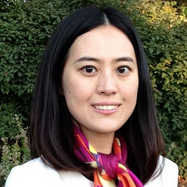
Shanshan Ding is an Associate Professor in the Department of Applied Economics and Statistics at the University of Delaware, College of Agriculture & Natural Resources. Her research focuses on advanced statistical methodologies including dimension reduction, envelope models, and multivariate analysis for high-dimensional data. Education: Ph.D., Statistics, University of Minnesota, Minneapolis (2014) M.S., Applied and Computational Mathematics, University of Minnesota, Duluth (2008) M.S., Finance, Peking University (2004) B.S., Applied Mathematics, Nankai University (2002) Her work spans applications in econometrics, health, and environmental science, with a particular emphasis on developing and applying innovative statistical models to complex datasets. Key publication trends include envelope models (2018), matrix variate regression (2018), tensor sliced inverse regression (2015), and dimension folding techniques (2014). Her research frequently addresses challenges in high-dimensional data analysis and multivariate statistical methods. She currently teaches STAT 617-010 – Multivariate Methods and has mentored students including Wang, L. and Jain, Y. on cutting-edge statistical projects.
Dr. Han Feng is a Research Associate Professor at the School of Environmental Science and Engineering, Southern University of Science and Technology, collaborating with Professor Yi Zheng. He has been with the institution since 2015, progressing from Post-doctoral Research Fellow (2015-2018) to Research Assistant Professor (2018-2021), and currently holds his present position since 2021. His educational background includes a Ph.D. in Mechanics (Energy and Resources Engineering) from Peking University (2008-2015) and a Bachelor's degree in Theoretical and Applied Mechanics from the same institution (2004-2008). Dr. Han specializes in eco-hydrological and water environmental simulation, with research focusing on numerical simulation of hydrological processes, ecological processes, and water quality processes at watershed scale . His work encompasses development of new computational models, exploration of efficient model-data fusion methods, and investigation into coupling paradigms of deep learning and process-based models. His expertise spans eco-hydrological modeling, non-point source pollution simulation, data assimilation, uncertainty analysis, and machine learning applications in environmental systems. His publication record demonstrates significant contributions to the field, with over 40 papers including 38 SCI-indexed articles in top journals such as Water Research, Water Resources Research, and Journal of Hydrology. His recent work shows a clear trend toward integrating artificial intelligence with traditional hydrological modeling, particularly in applying physics-encoded deep learning to distributed hydrological modeling and using Bayesian approaches for assimilating sensor data in water quality modeling. National Natural Science Foundation of China青年科学基金 project (41807164) as PI (2019-2021) NSFC-CONICYT International Cooperation project (5191101522) as main participant (2020-2024) Chinese Academy of Sciences Strategic Priority Research Program (XDA20100104) as main participant (2018-2023) Shenzhen Municipal Engineering Lab of Environmental IoT Technologies as key member (2018-2020) China Postdoctoral Science Foundation project (2017M612505) as PI (2017-2018) As one of the main developers of the three-dimensional distributed eco-hydrological model HEIFLOW (Hydrological-Ecological Integrated watershed-scale FLOW), Dr. Han's research has been applied across diverse geographical contexts including the Heihe River Basin, Pearl River Basin, Luanhe River Basin, Miho Basin (South Korea), Skjern Basin (Denmark), and San Joaquin Basin (United States).
Karl-Villem Võsa is an Expert (0.75 FTE) at Tallinn University of Technology's School of Engineering, Department of Civil Engineering and Architecture. He previously served as a Junior Research Fellow (2018-2023) and has been with the institution since 2018 in various research capacities. Dr. Võsa is a certified HVAC Engineer with level 7 qualification and has been a member of the Estonian Society of Heating and Ventilation Engineers since 2014. His research focuses on building indoor climate, energy efficiency, and HVAC systems with particular emphasis on ventilation effectiveness for infection control, heat emission efficiency of heating systems, and thermal comfort parameters. Dr. Võsa teaches Energy Simulation of Buildings (EEA5042) and has been involved in numerous research projects including the Energy Efficiency Excellence Center (2024-2030) and Post-COVID ventilation project (2024-2028). Analysis of his recent publications (2022-2024) reveals a significant focus on ventilation effectiveness for infection risk control in classrooms, cruise ships, and offices, reflecting the post-pandemic research priorities in building science. His work combines experimental measurements with CFD simulations to assess air distribution effectiveness and infection transmission risks. His scientific recognition includes: 2022 State Real Estate Ltd. PhD scholarship 2014 Estonian Society of Heating and Ventilation Engineers Society scholarship Dr. Võsa has secured funding from multiple sources including the Estonian Research Council, European Commission, and Academy of Finland for projects totaling millions of euros in research funding. His work bridges theoretical building physics with practical applications for improving indoor environmental quality and energy performance.