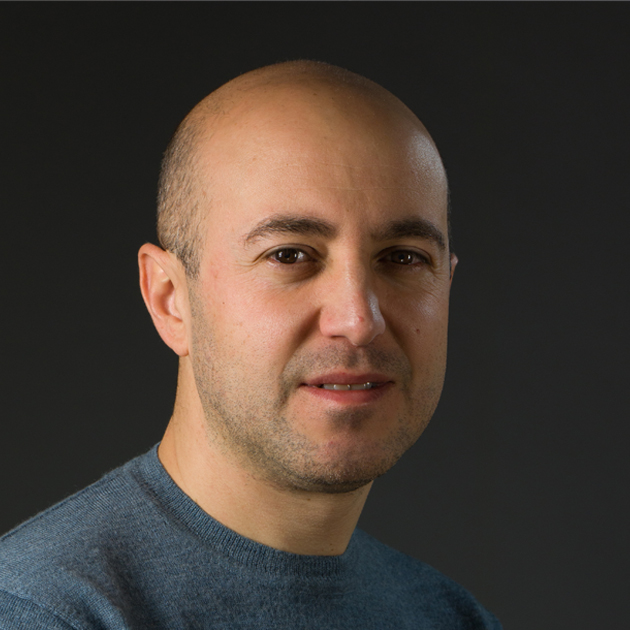
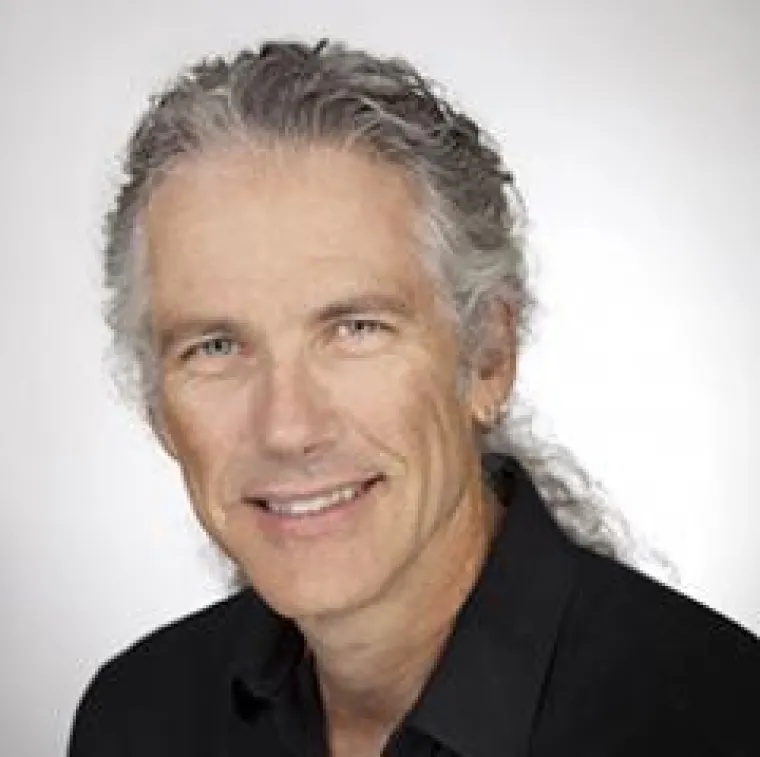
Alisa Yurovsky is a Lecturer and IDEA Fellow at the Department of Biomedical Informatics at Stony Brook University. Her research focuses on computational biology at the intersection of computer science, genetics, and statistics to advance precision medicine. She earned her PhD in Computer Science from Stony Brook University under Steven Skiena, an M.S. in Computational Biology from EPFL under Bernard Moret, and a B.S. in Computer Science with a Mathematics minor from Carnegie Mellon University. Research Interests: Alisa develops computational algorithms for precision medicine applications, particularly addressing racial disparities in health data. Her current projects include compartment deconvolution in mixed tissue samples, spatial transcriptomics analysis, small-size differential expression studies, and machine learning in biomedical informatics. Publications Trends: Her recent work spans spatial transcriptomics, survival analysis, and machine learning applications in genomics. She has contributed to algorithms for cell-cycle phase detection, ribosomal frameshift identification, and non-negative matrix factorization. Scientific Awards: 2023 IDEA Fellowship 2020 NSF/CRA/CCC Computing Innovation Postdoctoral Fellow 2017 CEWIT Best Poster Award 2016 NSF Graduate Research Fellowship 2010 Prix Annaheim-Mattille for Master’s Thesis 2007 Cadence Design Systems Award Advising and Grants: She mentors undergraduate and high school students through Stony Brook’s VIP Webgen team and Simons Summer Research Program. Her research has received support from NSF and institutional grants.
Olivier Cappé is a CNRS Research Director at the Department of Computer Science of École normale supérieure (DI ENS - CNRS/ENS/Inria) and an Adjunct Professor at Université PSL. He is affiliated with the Centre Sciences des Données (CSD) at ENS and serves as a Chair holder and member of the Executive committee of the Pr[AI]rie-PSAI (Paris School of AI) project. Previously, he served as deputy scientific director at INS2I (2017-2023) and headed the Information Processing and Communication Laboratory (LTCI) from 2013 to 2016. Dr. Cappé's research focuses on statistical signal processing and machine learning. His work spans several areas including Bayesian methods, Markov Chain Monte Carlo, online learning, multi-armed bandit models, and differential privacy for machine learning. Starting in speech and audio processing in the 1990s, he contributed to natural language processing applications in the 2000s, and has focused extensively on online learning and bandit algorithms since 2010. His recent work also addresses privacy issues in machine learning systems. Cappé teaches Reinforcement Learning and Differential Privacy for Machine Learning courses in the IASD master program at Université PSL. His publication record shows consistent output across multiple research areas, with recent work focusing on bandit algorithms, online learning, and privacy-preserving machine learning. His research bridges theoretical foundations with practical applications in digital advertising, recommendation systems, and pandemic response analysis. Grand Prize of the EADS Corporate Foundation (Information Sciences) from the French Academy of Sciences (2013) Co-author of 'Tout comprendre (ou presque) sur l'intelligence artificielle' with Claire Marc Dr. Cappé holds a Supélec engineering degree (1990) and a doctorate from ENST (currently Télécom ParisTech, 1993). He joined CNRS as a researcher in 1996 and has maintained a productive research career spanning over 30 years, with significant contributions to both theoretical and applied aspects of statistical signal processing and machine learning.
Professor Joe Carthy is a Full Professor at the School of Computer Science and Informatics, University College Dublin (UCD). He has served as Dean of Science at UCD since 2011, following roles as Head of the School of Computer Science and Informatics (2007–2011). With over 30 years at UCD, he holds a BSc and PhD in Computer Science and a Graduate Diploma in University Teaching and Learning. His research focuses on cybersecurity, digital forensics, and social media analysis, particularly investigating extremist online communities and cloud forensics. He has secured €5.4M in research funding and established the UCD Centre for Cybersecurity, collaborating with Europol, Interpol, and UNODC. Professor Carthy has supervised 14 PhD and 20 MSc students and contributed to education projects with €1.8M in funding. He chairs CyberSafeIreland and previously led Camara, a nonprofit distributing refurbished computers to schools globally. Education: BSc in Computer Science, UCD PhD in Computer Science, UCD HDip University Teaching & Learning, UCD Research Interests: Cybersecurity, digital forensics, social media analysis, incident analysis, lexical chaining, and news story segmentation. Professional Roles: Founding Director, UCD Centre for Cybersecurity Board Member, CyberSafeIreland Former Director/Chair, Camara Teaching: Coordinates modules on Information Security, Case Studies, and leadership/management courses. Labs/Teams: Leads the UCD Centre for Cybersecurity, fostering collaborations with law enforcement and international bodies. His 127+ publications span cybersecurity, digital forensics, and social media dynamics, with recent work addressing far-right activity on Telegram and algorithmic radicalization on YouTube. Grants and advisory roles highlight his impact on both academic and societal challenges.
Dr. Maria Konsta Gdoutos is a Professor of Civil Engineering and Materials Science and Engineering at The University of Texas at Arlington. She serves as the co-founder and Associate Director of the Center for Advanced Construction Materials (CACM), a state-of-the-art interdisciplinary center advancing smart materials for infrastructure. Her research focuses on sustainable concrete, nanotechnology, and multifunctional cement-based composites, with emphasis on CO2 sequestration, renewable energy integration, and infrastructure durability. Affiliations: CACM Director, ACI 241 Committee Chair, RILEM Technical Committee member, and Associate Editor of Cement and Concrete Composites . Leadership: UTC Director of the $10M DuRe-Transp Center, NSF PIRE grant recipient, and recipient of international awards including Fellowships from European and Russian Academies. Research interests span advanced nanocomposites, smart concrete for real-time monitoring, and eco-efficient materials. Her work addresses societal needs through nanotechnology-enabled solutions for construction sustainability and resilience. Over 150 peer-reviewed publications and patents on CNT-reinforced concrete and smart materials highlight her contributions. Grants include NSF PIRE (#2230747) for CO2 sequestration and a DOT Tier 1 UTC. Awards include Empirikion (2017) and Fulbright (2005). She advises multiple PhD and MS students, leading projects on carbon-negative concrete and waste material utilization. Labs/Teams: CACM, where interdisciplinary teams develop nanoengineered materials for infrastructure. Current projects include thermoelectric concrete for anti-icing and additive manufacturing of cementitious materials.
Professor Xiaohui Tao is a distinguished academic at the University of Southern Queensland's School of Mathematics, Physics and Computing, leading the Computing Discipline Team and chairing the ICT Programs Governance Committee. He holds a PhD in Information Technology from Queensland University of Technology (2009). His research focuses on artificial intelligence, machine learning, and health informatics, with over 200 publications in top journals like IEEE TKDE and conferences such as AAAI and IJCAI. He has mentored 10 doctoral students and leads a research group developing real-world AI applications. Education: PhD in Information Technology, Queensland University of Technology, 2009 Research Interests: Dr. Tao's work spans AI-driven health informatics, machine learning algorithms, natural language processing, and privacy-preserving technologies. His projects address critical challenges like mental health monitoring, smart healthcare systems, and privacy in 5G/IoT environments. Recent advancements include federated learning for unlearning mechanisms and multimodal fusion for medical decision support. Grants & Awards: Awarded Australia Research Council grants (DP220101360), Australian Endeavour Fellowships, and multiple best paper awards at conferences like BESC’22 and WI-IAT’20. Recognized for contributions to remote patient monitoring and AI in depression treatment. Labs & Teams: Leads a research group focused on AI applications in healthcare and data science, collaborating on projects like computational social science for mental health and privacy-preserving IoT systems.
Hans-Jörg von Mettenheim is Professor and Director of the Chair of Quantitative Finance and Risk Management at IPAG Business School Paris. He earned his Dr. rer. pol. (PhD) from Leibniz University Hannover with a dissertation on advanced neural networks in finance and forecasting. Current: IPAG Business School Paris Previous: École d'Économie (Leibniz University Hannover, 2010-2016) His research focuses on decision support systems, artificial intelligence in finance, and algorithmic trading. He has published extensively on neural networks, high-frequency trading, and energy economics. Recent work includes hybrid optimization techniques for energy forecasting, ESG sentiment-driven portfolio management, and cryptocurrency analytics. His editorial roles include Co-Editor-in-Chief of the Journal of Forecasting and founding Secretary General of the Forecasting Financial Markets Association.
Francesca ORSO is an Associate Professor at the Department of Translational Medicine , Universita' degli Studi del Piemonte Orientale 'Amedeo Avogadro'. Her research focuses on MicroRNA mechanisms in cancer progression, particularly in Melanoma , Breast Cancer , and Chronic Myeloid Leukemia . She explores how miRNAs regulate Tumor Metabolism , Metastasis , and Drug Resistance , with a strong emphasis on mTORC2 , Angiogenesis , and Tumor Microenvironment interactions. Key Research Areas : MicroRNA, Cancer Biology, Tumor Metabolism, Molecular Biology, Medical Biotechnology, Genetics Recent Trends : Her 2024 publications highlight miR-15a in Leukemia , RICTOR/mTORC2 in Melanoma Resistance , and miR-214 in Lung Cancer Metabolism . Earlier studies (2023-2008) address 3D Culture Systems , AXL-miRNA Sponges , and Transcription Factor Networks in tumor dissemination. Awards : Premio Chiara D'Onofrio Giovani Riercatori (2009)
James Cross is an Associate Professor in the School of Politics and International Relations at University College Dublin (UCD) and serves as the Director and co-founder of the Connected_Politics Lab @ UCD. His position places him at the intersection of political science and data analytics, where he applies computational methods to study EU political processes and decision-making. Dr. Cross received his BA from University College Cork, an MSc in International Relations from the University of Bristol, and completed his PhD at Trinity College Dublin. His postdoctoral work included positions at the ETH in Zurich and as a Max Weber and Jean Monnet Fellow at the European University Institute in Florence. Cross's research agenda focuses on international and comparative politics, with particular emphasis on EU policymaking processes. He has pioneered the application of natural language processing techniques to analyze large corpora of legislative texts in the EU, developing innovative methods to examine patterns of conflict and cooperation between EU institutions. His work extends beyond the EU context, with methodological approaches adaptable to other legislative bodies worldwide. His research spans several interconnected themes: data science applications in EU politics, legislative amendment tracking, transparency in EU decision-making, and the Decision-Making in the EU (DEU) project. Cross frequently employs computational methods including text analysis, network analysis, and machine learning to extract meaningful insights from political texts and communications. His publication record demonstrates a consistent trajectory of innovative research applying computational methods to political science questions, particularly concerning EU institutions. Cross's work shows a strong emphasis on methodological innovation alongside substantive contributions to understanding EU legislative processes, transparency mechanisms, and institutional dynamics. His recent publications increasingly focus on central banking communications, algorithmic bias in political analysis, and the application of network approaches to understanding policy agenda dynamics. PSAI Teaching and Learning prize (2021) European Union Politics/SAGE Award for best article (2018) Nomination for best conference paper (2015) Visiting Scholar fellowship at the University of Milan (2015) Jean Monnet Chair (2019-2022) Cross has secured multiple research grants including the Jean Monnet Chair, the EUR_data project integrating EU studies with data analytics, the ParliView project bridging information divides, the SDG_EU project tracking sustainable development goals' influence, and the EU Data Laboratory project. He actively engages in teaching innovation, with course syllabi openly shared on GitHub, and coordinates modules including Advanced Seminar in Politics, AI and Large Language Models, EU Foreign Policy, Introduction to EU Politics, and Politics of (mis-)information. As Director of the Connected_Politics Lab, Cross leads a research environment at the intersection of political science and data analytics. The lab collaborates with the Insight Centre for Data Analytics at UCD and focuses on applying computational methods to political texts and processes. His work has established him as a key figure in the application of data science to EU politics, with particular expertise in analyzing legislative processes and political communications through computational approaches.
Swapan K. Gayen is a Professor in the Department of Physics at City College of New York (CCNY), part of the City University of New York (CUNY) system. His office is located in the Center for Discovery and Innovation, room 2.380, with contact details including phone 212-650-5580 and email sgayen@ccny.cuny.edu. Professor Gayen's research centers on biomedical optics, specializing in optical tomography and spectroscopy for cancer detection in highly scattering media. His work develops time reversal optical tomography algorithms for tumor localization in breast tissue, fluorescence imaging techniques, and laser applications in biomedicine. Key focus areas include light propagation modeling in turbid media, independent component analysis for image reconstruction, and novel optical contrast agents. Analysis of his 15 most recent publications (2024-2013) reveals three dominant research thrusts: (1) Synthesis and characterization of organic laser dyes (pyrylium salts) for biomedical imaging, (2) Development of II-VI semiconductor disk lasers using ZnCdMgSe heterostructures, and (3) Advanced optical tomography methods for tumor detection. His work consistently bridges fundamental photonics with clinical breast cancer applications, emphasizing time-resolved and spectroscopic approaches. No scientific awards were documented in the provided materials. While extensive publications indicate active research, no specific information about grant funding or student advising roles was included in the source text. His laboratory work appears centered on optical instrumentation development for breast cancer imaging, though no explicit lab name or team structure was mentioned.
Slim Essid is a Full Professor at Télécom Paris and coordinator of the Audio Data Analysis and Signal Processing (ADASP) group. He holds a PhD and HDR from Université Pierre et Marie Curie (UPMC). His research focuses on machine learning, artificial intelligence, and signal processing applied to temporal data analysis, including multiview learning, representation learning, and structured prediction. Applications span music content analysis (MIR), multimodal perception (e.g., EEG data analysis), and human behavior analysis. He has advised 15 PhD students and collaborated on over 14 post-doctoral projects. Education: PhD in Signal Processing, Université Pierre et Marie Curie (2005) Habilitation (HDR), Université Pierre et Marie Curie (2015) M.Sc. in Digital Communication Systems, Télécom ParisTech (2002) Engineer Degree, École Nationale d’Ingénieurs de Tunis (2001) Research interests emphasize multimodal learning, self-supervised representation learning, and audio-visual fusion. Key projects include sound-prompted segmentation, zero-shot audio captioning, and EEG-based auditory attention decoding. Over 150 peer-reviewed publications exist across conferences like NeurIPS, ICML, and journals like IEEE Transactions. Active in reviewing for top-tier venues and advising French/EU research projects. Labs/Teams: Member of the Signal, Statistics and Learning (S2A) research team and the Information Processing and Communication Laboratory (LTCI).
Hemant Tiwari is a full-time Professor of Biostatistics at the University of Alabama at Birmingham (UAB) School of Public Health , with simultaneous senior scientist appointments at multiple UAB research centers including the Nephrology Research & Training Center and Center for Clinical and Translational Science (CCTS) . Holding a PhD in Mathematics from the University of Notre Dame, he transitioned to statistical genetics through postdoctoral work at LSU Medical Center and Case Western Reserve University, joining UAB in 2002. Doctor of Philosophy, Mathematics - University of Notre Dame (1986) His research focuses on genetic epidemiology , epigenetics , and multi-omics analysis of complex diseases like stroke, obesity, and autoimmune disorders. He has pioneered methods for polygenic risk score calibration and ancestry-specific genomic studies , particularly in African American populations. Recent work highlights include machine learning stroke prediction models for Sub-Saharan Africa and African ancestry-specific BMI risk alleles . Grants from the National Heart, Lung, and Blood Institute and American Heart Association support his research on cardiorenal genomics and stress-induced epigenetic modifications. As Vice Chair for Research and Faculty Development , he oversees academic initiatives while maintaining active collaborations across UAB's Comprehensive Diabetes Center , Cancer Center , and other multidisciplinary hubs.
Debasis Mitra is a Professor in the Department of Electrical Engineering and Computer Science at Florida Institute of Technology (FIT), with an affiliate role in the Biomedical Engineering and Science program within the College of Engineering and Science. He holds a dual Ph.D. in Physics from IIT Kharagpur and Computer Science from the University of Louisiana at Lafayette. His research focuses on inverse problems, medical imaging (e.g., SPECT/PET), machine learning, and spatio-temporal reasoning. He has contributed to projects like nuclear imaging reconstruction algorithms, muon tomography for contraband detection, and computational molecular biology. Education: Ph.D. in Computer Science (University of Louisiana at Lafayette), Ph.D. in Physics (IIT Kharagpur). Awards include the NSF Career Award and Fulbright Scholarship. His DM Lab develops algorithms for dynamic medical image analysis and radiomics. Collaborators include Lawrence Berkeley National Lab and UCSF. He advises graduate students on topics like tumor prognosis and 3D medical image analysis. Teaching includes courses on algorithms, topological data analysis, and medical imaging. Key projects span nuclear imaging reconstruction, muon tomography, and constraint reasoning systems. Labs and teams collaborate on interdisciplinary research blending computer science, physics, and biomedical applications.
Gaël Richard is a Professor at Télécom Paris, part of the Institut polytechnique de Paris. He leads the Signal, Statistics and Learning (S²A) research group within the LTCI laboratory and is the Executive Director of Hi! Paris, a hub for AI and data science. His primary research focuses on audio signal processing, including speech synthesis, source separation, and non-negative matrix factorization techniques. He has contributed significantly to applications in automotive and music industries, and his work has been recognized with the 2020 IMT-Académie des Sciences Grand Prix and a 2022 ERC Advanced Grant for the HI-Audio project. Education and Career: Gaël Richard transitioned from classical music to applied mathematics, earning a PhD in speech synthesis. His academic journey blends technical expertise with creative problem-solving, leading to impactful contributions in machine learning and audio technologies. Research Interests: His work spans machine learning for audio signals, including speech synthesis, sound separation, and music information retrieval. He emphasizes reproducibility, publishing tools like YAAFE and databases widely used in the field. Key Projects: The HI-Audio project explores AI-driven audio processing, while his ERC grant supports advancements in hybrid deep learning for audio. He co-supervises PhD students in areas like intelligibility in noisy environments and EEG-based source separation. Awards and Recognition: In addition to major grants and the IMT-Académie des Sciences prize, his work on source separation and audio indexing has earned international acclaim. He actively contributes to academic conferences and serves on editorial boards. Labs and Teams: He leads the S²A team at LTCI, fostering collaborations between academia and industry partners like Thales and Deezer. His research bridges theoretical advancements with practical applications in audio technology.
John Allen is a Professor in the Department of Psychology at the University of Arizona. His research focuses on interdisciplinary areas spanning neuroscience, psychology, and medical technology. He leads a lab dedicated to advancing understanding of emotional awareness, neuromodulation techniques, and their clinical applications. Key projects include investigating transcranial focused ultrasound for depression treatment, studying biomarkers in lung transplantation, and developing wearable neurotechnology devices. Dr. Allen's work integrates EEG, imaging technology, and genetic analysis to address complex health challenges. His contributions span peer-reviewed articles on emotional regulation, chronic disease biomarkers, and innovative medical devices. Collaborations bridge psychology, engineering, and clinical medicine to advance both theoretical and applied research. Research Interests : Dr. Allen's primary areas include neuromodulation (e.g., transcranial ultrasound), emotional awareness mechanisms, and translational medical research in transplantation and chronic disease. He explores how brain stimulation impacts mental health outcomes and develops tools for improving healthcare delivery through digital platforms and wearable devices. Key Article Trends : Recent work emphasizes non-invasive brain stimulation techniques, lung transplant biomarkers (cell-free DNA analysis), and pediatric anesthesia neurophysiology. His transdisciplinary approach is evident in publications blending EEG studies, medical imaging innovations, and molecular biology in cancer research. Grants & Advising : While specific grant details are not listed, his prolific publication record suggests active research funding. He advises no listed students but collaborates widely with interdisciplinary teams. His lab website provides further details on current projects and collaborations. Labs/Teams : Dr. Allen directs a research lab focusing on neuromodulation and translational medicine, leveraging advanced technologies like nanopore sequencing and non-negative matrix factorization for biomarker discovery.
Dr Thiru Balasubramaniam is a Research Fellow at Queensland University of Technology (QUT), working within the Faculty of Science, School of Computer Science. His expertise lies at the intersection of data science, machine learning, and real-world applications, with a specific focus on tensor factorization methods for managing multifaceted data from IoT and Web 3.0 applications. His educational background includes a PhD from Queensland University of Technology and a Bachelor of Engineering from Anna University. Prior to his doctoral studies, he worked as a Research Assistant at the Singapore University of Technology and Design - Massachusetts Institute of Technology (SUTD-MIT) International Design Centre, where he analyzed mobility data to personalize city environments for elderly citizens in Singapore. Dr Balasubramaniam's research interests span multiple areas of data science: Tensor and Matrix Factorization methods Pattern Mining and Text Mining applications Recommender Systems development IoT data processing Web 3.0 applications Real-time analytics for multifaceted data His publication record demonstrates consistent contributions to high-impact venues including IEEE TKDE, ACM TKDD, WWW, WISE, AusDM, and PRICAI. The trend in his recent work shows increasing application of tensor factorization techniques to diverse real-world problems including environmental monitoring, pandemic modeling, social media analysis, and smart grid technology. His research often involves interdisciplinary collaborations, particularly with Professor Richi Nayak at QUT. Scientific recognition includes: QUT-CDS first byte research funding worth 30,000 AUD Dr Balasubramaniam has been actively involved in teaching data analytics subjects at QUT since 2017, including Data Exploration and Mining, Data and Web Analytics, Data Mining Technology and Applications, and Web Computing. His teaching spans both undergraduate and postgraduate levels. His research has been supported through various collaborative grants and institutional funding mechanisms at QUT.