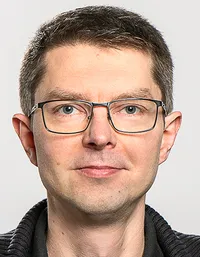
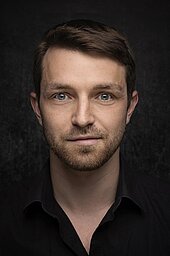
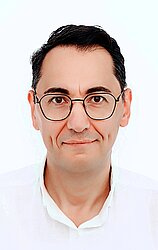
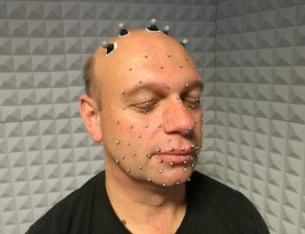
Prof. Dr. Viktor Leis is a Professor in the Department of Computer Science at the Technical University of Munich (TUM), leading the Chair for Decentralized Information Systems and Data Management. His research focuses on cost-efficient data systems, particularly in cloud environments, with expertise in core database topics like query processing, transaction management, and storage optimization. He earned his PhD from TUM in 2016 and previously held professorships at Friedrich Schiller University Jena and Friedrich-Alexander-Universität Erlangen-Nürnberg before returning to TUM in 2022. His work has been recognized with prestigious awards, including the ACM SIGMOD Dissertation Award, VLDB Early Career Research Contribution Award, and an ERC Starting Grant. Research Interests: Cloud computing, database systems, query optimization, storage engines, transaction processing, and NVMe-optimized systems. Key Projects: Developed the LeanStore storage engine and contributed to the Hyper database system. His recent publications emphasize cloud-native architectures, high-performance storage solutions, and hybrid transactional/analytical processing. He actively teaches courses on distributed systems, cloud databases, and blockchain technologies.
Prof. Dr. Angelika Braun is a full Professor of Phonetics at the University of Trier since October 2009, with a career spanning forensic phonetics, sociophonetics, and cross-cultural speech analysis. She previously held roles at the Bundeskriminalamt (Wiesbaden/Düsseldorf) and Philipps-Universität Marburg, where she habilitated in Phonetics and Speech Processing (2000). Her work bridges academic research with forensic practice. Research Focus: Her Sociophonetics (language and emotions, gender-specific speech) Forensic Phonetics (speaker identification, voice analysis) Contrastive and Hawaiian Phonetics Speech prosody and toxin effects (smoking, alcohol) Intercultural dubbing studies Academic Contributions: Over 15 recent articles explore voice quality, emotional speech, forensic age estimation, and cross-cultural dubbing effects. Key conferences include Interspeech, International Congress of Phonetic Sciences, and ISCA. Her work appears in journals like Forensic Linguistics and The Phonetician . Scientific Honors: Fellow of the American Academy of Forensic Sciences (AAFS) Founder Member and former Chairperson of the International Association for Forensic Phonetics (IAFP) Life-Member of the International Phonetic Association (IPA) Leadership roles in ISPhS and GAL Practical Impact: Developed the Almeida-Braun Transcription System for dialect analysis and contributed to forensic audio enhancement protocols (e.g., Rodney King case). Serves as reviewer for Language and Speech , Forensic Linguistics , and JIPA . Collaborates on longitudinal studies of vocal aging and speaker identification.
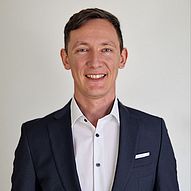
Steffen Becker is a Professor at the University of Stuttgart's Faculty of Computer Science, Electrical Engineering and Information Technology, affiliated with the Institute for Software Engineering's Software Quality and Architecture group. His work focuses on software engineering, cloud systems, model-driven engineering, and cybersecurity. He leads research in architectural modeling tools like Slingshot, GUI testing frameworks (ViMoTest), and hardware security analysis. Recent studies explore AI integration in testing, education, and automotive systems (CARISMA). Research interests include elasticity modeling, self-adaptive systems, and educational technology. His 2025 publications address issues like end-user hardware comprehension, FPGA security, and LLM-driven test generation. Notable tools developed include the Slingshot Simulator for cloud-native systems and Gropius for cross-component issue management. Becker contributes to both theoretical advancements and practical implementations in software quality, security, and cloud infrastructure. Key Areas: Software Architecture, Cyber-Physical Systems, Testing, Reverse Engineering Tool Developments: ViMoTest, Slingshot, Gropius Education Focus: Online programming pedagogy and curriculum innovation His work bridges foundational research with industry applications, addressing challenges in automotive computing, cloud elasticity, and human-centric security awareness. Recent efforts emphasize explainable hardware (XHW) and AI's role in qualitative analysis automation.
Tien Ping Tan is an experienced researcher specializing in speech recognition , natural language processing , and machine learning applications. With a PhD in Automatic Speech Recognition for Non-Native Speakers from Joseph Fourier University (2008), his career spans two decades of impactful contributions across multiple domains.
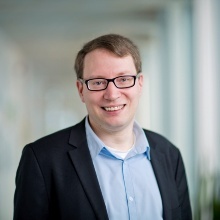
Birgit Lugrin is a Professor and Chair of Computer Science V (Socially Interactive Agents) at the University of Würzburg's Institute of Computer Science since 2024. Her interdisciplinary research bridges computer science and psychology, focusing on socially interactive agents (SIAs) for education, healthcare, and cultural understanding. She leads a lab focused on human-robot interaction, virtual agents, and bias reduction. Education: B.Sc. and M.Sc. in Computer Science from Augsburg University, followed by a Dr. rer. nat. in Human-Centered AI. Research Themes: Socially interactive agents, cultural diversity in AI, educational robotics, elderly support, and bias reduction through virtual agents. Projects: Adaptive pedagogical agents, mixed-cultural speech models, robotic concierge design, and VR interventions for racial bias. Her recent work explores AI-driven robotics for elderly engagement, empathy-building in mixed-cultural contexts, and the efficacy of virtual agents in educational and social settings. She has contributed to tools like PePUT for Pepper robotics and frameworks for ingroup bias research. Scientific Awards Victor Lesser Distinguished Dissertation Award (IFAAMAS-12) Best Paper Awards at ICMI, AAMAS, and Culture and Computing Women's Representative roles at University of Würzburg As a mentor, she advises students in socially interactive agents, co-authoring studies on topics like robotic storytelling, speech perception, and user studies. Her lab engages in field studies, partnerships with institutions like USC and NII, and multi-stakeholder design processes.
Dr. Ilshat Sharafutdinov serves as a Lecturer in the Department of English and American Studies within the Faculty of Languages, Literature, and Cultures at the University of Regensburg. His academic profile integrates teaching responsibilities with research in sociolinguistics, linguistic landscapes, language policy, and English language pedagogy. He maintains active membership in the International Society for the Linguistics of English and collaborates with the university's Research Center for World Englishes. His research centers on multilingual urban environments, examining how English functions within linguistic landscapes and public signage systems. This work intersects with sociophonetic analysis of non-native accents, second-language acquisition processes, and language policy implementation. His scholarship, exemplified by the 2018 Kazan linguistic landscape study, reveals patterns of English dominance in post-Soviet contexts while documenting complex language hierarchies in multilingual societies. For Winter Semester 2024/2025, Dr. Sharafutdinov teaches nine courses spanning core linguistics domains: Academic Writing B.A., Phonemic Transcription, Introduction to Statistics for Linguists, Sociophonetics, Syntax, Russian English, Research Methods for Variation in English, Text Analysis, and Linguistics Paper Writing Tutorium. This diverse portfolio demonstrates expertise across theoretical linguistics, sociolinguistic methods, and language teaching applications. He maintains regular office hours in room PT 3.2.79 during academic terms and collaborates with the Research Center for World Englishes, which investigates English language variation across global contexts through comparative and empirical approaches.
Prof. Dr. Ewa Dąbrowska holds the Alexander von Humboldt Professorship in the Chair of Language and Cognition at Friedrich-Alexander University Erlangen-Nürnberg. Her research spans cognitive linguistics, language acquisition, and individual differences in linguistic knowledge. Research Interests : Formulaic language in L1 acquisition and adult language processing The nature of linguistic generalizations through chunk-based grammar Individual differences in grammatical and lexical knowledge among native and L2 speakers Intersections of literacy, language structure, and cognitive fluency Scientific Awards & Funding : Alexander von Humboldt Foundation grant for a 5-year project on individual differences AHRC-funded corpus-experimental study on complex syntactic constructions Team Members : Dr. Miguel Llompart Garcia, Elodie Winckel, Ashley Blake, Magdalena Grose-Hodge, Panagiotis Kenanidis, Leonarda Prela, Richenda Wright.
Prof. Dr. Andrea Weber is a full-time professor in the Department of English at Eberhard-Karls-Universität Tübingen, part of the Faculty of Humanities. She leads the English Linguistics research group, focusing on psycholinguistics, spoken language comprehension, and second language acquisition. Her work explores how listeners adapt to foreign accents, idiomatic expressions, and the role of linguistic experience in processing spoken language. Education: PhD from Radboud University (Nijmegen), postdoctoral fellowships at City University of New York and Saarland University. Research highlights include the Otto-Hahn Medal (2001) and leadership in the Max Planck W2 Minerva program (2007–2012). She co-founded the LingTüLab, a state-of-the-art facility for language studies, and is a member of SpeechNet BaWü. Research interests span accent perception, bilingualism, and experimental methods in psycholinguistics. Recent work addresses face mask effects on speech intelligibility and the cognitive mechanisms underlying idiom processing. Key collaborations include studies on Vietnamese-German heritage speech and speaker credibility judgments. Publications focus on foreign-accented speech adaptation, L2 learning, and idiom processing. Her lab actively recruits participants for studies on language use and comprehension. Awards include the 2001 Otto-Hahn Medal for her PhD research on language-specific listening. Advising: Supervises PhD candidates such as Despoina Chalyvidou and Thanh Lan Truong. Collaborates with Sara D. Beck on the Database of Idiom Norms (DIN) for L1/L2 research. Labs/Teams: Directs the LingTüLab (Wilhelmstraße 50, Tübingen), offering paid participation in language experiments. The lab integrates psycholinguistics, cognitive psychology, and speech science to advance understanding of human language processing.
Cheng Li is an Associate Professor at the School of Computer Science, University of Science and Technology of China , and Director of the Information Computing Platform at the Institute of Artificial Intelligence, Hefei Comprehensive National Science Center. His research focuses on parallel and distributed intelligent computing systems, with an emphasis on optimizing computational efficiency through data-centric approaches. Education: PhD in Computer Science from Max Planck Institute for Software Systems (MPI-SWS) and Saarland University (2016) Bachelor's degree in Computer Science from Nankai University (2009) Research interests include distributed systems, machine learning optimization, database systems, and high-performance computing. Notable contributions include innovations in distributed training of deep neural networks, geo-replicated databases, and efficient graph processing. His work has been published in top-tier conferences like NSDI, AAAI, VLDB, and SOSP. Professional Activities : PC member at OSDI 2025, EuroSys 2024/2025, FAST 2024, and SOSP 2021. Teaching includes Systems Seminar and Compiler Principles at USTC since 2017. Grants : Secured $500k/year funding from Chinese government agencies and collaborations with Huawei/Alibaba. Active in cloud-native systems and AI infrastructure research.
Anamaria Bentea is a Research Fellow at the University of Konstanz's Department of Linguistics and Zukunftskolleg. Her work focuses on language acquisition and processing in monolingual and bilingual speakers, particularly in Romance languages like Romanian and French. She investigates how grammatical knowledge is represented and used in native and non-native languages, with a special emphasis on heritage language development in multilingual contexts. She holds a PhD in Linguistics from the University of Geneva (2016) and has held visiting research positions at the University of Maryland (2013-2014). Prior to Konstanz, she was a postdoctoral researcher at the University of Reading's Psycholinguistics and Neurolinguistics Lab, exploring Romanian-English bilingual children’s acquisition of complex syntax. Her research employs behavioral and eye-tracking methods to study real-time language processing, with key projects including the Marie Curie-funded ProHeritageSpeakers initiative (2021-2023) examining Romanian heritage language use in Germany. Her work addresses topics like bilingualism effects on theory of mind, syntactic processing in child heritage speakers, and the role of working memory in language comprehension. Major awards include the Marie Curie Fellowship. Her contributions span over 30 publications on relative clause acquisition, wh-dependencies, and cross-linguistic syntax development. She has led projects combining experimental linguistics with educational implications for multilingual populations.
Dr. David Obremski is a Senior Researcher at the Psychology of Intelligent Interactive Systems group within the Institute for Human-Computer-Media at Julius-Maximilians-University Würzburg's Faculty of Human Sciences. He joined the research group in April 2023, bringing expertise in human-computer interaction, virtual reality, and artificial intelligence. His work bridges the gap between psychological research and technological innovation, focusing on how humans interact with intelligent systems in various contexts. Dr. Obremski completed his Bachelor's degree in Human-Computer Systems and his Master's degree in Human-Computer Interaction at the University of Würzburg. He also studied jazz piano at the University of Music in Würzburg during his Bachelor's degree. He earned his PhD in the field of mixed-cultural virtual agents and their applications for reducing implicit cultural bias, supervised by Prof. Birgit Lugrin at the media informatics work group. Dr. Obremski's research focuses on the perception of embodied artificial intelligence, with particular emphasis on user trust, effectiveness of human-AI collaborative work settings, and AI applications in psychotherapy. His work explores how cultural background, speech patterns, and visual representation of virtual agents influence human perception and interaction. He investigates the psychological mechanisms behind human-AI interaction, examining factors such as trust formation, bias reduction, and emotional engagement with intelligent systems. His recent publications demonstrate a consistent focus on the intersection of virtual reality, artificial intelligence, and human psychology. A significant portion of his work examines mixed-cultural virtual agents and their impact on reducing cultural and racial biases. Another major theme explores the application of VR and AI in therapeutic contexts, particularly for anxiety disorders. His research also investigates practical workplace applications of spatial computing technologies like Apple Vision Pro, examining how immersion levels affect attention and collaboration. Best Paper Award at the International Conference on Multimodal Interaction (ICMI '22) Dr. Obremski collaborates extensively with researchers like Carolin Wienrich, Birgit Lugrin, and Marc Erich Latoschik across multiple projects. His work has been supported by institutional resources at the University of Würzburg, enabling him to conduct sophisticated VR experiments and develop innovative AI-based therapeutic approaches. While specific grant funding isn't detailed in the provided information, his research output suggests substantial institutional support for his work in human-AI interaction. Dr. Obremski is part of the Psychology of Intelligent Interactive Systems research group, which appears to be housed within the Institute for Human-Computer-Media at the University of Würzburg. This interdisciplinary team combines expertise from psychology, computer science, and media informatics to investigate how humans interact with increasingly sophisticated AI systems. The group likely has access to advanced VR laboratories and computing resources necessary for developing and testing virtual agents and immersive environments.
Baris Kabak is a Professor of English Linguistics at the Department of English and American Studies , Julius Maximilian University of Würzburg . He previously held a Junior Professorship at the University of Konstanz and served as Vice President for Internationalization from 2018–2021. Kabak founded the JMU Podcast in 2019 and has been a Senior Associate Member at St. Antony’s College, Oxford. Education : PhD in Linguistics (University of Delaware, 2003), MA in Linguistics (University of Delaware, 2000), BA in English Language Teaching (Boğaziçi University, 1998) Research Interests span phonology, phonetics, and prosodic typology, with a focus on Turkish and Korean linguistics. His work explores cross-linguistic influences in second language acquisition, stress-melody alignment in music, and sociophonetic variation in English varieties. He investigates phonological change, morphophonology-syntax interfaces, and bilingual speech perception. Workshop Organization : Co-organized events on phonological domains, stress systems, and suprasegmental processing. Scientific Awards include the Dean’s Honors List at Binghamton University and a Competitive Fellowship at the University of Delaware. His students have received accolades for dissertations on Turkish-German bilingualism and Turkish stress patterns. Advisory Role : Supervised PhD projects on non-native English, L3 phonology, Turkish verb agreement, Russian stress systems, and Korean suspended affixation. Current advisee: Matthias Krebs (L2 phonology of English).
Jürgen Trouvain is a Researcher and Lecturer at the Language Science and Technology Department , Saarland University , Germany. His research focuses on phonetics with emphasis on non-verbal vocalizations , speech fluency , prosody , non-native speech , and the history of speech communication research . Active in phonetic analysis of laughter and breath noises Contributions to speech disfluency and filler particles in multiple languages Expert in historical phonetics , including work on Wolfgang von Kempelen's 18th-century speech machine Organizer of international workshops on phonetic learner corpora , history of phonetics , and non-verbal vocalizations Recent publications address laughter timing in conversation, acoustic properties of breath noises, filler particle analysis in German and Ladino, prosodic features in child speech, and the evolution of the International Congress of Phonetic Sciences. His teaching includes language science , phonetics , and corpus linguistics courses at Saarland University.
Robert Lange is a researcher at the Institut für deutsche Sprache und Linguistik of Humboldt-Universität zu Berlin , specializing in phonetic realization in German spontaneous speech and register variation . He is a key contributor to the collaborative research center CRC 1412 (Register: Language Users’ Knowledge of Situational-Functional Variation), focusing on corpus-based studies of schwa realization and dialogue registers. His work involves co-authoring major publications in Zeitschrift für Sprachwissenschaft and Frontiers in Psychology , analyzing spontaneous speech patterns in free conversation versus task-based dialogues. He collaborates with scholars like Anke Lüdeling , Christine Mooshammer , and Bianca Maria Sell , and contributes to projects such as the Berlin Dialogue Corpus (BeDiaCo) and Corpus of Non-Native Addressee Register (CoNNAR) . Robert’s research explores phonetic variability influenced by factors like verb frequency, intonational phrase structure, and situational contexts. He has presented at conferences including the IDS-Methodenmesse 2022 and 19th Australasian International Conference on Speech Science and Technology . His methodological expertise includes corpus annotation, multimodal analysis, and computational tools for linguistic studies.
Dr. Hyeon-Ae Jeon serves as an Associate Professor in the Department of Brain and Cognitive Sciences at Seoul National University, South Korea, focusing on neural and cognitive mechanisms underlying language acquisition and processing. Her work bridges theoretical linguistics with empirical neuroscience to advance understanding of human language development. Her primary research domains include Second language acquisition , examining how individuals master non-native languages; Neurocognition of Language Learning , investigating brain plasticity during language education; and Neurocognition of Language Processing , analyzing real-time neural responses to linguistic stimuli. These areas converge in her affiliation with the Child Lab , which specializes in developmental language neuroscience with emphasis on pediatric populations. Dr. Jeon maintains active institutional engagement through Seoul National University's Department of Brain and Cognitive Sciences, where she contributes to advancing cognitive science research methodologies and interdisciplinary collaboration in language neuroscience.