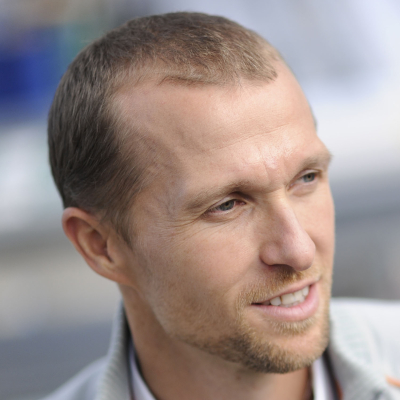
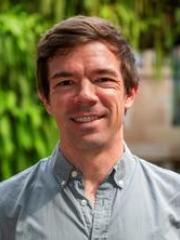
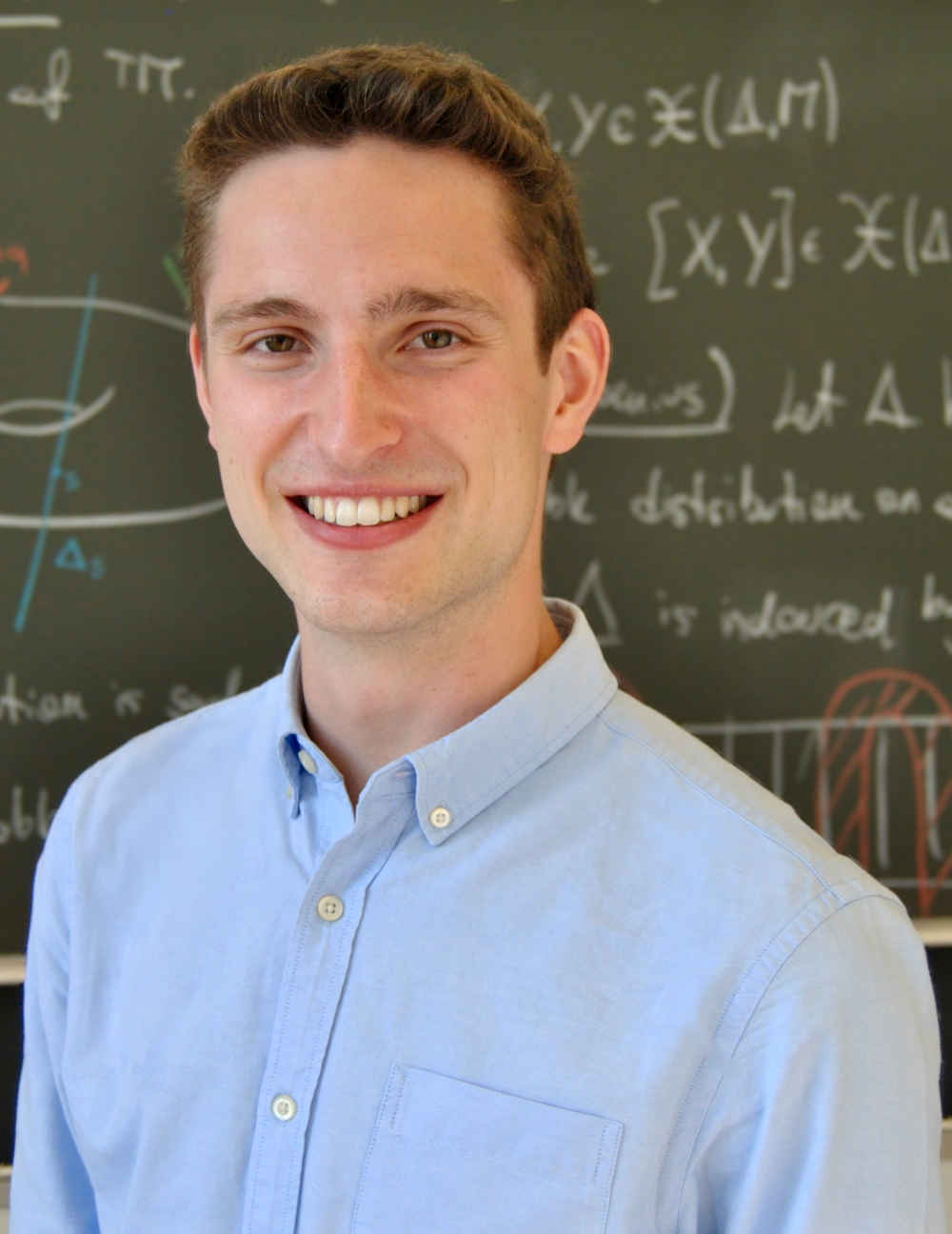
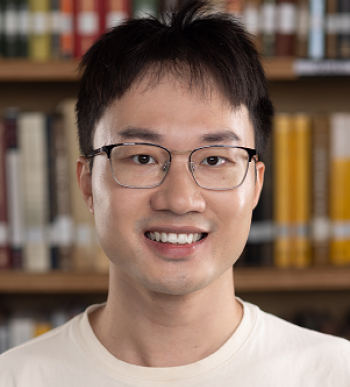
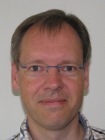
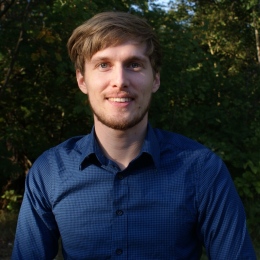
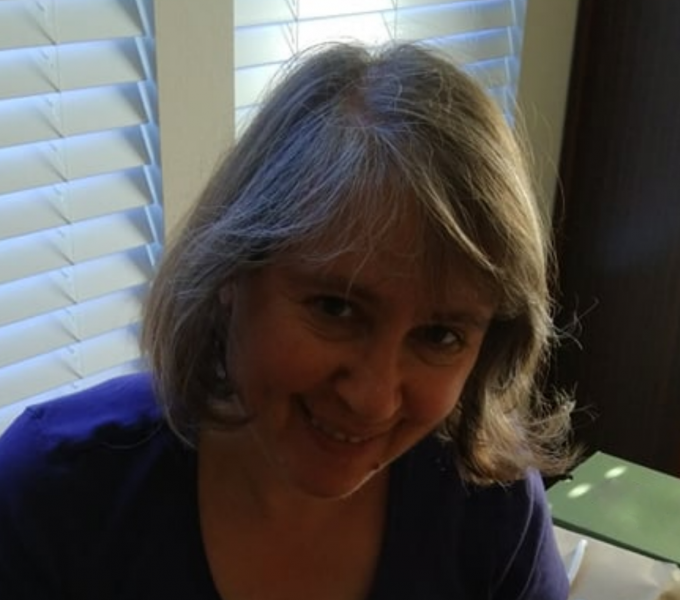
Anthony Wachs is an Associate Member of the Department of Mathematics at the University of British Columbia (UBC), affiliated with the Faculty of Science. His research focuses on computational fluid dynamics (CFD), particulate flows, and multiphase systems, with emphasis on numerical methods like DEM-CFD coupling and high-fidelity simulations of complex fluid-particle interactions. He develops scalable solvers for non-spherical rigid bodies and fluid-structure interactions, contributing to fields such as granular media, viscoplastic fluids, and biological capsule dynamics. His work bridges computational approaches with real-world applications in energy, biomedical engineering, and environmental systems. Research interests include particle-resolved direct numerical simulations (DNS), fluidized beds, and the development of tools like Grains3D and PeliGRIFF for particle dynamics. His studies address challenges in flow past irregular geometries, hydrodynamic force modeling, and machine learning-enhanced fluid dynamics. Wachs collaborates across disciplines, integrating advanced numerical techniques with experimental validation to advance understanding of multiphase flow phenomena.
Dr. William Defliese is a Senior Lecturer in Geochemistry at the University of Queensland's School of the Environment. He holds a Ph.D. in Geology from the University of Michigan (2014) and has held postdoctoral positions at UCLA and Texas A&M University before joining UQ in 2019. His research focuses on clumped isotope geochemistry, sedimentary processes, and paleoclimate reconstruction. He leads the Carbonate Research and Geochemistry group, advancing methodologies in clumped isotope analysis and their application to diagenesis, basin analysis, and halogen geochemistry. Key areas include clumped isotope reordering kinetics, carbonate sedimentation/diagenesis, and halogen distribution in marine sediments. He collaborates with ANZIC/IODP on oceanographic studies. Recent work explores Holocene climate change impacts on cultural evolution in Northwest India, Cretaceous oceanic anoxic events, and Snowball Earth glaciation effects on ocean isotopes. His lab develops halogen analysis techniques (combustion ion chromatography) to address gaps in oceanic sediment budgets. Defliese has supervised multiple Ph.D. projects on topics like monsoon variability, carbonate clumped isotope heterogeneity, and halogen recycling in sediments. Current funding includes projects on halogen content in oceanic sediments and coral paleoenvironmental proxies. His >30 publications span clumped isotope calibration, basin thermal history, and diagenetic processes. Lab facilities include carbonate precipitation labs and advanced geochemical instrumentation.
Alexander Strang is an Assistant Professor in the Department of Statistics at the University of California Berkeley. He earned his Ph.D. in applied mathematics from Case Western Reserve University in 2020 and served as a Kruskal Instructor in Statistics at the University of Chicago until 2023. His research spans interdisciplinary domains including statistical physics, spectral graph theory, optimization, and mathematical biology. Key research areas include: Stochastic processes and modeling in biological systems Structure-dynamics interplay in networks Bayesian inference and inverse problems Random graph theory and multi-agent training His recent publications focus on competitive systems, hierarchical Bayesian models, network analysis, and stochastic optimization. Scientific contributions include the 2022 Suzuki Postdoctoral Fellowship Award and foundational work on: Sparsity-promoting hierarchical Bayesian algorithms Spectral characterization of games Moment closure bounds via algebraic geometry Simplicial cohomology in stochastic processes
John E. Sader is a Research Professor of Aerospace and Applied Physics at the California Institute of Technology (Caltech), where he has been affiliated since 2022. Previously, he held the rank of Professor of Applied Mathematics at the University of Melbourne (1992–2022). He earned a B.S. (1989) and Ph.D. (1993) in electrical engineering from the University of New South Wales, Australia. His research spans fluid and solid mechanics, plasmonics, colloid science, and advanced instrumentation. Notably, he developed the Sader Method for AFM cantilever calibration, a standard used in commercial instruments. His work emphasizes interdisciplinary collaboration across scales—from nanotechnology to macroscopic fluid dynamics—and includes contributions to rarefied gas dynamics, vortex dynamics, and nanoelectromechanical systems. John’s accolades include Fellowships from the Australian Academy of Science, Australian Mathematical Society, and Australasian Fluid Mechanics Society. His AFM calibration methods have revolutionized material characterization at atomic and molecular scales, with applications in nanoscience and biophysics. He also leads the Global Calibration Initiative (GCI) to standardize AFM measurements worldwide. His recent publications focus on hydrodynamic electron flows, radiation pressure in lightsail systems, and advanced lattice Boltzmann methods. Collaborative efforts with institutions like Caltech and international researchers underscore his role in bridging theoretical and applied physics.
Silvio Barandun is a Postdoctoral Research Fellow at the Department of Mathematics of MIT, starting September 2025, working in the group 'Nanostructures and Computation' under Prof. S. G. Johnson. He completed his PhD in Mathematics at ETH Zurich in April 2025 under Prof. H. Ammari. His research focuses on photonic and phononic wave propagation in complex media, particularly non-Hermitian systems with geometric components. Barandun has taught courses such as Linear Algebra for electrical engineers and Numerical Methods for physicists at ETH Zurich. He actively supervises student projects and theses, co-organizes academic colloquia, and serves on the Foundation Council of the Swiss Study Foundation. His work bridges mathematical physics and applied mathematics, with a strong emphasis on metamaterials and resonator systems. Education: PhD (2025), ETH Zurich; Master's (2022), ETH Zurich; Bachelor's (2021), ETH Zurich. Research interests include non-Hermitian systems, topological metamaterials, and resonator dynamics. His publications span journals like Proceedings of the Royal Society A , SIAM Journal on Applied Mathematics , and Journal of Physics A . He frequently presents at international conferences on wave propagation and mathematical physics.
Tongmu He is a Mathematics Lecturer at Princeton University, affiliated with the Department of Mathematics. His research focuses on advanced topics in Algebraic Geometry, Number Theory, and Arithmetic Geometry, with particular emphasis on p-adic Hodge Theory, Galois representations, and Perfectoid spaces. He has contributed to foundational work on p-adic comparison theorems, Sen operators, and cohomological descent techniques in modern arithmetic geometry. His academic output includes groundbreaking papers on perfectoid covers of abelian varieties, purity for perfectoidness, and applications of Sen Theory to Shimura varieties. His recent work (2023–2025) explores p-adic cohomology structures and their implications for local fields with imperfect residues. Earlier contributions (2017) addressed topological conjugacy in non-hyperbolic linear flows, showcasing interdisciplinary reach. No scientific awards or grants are explicitly mentioned, but his prolific publication record reflects sustained scholarly impact. He is reachable via Fine Hall 803 and the email th7646@princeton.edu.
Dr. Jonathan Jordan is a Senior Lecturer in Probability at the University of Sheffield's School of Mathematical and Physical Sciences, affiliated with the Probability Group within the School of Mathematics and Statistics. He holds a DPhil from the University of Oxford, following studies at the University of Cambridge. His research focuses on probability theory, particularly random graphs (including preferential attachment models), reinforced processes, and fractal graphs. He teaches courses such as MAS113 (Introduction to Probability and Statistics) and MAS223 (Statistical Modelling and Inference). His work explores geometric preferential attachment networks, phase transitions, and multi-type network dynamics. He has published extensively in journals like the Electronic Journal of Probability and Random Structures and Algorithms . His research has addressed topics such as condensation phenomena, non-convergence in multi-type networks, and spatial network models. Dr. Jordan's research group is part of the Probability Group at Sheffield, and his work has applications in theoretical computer science and complex systems. He has supervised PhD topics involving random graph models and has collaborated on projects like the Amorph initiative. His academic background includes a shift from Bristol to Oxford during his PhD, followed by his current role at Sheffield since 2003. His research interests also extend to fractal geometry, including spectral properties of fractal graphs and spectral decimation techniques. Teaching responsibilities include undergraduate courses in probability and statistics, reflecting his expertise in foundational mathematical concepts. His publications span over two decades, showcasing contributions to both theoretical and applied aspects of random networks and stochastic processes. He maintains an active research profile, with ongoing interests in network evolution, geometric models, and interdisciplinary applications.
Sascha Delz, Ph.D., is an Assistant Professor at the University of Southern California’s School of Architecture, specializing in architecture, urban design, and urban studies. He holds a Doctor of Science and Master of Architecture from ETH Zurich. His research focuses on equitable urban development, cooperative housing models, and the socio-economic frameworks shaping urban environments. Delz has practiced architecture in Zurich and New York, served as a research fellow at Singapore’s Future Cities Laboratory and Addis Ababa University’s Ethiopian Institute of Architecture, and coordinated ETH Zurich’s doctoral program in Landscape & Urban Studies. Education : Doctor of Science in Architecture, ETH Zurich Master of Architecture, ETH Zurich Research Interests : Delz’s work addresses challenges of uneven urban development, resource distribution, and exclusive housing policies. He advocates for cooperative and non-profit housing models to foster inclusive urban environments. His writings explore spatial justice, collective action in housing, and the political dimensions of urban transformation. Publications : Key works include Housing the Co-op – A Micro-Political Manifesto and analyses of Ethiopia’s housing programs. His research bridges architectural design, urban policy, and international development cooperation. Teaching & Grants : Currently teaches courses on urban housing and design research at USC. Coordinates initiatives like the Collective Urban Housing seminar, addressing LA’s housing crises through equitable models. Labs & Collaborations : Engages with interdisciplinary urban research groups and global studios, emphasizing sustainability and social equity in urban design.
Dr. Paolo Pagano is an Honorary Lecturer in the School of Mathematics and Statistics at the University of St Andrews. His research focuses on solar and space physics, particularly the dynamics of coronal mass ejections (CMEs), Alfvén waves in the solar corona, and magnetohydrodynamic (MHD) modeling of solar eruptions. He contributes to space weather studies, investigating geomagnetic storm origins and stealth CME interactions with Earth's magnetosphere. His work integrates observational analysis with numerical simulations, including NLFFF modeling and MHD simulations to understand coronal loop structures and wave heating mechanisms. Collaborations span international missions like Solar Orbiter, emphasizing data analysis tools and multi-wavelength observations. Key research themes include phase mixing of Alfvén waves, chromospheric evaporation processes, and hydrogen ionization effects in CMEs. Dr. Pagano has organized conferences on wave-based coronal heating and contributed to over 27 peer-reviewed publications since 2019. His expertise bridges theoretical astrophysics with practical applications in solar system dynamics and space weather forecasting.
Bhuvnesh Jain is the Walter H. and Leonore C. Annenberg Professor in the Natural Sciences at the University of Pennsylvania's Department of Physics and Astronomy. He co-directs the Penn Center for Particle Cosmology and the Penn Data Driven Discovery Initiative. His affiliations include roles with the Dark Energy Survey (DES), Large Synoptic Survey Telescope (LSST), and Euclid space mission. He holds the Edmund J. and Louise W. Kahn Term Chair (2011-2015) and is a Fellow of the American Physical Society. Education: Ph.D., MIT (1994) A.B. in Physics (High Honors), Princeton University (1989) Research Interests: Cosmology: Formation of large-scale structure, dark matter/dark energy properties Gravitational lensing: Weak lensing analyses, CMB-galaxy cross-correlations Machine learning: Applications to astrophysical data, deep learning for image deblending Galaxy clusters: Splashback radius studies, halo boundary dynamics Modified gravity: Astrophysical tests of gravity theories Recent Article Trends (2025): Focus on resolving cosmological tensions (Hubble constant, structure growth) Weak lensing analyses combining DES, ACT, and Euclid data Development of diffusion-based reconstruction techniques Machine learning approaches for parameter inference Awards/Leadership: Co-chair of LSST Weak Lensing Science Collaboration Advisory roles in DES, LSST, and Simons Observatory Organized Data Science for Social Good programs Advising/Grants: Current advisees: Agrawal, Gomes, Park, Zhong, Gatti, Lin Alumni placements at Chicago, Cambridge, Caltech, and industry Leadership in Penn's Data Science minor and postdoctoral fellowships Labs/Teams: Core member of Penn's cosmology group Collaborations with DES, LSST, and CMB surveys (ACT/SPT) Developed courses on statistical methods in natural sciences
Prof. Daniël Boer is a theoretical physicist at the University of Groningen's Van Swinderen Institute for Particle Physics and Gravity, holding the rank of Professor in Theoretical Subatomic Physics. He serves as Scientific Director of the institute and chairs several national and international committees, including the NWO network for Theoretical High-Energy Physics. His research focuses on QCD, gluon dynamics, and particle physics beyond the Standard Model, particularly in connection with the Electron-Ion Collider (EIC) and Large Hadron Collider (LHC) synergies. Boer earned his PhD from VU University Amsterdam in 1998 and held postdoctoral positions at the RIKEN-BNL Research Center (U.S.A.) and VU Amsterdam. He joined the University of Groningen in 2009, becoming a full professor in 2017. He is a Fellow of the American Physical Society (2019) for contributions to understanding nucleon spin/momentum structure and the color glass condensate phase. His research group investigates quarkonium production, transverse momentum-dependent distributions, and gluon collective behavior at high energies. Major contributions include the Boer-Mulders function (1998), foundational for spin physics, and leadership in shaping the EIC's physics case. He has supervised over 10 PhD students and organized international workshops on topics like EIC-LHC synergies and QCD evolution. Education: PhD in Theoretical Physics (VU Amsterdam, 1998), M.Sc. Theoretical Physics (Utrecht University, 1994) Affiliations: External Advisory Board member for BNL EIC Theory Institute, Convener of CERN's PBC QCD Working Group Awards: APS Fellowship, Mercator Fellowship (2019), FOM Program Leadership (2014) Boer's work bridges theoretical QCD with experimental guidance from colliders, emphasizing gluon dynamics' role in probing new physics and hadron structure.
Robin Gålnander is an Assistant Professor in the Department of Criminology at Stockholm University, where he conducts research and teaches courses related to criminological theory, victimology, and qualitative research methods. He is an active member of the Victimological Research Group, established in 2021, which focuses on victims of crime from various perspectives. Assistant Professor, Department of Criminology, Stockholm University Member, Victimological Research Group (established 2021) Visiting Fellow, Centre for Criminological Research, University of Sheffield (2018) Dr. Gålnander's research primarily focuses on women's desistance from crime, examining the complex pathways women take when transitioning away from criminal behavior. His work applies a longitudinal qualitative approach, drawing on repeated interviews with desisting women to investigate the multifaceted process of leaving crime behind. His research interests span criminology, victimology, gender studies, and qualitative methodologies, with particular attention to how structural barriers, social relationships, and personal circumstances influence women's rehabilitation journeys. His research has revealed important insights about the role of debt, loneliness, intimate partner violence, and social relationships in women's desistance processes. He has examined how punitive drug policies create unique challenges for women seeking to leave criminal lifestyles, and how future aspirations shape the desistance journey. His work consistently highlights the gendered nature of desistance, demonstrating how women's pathways out of crime differ significantly from men's experiences. Women's Desistance from Crime Victimology Gender and Criminal Justice Qualitative Research Methods Structural Barriers to Rehabilitation Debt and the Welfare State Dr. Gålnander's publications reveal a consistent focus on understanding the complex, often non-linear pathways women take when leaving criminal lifestyles. His work demonstrates how financial challenges, social isolation, relationship dynamics, and structural barriers create unique obstacles for women in the desistance process. He has made significant contributions to understanding how intimate partner violence echoes through women's rehabilitation journeys, and how debt management intersects with criminal desistance in welfare state contexts. Dr. Gålnander teaches several courses at Stockholm University including Theoretical Perspectives in Criminology, Victimology, and Qualitative Research Methods at both undergraduate and master's levels. He also supervises bachelor's theses in Criminology and teaches courses on Crime Across the Life Course in the Master's Program. His current research projects include "Debt and Desistance in the Welfare State - Women's Experiences of Coping with Debt when Desisting from Crime," which extends his dissertation work "Maintaining Desistance," and "Young People in Criminal Networks within Compulsive Institutional Care: Challenges and Possibilities."
Giorgio Valente serves as Head of the Hong Kong Institute for Monetary and Financial Research (HKIMR), located at One Pacific Place, 10th Floor, 88 Queensway, Hong Kong. His research spans international finance, exchange rate dynamics, bond markets, and asset pricing, with significant contributions to understanding market anomalies and financial predictability. Valente's research interests focus on international finance phenomena, particularly exchange rate puzzles and bond market dynamics. His work on the forward bias puzzle has provided important insights into deviations from uncovered interest parity through nonlinear modeling approaches. He has extensively studied bond risk premia predictability and the relationship between stock markets and exchange rates, contributing to the understanding of international asset allocation strategies. His scholarly work shows consistent trends in applying sophisticated econometric techniques to financial market data, with recent publications addressing nonstandard errors in multi-analyst studies and global capital flow dynamics. Valente frequently collaborates with leading economists including Lucio Sarno, with whom he has co-authored numerous influential papers. Among his significant scientific contributions are publications in top finance journals including the Journal of Finance. His work has been cited over 126 times according to SSRN metrics, with his paper 'Nonstandard Errors' receiving over 17,000 downloads. Valente has contributed to central banking research through collaborations with institutions including the Bank for International Settlements and Federal Reserve Banks. His work on macroeconomic announcements and yield curve dynamics has provided valuable insights for monetary policy analysis.
Janice Chen is an Assistant Professor in the Department of Psychological & Brain Sciences at Johns Hopkins University, affiliated with the Krieger School of Arts & Sciences. Her research focuses on understanding how real-world memories are constructed and retrieved, using advanced neuroimaging and behavioral methods. Her work emphasizes the interplay between sensory input and mnemonic systems across multiple timescales, particularly during naturalistic experiences like movie viewing and narrative recall. Chen's education includes a PhD in Psychological & Brain Sciences. She leads a lab investigating topics such as neural coding of social interactions, temporal dynamics of memory, and cross-modal processing in blind individuals. Her lab employs fMRI, EEG, and behavioral experiments to map brain activity patterns during perception and recall. Current projects explore how causal structures in narratives shape memory organization, and the role of gaze behavior in linking visual perception to memory retrieval. Key contributions include developing datasets like 'Sherlock' and 'Film Festival,' widely used in cognitive neuroscience research. Her team collaborates on analyzing shared neural responses across individuals during narrative comprehension and transmission. She advises a diverse group of postdoctoral researchers and graduate students in cognitive and computational neuroscience. Chen's lab is not currently recruiting but maintains active research collaborations. Findings emphasize the brain's shared representational structures during memory recall, suggesting systematic neural reorganization from perception to memory storage.
Anna Vainchtein is a Professor in the Department of Mathematics at the University of Pittsburgh, affiliated with the Dietrich School of Arts and Sciences. She holds a Ph.D. from Cornell University (1998). Her research focuses on nonlinear dynamics and applied mathematics, particularly in the context of materials science and physics. Key areas include solitary waves in nonlinear lattices, phase boundaries in crystals, and hysteresis in phase-transforming materials. She has received prestigious grants such as the NSF CAREER Award and ADVANCE Fellow Award. Her work often involves mathematical modeling and analysis of complex systems, including minimization of nonconvex functionals and nonlinear partial differential equations. Vainchtein has organized academic events like the High School Integration Bee and has taught a variety of courses, from calculus to advanced topics in partial differential equations and mathematical physics. Education: Ph.D. in Mathematics, Cornell University (1998). Research Highlights: Her studies bridge applied mathematics and materials science, addressing phenomena such as wave propagation in nonlinear lattices, phase transition kinetics, and energy transfer mechanisms. Recent work includes investigations into solitary waves in FPU-type lattices and transition fronts in nonlinear systems. Grants & Awards: NSF DMS-2204880 (2022–2025) NSF CAREER Award DMS-0443928 (2005–2011) ADVANCE Fellow Award DMS-0137634 (2002–2006) Teaching: Courses include Analytical Geometry, Partial Differential Equations, Calculus of Variations, and honors-level linear algebra and differential equations. She has also organized integration competitions for high school and undergraduate students. Labs/Teams: Active in the Mathematics Research Center at the University of Pittsburgh, contributing to collaborative research in nonlinear dynamics and mathematical modeling.