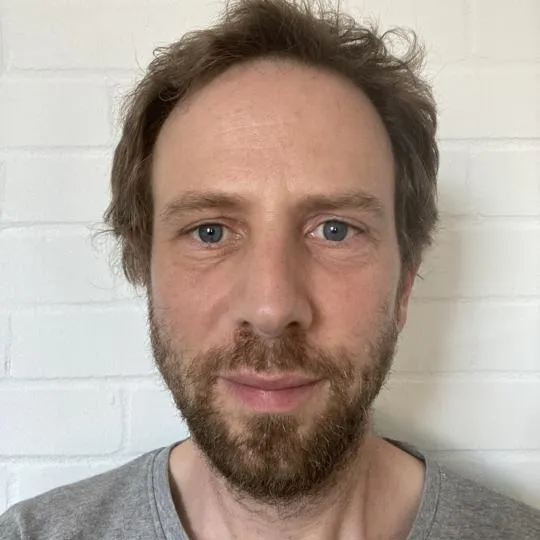
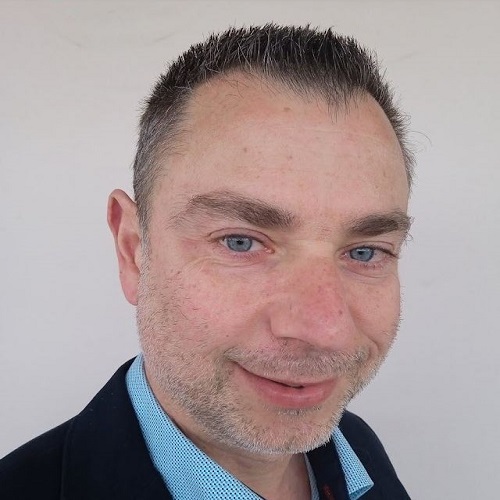
Asif Mahmood is an Assistant Professor of Applied Mathematics at the University of Virginia (UVA), part of the Academic General Faculty on the Teaching Track. Previously, he held positions as Visiting Assistant Professor at Ohio University, Assistant Professor at Pennsylvania State University (York campus), and Assistant Professor at the University of Nevada, Las Vegas. His research focuses on applied mathematics, fluid mechanics, and geophysical mass flows, with emphasis on analytical and computational modeling of fluid dynamics in diverse contexts such as non-Newtonian fluids, nanofluids, and geophysical phenomena. He earned a Ph.D. in Mathematics (2012) and M.A. in Mathematics (2007) from the University at Buffalo. Mahmood has taught a broad range of courses, including Multivariable Calculus, Linear Algebra, and Applied Numerical Methods. His work integrates fluid mechanics principles with real-world applications, addressing challenges in porous media, heat transfer, and magnetohydrodynamics (MHD). Key research themes include the dynamics of non-Newtonian fluids, geophysical mass flow simulations, and mathematical modeling of complex fluid systems. Recent publications explore boundary layer flows, nanofluid behavior, and computational emulators for geophysical processes.
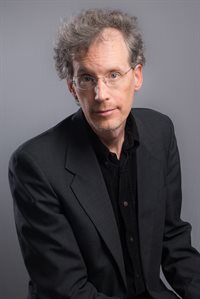
Professor Bret Battey is a Professor of Audiovisual Composition at De Montfort University, affiliated with the Faculty of Computing, Engineering and Media and the Leicester Media School. He is a core member of the Music Technology and Innovation Research Centre (MTIRC) and the Research Institute of Arts, Design and Performance (ADP). With a background spanning music composition, computer science, and digital arts, he integrates technical and artistic expertise in his work. His research interests include algorithmic music, digital signal processing, audiovisual synthesis, complex systems, feedback mechanisms, chaos theory, and the modeling of Indian classical music. He explores the expressive potential of custom-programmed algorithms to create immersive sound and image compositions. Battey's creative works, such as the Estuaries series and Mercurius , have received international acclaim, earning awards from Prix Ars Electronica, Bourges, Punto y Raya, ICMC, and others. His recent publications and installations focus on generative systems, audiovisual counterpoint, and the interplay between time, space, and perception in multimedia art. Award of Distinction: Video Music, Prix CIME 2023 Best Regional Music (Europe), ICMC 2022 MacDowell Colony Norton Stevens Fellow, 2003 U.S. Fulbright Research Fellowship to India, 2001-2002 Fellow of the Higher Education Academy He has supervised numerous postgraduate research students in areas including audiovisual composition, Indian classical music, and complex systems. He has led internally funded projects such as Haptic Control of Multistate Generative Music Systems and received research leave support. His consultancy includes mentoring for pedagogical software in Indian classical music with NESTA. He is actively involved in the academic community as a reviewer for Computer Music Journal and Organised Sound , and as a selection panel member for international competitions. Bret Battey leads and contributes to research groups including MTIRC and ADP, where he fosters interdisciplinary collaboration between music, technology, and visual arts. His work often involves custom software development, live performance systems, and installations that explore the boundaries of sensory experience and computational creativity.
Dr. Ariane Froidevaux is an Assistant Professor in the Department of Management at the College of Business, The University of Texas at Arlington. She is set to become Associate Professor with tenure starting September 1, 2025. Her academic journey includes a PhD in Psychology from the University of Lausanne (2016) and a postdoctoral fellowship at the University of Florida. She is actively engaged in research, teaching, and service. Education: PhD in Psychology, University of Lausanne (2016); MS and BS in Psychology and Career Coaching, University of Lausanne Current Position: Assistant Professor, UTA Department of Management Research Affiliations: Age in the Workplace Research Network, Sloan Research Network on Aging and Work, George Mason University Transition Research Group Dr. Froidevaux’s research focuses on retirement, aging in the workplace, career transitions, identity negotiation, and qualitative methods . Her work explores how individuals adjust to late-career changes, the psychological impact of retirement, and how organizations can support an aging workforce. She employs both qualitative and quantitative methods, often integrating life design and lifespan perspectives. Her recent publications span topics such as age discrimination, boomerang mobility, spirituality in careers, and cross-cultural work values. These works reflect a cohesive research agenda on sustainable careers and identity across the lifespan, particularly in the context of retirement and aging. Scientific Awards and Honors: Eunice and James L. West Distinguished Professorship Fellowship (2020–2021) Outstanding Reviewer, Academy of Management Careers Division (2019, 2021) Dean’s Award, UTA College of Business (2020, 2022) PhD Mentor Award and Outstanding Undergraduate Teaching Award (2025) ESVDC Young Research Award (2017) Multiple Best Paper and Finalist Awards from the Academy of Management Dr. Froidevaux advises PhD, Master’s, and undergraduate students, serving as a committee chair and member across disciplines including Management, Psychology, and Social Work. She has secured research funding from the Swiss National Science Foundation and UTA. She is active in service, serving on editorial boards of Journal of Vocational Behavior and Work, Aging and Retirement , and on multiple university and professional committees. She also contributes to public discourse through media interviews and presentations. She is a member of several professional networks, including the Age in the Workplace Research Network, Sloan Research Network on Aging and Work, and the European Society for Vocational Designing and Career Counseling. She has presented her work at major conferences such as the Academy of Management and Society for Industrial and Organizational Psychology.
Peggy Chi is a Staff Research Scientist at Google DeepMind and a Visiting Associate Professor at National Taiwan University's Department of Computer Science and Information Engineering. She holds a Ph.D. in Computer Science from UC Berkeley and an M.S. from MIT Media Lab. Her research focuses on interactive systems, accessibility technologies, and AI-driven interfaces to enhance creativity and user experience in areas like video creation, non-visual access for visually impaired users, and cross-device interaction. Key research interests include Human-Computer Interaction (HCI), accessibility, and the application of AI in user-facing technologies. She has pioneered projects such as TacNote (tactile/audio note-taking for BVI users), Slide Gestalt (non-visual slide structure extraction), and Bespoke (LLM-based interface generation). Her work bridges theory and practice, with contributions to top venues like ACM CHI, UIST, and CVPR. Received a Best Paper Award at ACM CHI and a Google PhD Fellowship . Published over 20+ papers in HCI and AI, focusing on accessibility, video technology, and cross-device systems. Her research also extends to educational tools (e.g., MixT for mixed-media tutorials) and ubicomp systems for health and daily life, such as calorie-aware smart kitchens. Peggy collaborates with industry and academia to advance interactive technologies that empower users through innovation and inclusivity.
Elisa Davoli is a Professor at TU Wien, affiliated with the Multiscale Calculus of Variations Research Group (E101-01-3). Her work focuses on calculus of variations, micromagnetics, and material science, with applications in phase transitions, nonlocal models, and stochastic homogenization. She collaborates extensively with researchers such as Irene Fonseca, Manuel Friedrich, and Ulisse Stefanelli. Her recent research includes studies on fractional Cahn-Hilliard systems, sharp-interface limits, and optimal control in nonlocal frameworks. She also investigates stochastic homogenization in micromagnetics and structural changes in nonlocal denoising models through bilevel learning. Key contributions include existence results in large-strain magnetoelasticity, two-scale convergence methods for composite materials, and the derivation of linearized fracture models under non-interpenetration constraints. Her work bridges mathematical analysis with applications in solid mechanics and image processing.
François Huveneers is an Associate Professor in the Mathematics department at King’s College London, part of the Faculty of Natural, Mathematical & Engineering Sciences. He specializes in disordered systems and statistical mechanics, focusing on topics like many-body localization and quantum dynamics in disordered environments. Previously, he earned his PhD in theoretical and mathematical physics from the University of Louvain-le-Neuve (Belgium, 2010), followed by postdoctoral research at Université Paris-Dauphine and a tenure as assistant professor there. His work bridges quantum mechanics, nonlinear dynamics, and condensed matter physics, with notable contributions to understanding energy transport and thermalization in complex systems. Research Interests: Disordered systems and localization phenomena Many-body localization in quantum and classical systems Non-equilibrium statistical mechanics Quantum dynamics in disordered media Anomalous heat and energy transport His recent articles explore subdiffusive behavior, quasi-localization, and prethermalization effects, reflecting a focus on rigorous theoretical analysis combined with numerical insights. He collaborates internationally, with engagements at institutions like KITP (Santa Barbara) and ICTS (Bangalore). His research emphasizes interdisciplinary approaches to understanding fundamental transport properties in complex systems.
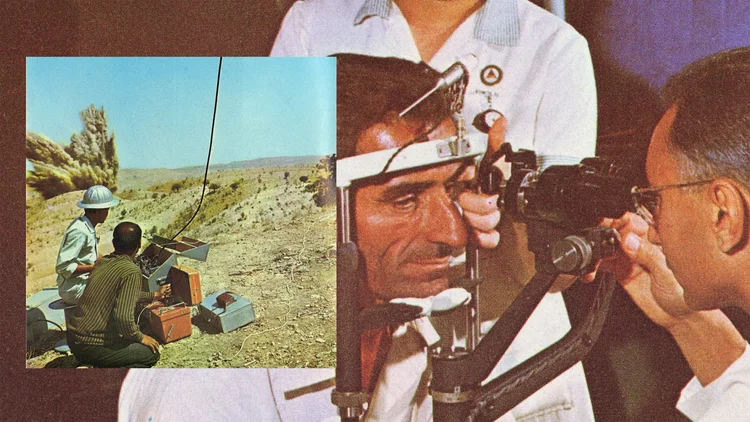
Sanaz Sohrabi (b.1988, Tehran) is an Assistant Professor at Concordia University's Department of Communication Studies. She is a visual culture researcher and artist-filmmaker conducting archival studies on oil industry visual regimes, postcolonial ecologies, and resource extraction cultures. Her work combines artistic research with academic analysis, focusing on the political economy of images. Education: BFA from University of Tehran College of Fine Arts, MFA from School of the Art Institute of Chicago (merit scholarship), PhD from Concordia University's Center for Interdisciplinary Studies in Society and Culture Teaching experience: School of the Art Institute of Chicago and University of Illinois at Chicago Her research explores colonial and postcolonial visual infrastructures in oil industries. Key projects include: One Image, Two Acts (2020) - Examines BP's colonial ethnographic films Scenes of Extraction (2023) - Critiques oil extraction visual cultures Specters of the Subterranean (2021-ongoing) - Reconstructs OPEC's cultural history Archives of Oil: Future Relics (2021) - Analyzes BP's historical media Sohrabi's work has been internationally acclaimed through: Exhibitions at Ljubljana Biennial, Berlinale Forum Expanded, and Montreal's Centre Clark Festival awards: IndieLisboa Best Short Film, Valdivia Special Jury Mention, Mimesis Best Documentary Short Residencies: Skowhegan School and RAW Académie She is currently developing a feature documentary about OPEC's establishment and preparing a 2025 artist book documenting her visual research processes.
Qingrong Xiong is a Professor in the Department of Hydraulic Engineering at the School of Civil Engineering, Shandong University. He holds a PhD in Civil Engineering from the University of Manchester (2012–2015) and received a Master's and Bachelor's in Hydraulic and Hydroelectric Engineering from Wuhan University (2010–2012, 2006–2010). Education: PhD in Civil Engineering, University of Manchester (2012–2015) Master of Hydraulic and Hydroelectric Engineering, Wuhan University (2010–2012) Bachelor of Hydraulic and Hydroelectric Engineering, Wuhan University (2006–2010) His research focuses on Hydrogen Storage , Carbon Capture and Storage , Nuclear Waste Disposal , and Thermal-Hydraulic-Chemical-Mechanical (THCM) Modeling of geomaterials. He specializes in pore network modeling, reactive transport in porous media, and coupled stress-seepage field analysis of underground rocks. Recent publications emphasize 3D mesostructural modeling , reactive diffusion in clays , and numerical simulation of microstructural evolution in nuclear materials. His work combines computational methods (finite element analysis, pore network models) with experimental validation. Scientific Awards President's Doctoral Scholar Award, University of Manchester
Petrakis Evangelos is an Assistant Professor at the Department of Mineral Exploitation within the School of Mineral Resources Engineering at the Technical University of Crete. His research focuses on modeling and optimization of material separation circuits, beneficiation of ores and industrial minerals, physicochemical characterization, and sustainable management of mining/metallurgical by-products through circular economy principles. Role: Assistant Professor Location: Office M2.015, Technical University of Crete, Chania, Crete Contact: Phone +30 28210 37608 | Email: evpetrakis@tuc.gr Research Interests: Modeling and optimization of material separation circuits Beneficiation research of ores, industrial minerals, and mining/metallurgical wastes Study of mechanical properties and physicochemical characterization Management and utilization of mining by-products Zero waste and circular economy applications Article Trends: Petrakis' publications demonstrate expertise in grinding process modeling, leaching technologies, waste valorization, and energy efficiency optimization. His work spans hard-rock lithium processing, alluvial gold mining history, and alkali activation of metallurgical residues. Projects: Involved in Horizon Europe's ENICON project (2022-2026) for sustainable processing of low-grade ores and the H2020 Metgrow+ project (2016-2020) focused on metal recovery from low-grade resources. Teaching Responsibilities: Instructs undergraduate courses in Industrial Ecology and ore processing, along with postgraduate studies in waste decontamination technologies.
PD Dr. Florian Frank is Privatdozent (senior lecturer with full teaching licence) for Applied Mathematics at Friedrich-Alexander-Universität Erlangen-Nürnberg (FAU) and heads the Bavarian research project „Parallel mesh loading and partitioning for large-scale simulation“ . His expertise spans high-performance computing, phase-field and discontinuous Galerkin methods, digital-rock physics, and reactive transport in porous media. Education & career 2022 – Venia legendi (private lecturer), Mathematics, FAU 2019 – Dr. habil., Mathematics, FAU 2013 – Dr. rer. nat., Applied Mathematics, FAU 2008 – Graduate Mathematician, University of Frankfurt 2021-2022 (acting) W2 Professor Scientific Computing, FAU 2018-2021 (acting) W2 Professor Mathematical Modelling, FAU 2017-2018 Senior Postdoc, CAAM, Rice University, USA 2014-2017 Postdoc, CAAM, Rice University, USA Research interests Frank focuses on the development and analysis of numerical schemes for partial differential equations that govern multiphase, multicomponent and reactive processes in porous or biological media. Key themes include discontinuous Galerkin and finite-volume methods , physics-preserving discretizations , high-performance computing , and digital-rock-based pore-scale simulations . He couples phase-field approaches with (Navier–)Stokes, Cahn–Hilliard, Nernst–Planck and density-gradient equations to quantify flow, transport, colloid dynamics and interfacial phenomena. Recent publications reveal a clear trend toward data-driven modelling : convolutional neural networks are trained with direct numerical simulation data to predict permeability and diffusion coefficients from 3-D micro-CT images, while advanced preconditioners and regularization techniques accelerate multiphase thermodynamic computations. Awards & recognition 2020 – Emmy-Noether-Prize der Naturwissenschaftlichen Fakultät, FAU 2017 – Promotion to Senior Postdoctoral Research Associate , George R. Brown School of Engineering, Rice University Projects, tools & supervision Frank currently leads a Bavarian state-funded project on parallel mesh handling for large-scale simulations. Together with collaborators he maintains the open-source MATLAB/GNU Octave toolbox FESTUNG for discontinuous Galerkin methods. Since 2018 he has (co-)supervised ten BSc and MSc theses on topics ranging from Stokes preconditioning to enriched Galerkin shallow-water solvers, regularly serves as reviewer for more than a dozen international journals, and is guest editor of special issues in Computational Geosciences and Oil & Gas Science and Technology .
Dr. Hilal DOKUZ is a Researcher at Ahi Evran Üniversitesi's Mühendislik-Mimarlık Fakültesi, Jeoloji Mühendisliği Bölümü. She previously worked at Ankara Üniversitesi from 2013–2019 and Ahi Evran Üniversitesi in 2013. Her academic background includes a PhD, MS, and BS in Geology Engineering from Ankara Üniversitesi. PhD: Ankara Üniversitesi, Jeoloji Mühendisliği, 2013–2019 MS: Ankara Üniversitesi, Jeoloji Mühendisliği, 2010–2013 BS: Ankara Üniversitesi, Jeoloji Mühendisliği, 2004–2009 Dr. DOKUZ specializes in Geology , with a focus on Hydrogeology , Environmental Geochemistry , and Isotope Geochemistry . Her research explores groundwater systems, coal geochemistry, and sedimentary basins. Her 15 most recent publications span hydrogeochemical modeling , geothermal energy , trace element analysis , and sedimentary provenance , reflecting interdisciplinary work in geoscience and environmental studies. She is a member of the International Association of Sedimentologists , European Geosciences Union , and American Geophysical Union . Her work has been cited 36 times according to Google Scholar, with an h-index of 2.
Franck Amadieu is a Professor at the Cognition, Languages, Ergonomics (CLLE) research unit of the University of Toulouse - Jean Jaurès . His work bridges cognitive psychology and human-computer interaction, focusing on how digital technologies (hypertexts, animations, tablets) influence learning processes and information retrieval. He examines cognitive load, prior knowledge effects, and user experience in multimedia learning environments. Research Trends: His recent publications analyze adolescents' evaluation of online video sources, disorientation in hypermedia navigation, and the acceptance of brain-computer interfaces (BCIs) for stroke rehabilitation. Key themes include critical thinking development, technology acceptance models, and cognitive resource allocation during digital learning. Collaborative Networks: He collaborates with institutions like ENAC (Aeronautical Computer Human Interaction) , LII (Interactive Computer Team) , and ACHIL . His interdisciplinary approach connects psychology, education, and neuroergonomics to optimize technology design for diverse populations.
Dr. Andrius Čiginas is a Senior Researcher at the Interdisciplinary Statistical Research Group , part of the Institute of Data Science and Digital Technologies (VU DMSTI) at Vilnius University . His work focuses on advancing survey statistics, small area estimation, and the integration of non-probability samples into official statistics. Research Focus Dr. Čiginas specializes in developing statistical methodologies for improving the accuracy and efficiency of population estimates, especially in small domains. His research includes: Composite estimation techniques Non-probability sample integration Real-time prediction using social media and administrative data Bootstrap and Edgeworth approximations for finite populations Doctoral Supervision He currently supervises two doctoral students: Akvilė Vitkauskaitė – Informatics (2024–2028): Parameter estimation and forecasting in population domains using non-probability samples. Ieva Burakauskaitė – Mathematics (2022–2026): Use of additional information in estimating parameters in population domains. Scientific Contributions Dr. Čiginas has published extensively in top-tier journals such as Journal of Official Statistics , Statistics , and Nonlinear Analysis: Modelling and Control . His recent work explores the integration of non-probability data sources into official statistics, consumer confidence estimation, and small area estimation techniques.
Prof. Dr. Dirk Neumann is a faculty member at the Institute for Information Systems at the University of Freiburg, Germany. His research spans multiple interdisciplinary domains including business analytics, reinforcement learning applications, energy systems, and social policy analysis. He leads research initiatives including the Climate Action Research Lab (CARL) and Business Analytics Research group at the university. Dr. Neumann's research interests focus on the intersection of information systems, operations research, and societal challenges. His work particularly emphasizes: Application of reinforcement learning to operations research problems Energy systems analysis and smart grid optimization Social implications of technology adoption and policy Information processing of fake news and deep fakes Business analytics for social good His recent publications demonstrate a strong trend toward interdisciplinary research that combines technical methodologies with social impact assessment. The articles span fields from political science and environmental policy to operations research and cognitive science, highlighting his ability to bridge technical and social domains. A significant portion of his recent work focuses on energy systems, particularly smart grids and renewable energy integration, while maintaining strong connections to social equity considerations. Dr. Neumann is actively involved in multiple research collaborations as evidenced by his extensive publication record across diverse domains. His work often involves interdisciplinary teams combining expertise from computer science, economics, political science, and social sciences. His research group, the Climate Action Research Lab (CARL), focuses on applying analytical methods to climate-related challenges, while his Business Analytics research examines practical applications of data science in organizational contexts.
Dr. Marie Le Merrer is a Researcher at the Institut Lumière Matière (Light and Matter Institute), affiliated with University of Lyon 1 . Her work focuses on soft matter physics , particularly the mechanical behavior of complex fluids such as foams and polymer gels, linking microscopic dynamics to macroscopic properties. Her research explores the coupling between surfactants and hydrodynamics in soap films, bubble rearrangements, and the influence of fluid/solid surfaces on rheology. She has contributed to understanding foam stability, calcite gel elasticity, and wall slip phenomena in jammed suspensions. Recent publications highlight her expertise in surfactant-induced dissipation (2024), foam film stability (2021), and numerical modeling of bubble assemblies (2018). Her work spans fluid mechanics , colloid science , and materials engineering . Scientific accolades include the CNRS Bronze Medal (2020) . She has also been recognized through selections like the Focus on Fluids commentary (2017) and Scientific News of the CNRS Institute of Physics (2012). Her methodologies integrate experimental approaches (Raman spectroscopy, diffusing-wave spectroscopy) and computational simulations. Collaborations with groups such as Liquids and Interfaces and institutions like ESPCI and Ecole Polytechnique underscore her interdisciplinary impact.