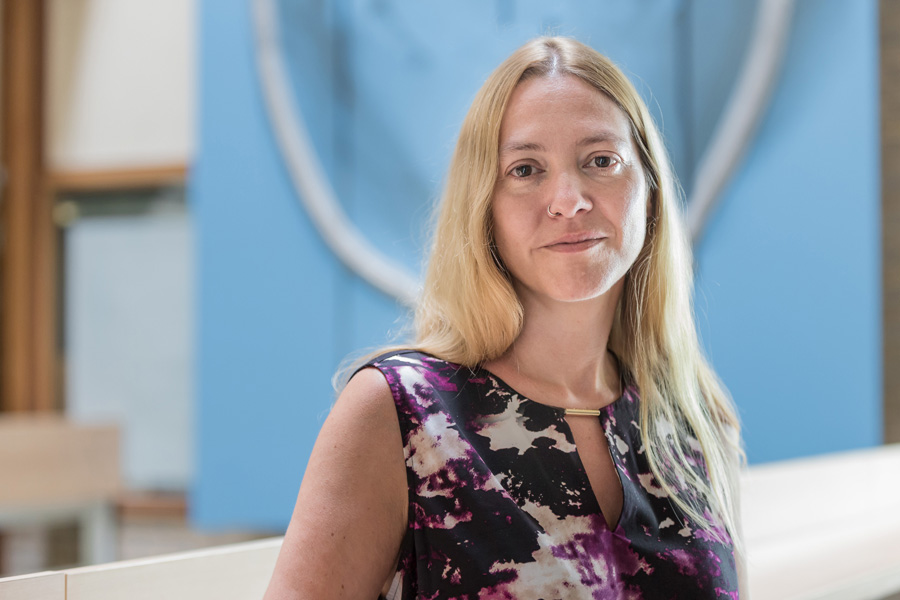
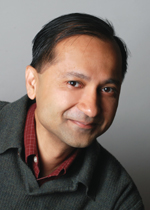
Sonja Smets is a Full Professor of Logic and Epistemology at the Institute for Logic, Language and Computation (ILLC) at the University of Amsterdam, with dual affiliation in the Faculty of Science and Faculty of Humanities. Her research spans formal epistemology, quantum logic, and logics for multi-agent systems in AI. Fields of Interest: Formal Epistemology, Quantum Logic, Dynamic Epistemic Logic Key Awards: ERC Starting Grant (2012-2017), VIDI Grant (2010-2015), Birkhoff-Von Neumann Prize (2012) Her work examines informational processes through classical and non-classical logics, focusing on knowledge updates in multi-agent systems and quantum structures. A 2021 publication with Fernando R. Velázquez Quesada explores logic’s evolution from individual reasoning to social interaction. She serves on editorial boards including the Oxford University Press Journal of Logic and Computation and Synthese , and co-organizes workshops on quantum logic and social reasoning. Her career includes leadership roles like Scientific Director of ILLC (2016-2021) and Rosalind Franklin Research Fellow.
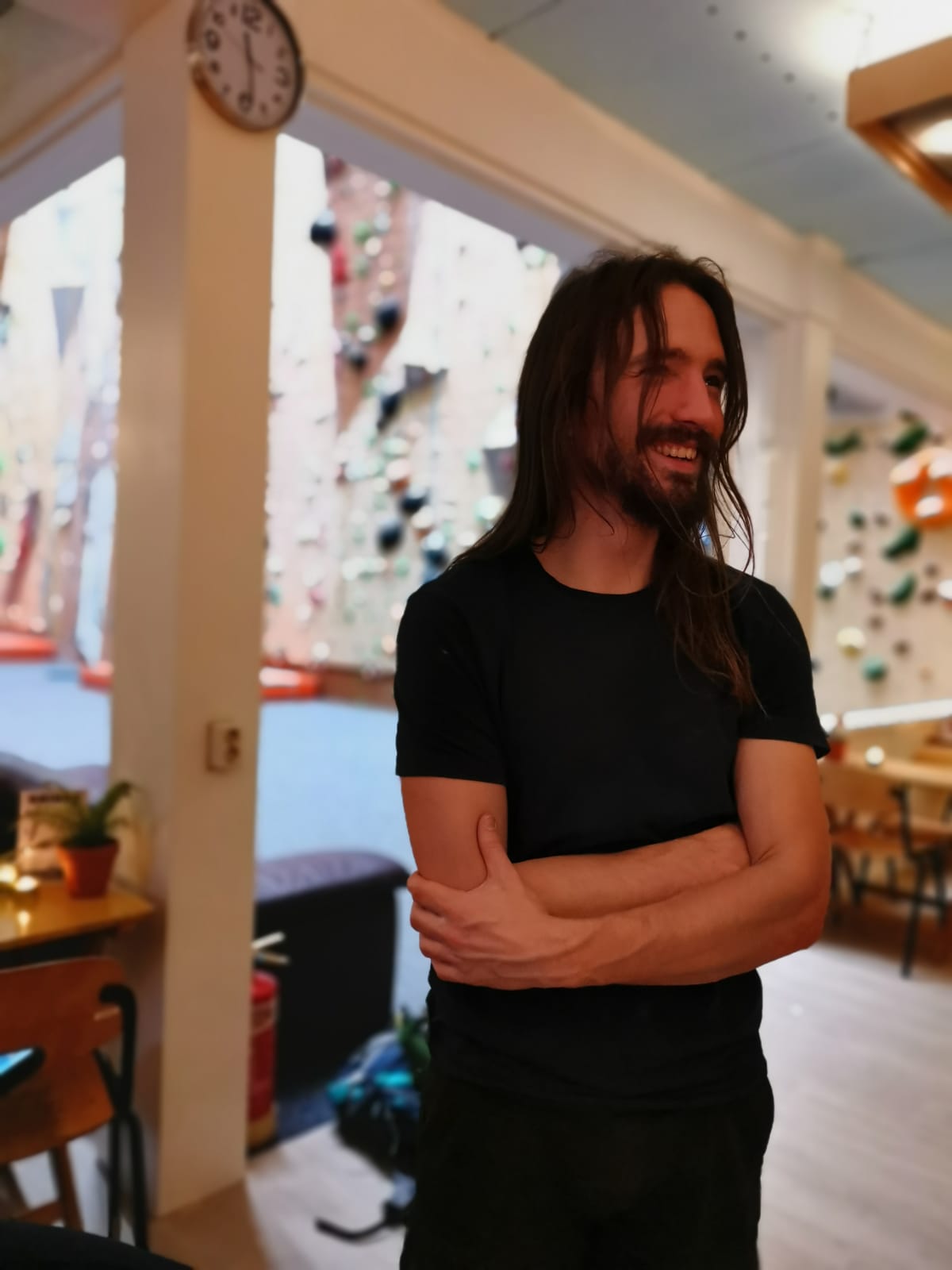
Andrew Adamatzky is Professor in Unconventional Computing at the University of the West of England, Bristol, where he directs the Unconventional Computing Laboratory. His research spans reaction-diffusion computing, cellular automata, physarum computing, massive parallel computation, applied mathematics, collective intelligence and robotics, bionics, computational psychology, non-linear science, novel hardware, and future computation technologies. Research focuses on developing computing paradigms inspired by natural phenomena. Major areas include: Physarum machines and slime mould computing Reaction-diffusion chemical computers Cellular automata theory and implementations Unconventional computing materials (colloids, fungi, proteins) Biologically-inspired robotics and swarm intelligence Recent publications demonstrate strong emphasis on biomolecular computing systems, proteinoid-based computation, cellular automata advances, and hybrid bio-electronic systems. Work increasingly explores bio-electrical phenomena in unconventional substrates like sea mud and plant tissues.
Per Andersson is a Senior Lecturer at the Department of Computer Science, Lund University. He serves as Director of first and second cycle studies and holds additional roles at ELLIIT (Linköping-Lund initiative on IT and mobile communication) and the Parallel Systems group. His research focuses on embedded systems, code generation, optimization, and reconfigurable hardware design. He contributes to UN Sustainable Development Goals through technology advancements. Professional roles include leadership in academic program administration and participation in major initiatives like the EASE project (Embedded Applications Software Engineering, 2008-2018). His work bridges computer science and education policy, particularly in recognition of prior learning (RPL) and higher education accreditation processes. Research interests span technical domains such as parallel architectures, reconfigurable systems, and medical informatics, alongside educational topics like lifelong learning systems. His 20+ publications reflect interdisciplinary engagement, with notable contributions in IEEE conferences and journals like Haematologica and International Journal of Lifelong Education. He collaborates extensively with industry and academia, evidenced by participation in projects involving software engineering, radio standard integration, and clinical trial analyses. His work emphasizes practical applications of theoretical advancements in both technical and educational fields.
Dr. Abraham Westerbaan is a Lecturer at Radboud University's ICIS (Digital Security Department) and a Scientific Programmer at Radboud's iHub. He earned his Ph.D. in 2019 under the supervision of Bart Jacobs, defending a thesis titled *The Category of Von Neumann Algebras*, which explores foundational aspects of operator algebras and category theory. His research spans quantum computing, mathematical logic, and cryptographic systems, with notable contributions to quantum programming languages and mathematical structures in theoretical physics. Westerbaan's work integrates advanced algebraic concepts with computational security, reflecting his dual role in academic research and applied scientific programming. His publications emphasize categorical frameworks for quantum mechanics, operational quantum logic, and cryptographic protocols for network privacy. He maintains an active GitHub repository documenting his thesis and related projects, showcasing collaborations in operator algebra theory and computational mathematics. While no specific grants or awards are explicitly listed, his extensive publication record and academic roles indicate sustained engagement with cutting-edge research in theoretical computer science and mathematical physics. His affiliations with ICIS and the iHub highlight a commitment to both foundational inquiry and applied technological development.
Wilfred G. van der Wiel is a Full Professor in the Nano Electronics department at the MESA+ Institute for Nanotechnology, University of Twente. His work bridges nanotechnology, quantum physics, and unconventional computing, focusing on novel hardware for machine learning and brain-inspired systems. Full Professor, Nano Electronics, MESA+ Institute, University of Twente Research Interests: His research lies at the intersection of nanoelectronics and cognitive computing. He investigates disordered dopant-atom networks in silicon , gold nanoparticle assemblies , and in-materio computing to develop energy-efficient, adaptive hardware. His work explores how physical systems can inherently perform computation, bypassing traditional von Neumann architectures. Publication Trends: Recent articles (2023–2025) highlight a shift toward practical implementations of neuromorphic computing, including speech recognition in physical systems and systematic reviews of brain-inspired architectures. Earlier works focus on fundamental transport mechanisms in nanostructures. Collectively, his publications reveal a trajectory from basic physics of nanodevices to applied neuromorphic engineering and software frameworks like Brains-PY. Scientific Contributions: While specific awards are not listed, his high-impact publications in journals like Nature and Physical Review Applied , along with continuous funding and supervision of research, indicate significant recognition in the field. Advising and Grants: He has supervised at least 29 research projects, including PhD and postdoctoral work, as indicated by 'Supervised Work (29)'. He leads or participates in externally funded projects related to nanotechnology and neuromorphic computing, evidenced by collaborative publications and datasets. Labs and Teams: He is a key member of the MESA+ Institute for Nanotechnology at the University of Twente, working within the Nano Electronics group. He collaborates extensively with researchers in physics, materials science, and computer science, particularly on projects involving unconventional computing and nanofabrication.
Professor Michael Ortiz is a faculty member at the California Institute of Technology (Caltech), specializing in the Department of Aerospace Engineering. His research spans the entire waterfront of solid mechanics, focusing on the deformation and failure of materials across diverse length and timescales, from atomic clusters to tectonic plates. Ortiz emphasizes applications-driven research, integrating experimental, theoretical, and computational methods to address real-world challenges in engineering and industry. His work includes non-equilibrium statistical thermodynamics for atomic ensembles, leveraging Jaynes' maximum entropy principle and discrete kinetic laws to model systems with non-uniform temperature and composition. He has contributed to understanding heat conduction in silicon nanowires, hydrogen desorption in palladium films, and alloy segregation/precipitation phenomena. Scientific Awards: University of Glasgow Honorary Degree (2025) 2025 Jerald L. Ericksen Prize (Inaugural Award) John von Neumann Medal (2019)
Rupak Chatterjee is an Industry Assistant Professor in the Department of Applied Physics at New York University's Tandon School of Engineering. His research bridges quantum information/computation and mathematical physics, with a focus on quantum algorithms for machine learning, optimization, operator algebras, and quantum mechanical systems. Education: Postdoctoral Scholar, Physics (James Franck Institute, University of Chicago) Ph.D. & M.S., Physics (Stony Brook University) M.Math., Mathematics (University of Waterloo) B.Sc., Physics (University of Calgary) Chatterjee's research explores quantum systems for machine learning, quantum optimization protocols, and mathematical frameworks like C∗-algebras and supersymmetric quantum mechanics. His work integrates theoretical rigor with applications in quantum computing and complex physical systems. His recent publications (2019–2024) demonstrate a strong emphasis on quantum entanglement, chaos in optomechanical systems, adiabatic quantum optimization, and relativistic quantum mechanics. Several publications also apply quantum methods to finance and diffusion modeling. No awards, student advising, or grant information is documented in the provided text.
Christos Papadimitriou is the Donovan Family Professor of Computer Science and Provost's Senior Faculty Teaching Scholar at Columbia University. He previously held the C. Lester Hogan Professorship at UC Berkeley (1996–2017) and taught at Harvard, MIT, Stanford, UC San Diego, and the National Technical University of Athens. His research bridges theory and practice, focusing on algorithms, complexity, computational biology, AI/ML, game theory, and neuroscience. He pioneered algorithmic game theory and explores brain-mind interfaces using neuronal assembly models. Education: BS in EE (Athens Polytechnic, 1972), PhD in EECS (Princeton, 1976) Awards: IEEE John von Neumann Medal (2016), Gödel Prize (2012), National Academy of Sciences/Engineering membership, 9 honorary doctorates Books: Elements of the Theory of Computation , Computational Complexity , Algorithms , and novels like Logicomix His work applies computational lenses to biology, economics, and language, emphasizing formal models for emergent cognition. Recent research includes neuronal assembly-based computation, fairness in ML, and game-theoretic dynamics.
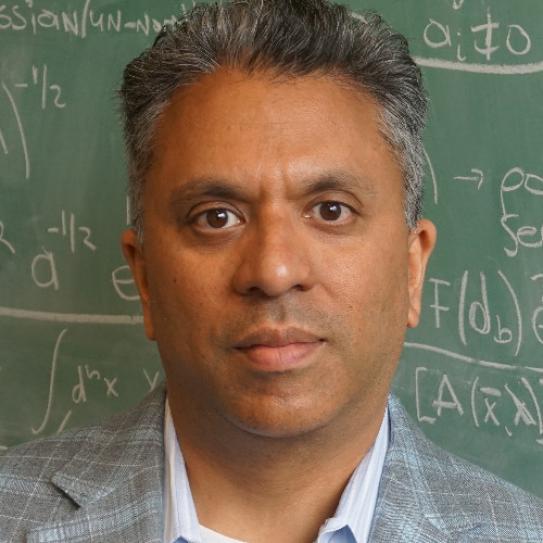
Jaijeet Roychowdhury is a Professor of Electrical Engineering and Computer Sciences (EECS) at the University of California, Berkeley. He specializes in machine learning, novel computational paradigms, and the analysis/simulation of cyber-physical, electronic, and biological systems. His research group pioneered self-sustaining oscillator-based Ising machines and contributed to oscillator phase macromodeling, nonlinear system reduction, and open-source prototyping platforms like MAPP. Education: B.Tech., Electrical Engineering, Indian Institute of Technology (IIT) Kanpur, 1987 M.S., Electrical Engineering & Computer Science, UC Berkeley, 1989 Ph.D., Electrical Engineering & Computer Science, UC Berkeley, 1993 Research Interests: Machine learning integration with physical systems Innovative computational hardware (e.g., oscillator-based Ising machines) Oscillator networks for unconventional computing Nonlinear dynamical systems analysis Analog circuit simulation and verification Awards & Recognition: 2019 Bell Labs Prize (with Tianshi Wang) 2009 IEEE Fellow 2019-2023 Bakar Foundation Awards Bell Labs' Extraordinary Achievement Award (1996) Advising & Industry: Notable advisee: Tianshi Wang (Bell Labs Prize co-winner) Cofounder of Berkeley Design Automation (acquired by Mentor Graphics) Leadership roles at AT&T Bell Labs, Bell Labs, and CeLight Inc. Lab & Tools: Leads the Roychowdhury Research Group, developing MAPP (Model and Algorithm Prototyping Platform) and PHLOGON phase-based logic frameworks.
Joachim Toft is a Professor in the Department of Mathematics at Linnaeus University (formerly Växjö University), where he has been employed since February 2004. Prior to this position, he served as an assistant professor at Blekinge Institute of Technology in Karlskrona, Sweden. He completed his PhD in mathematics at Lund University in 1997 and was employed as a teaching assistant master at Kristianstad University from 1995 to 1998. Currently, he holds editorial positions for the Journal of Pseudo-Differential Operators and Applications and Annals of Functional Analysis, and serves as a member of the International Society of Analysis, its Applications and Computations (ISAAC). Professor Toft's research primarily focuses on pseudo-differential calculus and related mathematical fields. His work encompasses Fourier analysis, time-frequency analysis, harmonic analysis, basic operator theory, generalized functions (particularly Gelfand-Shilov spaces and Gevrey classes), and micro-local analysis. While these areas form the core of his theoretical work, he also explores applications to wave phenomena, including physics interpretations, non-stationary filters in signal analysis, and geophysics. His research approach emphasizes functional analysis, harmonic analysis, and basic operator theory more frequently than is typical within these specialized fields. The recent publication record demonstrates a strong focus on extending pseudo-differential operator theory to more generalized function spaces, including quasi-Banach spaces, Orlicz spaces, and Pilipović spaces. His work shows a clear progression toward developing more comprehensive frameworks for time-frequency analysis and operator theory, with particular attention to continuity properties, spectral invariance, and characterization of operators in various function spaces. The collaboration network spans multiple international institutions, reflecting the global nature of modern mathematical research. Professor Toft is actively involved in three major research groups at Linnaeus University: the International Center for Mathematical Modeling (ICMM), Scientific Computing and Partial Differential Equations, and Waves, Signals and Systems. His current research project focuses on developing Hörmander-Weyl calculus within the framework of ultra distributions, aiming to create calculi feasible for objects more complex than standard distributions.
Mariagrazia Graziano is a Lecturer at the School of Engineering (EPFL). Her teaching focuses on advanced computational paradigms. Courses: Quantum and Nanocomputing (covers quantum computing, field-coupled nanocomputing, molecular computing, and spintronic computing). Research Interests: Non-traditional computing architectures, quantum technologies, and nanoscale systems. Contact: mariagrazia.graziano@epfl.ch
Romain Duboscq is a Lecturer at the National Institute of Applied Sciences (INSA) in Toulouse and a member of the Institute of Mathematics of Toulouse (IMT). He is affiliated with Paul Sabatier University (University Toulouse III) as evidenced by his contact information at the Toulouse Institute of Mathematics. His research spans several interconnected areas in mathematical physics: Analysis and numerical simulation of partial differential equations related to quantum mechanics Numerical methods for Gross-Pitaevskii type equations in Bose-Einstein condensates Stochastic Schrödinger equations and their numerical approximation Cauchy problem for stochastic Gross-Pitaevskii equations Stochastic regularization effects and the Itô-Tanaka trick Minimization of quantum entropies under local constraints Duboscq has developed the GPELab toolbox, a free-access Matlab resource for solving Gross-Pitaevskii equations, in collaboration with Xavier Antoine. His research often addresses challenging cases with strong nonlinearity and fast rotation in quantum systems. His work demonstrates a consistent integration of theoretical analysis with practical computational methods, making contributions to both fundamental understanding and applied methodology in quantum mechanical systems. His publication record shows sustained productivity across prestigious journals including Journal of Mathematical Physics, Annales Henri Lebesgue, and ESAIM: Mathematical Modelling and Numerical Analysis. The recent publications (2022-2025) demonstrate continued engagement with multiple research threads, particularly in quantum PDEs, stochastic methods, and computational approaches to quantum systems. Duboscq has received recognition through numerous publications in high-impact journals: Multiple publications in Annales Henri Lebesgue (2022) Work published in Journal of Mathematical Physics (2022) Contributions to ESAIM: Mathematical Modelling and Numerical Analysis (2025) Publications in Annals of Probability (2025) Research in Journal of Functional Analysis (2021) Duboscq maintains active research collaborations with several prominent researchers including Xavier Antoine, Christophe Besse, Renaud Marty, Anthony Réveillac, and Olivier Pinaud. His GPELab toolbox represents a significant contribution to computational tools for quantum physics research. While specific student supervision details aren't provided in the available information, his numerous collaborations suggest an active mentoring role in the research community. Duboscq leads the GPELab research group, which focuses on developing numerical methods and computational tools for quantum mechanical systems, particularly Bose-Einstein condensates modeled by Gross-Pitaevskii equations. The group's work bridges theoretical mathematics with practical computational applications, providing resources that enable more accurate simulations of complex quantum phenomena.