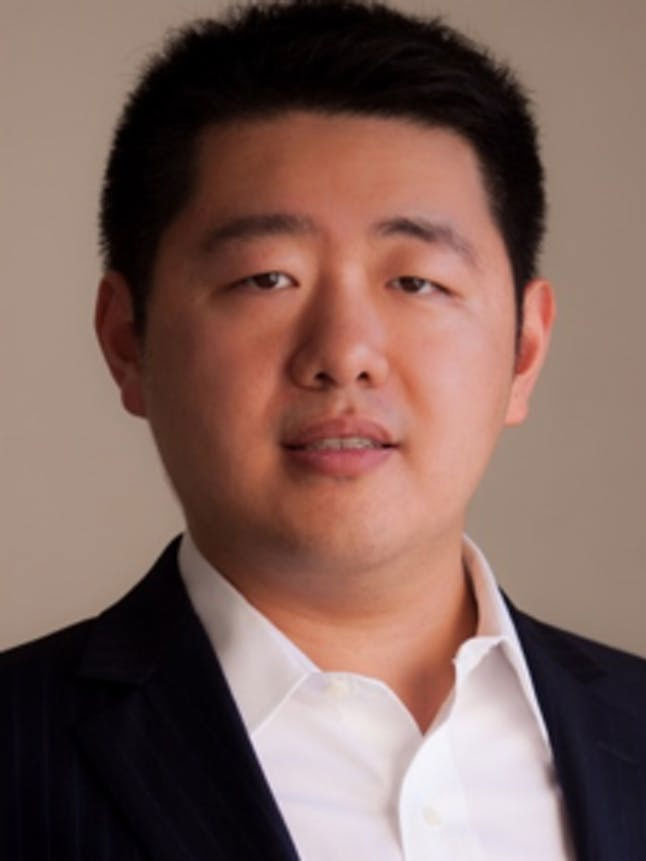
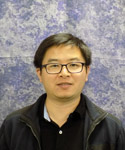
Yanzhi Wang is a Professor in the Department of Electrical and Computer Engineering at Northeastern University , affiliated with the Institute for Experiential AI and the Institute for the Wireless Internet of Things . He holds a PhD from the University of Southern California (2014). His research focuses on real-time AI systems, deep neural network compression, neuromorphic computing, and non-von Neumann architectures. Notable projects include NSF-funded initiatives on age-inclusive urban design, superconducting computing (DISCoVER), and edge device optimization (PatDNN). He has received prestigious awards such as the Army Research Office Young Investigator Award and the Constantinos Mavroidis Translational Research Award. His work emphasizes algorithm-hardware co-design for energy efficiency, with grants from NSF, ARO, and industry partners like Google. Recent research trends reflect his focus on accelerating vision transformers, diffusion models, and large language models for edge computing. He has pioneered methods like AutoViT and Fastcar, addressing latency and resource constraints in mobile platforms. Collaborations span academia and industry, driving innovations in superconducting circuits and neuromorphic systems.
Ivan Dokmanic is an Assistant Professor at the Coordinated Science Laboratory (CSL) within the University of Illinois . His research bridges signal processing , machine learning , and applied inverse problems , with a focus on acoustics, biomedical imaging, and distance geometry. Current Role : Assistant Professor, CSL Email : dokmanic@illinois.edu Research Interests : Dokmanic explores machine learning applications in inverse problems , particularly distance geometry for molecular imaging and acoustics . His work includes unlabeled sensing , where distances between points are known but their arrangement is not. This has implications for powder diffraction , indoor localization , and echo modeling . Article Trends : His recent publications emphasize distance geometry in machine learning , acoustic signal processing , and inverse problem theory . Key areas include molecular imaging , audio encryption , and sensor positioning . Collaborative work spans medical imaging , cyberphysical systems , and geometric invariants . 2016 Google Faculty Award NSF Grant (1 year, $157,079) Students and Grants : Dokmanic mentors PhD students like Puoya, Shuai, and Anadi. His research is funded by the National Science Foundation , Google , VISA , and nVidia .
Minghao Qi is a Professor in the Department of Electrical and Computer Engineering at Purdue University's College of Engineering, West Lafayette. His research focuses on integrated photonics systems for optical communications, quantum information, and precision metrology applications. Professor Qi's work spans several critical photonics domains: Design and application of microresonator-based optical frequency combs (Kerr combs) Silicon and silicon nitride integrated photonic circuits Thin-film lithium niobate devices for nonlinear optics Quantum information processing using frequency-bin entangled photons Photonic neuromorphic computing with machine learning co-design Optical sensors and time-of-flight ranging systems Analysis of his 2022-2025 publications reveals three dominant research vectors: (1) Vernier microcombs for optical atomic clocks and RF stabilization, (2) Trident edge coupler architectures for octave-spanning nonlinear processes on lithium niobate, and (3) Physics-informed neural networks applied to photonic device design and signal processing. His recent work demonstrates strong convergence between integrated photonics, quantum technologies, and machine learning.
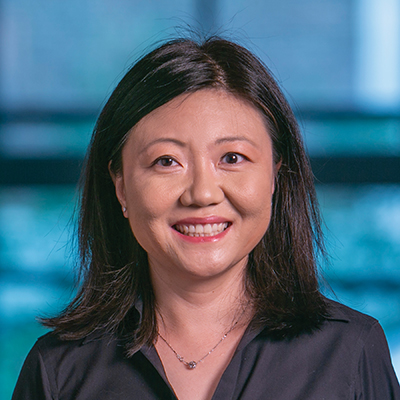
Dr. Jing Li is an Associate Professor and Eduardo D. Glandt Faculty Fellow at the University of Pennsylvania , holding dual appointments in the Electrical and Systems Engineering and Computer and Information Science departments. As co-director of the CyberSavvy nationwide security research center and director of the Penn Computational Intelligence Lab (PennCIL) , she pioneers innovations in non-von Neumann computing paradigms. Her research spans post-CMOS technologies, in-memory computing, and hardware-software co-design for security and AI applications. PhD in Computer Engineering, Purdue University (2009) BSc in Electrical Engineering, Shanghai Jiaotong University (2004) Research Focus: Dr. Li's work addresses fundamental challenges in computer systems across the stack. Key areas include: In-Memory Computing: Liquid Silicon architecture combining RRAM with silicon CMOS through monolithic 3D integration Security Engineering: Transforming computer security from "Art" to formal "Engineering" discipline within CyberSavvy Virtualization: Cloud FPGA abstraction layers decoupling compilation from runtime resource management Graph Analytics: Degree-aware optimization techniques for massive-scale graph processing Deep Learning Systems: Roofline model extensions for FPGA-based CNN acceleration Scientific Impact: Awarded DARPA Young Faculty Award , NSF CAREER Award , and IBM CEO Milestone Award , her team has achieved world records in energy-efficient computing (ENIAD supercomputer). With 46 U.S. patents and over 80 publications, she leads ecosystem development for emerging computing architectures through initiatives like the open-source MEG simulation platform . Community Leadership: Dr. Li serves on program committees for flagship conferences ( ISCA , FPGA Symposium ), chairs the International Memory Workshop , and contributes to the MLsys conference's inaugural committee. She actively mentors through multiple PhD openings and industry collaborations.
Xu Jinchao is a Professor of Applied Mathematics and Computational Sciences at King Abdullah University of Science and Technology (KAUST) and the Verne M. Willaman Professor of Mathematics at Penn State University. He has held distinguished roles, including Director of the Center for Computational Mathematics and Applications at Penn State since 1997 and is an Affiliated Faculty member of the College of Information Sciences and Technology at Penn State. His research focuses on numerical partial differential equations (PDEs), multigrid methods, machine learning, finite element methods, and domain decomposition methods. He is renowned for pioneering contributions such as the Bramble-Pasciak-Xu (BPX) preconditioner, Hiptmair-Xu (HX) preconditioner, Xu-Zikatanov (XZ) identity, and Morley-Wang-Xu (MWX) element. His work bridges computational mathematics and machine learning, including the development of MgNet, which unifies multigrid methods with convolutional neural networks. Xu has been recognized with numerous awards, including Fellowships from SIAM, AMS, AAAS, and the European Academy of Sciences. Notable accolades include the 2008 DOE Top 10 Breakthroughs for his HX preconditioner and the 1995 Feng Kang Prize for Scientific Computing. He has organized over 100 conferences and serves on editorial boards of top journals such as Mathematics of Computations and Numerische Mathematik . His leadership includes directing research centers and advancing computational science through collaborative efforts.
Endre Süli FRS is Professor of Numerical Analysis at the University of Oxford and Fellow of Worcester College. He also holds the position of Professor Hospitus Universitatis Carolinae Pragensis at Charles University, Prague. Süli leads research within the Oxford Centre for Nonlinear Partial Differential Equations (OxPDE) and the Numerical Analysis Group at Oxford. His research focuses on mathematical and numerical analysis of nonlinear partial differential equations and finite element methods , with particular expertise in kinetic models for polymers, Navier-Stokes-Fokker-Planck systems, non-Newtonian fluid flow, implicitly constituted material models, free-discontinuity problems, computational fracture modeling, adaptive algorithms, and multiscale finite element methods. Süli has received numerous prestigious honors including Fellowship in the Royal Society (2021), the London Mathematical Society Naylor Prize (2021), SIAM Fellowship (2016), and membership in the Academia Europaea (2020). He has delivered distinguished lectures worldwide including the John von Neumann Lecture (2016) and the Charlemagne Distinguished Lecture (2011). Foreign Member of Serbian National Academy of Sciences and Arts (2009) Fellow of European Academy of Sciences (2010) London Mathematical Society Forder Lecturer (2015) Oxford University Teaching Excellence Award (2009) Professor Süli has supervised over 40 doctoral students throughout his career and currently advises Stefano Fronzoni and Olav Haaland. He serves on multiple editorial boards including as Editor-in-Chief of Springer's Universitext Series (2023-) and previously co-edited Oxford University Press's Monograph Series in Numerical Mathematics (1994-2023). Süli has held significant leadership roles including Chair of the Society for Foundations of Computational Mathematics (2002-2005) and President of SIAM UKIE Section (2013-2015). He is actively involved in the international mathematics community, organizing workshops at the Mathematisches Forschungsinstitut Oberwolfach and participating in major conferences through 2025, including the upcoming EFEF XXII in Trieste.
Atakan Aral serves as an Associate Professor at the Faculty of Computer Science, University of Vienna, where he leads research in edge computing, distributed systems, and environmental monitoring applications. His work focuses on developing efficient and resilient computing systems for environmental applications, with particular emphasis on neuromorphic edge AI and the cloud-edge continuum. He maintains an active teaching schedule offering courses in Distributed Systems Engineering, Cloud Computing, and Practical Software Courses with Bachelor's Thesis work across multiple semesters through 2025. Dr. Aral's research interests span several critical areas in modern computing including edge computing architectures, federated learning approaches, neuromorphic computing for environmental monitoring, and resilient systems design. His work addresses fundamental challenges in resource-constrained environments, particularly focusing on latency-sensitive applications and energy-efficient computation. The interdisciplinary nature of his research bridges theoretical computer science with practical environmental applications, developing systems that can operate effectively in remote or resource-limited settings. Analysis of his recent publication trajectory reveals a clear evolution from foundational cloud computing research toward increasingly specialized edge intelligence systems. Early work focused on resource allocation and scheduling in cloud environments, while his current research emphasizes neuromorphic approaches for sustainable environmental monitoring. His publications demonstrate growing interdisciplinary collaboration, particularly with environmental scientists, and increasing focus on practical implementations of theoretical concepts in real-world monitoring systems. Dr. Aral leads significant research projects including TROCI (Towards Resilient Operation of Critical Infrastructure), an ongoing initiative, and SWAIN (Sustainable Watershed Management Through IoT-Driven AI), which ran from February 2021 to February 2024. His work spans multiple dimensions of computing systems, from hardware-aware algorithms to application-level implementations, with consistent contributions to major conferences and journals in distributed systems and edge computing. He is an active member of the Scientific Computing research group at the University of Vienna, working from Room 6.49 at Währinger Straße 29. His research environment includes collaboration with the Environment and Climate Research Hub, reflecting the interdisciplinary nature of his work that bridges computer science with environmental applications. His publications indicate strong international collaboration across European institutions and research groups.
Suyi Li is an Associate Professor in the Department of Mechanical Engineering at Virginia Tech's College of Engineering, where he leads the Dynamic and Architected Robot and structurE (DARE) Lab. Previously, he served as an Assistant Professor at Clemson University from 2016-2022 after completing postdoctoral research at the University of Michigan. Ph.D. in Mechanical Engineering, University of Michigan, Ann Arbor (2014) M.Sc. in Mechanical Engineering, Pennsylvania State University (2008) B.S. Summa Cum Laude in Mechanical Engineering, University of Michigan, Ann Arbor (2006) Dr. Li's research focuses on pioneering new paradigms of intelligent robots and functional structures by exploiting the interplay between geometry, mechanics, actuation, and computation. His work spans origami-inspired morphing structures, physically computing materials that perform machine learning tasks without traditional electronics, and soft/reconfigurable robots that can move like animals or grow like plants. His innovative approach combines mechanical engineering principles with computational thinking to create systems with 'mechano-intelligence'. Analysis of Dr. Li's recent publications reveals a strong trajectory toward embodied intelligence and mechanical computing, where physical structures themselves perform computational tasks. His work increasingly integrates origami/kirigami principles with advanced materials to create systems that can sense, process information, and actuate without conventional electronics. The research shows progression from fundamental mechanics of adaptive structures to sophisticated applications in robotics and computing. Dean's Awards of Excellence – Faculty Fellow, Virginia Tech (2024) C.D. Mote Jr Early Career Award, ASME Design Engineering Division (2022) Gary Anderson Early Achievement Award, ASME Aerospace Division (2021) Junior Researcher of the Year Award, College of Engineering, Clemson University (2020) CECAS Dean's Faculty Fellow, Clemson University (2018) CAREER Award, National Science Foundation (2018) ASME Freudenstein Young Investigator Award Dr. Li has secured nearly two million dollars in research funding, including the prestigious NSF CAREER award and an NSF EFRI project to build mechano-bio hybrid reservoir computers. He advises multiple Ph.D. and Master's students in the DARE Lab, with recent successes including Vishrut Deshpande's Ph.D. defense. His research has generated close to 80 journal and conference papers, demonstrating significant impact in the fields of adaptive structures and materials systems. Dr. Li also serves on editorial boards for several prominent journals including Journal of Intelligent Material Systems and Structures and Philosophical Transactions of the Royal Society A. The DARE Lab at Virginia Tech comprises a multidisciplinary team of researchers working on origami-inspired meta-structures, physically computing materials, and soft robotics. Current projects include developing electronics-free crawling robots with mechanical central pattern generators, creating kirigami-based wearable medical devices, and engineering metamaterials with programmable mechanical properties. The lab actively collaborates with institutions across the country and has received recognition for its innovative approaches to combining mechanical design with computational capabilities.
Tom Conte is an academic leader with a joint appointment in the School of Electrical & Computer Engineering and School of Computer Science at Georgia Institute of Technology. As the founding director of the Center for Research into Novel Computing Hierarchies (CRNCH), he specializes in computer architecture and compiler optimization. His work focuses on manycore architectures, energy-efficient microprocessor design, and embedded system architectures. Prior to Georgia Tech, he directed the Center for Embedded Systems Research at North Carolina State University. He holds IEEE Fellow status and served as 2015 President of the IEEE Computer Society, co-leading the IEEE Rebooting Computing Initiative since 2011. Dr. Conte earned his bachelor’s degree in Electrical Engineering from the University of Delaware (1986), followed by M.S. and Ph.D. degrees in Electrical Engineering from the University of Illinois at Urbana-Champaign (1988 and 1992). His research has been recognized with prestigious awards including the IEEE Computer Society’s Golden Core Member award and the National Science Foundation’s CAREER Award (1996). His research interests span quantum computing, 3D chip architectures, energy-efficient processing, and post-Moore computing innovations. He has pioneered initiatives like the Superstrider architecture and CREEPY energy-efficient processing frameworks. Recent work includes advancements in quantum programming languages (e.g., Qwerty) and hybrid quantum-classical systems. Awards: IEEE Fellow, Young Alumni Achievement Award, CAREER Award Leadership: IEEE Computer Society President (2015), CRNCH Director Key Projects: Rebooting Computing Initiative, Superstrider Architecture His lab’s contributions include novel compiler optimizations for manycore systems, smart NIC offloading techniques, and thermodynamically inspired computing models. Conte’s work bridges academic research with industry needs through interdisciplinary collaborations and standardization efforts.
Diego Donzis is a Professor in the Department of Aerospace Engineering at Texas A&M University, affiliated with the College of Engineering. He holds the Presidential Impact Fellow title. His work focuses on high-performance computing for fluid dynamics, particularly compressible turbulence, turbulent mixing, and shock-turbulence interactions. Donzis earned his Ph.D. and M.S. in Aerospace Engineering from the Georgia Institute of Technology. Research interests include large-scale simulations of turbulent flows, thermal boundary condition effects on turbulence, and the development of advanced numerical methods like Selected-Eddy Simulations (SES) for extreme-scale computing. His studies explore universality in turbulence scaling, energy spectra dynamics, and the interplay between compressibility and fluid mixing. Publications emphasize turbulence decay laws, shock-turbulence interactions, and the role of thermal non-equilibrium in turbulent flows. Notable contributions include advancing asynchronous algorithms for exascale CFD and analyzing density gradient statistics in compressible turbulence. Awards include the Presidential Impact Fellow distinction. Donzis collaborates on grants such as the Frontera Travel Grant for compressible turbulence research. His work bridges computational methods with fundamental fluid dynamics, addressing challenges in both numerical accuracy and physical modeling.
Paul R. Genssler is a Dr.-Ing. researcher at the Chair of AI Processor Design (AI-Pro) within the Technical University of Munich (TUM), actively advancing hardware solutions for artificial intelligence under Prof. Hussam Amrouch. His work bridges computer engineering and emerging technologies, focusing on overcoming fundamental limitations in conventional computing architectures through brain-inspired paradigms. His research spans critical domains in next-generation computing: Hyperdimensional Computing for robust pattern recognition and bioinformatics applications Neuromorphic and In-Memory Computing architectures for energy efficiency Reliability engineering for emerging memory technologies (FeFET, etc.) Quantum computing support systems including cryogenic embedded electronics Machine learning-driven transistor aging prediction and mitigation Analysis of his 15 most recent publications (2023-2024) reveals a dominant trend toward hyperdimensional computing as a unifying framework for addressing reliability challenges in emerging technologies. His work consistently integrates in-memory computing techniques to bypass von Neumann bottlenecks while targeting real-world applications like genome matching and unsupervised learning. A significant portion focuses on error-resilient implementations for unreliable nanoscale devices, demonstrating exceptional cross-stack expertise from transistor physics to algorithm design. As a core member of TUM's AI Processor Design group affiliated with the Munich Institute of Robotics and Machine Intelligence (MIRMI), Genssler collaborates extensively on projects spanning cryogenic quantum control systems, FPGA-based AI resilience, and monolithic 3D integration. The team operates at the intersection of semiconductor physics, computer architecture, and machine learning, with strong industry connections evident through publications at DATE, ASP-DAC, and ICCAD.
Professor Oliver Johnson is a faculty member at the School of Mathematics, University of Bristol, UK, where he serves as Head of School and holds the Professor of Information Theory position. His research bridges information theory, probability, and statistics, focusing on entropy convergence, group testing, and fundamental limits in data analysis. Current PhD students: Kieran Morris, Conor Crilly Ex-PhD students: Matt Aldridge, Leonardo Baldassini, Dan Cowley, Vaia Kalokidou, Tom Kealy, Jennifer Chakravarty, Zichen Gui, Chrys Paschou Ex-postdoc: Erwan Hillion His work includes ORCiD profile and collaborations across information theory, cybersecurity, and ecological modeling.
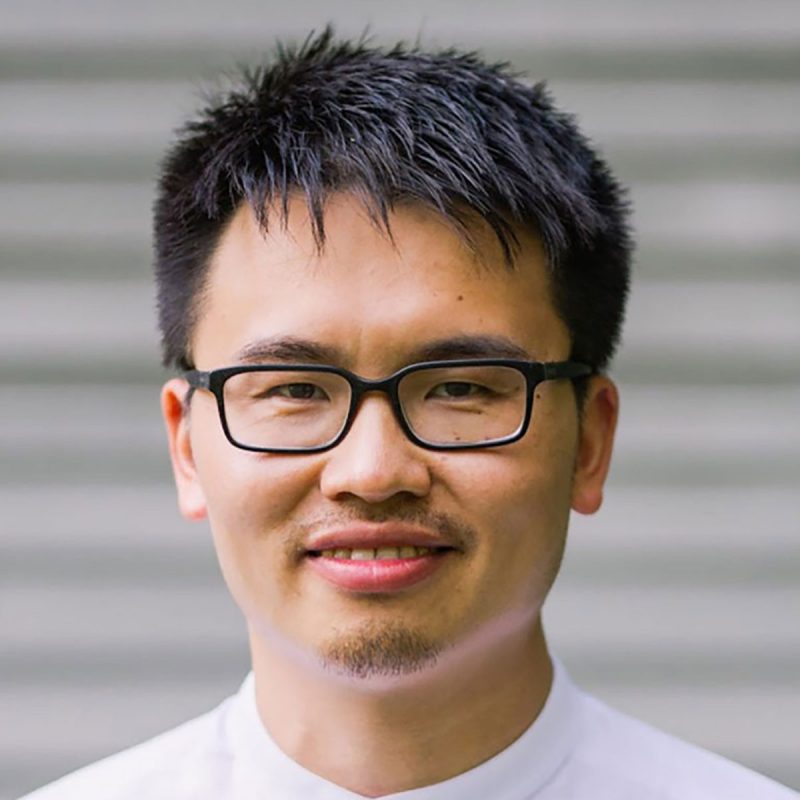
Xu Zhang is an Assistant Professor in Electrical and Computer Engineering at Carnegie Mellon University's College of Engineering. He directs the Zhang Lab, focusing on atomically precise 2D materials (e.g., graphene, tellurium) for nanoelectronic/photonic devices in computing, sensing, energy, and healthcare. His research bridges metamaterials, neuromorphic systems, and scalable nanofabrication. Zhang holds a PhD from MIT and BS from USTC, with honors including MIT Technology Review's Innovators Under 35 (2022), NSF CAREER Award (2023), and multiple MIT fellowships. His group's recent work demonstrates programmable mid-infrared metasurfaces, high-mobility tellurium photodiodes, and kirigami-actuated optical systems for biomedical imaging and AR/VR. Advisees include Kevin St. Luce, Yibai Zhong, and Tianyi Huang. Zhang has secured research funding from NSF and industry partners.
Prof. Dr. Sven Raum is Chair of Algebra at the University of Potsdam , Germany, within the Institute of Mathematics . His research focuses on operator algebras and their interactions with groups and group-like structures, including Hecke algebras, groupoids, quantum groups, and tensor categories. He leads the research group GOAT (Gruppen- und Operatoralgebren-Treffen), which includes postdocs Sanaz Pooya and Jonathan Taylor.
Ping Zhong is an Associate Professor in the Department of Mathematics at the University of Houston. He holds a Ph.D. from Indiana University Bloomington and joined UH in 2024 after serving as Assistant Professor at the University of Wyoming (2018-2024) and completing postdoctoral work at the University of Waterloo. His research explores free probability theory, operator algebras, and applications of random matrix theory to high-dimensional statistics. Educational background includes: Ph.D. Mathematics, Indiana University (2014) M.S. Mathematics, Peking University (2008) B.S. Applied Mathematics, Huazhong University of Science and Technology (2005) Research focuses on fundamental mathematical structures in probability with emerging applications in quantum physics and statistical learning. Current investigations bridge theoretical frameworks with computational approaches for high-dimensional data analysis. Recent publications demonstrate consistent contributions to spectral analysis of random operators and convergence properties in non-commutative probability spaces. Works frequently appear in premier mathematics journals including Transactions of the AMS and Journal of the European Mathematical Society.