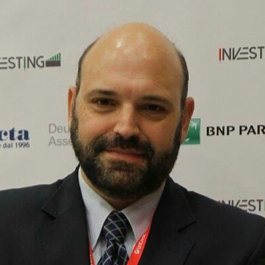
Peng Peng is an Assistant Professor at the University of Waterloo, specializing in advanced materials processing and laser technologies. His research focuses on laser-assisted joining of dissimilar materials (e.g., NiTi alloys, biomedical steels), flexible sensor fabrication, and high-entropy alloy coatings. He is part of the Full-time faculty group and maintains a personal webpage on Google Scholar. Research interests include laser welding innovations, nanomaterial synthesis, corrosion-resistant coatings, and additive manufacturing. His work bridges fundamental material science with practical applications in biomedical devices and energy systems. Recent studies emphasize machine learning integration for sensor optimization and defect engineering in nanomaterials. Publications highlight advancements in laser-induced metallurgical bonding, memristive logic circuits, and defect-controlled semiconductor properties. Collaborations span materials engineering, nanotechnology, and biomedical engineering. No awards are explicitly listed in the provided texts. Advising and grant details are not specified here. His lab focuses on laser fabrication techniques and material interface studies, with potential applications in flexible electronics and aerospace components.
Rasmus Tangsgaard Varneskov is a Professor of Statistics and Financial Econometrics at the Department of Finance, Copenhagen Business School (CBS). He is also employed by Alphadyne Asset Management. His research focuses on econometrics, high-dimensional statistics, asset pricing, and financial economics, with a strong emphasis on time series analysis and financial econometrics methodologies. Before joining CBS, he was a postdoctoral researcher in Finance at Northwestern University's Kellogg School of Management. He holds affiliations with the Center for Big Data in Finance (BIGFI) and the Center for Statistics at CBS. His educational background includes advanced studies in statistics and econometrics, though specific degrees are not detailed in the provided text. Rasmus' research interests span advanced statistical methodologies for financial data, including volatility estimation, bootstrap techniques, predictive regressions, and structural change analysis. His work has been published in top journals such as Journal of Econometrics , Journal of Financial Economics , and Quantitative Economics . A key achievement is his 2023 Econometric Theory Multa Scripsit award for prolific and impactful contributions. His publications address topics like Laplace transforms of volatility, consistent inference in predictive regressions, and dynamic hedging strategies. While no formal advisees are listed, his industry collaborations (e.g., with Nordea and Alphadyne) suggest applied research engagement. He contributes to CBS's research initiatives through participation in interdisciplinary centers focused on big data and financial statistics.
Thirumalai Venky Venkatesan is a Professor at the University of Oklahoma , renowned for inventing the pulsed laser deposition (PLD) process and pioneering its use in creating high-quality thin films of complex oxides. His work has transformed global research on oxide heterostructures, spanning applications in superconductors, magneto-resistive materials, ferroelectrics, and bioactive substrates. Recently, he has focused on ultra-low energy memories and brain-like electronics using organic molecular systems. Research Interests : Venkatesan's research bridges condensed matter physics , materials science , and nanotechnology . Key areas include oxide thin films, spintronics, plasmonics, and neuromorphic computing. His work addresses fundamental phenomena like metal-insulator transitions, polaron dynamics, and antiferromagnetic control, with applications in energy-efficient electronics and medical diagnostics. Publications & Trends : Recent articles emphasize molecular memristors , antiferromagnetic skyrmions , and oxide heterostructures for neuromorphic devices . His studies explore breathomics for lung cancer detection and quantum materials for low-energy electronics, reflecting interdisciplinary innovation. Scientific Awards : Distinguished Lectureship Award on the Applications of Physics (2020) Lab & Collaborations : Venkatesan is affiliated with the Center for Quantum Research and Technology , where he leads research on integrated oxide systems and molecular electronics.
Hooman Farkhani is an Associate Professor at the Department of Electrical and Computer Engineering at Aarhus University. His primary research focuses on spintronics, neuromorphic computing, and energy-efficient circuit design. He leads projects including the PHOTON-NeuroCom: Photonic-assisted Neuromorphic Computing system (2017-2019) and Hybrid Enhanced Regenerative Medicine Systems (2019-2023). His work spans magnetic tunnel junctions, spin-torque nano-oscillators, and resistive switching memories. Notable contributions include neuromorphic computing architectures, low-power analog/digital converters, and laser-assisted spintronic systems. Recent publications (2023-2024) highlight advancements in neuromorphic engineering, thermal effects on memristors, and energy-efficient spintronic circuits. His research bridges hardware design and neuroscience, emphasizing practical implementations in nanoscale electronics. Key projects involve hybrid spin-CMOS systems and photonic integration. He collaborates on multi-state memristor development and RF signal classification front-ends.
Charudatta Phatak is an Adjunct Professor of Materials Science and Engineering at Northwestern University and a Group Leader/Materials Scientist at Argonne National Laboratory. His research focuses on functional nanoscale heterostructures, magnetic domain behavior, and advanced microscopy techniques. He holds a Ph.D. from Carnegie Mellon University and M.Tech./B.Tech. degrees from IIT Bombay. Education : Ph.D., Materials Science Engineering, Carnegie Mellon University (2009) M.Tech., Metallurgical and Materials Science Engineering, IIT Bombay (2005) B.Tech., Metallurgical and Materials Science Engineering, IIT Bombay (2004) Research Interests : His work explores magnetic domain dynamics in 2D ferromagnets, topological spin textures (skyrmions, chiral domain walls), synthetic antiferromagnets, and quantum materials. He develops advanced computational methods for electron microscopy data analysis, including machine-learning models and 3D imaging techniques. His studies also address interfacial phenomena in solid electrolytes and low-power neuromorphic computing materials. Awards & Recognition : Argonne Impact Award for Safety (2021) Strategic Laboratory Leadership Program Honoree (2019) Northwestern-Argonne Early Career Award (2014) Research Fellowship, University of Paul Sabatier, Toulouse (2012) Professional Activities : He chairs symposia at Minerals, Metals, and Materials Society conferences, leads the IEEE Nanotechnology Council Chicago Chapter, and serves on Argonne's Center for Nanoscale Materials User Executive Committee. Labs & Teams : He leads the Functional Nanoscale Heterostructures Research Group at Argonne, focusing on microscopy-driven materials innovation.
Dr. Nema Abdelazim is an Assistant Professor in the School of Electronics and Computer Science at the University of Southampton, specializing in Sustainable Electronic Technologies. She holds a PhD in Physics and Materials Science from City University of Hong Kong (2017), followed by postdoctoral research on quantum security devices at Lancaster University (2018–2020). Her research focuses on experimental quantum nanotechnology, particularly 2D materials and quantum dots for optoelectronic applications. She leads projects on nanomaterial synthesis, optoelectronic device fabrication, and quantum security technologies. Dr. Abdelazim has published over 25 high-impact papers and holds 2 patents. She currently supervises two PhD students and teaches modules such as Nanoelectronic Devices and Green Electronics. Education: PhD in Physics & Materials Science (City University of Hong Kong, 2017) Roles: Deputy Programmer Leader for MSc Electronic Engineering and MSc Micro/Nanotechnology Her research group develops photonic/electronic devices including field-effect transistors, solar cells, and quantum optical security IDs. Key areas include 2D material heterostructures and electrodeposition techniques for semiconductor fabrication. Dr. Abdelazim collaborates with Quantum Base Ltd on quantum security tags using low-dimensional materials. Her recent publications emphasize electrodeposition of 2D materials like tungsten diselenide and molybdenum disulfide, alongside advancements in phase-change memory and quantum dot-based security systems. She actively mentors students and welcomes PhD applicants from physics, engineering, and computer science backgrounds.
Marek Skowronski is a Professor in the Department of Materials Science and Engineering at Carnegie Mellon University, part of the College of Engineering. He holds affiliations with the Engineering Research Accelerator. His research focuses on energy-efficient materials and devices, particularly in next-generation computing systems. Skowronski earned his Ph.D. in Solid State Physics from Warsaw University (1982) and conducted postdoctoral work at MIT and industry roles at Cabot Corp before joining Carnegie Mellon in 1988. Research interests include advanced materials processing, non-volatile memory devices, neuromorphic computing, and quantum devices. Collaborations involve Intel, Micron, Oak Ridge National Laboratory, and others. His group aims to address global energy consumption challenges in information technology through innovations like resistive switching devices and phase change memory. Education : Ph.D. (1982) and MS (1977) in Solid State Physics from Warsaw University Labs/Teams : Skowronski Group: Emergent Electronic Materials & Devices Key Projects : Development of energy-efficient logic/memory devices, thermal dynamics of resistive switching, and neuromorphic architectures.
Professor Zhihong Huang is a faculty member at the University of York since July 2024, holding the position of Professor of Healthcare Engineering in the School of Physics, Engineering and Technology. She earned a B.Sc. in instrumentation and a PhD in mechanical engineering, and previously worked at the University of Dundee for over two decades. Her research focuses on cross-disciplinary biomedical engineering, particularly in medical ultrasound, optical coherence tomography (OCT), and elastography for disease diagnosis and intervention. She leads projects involving medical device development, tissue-mimicking phantoms, and translational technologies for clinical applications. Education: B.Sc. in Instrumentation (university unspecified), PhD in Mechanical Engineering (institution unspecified). Research Interests: Medical ultrasound technology, photonics-based imaging, tissue characterization, and interventional medical devices. She explores novel techniques like sono- and OCT-elastography, robotic-assisted imaging, and optical coherence tomography angiography for applications in cancer detection, wound healing, and neuromodulation. Recent work emphasizes silicon photonics for high-speed optical communication systems and non-volatile optical memory. Publications highlight advancements in medical imaging systems, photonic devices, and AI-driven image analysis. Her research has attracted international doctoral candidates, with opportunities for students in engineering, clinical, and medical technology fields.
Yiorgos Tsiatouhas is a Professor in the Department of Computer Science and Engineering at the University of Ioannina. He holds a B.Sc. in Physics (University of Athens, 1990), M.Sc. in Informatics and Telecommunications (University of Athens, 1993), and Ph.D. in Informatics and Telecommunications (University of Athens, 1999). His research focuses on VLSI circuit design, reliability engineering, and secure computing. He teaches courses such as 'Electronics' (MYY404), 'VLSI Circuits' (MYE018), and 'Reliable Integrated Systems' (Y2), emphasizing topics like CMOS technology, radiation-hardened electronics, and testing methodologies. His research interests span secure computing architectures, fault-tolerant systems, and aging monitoring in integrated circuits. Recent work includes developing radiation-hardened latches, PUF-based security solutions for SoCs, and novel testing algorithms for phase-change memories. He has also contributed to visible light communication (VLC) systems, addressing challenges like anti-reflective obstacle detection and adaptive signal decoding in non-line-of-sight (NLOS) environments. Teaching activities include supervising student projects, maintaining an active lab for SPICE-based circuit simulation, and integrating industry-standard tools like Cadence into coursework. His lab focuses on designing and testing analog/digital circuits, emphasizing practical skills in SPICE simulation and layout design.
John Butcher is a Teaching Professor at the Aston Pharmacy School, part of the College of Health and Life Sciences at Aston University. He specializes in Neuroscience and Computational Intelligence, focusing on neuroplasticity mechanisms and biologically inspired neural networks. His work bridges neuroscience research and computational models, with applications in forensic science, robotics, and medical diagnostics. He holds a 1st-class degree in Computer Science and Management Science from Keele University (2007), followed by a PhD on reservoir computing applied to nonlinear time-series (2010). Postdoctoral research included astrocyte roles in plasticity (2012) and imaging neuron populations in crab stomatogastric ganglia. Recent projects explore caffeine's effects on adolescent learning and forensic applications of neural networks for age estimation. Teaching roles include co-programme director for the BSc Neuroscience and programme director for MSc Neuroscience for Drug Discovery. He teaches Computational Neuroscience, laboratory skills, and supervises research projects. His research spans astrocyte signaling, reservoir computing, and forensic entomology analysis, with over 14 peer-reviewed publications. Notable contributions include advancing voltage-sensitive dye imaging techniques and reservoir computing applications in structural health monitoring. Collaborations span neuroscience, chemistry, and engineering disciplines.
Alberto Salleo serves as Professor of Materials Science and Chair of the Department of Materials Science and Engineering at Stanford University's School of Engineering since 2019. He joined Stanford in 2005 as Assistant Professor, progressing to Associate Professor (2013) and Full Professor (2019) with a visiting professorship at École des Mines de Saint-Etienne in 2016. His research focuses on structure-property relationships in organic semiconductors , specializing in: Operando characterization techniques (X-ray/electron microscopy) Organic bioelectronics for biosensors and neuromorphic computing Development of artificial synapses and wearable diagnostic devices Electronic transport mechanisms in conjugated polymers His group's work bridges fundamental materials science with applications in healthcare and energy-efficient computing. Salleo's publication record includes multiple Clarivate Highly Cited Papers in Science , Nature Materials , and Journal of the American Chemical Society , demonstrating significant impact across organic electronics and neuromorphic engineering. His research trends show increasing focus on bioelectronic interfaces and energy-efficient computing architectures. Award highlights: Elected Fellow of Materials Research Society (2022) and European Academy of Sciences (2021) Cavaliere Ordine al Merito della Repubblica Italiana (2020) Walter J. Gores Award (Stanford's highest teaching honor, 2016) NSF Career Award and SPIE Early Career Award Salleo directs an active research group developing novel characterization methods and devices, serving as Principal Editor of MRS Communications and board member for the Materials Research Society. His leadership extends to international scientific collaboration through the Italian Scientists and Scholars in North America Foundation.
Dr. Christos Christodoulou-Volos is an Associate Professor of Economics and Finance and Head of the Department of Economics and Business at Neapolis University Paphos (NUP). He holds an MA, MPhil, and PhD in Economics from the City University of New York (CUNY). His research focuses on macroeconometrics, financial economics, and econometric modeling with particular emphasis on financial asset pricing, risk management, and unobserved components models. His academic contributions include over 20 peer-reviewed articles examining topics such as non-performing loans in Cyprus, cryptocurrency tail risk, and stock market dynamics during crises. He has held senior roles in U.S. financial institutions specializing in litigation economics and trade association analysis. His teaching spans macroeconomics, financial economics, econometrics, and statistics across multiple global universities. Key methodological specializations include GARCH/FIGARCH models, unobserved components analysis, and empirical macroeconomic modeling. His recent work addresses pandemic impacts on financial markets and structural shifts affecting asset pricing frameworks.
Professor Lijie Li is a faculty member in the Electronic and Electrical Engineering department at the School of Aerospace, Civil, Electrical and Mechanical Engineering, Swansea University. With expertise spanning MEMS/NEMS technologies, sensors, and optoelectronic devices, Professor Li leads research at the intersection of microsystems engineering and applied physics. Professor Li's research focuses on several key areas: Microelectromechanical Systems (MEMS) and Nanoelectromechanical Systems (NEMS) Optical MEMS and RF MEMS devices Biosensors and biological/medical transducers Micro-batteries and energy harvesting devices Piezotronics and piezo-phototronics for solar cell applications Thermal management of semiconductor materials, particularly Ga 2 O 3 /diamond interfaces Analysis of Professor Li's recent publications reveals a strong focus on semiconductor interfaces, particularly Ga 2 O 3 /diamond and AlN/diamond heterostructures, with applications in thermal management for high-power electronics. There's also significant work on piezo-phototronic effects in perovskite solar cells and development of ionic polymer sensors for various applications. The research spans fundamental materials science to practical device applications. Professor Li is available for postgraduate supervision and leads a research group working on MEMS/NEMS devices, sensors, and related technologies. The research involves collaborations with multiple institutions as evidenced by the co-authorship patterns in publications.
Prof. Saikat Guha holds the Clark Distinguished Chair Professorship in the Department of Electrical and Computer Engineering at the University of Maryland, College Park. He leads the Photonic Quantum Systems (PhoQuS) group, focusing on quantum information theory applications to quantum optics, quantum-limited photonic systems, and cross-disciplinary innovations in information theory, error correction, and network theory. His research spans quantum-enhanced classical communications, quantum network architectures, photonic sensing with non-classical light, and quantum-limited imaging. Notable projects include NSF-funded initiatives for quantum interconnects in ion trap quantum computers and quantum networking protocols. He is recognized as an IEEE Fellow for contributions to quantum communication. Teaching includes a new undergraduate/graduate course Information in a Photon (ENEE 439G/739G), introducing quantum light principles for information processing. His group collaborates on experimental proof-of-concept systems, including entanglement-enhanced LiDAR, fiber-optic gyroscopes, and quantum-optimal coronagraphs for exoplanet detection. Research Labs: Photonic Quantum Systems (PhoQuS) Lab Grants: $5M NSF Convergence Accelerator Award (Quantum Interconnects) $1M NSF Project (Quantum Network for Trapped-Ion Computers) Awards: IEEE Fellow (2023) Key advising contributions include PhD student Itay Ozer (optomechanics) and postdoc Yu Shi (quantum entanglement studies). His work bridges foundational theory with practical implementations, aiming to achieve quantum-limited performance in real-world systems.
Sergio Bianchi is Professor of Quantitative Finance at Sapienza University of Rome and International Associate Professor in the Department of Finance and Risk Engineering at the Tandon School of Engineering, New York University. He previously held professorial positions at the University of Sassari, the University of Cassino, and the Pontifical Gregorian University, and has served as a visiting professor at New York University and Szent István University in Hungary. His research focuses on the stochastic modeling of financial markets, particularly through fractional and multifractional models, risk assessment, liquidity, and stochastic volatility. These areas are central to understanding market inefficiencies, volatility clustering, and long-memory behavior in financial time series. His work bridges econophysics, mathematical finance, and statistical modeling, contributing to both theoretical and applied finance. The 15 most recent publications reflect a consistent trajectory in modeling financial dynamics using advanced mathematical tools, especially fractional calculus and multifractal analysis. They span topics such as VIX option pricing, liquidity risk, Hurst exponent estimation, and market inefficiency, demonstrating a deep engagement with both empirical data and theoretical frameworks. The keywords highlight intersections with machine learning, risk management, and econophysics, showing interdisciplinary reach. Editorial and Professional Contributions: Guest Editor for journals on fractal models in economics and finance Associate Editor, Frontiers in Applied Mathematics and Statistics Associate Editor, Risk and Decision Analysis Associate Editor, Mathematical Methods in Economics and Finance Permanent member, Scientific Board, Mathematical and Statistical Methods for Actuarial Sciences and Finance (biennial conference) Sergio Bianchi has advised numerous graduate students and researchers in quantitative finance, though specific names are not listed. His editorial roles and extensive publication record suggest active mentorship and collaboration. He has been involved in research projects related to econophysics and complexity science, including participation in the Econophysics Colloquium 2024 hosted by the Complexity Science Hub. While specific grants are not mentioned, his sustained output and international collaborations indicate significant research support. He is associated with research groups working on complexity in financial systems, particularly through his involvement in events like the CSH Workshop on Complexity Science. His work continues to influence the application of fractal and stochastic models in finance, with future research likely to explore machine learning integration, high-frequency data analysis, and systemic risk modeling.