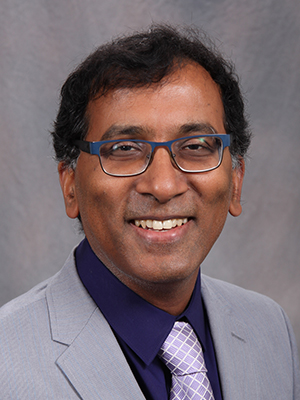
Prof. Timo Hönig is a Professor leading the Bochum Operating Systems and System Software (BOSS) Research Group at Ruhr-Universität Bochum (RUB). Previously, he served as an Assistant Professor at Friedrich-Alexander-University Erlangen-Nürnberg (FAU), where he was part of Department of Computer Science 4. His research focuses on Energy-Aware Computing Systems, Operating Systems, and System Software design with applications in embedded and real-time systems. Key research projects include the DFG Collaborative Research Center/TR 89 (Invasive Computing) and the DFG SPP 1914 (Latency- and Resilience-Aware Networking). He has received notable awards such as the SOSP SRC Gold Medal (2019) and the ISORC Best Paper Award (2017). He actively contributes to conferences like ACM EuroSys and USENIX ATC, and has led initiatives like the Albatross runtime system for energy-efficient HPC clusters. Teaching includes courses on Energy-Aware Computing and Operating Systems Technology. His work bridges theoretical system software design with practical applications in energy efficiency and heterogeneous architectures. The BOSS group explores future system software challenges for many-core and NVM-based systems.
Reza Salkhordeh is a Lecturer and Postdoctoral Researcher at Johannes Gutenberg University Mainz, Germany, where he leads the Efficient Computing and Storage Group. He holds a Ph.D. in Computer Engineering from Sharif University of Technology (2018) and has been affiliated with Ferdowsi University of Mashhad and Sharif University of Technology. His research focuses on operating systems, storage systems, and non-volatile memory technologies, with a particular emphasis on high-performance computing and I/O optimization. He has taught courses such as Storage Systems and Advanced Topics in Operating Systems since 2020. His academic journey includes a B.Sc. from Ferdowsi University (2011), M.Sc. and Ph.D. from Sharif University (2013, 2018). He has held roles such as Technical Lead for the High-Performance Data Storage System (HPDS) project in Tehran, Iran, and has mentored 4 M.Sc. and 6 B.Sc. students. His work spans patented technologies like Reconfigurable Cache Architectures and Load Balancers for I/O caching systems. Research interests include heterogeneous memory management, storage system design, and optimizing I/O performance in distributed environments. His recent publications address challenges in NVMM utilization, garbage collection in SSDs, and I/O tracing for HPC systems. He is actively involved in conference committees (e.g., FAST, ARCS, SC) and has reviewed for top journals like IEEE TPDS and ACM Transactions on Storage. Notable recognitions include membership in Iran’s National Elites Foundation (2012–2015) and top rankings in national exams (3rd in PhD, 35th in MSc). His contributions to storage systems have advanced enterprise-grade architectures and decentralized file systems, with a focus on practical implementations for modern computing challenges.
Llaberia Griño, Jose M. is a faculty member in the Department of Computer Architecture at the Faculty of Computer Science of Barcelona (FIB), Universitat Politècnica de Catalunya (UPC). He has been actively involved in research and academic activities for several decades, contributing significantly to the field of computer architecture. His research interests lie primarily in computer architecture, with a focus on high-performance computing, memory systems, cache management, interconnection networks, and parallel processing. He has made notable contributions to the design and optimization of cache hierarchies, particularly in multicore and non-volatile memory systems, and has explored innovative techniques such as reuse detection, data compression, and systolic array implementations. The trends in his recent publications indicate a sustained focus on improving the performance, efficiency, and reliability of memory systems, especially last-level caches using emerging non-volatile technologies like STT-RAM. His work often combines architectural innovation with practical modeling and forecasting techniques to evaluate system behavior. Among his scientific recognitions is participation in The 2nd Cache Replacement Championship (CRC-2) , highlighting his expertise in cache algorithms. Llaberia has advised doctoral students such as Ana Bosque Arbiol and Rubén Gran Tejero. He has been a key participant in numerous competitive R&D projects, including 'Computación de Altas Prestaciones' and 'HIPEAC 3 - European Network of Excellence', demonstrating sustained funding and collaborative research efforts. He is a member of the CAP - Grup de Computació d'Altes Prestacions (High-Performance Computing Group) at UPC, a leading research group in computer architecture and high-performance systems.
Prof. Brijesh Dongol is a Professor at the University of Surrey and Director of the UK Research Institute on Verified Trustworthy Software Systems (VeTSS). He leads research in formal techniques for concurrent and real-time systems, including transactional memory, weak memory models, and hybrid systems. His work emphasizes verification methods to ensure correctness in complex software systems. Education: BSc in Computer Science and Mathematics, BSc (Hons) in Logic and Computation from Victoria University of Wellington (NZ), PhD from University of Queensland (Australia). Postdoctoral roles at University of Queensland and University of Sheffield followed, before joining Brunel University London as a Lecturer and later the University of Surrey as Senior Lecturer. Research interests focus on formal verification of concurrent systems, with contributions to weak memory models, transactional memory protocols, and formal methods education. He has led EPSRC-funded projects totaling over £3.5 million, including grants on secure remote memory access and concurrent programming for advanced architectures. Notable roles include editorial board memberships (Formal Aspects of Computing), program committees (ESOP, FM, FACS), and international conference steering boards (iFM). His advisory roles include the ACM CS202X panel on Programming Languages. Current projects (2023-2027) include CHIST-ERA's REDONDA blockchain protocol, EPSRC grants on secure RDMA and concurrent programming. Supervised 10+ PhD students and postdocs, with alumni now in industry (e.g., Axiomise, Arm) and academia (Imperial College London). Labs/Teams: Director of VeTSS, collaborates internationally on projects like RoboCalc and RoboTest. Active in software engineering for robotics (RoboSoft RAEng initiative).
Seunghee Shin is an Assistant Professor at the Department of Computer Science within the School of Computing at SUNY Binghamton. He holds a PhD from North Carolina State University (2018), an MS in Computer Science from Northeastern University (focusing on computer networks), and a BS in Computer Engineering from Myongji University, South Korea. His research focuses on advancing computer architecture and systems, particularly exploring how emerging technologies influence memory systems. Notably, he received the NSF CAREER Award for research addressing faster cloud computing. With over five years of industry experience in system software development for mobile and storage systems, he bridges academic innovation with practical implementation. Currently, he is actively hiring PhD students to contribute to his research endeavors. Education: PhD, Electrical and Computer Engineering, North Carolina State University (2018) MS, Computer Science, Northeastern University BS, Computer Engineering, Myongji University Research Interests: Dr. Shin’s work centers on optimizing memory systems through novel architectures, including studies on non-volatile memory (NVM), GPU memory management, and serverless computing efficiency. His investigations into device-driven security vulnerabilities (e.g., IOMMU side-channel attacks) highlight a commitment to safeguarding modern computing systems. Key themes include: Emerging memory technologies and their integration Performance optimization in cloud/serverless environments Hardware-software co-design for latency reduction Awards: NSF CAREER Award (2024): Funds research into scalable serverless computing frameworks Advising & Grants: Dr. Shin oversees student research into cutting-edge memory systems and collaborates with industry on storage system development. While specific grant details are not listed, his NSF award underscores sustained external funding. Labs/Teams: His research group focuses on interdisciplinary projects at the intersection of architecture, systems, and security, leveraging SUNY Binghamton’s resources for experimental validation.
Professor Gregory Chockler is a full professor at the University of Surrey's Department of Computer Science, affiliated with the School of Computer Science and Electronic Engineering. He is Joint Head of the Distributed and Networked Systems Group and a member of the Surrey Centre for Cyber Security. His career spans roles at MIT, IBM Research, Royal Holloway University of London, and multiple visiting positions at institutions like EPFL and KTH. Education: Bachelor's and Master's degrees in Computer Science (Israel) PhD from the Hebrew University of Jerusalem Postdoctoral research at MIT (2003-2005) Research Interests: Chockler focuses on distributed systems, blockchain, and fault-tolerant computing. His work includes scalable consensus protocols, secure distributed storage, and applications of distributed algorithms in cloud and blockchain systems. Recent efforts emphasize resilient blockchain systems and efficient consensus mechanisms under communication failures. Key Contributions: His research has led to advancements in IBM WebSphere products, including Speculative Paxos for cloud management and event-monitoring techniques. Current projects explore NVM-based durable systems (e.g., Mangosteen) and channel reliability in distributed networks. Awards & Grants: IBM Outstanding Technical Achievement Award (2010s) Stellar Development Foundation Grant (2020) Facebook Faculty Award (2015) Advising & Collaboration: Supervises PhD students in distributed systems and collaborates with industry partners like IBM, Stellar, and Facebook. His work bridges academia and industry, addressing real-world scalability and security challenges. Labs & Teams: Leads the Distributed and Networked Systems Group, contributing to Surrey's Cyber Security Centre. Active in collaborative frameworks like CoMiFin for financial infrastructure protection.
Dr. Park Ki-ho is an Associate Professor at the Department of Computer Engineering, Sejong University. His research focuses on computer architecture, embedded systems, IoT systems, and low-power design methodologies. Academic Background: PhD in Computer Science from Yonsei University Professional Experience: Senior Engineer at Samsung Electronics, Post-Doctoral Research Associate at University of Utah Research Interests: Develops innovative solutions for sensor hub design , memory systems , and machine learning hardware acceleration . Key areas include: Non-Volatile Memory (NVM) management 3D Integrated Circuit memory bandwidth optimization Intelligent Edge Device architectures Hybrid Cache Architectures Model Compression Techniques On-Device AI Processing Recent Publications demonstrate expertise in in-memory acceleration , sparse matrix representation , and large language model inference . His work bridges theoretical advancements with practical implementations for IoT and AI applications.
Kuan-Hsun Chen is an Assistant Professor specializing in Computer Architecture Design for Embedded Systems Real-Time Systems Non-Volatile Memory (NVM) Optimization Machine Learning and Edge AI His research focuses on bridging hardware-software gaps in real-time embedded applications through innovative architectural solutions. Research highlights include: Decision Tree Optimization for Real-Time Inference Wear-Leveling Techniques in NVM Probabilistic Timing Guarantees GPU-Accelerated Graph Algorithms Security-Enhanced NVM Designs He explores theoretical foundations while emphasizing practical implementations in autonomous systems and cyber-physical platforms. Scientific achievements: Best Paper Award (2023) Outstanding Paper Award (2023) Outstanding Reviewer Award (2024) His work spans algorithm design, hardware-software co-optimization, and rigorous system validation through fault injection and simulation frameworks.
Ramnatthan Alagappan is an Assistant Professor at the Siebel School of Computing and Data Science, University of Illinois. His research focuses on distributed systems, storage systems, and fault tolerance in modern datacenter environments. He leads projects investigating high-performance storage abstractions, replication strategies, and reliability engineering for distributed infrastructure. Key research areas include filesystem design, crash consistency mechanisms, and optimizing storage hierarchies for hybrid NVM environments. His work emphasizes practical implementations of theoretical models, such as the LazyLog shared log abstraction and IONIA replication framework for disk-based key-value stores. Alagappan has received the NSF CAREER Award (2024) for his research on datacenter-aware storage systems. His recent publications address challenges in disaggregated datacenters, fault tolerance for modern workloads, and automated reliability testing for cluster management systems. He collaborates extensively on projects involving distributed storage protocols, log-based systems, and performance optimization for large-scale infrastructures. His research spans theoretical contributions (e.g., consistency models) to applied systems work (e.g., implementing fault-tolerant storage stacks), with a focus on bridging gaps between hardware capabilities and software system design.
Narasimha Reddy is a Professor and Department Head in the Department of Electrical and Computer Engineering at Texas A&M University, holding the Truchard Foundation Chair Professorship. He earned his B.Tech. from the Indian Institute of Technology, Kharagpur (1985), and M.S./Ph.D. in Computer Engineering from the University of Illinois at Urbana-Champaign (1987/1990). His research focuses on Computer Networks Storage Systems Multimedia Systems Computer Architecture Cybersecurity with notable contributions to hybrid storage systems, cybersecurity frameworks, and network protocols. Reddy has held roles such as Associate Dean for Research (2016-21) and received accolades including IEEE Fellow (2003), NSF Career Award (1996-2000), and multiple teaching excellence awards. His work spans 5 patents and includes leadership in projects like IoTAegis (IoT security), CATS (Twitter spam detection), and SCMFS (storage class memory filesystem). His awards reflect industry and academic recognition: Fellow, IEEE Computer Society Outstanding Professor Awards (1997-98, 2003-04) IBM Technical Achievement Award (1995) Reddy’s research integrates hardware-software co-design, cybersecurity resilience, and scalable storage solutions. He leads initiatives in cyber-physical systems and digital manufacturing assurance, bridging theoretical advancements with practical applications in industry.
Prof. Gael Thomas is a Professor at Telecom SudParis, focusing on distributed systems, operating systems, and high-performance computing. His work emphasizes virtualization, concurrency control, and secure execution environments. He has contributed extensively to projects like VMKit, I-JVM, and J-NVM, addressing challenges in garbage collection, system scalability, and trusted computing. His research interests include: Virtualization techniques for improved system isolation Optimizing garbage collectors for multicore architectures Trusted execution environments using SGX and HTM Performance analysis of MPI/OpenMP applications Notable contributions: Developed PALLAS trace format for HPC analysis (2025) Created NVCache for NVMM-based I/O optimization (2021) Pioneered secure code partitioning techniques (2023-2024) His work has been presented at top conferences including EuroSys, Middleware, and DSN.
Sudarsun Kannan is an Associate Professor in the Department of Computer Science at Rutgers University. His research focuses on Operating Systems, Computer Architecture, and their intersections with Distributed Systems and High Performance Computing (HPC). He leads the Computer and Networked Systems group, emphasizing memory and storage heterogeneity. Previously, he was a postdoc at UW-Madison and earned his PhD at Georgia Tech under Karsten Schwan and Ada Gavrilovska. Current appointments: Associate Professor, Rutgers University (CS Department) Academic recognition: NSF CAREER Award, Google Research Scholar Award (2022), Samsung Research Awards (2023), Best Paper at SOSP 2023, Distinguished Paper at ASPLOS 2023 Research themes: Memory/Storage Heterogeneity, Direct-Access Systems, Transactional Memory, Edge-Centric Architectures His work spans firmware-level optimizations (e.g., FusionFS, Kamino), persistent memory management (TRIO, Mosaic Pages), and distributed storage systems (PolyStore, CrossFS). He has filed multiple patents related to heterogeneous memory and storage systems. NSF CAREER Award Google Research Scholar (2022) Samsung Research Award (2023) Best Paper (SOSP 2023), Distinguished Paper (ASPLOS 2023) NSF grants for I/O Redesign, Near-Storage Acceleration, Virtual Memory Current advisees include PhD students David Domingo, Jian Zhang, and Linfeng He, with alumni like Yujie Ren and Shaleen Garg. He has served on program committees for SOSP, ASPLOS, FAST, and HotStorage.
Dr. Eishi Arima is a researcher at the Chair of Computer Architecture and Parallel Systems within the Department of Informatics at the Technical University of Munich (TUM). His work focuses on cutting-edge computer architecture and high-performance computing systems, with particular expertise in power-aware computing, resource management, and heterogeneous systems. He actively contributes to numerous international conferences and collaborative research projects addressing challenges in modern computing infrastructure. Dr. Arima's research spans multiple critical areas in computer architecture including memory and storage systems, performance modeling and optimization, hardware/software codesign, and processor microarchitectures. His work demonstrates particular strength in addressing energy efficiency challenges in high-performance computing environments, with numerous publications on power capping, resource partitioning, and sustainable computing approaches. His research bridges theoretical concepts with practical implementations, often incorporating machine learning techniques to optimize system performance under various constraints. Analysis of Dr. Arima's publication record reveals a strong focus on addressing the energy efficiency challenges in modern computing systems. His work consistently targets the intersection of hardware architecture and system-level resource management, with particular emphasis on heterogeneous computing platforms combining CPUs, GPUs, and emerging memory technologies. Over time, his research has evolved from traditional cache and memory system optimizations toward more holistic approaches incorporating machine learning for resource management in power-constrained environments. Recent publications demonstrate increasing attention to sustainability aspects of computing, reflecting broader industry trends toward greener computing solutions. Dr. Arima has served in various organizational capacities for major international conferences including as Program Committee member for SC, IPDPS, and Cluster conferences, and as Program Co-Chair for ACM CF'20. His journal review activities span multiple prestigious publications including IEEE TPDS and Elsevier FGCS. This extensive service demonstrates his recognition as a respected member of the international computer architecture research community. Dr. Arima has mentored numerous students through bachelor's theses, master's theses, and guided research projects. His students have produced research on topics including reinforcement learning for resource management, job scheduling optimization, memory system improvements, and power-aware computing techniques. Several student projects have resulted in publications at reputable conferences, indicating the high quality of research conducted under his supervision. His mentoring covers both theoretical aspects of computer architecture and practical implementation challenges in real-world systems. Dr. Arima is actively involved in multiple research projects including SEANERGYS (EuroHPC), PlasmaPEPS, OpenCUBE, DaREXA-F, ScalNEXT, PDexa, MUNIQC-ATOMS, BB-KI_Chips, QuaST, and Q-DESSI. These projects address various aspects of high-performance computing, from energy efficiency to quantum computing integration. His work contributes to the development of next-generation computing infrastructure that balances performance requirements with sustainability concerns.
Joy Arulraj is an Associate Professor at Georgia Institute of Technology, affiliated with the School of Computer Science and the Database group. His research focuses on developing innovative data systems for video analytics, non-volatile memory optimization, and self-driving database management systems. Research Interests: Database systems Machine learning Non-volatile memory Self-driving databases Query optimization Geo-distributed data management Notable Research Contributions: Developed EVA , a video analytics system using deep learning Created APOLLO for automated database debugging Designed EQUITAS to minimize SQL computation overlap Explored NVM-based database architectures ( BzTree , Write-Behind Logging ) Investigated self-tuning databases Key Awards: IEEE Rising Star Award Students: Co-advised multiple graduate students including Pramod Chunduri, Gaurav Tarkok Kakkar, and Jiashen Cao Graduated students: Xinyu Liu, Qi Zhou, Jinho Jung Labs & Teams: Member of Georgia Tech's Database group Collaborates with international institutions (MIT, Stanford, Microsoft Research, etc.)
Lazaros Papadopoulos serves as an Assistant Professor in the Department of Electrical and Computer Engineering at Democritus University of Thrace since May 2024, focusing on computational resource management for embedded and high-performance systems. His work bridges hardware-software co-design with energy-efficient computing paradigms. His academic credentials include: Bachelor's in Electrical and Computer Engineering from Democritus University of Thrace (2005) Master's degree from the same institution (2008) PhD from the National Technical University of Athens (2016) Research centers on optimizing computing infrastructure through real-time resource management, heterogeneous memory architectures, and AI workload acceleration. His investigations target energy-performance tradeoffs in GPU systems, persistent memory integration, and edge-device neural network deployment, with direct applications in sustainable computing and high-performance data processing. Publication analysis (2018-2022) reveals consistent focus on heterogeneous system optimization, particularly energy-aware GPU acceleration frameworks, memory management for DRAM/NVM hybrids, and efficient CNN implementations for edge devices. Key thematic threads include sustainable computing practices, hardware-aware AI deployment, and memory hierarchy innovations. Scientific recognition includes: Two Best Paper Awards Research leadership spans major EU initiatives: Work Package Coordinator for LAGO (Horizon Europe, 2022-2024) and PRAETORIAN (H2020, 2022-2024); Technical Coordinator for EXA2PRO (H2020, 2018-2021); and Work Package Coordinator roles in SDK4ED (H2020, 2018-2020) and EXCESS (H2020, 2013-2016). These projects address embedded systems security, exascale programming models, and energy-efficient computing toolchains. He operates within the Computer Architecture and High Performance Systems laboratory, directing research on computational resource orchestration for next-generation heterogeneous platforms.