Gary KL Tamمشاهده پروفایل
مدرس ارشد
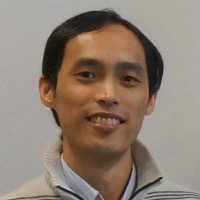
Dr. Gary KL Tam is a Senior Lecturer in the Department of Computer Science at Swansea University's School of Mathematics and Computer Science. He has been with Swansea University since 2012, initially as a Lecturer (2012-2018) and promoted to Senior Lecturer in 2018. He is based at The Computational Foundry on Bay Campus and is actively involved in research through the Visual Computing Group and RIVIC. Dr. Tam's research spans several key areas in computer science, with a strong focus on visual analytics, machine learning, and digital geometry processing. His work demonstrates expertise in analyzing multidimensional data, information retrieval, and pattern recognition. He has developed substantial research in 3D reconstruction techniques, point cloud processing, and their applications in medical imaging and urban modeling. His publication record shows a clear evolution from foundational work in 3D shape matching and non-rigid registration to current applications in medical diagnostics (particularly Chronic Kidney Disease classification), Welsh language processing (CymruFluency project), and industrial applications. Recent publications demonstrate strong interdisciplinary work bridging computer vision, machine learning, and healthcare applications. Best VAST Paper Award at VIS 2016 Conference for 'Analysis of Machine- and Human-Analytics in Classification' Excellence in Learning and Teaching Award (ELTA) from Swansea University (2018) Dr. Tam actively supervises numerous PhD students across diverse research topics including explainable AI for economic growth, 3D city reconstruction, medical diagnostics, and human-in-the-loop systems. He has secured multiple research grants totaling over £50,000 from sources including CHERISH-DE, EPSRC, and Swansea University funds, supporting projects in medical AI, Welsh language processing, and computational infrastructure. His research group maintains strong collaborations with Cardiff University, National University of Singapore, and various medical research institutions, focusing on applying advanced computational techniques to real-world problems in healthcare, language processing, and industrial applications.