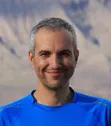
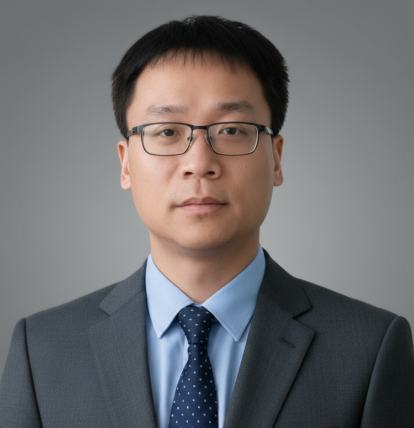
PD Dr. Slobodan Ilic is a Senior Key Expert Research Scientist at Siemens AG (since 2014) and an Adjunct Professor at the Chair of Computer Science Applications in Medicine , Technical University of Munich (TUM). His work bridges 3D computer vision and medical imaging , with a focus on real-time object detection, deformable surface modeling, and depth data analysis. Current Roles: Adjunct Professor at TUM, Senior Key Expert at Siemens Research Themes: 6D pose estimation, non-rigid 3D reconstruction, RGB-D data processing Labs: CAMP Chair (TUM), Siemens AG Research Division His recent work explores LLM-driven control systems , semantic-aware 3D generation , and cross-modal medical imaging . Articles highlight advancements in point cloud registration , rotation-invariant descriptors , and hyperspectral calibration . While no specific awards are documented in the provided text, his team at Siemens/TUM advises PhD candidates in 3D vision for robotics and medical applications .
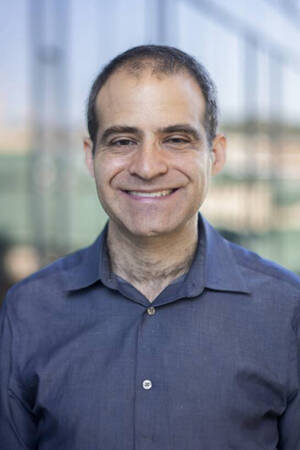
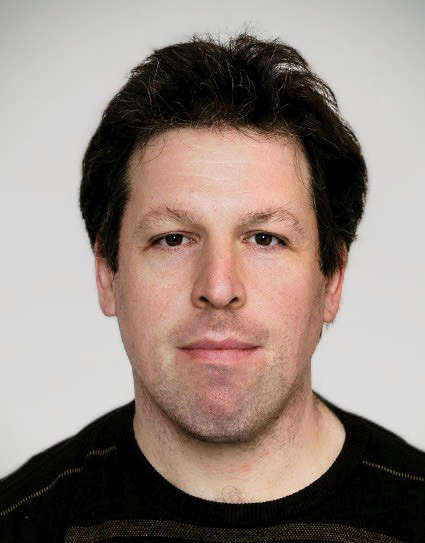
David Held is an Associate Professor at Carnegie Mellon University's Robotics Institute, leading the Robots Perceiving And Doing (RPAD) lab. His work focuses on perceptual robot learning, integrating robotics, machine learning, and computer vision to enable robots to interact with complex environments. He holds a Ph.D. in Computer Science from Stanford University, an M.S. and B.S. in Mechanical Engineering from MIT, and conducted postdoctoral research at UC Berkeley. His research spans object manipulation, autonomous driving, and reinforcement learning, with a focus on robust perception and control in dynamic settings. Research Interests: Developing methods for robots to manipulate novel objects, handle deformable materials, and operate in unstructured environments through deep learning and simulation-to-real transfer. He explores autonomous driving via self-supervised learning and semi-supervised techniques. Notable Articles (2024–2025): Focus on articulated object manipulation, sim2real transfer, safety-aware policies, and perception in robotics. Recent work includes ArticuBot for universal manipulation policies and SplatSim for zero-shot transfer using Gaussian splatting. Awards: Google Faculty Research Award (2017), NSF CAREER Award (2021). Labs: RPAD Lab, CMU Center for Autonomous Vehicle Research. Teaching: Courses include Statistical Techniques in Robotics and Advanced Computer Vision.
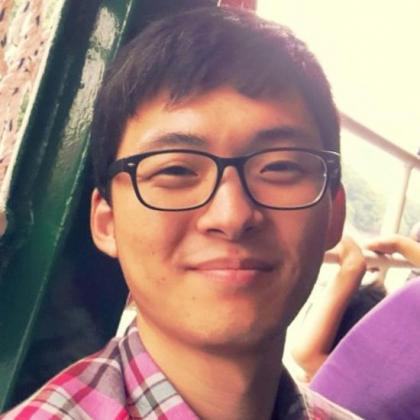
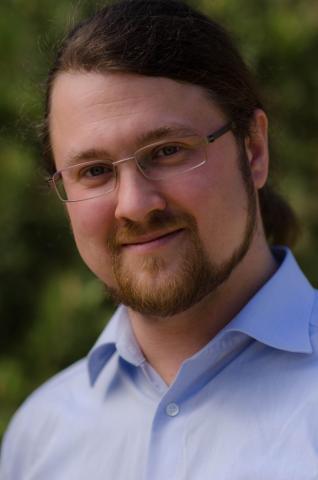
Minhyuk Sung is an Associate Professor in the School of Computing at KAIST, where he leads the KAIST Visual AI Group. He is also affiliated with the Graduate School of AI and the Metaverse Program. Previously, he worked as a research scientist at Adobe Research. He received his Ph.D. from Stanford University under the supervision of Leonidas Guibas and completed his M.S. and B.S. degrees at KAIST. Dr. Sung's research focuses on generating, manipulating, and analyzing various visual data, including images, videos, and 3D data. His work primarily centers around diffusion models, flow models, and other generative AI techniques applied to visual content. He has made significant contributions to the fields of 3D vision, text-to-image generation, and multi-modal AI systems. His recent publications demonstrate a strong trend toward improving the quality, efficiency, and controllability of generative models, with particular emphasis on 3D-aware generation, synchronization techniques, and grounding visual content with linguistic descriptions. His work spans multiple top-tier conferences including NeurIPS, CVPR, ICCV, and SIGGRAPH. Asiapgraphics Researcher Award (2024) Dr. Sung actively mentors students and recruits new members for his research group. He serves as an area chair for conferences like 3DV 2026 and frequently gives talks at major institutions including NVIDIA, Google, Stanford, and various universities across Asia. His research has attracted significant attention in both academic and industrial circles. He teaches advanced courses including Diffusion and Flow Models (CS492(C)), Machine Learning for 3D Data (CS479), and Diffusion Models and Their Applications (CS492(D)), demonstrating his commitment to training the next generation of AI researchers.
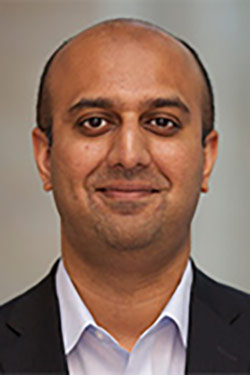
Marc Alexa is a Professor at the Technische Universität Berlin , leading the Department of Computer Graphics within the Institute of Computer Engineering and Microelectronics . His research spans computational geometry, rendering, and human-computer interaction, with a focus on differentiable rendering, mesh processing, and geometric modeling. PhD (2002) and MSc (1997) from Technische Universität Darmstadt under advisors Prof. Encarnacao and Prof. Gross (ETH Zurich) Research interests include: Differentiable rendering frameworks Geometric stylization and manifold reconstruction Optimization of polygonal and tetrahedral meshes Eye-tracking applications in mental imagery and visual perception Scientific awards include: ACM Fellow (2024) SIGGRAPH Academy inductee (2022) ERC Advanced Grant for geometric computation (2022) Eurographics Fellow (2018) Engineering Science Prize (2012) His recent publications (2023-2025) focus on differentiable acoustic path tracing, Poisson manifold reconstruction, and shadow mapping optimization. He has served as Editor-in-Chief of ACM Transactions on Graphics (2018-2021) and chaired key conferences like SIGGRAPH 2013 Technical Papers .
F. Tajdari is a Research Fellow in the Department of Mechanical Engineering at Delft University of Technology, specializing in intelligent vehicles and robotics. Tajdari completed a PhD at TU Delft in 2023 with a dissertation on non-rigid 3D/4D human mesh registration, establishing expertise at the intersection of mechanical engineering and computer vision. Education: PhD in Mechanical Engineering, Delft University of Technology, 2023 Research focuses on advanced control systems for robotics and human-vehicle interaction, with significant contributions to non-rigid mesh registration, adaptive feedback control, and intelligent transportation. Tajdari's work integrates deep learning (Graph Convolutional LSTM networks) with mechanical control theory to solve dynamic shape registration and vehicle navigation challenges, particularly for vulnerable road users. Recent publications (2022-2025) reveal a cohesive research trajectory: evolving from Stewart robot control (2022) to sophisticated non-rigid registration techniques (2024), culminating in vehicle systems for human-robot coexistence (2025). The work consistently bridges mechanical engineering with computer science, emphasizing real-world applications in safety-critical environments. No scientific awards were documented in the available records. No information regarding student advising or research grants was identified in the source materials. Tajdari operates within TU Delft's Intelligent Vehicles research ecosystem, collaborating extensively with the Delft Robotics Institute and contributing to projects involving multi-agent vehicle systems and human-centered robotics, as evidenced by co-authorship with leading researchers in autonomous systems.
Yaser Ajmal Sheikh is an Associate Professor at the Robotics Institute of Carnegie Mellon University (currently on leave) and serves as Director of Facebook Reality Lab in Pittsburgh. His work focuses on "metric telepresence": remote interactions in AR/VR that are indistinguishable from reality. He has made significant contributions to machine perception and rendering of social behavior, spanning computer vision, computer graphics, and machine learning. Dr. Sheikh's research encompasses analyzing dynamism in scenes from moving cameras, with particular focus on dynamic motion reconstruction, human behavior analysis, estimation of nonrigid motion, and modeling moving cameras in spacetime. His work has led to breakthroughs in social robotics, 3D vision and recognition, and multisensor data fusion. He founded and directs the Facebook Reality Lab in Pittsburgh, continuing his work on human-centered robotics and social robots. His publication record demonstrates consistent innovation in computer vision and graphics, with emphasis on human motion capture, facial animation, and social interaction modeling. His most recent work focuses on neural approaches to facial animation, full-body avatars, and capturing the complex dynamics of human interaction. The research shows a clear trajectory from foundational work in motion capture to sophisticated neural approaches for realistic human representation in virtual environments. Popular Science's Best of What's New Award Honda Initiation Award (2010) Best paper awards at WACV (2012), SAP (2012), SCA (2010), ICCV THEMIS (2009) First place in the MSCOCO Keypoint Challenge (2016) Hillman Fellowship for Excellence in Computer Science Research (2004) Dr. Sheikh has advised numerous doctoral and master's students who have gone on to prestigious positions in academia and industry. His research has been generously supported by government agencies including NSF and DARPA, as well as industrial partners such as Intel, Disney, Nissan, Honda, Toyota, and Samsung. He has served on senior committees at major conferences including SIGGRAPH, CVPR, ICRA, and ICCP, and was an Associate Editor of CVIU. He leads the Panoptic Studio project, a massively multiview system for social motion capture that has produced the CMU Panoptic Studio Dataset. His work on OpenPose has become a standard tool in the field for real-time 2D hand, body, and face keypoint detection. His current research at Facebook Reality Lab continues to push the boundaries of what's possible in virtual and augmented reality through advanced computer vision techniques.
Professor Jun Li is a tenured Professor and Australian Research Council (ARC) Future Fellow at Curtin University's School of Civil and Mechanical Engineering. He leads the Curtin Research Centre for Infrastructural Monitoring & Protection, focusing on advancing structural health monitoring (SHM) through AI, computer vision, and data analytics. His work integrates emerging technologies to monitor civil infrastructure like the Matagarup Bridge and Stirling Bridge in Western Australia. Affiliations: School of Civil and Mechanical Engineering, Curtin Research Centre for Infrastructural Monitoring & Protection Grants: Chief investigator for 10 projects, including ARC and CRC grants Awards: Nishino Prize (2019), Curtin Mid-Career Research Award (2023), Hong Kong PolyU Young Alumni Award (2024) His research interests span structural dynamics, AI-driven SHM, IoT sensing, and digital twins. Over 230 technical publications, including 170 journal papers, reflect his expertise. He advises 6 PhD students and collaborates on industry projects, emphasizing sustainable infrastructure resilience. Key contributions include developing vision-based displacement measurement systems, physics-guided neural networks, and data-driven damage detection frameworks. His work bridges academia and industry, enhancing infrastructure safety and maintenance efficiency.
Professor Hongkai Zhao is a Chancellor’s Professor and Chair of the Mathematics Department at the University of California, Irvine (UCI), with a joint appointment in Computer Science. He holds a B.S. from Peking University, M.S. from USC, and Ph.D. from UCLA, all in Mathematics. His research focuses on computational and applied mathematics, including moving interface problems, inverse problems, imaging, and Hamilton-Jacobi equations. He is renowned for developing the Fast Sweeping Method (FSM) for solving hyperbolic PDEs efficiently. Education: B.S. (Peking University, 1990), M.S. (USC, 1992), Ph.D. (UCLA, 1996). Employment: UCI faculty since 1999, Szego Assistant Professor at Stanford (1996–1999). Research interests span computational fluid dynamics (moving interfaces), inverse problems (tomography, wave propagation), and imaging (medical imaging, computer vision). Key contributions include numerical methods for surfactant-laden drops, fast algorithms for Hamilton-Jacobi equations, and 4D cone-beam CT reconstruction. Awards include the Feng Kang Prize (2007), Sloan Fellowship (2002–2004), and Chancellor’s Professorship (2016–present). He has authored over 100 publications on numerical methods, inverse problems, and PDEs. Lab affiliations: Active in interdisciplinary research at UCI, leading projects in computational mathematics and imaging science. Current work includes high-frequency wave propagation, multi-scale modeling, and geometric data analysis.
Amir Vaxman is a Reader in Graphics, Simulation and Visual Computing at the School of Informatics, The University of Edinburgh, where he leads the Geometry Processing Group within the Institute of Perception, Action and Behaviour. Previously, he was an assistant professor at Utrecht University in the Netherlands and a postdoctoral fellow at TU Wien (Vienna) where he received the Lise-Meitner fellowship. Ph.D. in Computer Science, Technion-IIT, 2011 M.Sc. in Computer Science, Technion-IIT, 2006 B.Sc. in Computer Engineering, Technion-IIT, 2002 Dr. Vaxman's research focuses on geometry processing and discrete differential geometry , with particular interests in directional-field design, unconventional meshes, constrained shape spaces, architectural geometry, and medical applications. His work bridges theoretical mathematics with practical applications in computer graphics, visualization, and fabrication. His recent publications (2023-2025) demonstrate a strong focus on geometric modeling, neural surface reconstruction, and directional field synthesis. Key trends include the development of novel algorithms for mesh processing, integration of deep learning with geometric modeling, and applications to medical imaging and architectural design. Best Paper Award (Honorable Mention) at SIGGRAPH 2024 for "Fabric Tessellation: Realizing Freeform Surfaces by Smocking" Runner-Up Best Paper Award at Symposium on Geometry Processing (SGP) 2023 for "BPM: Blended Piecewise Möbius Maps" Software Award at Symposium on Geometry Processing 2021 for libhedra Dr. Vaxman has supervised numerous graduate students including 5 current PhD candidates and over 20 graduated students. He serves in editorial roles for ACM Transactions on Graphics and has been program co-chair for multiple major conferences including Shape and Physical Modeling (SPM) 2026. He leads the Geometry Processing Group at the University of Edinburgh, which focuses on developing cutting-edge algorithms for geometry processing, with applications ranging from computer graphics to architectural design and medical imaging.
Felix Ambellan is a researcher at the Zuse Institute Berlin (ZIB), working in the Visual and Data-Centric Computing department within the Mathematics of Complex Systems division. His research focuses on applying advanced mathematical and computational techniques to medical imaging problems, particularly in the context of knee osteoarthritis and neurological disorders. Dr. Ambellan completed his doctoral studies at Freie Universität Berlin, where he earned his PhD in 2022 with a thesis titled "Efficient Riemannian Statistical Shape Analysis with Applications in Disease Assessment," supervised by Christof Schütte and Christoph von Tycowicz. His primary research interests lie at the intersection of medical imaging, computational geometry, and machine learning. Ambellan specializes in statistical shape analysis using Riemannian geometry, developing novel approaches for disease assessment through anatomical shape variations. His work has significant applications in knee osteoarthritis diagnosis and Alzheimer's disease grading, where he applies graph neural networks and manifold-valued statistics to extract clinically relevant information from medical images. He has made substantial contributions to the field of statistical shape modeling, particularly through the development of the open-source Python library Morphomatics. Analysis of Ambellan's recent publications reveals a strong focus on advancing statistical shape modeling techniques within non-Euclidean spaces. His work bridges theoretical mathematics with practical medical applications, particularly in developing methods that can handle the complex geometry of anatomical structures. Many of his papers demonstrate how incorporating geometric awareness into machine learning models improves diagnostic accuracy for conditions like knee osteoarthritis. His research often involves large-scale medical image datasets, including thousands of knee MRI scans from the Osteoarthritis Initiative. Dr. Ambellan is actively involved in several research projects including "Manifold-Valued Graph Neural Networks," "Morphological Scoring of Disease States," and "Treating Osteoarthritis in Knee with Mimicked Interpositional Spacer," which reflect his commitment to translating theoretical advances into clinical applications. His work has been published in high-impact journals including Medical Image Analysis, Physics in Medicine and Biology, and BMC Medical Imaging, demonstrating both the theoretical rigor and practical relevance of his research.
Bruno Vallet is a Senior Researcher at IGN (French National Institute of Geographic and Forest Information) within the LASTIG lab and leads the ACTE research team since 2019. His work focuses on geospatial data processing, including LiDAR and image registration, 3D urban modeling, and computer vision applications. He contributes to projects like AI4GEO and Time Machine , specializing in large-scale point cloud analysis and structured city reconstruction. Education : Habilitation (HDR) in Geographic Information Science (Univ Paris-Est, 2016), PhD in Computer Science (Institut National Polytechnique de Lorraine, 2008), and Master's in Computer Vision (Telecom ParisTech, 2005). His research integrates surface reconstruction , semantic labelings , and uncertainty propagation , with methodologies applied to autonomous navigation and urban change detection. Recent publications emphasize data fusion, visibility computation, and deep learning for 3D scene analysis. He co-supervises PhD students and leads teaching activities at ENSG (National School of Geographic Sciences), covering image processing and 3D data structures. Bruno Vallet also chairs the ISPRS Working Group II/4 on 3D Scene Reconstruction, demonstrating leadership in photogrammetry and remote sensing communities.
Dr. Jing Ren is affiliated with the Department of Computer Science at ETH Zürich, holding a role within the Professorship for Computer Science. Their research focuses on computational geometry, 3D reconstruction, and computer graphics, with notable contributions to shape analysis, non-rigid matching, and fabric modeling. Dr. Ren’s work bridges theoretical advancements with practical applications in textile design, architectural modeling, and medical imaging. They collaborate extensively on projects involving functional maps, optimization algorithms, and geometric morphometrics. Key research interests include: Non-rigid shape correspondence and matching Computational modeling of woven fabrics and textiles 3D face and building reconstruction techniques Efficient spectral and discrete optimization methods Recent publications (2022–2024) emphasize innovations in fabric parameterization, Gaussian noise distribution, and rethinking 3D face reconstruction benchmarks. Their work often employs machine learning and functional map frameworks to solve geometric problems across disciplines. Laboratory and team affiliations are not explicitly detailed in the provided materials, but their research aligns with ETH Zürich’s broader initiatives in computer science and engineering. No grants or advising activities are specified in the current data.
Dr. James Pritts is a computer vision researcher currently working at the Institute of Computer Science, Kiel University, within the Marine Data Science group. He is affiliated with the Faculty of Engineering and contributes to interdisciplinary marine research through the KiTE early-career fellowship program. His work bridges robotics, computer vision, and ocean science, focusing on enabling autonomous underwater vehicles (ROVs) to operate effectively in challenging, low-visibility environments. His research interests include: Underwater visual localization and mapping Robust 3D reconstruction in turbid waters Geometric calibration of camera systems Sensor fusion (camera, IMU, DVL) Non-rigid reconstruction (e.g., jellyfish) Autonomous monitoring of marine ecosystems Dr. Pritts' work supports applications in marine biology, underwater archaeology, and infrastructure inspection. He develops algorithms that allow robots to assess their own perception accuracy, enabling reliable long-term monitoring of seagrass beds and fragile marine species. His research is deeply collaborative, involving partnerships with GEOMAR and MBARI, and aligns with Kiel University’s priority research areas such as Kiel Marine Science and Ocean Health. He has previously held research roles at NASA, DARPA, and Facebook Reality Labs, and was an Assistant Professor at the Ukrainian Catholic University. His academic journey reflects a strong focus on geometric computer vision and real-world deployment of complex systems. Notable scientific contributions include advancing calibration techniques for underwater optics and developing robust localization methods under refractive distortions. His work often requires solving multiple vision challenges simultaneously, such as refraction, non-rigid deformation, and sparse features. Dr. Pritts is actively involved in hands-on robotics, working closely with hardware engineers to deploy ROVs in coastal waters near Kiel. He emphasizes practical utility in research and is driven by the principle of being useful. He holds a PhD from the Czech Technical University in Prague (2020) and has conducted postdoctoral research at Chalmers University and the Czech Institute of Informatics, Robotics & Cybernetics.
Prof. Dr. Kiran Varanasi serves as a Professor in Virtual and Extended Reality at the Faculty of Computer Science and Media, Leipzig University of Applied Sciences. His research focuses on 3D shape processing, real-time facial animation, and convolutional neural network applications in computer vision. University: Leipzig University of Applied Sciences School: Faculty of Computer Science and Media Academic Rank: Professor Research Interests: Varanasi's work bridges virtual reality , machine learning , and interactive systems . Key areas include: 3D reconstruction using deep learning Facial animation pipelines Light field data processing Surface defect classification with CNNs Interactive character control Publication Trends (2018–2021): His recent articles emphasize monocular 3D reconstruction , real-time feature extraction , and immersive VR environments , often leveraging convolutional networks and geometric warping techniques. Advising and Grants: No specific students or advisory roles are listed in the provided text. The faculty participates in collaborative projects like website redesign for the Egyptian Museum, though Varanasi's direct involvement isn't specified. Labs and Teams: The faculty includes multimedia labs and research groups in digital transformation, but Varanasi's direct affiliations with these units are not explicitly stated.
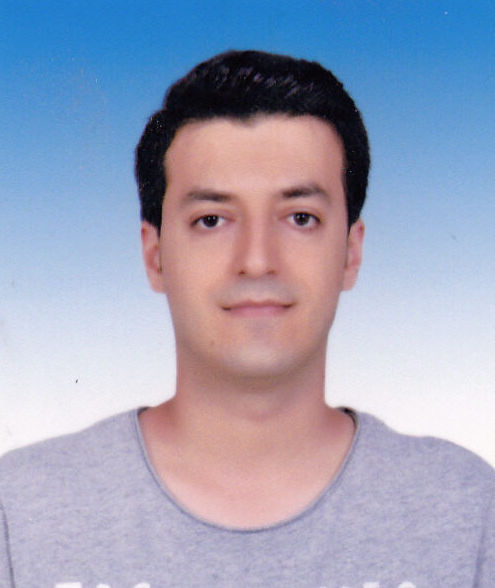
Dr. ALİ NEHİR currently serves as an Assistant Professor at Gaziantep University Faculty of Medicine, Department of Surgical Medicine. His clinical and academic work focuses on Neurosurgery, with a specialization in Brain and Nerve Surgery. He is affiliated with the Turkish Neurosurgical Society, Middle East Spine Society, and the Nervous System Surgery Association. Dr. NEHİR completed his medical specialization at Gaziantep University (2016-2022) and holds a medical license from Uludağ University (2007-2014). His research spans multiple neurosurgical domains, including minimally invasive endoscopic techniques, pituitary adenoma complications, and molecular genetic studies in glial tumors. His publications highlight expertise in endoscopic approaches for orbital and sellar pathologies, oxidative stress analysis in subarachnoid hemorrhages, and surgical management of foramen magnum meningiomas. Recent projects include TIMP gene polymorphism investigations in glial tumors and pituitary adenoma studies. Key memberships: Middle East Spine Society (2023), Turkish Neurosurgical Society (2022) Non-academic clinical role: Brain and Neurosurgery Specialist at Turkey's Ministry of Health (2024) Training: Live animal spine surgery osteotomy course at Istanbul Acıbadem University (2024)