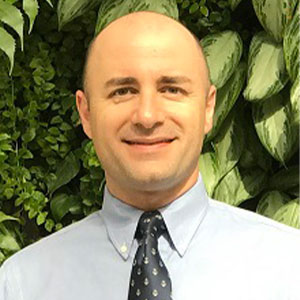
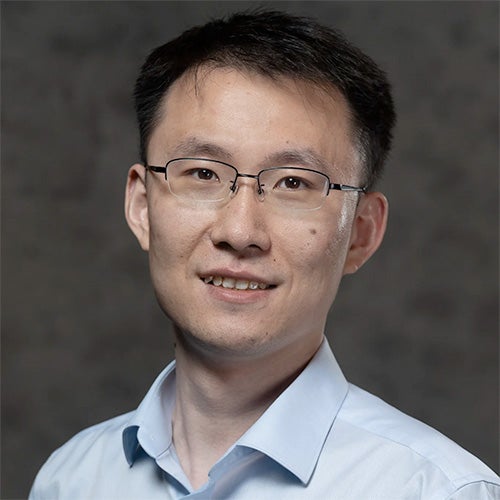
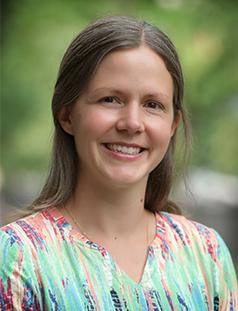
Stacy L. Hutchinson is an Associate Dean for Research and Graduate Programs and Professor at the Carl R. Ice College of Engineering, Kansas State University. She holds a Ph.D. (1998), M.S. (1996), and B.S. (1990) in Civil Engineering from Kansas State University and Montana State University, respectively. Her research focuses on ecological engineering, sustainable land management, and water resources. Notable projects include $4M+ in funding from the U.S. EPA, NSF, DOD, DOE, and USDA, addressing climate change adaptation, military land management, and green infrastructure. She has published over 30 peer-reviewed articles and given invited talks globally. Professional highlights include the Myers-Alford Teaching Award (2015), ASABE Young Educator of the Year (2007), and Fulbright Specialist (2016). She collaborates internationally with institutions in France, China, and Ukraine. Hutchinson has held visiting roles at Ecole d’Ingénieurs Purpan (France) and the National Mining University (Ukraine). Her advising and grants involve interdisciplinary efforts, including climate change mitigation for Kansas agriculture and sustainable strategies for military training lands. She emphasizes student mentorship and knowledge transfer to future engineering professionals.
Dr. Ali Ebrahimian is an Assistant Professor in the Department of Civil and Environmental Engineering at Florida International University (FIU). His research focuses on water resources engineering, sustainable infrastructure, and urban hydrology. He holds a Ph.D. from the University of Minnesota (2015), and earlier degrees from Sharif University of Technology, Iran (BS 1997, MS 2000). Prior to FIU, he served as a Research Professor at Villanova University’s Center for Resilient Water Systems, contributing to Philadelphia’s Green City, Clean Waters initiative. Education: Ph.D., Civil Engineering, University of Minnesota, 2015 M.S., Civil and Water Resources Engineering, Sharif University of Technology, 2000 B.S., Civil and Water Resources Engineering, Sharif University of Technology, 1997 His research integrates hydrological modeling, GIS, sensor-based monitoring, and socio-technical risk analysis to address urban water challenges, including stormwater management, green infrastructure, and non-point source pollution. He actively contributes to professional societies like ASCE’s EWRI and AGU, and reviews for national academies and journals.
Yinan Wang serves as an Assistant Professor in the Department of Industrial and Systems Engineering at Renssela Polytechnic Institute (RPI), focusing on engineering-driven machine learning applications for advanced manufacturing and robotics systems. Education: Ph.D., Industrial and Systems Engineering, Virginia Tech, 2022 M.S., Electrical Engineering, Columbia University, 2019 B.S., Electrical Engineering and Automation, Xi'an Jiaotong University, 2017 Research Interests: Dr. Wang's work bridges machine learning with industrial engineering through deep learning, uncertainty quantification, and system intelligence. His research targets advanced manufacturing challenges including robotic path planning, 3D anomaly detection, and environmental monitoring systems. Key application areas span aerospace assembly, toxic plume prediction, and quality control in industrial settings. Publication Trends: His 2024-2025 publications reveal three dominant themes: (1) transformer model compression for time-series forecasting (Smartformer), (2) geometric contrast learning for industrial point cloud segmentation (GeoContrast), and (3) multimodal physiological signal analysis for aviation safety prediction. These works consistently integrate physics-based constraints with deep learning architectures. Scientific Awards: Mary G. and Joseph Natrella Scholarship, American Statistical Association (ASA), 2022 Featured Article in ISE Magazine, Institute of Industrial and Systems Engineers (IISE), 2022 SPES + Q&P Best Student Paper Award, American Statistical Association (ASA), 2022 Educational Foundation Scholarship and Analysis Division Scholarship, International Society of Automation (ISA), 2021 Gilbreth Memorial Fellowship, Institute of Industrial and Systems Engineers (IISE), 2021 Data Mining & Decision Analytics (DMDA) Best Theoretical Paper Award, INFORMS, 2021 Finalist of Best Student Paper Award, Quality, Statistics & Reliability (QSR) Section, INFORMS, 2021 Best Poster Award, Manufacturing Science & Engineering Conference (MSEC), ASME, 2021 Advising and Grants: No publicly listed advisees or specific grant awards appear in the source material, though his extensive publication record and research center affiliations suggest active grant-supported projects. Labs and Teams: Dr. Wang contributes to RPI's Institute for Data Exploration and Applications (IDEA) and Center for Materials, Devices, and Integrated Systems (CMDIS), participating in interdisciplinary teams focused on data-driven engineering solutions.
Kimberley Schneider serves as an Assistant Professor in the Department of Plant Agriculture at the University of Guelph's Ontario Agricultural College. Her work centers on evaluating agro-ecological benefits of forage and service crops, with emphasis on soil and water quality, nutrient cycling, greenhouse gas emissions, and biodiversity enhancement in Ontario agricultural systems. She earned her B.Sc(Env.) in Environmental Protection, M.Sc. in Land Resource Science, and Ph.D. in School of Environmental Sciences, all from the University of Guelph. Dr. Schneider's research program adopts a systems-based, multidisciplinary approach to address critical agri-environmental challenges. She investigates how targeted agroecosystem management can enhance ecosystem services and optimize cropping systems for sustainable Ontario agriculture. Her work spans scales from rhizosphere to landscape, focusing on nutrient dynamics, soil microbial processes, and the environmental impacts of different farming practices. Analysis of her publication record (2005-2019) reveals consistent focus on phosphorus and nitrogen dynamics in agricultural soils, with significant contributions to understanding nutrient loss pathways, soil microbial communities (particularly arbuscular mycorrhizal fungi), and comparative analyses of organic versus conventional farming systems. Her research demonstrates strong methodological diversity across field, laboratory, and modeling approaches. Dr. Schneider actively recruits graduate students (M.Sc. and Ph.D.) for research opportunities in ecosystem services of forage and service crops, nutrient and carbon dynamics, and managed grazing systems, emphasizing practical applications for Ontario agriculture.
Ben DeVries is an Associate Professor in the Department of Geography, Environment & Geomatics at the University of Guelph's College of Social and Applied Human Sciences. His research focuses on satellite Earth observation, remote sensing of ecosystem dynamics, and land use/land cover change. He teaches courses such as Analysis in Geography, The Earth from Space, GIS and Spatial Analysis, and Applied Geomatics. His research interests span geospatial technologies, environmental monitoring, and ecosystem dynamics, with a strong emphasis on practical applications in conservation and land management. Dr. DeVries supervises multiple graduate students working on projects ranging from wetland classification using remote sensing to Arctic lake dynamics. His recent publications reflect a focus on global forest carbon patterns, erosion modeling, and advanced satellite data applications. Research trends show integration of machine learning, large-scale geospatial analysis, and climate impact assessments across diverse ecosystems. His work employs cutting-edge methodologies including cloud computing, time-series analysis of satellite imagery, and hybrid modeling approaches to address pressing environmental challenges.
Stacy L. Hutchinson is Professor and Associate Dean for Research and Graduate Programs at the Carl R. Ice College of Engineering, Kansas State University. She holds a Ph.D. (1998) and M.S. (1996) in Civil Engineering from Kansas State University, and a B.S. (1990) in Civil Engineering from Montana State University. Previously, she worked at the U.S. Environmental Protection Agency and joined K-State in 2000, rising to full professor in 2014. Research Focus: Dr. Hutchinson specializes in ecological solutions for environmental challenges, including vegetated systems for pollution control, sustainable stormwater management, and contaminated site remediation. Her work integrates climate adaptation, military land sustainability, and urban green infrastructure. Awards & Honors: ASABE Young Educator of the Year (2007) Fulbright Specialist, Ukraine (2016) Myers-Alford Teaching Award (2015) Multiple ASABE Young Member awards (2005, 2006) Mission Integration Award (2009) Grants & Projects: Secured over $4M funding from NSF, DOD, DOE, EPA, and USDA. Key initiatives include climate resilience planning for Kansas agriculture, military land management (Fort Riley), and urban green infrastructure development. Global Engagement: Maintains collaborations with institutions in France (Ecole d’Ingénieurs Purpan), China (Jilin University, Three-Gorges University), and Ukraine (National Mining University).
Anna Apostel is a Postdoctoral Researcher in the Department of Biological Systems Engineering at the University of Wisconsin-Madison. Her research focuses on water quality modeling, geospatial analysis, and watershed management, with a particular emphasis on mitigating harmful algal blooms in Lake Erie through advanced modeling techniques and conservation practices. Education: B.S. in Biology (Denison University, 2014), M.S. in Civil Engineering (Ohio State University, 2016), Ph.D. in Agricultural Engineering (Ohio State University, 2021). Her work integrates hydrological models like SWAT to assess nutrient dynamics, climate impacts, and uncertainty in watershed systems. Notable projects include evaluating management strategies for the Maumee River watershed and optimizing climate model selection for hydrologic predictions. She holds the Knauss Marine Policy Fellowship (2019) and an Outstanding Student Presentation Award from AGU (2018). Publications highlight contributions to understanding algal bloom drivers, model uncertainty, and conservation practices. Her research bridges environmental science and policy, aiming to inform sustainable decision-making for freshwater ecosystems.
Jeanine Denu Dudle is an Associate Professor in the Department of Civil, Environmental, & Architectural Engineering at Worcester Polytechnic Institute (WPI). She is affiliated with the Environmental Engineering program and the Environmental & Sustainability Studies initiative, and leads work in the Community Climate Adaptation program. Her research focuses on water quality, pathogen transmission prevention, and global sanitation solutions. Education: BS Civil Engineering (Cornell University, 1993), MS Environmental Engineering (University of Massachusetts Amherst, 1995), PhD Civil Engineering (University of Massachusetts Amherst, 1999). Research Interests: Water quality from source-to-tap systems, fecal source tracking, drinking water treatment disinfection strategies, sanitation in developing countries, and climate change adaptation. Her work spans environmental chemistry, public health engineering, and global water equity. Recent scholarly contributions include studies on cyanobacteria oxidation, Cryptosporidium parvum risk modeling, and borehole water quality in Ghana. She has pioneered interdisciplinary approaches linking engineering solutions with community climate adaptation. Awards: Multiple teaching and advising awards from WPI and national organizations, including the 2010 Outstanding Teaching Award in Environmental Engineering. Advising & Grants: Mentors undergraduate and graduate students on global water projects in Africa, Central America, and U.S. communities. Active in securing research funding and presenting student work at national conferences. Labs/Teams: Core member of WPI’s Community Climate Adaptation program, developing interdisciplinary graduate training to address climate impacts on communities.
Alba Canet Marti is a Researcher at the Institute of Sanitary Engineering and Water Pollution Control, University of Natural Resources and Life Sciences, Vienna. She leads EU-funded projects focused on sustainable water management, including nature-based wastewater solutions and agricultural hydrology. Her work bridges environmental engineering and circular economy principles. Research Interests: Marti investigates nature-based water treatment systems, isotope applications in hydrology, and soil-water interactions. Her research emphasizes practical solutions for small settlements and agricultural sustainability, with expertise in constructed wetlands, nutrient cycling, and climate-adaptive water management. Publication Trends: Her 18 publications (2018-2023) predominantly address wastewater treatment optimization, hydrological modeling, and sustainable agriculture. Recent works leverage stable isotopes for water flux quantification and evaluate nature-based systems' performance under varying climatic conditions. Supervision & Projects: Currently supervising two Master's theses on drainage systems and soil hydrology. Actively contributes to 5 projects, including H2020 initiatives like WATERAGRI (nutrient recycling in agriculture) and DANUBE4all (Danube River Basin water quality improvement).
Dr. Liang Wang is a Senior Research Fellow at the University of Newcastle's School of Environmental and Life Sciences. His work focuses on developing cutting-edge environmental assessment technologies for hydrocarbon contaminants, combining analytical sciences, chemometric methods, and computational modeling. Developed irCARE™ and probeCARE™ software for FTIR and ISE array analysis Led multiple CRC-funded projects totaling over $5.6M Expert in portable GC-MS and FTIR field applications Research Interests: Specializes in environmental analytical methods, with particular emphasis on: Rapid in-field contaminant assessment Artificial Intelligence for spectral data Mathematical modeling of environmental interactions Development of trademarked analytical products Publication Trends: Recent work demonstrates expertise in: FTIR-based contaminant analysis Portable sensor network integration Machine learning for environmental prediction Soil health assessment technologies Heavy metal and hydrocarbon remediation Smartphone-enabled field diagnostics Scientific Recognition: Recipient of two prestigious industry awards for analytical science innovation from PerkinElmer and Agilent Technologies. Holds multiple international patents including WO2021/035273 and US10761052B2.
Shi Weiming is a Level 2 Research Fellow and Doctoral Supervisor at the Nanjing Institute of Soil Science, Chinese Academy of Sciences . He serves as Director of the Agricultural Non-point Source Pollution Control Technology Research and Development Center, Vice Supervisor of the Chinese Society of Plant Nutrition and Fertilizer, and Executive Director of the Chinese Society of Soil Science and China Water Environment Association. Graduated from Zhejiang Agricultural University (now Zhejiang University) in 1982 MSc and DSc from Nanjing Institute of Soil Science, CAS International experience at University of Tokyo, Nagoya University, and University of Arizona His research focuses on: Plant nutritional genetics and molecular physiology Non-point source nitrogen and phosphorus pollution control in agriculture Soil-plant nutrient cycling mechanisms Efficient fertilizer utilization technologies Scientific awards and recognitions: Special Government Allowance from State Council CAS Young Scientist Award Zhu Yueli Hua Outstanding Teacher Award Multiple provincial/ministerial and societal awards His research group has trained 25 doctoral students, 16 master's students, and 4 postdocs, with current members including 7 researchers and 10 students. The team emphasizes interdisciplinary collaboration in soil science, environmental engineering, and plant genetics.
Joaquín Ortega Castro is a Senior Lecturer (Associate Professor level) in the Department of Chemistry at the University of the Balearic Islands (UIB) . He earned his PhD in Chemical Sciences from the University of Granada in 2007 and carried out post-doctoral research stays at the University of Erlangen-Nürnberg and University of Cambridge . Educational background PhD in Chemical Sciences, University of Granada (2007) Research stays: University of Erlangen-Nürnberg, University of Cambridge (×2) Research interests Dr Ortega Castro’s work lies at the intersection of theoretical chemistry, computational chemistry, and materials science . His research spans: Environmental chemistry: selective detection and removal of heavy metals, organic contaminants in membranes Solid-state chemistry: CO₂ capture on porous frameworks, halide perovskites for photovoltaics Photo-switchable materials: design of molecules for LEDs, luminescent probes, and optoelectronic devices Surface science: adsorption of organics on mineral surfaces Pharmaceutical chemistry: crystallization inhibitors and public–private collaborations Across these domains he applies quantum-chemical methods, molecular dynamics, multiscale modeling, and machine-learning techniques to predict structure–property relationships and guide experiments. Scientific output and recognition With 98 peer-reviewed articles and participation in 13 funded projects , his work is internationally recognized. He has been awarded two consecutive six-year research accreditation periods and four six-year teaching accreditation periods by the Spanish national evaluation agency (ANECA/CNEAI). Advising and coordination roles Directed 3 doctoral theses Supervised 4 master’s theses (TFM) Supervised 5 bachelor’s theses (TFG) Local coordinator of the Erasmus Mundus Master’s Degree in Theoretical Chemistry and Computational Modelling (TCCM) Laboratory and team affiliations He is an active member of the Flow Injection and Trace Analysis (FI-TRACE) and Nanocapture and Supramolecular Systems (SUPRANANO) consolidated research groups. Additionally, he manages the social media outreach for the UIB Department of Chemistry on Twitter (@DQuimicaUIB) and Instagram (rsociales_dqu), promoting scientific dissemination and community engagement.
Vijaya Raghavan is a Professor in the Bioresource Engineering Department at McGill University's Macdonald Campus . His research focuses on food safety , food security , bioproducts , and waste management , with specialties in postharvest technologies and food allergenicity reduction . He has been recognized with the Distinguished James McGill Professor award. Fields of Interest: Food science, agricultural engineering, bioproducts, sustainability Awards: Distinguished James McGill Professor Vijaya's recent publications investigate topics like ultrasound-assisted cold plasma for allergenicity reduction, AI-driven IoT sensors for real-time crop monitoring, and sustainable forest soil remediation . His scientific output emphasizes interdisciplinary applications of engineering to food systems and health. He contributes to advancements in 3D food printing for dysphagia patients, bioactive compound extraction from agricultural waste, and cultured meat scalability . Vijaya's work bridges agricultural engineering with human health through innovations in food processing and environmental monitoring.
René Kahawita is a Full Professor at the Department of Civil, Geological and Mining Engineering at Polytechnique Montréal . Holding a Ph.D. from Colorado State University, his research focuses on hydraulic engineering , fluid mechanics , and numerical simulation of water flow systems. His academic journey includes a B.Sc. from Imperial College , an M.Sc.A. from Waterloo , and a Ph.D. from Colorado State . As a member of the Experimental and Digital Water Flow Engineering Group (GENIE EAU) , he has supervised 16 graduate theses (6 Ph.D. and 10 Master's) on topics ranging from dam breach modeling to pollutant transport in porous media . Research Themes : Hydraulic modeling of rivers and estuaries Numerical simulation of fluid dynamics Air/water pollution dispersion analysis Heat transfer in environmental systems Computational methods for floodplain simulation Dam failure and breach formation The 15 most recent publications (1977-2019) demonstrate sustained expertise across fluid mechanics , environmental pollution , and computational hydraulics . Key methodologies include Godunov schemes , SPH techniques , and finite-volume methods .
Professor Ashantha Goonetilleke is a leading academic in Water/Environmental Engineering at the Queensland University of Technology (QUT) , School of Civil & Environmental Engineering. With over 300 publications and $14M+ in research funding, his work focuses on climate change adaptation, integrated water resources management (IWRM), and sustainable urban water systems. Key roles: Technical Advisor to Brisbane Airport Corporation (10 years), Professorial Chair in Airport Innovation (5 years), Director for Infrastructure Research (QUT, 2005–2010), Discipline Leader for Civil Engineering (2017–2019) Research pillars: Water Quality Protection: Microplastics, PFAS, and urban pollutant dynamics Risk-Based Water Recycling: Decentralized systems and life-cycle analysis Infrastructure Resilience: Climate change impacts on water supply systems WASH Innovations: Decentralized sanitation and SDG6 implementation His 15 most recent articles (2023–2025) highlight expertise in nanotechnology for water purification, flood resilience strategies, and microplastics-heavy metal interactions. Awards include QUT's Vice-Chancellor's recognition for research-industry partnerships (2007, 2009). Supervised over 40 PhD students, with notable works on stormwater pollutant modeling and climate adaptation frameworks.