
- Materials Science
- Metallography
- Magnetic Materials
- +۷ مورد دیگر
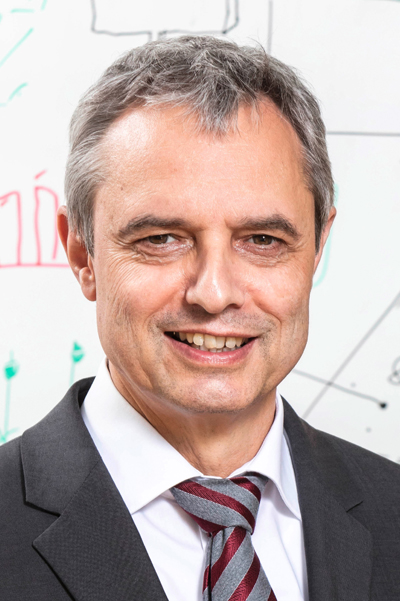
Professor Gerhard Schneider is Head of the Institute for Materials Research (IMFAA) at Hochschule Aalen, where he serves as a Professor in the Faculty of Mechanical Engineering and Materials Technology. With a career spanning several decades, he has established himself as a leading researcher in materials science, particularly in the fields of magnetic materials, metallography, and additive manufacturing. His research interests encompass a wide range of materials engineering topics, with particular focus on magnetic materials (both soft and hard), additive manufacturing techniques (especially selective laser melting), lithium-ion battery technology , and the application of machine learning in materials microscopy . Professor Schneider has published extensively on the microstructure and properties of Fe-Nd-B permanent magnets, additive manufacturing of magnetic components, and advanced characterization methods for materials analysis. Professor Schneider's recent work demonstrates a strong trend toward integrating advanced manufacturing techniques with materials science fundamentals. His publications from the last five years show increasing emphasis on machine learning applications for materials characterization, additive manufacturing of functional materials, and detailed analysis of battery materials. This reflects the evolving nature of materials science research, where traditional characterization methods are being augmented with computational approaches. As Head of the Institute for Materials Research, Professor Schneider oversees a significant research operation focused on advancing materials engineering knowledge and applications. His leadership in the field is evidenced by his extensive publication record and the practical applications of his research in industrial contexts. Professor Schneider maintains an active research program with numerous current projects in materials characterization, additive manufacturing, and magnetic materials development. His work continues to bridge fundamental materials science with practical engineering applications, contributing to advancements in multiple technology areas including electric motors, energy storage, and advanced manufacturing.
