Spencer Banzhaf is a Professor in the Department of Agricultural and Resource Economics at North Carolina State University (NC State), and Director of the Center for Environmental and Resource Economics Policy (CEnREP). He holds a PhD in Economics from Duke University. His research focuses on environmental policy, particularly land use, urban equity, and the interplay between environmental quality, real estate markets, and urban demographics. Key areas include environmental justice, fiscal federalism, and the historical evolution of environmental economic thought. He has contributed to journals such as the American Economic Review and Journal of Political Economy , and serves as editor of the Review of Environmental Economics and Policy . Recent work explores topics like racial segregation’s environmental impacts, the economic history of pollution pricing, and the valuation of ecosystem services. His scholarship bridges theoretical frameworks with applied policy analysis, emphasizing equity and interdisciplinary approaches. He is associated with NC State’s Economics Graduate Program and actively engages in policy debates through contributions to regulatory analyses and public discourse on environmental governance.
Nathan Lassance is a Lecturer at the Louvain School of Management (LSM), Université catholique de Louvain (UCLouvain), and a member of the Louvain Finance (LFIN) research division. His work bridges financial theory, statistical modeling, and data-driven portfolio optimization, with a focus on addressing parameter uncertainty and improving risk-return tradeoffs in asset allocation. Research Interests: Portfolio management, covariance matrix estimation, financial econometrics, risk analysis, quantitative finance, and non-Gaussian return distributions. Publications: His recent work explores shrinkage methods for high-dimensional portfolio selection, sentiment-aligned covariance matrices, and the economic value of statistical metrics like mean squared error. He has also contributed to understanding the limitations of factor-based mispricing models and the statistical properties of mean-variance portfolios. Labs/Teams: Affiliated with the Louvain Institute of Data Analysis and Modeling (LIDAM) and the Louvain Finance (LFIN) group.
Prof. Dr. DJC (Dick) van Dijk is a Full Professor of Financial Econometrics at the Econometric Institute, Erasmus School of Economics, Erasmus University Rotterdam. He received his PhD in Econometrics cum laude from Erasmus University Rotterdam in 1999. His research spans: Volatility modeling and forecasting Analysis of high-frequency financial data Predictability of asset returns Business cycle dynamics Non-linear time series methodologies He has published extensively in premier journals including the Journal of Econometrics , Review of Economics and Statistics , and Journal of Business and Economic Statistics , focusing on empirical finance and econometric theory. Honors: PhD conferred cum laude (1999)
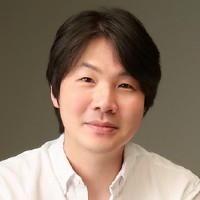
Jungbin Hwang is an Associate Professor in the Department of Economics at the University of Connecticut. He specializes in econometrics theory, with a focus on improving the accuracy and robustness of Generalized Method of Moments (GMM) methods in handling time series and panel data with dependence and heterogeneity. His research also extends to financial econometrics, Bayesian methods, and cointegration analysis. Education: Ph.D., Economics, University of California, San Diego (2016) M.A., Economics, Seoul National University (2010) B.A., Economics, Seoul National University (2008) Research Interests: Efficiency and approximation in GMM estimation Cluster-robust inference and bootstrap methods Cointegration in non-stationary systems Applications to financial markets and policy analysis Teaching: Courses include Empirical Methods in Economics, Econometrics I, and advanced topics in panel data analysis. Key Contributions: His work addresses challenges in GMM inference for time series and panel data, including finite-sample corrections and robust variance estimation. Recent studies explore low-frequency cointegration and quantile regression in dynamic settings. Grants & Collaborations: Collaborations with scholars like Yixiao Sun and Gonzalo Valdés have produced influential methods for accurate econometric testing and inference. Contact: Located in 333 Herbst Hall, Storrs, CT. Office hours: Wednesdays 3:00-4:00 PM or by appointment.
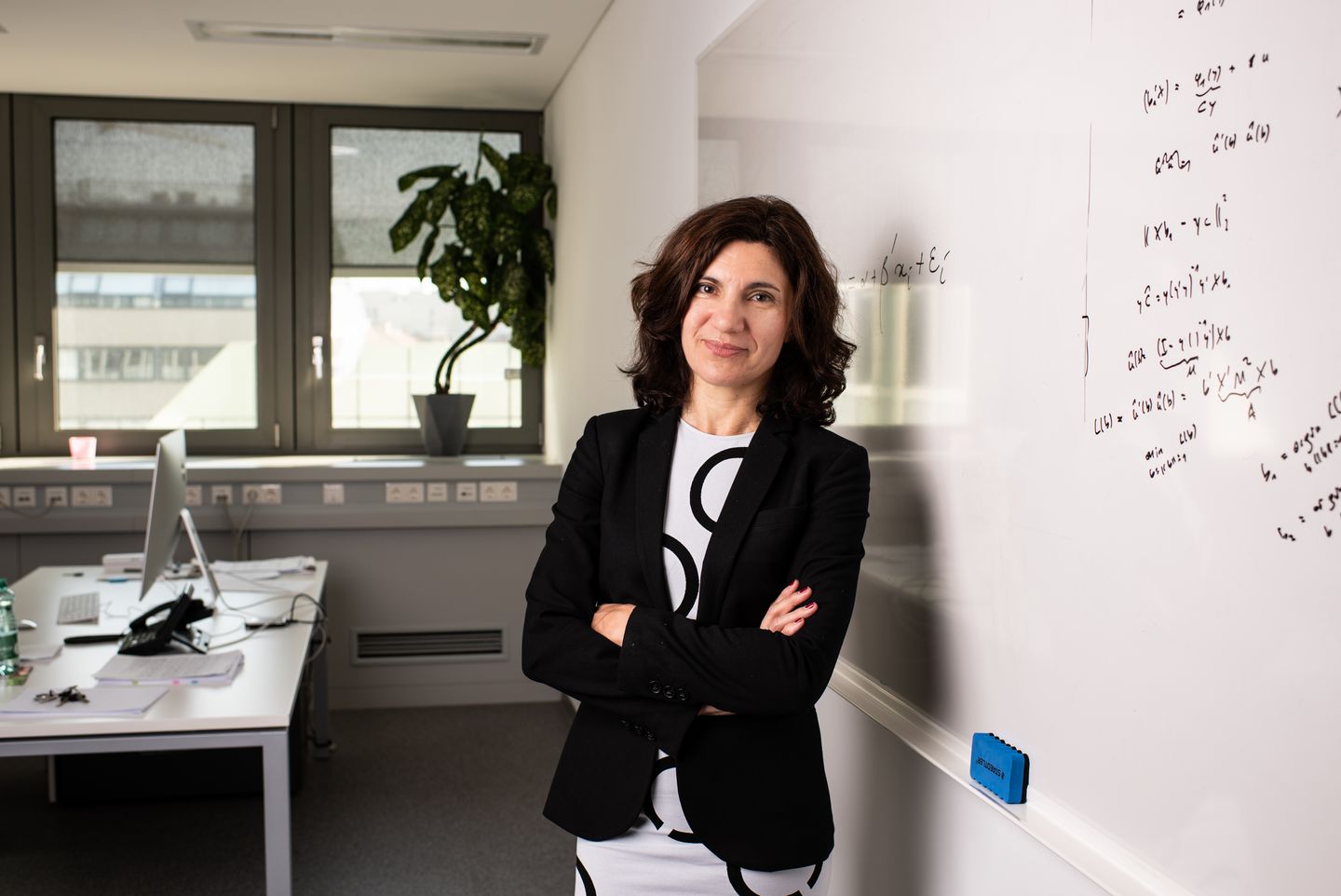
Efstathia Bura is a Professor heading the Applied Statistics Research Unit (ASTAT) within the Institute of Statistics and Mathematical Methods in Economics at TU Wien's Faculty of Mathematics and Geoinformation. Her research focuses on dimension reduction techniques in regression and classification, high-dimensional statistics, and their applications in biostatistics, econometrics, and legal statistics. She leads projects like ProbInG (WWTF-funded) and the SecInt Doctoral College on statistical verification of cyber-physical systems. Her work integrates advanced statistical methodologies with interdisciplinary applications, emphasizing practical solutions for complex data challenges. Current projects explore probabilistic program analysis, security properties in cyber-physical systems, and dynamic econometric modeling. She collaborates internationally, with notable contributions to statistical theory and applications in law, healthcare, and telecommunications. Key research themes include time-varying regression models, sufficient dimension reduction for mixed predictors, and fusion of statistical methods with machine learning. Her publications bridge theoretical advancements and real-world problem-solving, reflecting her role as a leading academic in modern applied statistics. Her team includes postdocs and assistants working on WWTF and SecInt grants, focusing on probabilistic systems and statistical verification. While no formal student advisees are listed, her collaborative projects engage junior researchers in cutting-edge statistical research.
Kwaku Ohene-Asare is a Lecturer in Business Analytics at De Montfort University, UK, within the School of Leadership, Management and Marketing. He holds a PhD in Operational Research and Management Science from the University of Warwick, an MSc in Economics and Finance (with distinction) from Loughborough University, and a BSc in Economics (first-class honors) from the University of Ghana-Legon. He also completed a certificate in Decision Science and Machine Learning at MIT, USA. He has held visiting professorships at Warwick University and Stellenbosch University and plays a senior lecturer role at the University of Ghana. His educational background includes: PhD in Operational Research and Management Science, University of Warwick, UK (2012) MA in Decision Science and Machine Learning, MIT, USA MSc in Economics and Finance, Loughborough University, UK (Distinction) BSc in Economics, University of Ghana-Legon (First Class) PGCAP (Part 1), University of Warwick, UK (2009) Certificate in Nonparametric & Bootstrap Methods, Sapienza University of Rome, Italy (2012) Kwaku's research interests span business analytics, management science, artificial intelligence, data science, machine learning, economic efficiency, productivity analysis, data envelopment analysis (DEA), stochastic frontier econometrics, and their applications in energy, finance, insurance, and credit unions. He has developed a research-based DEA course at the University of Ghana and pioneered the advanced quantitative research methods course for PhD students since 2015. His work integrates cutting-edge computational techniques and econometric modeling to address real-world economic and business challenges. The recent trend in his publications shows a strong focus on efficiency and productivity analysis across sectors—particularly in energy, banking, and insurance—using advanced non-parametric and parametric methods. He frequently applies DEA, Malmquist indices, and stochastic frontier models to assess performance in African and ECOWAS economies, with a growing emphasis on sustainability, undesirable outputs, and dynamic efficiency. His work bridges theoretical rigor with practical policy implications. His scientific awards include: Global Leadership Award (2021) DFID Shared Scholarship Scheme Award (2004) Doctoral Research Scholarship, Warwick Business School (2007) He has received multiple research grants, primarily from the University of Ghana Business School (UGBS), as Principal Investigator, including projects on data science and machine learning, energy productivity, banking efficiency, and multinational operations. He has supervised PhD students through course development and research mentorship. His consultancy work includes efficiency analysis for the National Petroleum Authority, Ghana, and market entry feasibility studies for international firms. He is affiliated with the Centre for Enterprise and Innovation (CEI), the Institute for Sustainable Economics, and the Institute of Energy and Sustainable Development (IESD) at DMU, where he contributes to interdisciplinary research on sustainable economic development. He is an active member of professional societies including the Operational Research Society (UK), INFORMS, Association of European Operational Research Societies, British Academy of Management, Productivity Analysis Research Network (USA), and the Economic Society of Ghana.
Farzad Sabzikar is an Associate Professor in the Department of Statistics at Iowa State University, specializing in stochastic processes, fractional models, and optimization algorithms. He integrates mathematical theory with applications in machine learning and time series analysis. Education: PhD in Statistics (Michigan State University, 2014), MS in Mathematics (Sharif University, 2009), BS in Mathematics (Isfahan University of Technology, 2006) His research bridges fractional calculus and statistical modeling, focusing on tempered processes and their applications in turbulence analysis, geophysical flows, and high-frequency data. He employs wavelet methods and asymptotic theory to study heavy-tailed phenomena and long-range dependencies. Recent publications emphasize tempered fractional Brownian motion, stable noise modeling, and functional data analysis. Key trends include transient anomalous diffusion, machine learning for cognitive decline classification, and optimized signal processing techniques. Scientific Awards: None listed His work has implications for machine learning, geophysics, and astrophysics, though no formal advising, grant, or lab affiliations are detailed in available sources.
Yinqiu He is an Assistant Professor in the Department of Statistics at the University of Wisconsin-Madison. They hold affiliations with the School of Computer, Data & Information Sciences and the Data Science Institute at Columbia University (2021-2022 postdoc). Their research focuses on developing statistical methodologies for high-dimensional and complex data, with applications in genomics, metabolomics, and network analysis. Key areas include mediation pathway analysis, asymptotic theory for U-statistics, and functional connectivity modeling. Education includes a B.S. in Statistics from the University of Science and Technology of China (2016) and a Ph.D. in Statistics from the University of Michigan-Ann Arbor (2021), advised by Professors Gongjun Xu and Xuming He. They were awarded the ProQuest Distinguished Dissertation Award (2022) and received multiple travel grants from the Institute of Mathematical Statistics and ASA. Teaching includes core Ph.D. courses like STAT 849 (Regression Analysis) and applied courses like STAT 456 (Multivariate Statistics). Current mentoring includes MS student Yuhan Zheng (now pursuing UW-Madison Ph.D.) and Xiangyi Liao (Ph.D. in Educational Psychology). Research outputs include foundational work on adaptive U-statistics testing frameworks and scalable methods for large-scale genomic data analysis. Active in methodological contributions to biostatistics, their work bridges statistical theory and computational efficiency. Recent projects involve dynamic functional connectivity estimation from fMRI data and latent space modeling in heterogeneous networks. GitHub repository 'Adaptive-U-stats' hosts open-source implementations of high-dimensional testing algorithms developed in their research.
Dr. Saumen Mandal is a Professor in the Department of Statistics at the University of Manitoba, Faculty of Science. He holds a PhD from the University of Glasgow, UK, and MSc/BSc (Gold Medal) from the University of Calcutta, India. His research focuses on optimal experimental design, biostatistics, data science, shrinkage estimation, and constrained optimization. He has received numerous teaching awards including the Dr. and Mrs. H.H. Saunderson Award for Excellence in Teaching, Students Choice Best Professor Award, and multiple Merit Awards. He is also a P.Stat. designee from the Statistical Society of Canada. Education: PhD (Statistics), University of Glasgow, UK MSc (Statistics), University of Calcutta, India (First Class First, Gold Medal) BSc Honours (Statistics), University of Calcutta, India Research Interests: Optimal design theory and applications Biostatistical methods for clinical trials and healthcare data Data science and machine learning techniques Shrinkage estimation and model selection Linear models and goodness-of-fit testing Publications span topics like optimal regression designs, response-adaptive clinical trial methods, and statistical models for healthcare data. His work emphasizes practical applications in medicine and data-driven decision making. Awards include: Teaching Excellence Awards (2005-2007) Merit Awards for Teaching and Research (2010-2019) Faculty of Science Innovation in Teaching Award (2020) He advises graduate students in statistics and contributes to research teams in biostatistics and data science. His office is temporarily located at 256 Parker Building during construction.
Liqun Wang is a Professor of Statistics at the University of Manitoba, within the Faculty of Science. His research focuses on statistical inference in complex models, measurement error correction, boundary crossing problems in stochastic processes, and Monte Carlo simulation methods. He holds a prominent role in advancing methodologies for nonlinear time series analysis and Bayesian inference. His work integrates theoretical rigor with practical applications, addressing challenges in econometrics, environmental science, and public health. Notable contributions include advancements in instrumental variable estimation, second-order least squares methods, and high-dimensional covariance estimation. He actively mentors graduate students in these areas and has published extensively in top-tier statistical journals. Recent research highlights include Bayesian bias correction techniques, sparse covariance matrix estimation, and modeling SARS-CoV-2 dynamics via wastewater data. His methodologies often bridge computational efficiency with statistical accuracy, making them applicable to diverse fields such as finance, biostatistics, and environmental monitoring. Despite prolific output (over 70 publications since 1990), Dr. Wang has yet to be explicitly noted for formal scientific awards. His academic profile emphasizes methodological innovation, with a strong focus on real-world data challenges and interdisciplinary collaboration.
Pedro Galeano is an Associate Professor in the Department of Statistics at Universidad Carlos III de Madrid (UC3M) since 2009. He holds a PhD in Statistics (2004) under Prof. Daniel Peña, focusing on multiple time series. Previously, he served as Visiting Assistant Professor of Statistics and Econometrics at the University of Chicago’s Graduate School of Business and as a Postdoctoral Fellow at the Department of Statistics and Operations Research at Universidade de Santiago de Compostela. His research focuses on time series analysis, outlier detection, Bayesian inference in financial models, and functional data analysis with applications to missing data. He is an Associate Editor of the Journal of Time Series Analysis and advises the Heliyon journal. Key contributions include developing methodologies for detecting structural breaks, modeling systemic risk via copula approaches, and advancing robust statistical techniques for high-dimensional data. Active in academic leadership, Galeano co-organized the NICDA Workshop 2025 and has published extensively on topics like dynamic factor models, sequential parameter change detection, and functional data applications in energy markets. His work bridges theoretical statistics with practical applications in finance, economics, and environmental science.
Carlo Fezzi is an Associate Professor at the Department of Economics and Management, University of Trento. His research focuses on econometrics, environmental economics, and climate change impacts, particularly in policy design and integrated modeling. Teaches Applied Econometrics and Econometrics for Behavioral and Applied Economics and Mathematics programs. Leads workshops in the Market Analysis Laboratory (G3-2), emphasizing data-driven market understanding. Fezzi’s research integrates econometric methods with environmental policy, addressing biodiversity, climate adaptation, and energy economics. Recent work explores land use optimization under climate change, electricity demand forecasting, and coral reef valuation. His publications span topics like carbon trading, agro-environmental modeling, and non-market valuation techniques. Fezzi’s 15 most recent articles highlight trends in econometric applications to environmental challenges, including climate policy, energy demand modeling, and biodiversity conservation. His methodologies combine linear/nonlinear models, neural networks, and spatial analysis to address global issues like food security, carbon emissions, and ecosystem resilience.
Mark Steel is a Professor of Statistics at the University of Warwick, Department of Statistics. He previously held Chairs in Economics at the University of Edinburgh (1998-2000) and in Statistics at the University of Kent (2000-2003). His research focuses on Bayesian statistics, including theoretical and applied work in distribution theory, Bayesian model averaging, spatial statistics, survival analysis, and stochastic volatility models. He has extensive editorial experience, serving as Editor-in-Chief of Bayesian Analysis (2022-2025) and as Head of the Statistics Department at Warwick (2014-2018). He is currently Chair-Elect of the Objective Bayes section of the International Society for Bayesian Analysis (ISBA). His research interests span Bayesian methodology, econometrics, and statistical theory, with applications to economics, survival analysis, and spatial data. He is affiliated with the Centre for Research in Statistical Methodology at Warwick and actively contributes to academic conferences. His work has been recognized through highly cited publications, including influential papers on Bayesian model averaging and non-Gaussian statistical models. Professional activities include editorial roles in top journals such as the Journal of Econometrics , Journal of the Royal Statistical Society , and Journal of Productivity Analysis . He collaborates with researchers globally and maintains an active profile on academic platforms like Google Scholar and ResearchGate.
Luca De Angelis is an Associate Professor at the Department of Economic Sciences within the University of Bologna , Italy. His research focuses on econometrics, climate change economics, financial markets, and sports economics. He holds the scientific-disciplinary sector ECON-05/A (Econometrics). Key research interests include: Climate change impacts on macroeconomic systems and financial markets Econometric methods for cointegration and time series analysis Behavioral aspects of betting and prediction markets Analysis of transition risks in energy and sovereign debt markets Publications trends reflect interdisciplinary focus on: Climate policy and financial stability (e.g., transition risks in CDS markets) Innovative econometric methodologies (e.g., adaptive cointegration rank determination) Sports analytics (Elo-based predictions for tennis and basketball) No scientific awards are explicitly mentioned. His work integrates advanced statistical techniques with real-world applications in economics, finance, and sports.
Patrick J. Coe is an Associate Professor in the Department of Economics at Carleton University, affiliated with the Faculty of Public and Global Affairs. He holds degrees from the University of Essex (B.A., M.A.) and the University of British Columbia (Ph.D.). His research focuses on macroeconomics and economic history, particularly testing long-run neutrality restrictions, the Great Depression, and Canadian labour market integration. Key research contributions include analyzing downward nominal wage rigidity in early 20th-century Canada and exploring the relationship between financial conditions and economic growth. His work often employs advanced econometric techniques such as regime switching models and bounds testing approaches. Current research interests include monetary history and the predictive power of financial indicators like yield curves. Coe’s teaching spans introductory economics, graduate-level monetary history, and specialized courses on financial crises. He has published extensively in journals like the Journal of Applied Econometrics, Canadian Journal of Economics, and Journal of Banking and Finance. Though no specific awards are listed, his work has addressed pivotal historical economic events and policy-relevant topics such as apprenticeship systems and sovereign debt management. He has advised on topics related to labour market policy and apprenticeship completion rates, though no formal student advisees are named. His research often involves collaborations with scholars like Shaun P. Vahey and Tony Chernis, focusing on historical data analysis to inform contemporary economic debates.