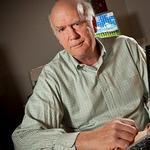
Vaibhav Krishna is a Postdoctoral Associate in the Department of Social and Behavioral Sciences at the Yale School of Public Health, where his research bridges information systems, data science, and public health challenges. His work focuses on sustainable agriculture optimization, crisis informatics, and knowledge-sharing dynamics in digital communities. Education: PhD in Information Systems from ETH Zurich (2022) MS in Statistics from ETH Zurich (2017) BTech in Material Science from Indian Institute of Technology Bombay (2009) Dr. Krishna's research integrates advanced computational methods to address complex public health problems. He develops quantitative frameworks for sustainable food systems that balance environmental, nutritional, and economic constraints, with specific applications in India. His crisis informatics work analyzes real-time sensemaking during pandemics using language models, while his social computing research examines motivation dynamics in community question-answering platforms through graph-based recommendation systems. His publication record reveals three dominant research trajectories: sustainable agriculture optimization (40% of recent work), crisis-informed knowledge systems (35%), and machine learning for social computing (25%). Methodologically, he combines optimization algorithms, temporal graph analysis, and natural language processing to tackle sparse data challenges in real-world settings. His interdisciplinary approach consistently translates technical innovations into actionable public health insights.
Sheila A. McIlraith is a Professor in the Department of Computer Science at the University of Toronto, where she leads research at the intersection of artificial intelligence, knowledge representation, and formal methods. With an extensive publication record spanning over three decades, she has made significant contributions to planning, reinforcement learning, and epistemic reasoning in AI systems. Her research interests focus on developing formal frameworks for AI planning and decision-making, with particular emphasis on interpretable AI, reward specification in reinforcement learning, and multi-agent systems. She has pioneered work in reward machines for reinforcement learning, epistemic planning, and the application of formal methods to ensure safety and fairness in AI systems. Her recent work bridges symbolic AI with deep learning approaches to create more transparent and controllable intelligent agents. Analysis of her recent publications reveals a strong trend toward integrating formal specification languages with machine learning, particularly in reinforcement learning where she develops methods for specifying complex tasks using linear temporal logic and related formalisms. Her work increasingly addresses ethical considerations in AI, including fairness in sequential decision making and the impact of ethics education in computer science curricula. McIlraith has mentored numerous PhD students who have become prominent researchers in AI, including Rodrigo Toro Icarte, Toryn Q. Klassen, and Andrew C. Li. Her collaborative network spans major AI research institutions worldwide, with frequent collaborations with researchers at institutions including the Vector Institute and international universities. Her research group explores the theoretical foundations of AI planning while developing practical applications in areas including robotic assistance, ethics-aware AI, and interpretable decision systems. Current projects focus on language-guided reinforcement learning, multi-agent verification, and the development of tools for responsible AI development and deployment.
Qihang Lin is a Professor and the Gary C. Fethke Research Professor in Business Analytics at the Tippie College of Business, University of Iowa, where he also serves as Faculty Director of the part-time Master of Science in Business Analytics (MSBA-PT) program. His academic leadership and research excellence position him at the forefront of optimization and data science. Dr. Lin holds a PhD in Algorithms, Combinatorics, and Optimization from Carnegie Mellon University and a BS in Mathematical Science from Tsinghua University. His research spans continuous optimization, machine learning, and fairness in AI, with a focus on developing efficient and provable algorithms for complex decision-making problems. Continuous Optimization First-Order Methods Distributed Optimization Error Bound Conditions Machine Learning and Predictive Analytics Fairness in AI Markov Decision Processes His recent publications, appearing in venues like Mathematics of Operations Research , NeurIPS , and Management Science , emphasize theoretical advances in optimization under constraints, fairness-aware learning, and scalable methods for large-scale data. The work consistently bridges theory and application, particularly in healthcare and AI ethics. Dr. Lin has been recognized with multiple awards, including: Best Paper Award - INFORMS Workshop on Data Science (2017) Runner-up, Best Paper Award - INFORMS Workshop on Data Science (2019) Early Career Faculty Research Award, Tippie College of Business (2018) MBA Business Analytics Professor of the Year (2018–2019) He has secured significant research funding from the National Science Foundation and the University of Iowa, focusing on fairness-aware machine learning and federated learning in healthcare. His grants demonstrate strong collaboration with interdisciplinary teams and a commitment to solving real-world problems through algorithmic innovation. He has also contributed to the academic community as a reviewer for top journals such as Mathematical Programming , SIAM Journal on Optimization , and IEEE Transactions on Signal Processing . Dr. Lin has been involved in research initiatives related to federated learning for medical imaging (ImagiQ) and fairness in AI systems, often working within collaborative frameworks involving data science and healthcare equity. His role as Faculty Director and research fellow underscores his leadership in shaping analytics education and research at the University of Iowa.
Eric Koskinen is the Charles Berendsen Associate Professor (with tenure) of Computer Science at Stevens Institute of Technology in Hoboken, New Jersey. He is also a co-founder of the Commute Workshop at PLDI 2022 and has previously held positions as Researcher at Yale University and Visiting Professor at New York University. Education: Ph.D. in Computer Science, University of Cambridge (UK) Research Interests: Koskinen's research lies at the intersection of software verification , programming languages , and concurrency . He develops automated techniques to ensure reliable and efficient software, with a particular emphasis on commutativity analysis , parallelization , and language-level abstractions for multicore and distributed systems. His recent focus includes the Veracity programming language that introduces commute blocks to simplify concurrent programming. Scientific Awards & Honors: POPL 2023 Distinguished Paper Award Provost's Early Career Award for Research Excellence (2020) CAV 2011 Award Paper Advising & Funding: Prof. Koskinen currently advises three Ph.D. students—Adam Chen, Parisa Fathololumi, and Mihai Nicola—and has recently graduated Cyrus Liu (Ph.D. 2022). His research group has been generously supported by more than $5 million in competitive grants from the NSF, ONR, and DARPA. Recent awards include: NSF: Concurrent Objects ($593k, 2023) ONR: AVTA Transition ($215k, 2022) NSF: Dynamic Analysis ($399k, 2021) NSF: Commutativity Analysis ($495k, 2020) ONR: Temporal Alignment ($3.2M, 2017) Labs & Tools: His group maintains an active open-source tool suite including Veracity (interpreter for commute blocks), Servois2 (commutativity synthesizer), Dynamite (termination/non-termination checker), DarkSea (temporal verifier for binaries), CityProver (commutativity verifier), Knotical (trace-refinement synthesizer), and DrNLA (non-linear to linear integer arithmetic rewriter).
Tim van Erven is an Associate Professor of Machine Learning at the Korteweg-de Vries Institute for Mathematics within the Faculty of Science at the University of Amsterdam. His research focuses on the mathematical foundations of machine learning, with particular expertise in online convex optimization, statistical learning theory, and explainable AI. He leads a research group dedicated to developing mathematically rigorous machine learning methods that work effectively without manual fine-tuning. His research interests span the mathematical foundations of machine learning, with emphasis on explainable machine learning, adaptive methods in online convex optimization, faster-than-minimax rates for 'easy data' in statistical learning, PAC-Bayesian concentration inequalities, and statistical learning theory with frequentist analysis of Bayesian methods. His work bridges theoretical guarantees with practical applications, recently shifting toward formal mathematical analysis of explainability methods for black-box AI systems. His recent publications reveal a clear evolution from foundational work in online learning and statistical theory toward explainable AI, with increasing focus on theoretical guarantees for concept learning and algorithmic recourse. The publications demonstrate strong methodological rigor while addressing practical challenges in interpretability and robustness of machine learning systems. Scientific Awards: VICI grant by the Dutch Research Council (2025) VIDI grant by the Dutch Research Council (2019) TOP grant by the Dutch Research Council (2016) NIPS 2014 outstanding reviewer award Rubicon grant by the Dutch Research Council (2011) Van Erven serves in significant academic leadership roles including as a member of the board of directors for COLT, co-chair for the AI & Mathematics initiative, and organizer of the thematic seminar on machine learning. He has successfully secured multiple competitive research grants and leads a research group working on the Mathematical Foundations for Explainable AI project, with several PhD and Postdoc positions currently open.
Ashutosh Gupta is an Associate Professor in the Department of Computer Science and Engineering at the Indian Institute of Technology Bombay, where he has been a faculty member since 2018. His research focuses on formal methods for software verification, particularly in the areas of model checking, constraint solving, and automated reasoning for both sequential and concurrent programs. He teaches advanced courses including Automated Reasoning (CS433), Analysis of Concurrent Programs (CS766), and Logic for Computer Science (CS228). Dr. Gupta received his Ph.D. in Computer Science from Technical University of Munich (TUM) in 2011, with affiliations during his doctoral studies at TUM, Max Planck Institute for Software Systems (MPI-SWS), and École Polytechnique Fédérale de Lausanne (EPFL). Prior to joining IIT Bombay, he served as a faculty member at Tata Institute of Fundamental Research (TIFR) in Mumbai and completed post-doctoral research in the Henzinger group at IST Austria. His research interests span formal verification of sequential and concurrent software, modeling of biological systems, and constraint solving including constraint logic programming, decision procedures, and automated theorem proving. He has developed several verification tools including VAJRA, HSF, and InvGen. His work bridges theoretical foundations with practical applications, particularly in verifying safety-critical systems and biological processes. Dr. Gupta's publication record shows a consistent trajectory of high-impact research in top venues like POPL, CAV, TACAS, and AAAI. His recent work has expanded into neural network verification, reinforcement learning verification for medical devices, and applying formal methods to biological systems, demonstrating both depth in core verification techniques and breadth in application domains. Best Paper Award at TACAS 2015 Best Paper Award at TACAS 2009 Dr. Gupta actively mentors numerous students through course projects, research presentations, and specialized workshops like SATfest. He has supervised students working on SAT/SMT solvers, verification of concurrent programs, and applications of formal methods to biological systems. His teaching philosophy emphasizes hands-on experience with verification tools and encourages students to engage with cutting-edge research through reading and presenting recent conference papers. He maintains active research collaborations with institutions including TUM, MPI-SWS, EPFL, IST Austria, and TIFR, reflecting his continued integration into the international formal methods research community.
Prof. Dr. Jan Bender holds a professorship in Computer Animation at RWTH Aachen University's College of Engineering. As a leading researcher in physics-based simulation methods, his work focuses on developing advanced numerical techniques for fluid dynamics, deformable solids, and multi-physics interactions through Smoothed Particle Hydrodynamics (SPH) and Finite Element Methods (FEM). Key Contributions: Invented PF-FLIP for two-phase flows, developed SymX symbolic framework for energy-based simulations, created STARK unified solver for robotics applications, and introduced implicit boundary handling for SPH Methodologies: Specializes in hybrid Eulerian/Lagrangian approaches, differentiable physics, adaptive discretization, and machine learning integration for simulation acceleration Research Impact: 2023 & 2024 Best Paper Awards in VMV and SCA conferences. His work enables billion-particle fluid simulations and realistic multi-body interactions for robotics, with applications in welding, thermal spraying, and soft robotics. Collaborations: Works extensively with robotics institutes (Gazebo Fluids extension) and materials science departments (TIG welding, thermal spray modeling). Maintains open-source code repositories for simulation frameworks.
Fabio Patrizi is an Associate Professor in Computer Science at the Department of Computer, Control and Management Engineering (DIAG) at Sapienza University of Rome. He serves as Coordinator of the Bachelor in Information Engineering program at the Latina site. His academic career includes significant service roles such as Editorial Board Member for the prestigious Artificial Intelligence Journal (AIJ) since 2023, Area Chair for ICSOC 2023, and co-chair for the KR 2025 track on Knowledge Representation & Reasoning and Planning & Scheduling. Patrizi's educational background led to National Scientific Habilitation for Full Professorship for sector SC 09/H1 (now GSD 09/IINF-05). His research spans Formal Methods, Knowledge Representation, Machine Learning, Reasoning about Action, Planning in AI, Service-oriented Computing, and Business Processes. His work focuses on theoretical, methodological, and practical aspects including Behavior and Service composition, Planning programs, MAS Verification, Reasoning About Actions, Infinite-plan synthesis, Data abstraction techniques, and Reinforcement Learning with non-Markovian Rewards. His publication record includes over 70 scientific papers in top-level international journals and conferences. Recent research trends show a strong focus on temporal reasoning in reinforcement learning, planning frameworks, process mining, and verification techniques. His work bridges theoretical foundations with practical applications in AI planning and verification. ICDT Test of Time Award on Automatic verification of data-centric business processes (2009) RMIT Visiting Researcher's Award (2011) ICAPS 2024 Outstanding SPC Award Patrizi has supervised 2 PhD students and actively serves on program committees for major AI conferences including AAAI, IJCAI, ICAPS, AAMAS, KR, and ECAI. His research projects include MARLeN (Principal Investigator, 2023-2025), AIPlan4EU (Task Leader, 2021-2023), DRAPE (Principal Investigator, 2019-2022), WhiteMech (Participant, 2019-2024), TAILOR (Participant, 2020-2023), VerySynCopated (Principal Investigator, 2014-2016), ACSI (Participant, 2010-2013), and SM4All (Participant, 2008-2011). He is a member of the Data Management & Service-Oriented Computing and Artificial Intelligence & Knowledge Representation research groups at DIAG, contributing to collaborative efforts in advanced AI research and applications.
Lars Schewe is a researcher at the School of Mathematics, University of Edinburgh , specializing in optimization problems at the intersection of physical systems and political economy. He collaborates with institutions like Open Grid Europe (OGE) and the National Grid to model complex infrastructure systems. Educational Background: Joint undergraduate degree in Mathematics and Sociology; PhD in Discrete Geometry. Research Focus: Optimization in real-world systems, particularly energy networks, balancing mathematical rigor with practical problem-solving. His work addresses non-linear physical laws and economic constraints in gas transport modeling. Collaborations: Engages with interdisciplinary teams including economists and physical scientists. Mentors students like Jonah Aldridge and Joe Carstairs, who contributed to his academic interview series.
Ruzica Piskac is a Professor of Computer Science at Yale University, where she joined the Department of Computer Science in 2013 and leads the Rigorous Software Engineering (ROSE) research group. Her work focuses on formal techniques to improve software reliability and trustworthiness through verification, security, and synthesis approaches. Education: PhD in Computer Science from the Swiss Federal Institute of Technology (EPFL) in 2011 Thesis title: Decision Procedures for Program Synthesis and Verification Previously led an independent research group at the Max Planck Institute for Software Systems in Germany (2012-2013) Research Interests: Piskac's research spans software verification, security and applied cryptography, automated reasoning, and code synthesis. Her work combines formal methods with practical applications in programming languages, particularly focusing on making software systems more reliable and trustworthy. She has developed tools for symbolic execution in Haskell, privacy-preserving formal methods, and verification techniques for configuration files and software updates. Publication Trends: Her recent work shows a strong focus on applying formal verification techniques to emerging challenges including large language models, zero-knowledge proofs, quantum computing security, and legal accountability for AI systems. There's a clear trajectory toward bridging formal methods with practical security and verification challenges across diverse domains. Awards: Multiple Amazon Research Awards Yale University's Ackerman Award for Teaching and Mentoring Facebook Communications and Networking Award Microsoft Research Award for the Software Engineering Innovation Foundation Patrick Denantes Prize for her doctoral dissertation Advising and Service: Piskac has graduated five PhD students, four of whom are now assistant professors of computer science. She has served as Program Chair of the 37th International Conference on Computer Aided Verification and is on the Steering Committee of the Formal Methods in Computer-Aided Design conference. Her service includes numerous program committee roles across major programming languages and verification conferences. Research Group: She leads the Rigorous Software Engineering (ROSE) group at Yale, which focuses on developing formal techniques for software reliability and trustworthiness, with projects spanning symbolic execution, privacy-preserving verification, reactive synthesis, and configuration file verification.
Allen G. Hunt is a distinguished Professor in the Department of Physics at Wright State University, holding a joint appointment in Geology during the period of its existence. His interdisciplinary research bridges physics, hydrology, soil science, and ecology through the application of percolation theory to understand complex natural systems. Education: Ph.D. Physics, 1983, University of California, Riverside Fulbright Scholar, 1985-1987, Germany (Semiconductor Physics) M.A. Geomorphology, 1996, Duke University Hunt's research focuses on applying percolation theory to solve fundamental problems across multiple disciplines. His work has revolutionized understanding of water balance, soil formation, vegetation growth, and species richness through a unified theoretical framework. He has demonstrated how solute transport velocity in soil networks explains phenomena ranging from crop growth rates to soil formation over millennia. His theoretical approach treats soil as an interconnected network rather than a continuum, enabling predictions across spatial and temporal scales that were previously unattainable. Analysis of Hunt's recent publications reveals a consistent trajectory applying percolation theory to increasingly complex environmental systems. His work has evolved from fundamental physics of porous media to comprehensive models of water balance, ecosystem productivity, and biodiversity. A key breakthrough was solving the water balance problem - how water partitions at the Earth's surface between evapotranspiration and runoff - which has been the central goal of NSF's Hydrologic Sciences program. His most recent work separates energy and geological/climatic stability effects on plant species richness, resolving a question that remained unresolved since Alexander von Humboldt's time. Scientific Recognition: University Professor 2021-2026 for research outside principal field of physics Outstanding Scholarly Activity Award (2023 for period 2020-2023) Ranked 177th among world's civil engineers (2020 Stanford study) #1 in citations in Soil Science Society of America Journal (2013) #1 published author in Springer's Lecture Notes in Physics series Google Scholar citations: 7160, H-index: 40 Hunt has successfully advised multiple graduate students who have gone on to distinguished careers, including Behzad Ghanbarian who received the prestigious Turcotte Award from the American Geophysical Union. His research has secured approximately $500,000 in funding from diverse sources including NSF, Swiss National Science Foundation, PNNL, Procter & Gamble, BHP Billiton, and USDA. His work has been featured in scientific news outlets (CSA News, Eos, Geotimes) ten times, with recent Editor's Highlights in Eos.org recognizing the significance of his contributions to hydrology and ecosystem science. Hunt's research program represents a unique integration of physics principles with environmental systems, creating a theoretical framework that connects processes from pore-scale interactions to continental-scale water cycles. His work has practical applications for predicting effects of climate change on water resources and food production.
Stefano Berrone is a Full Professor in the Department of Mathematical Sciences "G.L. Lagrange" (DISMA) at the Polytechnic University of Turin, where he also holds key administrative roles as Vice-Rector for Quality and President of the University Quality Assurance Committee. He is a member of the Interdepartmental Center SmartData@PoliTO and the University Committee for Research, Technology Transfer and Services to the Territory. Department of Mathematical Sciences "G.L. Lagrange" (DISMA), Polytechnic University of Turin Interdepartmental Center SmartData@PoliTO - Big Data and Data Science Laboratory Scientific leadership in EU, national, and commercial research projects Teaching assignment at Turin Polytechnic University in Tashkent (2012–2014) His research lies at the intersection of numerical analysis, scientific computing, and machine learning, with a strong emphasis on the development and analysis of advanced numerical methods. He specializes in the Virtual Element Method (VEM), mesh adaptivity and generation, high-performance computing (HPC), physics-informed neural networks, and deep learning for engineering problems. His work contributes to computational engineering, data science, and sustainable development (aligned with SDGs 4, 9, and 13). He leads multiple research groups and projects focused on numerical optimization, PDE discretization on polygonal meshes, and simulation of complex physical systems. The recent publications (2023–2025) reveal a strong trend toward hybrid computational methodologies, combining classical numerical techniques like VEM with machine learning, particularly physics-informed and neural-approximated models. There is a clear focus on stabilization-free formulations, mesh optimization, and applications in energetic materials, fluid dynamics, and subsurface modeling. The work spans high-impact journals in scientific computing, computational mechanics, and algorithms. Scientific Participations and Memberships: Full Member, SIAM (Society for Industrial and Applied Mathematics) (2020–present) Full Member, Italian Society of Applied and Industrial Mathematics (2020–present) Full Member, Italian Mathematical Union (2020–present) Full Member, National Institute of Higher Mathematics - National Group for Scientific Computing (1999–present) Research Leadership and Grants: Scientific Responsible, In-Deep (EU Horizon Europe, 2024–2028) Scientific Responsible, PYGEOM (PRIN, 2023–2026) Scientific Director of Structure, SHIMMER (Clean Hydrogen JTI, 2023–2026) Scientific Director of Structure, HPC-Spoke 6 (PNRR, 2022–2025) Scientific Responsible, AdPolyMP (PRIN, 2022–2025) Scientific Responsible, Virtual Element Methods: Analysis and Applications (PRIN, 2019–2022) Scientific Responsible, IDEA (PRIN, 2013–2015) Scientific Responsible, AIRTOLYMI (Regional, 2007–2011) Scientific Responsible, Engine Health Monitoring (Commercial, 2024–2025) Advising and Doctoral Supervision: Supervising multiple PhD students in Pure and Applied Mathematics and Mathematical Sciences Member of Doctoral Colleges in Pure and Applied Mathematics at Politecnico di Torino and University of Turin (2013–2023) Key advisor in research areas including energetic materials, computational fluid dynamics, and numerical PDEs Laboratories and Research Groups: Numerical Analysis and Scientific Computing (DISMA) Interdepartmental Center SmartData@PoliTO - Big Data and Data Science Laboratory Lead in developing computational tools like HEMSim for energetic materials simulation
Carl C Kjelgaard Mikkelsen is an Associate Professor at the Department of Computing Science, Umeå University, Sweden. His research focuses on developing robust numerical algorithms that cannot fail, particularly in the context of finite precision arithmetic used by computers. His work bridges theoretical numerical analysis with practical high-performance computing applications. Dr. Mikkelsen's research interests center around numerical analysis and high performance parallel computing, with special emphasis on the worst case analysis of algorithms. He investigates the profound differences between exact arithmetic used by humans and finite precision arithmetic used by computers. His current projects include developing parallel constraint solvers for constrained molecular dynamics and parallel solvers for ultra-sparse linear systems. He is a co-author of the StarNEig library for solving dense nonsymmetric standard and generalized eigenvalue problems in parallel. His recent publications demonstrate a strong focus on accuracy requirements in numerical methods, particularly Newton's method, and the development of robust parallel algorithms for linear algebra problems. His work spans from theoretical analysis of numerical stability to practical implementation in high-performance computing environments. Dr. Mikkelsen teaches numerical analysis and scientific computing, emphasizing algorithm design, analysis, and implementation. He focuses on teaching students the critical differences between exact and finite precision arithmetic, and invests significant time in teaching software development practices and technical writing.
Amin Coja-Oghlan is Professor of Efficient Algorithms and Complexity Theory at TU Dortmund University's Department of Computer Science. His research integrates probabilistic combinatorics, information theory, and statistical physics to solve fundamental problems in theoretical computer science. Education includes a doctorate in Mathematics (University of Hamburg, 2002) and habilitation in Computer Science (Humboldt University Berlin, 2005). Research advances understanding of phase transitions in constraint satisfaction problems, optimization landscapes, and random structures. Recent publications analyze SAT thresholds, group testing, and sparse matrix properties. Academic appointments include professorships at Goethe University Frankfurt and lectureships at Edinburgh and Warwick. Research contributions bridge discrete mathematics with computational complexity.
Carsten W. Scherer is a Professor and Head of the Institute of Mathematical Methods in Engineering, Numerical Analysis and Geometric Modeling at the University of Stuttgart, Faculty of Engineering. He holds the Chair of Mathematical Systems Theory and serves as Erasmus Coordinator for the Department of Mathematics. His research focuses on robust control, multiobjective control, linear matrix inequalities (LMIs), and semi-definite programming, with applications in mechatronics and flight control. He has authored numerous publications and contributed to advanced control theory methodologies. His research interests include exploring LMIs in control systems analysis, robust optimization techniques, and nonlinear control strategies. He has developed frameworks for model predictive control (MPC) and gain-scheduled control, leveraging integral quadratic constraints (IQCs) for system analysis and synthesis. Dr. Scherer’s work bridges theoretical advancements with practical applications, emphasizing convex optimization and its role in solving complex control problems. His contributions span both foundational theory and real-world implementations, particularly in aerospace and mechatronic systems. His publications reflect a sustained focus on robustness, optimization, and control system design, with recent work addressing data-driven methods, trajectory generation, and algorithmic synthesis. He leads research initiatives in mathematical systems theory and collaborates on interdisciplinary projects integrating control engineering with optimization and machine learning.