Charith Cooray is an Associate Professor and Adjunct Associate Professor at Karolinska Institutet , affiliated with the Department of Clinical Neuroscience . He leads a research group focused on Clinical Neurophysiology and Neurocritical Care , with a clinical background in neurology and clinical neurophysiology. Non-invasive estimation of intracranial pressure via optic nerve sheath diameter (ONSD) and transcranial Doppler Blood biomarkers for acute stroke subtyping and differentiation from stroke mimics Neurophysiological monitoring in neurointensive care settings His recent publications (2019-2024) span neuroimaging , stroke outcomes , and epilepsy mechanisms . He supervises doctoral student Jakob Pansell and collaborates with teams at Karolinska University Hospital and SciLifeLab . No scientific awards are documented in public records.
Linda Olafsen is an Associate Professor in the Department of Electrical & Computer Engineering at Baylor University’s School of Engineering and Computer Science. She holds a PhD in Physics from Duke University and has held academic positions at the University of Kansas and Baylor University since 1999. Her research spans photonics, semiconductor optoelectronics, and biomedical device development. PhD, Physics, Duke University (1997) MA, Physics, Duke University (1994) AB, Physics, Princeton University (1991) Her research focuses on mid-infrared semiconductor lasers, optoelectronic devices, graphene-semiconductor integration, and biomedical applications such as endovascular navigation and glucose monitoring. She leads the Semiconductor Optoelectronics Laboratory, where her team develops advanced mid-IR lasers, characterizes 2D/3D material interfaces, and engineers sensors for medical use. Her work bridges fundamental physics with practical engineering solutions in healthcare and defense. The recent publications show a strong trend toward mid-infrared optoelectronics , particularly interband cascade lasers , graphene-based contacts , and biomedical sensing . Her team integrates optical, thermal, and electrical characterization to improve laser efficiency and device performance. Applications span infrared countermeasures, chemical sensing, and endovascular robotics. Scientific Awards and Professional Leadership: Chair, Congressional Visit Day Subcommittee, MRS (2012–2016) Chair, Policy Outreach Working Group, MRS Government Affairs Committee Book Review Board Chair, MRS Bulletin Editorial Board Member, MRS Bulletin Lifetime Member, American Physical Society, OSA, and SPIE Senior Member, IEEE and IEEE Photonics Society Linda Olafsen actively mentors undergraduate and graduate students, involving them in research on laser development, material characterization, and biomedical device design. She has secured funding for projects in mid-IR lasers and sensing technologies. Her lab offers opportunities in device fabrication, graphene integration, beam profiling, and LabVIEW programming. She leads the Semiconductor Optoelectronics Laboratory , which focuses on: Mid-infrared semiconductor laser development Graphene-semiconductor optoelectronic devices Endovascular navigation using shape-memory alloys In vivo infrared and ultrasound sensing Beam and thermal profiling Device fabrication and characterization
Gonçalo Jesus is an Assistant Professor at the School of Psychology and Life Sciences, Universidade Lusófona, where he teaches undergraduate and postgraduate courses in life sciences and psychology. His academic work bridges biological anthropology, primatology, and conservation science, with a strong focus on human-modified ecosystems. Education: Doctor of Philosophy in Biological Anthropology Licenciatura in Biology Additional training in Epidemiology His research centers on understanding wildlife adaptation in anthropogenically altered environments, particularly studying non-human primates such as introduced guenons in São Tomé and Príncipe and feral cats in Portugal. He integrates interdisciplinary data to explore human-wildlife interactions, conservation challenges, and primate behavioral flexibility. A key interest is the evolution of primate sexual behavior and its implications for human evolution. His work combines field ecology, behavioral observation, and sociozoological perspectives. His recent publications reflect a strong trend in island primatology, conservation of fragmented habitats, and human perceptions of wildlife. Topics include leopard ecology in Nigeria, chimpanzee foraging and social behavior, and the ecological roles of introduced monkeys. His research spans tropical zoology, behavioral ecology, and ethnoprimatology, emphasizing long-term field studies and community engagement. Scientific Involvement: Active participant in international primatology conferences (American Society of Primatologists, Iberian Primatological Conference) Engaged in science-art collaborations, integrating contemporary art with scientific research Member of research networks focused on African primates and island biodiversity Dr. Jesus supervises academic projects and mentors students in life sciences and psychology, though specific advisees are not listed. He is involved in field research grants and biodiversity monitoring initiatives, particularly in West Africa and insular Portugal. His lab or research group appears to focus on interdisciplinary wildlife studies, combining ecological data with anthropological insights. Future work is expected to expand on sociozoological frameworks and conservation strategies for introduced species.
Brett Meyers is an Assistant Research Professor at Purdue University's College of Engineering, specializing in biomedical engineering and cardiovascular fluid dynamics. His research focuses on advancing echocardiographic techniques, computational fluid dynamics (CFD), and medical imaging technologies to assess cardiac function in patients with congenital heart defects, sepsis, and other cardiovascular conditions. Key contributions include developing the Doppler Velocity Reconstruction (DoVeR) method and enhancing fetal/neonatal echocardiography for early diagnosis. Education details are not explicitly stated in the provided text. His work spans pediatric cardiology, adult heart failure, and biomaterials, with a strong emphasis on translational research. Meyers has pioneered methods to quantify intracardiac flow patterns using 4D flow MRI and ultrasound-based techniques like EchoPIV (Echocardiographic Particle Image Velocimetry). Research interests include hemodynamic biomarker development for sepsis prognostication, single ventricle heart biomechanics, and fluid mechanics in biological systems (e.g., snake tongue flicking). He has authored over 50 peer-reviewed articles since 2013, with recent work focusing on AI-driven analysis of echocardiograms and novel drug delivery systems using synchrotron imaging. While no specific awards are listed, his innovative methodologies have been applied in clinical settings, such as assessing exercise capacity in repaired Tetralogy of Fallot patients and refining therapeutic regimens for thrombotic disorders. Meyers collaborates with multidisciplinary teams in Purdue's biomedical engineering and mechanical engineering departments, contributing to both academic and industrial partnerships.
Haitham Kanakri is a Lecturer in the Department of Electrical and Computer Engineering at Purdue University's Indianapolis campus. His research focuses on power electronics, biomedical engineering, and electromagnetic systems with applications in medical devices, renewable energy systems, and semiconductor technologies. He is affiliated with Purdue Engineering and contributes to interdisciplinary projects spanning nanoengineering, sustainable housing design, and neurostimulation therapies for Alzheimer’s disease. Key research interests include capacitorless power converter designs, planar electromagnetic components, and neuroengineering innovations. His work integrates nanotechnology fabrication processes with traditional electrical systems to achieve compact, high-performance solutions. Recent projects explore electromagnetic field therapy for neurological disorders and high-efficiency DC-AC conversion systems for electric vehicles. Notable contributions include developing portable neurostimulation devices using meander line antennas and advancing resonant converter technologies for renewable energy applications. His work bridges theoretical electromagnetic models with practical engineering solutions, particularly in transformer design and semiconductor cooling systems. While no specific awards are listed, his publications indicate sustained innovation in power electronics and biomedical engineering. Academic advising and grant activities are not detailed in available records. Collaborations likely involve multidisciplinary teams given the breadth of his research portfolio.
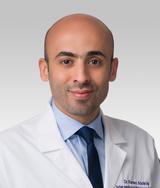
Ramez N Abdalla, MD, PhD, is an Assistant Professor of Radiology specializing in Interventional Neuroradiology at Northwestern University's Feinberg School of Medicine. His clinical focus includes endovascular management of cerebrovascular diseases, spinal interventions, and acute stroke treatment. He completed his MD, MS, and PhD at Ain Shams University, followed by postgraduate training in Egypt and fellowships at Northwestern University in Interventional Neuroradiology. Dr. Abdalla’s research emphasizes advanced imaging techniques (e.g., 4D Flow MRI) for optimizing stroke care, hemodynamic analysis in intracranial atherosclerosis, and novel treatments for cerebral vasospasm. Education: MD: Ain Shams University, Egypt (2010) MS: Ain Shams University (2015) PhD: Ain Shams University (2023) Fellowships: Ain Shams University (2018–2022) and Northwestern University (2019–2022) Research Interests: Endovascular treatment of neurovascular diseases 4D Flow MRI for cerebrovascular hemodynamics Stroke intervention outcomes Imaging biomarkers for intracranial atherosclerosis Publications reflect his focus on neurovascular imaging and clinical trials comparing endovascular vs. surgical treatments. Notable awards include the 2019 LINNC Travel Grant and Egyptian Ministry research scholarships. He is an active member of societies like the American Society of Neuroradiology and Society of Neurointerventional Surgery. Grants and Collaborations: His work is supported by institutional and registry-based research (e.g., NVQI-QOD). He has contributed to multi-institutional studies on stroke thrombectomy outcomes and ARUBA-eligible AVM treatments. No external industry relationships were disclosed for 2024. Labs/Teams: Collaborates with neurovascular imaging and interventional research groups at Northwestern, focusing on translational applications of advanced MRI and AI-driven diagnostic tools.
Marcin Mrozowski is a Research Fellow in the Department of Physics at the University of Strathclyde, Faculty of Science. His work is centered on quantum sensing technologies, particularly optically pumped magnetometers, with applications in navigation, space weather, and biomedical diagnostics. His research focuses on the development of high-sensitivity, miniaturized, and low-noise atomic magnetometers. Key areas include zero-field detection, spin relaxation optimization, and portable systems for real-world deployment. He has contributed to advancements in cesium-based sensors and programmable current sources for magnetic field control. The recent publications reveal a strong trend toward practical quantum instrumentation—emphasizing performance, portability, and integration into distributed networks. His work bridges fundamental atomic physics with engineering applications in navigation, environmental monitoring, and medical sensing. Optically Pumped Magnetometers Quantum Sensing Atomic Physics Low-Noise Instrumentation Space Weather Monitoring Biomedical Magnetometry Mrozowski was a Research Co-investigator on the EPSRC-funded Translational Quantum Technology PhD Studentship (2019–2024), contributing to the development of quantum sensors for real-world deployment. He has collaborated extensively with Paul Griffin and Erling Riis. He has also engaged in public outreach, including participation in the Big Bounce 2021 science festival. He is affiliated with research labs focused on experimental quantum optics and precision measurement at Strathclyde, contributing to both hardware development and data acquisition systems for advanced magnetometry.
Wendy Lomas is a researcher and lecturer at the Faculty of Science and Engineering, University of Wolverhampton , specializing in artificial intelligence and computational bioacoustics . She holds an MSc in Artificial Intelligence from the University of Wolverhampton and a BA (Hons) in Social and Political Science from the University of Cambridge. Education MSc in Artificial Intelligence (2023-2024), University of Wolverhampton BA (Hons) in Social and Political Science (1989-1993), University of Cambridge Her research focuses on developing lightweight associative memory AI algorithms for bioacoustic monitoring of ecosystems, targeting wildlife conservation and carbon cycle monitoring . Projects include sustainable AI models for identifying endangered primate vocalizations in Peruvian rainforests and captive settings, lemur welfare initiatives, and collaborations on beetle outbreak detection in forestry. All work emphasizes energy efficiency and AI equity , enabling models to run on standard field devices to reduce dependence on high-performance computing. Her recent publications highlight applications of Hopfield networks in bioacoustic classification, with a focus on bat echolocation and primate vocalizations . These works align with her broader goals of democratizing AI tools for global conservation efforts. Scientific Awards Invest to Grow PhD Studentship (University of Wolverhampton) OpenBright Awards (2024, 2025) Wendy supervises MRes Artificial Intelligence students and lectures on MRes Cybersecurity and Artificial Intelligence courses. She is involved in STEM outreach and educational development, including the SEDA certification for technology-enhanced learning. Her grants from the OpenBright Foundation support projects on environmentally sustainable AI and bat recognition.
Jiahua Xu serves as a Visitor (Faculty) in the Department of Neuroscience and Biomedical Engineering, actively contributing to academic research in 2024. Research focuses on neural interface technologies and adaptive neuromodulation , with core expertise in closed-loop brain-computer systems . Key methodologies integrate electroencephalography (EEG) for neural monitoring and transcranial magnetic stimulation (TMS) for targeted intervention, enabling real-time brain state modulation. This work bridges clinical neurophysiology and engineering to develop responsive neurotherapeutic platforms. Current research demonstrates a clear trajectory toward personalized neuromodulation , as evidenced by the 2024 Clinical Neurophysiology publication on EEG-TMS integration. This approach represents a paradigm shift from open-loop to adaptive stimulation protocols, addressing critical challenges in precision timing and state-dependent intervention efficacy.
Tadesse Ghirmai is a Professor and Division Chair of Electrical Engineering at the University of Washington Bothell, affiliated with the School of Science, Technology, Engineering & Mathematics. He has worked at the university since 2009 and holds a Ph.D. in Electrical Engineering from Stony Brook University (2007), an M.S. in Electrical Engineering from the University of South Florida, and a B.S.E.E. from Addis Ababa University, Ethiopia. His research focuses on statistical signal processing , Bayesian analysis , and Monte Carlo methods for applications in wireless communication, sensor networks, system modeling, and biomedical signals. He has developed advanced algorithms for data detection, channel estimation, and adaptive filtering in dynamic communication environments. Key trends in his 15 most recent publications (2012–2017) include innovations in distributed particle filtering Laplace autoregressive modeling non-invasive biomedical monitoring systems reduced-complexity precoding for MIMO-OFDM Bayesian methods in relay-based communication multi-band signal processing. Scientific recognition includes the Best Paper of the Year Award from IEEE Signal Processing Magazine (2007) for co-authoring a seminal work on particle filtering in wireless communications. His teaching portfolio includes courses on digital signal processing, wireless communication, and statistical signal processing at undergraduate and graduate levels.
Emek Demir serves as an Associate Professor in the Department of Molecular and Medical Genetics at Oregon Health & Science University's School of Medicine, where he directs the Computational Biology program at the Brenden-Colson Center for Pancreatic Care. His academic journey includes a Ph.D. in Computer Engineering from Bilkent University (2005) under Ugur Dogrusoz and postdoctoral training with Chris Sander at Memorial Sloan Kettering Cancer Center's Computational Biology Center. Dr. Demir's research centers on Pathway Informatics, integrating detailed biological pathway information with omic data to solve cancer biology problems. His work spans pathway curation, visualization, NLP, data standardization, machine learning, and mechanistic simulation. He pioneered the BioPAX pathway data standard and developed Pathway Commons—the largest process-level pathway database with over 2 million interactions and 400,000 detailed human reactions. His publication record demonstrates consistent innovation in computational oncology, with recent work focusing on transcription factor activity prediction, spatial tumor mapping, and causal network analysis. Key contributions include algorithms for detecting altered cancer sub-networks, identifying transcription factor modulators, and inferring active networks from proteomic data. His research bridges computational methods with clinical applications in leukemia, prostate cancer, and glioblastoma. Recipient of leadership roles in major NIH-funded initiatives Principal developer of Pathway Commons and BioPAX standards Extensive collaborations with Memorial Sloan Kettering and OHSU clinical departments Dr. Demir directs a computational biology program focused on translating pathway knowledge into clinical insights for pancreatic cancer, with ongoing projects in spatial omics, multi-dimensional tumor atlases, and antiviral nanomaterial applications.
Dr. Paul Cross is a Senior Lecturer in the Environment and Senior Tutor at the School of Environmental and Natural Sciences, Bangor University, UK. He is actively involved in research, teaching, and public engagement, with a strong focus on environmental science, pollinator conservation, and sustainable agriculture. His work bridges ecology, engineering, and socio-economic modeling, contributing significantly to understanding pollinator health and agricultural sustainability. His research interests include UAV-based tracking of insect pollinators, beekeeping as a tool for poverty alleviation, zoonotic diseases (particularly E. coli O157), bee morphometrics, and socio-economic methodologies for estimating disease and illegal behaviors. He employs advanced technologies such as radar, machine learning, and UAVs to study pollinator behavior and environmental impacts. His recent publications highlight a strong trend in integrating engineering and ecological sciences, particularly through the development of energy-harvesting bee tracking devices and radar-based monitoring systems. His work spans disciplines from entomology and soil science to public health and climate change, reflecting a highly interdisciplinary approach to environmental challenges. Senior Lecturer in the Environment, Bangor University Senior Tutor Course Director for MSc Conservation and Land Management Member of SENRGy Teaching and Ethics Committees Dr. Cross has supervised multiple PhD students on topics ranging from beekeeping in Tanzania to UAV-based bee tracking and neonicotinoid impacts. He has led or contributed to numerous research projects funded by the Welsh Government, RCUK, and the British Academy, focusing on pesticide hazards, greenhouse gas emissions, and food safety. He is actively involved in public outreach, with media appearances on BBC Countryfile and contributions to The Conversation. His work contributes to UN Sustainable Development Goals related to poverty reduction, climate action, and life on land.
Louis R. Pasquale, MD, is a Professor in the Department of Ophthalmology and also holds a joint appointment in the Department of Artificial Intelligence and Human Health at the Icahn School of Medicine at Mount Sinai. His clinical and research work is centered on glaucoma, particularly open-angle glaucoma and glaucoma surgery, with a strong emphasis on genetic and microvascular risk factors. Specialties: Ophthalmology, Glaucoma Clinical Focus: Glaucoma, Glaucoma Surgery, Open-Angle Glaucoma His research integrates advanced technologies such as capillaroscopy and artificial intelligence to understand disease mechanisms and improve diagnostics. Dr. Pasquale has authored over 288 publications, with recent work focusing on genetic associations with visual field defects, non-invasive microvascular imaging, and AI-driven classification of ocular hypertension subtypes. These studies reflect a trend toward precision medicine and data-driven ophthalmology. Dr. Pasquale is board-certified by the American Board of Ophthalmology and has received extensive training from leading institutions, including Johns Hopkins University and Temple University. He plays a key role in advancing the integration of AI into human health, particularly in eye care. MD: State University of NY at Stony Brook School of Medicine Internship: Internal Medicine, Albert Einstein College of Medicine-Yeshiva University Residency: Ophthalmology, Temple University Hospital-Episcopal Division Fellowship: Glaucoma, Wilmer Eye Institute-Johns Hopkins University He has not disclosed any scientific awards or industry conflicts in the provided text, but his extensive publication record and leadership in glaucoma research suggest national and international recognition. There is no mention of student advising or grant funding details, but his position and research output imply active mentorship and extramural support. Dr. Pasquale is a key figure in the development of AI applications for eye disease, working at the intersection of clinical ophthalmology and computational health sciences.
Dr. Narasimman Gurusamy is an Assistant Professor at the Barry and Judy Silverman College of Pharmacy, Nova Southeastern University, specializing in Pharmaceutical Sciences. He holds a Ph.D. in Pharmaceutical Sciences from Niigata University of Pharmacy and Applied Life Sciences (Japan) and completed postdoctoral training at UConn Health Center, Harvard Medical School, and University of Tennessee Health Science Center. Education: M.Pharm (Tamil Nadu Dr. MGR Medical University, India), Ph.D. (Niigata University, Japan) Research Focus: Epigenetic mechanisms in cardiac diseases, non-coding RNA regulation, exosome therapy, stem cell biology, and gene-environment interactions His work explores how long non-coding RNAs and epigenetic modifiers influence cardiac repair, particularly through induced mesenchymal stem cells and their exosomal signaling . Current projects investigate dietary and environmental impacts on epigenetic changes in the heart. Recent publications highlight advancements in RNA-based therapies and metabolic interventions for cardioprotection. Scientific Awards: American Heart Association Career Development Award, Young Research Scientist Award, Travel Awards Dr. Gurusamy serves as Grant Reviewer for the American Heart Association, Associate Editor for Frontiers in Cardiovascular Medicine , and Vice-Chair for the Communication Committee of the Society for South Asian Heart Research (SAHR). His lab employs in-vitro, in-vivo, and clinical trial approaches, utilizing PCR, ELISA, flow cytometry, and genomic repository analyses.
Noemi Stefanía Csaba is a Professor at the University of Santiago de Compostela, affiliated with the Department of Pharmacology, Pharmacy and Pharmaceutical Technology within the Faculty of Pharmacy. She is also part of the Center for Research in Molecular Medicine and Chronic Diseases (CIMUS). Her research focuses on nanotechnologies applied to drug delivery systems, particularly in the development of gene therapy carriers, vaccines, and targeted therapies for cancer and infectious diseases. She earned her PhD in 2005 with a thesis on genetic vaccine delivery systems under the supervision of Dr. María José Alonso Fernández and Dr. Alejandro Sánchez Barreiro. Her research interests encompass nanomedicine, biomaterials engineering, and mucosal drug delivery. She has pioneered studies on protamine nanocapsules, chitosan-based systems, and polyphosphazene derivatives for targeted drug delivery. Her work addresses challenges in overcoming biological barriers (e.g., nasal-to-brain, pulmonary, intestinal) and enhancing therapeutic efficacy through nanoparticle design. Notable contributions include the development of semisynthetic pneumococcal nanovaccines, hybrid peptide-polymer platforms for cancer immunotherapy, and lymphatic-targeted anticancer nanocarriers. Her articles highlight advancements in gene delivery for glioblastoma, ocular tumor treatment, and macrophage-targeted pulmonary therapies. While no specific awards are listed, her prolific publication record (spanning 2002–2025) reflects sustained innovation in pharmaceutical nanotechnology. She collaborates widely on projects integrating biomaterials, molecular medicine, and translational drug delivery systems. Her lab (NANOBIOFAR research group) focuses on translational nanomedicine, emphasizing practical applications such as ready-to-use dry powders for pulmonary delivery and plant-derived sporopollenin microcapsules for drug encapsulation. Current work includes optimizing nanoparticle stability, improving vaccine adjuvants, and addressing barriers in intestinal and transmucosal drug absorption.