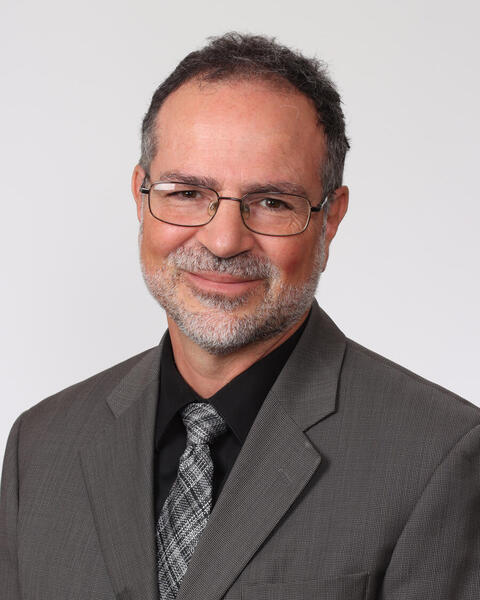
Andre Filiatrault is an Adjunct Professor at the Department of Civil Engineering within McMaster University . His research spans seismic engineering, structural dynamics, and performance-based design, focusing on nonstructural components, damping systems, and wood/steel structures. Key contributions include seismic isolation, passive energy dissipation, and experimental validation of building systems. Research Interests: Earthquake Engineering, Structural Dynamics, Performance-Based Seismic Design, Nonstructural Components, Steel and Wood Structures, Seismic Retrofit Recent Trends: Advanced studies on viscous dampers, seismic loss estimation for acceleration-sensitive elements, and integration of building information modeling with seismic analysis.
Dr. Erhan Yumuk is a researcher at Ghent University and an alumnus of Istanbul Technical University , where he earned his Ph.D. in Control and Automation Engineering . He has served as a lecturer and deputy head of the department at Istanbul Technical University. His research focuses on: Fractional order control systems Anesthesia depth and hemodynamic control Pharmacokinetics/pharmacodynamics modeling Industrial control laboratory development Remote access control education Artificial intelligence in biomedical applications Recent publications (2024-2025) demonstrate expertise in fractional order PID controllers for time-delay systems, obesity-specific drug distribution models, and AI-enhanced pain monitoring during anesthesia. His work spans mathematical control theory, clinical implementation, and industrial applications. Scientific Recognition: Best Paper Award, IEEE Control System Society (2015) Erhan Yumuk contributes to Journal of Process Control , IFAC Journal of Systems and Control , and Applied Sciences , with emerging leadership in postdoctoral research at Ghent University.
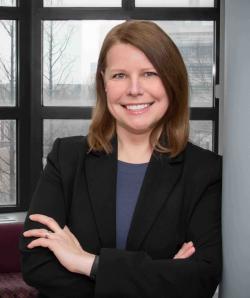
Kathleen S. Berfield, MD is a board-certified thoracic surgeon and Chief of Thoracic Surgery at the VA Puget Sound HCS, with clinical roles at the UW Medical Center’s Thoracic Surgery Clinic and involvement in the UW Lung Transplant Program. She specializes in general thoracic oncology and end-stage lung disease management, including lung transplantation. Primary Affiliation: VA Puget Sound Health Care System Secondary Affiliation: University of Washington Medical Center Education: Residency at University of Washington Cardiothoracic Surgery (2016), Medical Degree from University of Washington School of Medicine (2010) Her research focuses on thoracic surgical techniques, lung cancer treatment, and post-transplant vascular complications. Recent publications highlight cost analyses of diagnostic procedures, surgical education frameworks, and safety protocols in cardiothoracic surgery. She actively promotes robotic thoracic surgery adoption and gender inclusion in surgical environments. Dr. Berfield serves as Program Director for the University of Washington Cardiothoracic Surgery Residency Programs, emphasizing surgical education. She has published studies on VATS lobectomy outcomes, aortic dissection repair post-transplant, and safety culture development in cardiothoracic surgery. Clinical Expertise: Robotic thoracic surgery, lung transplantation Research Themes: Surgical cost-effectiveness, educational methodologies, post-transplant complications
Nicole Li-Jessen, PhD is an Associate Professor in the Department of Surgery at McGill University's Faculty of Medicine and Health Sciences and holds the Canada Research Chair (Tier 2) in Personalized Medicine of Upper Airway Health and Diseases. She serves as Graduate Program Director for the School of Communication Sciences and Disorders and is an Associate Investigator at The Research Institute of the McGill University Health Centre (RI-MUHC). Dr. Li-Jessen maintains additional affiliations with the Departments of Otolaryngology and Biomedical Engineering, and is a Research Member of Quantitative Life Sciences and McGill Regenerative Medicine Network. Dr. Li-Jessen's research laboratory integrates in vitro, in vivo, and in silico (computational) approaches to study vocal fold biology and wound healing, with the goal of generating computational platforms that guide surgeons and speech pathologists in voice repair methods. Her key research areas include: Non-invasive assessment of airway reflux Designing 3D printable biomaterial for laryngeal tissue and muscle reconstruction Creating wearable e-health devices for upper airway monitoring Agent-based modeling of vocal trauma and repair response Development of tumor-on-a-chip platforms for studying laryngeal cancer chemoresistance Her work is funded by a Canada Research Chair, the CIHR, NSERC, SSHRC, FRQS, and NIH in the United States. Dr. Li-Jessen has published extensively in high-impact journals across biomedical engineering, otolaryngology, and regenerative medicine fields, with recent publications focusing on vocal fold biomaterials, computational modeling of vocal pathology, and audio-based digital biomarkers for respiratory diseases. Dr. Li-Jessen has received several prestigious awards including the Canada Research Chair (2021), Principal's Prize for Excellence in Teaching (2018), and the Rosemary Wedderburn Brown Prize (2018). She serves as Section Editor of PLOS Digital Health and is actively involved in science policy as a Delegate for Science Meets Parliament. As Graduate Program Director, Dr. Li-Jessen oversees graduate thesis programs in the School of Communication Sciences and Disorders and has mentored numerous PhD, Master's, and undergraduate students. She leads the Voice and Upper Airway Research Lab (VUA Lab), which advocates for EDI principles in STEM and currently has open positions for PhD and post-doctoral researchers in computer modeling and digital health projects.
Jacqueline Joza, MD is an Assistant Professor in the Department of Medicine at McGill University's Faculty of Medicine and Health Sciences. She serves as an Investigator at the Research Institute of the McGill University Health Centre (RI-MUHC) and is affiliated with the Department of Medicine, Division of Cardiology at the McGill University Health Centre (MUHC). Dr. Joza is a member of the Cardiovascular Health Across the Lifespan Program at RI-MUHC, which focuses on comprehensive cardiovascular care throughout all stages of life. Dr. Joza's research spans multiple cutting-edge areas within cardiac electrophysiology. Her primary interests include cardiac resynchronization therapy optimization , conduction system pacing techniques , management of inherited arrhythmia syndromes including Long QT syndrome, and atrial fibrillation treatment strategies . Her work bridges clinical practice with research innovation, particularly in the areas of left bundle branch area pacing, risk stratification for arrhythmic events, and novel approaches to cardiac rhythm management. She has made significant contributions to clinical guidelines and consensus statements in the field of cardiac electrophysiology through collaborations with major cardiology societies. Dr. Joza has been actively involved in numerous clinical studies examining cardiac pacing technologies, arrhythmia management, and outcomes research in electrophysiology procedures. Her research often combines clinical observation with advanced analytical approaches, including in silico modeling of cardiac electrophysiology and vectorcardiographic analysis. She has published extensively on topics related to cardiac device optimization, with particular attention to improving patient selection criteria and procedural techniques. Her work on cost-effectiveness of cardiac device interventions demonstrates her commitment to understanding the broader healthcare implications of electrophysiology treatments.
Mark L. Weiss is a Professor in the Department of Anatomy & Physiology at the Kansas State University College of Veterinary Medicine . He is the Director of the Midwest Institute for Comparative Stem Cell Biotechnology , Coordinator of the Stem Cell Certificate program, and a member of the Terry C. Johnson Center for Basic Cancer Research. His PhD in Biology (University of Pennsylvania, 1986) laid the foundation for his research in stem cell biotechnology and regenerative medicine. Weiss’ research focuses on harnessing stem cells for cellular therapy and gene therapy in diseases like cancer, Parkinson’s, and myocardial infarction. His lab has pioneered techniques for modifying umbilical cord-derived mesenchymal stromal cells to bypass the blood-brain barrier and deliver anti-cancer proteins. Recent publications highlight his work on extracellular vesicles , RNA biomarkers , and 3D bioprinting for tissue engineering. His lab collaborates with institutions like the University of Kansas and University of Minnesota on clinical trials. Courses taught include Stem Cell Techniques , Veterinary Physiology , and Bioinstrumentation Lab . Work-related 3D models on the NIH 3D Print Exchange reflect his contributions to biomedical innovation.
Dr. Akhil Kallepalli is a Lecturer in Biomedical Engineering at the University of Strathclyde, United Kingdom. He holds professional memberships as Senior Member of IEEE (SMIEEE) and Member of the Institute of Physics (MInstP). His research spans biophotonics, optical imaging, and computational microscopy with applications in medical diagnostics and tissue analysis. Dr. Kallepalli actively accepts PhD students and maintains an active research profile with numerous publications and projects. Dr. Kallepalli's research interests focus on biophotonics and optical imaging techniques with applications in medical diagnostics. His work spans several key areas including Fourier ptychography for digital pathology, polarized light microscopy for identifying malaria-related hemozoin crystals, modular microscopy systems for volumetric imaging, and light transport through biological tissues. His research demonstrates a strong interdisciplinary approach combining physics, engineering, and biomedical applications, with recent work emphasizing computational imaging techniques and deep learning enhancements to traditional optical methods. His publications reveal an evolving research trajectory from remote sensing applications in earlier career stages to more focused biomedical optics in recent years. Dr. Kallepalli's publication record shows significant contributions to biophotonics and optical imaging. His recent work (2023-2025) focuses on advanced microscopy techniques including polarized Fourier ptychography, modular microscopy systems, and light transport through tissues. These publications demonstrate his expertise in developing innovative optical solutions for biomedical challenges, particularly in digital pathology and point-of-care diagnostics. The research spans both theoretical developments in computational imaging and practical implementations of optical hardware, with increasing integration of deep learning methods in recent work. Active participation in the scientific community with numerous conference contributions Multiple publications in high-impact journals including Journal of Microscopy, Scientific Reports, and Journal of Biophotonics Development of open-source hardware solutions for optics education and microscopy Book publication on Laser Beam Profiling: Cost-Effective Solutions (2022) Dr. Kallepalli collaborates extensively with researchers across multiple institutions, particularly with colleagues at the University of Strathclyde including Dr. Graham Gibson and others in the optics and biophotonics community. His work on modular microscopy (ModMicro) and modular light sources (ModLight) represents significant contributions to making advanced optical techniques more accessible. His research has practical applications in medical diagnostics, particularly for malaria detection, tissue ischemia monitoring, and non-invasive cardiovascular assessment. Dr. Kallepalli's work bridges fundamental optical physics with practical biomedical applications, demonstrating strong translational potential.
Agata A. Exner is the Henry Willson Payne Professor in the Department of Radiology at Case Western Reserve University School of Medicine and a Professor in the Department of Biomedical Engineering at the Case School of Engineering . She serves as Vice Chair of Basic Research , Director of the CWRU Center for Imaging Research , and Co-Leader of the Cancer Imaging Program at the Case Comprehensive Cancer Center . Education: PhD in Biomedical Engineering, Case Western Reserve University (2003) BS in Biomedical Engineering, Case Western Reserve University (1998) Research Focus spans image-guided drug delivery , ultrasound contrast agents , interventional oncology , nanomedicine , and cancer detection/therapy . Her work integrates ultrasound imaging with nanotechnology to develop theranostic systems for tumor targeting . Article Trends emphasize ultrasound-mediated drug delivery , nanocontrast agents , and real-time imaging for cancer therapy monitoring . Key methodologies include microfluidic models , high-throughput ultrasound techniques , and in situ forming implants . Scientific Awards Elected Senior Member, National Academy of Inventors (2024) Mather Spotlight Woman of Achievement Award (2015) Distinguished Investigator Award, The Academy for Radiology and Biomedical Imaging Research (2013) Fellow, American Institute for Medical and Biological Engineering (2015) Labs & Teams : She leads the CWRU Center for Imaging Research and contributes to the Medical Scientist Training Program at CWRU School of Medicine.
Frans H.C. de Jongh is an Assistant Professor at the TechMed Centre, University of Twente, specializing in Engineering Fluid Dynamics. His research bridges biomedical engineering and respiratory medicine, focusing on neonatal care, lung function diagnostics, and medical device innovation. His recent work includes developing wireless monitoring systems for diaphragm activity in infants, validating electronic nose technology for lung cancer detection, and optimizing neonatal endotracheal tube designs using oscillometry. Key research themes involve respiratory mechanics , non-invasive diagnostics , and pediatric pulmonology , with applications in prematurity and lung disease classification . Publications emphasize z-score-based severity classification , cardiorespiratory monitoring , and breath profiling , reflecting collaborations across medical and engineering disciplines. No awards or student advisement details are listed in the provided data.
Jan Sijbers is a Full Professor at the University of Antwerp , affiliated with the Department of Physics . He serves as Spokesperson of the imec-Vision Lab and is a co-founder of spin-offs IcoMetrix and Deltaray . His academic role includes a 10% position as Research Director at imec. Research Interests: Quantitative Magnetic Resonance Imaging (MRI), Tomographic Image Reconstruction, Medical Imaging Algorithms Editorial Roles: Senior Area Editor (IEEE Transactions on Image Processing), Associated Editor (IEEE Transactions on Computational Imaging) Teaching: Courses in Physics, Mathematics, Signal/Image Processing, and X-ray Microtomography Research Trends: His 2025 publications focus on X-ray phase contrast imaging, zebrafish models for bone disease, mesh-based CT reconstruction, and AI-driven biomedical imaging. Earlier works emphasize statistical signal processing in MRI and discrete tomography algorithms. PhD Advisees: He has supervised 68 PhD theses since 2004, with recent topics spanning edge illumination X-ray imaging, 3D knee morphology, and advanced MRI relaxometry. Laboratory Leadership: As head of imec-Vision Lab, he leads research in computational imaging, with applications in medical diagnostics and industrial X-ray systems.
Professor Alejandro Roldán-Alzate is a faculty member in the Department of Mechanical Engineering at the University of Wisconsin-Madison, with an additional affiliation in Biomedical Engineering. He leads the UW Cardiovascular Fluid Dynamics laboratory, focusing on fluid dynamics analysis of physiological and pathological flows using medical imaging, 3D printing, and computational fluid dynamics (CFD). His research integrates 4D flow MRI, patient-specific modeling, and in vitro experiments to study cardiovascular and urological systems. Education: PhD in Mechanical Engineering, University of Wisconsin-Madison (2008) M.Eng., University of Wisconsin-Madison (2005) Bachelor of Science, Escuela de Ingeniería de Antioquia – Universidad CES (2002) Research Interests: His work bridges engineering and medicine, emphasizing cardiovascular fluid dynamics, medical image-based CFD, and 4D flow MRI applications. Key areas include hemodynamic analysis of congenital heart defects, pulmonary artery stenosis, bladder voiding mechanics, and surgical planning. His lab also develops low-cost patient-specific vascular models and explores ultrasound and MRI innovations for clinical diagnostics. Publications Trends: Recent articles highlight advancements in uro-dynamic MRI, pulmonary artery remodeling models, and 4D flow MRI for abdominal and cardiovascular applications. Focus areas include translational research, non-invasive diagnostics, and computational modeling for surgical optimization. Awards: 2013 & 2012 ISMRM Summa Cum Laude Merit Awards (twice each) 2011 Lauterbur Award in Magnetic Resonance 2005 Wang Fellowship (UW-Madison) Multiple undergraduate and early-career recognition awards Teaching & Advising: Roldán-Alzate teaches courses in biofluidics (BME/ME 505), mechanical engineering design, and graduate research. While no named advisees are listed, his lab actively engages students in CFD, imaging, and biomedical device projects. Labs & Teams: Director of the UW Cardiovascular Fluid Dynamics Lab , collaborating with clinicians and engineers on translational cardiovascular and urological research.
Per Steinar Halvorsen is a Professor at the University of Oslo, affiliated with the Division of Technology and Innovation and Oslo University Hospital (Rikshospitalet). His primary focus is on cardiovascular engineering and medical technology innovation, with an emphasis on developing advanced monitoring systems for critical care and cardiac applications. His work integrates biomedical engineering principles with clinical practice to address challenges in ECMO, left ventricular assist devices (LVADs), and real-time cardiac monitoring. Research Interests: Halvorsen’s research spans accelerometer-based cardiovascular monitoring, thrombosis detection in extracorporeal systems, and the application of machine learning in medical diagnostics. His studies often utilize porcine models to validate novel sensor technologies and device functionalities. He has contributed to advancements in non-invasive waveform analysis for emergency triage and therapeutic hypothermia protocols. Key Research Trends: His articles emphasize innovations in medical device design, particularly accelerometers for continuous cardiac monitoring. Recent work includes deep learning applications for valve event detection and vibration analysis for LVAD thrombosis. Collaborations with engineering teams (e.g., MEMS sensor development) highlight his interdisciplinary approach. Labs/Teams: He is part of the Clinical and Experimental Cardiovascular Monitoring research group, focusing on translational research between engineering and clinical cardiology.
Jennifer Price, MD, PhD, is a Professor in the Department of Medicine at the University of California, San Francisco (UCSF) School of Medicine. Her research focuses on liver diseases, HIV, and hepatitis, with an emphasis on translating clinical and public health strategies to address disparities in care. She completed her MD at Johns Hopkins University School of Medicine and a PhD at the Bloomberg School of Public Health, followed by fellowships in Gastroenterology and Transplant Hepatology. Her research spans microbial translocation, gut-liver axis interactions, and non-invasive liver disease diagnostics. Notable contributions include studies on hepatitis B and C management in HIV-positive populations, including vaccine efficacy and direct-acting antivirals. She leads initiatives to improve access to hepatitis C treatment in marginalized communities, such as the NO ONE Waits (NOW) study. Price has received numerous awards, including the UCSF Hellman Fellows Award (2015) and ACG Junior Faculty Development Award (2015). Her work also explores public health aspects, such as telemedicine accessibility and food insecurity's impact on liver disease progression.
Philip A. Araoz is Professor of Radiology at Mayo Clinic College of Medicine and Science, specializing in Cardiovascular Radiology. He completed his medical education at University of Washington (MD, 1995) and residency/fellowship training at Mayo Clinic and University of California, San Francisco. His research focuses on advanced cardiac imaging techniques including CT angiography for cardiac masses, coronary anomalies, and valvular pathologies. Dr. Araoz has extensive expertise in non-invasive cardiovascular diagnostics, particularly CT and MRI applications for structural heart disease. His recent work investigates novel PET tracers for malignant disease evaluation in pediatric populations. He maintains active clinical practice in Rochester, MN and Phoenix, AZ locations. His scholarly contributions include over 100 publications on cardiac imaging innovations, with recent emphasis on dose reduction strategies and multimodal approaches to foreign body detection. Research demonstrates consistent focus on improving diagnostic accuracy for congenital heart abnormalities and acquired cardiovascular pathologies. Honors & Awards: A3CR2 Outstanding Teacher Award (2025) Multiple Teacher of the Year awards from Department of Radiology Repeated Certificates of Merit from Radiological Society of North America Cum Laude awards from European Congress of Radiology Professional Leadership: Fellowship Director for Cardiac Radiology Research Chair for Cardiac Radiology Member of RSNA Cardiac Exhibit Judging Committee Contributor to ACR Appropriateness Criteria Committee Global Outreach: Conducts missionary medical work in Honduras and Guatemala wilderness medicine programs.
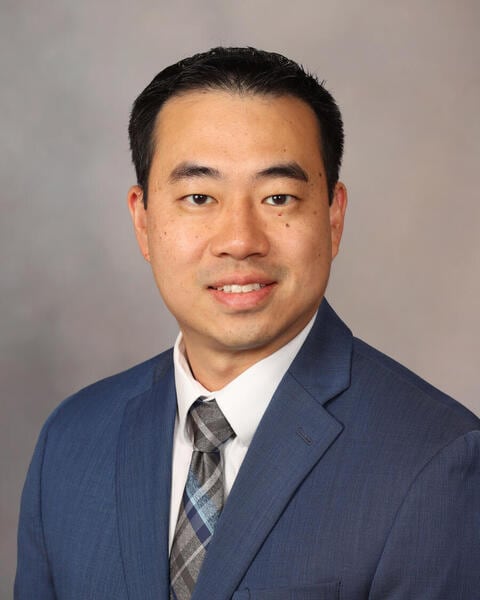
Edwin A. Takahashi, M.D., is a vascular and interventional radiologist at Mayo Clinic in Rochester, Minnesota. He specializes in vascular imaging, cardiac imaging, and minimally invasive treatments for vascular diseases. His clinical focus includes dialysis access management, peripheral arterial disease, venous disease, and IVC filter placement. He holds leadership roles in the American Heart Association and Mayo Clinic's radiology residency program. Education: 2019: Fellowship in Interventional Radiology, Mayo Clinic 2018: Residency in Diagnostic Radiology, Mayo Clinic 2014: Transitional Internship, Methodist Hospital of Indiana 2013: MD, John A. Burns University of Hawaii 2009: BA in Biochemistry, Oberlin College Research Interests: Dr. Takahashi's research focuses on renovascular disease, peripheral arterial disease, and venous stenosis. He investigates novel imaging techniques and interventions to improve outcomes for patients with vascular access issues and chronic limb-threatening ischemia. His work emphasizes disparities in care and telehealth applications in cardiovascular medicine. Professional Contributions: He chairs committees for the American Heart Association (AHA) and serves on executive teams for vascular organizations. He has authored over 60 peer-reviewed articles, with recent work addressing racial disparities in vascular care and radial access techniques in peripheral interventions. Awards: 2023: Carmen Award for Educational Excellence 2023: AHA Fellow 2022: Mayo Radiology Residency Distinguished Educator Labs/Teams: Active in the Gonda Vascular Center and Mayo Clinic's interventional radiology research group, focusing on translational studies in vascular access preservation and minimally invasive therapies.