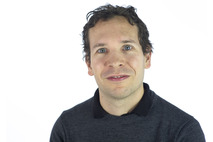
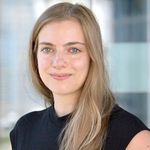
Geert Dom, MD, PhD, is a Full Professor of Addiction Psychiatry at the University of Antwerp and vice-chair of the Collaborative Antwerp Psychiatric Research Institute . He also serves as Medical Director of the PC Multiversum in Boechout, Belgium. His research focuses on the pathogenesis and treatment of addictive disorders, particularly in relation to comorbid psychiatric conditions like ADHD. Current academic affiliation: University of Antwerp Primary research areas: Addiction psychiatry, substance use disorders, comorbidity, non-invasive brain stimulation Recent publications: Opioid maintenance treatment outcomes, psychedelic therapies, and cross-national mental health comparisons
Dr. Jing Wang is a Professor in the Department of Bioinformatics at Southern Medical University's School of Medicine, with extensive research at the intersection of artificial intelligence and biomedical applications. Her work demonstrates strong cross-disciplinary collaboration across medical institutions, engineering departments, and computer science research groups. Her primary research interests include Artificial Intelligence in Healthcare , Biomedical Engineering , and Traditional Chinese Medicine Informatics , with recent publications showing particular expertise in medical imaging analysis, diagnostic assistance systems, and clinical decision support. Her work spans both theoretical algorithm development and practical clinical implementations. Analysis of her 15 most recent publications (2025-2026) reveals a strong trend toward clinically applicable AI systems, with approximately 60% of publications focused on medical diagnostics and treatment support systems. The remaining publications demonstrate expertise in industrial applications of computer vision and fundamental AI research. Her work shows consistent collaboration with both domestic Chinese institutions and international research groups. Notable scientific contributions include: Development of 'Tianyi', a traditional Chinese medicine language model for clinical practice Innovations in bionic soft robotics for rehabilitation assistance Novel approaches to medical image analysis for cancer diagnostics Her research program appears well-funded with consistent publication output across high-impact journals in biomedical engineering, AI, and medical informatics. Current work suggests strong emphasis on translating AI research into clinical practice, particularly in diagnostic support systems and rehabilitation technology.
Dr. Daniel Keeser is a Research Fellow and Research Group Leader at the Department of Psychiatry and Psychotherapy of the University of Munich (LMU) and affiliated with the NeuroImaging Core Unit Munich (NICUM). His work focuses on clinical deep phenotyping and multimodal neuroimaging, integrating advanced MRI, EEG, and non-invasive brain stimulation methods to study severe mental and neurological disorders. Research Interests: Elucidating neurobiological mechanisms of schizophrenia, major depressive disorder, and Alzheimer's disease through multimodal neuroimaging and neuromodulation. His recent publications highlight methodologies like resting-state fMRI, diffusion tensor imaging, and transcranial magnetic stimulation combined with MRI, emphasizing personalized treatment strategies. Collaborative affiliations include the University Hospital of LMU Munich and the Clinical Deep Phenotyping (CDP) Working Group. Affiliations: NeuroImaging Core Unit Munich (NICUM) Department of Psychiatry and Psychotherapy, University of Munich (LMU)
Prof. Dr. Agnes Flöel serves as a Professor and Group Leader at the Department of Neurology, Faculty of Medicine, University of Greifswald. Her research integrates clinical neurology with advanced neuroscience methodologies to address cognitive decline and recovery mechanisms. Her core research domains include: Healthy aging and age-related cognitive impairment Post-stroke neurorehabilitation for speech and motor function recovery Vascular dementia and Alzheimer's disease pathophysiology Neuronal correlates of learning using fMRI, structural MRI, and EEG Pharmacological interventions (dopaminergic/serotonergic agents) Non-invasive brain stimulation (TMS, tDCS) and lifestyle modifications Her work emphasizes genetic interactions with therapeutic responses, driving clinical studies that translate neuroscientific findings into targeted rehabilitation strategies for neurological disorders.
Christian Grefkes-Hermann serves as Professor of Neurology at Goethe University Frankfurt's Faculty of Medicine, based at University Hospital Frankfurt's Center of Neurology and Neurosurgery. His research targets stroke-induced brain network disruptions and develops novel rehabilitation strategies using non-invasive brain stimulation to restore motor function. His work focuses on neural plasticity, brain connectivity, and stroke rehabilitation through multimodal approaches including structural/functional MRI, EEG, transcranial magnetic stimulation (TMS), and machine learning. He investigates how interhemispheric network reorganization enables functional recovery and develops biomarkers for personalized rehabilitation protocols. Analysis of his publication history reveals an evolution from foundational studies on crossmodal processing (2002) to clinical applications in stroke recovery, with recent work emphasizing individualized biomarkers and frontoparietal connectivity as predictors of motor recovery. This trajectory demonstrates a consistent translation of basic neuroscience into clinical neurorehabilitation. Professor Grefkes-Hermann leads a research team within the Center of Neurology and Neurosurgery dedicated to bridging neural network science with practical rehabilitation solutions for stroke survivors, addressing Germany's challenge of 200,000 annual stroke cases where over 50% experience permanent disability.
Surjo R. Soekadar is the Einstein Professor of Clinical Neurotechnology at Charité – University Medicine Berlin. He leads the Clinical Neurotechnology Laboratory , which focuses on developing noninvasive neurotechnologies for treating neurological and psychiatric disorders through closed-loop brain stimulation and advanced brain-machine interfaces (BCI/BMI). His work integrates real-time EEG/MEG monitoring with electromagnetic stimulation to modulate pathological brain oscillations and enhance neuroplasticity in conditions like stroke, spinal cord injury, and psychiatric disorders. Education : Studied medicine in Mainz, Heidelberg, and Baltimore Clinical Training : Residency in Psychiatry and Psychotherapy at University of Tübingen Academic Journey : 2008-2011 Research Fellow at NINDS (USA); 2017 Venia Legendi at University of Tübingen; 2018 First Professor of Clinical Neurotechnology in Germany His research interests span: • Closed-loop neurostimulation combining real-time brain state monitoring with targeted intervention • Next-generation BCI using optically pumped magnetometers (OPM) for mobile MEG recordings • Neurorehabilitation through exoskeleton control and sensory feedback • Neurophysiological modeling of entropy measures and phase flows Recent publications highlight: • Adaptive deep brain stimulation protocols • Real-time phase-sensitive tACS applications • OPM-based BCI innovations • Stroke recovery mechanisms through corticospinal tract analysis Scientific recognition includes: International BCI Research Award BIOMAG Award NARSAD Young Investigator Award Funded by the European Research Council (ERC) , his lab trains doctoral students like David Haslacher (EEG/MEG integration), Khaled Nasr (multicoil TMS optimization), and Annalisa Colucci (entropy-driven BCI development). The team also explores quantum AI applications in clinical decision-making and bidirectional BCI systems using OPM and tES.
Professor Melanie Wilke is a leading figure in cognitive neurology at the University Medical Center Göttingen, where she serves as Director of the Department of Cognitive Neurology and Head of the MR Research Unit. She is also a Co-Investigator in the 'Decision and Awareness' group at the German Primate Center. Her work bridges human and non-human primate neuroscience to investigate the neural basis of perception, awareness, and movement planning. Her research focuses on understanding how distributed neural activity supports spatial awareness and decision-making. Key areas include thalamocortical interactions, neural mechanisms of spatial neglect, and translational models of cognitive disorders. She employs multimodal methods such as fMRI, electrophysiology, brain stimulation (tACS, tDCS, TMS), and inactivation techniques in both human and monkey models. Analysis of her recent publications reveals a strong emphasis on visual consciousness, neural connectivity, and sensorimotor integration. Her work frequently explores the role of the pulvinar and parietal cortex in attention and awareness, using innovative paradigms including no-report tasks and microstimulation. There is a clear translational trajectory from basic mechanisms to clinical applications in stroke and Parkinson’s disease. Fellows Award for Excellence in Biomedical Research, National Institutes of Health, USA (2008) Prof. Wilke leads a dynamic research group and mentors students within several graduate programs, including Systems Neuroscience and the International Max Planck Research School (IMPRS). Her team conducts cutting-edge research using advanced imaging and stimulation techniques. She has secured long-term support through the Herman and Lilly Schilling Foundation Professorship (2011–2022) and continues to lead major projects in cognitive neurology and brain network dynamics. Her laboratory, embedded in the Heart & Brain Center Göttingen, fosters interdisciplinary collaboration and focuses on developing novel therapeutic interventions for cognitive deficits following brain injury. The MR Research Unit under her leadership is central to advancing non-invasive brain imaging and stimulation in both research and clinical contexts.
Sandra Martin is a Postdoctoral Researcher at the Max Planck Institute for Human Cognitive and Brain Sciences in Leipzig, Germany, where she works in the Lise Meitner Research Group Cognition and Plasticity. Her research combines neuroimaging and neuromodulation methods with graph theory, large language models, and behavioral modeling to explore cognitive changes across the adult lifespan, with a particular focus on age-related changes in memory processes and their interaction with executive functions. Education: PhD in Cognitive Neuroscience (2018-2023) from the Max Planck Institute for Human Cognitive and Brain Sciences, Leipzig M.Sc. in European Master of Clinical Linguistics (2014) from University of Potsdam, Germany & University of Groningen, The Netherlands B.A. in Linguistics (2012) from Humboldt University Berlin, Germany Research Interests: Dr. Martin's research focuses on cognitive aging , neurolinguistics , and network neuroscience . She investigates how domain-general networks contribute to language prediction and semantic cognition across the adult lifespan. Her work often employs non-invasive brain stimulation techniques like transcranial magnetic stimulation (TMS) to understand the causal roles of specific brain regions in cognitive processes. She is particularly interested in how executive resources shape language predictability effects and how these relationships change with age. She's a strong advocate for open and reproducible research practices including preregistration and registered reports. Her recent publications reveal a strong trend toward understanding the neural mechanisms of semantic cognition and language processing across the lifespan. She combines multiple methodologies including fMRI, TMS, graph theory, and computational modeling to investigate how brain networks reorganize with age and how this affects cognitive performance. Her work has important implications for understanding cognitive aging and developing interventions for language disorders like aphasia. Scientific Awards: Doctoral fellowship from the German Academic Scholarship Foundation (Studienstiftung des deutschen Volkes) Advising and Grants: Dr. Martin has been involved in several research projects, including a DFG-funded project on 'The role of domain-general networks in natural language predictions' together with Prof. Dr. Gesa Hartwigsen (Leipzig University) and Prof. Dr. Jonas Obleser (University of Lübeck). While there's no explicit mention of students she's formally advising, her role as a postdoc suggests she likely mentors junior researchers. She actively promotes open and reproducible research practices and co-organized a symposium on Good Scientific Practice titled 'Doing Good – Scientific Practice under Review'. Labs and Teams: Dr. Martin is part of the Lise Meitner Research Group Cognition and Plasticity at the Max Planck Institute for Human Cognitive and Brain Sciences. She collaborates with researchers from Leipzig University and University of Lübeck. Her work often involves interdisciplinary teams combining expertise in cognitive neuroscience, linguistics, and clinical neurology, particularly in studying aphasia and language recovery after stroke. Her research group maintains open science practices with code and data available on GitLab and OSF.
Holger Gerhardt is a postdoctoral researcher at the Department of Economics , Institute for Applied Microeconomics , University of Bonn , and serves as Lab Manager at BonnEconLab . He is affiliated with the Center for Economics and Neuroscience (CENs) and ECONtribute: Markets & Public Policy . His research bridges economics, psychology, and neuroscience to investigate human decision-making under risk, time, and social contexts. Ph.D. in Economics , Humboldt-Universität zu Berlin (summa cum laude) Diplom-Volkswirt (M.Sc. equivalent), Humboldt-Universität zu Berlin His research focuses on experimental and behavioral economics , with strong emphasis on neuroeconomics . Key interests include risk and time preferences , loss aversion , cognitive load effects , social decision-making , and the neurochemical modulation of behavior via oxytocin . He employs experimental methodologies, including neuroimaging and pharmacological interventions, to understand the psychological and neural mechanisms behind economic choices. His recent publications (2020–2024) reveal a consistent focus on preference estimation , social discounting , emotional modulation of risk , and neurochemical influences on norm compliance . His work appears in top journals such as Review of Economic Studies , PNAS , and Frontiers in Psychology , often using innovative experimental designs, including online platforms and neuroeconomic paradigms. WWG Prize for best diploma degree (2004/05 winter term) Dr. Gerhardt advises and collaborates with interdisciplinary teams across neuroscience and economics. He has not received specific grant mentions in the provided text but leads experimental infrastructure as Lab Manager. He is actively involved in ongoing research, including recent 2024 working papers on preference parameter estimation. He is associated with the BonnEconLab, a key experimental economics laboratory supporting behavioral and neuroeconomic research at the University of Bonn.
Amba Frese serves as a Researcher in the Neuromodulation group within the Psychology and Neurosciences department at the Leibniz Research Centre for Working Environment and Human Factors (ifADo) in Dortmund, Germany. She operates under the supervision of Prof. Dr. Michael Nitsche, head of the department, and is based at the institute's headquarters: Ardeystr. 67, 44139 Dortmund. Her research focuses on neuromodulation techniques including transcranial magnetic stimulation (TMS) and transcranial direct current stimulation (tDCS), investigating their applications in cognitive enhancement and behavioral control. This work sits at the intersection of experimental neuroscience and human performance optimization, with implications for both occupational health and clinical interventions. The Neuromodulation group emphasizes methodological innovation in non-invasive brain stimulation protocols. Professional contact is maintained via email frese@ifado.de and telephone +49 231 1084-433. The department maintains active collaborations across the institute's research divisions including Ergonomics, Immunology, and Toxicology, though specific project details for Dr. Frese are not documented in the provided text.
Prof. Konstantin Kotliar is a Professor at Aachen University of Applied Sciences, specializing in Biomedical Engineering and Medical Statistics. He teaches courses in Mathematics, Advanced Medical Statistics, and Space Physiology. His research focuses on retinal vessel analysis to study microvascular dysfunction in diseases such as Fabry disease, diabetes, and Alzheimer’s. Kotliar’s work bridges ophthalmology, neuroscience, and cardiovascular science, with a particular interest in developing non-invasive diagnostic tools for early disease detection. His studies often involve collaborations with global health initiatives and clinical trials, such as the EndoAfrica-NWU Study. He has contributed to understanding neurovascular coupling mechanisms and their implications for neurological disorders. Research interests include retinal vessel dynamics, cardiovascular risk stratification, and the application of statistical methods in medical diagnostics. Kotliar’s methodologies span from biomechanical modeling to machine learning-driven image analysis, emphasizing translational research with clinical relevance. His work has implications for improving therapies and preventive measures in chronic diseases.
Esther Florin is a postdoctoral researcher specializing in neuroscience, neurology, and biomedical engineering, with a focus on brain imaging and signal processing. She is currently affiliated with the Max-Planck Institute for Biological Cybernetics (since 2013), where she works under Prof. Dr. N.K. Logothetis. Her career spans institutions such as the McConnell Brain Imaging Center at McGill University, University Hospital Köln, and the Medical College of Wisconsin. Educational Background: PhD in Physics (2010), Bergische Universität Wuppertal, Germany M.Sc. in Physics (2006), University at Buffalo, USA Her research involves analyzing neural signals using invasive and non-invasive techniques, contributing to understanding movement disorders and deep brain stimulation. She has collaborated extensively with experts in neurology and brain imaging, including Prof. Dr. S. Baillet and Prof. Dr. L. Timmermann.
Marco K. Wittmann is an MRC Career Development Fellow and Group Leader at the Max Planck UCL Centre for Computational Psychiatry and Ageing Research, based in the Department of Experimental Psychology at University College London (UCL). His research focuses on the cognitive and neural mechanisms underlying social cognition and adaptive behavior in complex social environments. His educational background includes: BSc and MSc in Psychology (Diplom in Psychologie) from the Universities of Constance and Freiburg, Germany (2011) MSc in Neuroscience from the University of Oxford, UK (2012), funded by a Wellcome Trust scholarship DPhil in Neuroscience from the University of Oxford, UK (2017) Dr. Wittmann's research integrates computational modelling , neuroimaging , and brain stimulation techniques to investigate the neural basis of social cognition. His work particularly examines how the brain represents self and others, navigates social interactions, and adapts mental strategies in diverse social contexts. A key focus is on the causal role of specific brain regions, such as the dorsomedial prefrontal cortex, in social decision-making. His recent publications span high-impact journals including Nature Communications , Neuron , and Annual Review of Neuroscience , reflecting a strong emphasis on computational psychiatry , social neuroscience , and causal brain-behavior relationships . His work often involves primate models and human studies, bridging basic and clinical research. Scientific awards and fellowships include: MRC Career Development Fellowship Wellcome Trust Scholarship for MSc and DPhil As a group leader, Dr. Wittmann supervises a dynamic team and secures competitive research grants. His lab, the Metacognition and Computational Psychiatry Group, is part of the Max Planck-UCL Centre and focuses on cutting-edge research using non-invasive transcranial ultrasound stimulation to establish causal links between brain activity and social behavior.
Stefan Ehrlich is a Researcher at the Institute for Cognitive Systems (ICS) at the Technical University of Munich (TUM). His work focuses on neuroengineering, particularly non-invasive brain-computer interfaces (BCI) for human-robot interaction (HRI), neuroadaptive systems, and EEG-based neurotechnology. He collaborates closely with Prof. Gordon Cheng and contributes to projects involving error-related potentials (ErrPs), affective neurofeedback, and neuroprosthetics. His research integrates cognitive neuroscience principles with robotics to enhance human-machine collaboration and adaptive systems. Key research areas include: Development of passive BCI systems for real-time robotic adaptation Design of co-adaptive human-agent interfaces using neural signals EEG-based assessment of exoskeleton and humanoid robot performance Neuroimaging techniques for music-brain interactions His publications emphasize interdisciplinary approaches, combining neuromorphic engineering, machine learning, and social robotics. Ongoing work explores low-power neuromorphic hardware for EEG decoding and neurophysiological mechanisms underlying human-robot trust dynamics. Collaborations involve institutions like the Bernstein Center for Computational Neuroscience and industry partners in wearable robotics. Labs/Teams: Active contributor to the EEG Laboratory and projects like the Soft Wearable Robotics initiative. Engages in international conferences (IROS, IEEE EMBC) and co-organizes workshops on HRI and neurotechnology.
Peter Dechent is the Head of the Research Group 'MR-Research in Neurology and Psychiatry' at the Medical Faculty of the University of Göttingen. His work focuses on combining functional MRI with non-invasive brain stimulation techniques like TMS and tDCS to study brain networks in healthy and pathological conditions. He holds a diploma in Biology and a Dr.rer.nat. from the University of Göttingen, with postdoctoral research at the Max Planck Institute for Biophysical Chemistry. Education: 1991-2001: Studies in Biology at the University of Mainz 1998-2001: Doctoral thesis at the Max Planck Institute for Biophysical Chemistry 2001-2003: Postdoc at the Biomedical NMR Research Lab Research Interests: Functional MRI integration with brain stimulation Hemodynamic processes underlying BOLD signals Application of advanced MRI techniques (structural MRI, DTI, MRS) Publications focus on neuroimaging applications in neurology and psychiatry, with recent emphasis on stimulation-induced brain activity modulation and reward system dysfunction in depression. Collaborations include studies on primate neuroimaging and genetic disorders using MRS. Awards: None explicitly listed. Lab Affiliation: Department of Cognitive Neurology (University Medical Center Göttingen). Active in GGNB programs in Systems Neuroscience and Molecular Medicine.