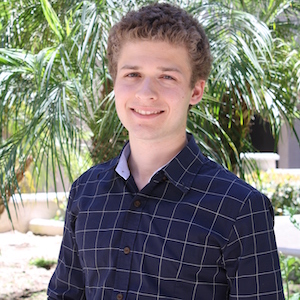
David Robert Shannon is an Instructor at the Department of Computer Science, University of Copenhagen. He contributes to teaching and research within the Machine Learning section, which participates in the SCIENCE AI Centre. University: University of Copenhagen Department: Department of Computer Science Section: Machine Learning His research interests span theoretical and applied machine learning, focusing on natural language processing, information retrieval, medical image analysis, computational biology, and quantum computing applications. He utilizes the department's powerful compute cluster for projects involving AI's environmental impact, quantum algorithms, and biomedical data modeling. Recent publications highlight work in quantum-inspired neural networks, sustainable AI, medical diagnostics, and cross-cultural computational frameworks. Key themes include ethical considerations in AI, hybrid quantum-classical systems, and multimodal data analysis. David collaborates with the Machine Learning section and SCIENCE AI Centre, leveraging resources like TreeSense for remote sensing and deep learning of global tree resources. The section's activities range from foundational research to applications in sustainability and biological data modeling.
Alexander Terenin is an Assistant Research Professor at Cornell University , specializing in machine learning and artificial intelligence. His work focuses on decision-making under uncertainty, Bayesian optimization, and Gaussian processes, particularly in non-Euclidean spaces. He has contributed to geometric learning, scalable Gaussian process methods, and applications in robotics, plasma science, and legal AI. His research integrates theoretical foundations with practical algorithms, emphasizing principles like the Gittins Index for optimal decision-making. Notable projects include the GeometricKernels software package for manifold learning and the Cambridge Law Corpus for legal AI. His work bridges statistics, geometry, and computer science to address challenges in autonomous systems, energy optimization, and data-driven decision-making. Recent Talks and Contributions: An Adversarial Analysis of Thompson Sampling (INFORMS Applied Probability Society 2025) Cost-aware Bayesian Optimization (NeurIPS 2024) Stochastic Poisson Surface Reconstruction (ICML 2025) Key Research Themes: Bayesian Optimization for multi-objective problems (e.g., plasma-driven energy systems) Geometric Gaussian Processes for robotics and 3D modeling Statistical guarantees for Gaussian processes on manifolds Grants and Collaborations: His work involves interdisciplinary projects with institutions like Carnegie Mellon University, ETH Zürich, and the University of Cambridge, reflecting a global network in AI and statistical learning.
Arthur Kosowsky is a Professor in the Department of Physics & Astronomy at the University of Pittsburgh, affiliated with the Dietrich School. His research focuses on cosmology, particularly the cosmic microwave background (CMB) radiation, dark matter/dark energy, inflationary universe models, and gravitational waves. He is a key member of the Simons Observatory collaboration, leading efforts to observe the CMB using advanced telescopes in Chile's Atacama Desert. His work addresses fundamental questions about cosmic structure formation, dark energy's nature, and potential deviations from general relativity. Research interests include CMB polarization analysis, detecting primordial gravitational waves, and probing cosmic topology. Notable contributions involve analyzing anomalies in CMB asymmetry and large-scale correlations, simulating gravitational wave backgrounds from early-universe turbulence, and developing methods to study galaxy cluster dynamics. He has mentored numerous graduate students whose thesis topics span CMB lensing, cosmic birefringence, and transient phenomena. Scientific awards include the 2024 Fulbright US Scholar to Chile, APS Fellow (2014), and Cottrell Scholar (2000). His collaborations with the Simons Observatory aim to measure the B-mode polarization signal, neutrino masses, and cosmic magnetic fields through upcoming observations (2024-2025). He also leads efforts to detect transient millimeter-wave sources and study cosmic topology using machine learning techniques. Key projects include analyzing Atacama Cosmology Telescope (ACT) data for cosmological parameters and exploring the moving lens effect. His research bridges theoretical models with observational data, emphasizing precision cosmology and fundamental physics tests. Active in fostering interdisciplinary methods, he advocates for leveraging advanced instrumentation and computational tools to unravel cosmic mysteries.
Hasnaa ZIDANI is a Professor in applied mathematics at INSA Rouen Normandie , holding the COPTI Chair . Her research focuses on optimal control , mathematical modeling , and numerical simulation , with applications to transportation systems (e.g., autonomous vehicles, traffic management) and environmental modeling (e.g., resource management, marine ecology). She leads the COPTI project, funded by the ANR , Région Normandie , and EU’s ERDF , aiming to advance international-level research in optimal control methods. Research priorities include Optimal control of large-scale and stratified systems, Trajectory planning and crowd movement optimization, Image segmentation and optimal transport, Applications in aerospace (e.g., launcher trajectory optimization) and energy (e.g., demand response systems). ZIDANI actively contributes to academic events, such as the 2024 conference on Control Theory (co-chair) and the 2023 workshop on Optimal Control in Italy . She collaborates with institutions like Thales Alenia Space and develops tools like the ROC-HJ solver for reachability analysis and optimal control. Affiliations : Laboratoire de Mathématiques de l’INSA Rouen (LMI), CNRS EA-3226. Contact via Hasnaa.Zidani@insa-rouen.fr .
Ida Friestad Pedersen is an Associate Professor in the Department of Mathematics and Statistics at UiT The Arctic University of Norway. She teaches beginner mathematics courses and supervises master's and PhD students in subject didactics. She serves as the program chair for Associate Professor in Science grades 8-13, demonstrating her commitment to teacher education across multiple educational levels. Her research focuses on mathematics didactics, with special emphasis on exploratory mathematics teaching , formative assessment , student-active teaching methods , and the transition from school to university . Her work bridges theory and practice, connecting classroom observations with educational research to improve mathematics instruction. She investigates how inquiry-based approaches affect students' mathematical beliefs and motivation, and examines the challenges students face when transitioning between educational levels. Her recent publications demonstrate a strong focus on the SUM project, which examines inquiry-based mathematics teaching and its effects on both teachers and students. Her research shows how exploratory teaching methods can be effectively implemented, how to assess students' mathematical beliefs and motivation, and how to improve the continuity between secondary school and university mathematics education. Her scientific contributions include: Development of survey instruments for assessing mathematical beliefs and motivation Analysis of exploratory teaching methods and their implementation Research on the transition challenges between school and university mathematics Studies on formative assessment and student-active learning approaches Investigations into students' choices of learning resources in STEM education Dr. Pedersen is an active member of the Mathematics Didactics research group and the Science Didactics in Higher Education group at UiT, where she contributes to advancing research in mathematics education. Her teaching portfolio includes courses for engineering students (Mat-1052, Mat-1060, Mat-2050), teacher education (MAT-6101), and preparatory programs (Tek-0002), demonstrating her versatility across different educational contexts and student populations.
Erik J. Bekkers is an Associate Professor in Geometric Deep Learning at the University of Amsterdam, affiliated with the Machine Learning Lab (AMLab). Previously, he served as a post-doctoral researcher in applied differential geometry at the Technical University Eindhoven (TU/e) Department of Applied Mathematics, following completion of his PhD cum laude in Biomedical Engineering at TU/e. His educational background includes: PhD in Biomedical Engineering, Technical University Eindhoven (cum laude) Dr. Bekkers' research centers on geometric deep learning principles where data representation preserves physical-world geometry and symmetries. He develops group-equivariant architectures and explores structure-preserving learning through equivariant operators, dynamical systems on manifolds, and geometric algebra. His work bridges theoretical frameworks with applications in medical imaging, computational physics, robotics, and generative modeling of non-Euclidean data. His scientific recognitions include: MICCAI Young Scientist Award 2018 Philips Impact Award (MIDL 2018) NWO VENI grant: "Context-Aware Artificial Intelligence in Medical Image Analysis" NWO VIDI grant: "Neural Ideograms: Shaping AI with Geometry-Grounded Learning" As principal investigator of NWO grants, he leads research on geometry-grounded representation learning while co-organizing the ICML'24 GRaM workshop to advance community collaboration. His GitHub repositories demonstrate active software development in equivariant neural networks. At the AMLab, his team investigates geometric latent variable models, physics-informed neural networks, and methods for generating geometric objects on manifolds, maintaining strong ties to both theoretical foundations and real-world applications.
Bin Li is an Associate Professor at the School of Electrical Engineering and Computer Science. His research focuses on wireless networks, network scheduling, sufficient dimension reduction, and statistical inference. NSF-funded projects: EAGER: TaskDCL, CAREER: Wireless Collaborative Mixed Reality Networking, CNS Core: Scalable Algorithms for Virtual Reality Over Wireless Networks. Grants include foundational work in AI-driven task training, geospatial digital twins, and joint communication-computation-learning systems. His research spans wireless scheduling algorithms, data freshness optimization, and nonlinear sufficient dimension reduction. Recent work explores Fréchet regression, functional graphical models, and kernel-based hypothesis testing. Articles highlight interdisciplinary applications in computer science, statistics, and mathematics. Statistical methods dominate his contributions, including Bayesian credible sets, copula models, and additive independence frameworks. Collaborations extend to multi-source genomic data analysis and immersive educational platforms via augmented reality. With an h-index of 16 and 74 research outputs, Bin Li’s expertise intersects wireless network optimization and statistical learning. His work addresses challenges in edge computing, cloud offloading, and cyber-physical systems through algorithmic innovation and theoretical rigor.
Graeme Best is a Lecturer in robotics at the University of Technology Sydney's School of Mechanical and Mechatronic Engineering within the Faculty of Engineering and Information Technology. He joined UTS in April 2022 after working as a Postdoctoral Scholar at Oregon State University from 2018 to 2022, where he collaborated with Carnegie Mellon University and University of Washington on projects funded by DARPA, ONR, NSF, and NAVFAC. Dr. Best completed his PhD titled "Planning Algorithms for Multi-Robot Active Perception" at the University of Sydney's Australian Centre for Field Robotics. His educational background includes a BE (Electrical and Computer Systems) and BSc (Computer Science) from Monash University, both completed in 2014. His research focuses on developing fundamental algorithms for multi-robot systems, with particular emphasis on active perception, where robots plan their motion to obtain high-value observations. His work spans from theoretical algorithm development to full-scale system demonstrations across diverse environments including subterranean spaces, marine settings, precision agriculture, and planetary exploration. He has pioneered approaches such as decentralized Monte Carlo tree search, self-organizing maps for active perception, and spatiotemporal optimal stopping to address challenges like online planning, decentralized coordination, long planning horizons, and unreliable communication. Dr. Best's publication record shows a consistent trajectory of high-impact research in top robotics venues, with recent work focusing on behavior trees for intent communication, multi-room exploration, and resilient multi-sensor systems. His publications demonstrate strong interdisciplinary connections between theoretical computer science, control theory, and practical field robotics applications. Google Research Scholar Program Award (2023) DARPA Subterranean Challenge: Winner for the Tunnel Circuit (2019) DARPA Subterranean Challenge: Second Place for the Urban Circuit (2022) IEEE ICRA Best Paper Award on Multi-Robot Systems (2021) RSS Best Systems Paper Award, Finalist (2022) Dr. Best actively contributes to the robotics community through editorial roles at major conferences including IEEE ICRA, IROS, and MRS. He currently serves as Program Director for UTS's undergraduate Mechatronics major and teaches courses related to robotics software and algorithms. His funded research includes projects like the Multi-Robot Mission Control System for Maritime Autonomous Systems and the Online Behaviour Tree Synthesis for Adaptive Multi-Agent Coordination project funded by Google. He leads the UTS Motorsports Autonomous Vehicle team and supervises capstone projects, demonstrating his commitment to translating research into practical student experiences. His work on the DARPA Subterranean Challenge, where his team won the "Most Sectors Explored" award, exemplifies his ability to bridge theoretical research with real-world field applications.
Irina Kogan is a Professor in the Department of Mathematics at NC State University, part of the College of Sciences. She holds a PhD in Mathematics from the University of Minnesota (2000). Her research focuses on geometric study of differential equations, equivalence and symmetry problems, computational invariant theory, and symbolic computation. She is affiliated with the Symbolic Computation Research Group and the Topology, Geometry, and Mathematical Physics Research Group. Dr. Kogan's recent work emphasizes differential invariants, object-image correspondence under projections, and computational methods in algebraic geometry. Her articles span topics like curve reconstruction, moving frames, and applications of invariant theory in computer vision and physics. Key contributions include studies on non-congruent curves with identical signatures and minimal-degree affine frames for polynomial curves. Her research has addressed hyperbolic conservation laws, integrability theorems of Darboux, and algorithmic approaches to μ-bases and Jacobians. While no awards are explicitly listed, her extensive publication record reflects sustained contributions to geometric and algebraic research. She collaborates on projects like the NSF-funded 'Fundamental Challenges in Nonlinear Hyperbolic PDEs' (2013). Dr. Kogan's affiliations include the Department of Mathematics office at SAS Hall 3146, and she maintains an active website. Her work bridges theoretical mathematics with computational applications, particularly in symbolic computation and geometric modeling.
Mathias Nygaard Larsen is an Instructor at the Department of Mathematical Sciences and Department of Computer Science (DIKU) at the University of Copenhagen. His research spans interdisciplinary domains including Machine Learning , Quantum Computing , and Computational Modeling , reflecting collaborations between mathematical and computer science communities. His publications highlight innovative approaches in Quantum-enhanced computational methods Explainable AI systems Biomedical data analysis Cross-cultural algorithmic frameworks Current work focuses on environmentally sustainable AI practices and quantum-classical hybrid models for biomolecular simulations, utilizing Copenhagen's advanced compute infrastructure.
Václav Snásel is a Professor at the Department of Informatics, VSB - Technical University of Ostrava, Czech Republic. He holds a PhD from Masaryk University (Brno, Czech Republic). His research focuses on optimization algorithms, machine learning, metaheuristics, data mining, and their applications in engineering and computational intelligence. Key research interests include developing novel metaheuristic algorithms (e.g., Walrus Optimizer, Artificial Protozoa Optimizer), optimization frameworks for engineering problems, and applications in wireless sensor networks, power systems, and medical diagnostics. He also explores computational methods for data analysis, including graph-based techniques and surrogate-assisted evolutionary algorithms. His recent work emphasizes multi-objective optimization, algorithm design for high-dimensional problems, and interdisciplinary applications in agriculture, energy systems, and bioinformatics. Collaborations span institutions globally, with frequent co-authorship on topics like swarm intelligence and evolutionary computation.
Jörn Schulz is an Associate Professor in the Department of Mathematics and Physics at the University of Stavanger, affiliated with the Faculty of Science and Technology. His research focuses on statistical shape analysis, medical imaging, and computational statistics with applications in neuroscience and biostatistics. Recent work includes studies on shape representation in medical imaging, rotational deformation analysis, and clinical studies related to Parkinson's disease and neonatal resuscitation outcomes. Key research areas include statistical methods for geometric data, non-Euclidean analysis, and interdisciplinary applications in healthcare. His publications span journals like Journal of Computational and Graphical Statistics, Medical Image Analysis, and Neurology. Notable contributions include developing shape analysis techniques for medical objects and analyzing clinical data from Parkinson's disease cohorts. Publications trends show strong focus on combining statistical theory with medical applications, particularly in imaging and patient outcomes. He has collaborated on projects involving newborn resuscitation protocols, elderly transitional care safety, and sleep pattern analysis in aging populations. His work frequently integrates advanced statistical modeling with real-world clinical challenges. Academic activities include presentations at conferences such as DAGStat and ERCIM, and involvement in projects like the Safer Births initiative. Despite not explicitly listing awards, his extensive publication record reflects significant contributions to statistical methodology and medical data analysis.
Arash Yavari is a Professor at the School of Civil and Environmental Engineering, Georgia Institute of Technology. He holds a B.S. in Civil Engineering from Sharif University of Technology (1997), M.S. in Mechanical Engineering from The George Washington University (2000), and a Ph.D. in Mechanical Engineering (Applied Mechanics) with a minor in Mathematics from Caltech (2005). His research focuses on geometric mechanics, nonlinear elasticity, and discrete mechanics of crystalline solids with defects. He is a Fellow of the Society of Engineering Science and a member of the American Academy of Mechanics. Research Interests: Systematic theories for defective crystals, bridging atomistic and continuum models. Applications of differential geometry, exterior calculus, and algebraic topology in mechanics. Accretion mechanics, nonlinear anelasticity, and transformation cloaking in elastic structures. His work addresses challenges in non-periodic systems, discrete boundary-value problems, and the geometric foundations of mechanics. Recent studies include optimal elastostatic cloaking and universal deformations in anisotropic materials. Awards and Recognition: Fellow of the Society of Engineering Science (2018). Member of the American Academy of Mechanics. Grants and Projects: Included collaborations like the NSF-funded "Mechanics of Growing Bodies: A Riemannian Geometric Approach" (2011), focusing on geometric modeling of growth and accretion. Ongoing research explores cloaking structures and defect mechanics in nanomaterials.
Prof. Wouter M. Koolen serves as Professor of Mathematical Machine Learning in the Statistics group at the University of Twente and as Senior Researcher in the Machine Learning group at Centrum Wiskunde & Informatica (CWI). He maintains active research affiliations with INRIA-CWI associate teams 6PAC (with Inria Lille) and 4TUNE (with Inria Paris and Grenoble), and holds the distinction of ELLIS Scholar. Dr. Koolen earned both his MSc and PhD cum laude from the Institute of Logic, Language and Computation at the University of Amsterdam, completing his doctoral work titled 'Combining Strategies Efficiently: High-quality Decisions from Conflicting Advice' in January 2011. His academic journey includes being designated a Master of Logic. Prof. Koolen's research spans theoretical machine learning with deep connections to game theory, information theory, statistics, and optimization. His current work focuses on pure exploration in multi-armed bandit models, game tree search algorithms, and provably accelerated learning methods in statistical and individual-sequence settings, which he characterizes as 'learning faster from easy data.' His theoretical contributions consistently demonstrate practical relevance in sequential decision making and statistical inference. Analysis of his recent publications reveals three dominant research threads: martingale-based methods for anytime-valid statistical inference using e-values, adaptive optimization algorithms with provable guarantees, and theoretical foundations of multi-armed bandit problems. His work increasingly bridges theoretical computer science with modern statistical methodology, particularly in sequential analysis and adaptive experimentation. His notable achievements include: NWO VENI grant for innovative research QUT Vice-Chancellor's postdoctoral research fellowship Designation as ELLIS Scholar recognizing European research excellence cum laude distinctions for both master's and doctoral degrees Prof. Koolen actively mentors the next generation of researchers, having supervised multiple PhD students to completion including Hongwei Wen, Clément Lezane, and Tyron Lardy with defenses scheduled for 2025. His research program is supported by competitive grants focusing on theoretical machine learning and statistical methodology. He maintains an active presence in the international research community through conference presentations, workshop organization, and collaborations across European institutions. Within the Machine Learning group at CWI and Statistics group at the University of Twente, Prof. Koolen contributes to a dynamic research environment focused on theoretical foundations with practical applications. His work often intersects with colleagues investigating sequential decision processes, game-theoretic approaches to learning, and robust statistical inference methods.
Xiaofeng Shao is an Adjunct Professor in the Department of Statistics at the University of Illinois at Urbana-Champaign, affiliated with the College of Liberal Arts & Sciences. His research focuses on statistical methodology for time series, spatial data, and high-dimensional data, with applications in econometrics, environmental science, and neuroscience. Shao earned his PhD in Statistics from the University of Chicago in 2006. He has held grants as PI or co-PI from NSF-CMG, NSF-DMS, the Research Board at UIUC, and industry partners like ABInBev and Jump. His work has been recognized with awards such as the Tjalling C. Koopmans Econometric Theory Prize (2009) and the Centennial Scholar designation (2013–2016). His research spans long memory processes, functional data analysis, resampling methods, and applications in atmospheric science, economics, and neuroscience. Notable contributions include self-normalization techniques for high-dimensional time series and spatial bootstrap methods. He has advised numerous students and collaborates across disciplines, maintaining an active publication record in top journals like the Journal of the American Statistical Association and Biometrika.