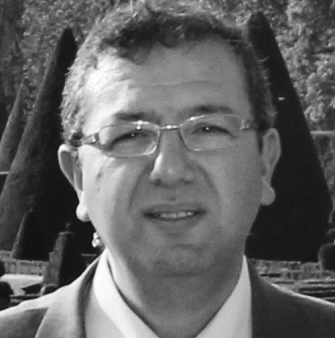
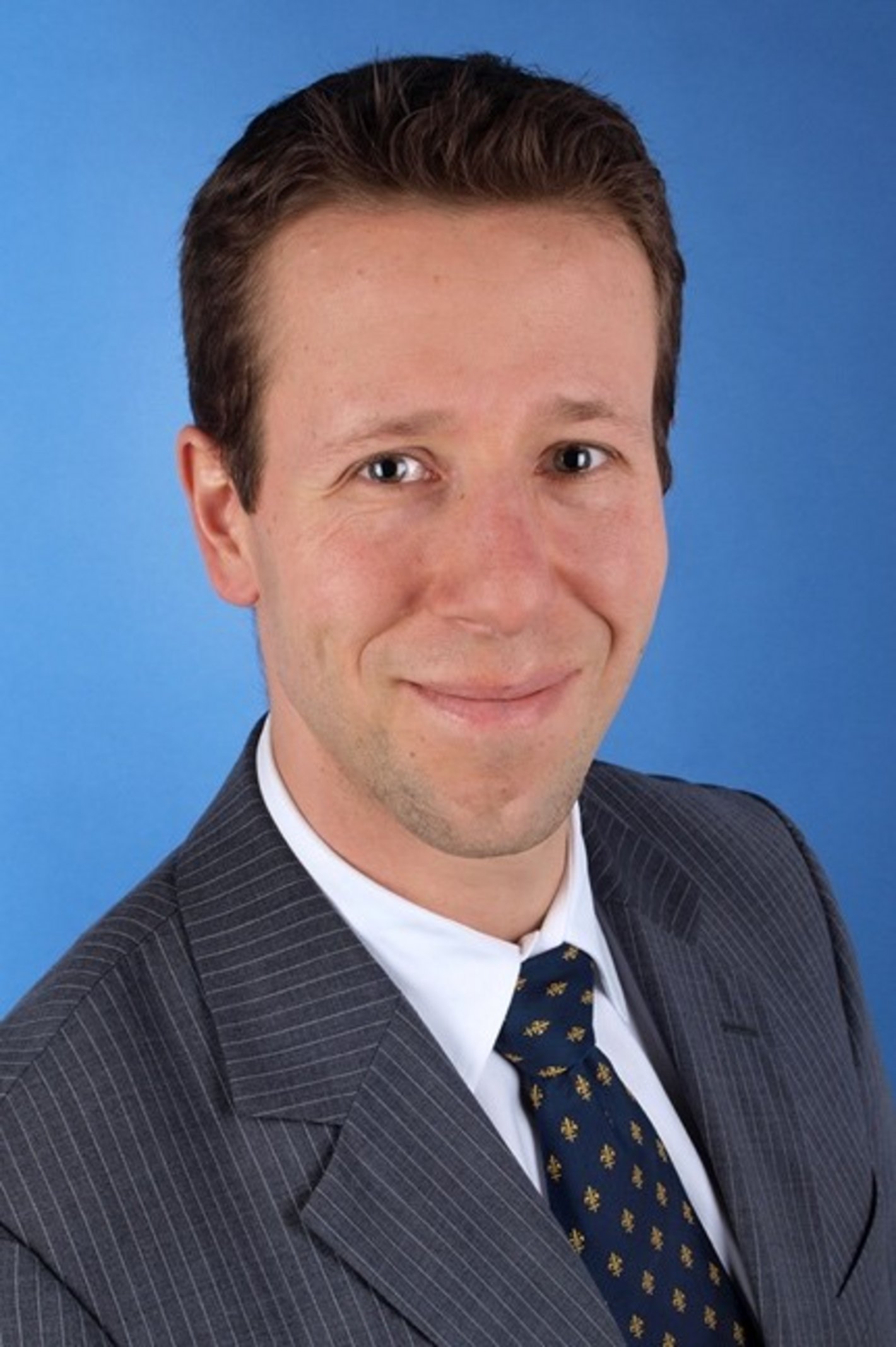
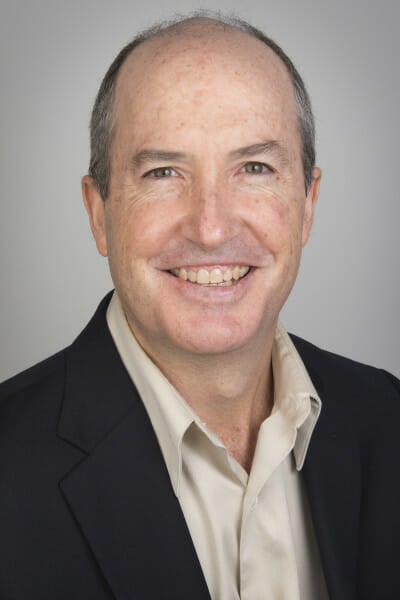
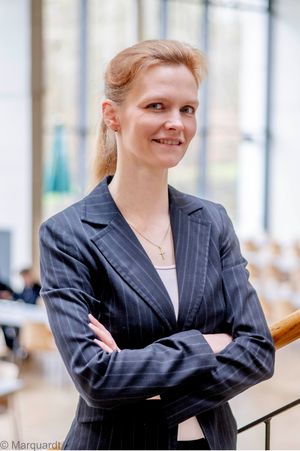
Zoheir ABOURA is a Professor at the Laboratoire Roberval, Université de Technologie de Compiègne. He leads the Materials and Surfaces team, focusing on advanced composite materials and structural health monitoring technologies. His work integrates nanotechnology, piezoelectric sensors, and data analysis for industrial applications. Research interests include enhancing conductivity in carbon fiber composites, developing piezoresistive sensor systems for damage detection in aerospace composites, and analyzing thermal/mechanical behavior of polymer-matrix materials. Collaborations include SAFRAN Aircraft Engines, Zodiac Aerospace, and ARKEMA. Recent publications (2018-2019) emphasize nanofiller incorporation in composites, structural health monitoring via tufted reinforcements, and in-situ piezoelectric sensor integration during manufacturing. Current projects involve thermoplastic composites under self-heating conditions. Labs/Teams: Materials and Surfaces team at Laboratoire Roberval. Industrial partnerships focus on aerospace and composite material applications.
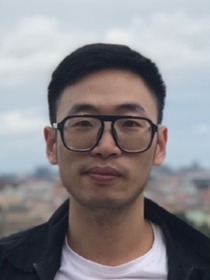
Dr. Liangliang Cheng is a Tenure Track Assistant Professor in Dynamics and Vibration at the University of Groningen. His research develops physically interpretable machine learning methods for structural health monitoring and non-destructive testing applications. Research innovations include: Novel computer vision techniques for vibration measurement Advanced signal processing for damage detection Machine learning frameworks for structural diagnostics
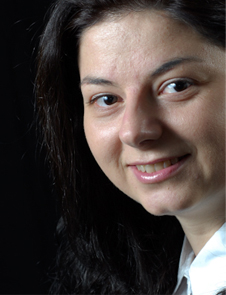
Michele Pasquali is an Associate Professor at the Department of Mechanical and Aerospace Engineering of Sapienza University of Rome. His research focuses on advanced materials for aerospace and high-energy physics applications, structural health monitoring, Industry 4.0 integration in aerospace manufacturing, and preliminary design methodologies for satellite systems and collimation systems in particle accelerators. His work often intersects with experimental facilities at CERN, particularly the HiRadMat facility for material testing under extreme conditions. Key research themes include: Development of advanced composite materials for aerospace and accelerator components Integration of AI and immersive technologies (AR/VR) in manufacturing and assembly processes Optimization of beam collimation systems for high-luminosity particle accelerators like the HL-LHC and FCC Economic analysis of space infrastructure concepts such as lunar propellant mining Systems engineering approaches for Earth observation satellite constellations His recent projects include: Design of a Cyber-Physical System for AR-assisted assembly of aerospace components Material characterization studies for vacuum beam windows at CERN facilities Preliminary analysis of moon-mined propellant viability for on-orbit refueling Collaborations involve major scientific institutions such as CERN and contributions to Future Circular Collider (FCC) conceptual design reports. His work bridges theoretical modeling with practical implementation in cutting-edge engineering systems.
Dr. Xin Wang is an Associate Professor at the Malaysia School of Engineering, Monash University Malaysia. She holds a PhD from Nanyang Technological University (NTU) and has held roles such as Research Fellow at NTU's Robotics Research Center (2007–2009) and Assistant Professor at Universiti Tunku Abdul Rahman (2009–2012). She became a Senior Lecturer at Monash in 2012 and promoted to Associate Professor in 2018. She also served as a Visiting Professor at the National Metrology Centre (Singapore, 2011) and the Centre for Optical & Laser Engineering, NTU (2016). Research Interests: Focus on machine vision, image processing, laser sensing, optical metrology, deep learning, AI in healthcare, non-destructive testing, and structural health monitoring. She has published over 70 peer-reviewed papers and 2 book chapters. Her work aligns with UN SDGs related to innovation and industrialization. Awards: Distinguished Woman Researcher (2025) IEEE SMC Volunteer Award (2020) ITEX 2018 Silver Medal (Team) ITEX 2021 Gold Medal (Team) Teaching: Monash courses include MEC3457 (Systems and Control) and MEC4801 (Non-Destructive Testing and Inspection).
Elena Dragomirescu is an Associate Professor in the Department of Civil Engineering at the University of Ottawa's Faculty of Engineering. She joined the department in 2008 after research positions at Yokohama National University (2004) and Nagoya University (2006), establishing expertise in structural reliability and wind engineering for bridges and infrastructure. Her educational background includes: Ph.D. in Civil Engineering from Yokohama National University, Japan M.A.Sc. in Civil Engineering from University of Bucharest, Romania (UNESCO Chair Program) B.Sc. in Civil Engineering from University of Bucharest, Romania Dr. Dragomirescu's research focuses on wind effects on structures , particularly aerodynamics of suspension bridges and structural reliability . She develops probabilistic methods for predicting wind-induced fatigue in slender structures using computational wind engineering (CFD) and aerodynamic formulations. Current projects address moisture ingress in building envelopes and machine learning applications for structural health monitoring, reflecting adaptation to climate resilience challenges. Analysis of her 2021-2025 publications reveals dual research thrusts: (1) moisture dynamics in building envelopes across Canadian climates, and (2) deep learning (LSTM/transformers) for structural assessment of bridges/beams. This strategic integration of data-driven methods with core wind engineering expertise demonstrates responsiveness to infrastructure resilience demands while maintaining theoretical rigor in probabilistic structural dynamics. She has received numerous scholarships and awards throughout her career, though specific honors are not detailed in available sources. Professional service includes membership in the Steering Committee for Japanese National Wind Engineering Guidelines (2008-2010) and active roles in JAWE, JSCE, CSCE, and IAWE. As coordinator of the International Exchange Program for Students, Dr. Dragomirescu facilitates global academic partnerships. Her research has been supported through international collaborations with Ecoland and UNESCO, and she regularly serves as a journal reviewer. Future work appears directed at machine learning applications for real-time structural integrity assessment under extreme winds, with implications for bridge safety standards and climate-adaptive building design. Her laboratory work involves wind tunnel testing and computational simulations for aerodynamic studies of bridge components (cable stays, multi-box decks) and building envelope systems, complemented by experimental validation of structural dynamics phenomena.
Ann Cook is Professor and Director of Undergraduate Studies in the School of Earth Sciences at Ohio State University. Her research employs petrophysics and geophysics to study natural gas hydrate systems globally, with focus on the Gulf of Mexico, Arctic, and Pacific margins. She examines hydrate formation mechanisms, quantification methods, and geological controls through core analysis, seismic interpretation, and modeling. Her extensive publication record demonstrates consistent focus on hydrate-bearing reservoirs, submarine landslides, and sediment characterization. Recent work emphasizes advanced techniques including pressure coring, CT scanning, and noble gas tracing. She has led multiple Gulf of Mexico research expeditions including UT-GOM2-2.
Professor Mark Masia is a faculty member in the School of Engineering at the University of Newcastle, specializing in structural engineering and masonry systems. He holds a PhD from the University of Newcastle, with research focused on masonry structural behavior, FRP strengthening, and seismic retrofitting. His career spans over two decades, including roles as Lecturer, Senior Lecturer, and Professor at the University of Newcastle. Research interests include experimental and numerical modeling of unreinforced masonry (URM) structures, FRP-strengthened masonry, and the development of design methods for URM. Teaching expertise covers statics, structural mechanics, and design of masonry, concrete, and timber structures. Administrative roles include Program Convenor for Civil Engineering and leadership in academic committees. Key Contributions: Development of semi-interlocking masonry systems for improved seismic performance. Investigations into corrosion effects on masonry wall ties and durability enhancement. Advancements in probabilistic modeling and reliability assessment of masonry structures. Publications span over 100 peer-reviewed articles, focusing on masonry mechanics, material characterization, and structural safety. His work bridges experimental testing, numerical analysis, and practical engineering applications.
Dr. Md Akhtar Hossain is a Lecturer and Research Associate at the School of Engineering, University of Newcastle, Australia. He previously served as a Lecturer and Program Coordinator at the University of Newcastle (UON), Singapore. His academic journey includes a Doctorate in Civil Engineering from the University of Newcastle, an MSc in Fire Safety Engineering from European universities, and a BSc in Civil Engineering from Khulna University of Engineering and Technology (KUET), Bangladesh. He has been affiliated with the University of Newcastle since 2015 and has held roles such as Course Coordinator for multiple Civil Engineering programs. His research focuses on experimental and numerical modeling of masonry structures, FRP strengthening, computational mechanics, and fire protection materials. He has authored over 20 articles in international journals and conferences, with notable contributions to masonry behavior under seismic and fire conditions. His work has been recognized through awards such as the M.A. Hatzinikolas Award (2017) and the UNIPRS Scholarship (2015). Dr. Hossain has secured grants totaling AUD 10,500, including a Faculty Strategic Research Grant (2020) and a Conference Travel Grant (2024). He collaborates internationally, with research networks spanning Australia, Bangladesh, and Europe. His teaching spans courses like Structural Mechanics, Geomechanics, and Fire Safety Compliance. He is a member of Engineers Australia and the Concrete Institute of Australia.
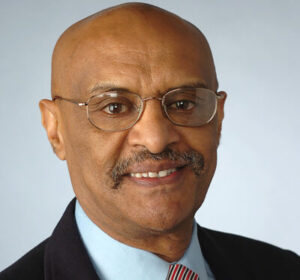
Dawit Negussey serves as a Professor and Graduate Dean’s Faculty Fellow for Diversity and Inclusion at Syracuse University, where his work advances geotechnical engineering through innovative infrastructure solutions. His research bridges academic theory with practical industry applications, particularly in sustainable civil engineering systems. Educational Background Ph.D. in Civil Engineering, University of British Columbia Research Expertise Negussey's research program focuses on EPS geofoam geotechnics , addressing critical infrastructure challenges through: Forensic analysis of culvert and pipeline failures Optimization of geofoam installation parameters (density, vertical gaps) Non-destructive testing methodologies for material quality assurance Long-term creep behavior under confinement conditions Integration of sensor networks for structural health monitoring Applications in bridge support and transportation infrastructure His interdisciplinary approach combines soil mechanics, materials science, and sensor technology to enhance infrastructure resilience and safety. Scholarly Impact Analysis of his 2013-2019 publications reveals consistent contributions to geofoam engineering, with emphasis on practical failure investigation, construction techniques, and performance validation. His work in ASCE journals and specialized conferences demonstrates strong industry relevance, particularly in infrastructure rehabilitation and lightweight fill applications. Teaching and Leadership Negussey teaches core courses in Soil Mechanics, Geotechnical Engineering, and Transportation Engineering while advancing Syracuse University's diversity initiatives through his Graduate Dean’s Fellowship, promoting inclusive excellence in graduate education. Awards and Service No scientific awards were documented in the source material. His administrative role as Graduate Dean’s Faculty Fellow highlights commitment to academic service and graduate student development, though specific grant activities or advising details were not provided.
Prof. Philipp Huke is a Professor in the Department of Technology at the University of Applied Sciences Emden/Leer. His research focuses on optical metrology, non-destructive testing methods, and coherent technologies. He coordinates the 'Calibration-Unit' sub-project in the HIRES international research initiative. Key areas include laser frequency comb applications, Fourier transform spectroscopy, and high-precision radial velocity measurements. Expertise: Optical inspection systems, 3D shape measurement, thermography, digital image correlation Key projects: HoloMet 2010 conference contributions, automotive component quality inspection systems His work bridges fundamental optical research with industrial applications, particularly in automotive manufacturing and precision instrumentation. Notable contributions include algorithm development for spectroscopic phase correction and iodine cell calibration methods for astrophysical measurements.
Marcus Oliver Weber is a Professor at the Department of Textile and Clothing Technology at Niederrhein University of Applied Sciences. He also serves as Head of the Department of Textile Management at Technische Universität Berlin (TUB). His work spans textile engineering, knitting innovation, and sustainable material science. Academic Rank: Professor Primary Role: Niederrhein University of Applied Sciences Secondary Role: Head of Department of Textile Management at TUB Research Interests focus on advanced knitting technologies , smart textiles , and sustainable fiber applications . Key areas include biodegradable textile solutions, conductive yarns for sensor applications, and technical textiles for protective, medical, and automotive sectors. Recent Publications highlight innovations in PLA-based biodegradable packaging , ultrasonic welding of nanofibers , and thermodynamic properties of spacer fabrics . His work emphasizes sustainable practices, material testing, and smart textile integration. Scientific Awards & Activities include UNIDO Technical Advisor Bundesgerichtshof (BGH) Technical Advisor ISO Standardization Committee for Knitting Machines Patents cover novel yarn feeding systems and textile machine designs. Teaching responsibilities include courses in Textile and Clothing Technology , Design Engineering , and Textile Product Management .
Marc Veletzos is a Professor of Civil Engineering at Merrimack College, specializing in earthquake engineering, disaster recovery, and resilient infrastructure design. He holds additional roles as a Fulbright Senior Scholar (Nepal, 2018), Director-at-Large of the Earthquake Engineering Research Institute’s New England Chapter, and Structures Specialist with FEMA’s Massachusetts Task Force 1. Veletzos earned his Ph.D., M.S., and B.S. in Structural Engineering from the University of California, San Diego. His research focuses on three core areas: 1) improving bridge resilience in extreme events through emergency response planning and rapid restoration techniques, 2) developing earthquake-resistant designs for vernacular buildings in developing countries (e.g., Nepal), and 3) advancing understanding of seismic behavior in segmental bridges through large-scale testing and simulations. His work is supported by organizations like Caltrans and the National Cooperative Highway Research Program (NCHRP). His publications highlight contributions to bridge assessment guidelines, smart app development for emergency situations, and innovative seismic retrofitting methods. Recent work emphasizes global collaboration, including workshops in Hawaii and Nepal to transfer knowledge to local communities. He has also pioneered service-learning initiatives linking academic programs with real-world disaster response efforts. Awards: BSCES College Educator of the Year (2023) McKniff Service Award (2017) ExCEEd Teaching Fellow (2009) James Cooper Best Paper Award (2008) Grants & Partnerships: NCHRP, Caltrans, U.S. Education Foundation/Nepal, FEMA Veletzos leads Merrimack College’s efforts in STEM education innovation, integrating national best practices into a liberal arts environment to enhance student retention and engagement. His work bridges academic research, community service, and policy development to create sustainable solutions for global challenges.
Dr. Karen Gipson is a Professor of Physics at Grand Valley State University's Department of Physics within the College of Liberal Arts & Sciences. Her academic roles include Department Chair (2007–2010, 2011–2012), Interim Assistant Dean of Curriculum (2009), and adjunct leadership roles. She holds a Ph.D. in Physics from Washington State University (1998), an M.S. from the University of North Texas (1987), and a B.S. from North Texas State University (1982). Her research focuses on Physical Acoustics (e.g., sonoluminescence, musical instrument acoustics), Philosophy of Science (integrating contemplative practices into education), and Contemplative Pedagogy . She has led over 15 undergraduate research projects, including studies on oboe reed construction, single-bubble sonoluminescence, and therapeutic ultrasound effects. Dr. Gipson has received awards such as Outstanding University Service (2014) and Professor of the Year (2001). She secured grants totaling over $20,000 for student research projects and has presented at conferences like the Acoustical Society of America and the Grand Dialogue on Science and Religion. Her service includes roles as Faculty Sponsor for Women in STEM Fields, Chair of the University Academic Senate’s Executive Committee, and Director of the Women in Science & Engineering Living Center. She also advocates for diversity in STEM and participates in outreach programs like Science IS for Girls and Gear-Up for College Days.
Prof. Dr.-Ing. Inka Mueller is a Professor in the Department of Mechatronics and Mechanical Engineering at Bochum University of Applied Sciences. She leads the AG Mueller research group within the Institute of Mechanics, focusing on Structural Health Monitoring (SHM), guided wave-based systems, and non-destructive testing (NDT). Her work emphasizes reliability assessment of SHM systems, sensor calibration, and the application of artificial intelligence in damage detection. Research Interests: Her primary areas include SHM systems for civil infrastructure and petrochemical pipelines, guided wave propagation analysis, acoustic emission sensor diagnostics, and the development of standardized methods for SHM system validation. She also explores the integration of AI techniques to enhance damage localization accuracy and system reliability. Key Projects: She leads the ITN GW4SHM project to improve guided wave-based SHM reliability and the calibrAEte initiative for acoustic emission sensor standardization. She is a key member of the DFG Scientific Network advancing SHM system quality assessment. Grants & Advising: Mueller has managed multiple industrial and academic projects, including the C7 - SFB 837 tunnel boring machine monitoring system. She advises doctoral student Ahmed Bayoumi and collaborates with international researchers in Germany, Russia, Italy, and the Netherlands. Labs & Teams: Her team operates within the AG Mueller group, focusing on experimental mechanics and data-driven SHM solutions. The group contributes to industry partnerships and publishes extensively in journals like Sensors and IEEE Transactions on Ultrasonics .
Prof. Dr. Yegan Kahya Sayar currently holds the position of Professor at the Department of Architecture, Faculty of Architecture at Istanbul Technical University. His research focuses on Conservation, Renovation, and Restoration with a specialization in cultural heritage preservation. He has served in various academic and administrative roles, including Program Chairman (2018–present), Dean's Deputy (2008–2012), and numerous committee memberships at the university level. His professional memberships span organizations such as UNESCO, ICOMOS, and Türk Eskiçağ Bilimleri Enstitüsü, reflecting his leadership in global heritage conservation. Education: Bachelor’s in Architecture (1977–1982) Master’s in Architecture (1982–1984) Doctorate in Architecture (1984–1992) Research Interests: Prof. Sayar’s work emphasizes architectural conservation, urban heritage, and the restoration of historic structures. His projects often address challenges in preserving cultural landscapes, historic monuments, and endangered rural settlements. Key themes include non-destructive testing for historic buildings, policy frameworks for cultural heritage management, and interdisciplinary approaches to restoration. Publications & Awards: Recipient of the CIPA Berlin Best Poster Award (2011) National Architecture Award for Building Conservation (2000) ARIT Doctoral Support Scholarship (1988) His recent research explores methodologies for evaluating and protecting historic landscapes (e.g., Silifke rural areas, Kapadokya settlements) and innovative approaches to structural analysis in medieval architecture (e.g., Cyprus fortifications). Advising & Grants: Supervised over 50 graduate theses, focusing on restoration projects of significant cultural sites such as the Fatih Kilise Camii, Yeşilköy Train Station, and Anadoluhisarı fortress. Active in grant management and international collaborations, particularly through ICOMOS and UNESCO platforms. Labs & Teams: Coordinates the Architectural Conservation Laboratory at Istanbul Technical University, fostering interdisciplinary research in heritage science and sustainable preservation practices.